



What was Lewis Carroll’s IQ?
Alice’s author was also Oxford’s mathematics lecturer: first on the 1854 honours list, then a logic textbook in 1896.
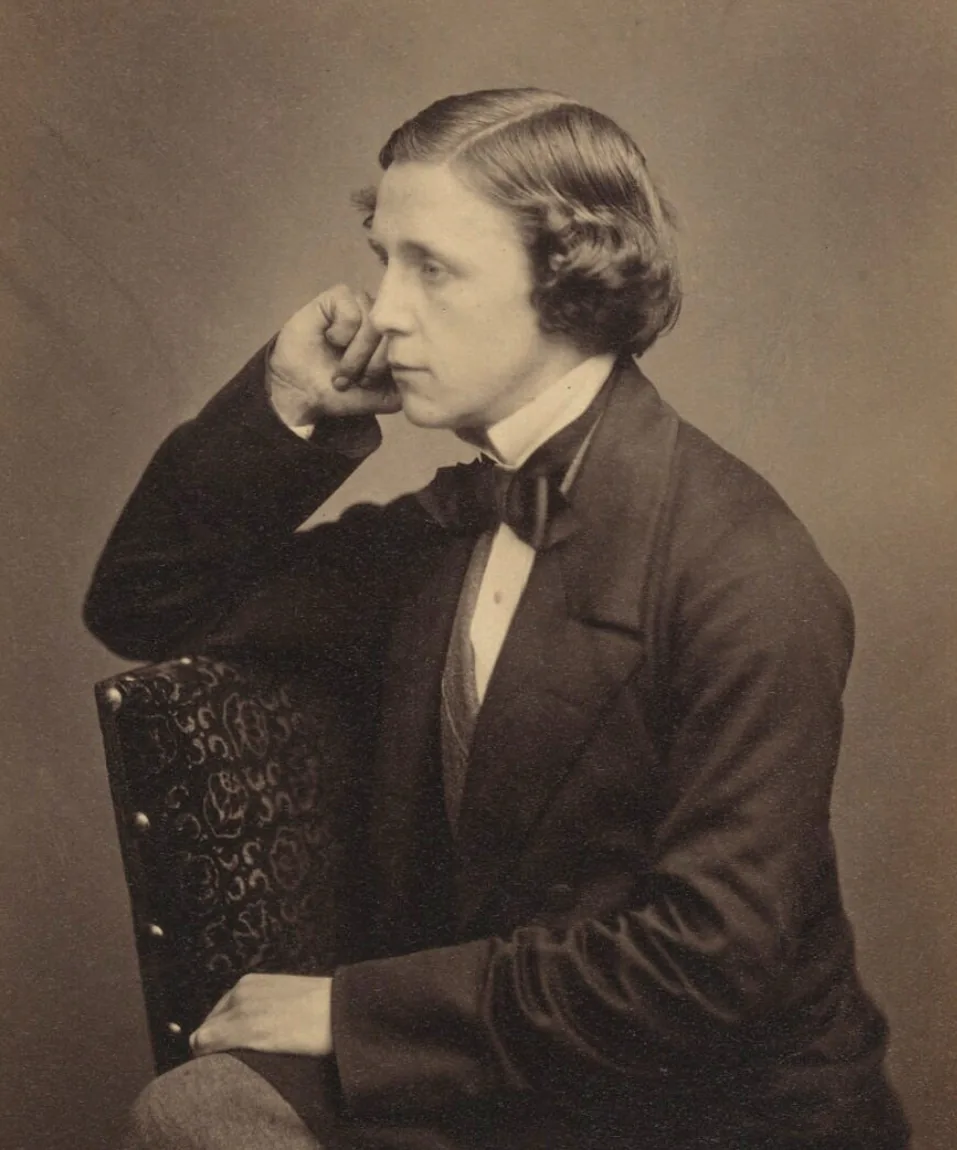
No IQ score exists for Lewis Carroll: his IQ was never measured, and no figure that cites a test circulates. The documented record is first-class honours in mathematics in 1854, standing first on the list, and 26 years as Christ Church’s Mathematical Lecturer. Lewis Carroll’s IQ is therefore an inference, as of November 2026.
Lewis Carroll’s estimated IQ
- In 1852 he obtained first-class honours in mathematics moderations, and in 1854 first-class honours in the Final Honours School of Mathematics, standing first on the list, according to Wikipedia.
- He was appointed a senior student and mathematical lecturer at Christ Church in 1855, at age 23, and took his M.A. in 1857, per Warren Weaver’s essay “Lewis Carroll: Mathematician.”
- He held the Christ Church Mathematical Lectureship for twenty-six years, according to the Brigham Young University Library’s literary-worlds exhibit.
- Nearly half of his mathematical writings were in formal logic, including The Game of Logic (1886) and Symbolic Logic Part I (1896), per Weaver.
- Alice’s Adventures in Wonderland (1865) and Through the Looking-Glass (1871) are described by Wikipedia as among the most important examples of Victorian literature.
This is an inference from a record, not from a test. Weaver judged him a capable, conscientious teacher of elementary mathematics and pointed to his logic as the more interesting side, so the range sits at the middle of the writers on this site rather than at the top. A first-class degree ranks a student against peers in 1854; it is not an IQ.
- Born
- January 27, 1832, Daresbury, Cheshire, England
- Died
- January 14, 1898, Guildford, Surrey
- Real name
- Charles Lutwidge Dodgson
- Education
- Rugby School; Christ Church, Oxford (B.A. 1854, first-class honours)
- Post
- Mathematical Lecturer at Christ Church for 26 years
- Mathematics books
- Euclid and His Modern Rivals (1879); The Game of Logic (1886); Symbolic Logic Part I (1896)
- Literary works
- Alice’s Adventures in Wonderland (1865); Through the Looking-Glass (1871)
- Circulating figure
- None found
What an IQ of 140–155 actually means
Set the claim aside for a moment. If someone genuinely scored in this range, here is what that would represent.
| Score range | Classification | Share of people | What it indicates |
|---|---|---|---|
| 85 – 114 | Average | ~68% | The range most people fall into. |
| 115 – 129 | Above average | ~13.6% | Roughly one person in seven. |
| 130 – 144 | Gifted | ~2% | The threshold most high-IQ societies use. |
| Above 144 | Highly gifted | ~0.1% | Figures above this range are extrapolated from the curve rather than measured. |
Percentages are approximate and describe a normal distribution. The same number means different things on tests with different standard deviations.
Thirty questions gives you a measured position on this exact scale — your score, your percentile and the ability breakdown behind it.
Find out in 30 minutes →Who Lewis Carroll was
Who was Lewis Carroll? Charles Lutwidge Dodgson was born on January 27, 1832, in Daresbury, Cheshire, and died on January 14, 1898, in Guildford, Surrey, according to Wikipedia. He was educated at Rugby School and Christ Church, Oxford, and wrote under the name Lewis Carroll. Wikipedia describes him as an author, poet, mathematician, photographer and Anglican deacon.
What was Lewis Carroll’s Oxford record? In 1852 he obtained first-class honours in mathematics moderations and was nominated to a studentship; in 1854 he obtained first-class honours in the Final Honours School of Mathematics, standing first on the list, and graduated Bachelor of Arts, per Wikipedia. Weaver adds that in 1855, at age 23, he was appointed senior student and mathematical lecturer at Christ Church. The BYU Library exhibit says he held the Mathematical Lectureship for twenty-six years.
What did Lewis Carroll write? Alice’s Adventures in Wonderland appeared in 1865 and Through the Looking-Glass in 1871. His mathematical books include Euclid and His Modern Rivals (1879), The Game of Logic (1886) and Symbolic Logic Part I (1896). Wikipedia notes that Martin Gardner’s work on logic machines and diagrams, and William Warren Bartley’s posthumous edition of the second part of Symbolic Logic, renewed interest in his logic late in the 20th century. See other writers we have checked, or compare yourself on the same scale with the IQ Metrics test.
 By Elora Mercer, Celebrity Research WriterFigures checked by Leon Falkner, Data & Research Analyst
Reviewed by Aarav Vardhan, Editor-in-Chief · Last reviewed November 2026

Lewis Carroll: the documented record
The estimate above rests on this record. Every entry here is a matter of public fact, which is more than can be said for the number itself.
- 1832Born January 27 in Daresbury, Cheshire.
- 1852First-class honours in mathematics moderations; nominated to a studentship at Christ Church.
- 1854First-class honours in the Final Honours School of Mathematics, first on the list; B.A.
- 1855Appointed senior student and mathematical lecturer at Christ Church.
- 1857Takes his M.A.; the self-portrait photograph used on this page dates from this year.
- 1865Alice’s Adventures in Wonderland is published.
- 1871Through the Looking-Glass is published.
- 1879Publishes Euclid and His Modern Rivals; “Doublets” runs in Vanity Fair from 1879 to 1881.
- 1896Publishes Symbolic Logic Part I.
- 1898Dies January 14 in Guildford.
Why no figure circulates
Following a claim back to its first appearance is the part almost nobody does — and it is what most people are actually asking.
No published source gives Lewis Carroll’s IQ as a test result, and none could: he died in 1898 and left no intelligence test behind. The Lewis Carroll IQ question has to be answered from his Oxford record and his books, not from a score. That absence is the finding, and any number attached to his name would be an opinion about a Victorian author. For how such numbers spread, see where celebrity IQ numbers come from.
Was Lewis Carroll a genius? His documented record is that of an exceptional student and a gifted writer of wordplay and logic, not a mathematical great. Warren Weaver’s essay “Lewis Carroll: Mathematician” notes that nearly half of his mathematical writings were in logic, and judges the Reverend Dodgson a capable, conscientious teacher of elementary mathematics, pointing to his logic and puzzles as the more interesting side. His puzzles are the part that lasts: the word-ladder game “Doublets” ran in Vanity Fair from 1879 to 1881, per Wikipedia, and modern word and logic puzzles are in our brain games.
What is Lewis Carroll’s IQ if it must be estimated? This site’s range is 140–155. It sits inside Charles Dickens (140–160), overlaps C. S. Lewis (145–160) and Oscar Wilde (140–155). For how estimates for people of this era are built, and why they are not test scores, see the research on the IQ of historical geniuses.
How we read a number →Birth and death dates, Rugby and Christ Church, 1852 and 1854 honours, works, “Doublets” and the late-20th-century interest in his logic.
B.A. 1854, M.A. 1857, 1855 appointment as senior student and mathematical lecturer; his logic books and a measured verdict on his mathematics.
States he held the Christ Church Mathematical Lectureship for twenty-six years.
Confirms the identifier Q38082 is the British author and scholar (1832–1898), not a namesake.
Self-portrait photograph from 1857, first published in Collingwood’s 1898 biography; public domain.
No test result appears in Wikipedia’s biography, the BYU exhibit or Weaver’s essay.
The sources behind our estimate
The figures that circulate for Lewis Carroll, what we were able to confirm, and where the two diverge.
No page states a Lewis Carroll IQ score together with a named test, a date and an examiner, so there is no circulating figure to audit.
Wikipedia’s biography, the BYU Library exhibit and Weaver’s essay describe his degrees, teaching and books without giving any IQ. He died in 1898, and no intelligence test result for him is recorded. The only numbers are his honours placings, which rank students against one another.
With no circulating number to test, the only figure on the page is this site’s own 140–155 range. It is built from dated facts, so it can be checked, but it is an inference and not a score.
Want a number that does hold up? Every figure on this page is somebody’s claim. Take the 30-question test and get a percentile you can check rather than a figure you have to trust.
Lewis Carroll — frequently asked
What was Lewis Carroll’s IQ?
No IQ test result for Lewis Carroll has been published, and no sourced figure circulates. His documented record is first-class honours in mathematics in 1854, standing first on the list, per Wikipedia. This site’s estimated range, inferred from that record, is 140–155 on a scale with mean 100 and SD 15.
Was Lewis Carroll a genius?
Lewis Carroll was an exceptional student and an inventive writer, but “genius” is a label, not an IQ score. Warren Weaver’s essay judged him a capable teacher of elementary mathematics and pointed to his logic and puzzles as the more interesting side.
Did Lewis Carroll take an IQ test?
No IQ test result for Lewis Carroll exists. He died on January 14, 1898, according to Wikipedia. What is documented are examination placings: first-class honours in 1852 and 1854, which ranked him against other Oxford students rather than on an IQ scale.
Was Lewis Carroll good at mathematics?
Yes, as a student and a teacher. Wikipedia records first-class honours in 1854, standing first on the list, and the BYU Library says he held the Christ Church Mathematical Lectureship for 26 years. Weaver called him a capable teacher of elementary mathematics and pointed to his logic writing as the more interesting side.
What was Lewis Carroll’s job at Oxford?
Lewis Carroll was a Mathematical Lecturer at Christ Church, Oxford. Weaver says he was appointed in 1855, at age 23, as senior student and mathematical lecturer, and the BYU Library says he held the lectureship for twenty-six years.
How does Lewis Carroll’s estimated IQ compare with Charles Dickens’s?
This site’s estimate for Lewis Carroll, 140–155, sits inside its 140–160 estimate for Charles Dickens and overlaps its 145–160 estimate for C. S. Lewis. All are inferences from documented records, not test scores, so the ranges are too close to rank.
Which logic books did Lewis Carroll write?
Lewis Carroll wrote The Game of Logic (1886) and Symbolic Logic Part I (1896). Warren Weaver notes that nearly half of his mathematical writings were in logic, and Wikipedia says later scholars renewed interest in this work.
How does my IQ compare with Lewis Carroll?
You can find out in about fifteen minutes. The IQ Metrics assessment is 30 questions, scored on the same 100-mean scale used throughout this page, so your result and the estimate above are at least expressed in the same units — one measured, one inferred. Once you have a number, the leaderboard shows where it would sit, and how we score and norm it explains the benchmarking.
Where does this estimate come from?
From the documented record rather than a test — the method is named above and set out in full under how we read a number. Compare it against the other writers profiles, starting with Voltaire.
- Take the 30-question IQ test — get a measured score and percentile of your own
- Average IQ by country — how the scale behaves across populations
- How IQ Metrics scores its assessment — the method behind our own number
- More on how IQ testing works — reliability, error and what a score can and cannot say
- More writers profiles — same field, same method
More writers
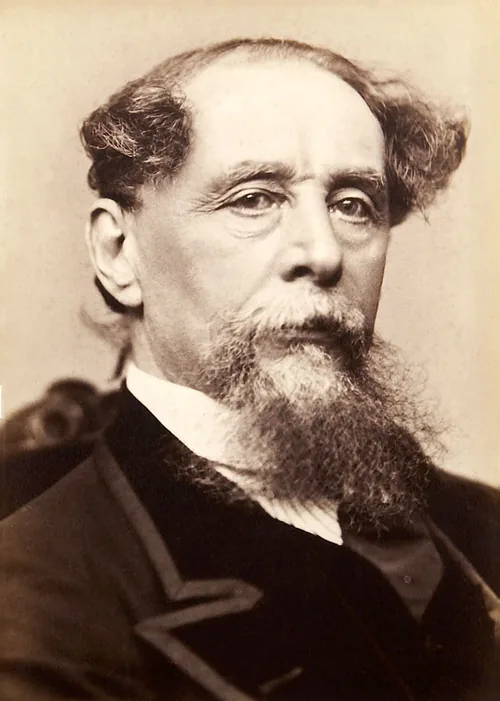
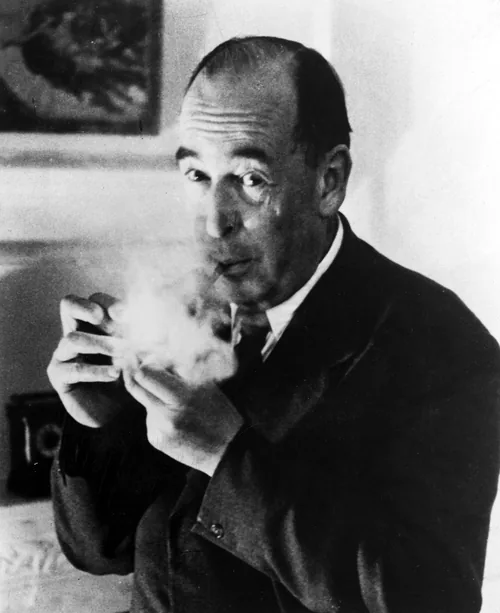
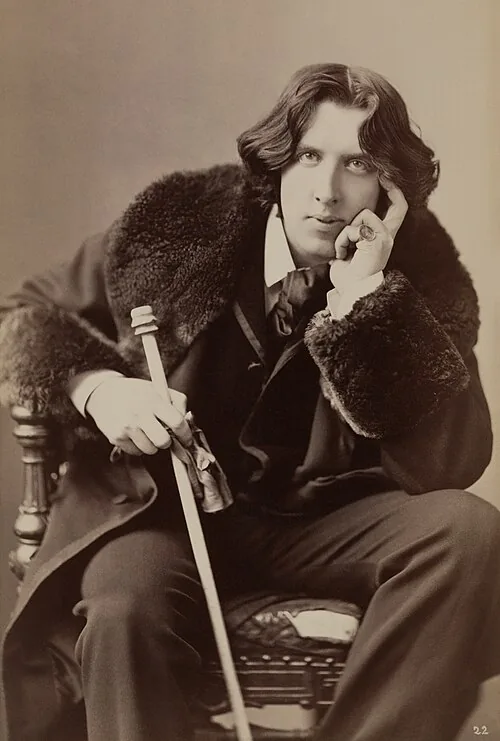
Photograph of Charles Dickens by Jeremiah Gurney (between 1867 and 1868), Commons file, public domain (a nineteenth-century photograph). Cropped for the portrait above. · Portrait of C. S. Lewis from the dust jacket of the first US edition of Till We Have Faces (Harcourt, Brace and Company, 1957), photographer credited as John S. Murray (Commons file). Public domain in the United States as a dust-jacket photograph published without a copyright notice; the status in other countries may differ. · Photograph by Napoleon Sarony (1882), Library of Congress, public domain.


An estimate is an inference.
Yours can be measured.
Thirty questions, scored against general-population benchmarks. Your score, your percentile, your ability breakdown and a printable IIF certificate.
Find your IQ score now! →