



What was Charles Dickens’ IQ?
A self-taught shorthand writer who was reporting from the parliamentary gallery at 19: the documented record behind a Dickens IQ of 180 that no one can source.

Charles Dickens’s IQ was never tested: he died in 1870, before any IQ test existed, and the 180 that circulates names no test. Catharine Cox’s 1926 study rated him 145 to age 17 and 155 to age 26, so this page estimates his IQ at 140–160.
Charles Dickens’ estimated IQ
- Catharine Cox’s 1926 volume of Genetic Studies of Genius rated Dickens at 145 for his first 17 years and 155 for his first 26. Each figure averages three raters working from biographies (Table 30 and pp. 513–515).
- After about two years at Wellington House Academy and a law clerkship (May 1827 to November 1828), he taught himself Gurney’s shorthand, per his friend and biographer John Forster, and reported at Doctors’ Commons.
- He entered the parliamentary gallery at 19 for the True Sun, reported for the Mirror of Parliament, and by 1834 was a Morning Chronicle reporter.
- Sketches by Boz appeared on February 8, 1836, and The Pickwick Papers began as a serial that April, when he was 24. Oliver Twist began in February 1837 while Pickwick was still running.
Cox worked from two biographies (Forster, 1872–74, and Marzials, 1887), rated her data at only .60 and .53 for reliability, and wrote that her corrected estimates are not exact scores for an individual. Her summary says his Wellington House years showed no sign of later literary talent. Treat 140–160 as an inference.
- Born
- February 7, 1812, Landport, Portsmouth
- Died
- June 9, 1870
- Schooling
- William Giles’s school, Chatham, from 1821; Wellington House Academy for about two years, to 1827
- Early work
- Warren’s Blacking Warehouse, early 1824; clerk at Ellis and Blackmore, May 1827 to November 1828
- Reporting
- Self-taught Gurney shorthand; Doctors’ Commons; True Sun, Mirror of Parliament, Morning Chronicle (1834)
- Known for
- The Pickwick Papers, Oliver Twist, A Christmas Carol, David Copperfield, Bleak House, Great Expectations
- In Cox 1926
- Rated 145 to age 17 and 155 to age 26 (Table 30; pp. 513–515)
- Measured IQ
- None on record
What an IQ of 140–160 actually means
Set the claim aside for a moment. If someone genuinely scored in this range, here is what that would represent.
Average is 100 by construction, and about two-thirds of people fall between 85 and 115. Take the test to place your own score on this scale.
| Score range | Classification | Share of people | What it indicates |
|---|---|---|---|
| 85 – 114 | Average | ~68% | The range most people fall into. |
| 115 – 129 | Above average | ~13.6% | Roughly one person in seven. |
| 130 – 144 | Gifted | ~2% | The threshold most high-IQ societies use. |
| Above 144 | Highly gifted | ~0.1% | Figures above this range are extrapolated from the curve rather than measured. |
Percentages are approximate and describe a normal distribution. The same number means different things on tests with different standard deviations.
Thirty questions gives you a measured position on this exact scale — your score, your percentile and the ability breakdown behind it.
Find out in 30 minutes →Who Charles Dickens was
Charles Dickens was born on February 7, 1812, in Landport, Portsmouth. The Dickens Project chronology has him starting at William Giles’s school in Chatham in 1821. In 1824 he spent several months working at Warren’s Blacking Warehouse in London, from late January or early February to June, an interruption to his schooling. He then attended Wellington House Academy, a day school in the Hampstead Road, for about two years until 1827.
In May 1827 he became a clerk at Ellis and Blackmore in Gray’s Inn. Edward Blackmore recalled that he left in November 1828. Dickens then taught himself Gurney’s shorthand, reported at Doctors’ Commons and read in the British Museum reading room. At 19 he entered the parliamentary gallery for the True Sun, then reported for the Mirror of Parliament and, from 1834, the Morning Chronicle.
His first published piece appeared in the Old Monthly Magazine in December 1833. Sketches by Boz followed on February 8, 1836, and The Pickwick Papers began that April. Oliver Twist started in Bentley’s in February 1837 and Nicholas Nickleby in April 1838. A Christmas Carol was published on December 19, 1843, David Copperfield ran from May 1849 to November 1850, and Great Expectations from December 1860 to August 1861.
He founded and edited the weekly Household Words in 1850 and All the Year Round in 1859. On April 29, 1858, he gave his first public reading for his own benefit, and in 1870 he gave twelve farewell readings in London. He died on June 9, 1870. This page covers only the IQ claims, his schooling and his career.
 By Elora Mercer, Celebrity Research WriterFigures checked by Leon Falkner, Data & Research Analyst
Reviewed by Aarav Vardhan, Editor-in-Chief · Last reviewed November 2026

Charles Dickens: the documented record
The estimate above rests on this record. Every entry here is a matter of public fact, which is more than can be said for the number itself.
- 1812Born February 7 in Landport, Portsmouth.
- 1821Begins at William Giles’s school in Chatham.
- 1824Works at Warren’s Blacking Warehouse, from late January or early February to June.
- 1827Leaves Wellington House Academy in the spring; becomes a clerk at Ellis and Blackmore in May.
- 1828Learns shorthand and works as a freelance reporter at Doctors’ Commons (1828–29).
- 1831Becomes a parliamentary reporter (1831–34); joins the Morning Chronicle in 1834.
- 1836Sketches by Boz appears on February 8; The Pickwick Papers begins in April.
- 1858Gives his first public reading for profit on April 29.
- 1870Gives twelve farewell readings in London; dies on June 9.
- 1926Cox’s Genetic Studies of Genius, Vol. II rates him 145 to age 17 and 155 to age 26.
Where the 180 figure came from
Following a claim back to its first appearance is the part almost nobody does — and it is what most people are actually asking.
Charles Dickens’s IQ is not on record, and the 180 attached to him comes from lists that name no test. The Christian Post article “IQ Scores of Famous People” (Daniel Blake, June 16, 2012) says he “reportedly” had 180. A drdianehamilton.com table copied from aceviper.net repeats 180 under “IQ (SB)”. Neither page names a test or a date. See how celebrity IQ numbers arise.
The one systematic estimate of Dickens’s IQ is Catharine Cox’s, published in 1926. Three raters read the biographies and scored the IQ that would best account for the recorded facts: 145 for his first 17 years and 155 for his first 26, on data she rated .60 and .53 for reliability. For her ratings of other eminent figures, see Cox’s 1926 estimates for the Founding Fathers. It is a rating drawn from a book, not a test result.
Does a Dickens IQ of 180 hold up? No. It is 25 points above Cox’s higher rating, and an IQ of 180 lies beyond the highest score a test can report. The Genius Index’s 165 gives no source or method either. Dickens died in 1870, the first Binet–Simon scale appeared in 1905 and the Stanford–Binet in 1916, so every Dickens IQ figure is a modern estimate.
Dickens’s estimated IQ of 140–160 sits above Charles Darwin’s 125–140 and overlaps Mark Twain’s 145–165. Cox rated Darwin 135 and 140, yet the Christian Post sentence that gives Dickens 180 gives Darwin 165. She rated Victor Hugo 150 and 170, and this site’s range for him is 165–180. A score near 150 is the middle of Dickens’s range.
How we read a number →Dickens case study, pp. 513–515: A1 IQ 145 (reliability .60) and A2 IQ 155 (reliability .53), also in Table 30 (p. 122). A1 is the average of three raters to age 17 and A2 to age 26; the book says its corrected estimates are not exact individual scores. Cox’s Darwin entry gives 135 and 140 and Hugo’s gives 150 and 170.
Warren’s warehouse and his own words on its length; Wellington House for nearly two years; Edward Blackmore’s letter (May 1827 to November 1828); self-taught shorthand from Gurney’s book; nearly two years at Doctors’ Commons; the gallery at 19, the True Sun, the Mirror of Parliament, the Morning Chronicle in his twenty-third year; first published piece, December 1833. Forster was his friend.
Giles’s school 1821; Warren’s late January or early February to June 1824; Wellington House 1825; clerk 1827; shorthand and Doctors’ Commons 1828–29; parliamentary reporter 1831–34; Morning Chronicle 1834; dates of the major serials, A Christmas Carol (December 19, 1843), the first paid reading (April 29, 1858) and the 1870 farewell readings.
Says Dickens, aged 12, was sent to work at Warren’s shoe polish factory and later took on work as a parliamentary reporter and journalist. Gives no dates for either.
Clerk with Mr. Blackmore from May 1827 to November 1828; reporting at Doctors’ Commons, for the True Sun and the Mirror of Parliament; first paid reading on April 29, 1858. It dates the Morning Chronicle post to the 1835 session, one year later than the Dickens Project.
Wellington House for nearly three years from age 12, leaving in spring 1827; Ellis and Blackmore from May 1827; self-taught shorthand; Morning Chronicle reporter in 1834.
Wikidata Q5686 is Charles Dickens, born 1812-02-07 and died 1870-06-09. The Stanford–Binet pages date the Binet–Simon scale to June 1905 and the first Stanford–Binet to 1916. The Dickens lead says he left school at 12 and returned “after three years”, which conflicts with the other sources and is not used.
The Christian Post says Dickens “reportedly” had an IQ of 180 and Charles Darwin 165, naming no test. The Hamilton table lists Dickens, Writer, England, 180 under “IQ (SB)”, with no test named and no date.
Gives an “Estimated Cognitive Quotient” of 165 with no source, method or estimate date.
He died in 1870, before the Binet–Simon scale (1905) or the Stanford–Binet (1916). No page opened reports a test score for him; searched: celebrity IQ lists, Cox’s 1926 volume, biographies and chronologies.
The sources behind our estimate
The figures that circulate for Charles Dickens, what we were able to confirm, and where the two diverge.
The Christian Post article “IQ Scores of Famous People” (Daniel Blake, June 16, 2012) says Dickens “reportedly” had an IQ of 180. A table on drdianehamilton.com, introduced as “from aceviper.net”, also lists 180 under a column headed “IQ (SB)”. The Genius Index site gives an “Estimated Cognitive Quotient” of 165.
No IQ test result exists for Dickens, and none could: the Binet–Simon scale dates from 1905 and the first Stanford–Binet from 1916, decades after he died in 1870. The Christian Post gives no source for 180, and the Hamilton table names no test and carries no date. The Genius Index gives 165 with no method. The only systematic ratings we found are Cox’s 145 and 155, and neither circulating figure matches them.
The circulating figures sit 5 and 20 points above the top of this range and 10 and 25 points above Cox’s higher rating of 155. Sourced records usually support a lower range than the number that circulates, and Dickens follows that pattern. On a scale with a standard deviation of 15, 180 is more than five standard deviations above 100.
Want a number that does hold up? Every figure on this page is somebody’s claim. Take the 30-question test and get a percentile you can check rather than a figure you have to trust.
Charles Dickens — frequently asked
What is Charles Dickens’s IQ?
Charles Dickens’s IQ is unknown: no IQ test result exists for him, and he died in 1870, decades before the first Stanford–Binet in 1916. Catharine Cox’s 1926 study rated him 145 to age 17 and 155 to age 26, and this site infers an estimated IQ of 140–160. The 180 on celebrity lists names no test.
Did Charles Dickens take an IQ test?
No record shows that he did. The Binet–Simon scale appeared in 1905 and the Stanford–Binet in 1916, both after he died in 1870. Any Dickens IQ score is therefore an estimate, and the 140–160 on this page comes from his schooling, his reporting career and Cox’s 1926 ratings, not from a test.
Where does Charles Dickens’s IQ of 180 come from?
No source is given. The Christian Post article “IQ Scores of Famous People” (June 16, 2012) says he reportedly had 180, and a drdianehamilton.com table copied from aceviper.net lists 180 under “IQ (SB)”. Neither names a test. Cox’s 1926 ratings for Dickens are 145 and 155, so 180 is 25 points above her higher one.
Was Charles Dickens a genius?
Genius is a judgment, not a test score, but the record supports a high estimated IQ. Dickens taught himself shorthand, was reporting from the parliamentary gallery at 19, and had Sketches by Boz and The Pickwick Papers in print by age 24. Cox rated him 145 and 155. This site estimates 140–160.
Did Charles Dickens leave school at 12 to work in a factory?
Not for good. He worked at Warren’s Blacking Warehouse in early 1824, aged 12, and the Dickens Project dates that from late January or early February to June. He then spent about two years at Wellington House Academy, leaving in 1827. Sources differ on exact dates, and Dickens himself said he was unsure how long the job lasted.
Was Charles Dickens a parliamentary reporter?
Yes. After a clerkship he taught himself Gurney’s shorthand, reported at Doctors’ Commons, and entered the parliamentary gallery at 19 for the True Sun. He also reported for the Mirror of Parliament and, from 1834, the Morning Chronicle. Forster says he mastered shorthand in “marvelously quick time”, an anecdote and not a test.
How does Charles Dickens’s estimated IQ compare with Charles Darwin’s?
This site estimates 140–160 for Dickens and 125–140 for Darwin, so Dickens sits higher. Cox’s own ratings point the same way: 145 and 155 for Dickens, 135 and 140 for Darwin. Both are inferences from biographies, not test scores, and the two ranges meet only at 140.
How does my IQ compare with Charles Dickens?
You can find out in about fifteen minutes. The IQ Metrics assessment is 30 questions, scored on the same 100-mean scale used throughout this page, so your result and the estimate above are at least expressed in the same units — one measured, one inferred. Once you have a number, the leaderboard shows where it would sit, and how we score and norm it explains the benchmarking.
Where does this estimate come from?
From the documented record rather than a test — the method is named above and set out in full under how we read a number. Compare it against the other writers profiles, starting with Voltaire.
- Take the 30-question IQ test — get a measured score and percentile of your own
- Average IQ by country — how the scale behaves across populations
- How IQ Metrics scores its assessment — the method behind our own number
- More on how IQ testing works — reliability, error and what a score can and cannot say
- More writers profiles — same field, same method
More writers
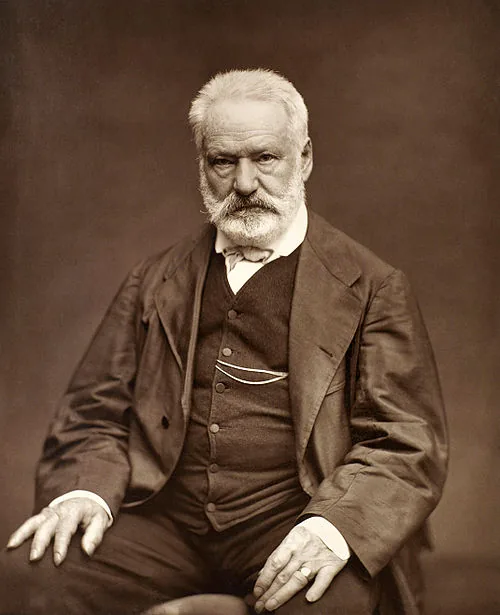
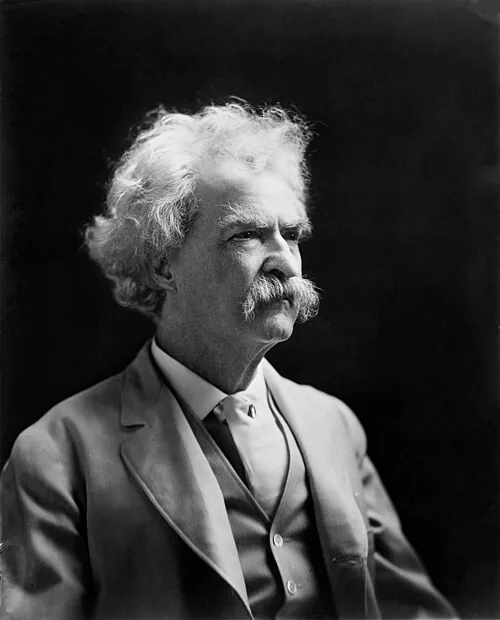
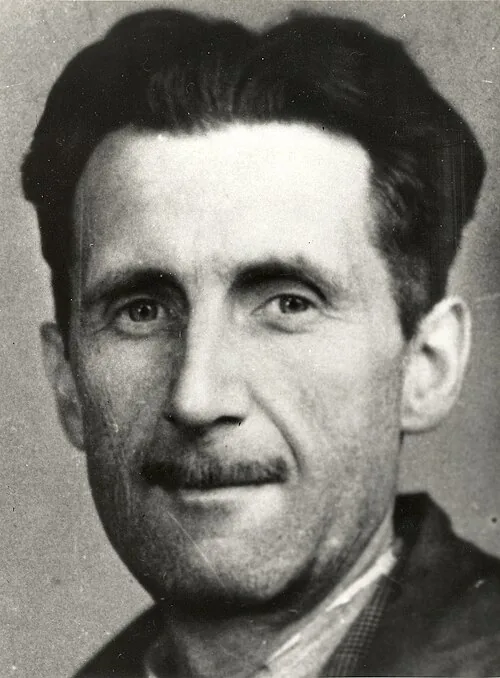
Photograph by Étienne Carjat (1876), public domain. Background removed for the portrait above. · Photograph, 1907, via the Library of Congress (digital ID cph.3a08820), public domain. Background removed for the portrait above. · Press photograph by the Branch of the National Union of Journalists (1943), public domain. Background removed for the portrait above.


An estimate is an inference.
Yours can be measured.
Thirty questions, scored against general-population benchmarks. Your score, your percentile, your ability breakdown and a printable IIF certificate.
Find your IQ score now! →