



What was Sergei Rachmaninoff’s IQ?
A gold medal awarded only twice before him, a score written in under three weeks, and no test.

Sergei Rachmaninoff has no IQ score, and he was born in 1873, outside the 1450–1850 window of Catharine Cox’s 1926 study of 301 geniuses. His record is documented: the Moscow Conservatory’s Great Gold Medal at 19 and a Piano Concerto No. 2 finished in 1901. Our Rachmaninoff IQ estimate is 135–150.
Sergei Rachmaninoff’s estimated IQ
- The Moscow Conservatory’s Great Gold Medal in May 1892 for his graduation opera Aleko, a medal the Conservatory had given only to Taneyev and Arseny Koreshchenko before him (Tchaikovsky Research; Wikipedia).
- He wrote Aleko in 17 to 19 days, depending on the source, as a graduation exercise that he and two other students were set in March 1892 (Tchaikovsky Research; Wikipedia).
- After the failed premiere of his Symphony No. 1 in 1897 he composed little for four years, then completed the very well-received Piano Concerto No. 2 in 1901 (Wikipedia).
- He was conductor of the Bolshoi Theatre from 1904 to 1906 and, after leaving Russia on December 22, 1917, a touring concert pianist (Wikipedia).
There is no test, school mark or contemporary IQ claim for Rachmaninoff. Musical talent and IQ are different things, and a conservatory medal rewards composition and performance. We leave out hand size and medical speculation, which say nothing about intelligence.
- Born
- April 1, 1873 (March 20, old style), Semyonovo, near Veliky Novgorod
- Education
- Moscow Conservatory; graduated May 1892 with the Great Gold Medal
- Graduation work
- The one-act opera Aleko, written in 17 to 19 days
- Setback
- Symphony No. 1 failed at its premiere in 1897
- Breakthrough
- Piano Concerto No. 2, completed in 1901
- Left Russia
- December 22, 1917
- Died
- March 28, 1943, Beverly Hills, California
- In Cox’s 301?
- No: born 1873, outside her 1450–1850 window
What an IQ of 135–150 actually means
Set the claim aside for a moment. If someone genuinely scored in this range, here is what that would represent.
| Score range | Classification | Share of people | What it indicates |
|---|---|---|---|
| 85 – 114 | Average | ~68% | The range most people fall into. |
| 115 – 129 | Above average | ~13.6% | Roughly one person in seven. |
| 130 – 144 | Gifted | ~2% | The threshold most high-IQ societies use. |
| Above 144 | Highly gifted | ~0.1% | Figures above this range are extrapolated from the curve rather than measured. |
Percentages are approximate and describe a normal distribution. The same number means different things on tests with different standard deviations.
Thirty questions gives you a measured position on this exact scale — your score, your percentile and the ability breakdown behind it.
Find out in 30 minutes →Who Sergei Rachmaninoff was
Who was Sergei Rachmaninoff? He was born on April 1, 1873 (March 20 in the old Russian calendar), at Semyonovo, near Veliky Novgorod. Wikipedia says his mother began his piano lessons at age four and noticed he could reproduce passages from memory; Tchaikovsky Research puts formal lessons at five. At 15 he won a Rubinstein scholarship.
What did he study? He moved to the Moscow Conservatory, where he lived with the strict teacher Nikolai Zverev, studied counterpoint with Sergei Taneyev and learned composition from Anton Arensky. He graduated in May 1892 at 19, and Tchaikovsky praised Aleko.
What came next? The Symphony No. 1 failed at its premiere in 1897, and he composed little for four years before the Piano Concerto No. 2 in 1901. He conducted at the Bolshoi from 1904 to 1906, left Russia on December 22, 1917, and spent his later years touring as a pianist. He died on March 28, 1943, in Beverly Hills, California. Compare other composers in our musicians category.
 By Elora Mercer, Celebrity Research WriterFigures checked by Leon Falkner, Data & Research Analyst
Reviewed by Aarav Vardhan, Editor-in-Chief · Last reviewed November 2026
Sergei Rachmaninoff: the documented record
The estimate above rests on this record. Every entry here is a matter of public fact, which is more than can be said for the number itself.
- 1873Born on April 1 at Semyonovo.
- 1888–89Wins a Rubinstein scholarship at 15 (Wikipedia).
- 1892Graduates from the Moscow Conservatory in May with the Great Gold Medal for Aleko.
- 1897The Symphony No. 1 fails at its premiere; he composes little for four years.
- 1901Completes the Piano Concerto No. 2.
- 1904Becomes conductor of the Bolshoi Theatre (to 1906).
- 1917Leaves Russia on December 22.
- 1943Dies on March 28 in Beverly Hills.
Why no figure circulates
Following a claim back to its first appearance is the part almost nobody does — and it is what most people are actually asking.

What is Rachmaninoff’s IQ? Nobody has published a score, and no list that we found prints one. That is a reason to be careful with any number you see. Catharine Cox’s 1926 study gave estimated childhood IQs to some composers, such as Johann Sebastian Bach and Mozart, but she studied people between 1450 and 1850. Rachmaninoff was born in 1873, so no Cox figure exists for him.
What does his record support? A medal that the Conservatory had given only twice before, a score completed in about three weeks, and a recovery from a failed premiere to one of the best-known piano concertos. That is a strong record of work, memory and craft. We place it slightly below Chopin and Beethoven, because the evidence is of achievement and not of a childhood record like Cox’s.
Does music make people smarter? Our article on the Mozart effect and our page on music lessons and IQ cover what is known. For the full list of Cox’s subjects and how her method works, see our research on the IQ of historical geniuses.
How we read a number →Born March 20 / April 1, 1873 at Semyonovo; formal lessons at five; Aleko set as a graduation exercise in March 1892 and finished in 19 days; on May 7/19, 1892 the examiners awarded the Great Gold Medal, previously given only to Taneyev and Koreshchenko.
Piano lessons from age four and the memory story, the Rubinstein scholarship at 15, Zverev, Taneyev and Arensky, Aleko in 17 days, graduation on May 29, 1892, the 1897 Symphony No. 1, the 1901 concerto, the departure on December 22, 1917, and his death on March 28, 1943.
States that her subjects lived between 1450 and 1850 and counts them by birth period. Rachmaninoff, born in 1873, falls outside it.
Confirms Q131861 is the Russian composer, pianist and conductor (1873–1943).
None from Rachmaninoff, a school or a psychologist. We looked in Tchaikovsky Research, Wikipedia and a general web search for “Rachmaninoff IQ”.
On this site Chopin is 140–155, Mozart 150–165, Beethoven 150–165, Wagner 135–150 and Bach 140–160.
The sources behind our estimate
The figures that circulate for Sergei Rachmaninoff, what we were able to confirm, and where the two diverge.
People type “rachmaninoff iq”, “sergei rachmaninoff iq” and “was rachmaninoff a genius”. A web search for the number returned general genius-IQ guides and articles about Cox’s study, but none that names him with a figure.
We found no IQ score or rating of Rachmaninoff’s intelligence in Wikipedia, the Tchaikovsky Research biography or a general web search. He is not in Cox’s 301 because she studied people between 1450 and 1850, and he was born in 1873.
No circulating number exists, so the range is ours. It sits in the same band as Frédéric Chopin (140–155) and Richard Wagner (135–150) on this site.
Want a number that does hold up? Every figure on this page is somebody’s claim. Take the 30-question test and get a percentile you can check rather than a figure you have to trust.
Sergei Rachmaninoff — frequently asked
What is Rachmaninoff’s IQ?
Sergei Rachmaninoff has no IQ score, and no source we found gives one. He died in 1943 and was never in Cox’s 1926 study. Our Sergei Rachmaninoff IQ estimate, built from his record, is 135–150.
Was Rachmaninoff a child prodigy?
He showed early talent. His mother noticed that he could reproduce passages from memory, his lessons began at four or five, and he won a Rubinstein scholarship at 15. The medal came at 19. That is a strong early record, but it does not give an IQ.
Is Rachmaninoff in Cox’s 301 geniuses?
No. Catharine Cox studied people who lived between 1450 and 1850, and Rachmaninoff was born in 1873. Any “Cox IQ” quoted for him did not come from her study.
Was Rachmaninoff a genius?
He is one of the best-known composers of the early 20th century, and the Moscow Conservatory gave him a medal it had awarded only twice before. “Genius” is not an IQ category, and our estimate is 135–150.
Does classical music raise IQ?
It is a common question, and the research is more mixed than the headlines. Our article on the Mozart effect and our page on music lessons and IQ set out what the studies found.
How does Rachmaninoff’s estimated IQ compare with Chopin’s and Bach’s?
On this site Rachmaninoff is 135–150, Chopin 140–155 and Bach 140–160. All three are estimates from records, not scores, and the ranges overlap almost completely.
How does my IQ compare with Sergei Rachmaninoff?
You can find out in about fifteen minutes. The IQ Metrics assessment is 30 questions, scored on the same 100-mean scale used throughout this page, so your result and the estimate above are at least expressed in the same units — one measured, one inferred. Once you have a number, the leaderboard shows where it would sit, and how we score and norm it explains the benchmarking.
Where does this estimate come from?
From the documented record rather than a test — the method is named above and set out in full under how we read a number. Compare it against the other musicians profiles, starting with Brian May.
- Take the 30-question IQ test — get a measured score and percentile of your own
- Average IQ by country — how the scale behaves across populations
- How IQ Metrics scores its assessment — the method behind our own number
- More on how IQ testing works — reliability, error and what a score can and cannot say
- More musicians profiles — same field, same method
More musicians
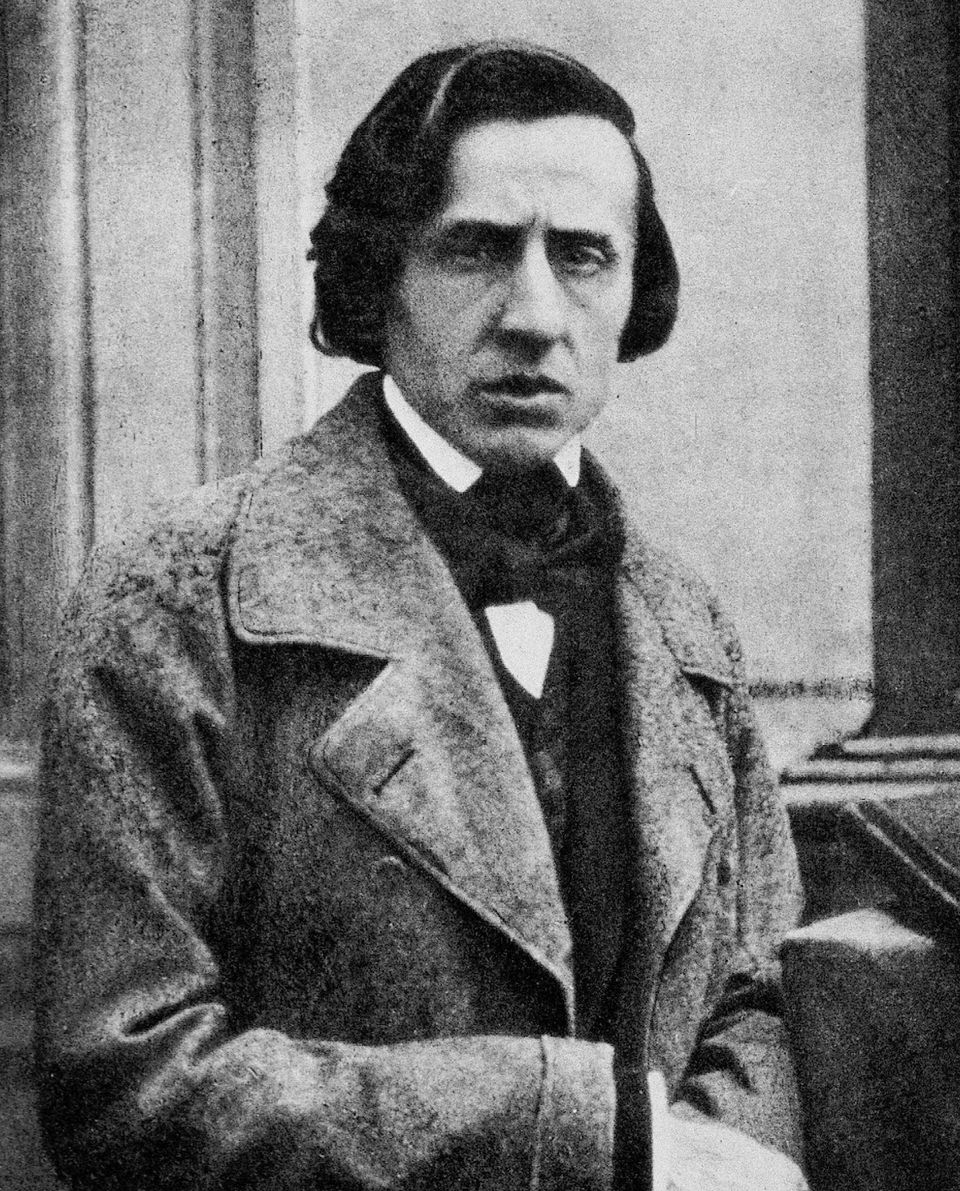
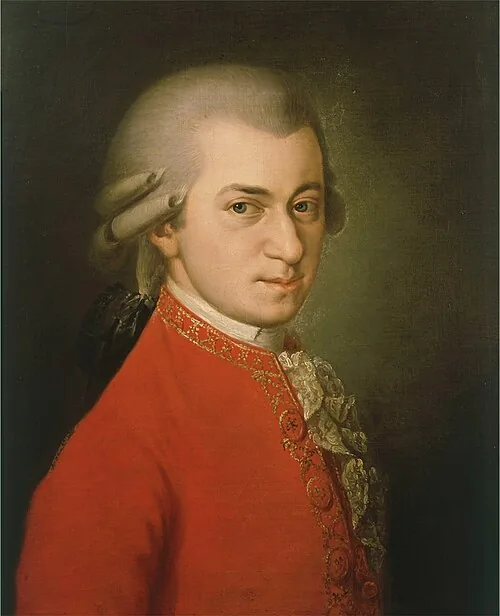
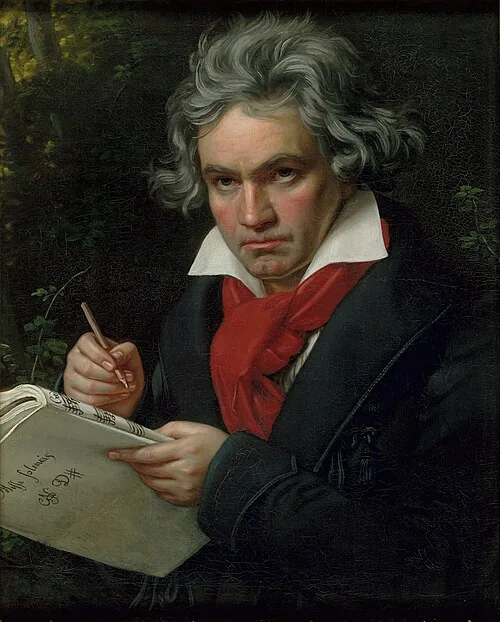
Daguerreotype by Louis-Auguste Bisson (1849), public domain. Background removed for the portrait above. · Portrait by Barbara Krafft (1819), public domain. Background removed for the portrait above. · Portrait by Joseph Karl Stieler (1820), public domain.


An estimate is an inference.
Yours can be measured.
Thirty questions, scored against general-population benchmarks. Your score, your percentile, your ability breakdown and a printable IIF certificate.
Find your IQ score now! →