



What was Ludwig van Beethoven’s IQ?
The same Cox number as Mozart, from the same 1926 table.
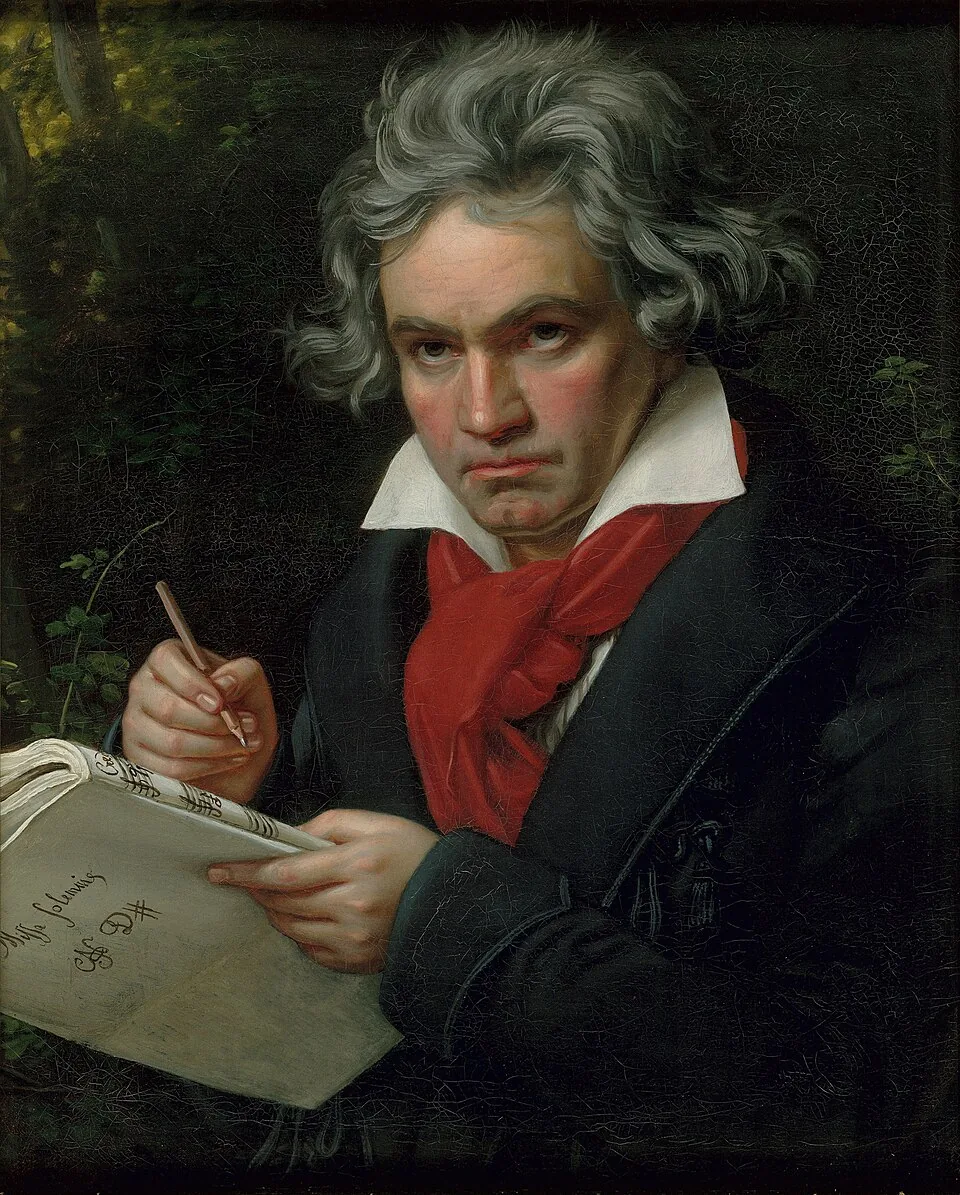
Beethoven’s 165 is one of the few figures on this site with a real document behind it — Catharine Cox’s 1926 study. That document is also the reason to treat the number carefully: it is an estimate of a childhood nobody recorded well.
Ludwig van Beethoven’s estimated IQ
- Cox (1926) assigns Beethoven a corrected estimate of 165 in the AII column of Table 12A — the same figure the study gives Mozart.
- Published his first compositions as a boy in Bonn and was appointed assistant court organist at around fourteen, a salaried professional post.
- Studied with Haydn in Vienna from 1792, and worked for a decade as one of the city’s leading keyboard improvisers before deafness ended his performing career.
- Composed the Ninth Symphony while functionally deaf; it was premiered in Vienna on 7 May 1824.
The Cox estimate is not a measurement. It is a rating assigned by readers of biographical material, and its own authors flagged that figures for subjects with thin childhood records are systematically depressed. Beethoven’s early record is thinner than Mozart’s, which is one reason to read 165 as a ceiling rather than a centre.
- Baptised
- 17 December 1770, Bonn
- Died
- 26 March 1827, Vienna
- Field
- Composition, piano
- Cox 1926 estimate
- 165 (corrected, AII)
- Known for
- Nine symphonies, the late string quartets, 32 piano sonatas
What an IQ of 150–165 actually means
Set the claim aside for a moment. If someone genuinely scored in this range, here is what that would represent.
Average is 100 by construction, and about two-thirds of people fall between 85 and 115. Take the test to place your own score on this scale.
| Score range | Classification | Share of people | What it indicates |
|---|---|---|---|
| 85 – 114 | Average | ~68% | The range most people fall into. |
| 115 – 129 | Above average | ~13.6% | Roughly one person in seven. |
| 130 – 144 | Gifted | ~2% | The threshold most high-IQ societies use. |
| Above 144 | Highly gifted | ~0.1% | Figures above this range are extrapolated from the curve rather than measured. |
Percentages are approximate and describe a normal distribution. The same number means different things on tests with different standard deviations.
Thirty questions gives you a measured position on this exact scale — your score, your percentile and the ability breakdown behind it.
Find out in 30 minutes →Who Ludwig van Beethoven was
Ludwig van Beethoven was baptised in Bonn on 17 December 1770. His father, a court singer, taught him and pushed him hard toward a prodigy career; he was appointed assistant court organist as a teenager and had work in print before he left for Vienna.
He settled in Vienna in 1792, studying briefly with Haydn, and made his early reputation as a pianist and improviser rather than as a composer. His hearing began to fail around 1798, when he was in his late twenties. The Heiligenstadt Testament of 1802 records what that meant to him.
He kept composing for twenty-five more years, through and past total deafness — the late quartets, the Missa solemnis he holds in the Stieler portrait above, and the Ninth Symphony, premiered in 1824 when he could not hear it. He died in Vienna in 1827.
 By Elora Mercer, Celebrity Research WriterFigures checked by Leon Falkner, Data & Research Analyst
Reviewed by Aarav Vardhan, Editor-in-Chief · Last reviewed August 2026

Ludwig van Beethoven: the documented record
The estimate above rests on this record. Every entry here is a matter of public fact, which is more than can be said for the number itself.
- 1770Baptised in Bonn on 17 December.
- 1783First published compositions appear.
- 1792Moves to Vienna; studies briefly with Haydn.
- 1798Earliest signs of hearing loss.
- 1802Writes the Heiligenstadt Testament.
- 1808Fifth and Sixth Symphonies premiered in one concert.
- 1818Begins using conversation books as deafness becomes total.
- 1824Ninth Symphony premiered in Vienna on 7 May.
- 1827Dies in Vienna.
- 1926Cox assigns a corrected estimate of 165.
Where the 165 figure came from
Following a claim back to its first appearance is the part almost nobody does — and it is what most people are actually asking.
This is the rare page where the audit ends well. The number is traceable, the study is named, and the method is written down. Cox’s The Early Mental Traits of Three Hundred Geniuses (1926) is the second volume of Terman’s Genetic Studies of Genius, and the figures reproduced across the internet come from column 25 of its Table 12A.
The method deserves stating plainly, because knowing it changes how much weight the number can carry. Cox’s raters read biographies and inferred what a child must have been capable of. A subject with a well-documented childhood — letters, school records, prodigy anecdotes — scores higher than an equally able subject whose early life went unrecorded. Cox knew this and corrected for it. The correction is an adjustment, not a measurement.
Beethoven and Mozart landing on the same 165 is therefore less a finding about the two men than a fact about two similar childhood dossiers. Both were performing publicly as children under a musician father; both left early evidence a rater could work from. The identical figure should be read as the study being consistent, not as a verdict that the two were equally able. Compare Voltaire at 190 and Goethe at 210 from the same table.
How we read a number →The origin of the 165. Volume II of Terman’s Genetic Studies of Genius; figures taken from column 25, “Corrected IQ estimate” (AII), of Table 12A, based on evidence to age twenty-six.
A letter to his brothers, never sent, describing his deafness. A first-person document of the period when he understood the hearing loss was permanent.
Visitors wrote their side of conversations down for him once he could no longer hear. Roughly 139 survive — an unusually direct record of an adult subject’s daily exchanges.
Beethoven died in 1827. Intelligence testing began with Binet in 1905. No test of any kind exists or could exist.
Several sites present a downward-adjusted Beethoven figure near 135–150. These are recalculations of Cox, not independent evidence, and should not be read as a second source.
The sources behind our estimate
The figures that circulate for Ludwig van Beethoven, what we were able to confirm, and where the two diverge.
165 is quoted almost universally, and almost always without saying where it comes from — which is a pity, because unlike most figures on this site, it has an actual source.
The 165 is genuine Cox data, and it is still not an IQ score. Cox’s team read biographies and assigned ratings on the Stanford–Binet scale using evidence up to age twenty-six, then corrected for regression to the mean. Beethoven sat no test; he died in 1827, eighty years before one existed.
The lower figures come from Cox’s uncorrected column and from later commentators applying a Flynn adjustment. Same study, different arithmetic — which is a better class of disagreement than most pages here document.
Want a number that does hold up? Every figure on this page is somebody’s claim. Take the 30-question test and get a percentile you can check rather than a figure you have to trust.
Ludwig van Beethoven — frequently asked
What was Beethoven’s IQ?
No test exists — he died in 1827, before intelligence testing was invented. The 165 that circulates is a historiometric estimate from Catharine Cox’s 1926 study, not a measured score. Our range is 150–165.
Where does Beethoven’s 165 IQ come from?
Column 25 of Table 12A in Cox’s The Early Mental Traits of Three Hundred Geniuses (1926). It is a corrected rating assigned by researchers reading biographical evidence up to age twenty-six.
Was Beethoven smarter than Mozart?
Cox gives both men 165, which reflects two similarly well-documented musical childhoods rather than a finding that they were equally able. The study cannot separate them, and neither can we.
Did Beethoven compose while deaf?
Yes. His hearing failed from about 1798 and was effectively gone by 1818. The Ninth Symphony, the late quartets and the Missa solemnis all date from after that.
Is the Cox IQ estimate reliable?
It is a real study with a stated method, which puts it far above the unsourced figures elsewhere on this site. But it rates surviving biographical evidence, so subjects with thin childhood records score lower regardless of ability.
Who scored highest in the Cox study?
Among the figures profiled here, Goethe at 210 and Voltaire at 190 sit above Beethoven and Mozart, both at 165. The ranking tracks documentary survival as much as ability.
How does my IQ compare with Ludwig van Beethoven?
You can find out in about fifteen minutes. The IQ Metrics assessment is 30 questions, scored on the same 100-mean scale used throughout this page, so your result and the estimate above are at least expressed in the same units — one measured, one inferred. Once you have a number, the leaderboard shows where it would sit, and how we score and norm it explains the benchmarking.
Where does this estimate come from?
From the documented record rather than a test — the method is named above and set out in full under how we read a number. Compare it against the other musicians profiles, starting with Brian May.
- Take the 30-question IQ test — get a measured score and percentile of your own
- Average IQ by country — how the scale behaves across populations
- How IQ Metrics scores its assessment — the method behind our own number
- More on how IQ testing works — reliability, error and what a score can and cannot say
- More musicians profiles — same field, same method
More musicians
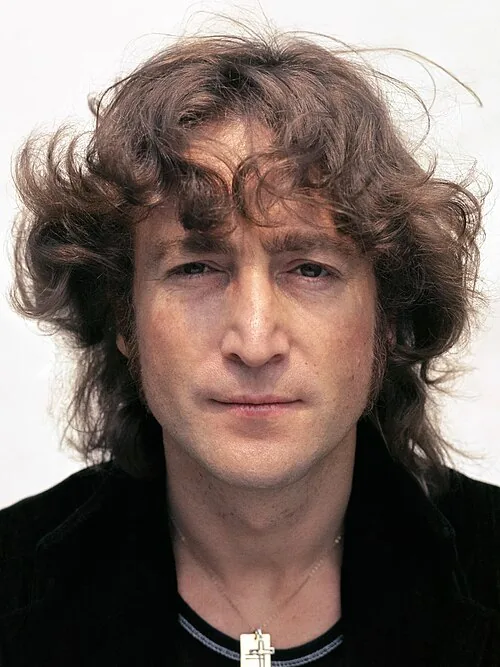


1974 Apple Records / Capitol Records press photograph by Bob Gruen, public domain (published without a copyright notice). Background removed for the portrait above. · Photograph by Matthew Rolston (1983), distributed by Epic Records, public domain. Background removed for the portrait above. · Photograph by Carlos M. Vazquez II, CC BY 2.0. Background removed for the portrait above.
_(cropped).jpg)
_(contrast).jpg)
.jpg)
An estimate is an inference.
Yours can be measured.
Thirty questions, scored against general-population benchmarks. Your score, your percentile, your ability breakdown and a printable IIF certificate.
Find your IQ score now! →