



What was Johann Sebastian Bach’s IQ?
Bach is in Catharine Cox’s 1926 study, and her printed ratings for him are 125 and 140, not 165.

Johann Sebastian Bach was never tested, but unlike most composers he has a printed rating in Catharine Cox’s 1926 study: 125 for his first 17 years and 140 through age 26. The 165 quoted on music sites is her corrected figure for the second period. Our Bach IQ estimate is 140–160, from a documented musical record.
Johann Sebastian Bach’s estimated IQ
- Cox’s obtained ratings of 125 (to age 17) and 140 (to age 26), each with a data reliability of only .43 (Table 26, p. 105; case study, pp. 309–310).
- Her corrected estimates of 140 and 165 in the fold-out Table 12A, where Bach is 269th in Cattell’s eminence order (read on the archive.org page image).
- A court musician at Weimar at 18, organist at Arnstadt soon after and at Mühlhausen at 22, with works “of unmistakable genius” before 20, in Cox’s account of his early record.
- Thomaskantor in Leipzig from 1723 until his death in 1750, the last and longest of his posts (Wikipedia).
Cox’s raters disagreed about Bach, and she wrote that the disagreement came from the problem of weighting musical achievement, because the link between musical achievement and intelligence is unknown. Her data for his childhood are thin (reliability .43), so her low obtained figures reflect missing records as much as ability. Our range reads the later record and sits below the 165 that circulates.
- Born
- March 21, 1685 (Old Style), Eisenach
- Died
- July 28, 1750, Leipzig
- Education
- Town academy to age 15; St. Michael’s school, Lüneburg, from about 15 (Cox)
- Main post
- Thomaskantor, Leipzig, 1723–1750
- Cox obtained ratings
- 125 (to age 17) and 140 (to age 26), reliability .43 (Table 26, p. 105)
- Cox corrected estimates
- 140 and 165 (fold-out Table 12A); 269th in Cattell’s eminence order
- Cox case study
- Pages 309–310; one of 11 composers among 301 subjects
- Circulating figure
- 165, with no source on the Classic FM page that prints it
What an IQ of 140–160 actually means
Set the claim aside for a moment. If someone genuinely scored in this range, here is what that would represent.
Average is 100 by construction, and about two-thirds of people fall between 85 and 115. Take the test to place your own score on this scale.
| Score range | Classification | Share of people | What it indicates |
|---|---|---|---|
| 85 – 114 | Average | ~68% | The range most people fall into. |
| 115 – 129 | Above average | ~13.6% | Roughly one person in seven. |
| 130 – 144 | Gifted | ~2% | The threshold most high-IQ societies use. |
| Above 144 | Highly gifted | ~0.1% | Figures above this range are extrapolated from the curve rather than measured. |
Percentages are approximate and describe a normal distribution. The same number means different things on tests with different standard deviations.
Thirty questions gives you a measured position on this exact scale — your score, your percentile and the ability breakdown behind it.
Find out in 30 minutes →Who Johann Sebastian Bach was
Who was Johann Sebastian Bach? He was born on March 21, 1685, in Eisenach, in a family in which musicians had served as organists, cantors and town musicians for generations. He was orphaned by the age of 10 and lived for five years with his eldest brother, Johann Christoph, who taught him (Wikipedia). Cox, citing Spitta and Forkel, records that he attended the orthodox town academy from 10 to 15 and the Lüneburg Academy of St. Michael from 16 to 18.
What did he do as a young man? Cox’s account has him a court musician in Weimar at 18, organist at Arnstadt soon after with an unusually large salary, organist at Mühlhausen at 22 and court organist at Weimar at 23. A familiar anecdote says that at 10 he copied a forbidden manuscript by moonlight over more than six months; Cox reports it only as tradition (“is said to have”), and we treat it the same way.
What is he remembered for? From 1723 until his death on July 28, 1750, he was Thomaskantor in Leipzig, responsible for the city’s church music, after posts at Arnstadt, Mühlhausen, Weimar and Köthen. His works include the Mass in B minor, the St. Matthew Passion, the Goldberg Variations and The Well-Tempered Clavier (Wikipedia). See our musicians category for other composers whose numbers we have checked.
 By Elora Mercer, Celebrity Research WriterFigures checked by Leon Falkner, Data & Research Analyst
Reviewed by Aarav Vardhan, Editor-in-Chief · Last reviewed November 2026

Johann Sebastian Bach: the documented record
The estimate above rests on this record. Every entry here is a matter of public fact, which is more than can be said for the number itself.
- 1685Born on March 21 (Old Style) in Eisenach.
- c. 1695Orphaned by the age of 10 and taken in by his eldest brother, Johann Christoph.
- 1700Enters St. Michael’s school in Lüneburg at about 15 (Cox).
- 1703Returns to Thuringia, working as a musician in Arnstadt and Mühlhausen.
- 1708Returns to Weimar, where he stays until 1717.
- 1717Moves to Köthen.
- 1723Begins as Thomaskantor in Leipzig.
- 1750Dies in Leipzig on July 28.
- 1926Cox prints his obtained ratings of 125 and 140, corrected to 140 and 165.
- 2018Classic FM prints 165 as the figure “widely accepted” for his IQ.
Where the 165 figure came from
Following a claim back to its first appearance is the part almost nobody does — and it is what most people are actually asking.
What was Bach’s IQ? He has no test score, since the first intelligence scale appeared in 1905, 155 years after his death. What he has is a Cox rating.
In The Early Mental Traits of Three Hundred Geniuses (1926), Catharine Cox gives him 125 for his first 17 years and 140 for the record from 17 to 26, with a data reliability of .43 and a margin of ±8 (Table 26, p. 105). Her case study of Bach runs pp. 309–310, and she places him among the cases rated 120 to 130 on the first estimate.
Where does 165 come from? Cox’s fold-out Table 12A, facing page 60, lists corrected estimates beside the obtained ones: 140 for Bach’s first period and 165 for the second. The correction compensates for how thin the record is. Classic FM’s 2018 article quotes 165 without naming Cox, so the figure travels without its source. For how Cox’s method works, see our Beethoven and Mozart profiles.
Is Bach one of Cox’s 301 geniuses? Yes. He is one of 11 composers in her sample, with Palestrina, Gluck, Haydn, Rossini, Beethoven, Wagner, Weber, Handel, Mendelssohn and Mozart. Frédéric Chopin is not, which is why his page has no Cox number. Cox wrote that “125 appears a safe rating for the Bach of whom we have record,” while noting he showed intensity of interest, ambition, independence and perseverance (p. 106).
How does Bach compare with Mozart and Beethoven? Dean Keith Simonton, reading Cox’s age 0 to 17 scores corrected for reliability, quotes 150–155 for Mozart and 135–140 for Beethoven (British Psychological Society, 2009); Bach’s corrected figure on that same basis is 140. On this site Mozart and Beethoven are 150–165 and Bach 140–160. Whether music lifts IQ is another question; see the Mozart effect study and our music lessons and IQ page.
How we read a number →Bach case study pp. 309–310 (AI IQ 125, AII IQ 140, reliability .43); Table 26, p. 105 (AI 125 ±8, AII 140 ±8); p. 106 (the rating of 125 and the rater disagreement over musical achievement). The corrected 140 and 165 and the eminence rank 269 are read from the fold-out Table 12A (page 1) on a second scan, geneticstudiesof0002cath_c2h2.
Reads Cox’s 11 composers: Mozart 150–155, Gluck 110–115, Beethoven 135–140, using Cox’s age 0 to 17 score corrected for data reliability; Bach appears there as a member of a famous family of musicians. It does not print a figure for Bach.
Born March 21, 1685 (O.S.), Eisenach; orphaned at 10 and raised by his eldest brother; Lüneburg; Arnstadt and Mühlhausen from 1703; Weimar; Köthen 1717–1723; Leipzig 1723–1750; died July 28, 1750; the list of works.
Prints 165 as the figure “widely accepted amongst studies” and places it in the “very superior” band. It names no study, test or date, and does not mention Cox.
Confirms Q1339 is the German composer (1685–1750), not a namesake.
Portrait by Elias Gottlob Haussmann, second version, 1748, holding the canon BWV 1076; public domain (PD-Art, PD-old-100-1923).
Ranges used for comparison: Mozart 150–165, Beethoven 150–165, Chopin 140–155 (no Cox number).
Bach died in 1750, 155 years before the first intelligence scale. No score, school mark or contemporary measurement exists; the only numbers are Cox’s retrospective ratings and republications of them.
The sources behind our estimate
The figures that circulate for Johann Sebastian Bach, what we were able to confirm, and where the two diverge.
Bach’s IQ is quoted as 165 and said to be “widely accepted amongst studies.” Classic FM’s article “What was Bach’s IQ and was he really a genius?” (November 8, 2018) prints 165 as the number “music scholars and scientists” landed on, with no study named.
165 matches the corrected AII estimate in Cox’s Table 12A, the fold-out that lists a corrected rating beside each obtained one. The ratings printed in her case study are 125 and 140. The Classic FM article cites neither Cox nor a table, so the 165 cannot be traced from its page alone.
125 and 140 are the ratings Cox printed for his two periods, and 165 is the correction of the second. Our range of 140–160 sits between the printed figure and the circulating one.
Want a number that does hold up? Every figure on this page is somebody’s claim. Take the 30-question test and get a percentile you can check rather than a figure you have to trust.
Johann Sebastian Bach — frequently asked
What was Bach’s IQ?
Johann Sebastian Bach was never tested. Catharine Cox’s 1926 study prints ratings of 125 and 140 for him, corrected to 140 and 165 in her fold-out table. Our own Bach IQ estimate is 140–160, and the 165 quoted on music sites is the top corrected figure, not a score.
Is Bach in Catharine Cox’s study?
Yes. Bach is one of 11 composers among her 301 case studies (pp. 309–310). She rated his first 17 years at 125 and his years 17 to 26 at 140, with low data reliability (.43), and she called 125 a safe rating for the Bach of whom there is a record.
Was Bach a genius?
The record of his work supports it: Thomaskantor in Leipzig from 1723, the Mass in B minor and the St. Matthew Passion. Cox’s raters disagreed on how to weigh musical achievement, so her numbers say less about Bach than the music does.
Bach vs Mozart vs Beethoven: whose IQ number is sourced?
All three have Cox ratings, so all three are retrospective estimates. Simonton quotes 150–155 for Mozart and 135–140 for Beethoven on Cox’s age 0 to 17 corrected scale; Bach’s corrected figure on that basis is 140. On this site Mozart and Beethoven are 150–165, Bach 140–160.
Where does the Bach IQ of 165 come from?
It matches the corrected AII estimate in Cox’s Table 12A. Classic FM’s 2018 article gives 165 as widely accepted without naming a study. Her printed ratings for Bach are 125 and 140, so 165 is the highest of the four numbers.
Does listening to Bach raise IQ?
No study shows that. The 1993 “Mozart effect” experiment tested 36 college students on one spatial task for about 10 to 15 minutes and did not measure IQ. A later trial found a small IQ gain from a year of music lessons, which is different from listening.
Why is Bach’s Cox rating lower than Mozart’s?
Her data for Bach’s childhood are thin (reliability .43), and a rating built on a sparse record comes out low. Mozart’s father kept detailed records of his son’s childhood. The gap reflects what was written down, not necessarily the gap in ability.
How does my IQ compare with Johann Sebastian Bach?
You can find out in about fifteen minutes. The IQ Metrics assessment is 30 questions, scored on the same 100-mean scale used throughout this page, so your result and the estimate above are at least expressed in the same units — one measured, one inferred. Once you have a number, the leaderboard shows where it would sit, and how we score and norm it explains the benchmarking.
Where does this estimate come from?
From the documented record rather than a test — the method is named above and set out in full under how we read a number. Compare it against the other musicians profiles, starting with Brian May.
- Take the 30-question IQ test — get a measured score and percentile of your own
- Average IQ by country — how the scale behaves across populations
- How IQ Metrics scores its assessment — the method behind our own number
- More on how IQ testing works — reliability, error and what a score can and cannot say
- More musicians profiles — same field, same method
More musicians
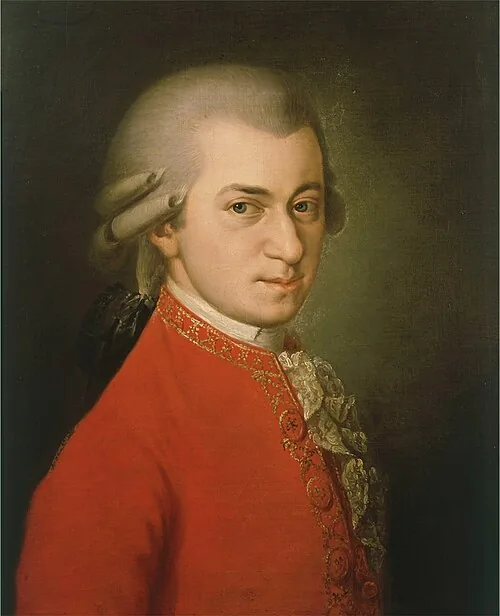
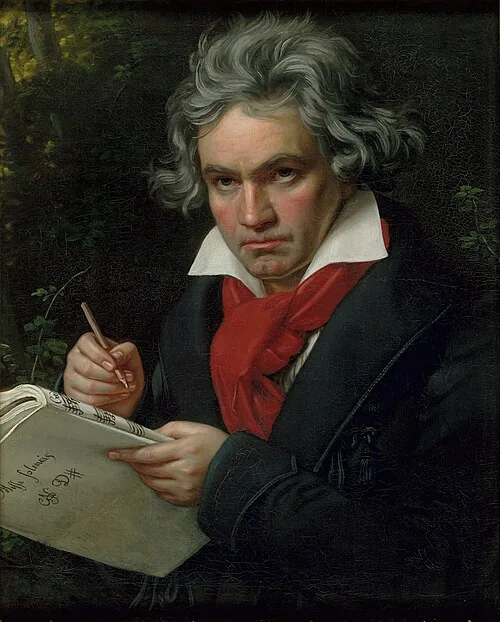
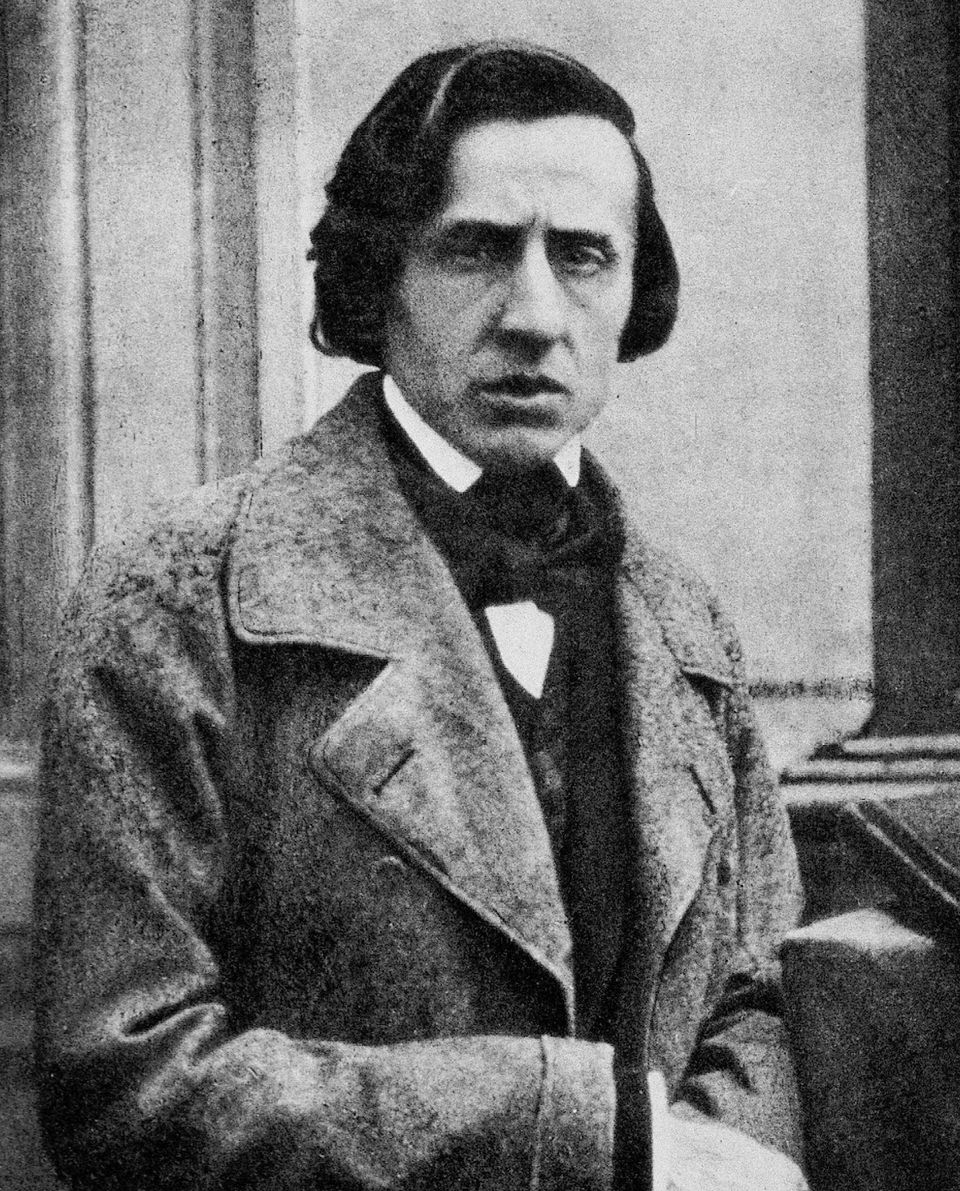
Portrait by Barbara Krafft (1819), public domain. Background removed for the portrait above. · Portrait by Joseph Karl Stieler (1820), public domain. · Daguerreotype by Louis-Auguste Bisson (1849), public domain. Background removed for the portrait above.


An estimate is an inference.
Yours can be measured.
Thirty questions, scored against general-population benchmarks. Your score, your percentile, your ability breakdown and a printable IIF certificate.
Find your IQ score now! →