



What is Kip Thorne’s IQ?
No IQ score has been published. His record is a shared 2017 Nobel Prize.
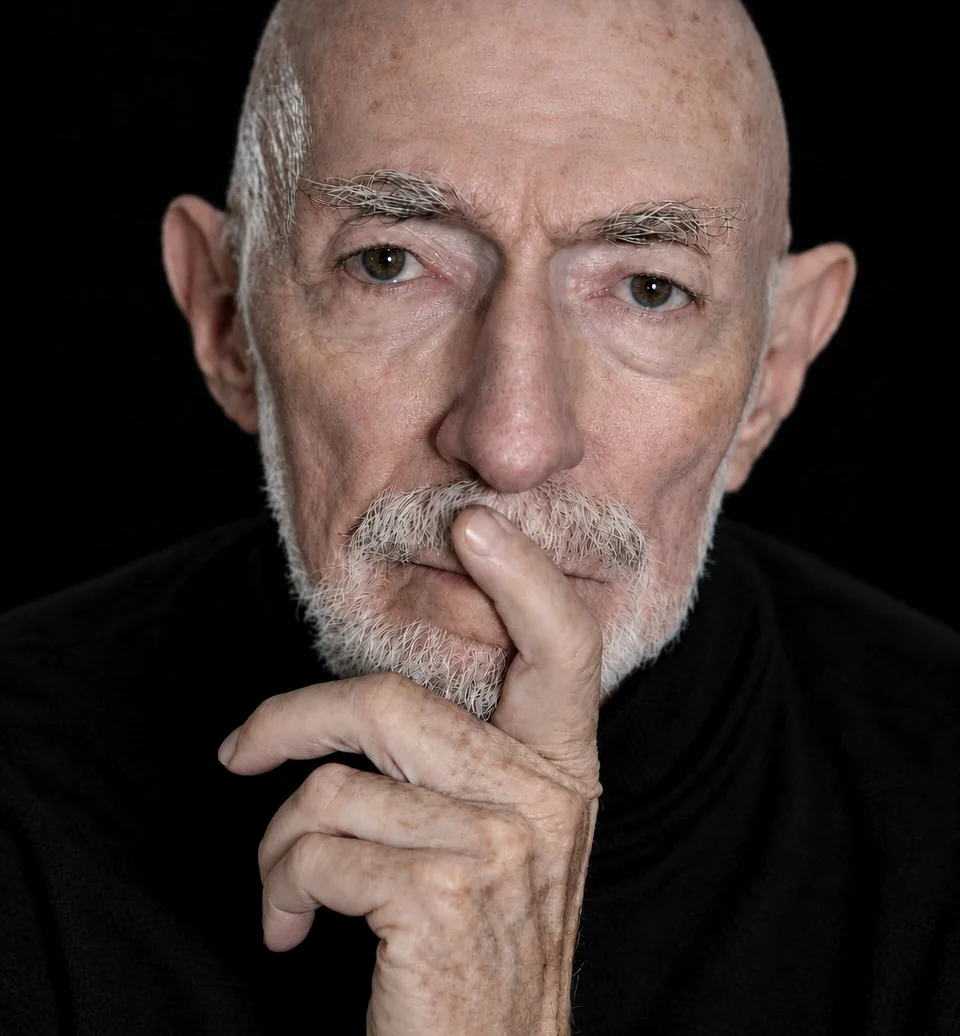
Kip Thorne’s IQ has never been published, and our Kip Thorne IQ estimate is 150–165. We placed him from his record. He shared the 2017 Nobel Prize in Physics with Rainer Weiss and Barry Barish “for decisive contributions to the LIGO detector and the observation of gravitational waves”. He was also a Caltech professor at age 30.
Kip Thorne’s estimated IQ
- Neither the Nobel Prize page nor Wikipedia gives an IQ or test score for him. The Nobel citation is for “decisive contributions to the LIGO detector and the observation of gravitational waves”.
- The Royal Swedish Academy of Sciences gave half of the 2017 Physics prize to Rainer Weiss. The other half went jointly to Barry Barish and Kip Thorne (press release, October 3, 2017).
- He took a BS in physics at Caltech in 1962 and a PhD at Princeton in 1965 under John Wheeler. He became a Caltech full professor at 30, “one of the youngest full professors in the history of Caltech” (Wikipedia).
- With John Wheeler and Charles Misner he wrote the 1973 textbook Gravitation. He co-founded the LIGO Project in 1984 and was the Richard P. Feynman Professor of Theoretical Physics from 1991 to 2009 (Wikipedia).
A Nobel Prize rewards a discovery that took a thousand-person collaboration decades, so it measures far more than one person’s test-taking ability. Prizes, posts and early promotion are not a score. The range is wide on purpose, and it is not a measurement of him.
- Born
- June 1, 1940, Logan, Utah
- Known for
- LIGO, gravitational waves, black holes and wormholes
- Education
- BS, Caltech, 1962; PhD, Princeton, 1965
- Top honor
- 2017 Nobel Prize in Physics, shared with Rainer Weiss and Barry Barish
- Post
- Richard P. Feynman Professor of Theoretical Physics, Caltech, 1991 to 2009
- Books
- Gravitation (1973, with Misner and Wheeler); Black Holes and Time Warps (1994)
- Film work
- Scientific consultant on Interstellar and Tenet (Wikipedia)
- Documented IQ test
- None found
What an IQ of 150–165 actually means
Set the claim aside for a moment. If someone genuinely scored in this range, here is what that would represent.
| Score range | Classification | Share of people | What it indicates |
|---|---|---|---|
| 85 – 114 | Average | ~68% | The range most people fall into. |
| 115 – 129 | Above average | ~13.6% | Roughly one person in seven. |
| 130 – 144 | Gifted | ~2% | The threshold most high-IQ societies use. |
| Above 144 | Highly gifted | ~0.1% | Figures above this range are extrapolated from the curve rather than measured. |
Percentages are approximate and describe a normal distribution. The same number means different things on tests with different standard deviations.
Thirty questions gives you a measured position on this exact scale — your score, your percentile and the ability breakdown behind it.
Find out in 30 minutes →Who Kip Thorne is
Who is Kip Thorne? Kip Stephen Thorne was born on June 1, 1940, in Logan, Utah. Wikipedia calls him an American astrophysicist and author. His father was a soil chemistry professor and his mother an economist. As a high-school senior he was recognized in the Westinghouse Science Talent Search. See all scientists on this site.
What is Kip Thorne’s education? He took a BS in physics at Caltech in 1962. He then took a master’s in 1964 and a PhD in 1965 at Princeton, where John Wheeler supervised his thesis. He returned to Caltech in 1967 and was a full professor by 1970. See average IQ by education level.
What is he known for? Wikipedia credits his research on relativistic stars, black holes and gravitational waves. It says the public knows him best for his theory that wormholes could in principle allow time travel. His 1994 book Black Holes and Time Warps won the Phi Beta Kappa Award in Science.
What has he done since? He has been Feynman Professor of Theoretical Physics, emeritus, at Caltech since 2009. He received the 2018 Lewis Thomas Prize for science writing. About 50 physicists earned Caltech PhDs under his personal mentorship (Wikipedia). To test your own reasoning, take the IQ test.
 By Elora Mercer, Celebrity Research WriterFigures checked by Leon Falkner, Data & Research Analyst
Reviewed by Aarav Vardhan, Editor-in-Chief · Last reviewed November 2026

Kip Thorne: the documented record
The estimate above rests on this record. Every entry here is a matter of public fact, which is more than can be said for the number itself.
- June 1, 1940Born in Logan, Utah.
- 1962Takes a BS in physics at Caltech.
- 1965Takes a PhD at Princeton under John Wheeler.
- 1970Becomes a Caltech professor of theoretical physics, aged 30.
- 1973Gravitation is published with Charles Misner and John Wheeler.
- 1984Co-founds the LIGO Project.
- 1991Becomes the Richard P. Feynman Professor of Theoretical Physics.
- September 14, 2015LIGO observes gravitational waves for the first time.
- October 3, 2017The 2017 Nobel Prize in Physics is announced.
- 2018Receives the Lewis Thomas Prize for science writing.
Why no figure circulates
Following a claim back to its first appearance is the part almost nobody does — and it is what most people are actually asking.
Has Kip Thorne’s IQ ever been published? No. The Nobel Prize page, Wikipedia and Wikidata give no IQ, and we found no test, date or examiner. Our range of 150–165 is placed from his record. For how such numbers spread online, see where celebrity IQ numbers come from.
What does the Nobel and the Caltech record show? The Nobel Prize in Physics 2017 went one half to Rainer Weiss and the other half jointly to Barry Barish and Kip Thorne. LIGO first observed gravitational waves from two colliding black holes on September 14, 2015. Thorne co-founded the LIGO Project in 1984, and Wikipedia says he became a Caltech full professor at 30.
What did he do on Interstellar and Tenet? Wikipedia says he and producer Lynda Obst developed the concept for Christopher Nolan’s film Interstellar. He wrote a tie-in book, The Science of Interstellar, and was a scientific consultant on Interstellar and Tenet. Advising a film on physics is a sign of standing in the field. It is not an IQ measure.
How does he compare with Hawking and Brian Cox here? On this site Stephen Hawking, his longtime friend and colleague, is 150–170. Brian Cox is 125–140 and Christopher Nolan is 130–145. Thorne’s 150–165 sits at the top with Hawking. All of these are estimates from records.
How rare would 150 to 165 be? On the usual scale (mean 100, SD 15), 150 is about the 100.0th percentile, so about 1 person in 2331 scores higher. 165 is about the 100.0th percentile, or about 1 in 136,176. Those are our arithmetic from the normal curve for our range, not results. See the IQ percentile calculator.
How we read a number →The citation “for decisive contributions to the LIGO detector and the observation of gravitational waves”, the split of the prize (one half Rainer Weiss, one half jointly Barry Barish and Kip Thorne) and the first observation on September 14, 2015. It gives no IQ.
Birth, family, school, degrees, the Caltech posts, research, books, honors and the Interstellar and Tenet consulting. It gives no IQ or test score.
No test, score, date or examiner turned up for Kip Thorne.
Confirms the identity (American physicist, born 1940) used for this page’s structured data.
Photograph of Kip Thorne taken in 2022 by Christopher Michel (Cmichel67, own work), shared under CC BY-SA 4.0. The file page shows no deletion notice.
How this section separates a published test result, a circulating figure and its own estimate.
The sources behind our estimate
The figures that circulate for Kip Thorne, what we were able to confirm, and where the two diverge.
People search “kip thorne iq”, “kip thorne iq score”, “is kip thorne smart”, “kip thorne nobel prize” and “kip thorne interstellar”. No IQ number for him circulates widely, so we looked for one and weighed the “genius physicist” reputation against the record.
We found no published IQ score for Kip Thorne. The Nobel Prize press release, Wikipedia and Wikidata give none. What is on record is a prize, a degree trail from Caltech to Princeton, a professorship at 30 and a long publication list. Those are achievements, not test results.
These are the ends of our range, not a score. On this site Stephen Hawking is 150–170, Christopher Nolan is 130–145 and Brian Cox is 125–140. None of them has a published score either.
Want a number that does hold up? Every figure on this page is somebody’s claim. Take the 30-question test and get a percentile you can check rather than a figure you have to trust.
Kip Thorne — frequently asked
What is Kip Thorne’s IQ?
No IQ score for Kip Thorne has been published. Our Kip Thorne IQ estimate is 150–165, placed from his record: a shared 2017 Nobel Prize in Physics, a Caltech professorship at 30 and decades on LIGO. It is an inference, not a test result. To place a score on the scale, use the IQ percentile calculator.
What is Kip Thorne’s IQ score?
There is no score on record. The Nobel Prize page and Wikipedia give none, and we found no test, date or examiner. Any figure you see online has no test behind it.
Is Kip Thorne smart?
His record is exceptional: Caltech and Princeton degrees, a full professorship at 30 and a Nobel Prize. That shows deep ability in physics, but it is not a score. Our 150–165 is an inference.
Did Kip Thorne win a Nobel Prize?
Yes. Yes. The 2017 Nobel Prize in Physics went one half to Rainer Weiss. The other half went jointly to Barry Barish and Kip Thorne, for decisive contributions to the LIGO detector and the observation of gravitational waves.
What did Kip Thorne do on Interstellar?
Wikipedia says he and producer Lynda Obst developed the concept for Christopher Nolan’s film, and that he was a scientific consultant on it and on Tenet. He also wrote the book The Science of Interstellar.
How does Kip Thorne compare with Stephen Hawking and Brian Cox?
On this site Stephen Hawking is 150–170 and Brian Cox is 125–140. Thorne’s 150–165 sits with Hawking. All are estimates from records, not test results.
How rare is an IQ of 150 to 165?
On the usual scale (mean 100, SD 15), 150 is about the 100.0th percentile, so about 1 person in 2331 scores higher. 165 is about the 100.0th percentile, or about 1 in 136,176. Those are our arithmetic from the normal curve for our range, not results. See the IQ percentile calculator.
How does my IQ compare with Kip Thorne?
You can find out in about fifteen minutes. The IQ Metrics assessment is 30 questions, scored on the same 100-mean scale used throughout this page, so your result and the estimate above are at least expressed in the same units — one measured, one inferred. Once you have a number, the leaderboard shows where it would sit, and how we score and norm it explains the benchmarking.
Where does this estimate come from?
From the documented record rather than a test — the method is named above and set out in full under how we read a number. Compare it against the other scientists profiles, starting with Albert Einstein.
- Take the 30-question IQ test — get a measured score and percentile of your own
- Average IQ by country — how the scale behaves across populations
- How IQ Metrics scores its assessment — the method behind our own number
- More on how IQ testing works — reliability, error and what a score can and cannot say
- More scientists profiles — same field, same method
More scientists
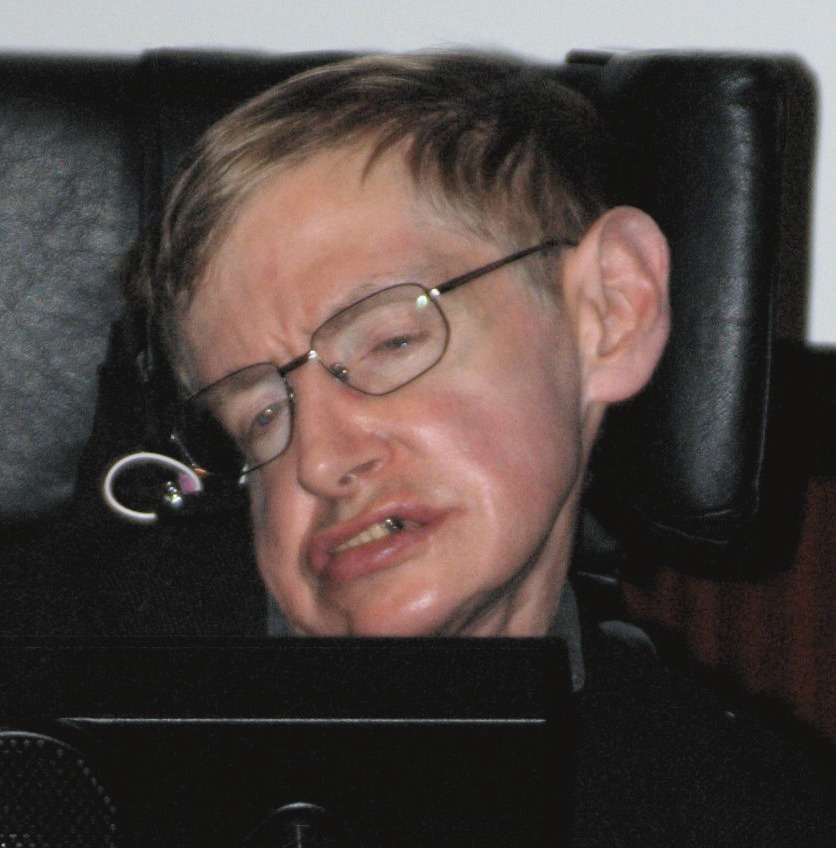


Photograph by ²°¹°°, Paris, 2006, public domain. Cropped from the original. · Photograph by Duncan.Hull, CC BY-SA 4.0. Background removed for the portrait above. · Photograph by Jay Murdock, CC BY-SA 4.0.


An estimate is an inference.
Yours can be measured.
Thirty questions, scored against general-population benchmarks. Your score, your percentile, your ability breakdown and a printable IIF certificate.
Find your IQ score now! →