



What was Adolf Hitler’s IQ?
The 141 on celebrity lists names no test, and the Nuremberg scores of 106 to 143 belong to captured defendants, not to him.
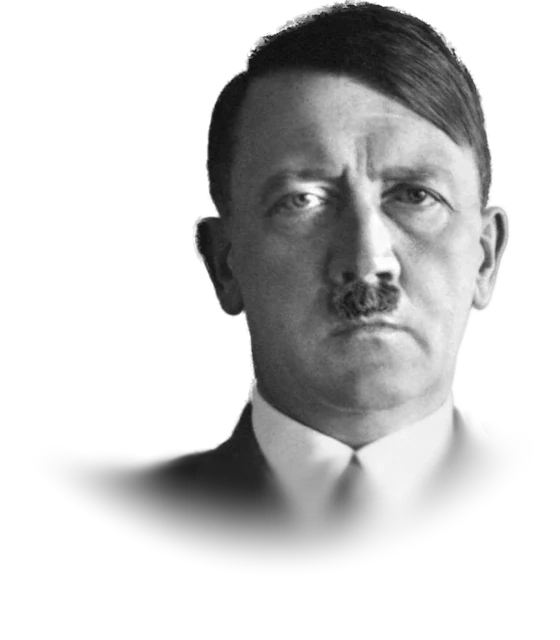
Adolf Hitler’s IQ is most often given as 141, but no Hitler IQ test result exists in any source we opened: he died on April 30, 1945, before the Nuremberg tests of captured defendants. His school, art-academy and military record supports only a wide estimated IQ of 110–135.
Adolf Hitler’s estimated IQ
- No IQ test of Hitler appears in any source we opened. He died in Berlin on April 30, 1945, before American staff tested defendants at Nuremberg, so the range cannot be anchored to a score.
- Schooling: the Realschule in Linz from September 1900, then the Realschule in Steyr from September 1904, and departure in 1905 without a final exam, according to the Deutsches Historisches Museum. He never finished secondary school.
- Not admitted to the Academy of Fine Arts Vienna in 1907 or 1908. In 1907 he passed the preliminary drawing task, but his sample drawing was judged unsatisfactory, a verdict on drawing rather than on general ability.
- Volunteered in 1914 for Bavarian Reserve Infantry Regiment No. 16 and received the Iron Cross, Second Class (December 1914) and First Class (August 1918): decorations for conduct, not evidence of test ability.
- Author of Mein Kampf (volume 1 in 1925, volume 2 in 1926), dictated at Landsberg and, according to English Wikipedia, transcribed and edited with help from others; appointed Chancellor on January 30, 1933.
Evidence is thin: there is no test, his schooling ended early and his career was political, so the range is an inference from documented education and career records only, and it is wide (25 points) on purpose. A range is a statement about uncertainty, not a verdict or a compliment.
- Born
- April 20, 1889, Braunau am Inn, Austria-Hungary
- Died
- April 30, 1945, Berlin
- School
- Realschule in Linz (from September 1900) and Steyr (from September 1904); left in 1905 without a final exam
- Art academy
- Academy of Fine Arts Vienna: not admitted, 1907 and 1908
- World War I
- Bavarian Reserve Infantry Regiment No. 16; Iron Cross, Second Class (December 1914), First Class (August 1918)
- Book
- Mein Kampf: volume 1 (1925), volume 2 (1926)
- Office
- Chancellor of Germany from January 30, 1933; Führer from 1934
- Measured IQ
- None on record
What an IQ of 110–135 actually means
Set the claim aside for a moment. If someone genuinely scored in this range, here is what that would represent.
Average is 100 by construction, and about two-thirds of people fall between 85 and 115. Take the test to place your own score on this scale.
| Score range | Classification | Share of people | What it indicates |
|---|---|---|---|
| 85 – 114 | Average | ~68% | The range most people fall into. |
| 115 – 129 | Above average | ~13.6% | Roughly one person in seven. |
| 130 – 144 | Gifted | ~2% | The threshold most high-IQ societies use. |
| Above 144 | Highly gifted | ~0.1% | Figures above this range are extrapolated from the curve rather than measured. |
Percentages are approximate and describe a normal distribution. The same number means different things on tests with different standard deviations.
Thirty questions gives you a measured position on this exact scale — your score, your percentile and the ability breakdown behind it.
Find out in 30 minutes →Who Adolf Hitler was
Adolf Hitler was born on April 20, 1889, in Braunau am Inn, then in Austria-Hungary. English Wikipedia says he was sent to the Realschule in Linz in September 1900, that his school performance deteriorated after his father’s death on January 3, 1903, and that he enrolled at the Realschule in Steyr in September 1904. The Deutsches Historisches Museum’s chronology records that in 1905 he left the Realschule without a final exam and returned to Linz, so he never finished secondary school.
He applied to the Academy of Fine Arts Vienna. The Deutsches Historisches Museum dates the applications to 1907 and says both failed; English Wikipedia gives the rejections as 1907 and 1908. History.com, citing Volker Ullrich’s biography, says he passed the initial exam in 1907 but his drawing was judged unsatisfactory, then applied again in the fall of 1908 and was rejected again. English Wikipedia adds that the institute saw more talent in architecture, a route that required the secondary schooling he had not completed.
In 1914 he volunteered for the Bavarian Reserve Infantry Regiment No. 16 and, according to the Deutsches Historisches Museum, received the Iron Cross, Second Class, in December 1914 and the First Class in August 1918. After the failed Munich coup he was held at Landsberg, where he dictated most of the first volume of Mein Kampf (volume 1, 1925; volume 2, 1926). English Wikipedia says Emil Maurice helped with early transcription and Rudolf Hess did most of the editing.
He was appointed Chancellor on January 30, 1933, took the title Führer in 1934, and ruled Germany until his death in Berlin on April 30, 1945. His regime carried out the Holocaust and started the Second World War; this page covers only the IQ figures attached to his name and his education and early career. In 1943 the OSS psychoanalyst Walter Langer prepared a psychological analysis of him from interviews and written sources. It made behavioral predictions, and the two pages we read about it state no IQ figure.
 By Elora Mercer, Celebrity Research WriterFigures checked by Leon Falkner, Data & Research Analyst
Reviewed by Aarav Vardhan, Editor-in-Chief · Last reviewed November 2026

Adolf Hitler: the documented record
The estimate above rests on this record. Every entry here is a matter of public fact, which is more than can be said for the number itself.
- 1889Born April 20 in Braunau am Inn.
- 1905Leaves the Realschule without a final exam.
- 1907Applies to the Academy of Fine Arts Vienna; his sample drawing is judged unsatisfactory and he is not admitted.
- 1908Applies again in the fall and is rejected again.
- 1914–18Volunteers for Bavarian Reserve Infantry Regiment No. 16; Iron Cross, Second Class (December 1914) and First Class (August 1918).
- 1925–26Mein Kampf appears in two volumes, the first dictated at Landsberg in 1924.
- 1933Appointed Chancellor on January 30.
- 1945Dies in Berlin on April 30.
- 1945–46The Nuremberg trial of the major defendants runs from November 1945 to October 1946; the defendants are IQ-tested by American prison staff (exact test dates not found).
- 2012The Christian Post article of June 16 gives 141, the earliest dated page we found that does.
Where the 141 figure came from
Following a claim back to its first appearance is the part almost nobody does — and it is what most people are actually asking.

Hitler’s IQ is usually quoted as 141, and the number comes from lists, not from a test. The Christian Post (Daniel Blake, June 16, 2012) says the Nazi leader had an IQ of 141 and names no test or source. A table on drdianehamilton.com, introduced as copied from aceviper.net, gives the same 141 under the heading IQ (SB), with no date or method. We could not date the original table, so 2012 is the earliest appearance we can document. This site traces celebrity IQ numbers the same way.
Is there a Hitler IQ test? No source we opened reports one, so no Hitler IQ score from a test exists. He died in Berlin on April 30, 1945. The well-known IQ testing came afterward: Gustave Gilbert, a US Army captain and the prison psychologist at Nuremberg, tested Nazi leaders on the Wechsler-Bellevue scale. Reported scores ran from 106 (Julius Streicher) to 143 (Hjalmar Schacht), with a mean of 128 for 21 men. Those are the Nuremberg defendants’ IQ scores; none is Hitler’s, and a group average is not an individual result.
One coincidence is worth knowing. The figure 141 is also the score Gilbert recorded for Arthur Seyss-Inquart, one of the 21 Nuremberg defendants; our report on the Nuremberg IQ scores checks that table in three editions of his book. We found nothing that links the list entry for Hitler to that score, so this is a coincidence and not a source. A figure with no test behind it can be moved from one name to another without anyone noticing.
The Adolf Hitler IQ estimate on this page, 110–135, sits below Napoleon (130–140) and Winston Churchill (140–160), and the evidence differs in kind. Napoleon’s circulating 142 and 145 trace back to a published 1926 study; Hitler’s 141 traces to no study we could open. Churchill, like Hitler, was never tested, and his 150 is also unsourced. Ted Kaczynski shows what a documented result looks like: a WAIS-R Full Scale of 136 on May 1, 1996. A score near 135 is the top of this range, not its center.
How we read a number →Chronology: left the Realschule in Steyr in 1905 without a final exam; applied twice unsuccessfully to the art academy (1907 entry); volunteered in 1914 for Bavarian Reserve Infantry Regiment No. 16; Iron Cross, Second Class, December 1914 and First Class, August 1918; first volume of Mein Kampf written at Landsberg in 1924; named Chancellor January 30, 1933; died April 30, 1945 in the Berlin bunker.
Born April 20, 1889, in Braunau am Inn; wrote Mein Kampf in prison; appointed Chancellor in January 1933; died in Berlin on April 30, 1945.
Dates the OSS report to 1943, by a psychoanalyst in the OSS Research and Analysis Branch, built from written sources and interviews with people who had met Hitler; it predicted a suicide before the surrender. No IQ or intelligence statement on the page.
The Drexel record describes the chapter on the Nuremberg psychological records and the dispute between Gilbert and Kelley over them; its visible abstract gives no scores. In the Cabinet interview Zillmer says the mean IQ for the 21 defendants was 128 and that Göring scored 138, and that the results were not made public until much later. Hitler is not mentioned as tested.
Gilbert, a US Army captain and prison psychologist, administered IQ tests to the Nazi leadership; Schacht highest at 143, Seyss-Inquart and Göring next, Streicher lowest at 106. Cited there to Heydecker, The Nuremberg Trial (1975), p. 83, and Gilbert, Nuremberg Diary (1995 edition), p. 34; neither work was opened.
Schooling in Linz and Steyr and the father’s death on January 3, 1903; rejections by the Academy of Fine Arts Vienna in 1907 and 1908 (History.com citing Ullrich: passed the initial exam in 1907, drawing unsatisfactory, rejected again in fall 1908); Mein Kampf volume 1 in 1925 and volume 2 in 1926; Langer report submitted late 1943 or early 1944, declassified 1968, published 1972. Wikidata Q352 is the human born 1889-04-20 and died 1945-04-30.
The Christian Post states that the Nazi leader had an IQ of 141, with no test, date, source or hedge. The Hamilton page prints a table row for Adolf Hitler, Nazi leader, Germany, 141 under the heading IQ (SB), undated and with no method. aceviper.net could not be opened and the Internet Archive was offline, so the table could not be dated.
No page opened reports a school, army, medical or government IQ test of Hitler. The Nuremberg tests covered defendants held after the war; Hitler had died on April 30, 1945. Searched: IQ lists, the Nuremberg testing literature, the Langer report pages and biographical chronologies.
The sources behind our estimate
The figures that circulate for Adolf Hitler, what we were able to confirm, and where the two diverge.
141 is the figure that circulates for Hitler’s IQ. The Christian Post article “IQ Scores of Famous People” (Daniel Blake, June 16, 2012) says the Nazi leader had an IQ of 141 and names no test or source. A table on drdianehamilton.com, introduced as copied from aceviper.net, lists Adolf Hitler, Nazi leader, Germany, 141 under the heading IQ (SB), with no date or method.
The 141 is a list entry, not a test result. Neither the Christian Post article nor the Hamilton table names a test, an examiner or a test date. The table’s IQ (SB) heading hints at a Stanford-Binet-type scale, but the page never says one was given. The table is undated and its source site, aceviper.net, could not be opened, so June 16, 2012 is the earliest dated page we found that states 141. The Nuremberg scores, 106 to 143 with a mean of 128, belong to 21 captured defendants, not to Hitler. This page’s Adolf Hitler IQ estimate of 110–135 is built from his education and career record instead.
The spread is 31 points, from 110 to 141. This site’s range rests on an education and career record and is kept wide on purpose; the 141 rests on nothing we could open and sits 6 points above the top of the range. As elsewhere on this site, the sourced record supports a lower figure than the one that circulates.
Want a number that does hold up? Every figure on this page is somebody’s claim. Take the 30-question test and get a percentile you can check rather than a figure you have to trust.
Adolf Hitler — frequently asked
What is Adolf Hitler’s IQ?
Adolf Hitler’s IQ is unknown: no IQ test result for him exists in any source we opened. The 141 that circulates on celebrity lists names no test, date or examiner. From his documented schooling, art-academy rejections and career, this site infers a wide estimated IQ of 110–135, an inference rather than a measurement.
Did Hitler take an IQ test?
No Hitler IQ test is recorded in any source we opened, and we found no school, army or government file reporting one. The Nuremberg IQ tests came after the war, when he was already dead, and covered captured defendants. Any Hitler IQ score is therefore an estimate or a list entry, never a measured result.
Where does the Hitler IQ of 141 come from?
It comes from lists that do not cite a test. The earliest dated page we found is a Christian Post article of June 16, 2012. An undated table on drdianehamilton.com, copied from aceviper.net, gives it under the heading IQ (SB). Neither names a test, a date or an examiner, so 141 is best treated as unsourced.
Was Hitler’s IQ tested at Nuremberg?
No. The Nuremberg tests covered 21 captured defendants, not Hitler, who had died on April 30, 1945. Reported scores ran from 106 (Julius Streicher) to 143 (Hjalmar Schacht), with a mean of 128 and Hermann Göring at 138. Those scores belong to the defendants and cannot be applied to Hitler.
Stalin vs Hitler IQ: who had the higher score?
Neither man has a published IQ test result that we found, so a Stalin vs Hitler IQ ranking has no test behind it. This site’s estimates are 110–135 for Hitler and 120–140 for Joseph Stalin; the ranges overlap and both are inferences from schooling and career records, so the gap is not a measurement. For Hitler, the most-cited figure, 141, names no test.
Why was Hitler rejected from art school?
He was not admitted to the Academy of Fine Arts Vienna in 1907 or 1908. In 1907 he passed the preliminary drawing task, but his sample drawing was judged unsatisfactory. That was a verdict on his drawing, not on his general intelligence, and it sets no limit on his IQ in either direction.
How does Adolf Hitler’s estimated IQ compare with Napoleon’s and Churchill’s?
This site’s range for Hitler, 110–135, sits below Napoleon’s 130–140 and Winston Churchill’s 140–160. The evidence also differs: Napoleon’s figure leads back to a published 1926 study, while Churchill, like Hitler, was never tested, and Hitler’s record shows no completed secondary school.
How does my IQ compare with Adolf Hitler?
You can find out in about fifteen minutes. The IQ Metrics assessment is 30 questions, scored on the same 100-mean scale used throughout this page, so your result and the estimate above are at least expressed in the same units — one measured, one inferred. Once you have a number, the leaderboard shows where it would sit, and how we score and norm it explains the benchmarking.
Where does this estimate come from?
From the documented record rather than a test — the method is named above and set out in full under how we read a number. Compare it against the other historical profiles, starting with Isaac Newton.
- Take the 30-question IQ test — get a measured score and percentile of your own
- Average IQ by country — how the scale behaves across populations
- How IQ Metrics scores its assessment — the method behind our own number
- More on how IQ testing works — reliability, error and what a score can and cannot say
- More historical profiles — same field, same method
More historical
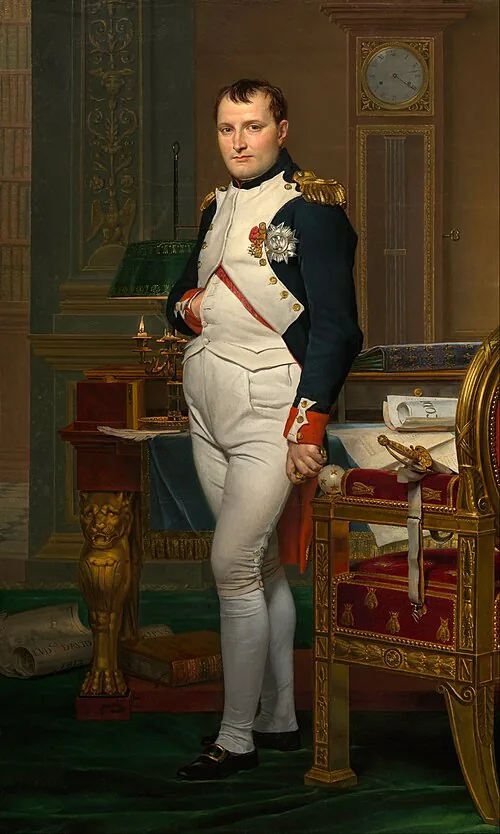
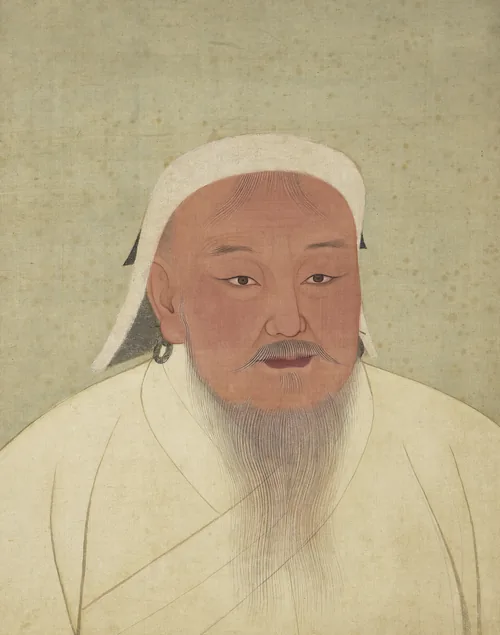
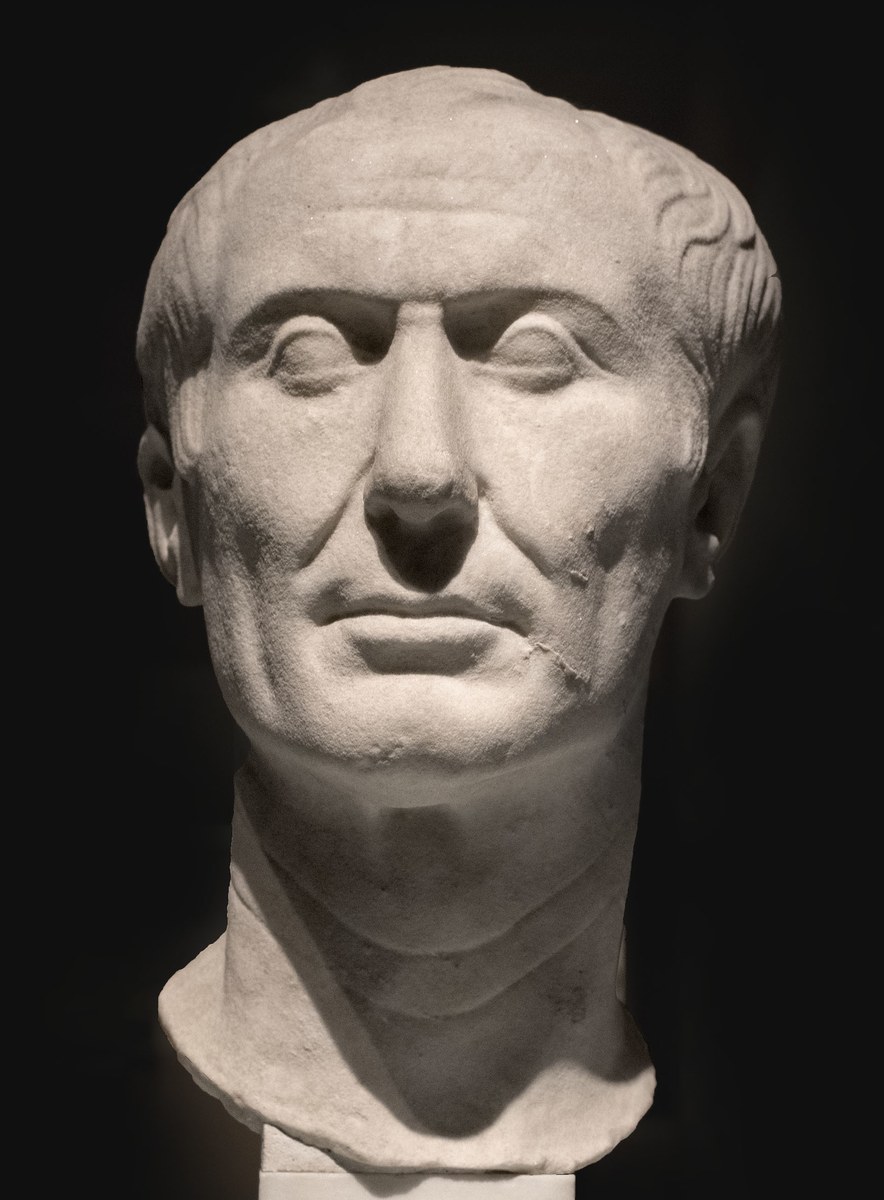
Portrait by Jacques-Louis David (1812), via Wikimedia Commons, public domain. · Yuan-dynasty court portrait of Taizu (Genghis Khan), artist unknown, 14th century, in the collection of the National Palace Museum, Taipei; the painting is in the public domain (digitized copy via Shuge). · Photograph by Ángel M. Felicísimo, public domain. Background removed for the portrait above.


An estimate is an inference.
Yours can be measured.
Thirty questions, scored against general-population benchmarks. Your score, your percentile, your ability breakdown and a printable IIF certificate.
Find your IQ score now! →