



What was Ted Kaczynski’s IQ?
Two numbers circulate for Ted Kaczynski’s IQ score, 167 and 136, and only one of them comes with a test date.

Ted Kaczynski’s IQ is most often given as 167, a school-test figure for which no record could be found; the one score with a test date behind it is a Full Scale 136 on the WAIS-R in May 1996. His documented record, Harvard at 16 and a University of Michigan mathematics Ph.D. in 1967, supports an estimated IQ of 135–150.
Ted Kaczynski’s estimated IQ
- A Full Scale IQ of 136 (Verbal 138, Performance 124) on the Wechsler Adult Intelligence Scale–Revised, administered on May 1, 1996 and reported in a federal document dated January 16, 1998: the only standardized score found for him.
- School testing in the fifth grade led to his skipping the sixth; he also skipped the eleventh, graduated from Evergreen Park Community High School at 15 and entered Harvard on a scholarship in 1958, at 16.
- A Harvard B.A. in mathematics in 1962, then a University of Michigan M.A. in 1964 and a Ph.D. in mathematics in 1967.
- A dissertation, Boundary Functions (1967), advised by Allen Shields, which the Michigan mathematics department lists as the 1967 winner of its Sumner B. Myers Prize for the best Ph.D. thesis.
- Five research papers in the Journal of Mathematics and Mechanics (1965), Michigan Mathematical Journal (1966), Transactions of the American Mathematical Society (two, 1969) and Proceedings of the American Mathematical Society (1969), and an assistant professorship at the University of California, Berkeley from late 1967.
Only one adult administration is on record, and its Verbal and Performance scores (138 and 124) differ by 14 points, so the Full Scale 136 averages two different profiles; no record, test name or date could be found for the 167. The range is an inference that weighs the measured 136 against a doctoral record pointing somewhat higher, not a measured IQ.
- Born
- May 22, 1942, Chicago, Illinois
- Died
- June 10, 2023, Durham, North Carolina
- School
- Evergreen Park, Illinois; skipped the sixth and eleventh grades; graduated at 15
- Harvard
- Entered 1958 at 16 on a scholarship; B.A. in mathematics, 1962
- Michigan
- M.A. 1964; Ph.D. in mathematics 1967, advised by Allen Shields
- Dissertation
- Boundary Functions (1967); Sumner B. Myers Prize, 1967
- Berkeley
- Assistant professor of mathematics, 1967–1969
- Measured IQ
- Full Scale 136 on the WAIS-R, May 1, 1996 (Verbal 138, Performance 124)
What an IQ of 135–150 actually means
Set the claim aside for a moment. If someone genuinely scored in this range, here is what that would represent.
Average is 100 by construction, and about two-thirds of people fall between 85 and 115. Take the test to place your own score on this scale.
| Score range | Classification | Share of people | What it indicates |
|---|---|---|---|
| 85 – 114 | Average | ~68% | The range most people fall into. |
| 115 – 129 | Above average | ~13.6% | Roughly one person in seven. |
| 130 – 144 | Gifted | ~2% | The threshold most high-IQ societies use. |
| Above 144 | Highly gifted | ~0.1% | Figures above this range are extrapolated from the curve rather than measured. |
Percentages are approximate and describe a normal distribution. The same number means different things on tests with different standard deviations.
Thirty questions gives you a measured position on this exact scale — your score, your percentile and the ability breakdown behind it.
Find out in 30 minutes →Who Ted Kaczynski was
Born in Chicago on May 22, 1942, Theodore John Kaczynski pleaded guilty on January 22, 1998 in the Unabomber case, accepting life imprisonment without the possibility of parole, and died on June 10, 2023, in Durham, North Carolina; this page covers only his documented academic record and the IQ figures attached to his name. He attended Evergreen Park Central school in Evergreen Park, Illinois, from the fifth through the eighth grade; testing in the fifth grade led to his skipping the sixth, and he skipped the eleventh as well, graduating from Evergreen Park Community High School at 15. He entered Harvard on a scholarship in 1958, at 16, and took a B.A. in mathematics there in 1962; English Wikipedia gives his grade point average as 3.12.
At the University of Michigan, where he enrolled in 1962, Kaczynski earned an M.A. in 1964 and a Ph.D. in mathematics in 1967. The Mathematics Genealogy Project lists the dissertation, Boundary Functions (1967), under the advisor Allen Lowell Shields, and the Michigan mathematics department’s own history page lists Theodore J. Kaczynski as the 1967 winner of the Sumner B. Myers Prize, which it describes as recognizing the Ph.D. thesis deemed the best contribution to its field; Shields called the dissertation “the best I have ever directed,” according to English Wikipedia. George Piranian, another Michigan mathematics professor, taught him function theory, according to English Wikipedia. Peter Rosenthal, a University of Toronto mathematician who was at Michigan in those years, quotes the fellow student Joel Shapiro as remembering him as having unusual mathematical ability, and a 2021 arXiv paper by Connor Paul Wilson, “On the Baire class of n-dimensional boundary functions,” announces an extension of a theorem of Kaczynski’s from the dissertation.
Wikisource’s author page lists five research papers from 1965 to 1969: “Boundary Functions for Functions Defined in a Disk” (Journal of Mathematics and Mechanics, 1965), “On a Boundary Property of Continuous Functions” (Michigan Mathematical Journal, 1966), “Boundary Functions for Bounded Harmonic Functions” and “Boundary Functions and Sets of Curvilinear Convergence for Continuous Functions” (both Transactions of the American Mathematical Society, 1969), and “The Set of Curvilinear Convergence of a Continuous Function Defined in the Interior of a Cube” (Proceedings of the American Mathematical Society, 1969), together with shorter notes and problems in the American Mathematical Monthly (1964–65) and Mathematics Magazine (1968, 1971). Project Euclid confirms the 1966 paper as volume 13, issue 3, pages 313–320.
In late 1967, at 25, he became an acting assistant professor of mathematics at the University of California, Berkeley; by September 1968 he was formally appointed to an assistant professorship, and he resigned on June 30, 1969, according to English Wikipedia, the only source found for those exact dates. Rosenthal’s essay independently places him as an assistant professor of mathematics at Berkeley after the Ph.D. His later writings, which this page does not cover, include Industrial Society and Its Future (1995).
 By Elora Mercer, Celebrity Research WriterFigures checked by Leon Falkner, Data & Research Analyst
Reviewed by Aarav Vardhan, Editor-in-Chief · Last reviewed August 2026

Ted Kaczynski: the documented record
The estimate above rests on this record. Every entry here is a matter of public fact, which is more than can be said for the number itself.
- 1942Born May 22 in Chicago.
- 1958Graduates from Evergreen Park Community High School at 15 and enters Harvard on a scholarship at 16.
- 1962Takes a B.A. in mathematics at Harvard; enrolls at the University of Michigan.
- 1964Earns an M.A. at Michigan; his note “Another Proof of Wedderburn’s Theorem” appears in the American Mathematical Monthly.
- 1965–66Publishes “Boundary Functions for Functions Defined in a Disk” (1965) and “On a Boundary Property of Continuous Functions” (1966).
- 1967Earns the Michigan Ph.D. in mathematics; his dissertation, Boundary Functions, wins the Sumner B. Myers Prize. Becomes an acting assistant professor at Berkeley, aged 25.
- 1969Publishes two papers in the Transactions and one in the Proceedings of the American Mathematical Society; resigns from Berkeley on June 30.
- 1996A WAIS-R is administered on May 1: Full Scale 136, Verbal 138, Performance 124.
- 1998A federal court document dated January 16 records the WAIS-R scores and says the school-era test records had not been made available for review.
- 2023Dies June 10 in Durham, North Carolina.
Where the 167 figure came from
Following a claim back to its first appearance is the part almost nobody does — and it is what most people are actually asking.
Ted Kaczynski’s IQ score is usually given as 167, and the number comes from a school test whose record is not in any source we found. English Wikipedia says that after testing scored his IQ at 167 he skipped the sixth grade, and cites the Chicago Tribune; French Wikipedia puts the test at age ten and cites a 2008 Tribune article. A 2026 chapter by Lucio Cadeddu in Springer’s Handbook of the Mathematics of the Arts and Sciences says a school counselor administered an intelligence test and that he scored 167. None of these pages names the test, dates it or shows the record. Listverse (October 4, 2020) repeats 167 with no test named, and EBSCO’s research starter says only that it has been reported that he scored 157 at age ten.
The most direct statement about the school testing is in a federal court document dated January 16, 1998, It says that testing in the fifth grade led to his skipping the sixth, that accounts describe the result as a high IQ, that he put his own figure at 160 to 170, and that the testing supposedly conducted then had not been made available for review. That is why this page treats 167 as a widely repeated figure rather than a documented score. If it came from a 1950s school test scored as a ratio IQ — no page says either way — it would not be directly comparable with a modern score (ratio versus deviation IQ), and a childhood score tends to move toward the average when a person is retested (regression to the mean).
The 136 is a different kind of number: a Ted Kaczynski IQ test result on a standardized adult scale. French Wikipedia states it as a WAIS-R result of 1996 and cites the January 1998 report; the report itself gives the WAIS-R results as Verbal 138, Performance 124 and Full Scale 136, from a single administration on May 1, 1996. It is the only standardized score found for him, and a Ted Kaczynski IQ of 136 falls in the territory of a score around 135. The 14-point gap between the Verbal and Performance scores is the kind of difference a single Full Scale number averages away (full-scale IQ versus index scores), and every score carries a margin of error (IQ score margin of error).
Was Ted Kaczynski a genius? The record supports “exceptionally able in mathematics” more firmly than it supports any number. Ted Kaczynski’s estimated IQ of 135–150 starts at the measured 136 and extends fourteen points above it, for a record (Harvard at 16, a prize-winning Michigan dissertation) that one 1996 administration may not capture fully. That puts him level with George Orwell (135–150), above Franz Kafka (130–145), another holder of a doctorate, and far below William James Sidis (170–200), the child prodigy profiled here. The pattern matches Christopher Langan’s page, where a test result also sits well under the number that circulates; this site traces celebrity IQ numbers the same way, and here the gap is 31 points (136 against 167).
How we read a number →Background section: testing in the fifth grade led to his skipping the sixth; “He claims that his IQ was in the 160 to 170 range”; the testing from that time had not been made available for review. Cognitive Assessment: WAIS-R Verbal 138, Performance 124, Full Scale 136, administered 05/01/96. Only these passages were read and used.
Describes the prize as recognizing the Ph.D. thesis deemed the best contribution to its field; the 1967 entry reads Theodore J. Kaczynski, advisor Allen Shields.
Ph.D., University of Michigan, 1967, “Boundary Functions”, advisor Allen Lowell Shields; the 1966 paper’s citation; ProQuest number 6717790 for the thesis; a 2021 preprint extending a theorem of Kaczynski cited to the dissertation.
A school counselor administered an intelligence test and he scored 167 (no test name, grade or record given); Harvard degree in mathematics 1962; Michigan M.A. 1964 and doctorate 1967; the Sumner B. Myers award.
IQ 167 and the skipped sixth grade (cited to the Chicago Tribune); skipped eleventh grade, graduation at 15, Harvard 1958 at 16, B.A. 1962 with a 3.12 GPA; Michigan M.A. 1964, Ph.D. 1967; Berkeley dates; Piranian taught function theory; birth and death dates; the guilty plea of January 22, 1998; Wikisource’s list of his twelve mathematical items, 1964–1971.
Gives 167 at age ten (footnote: Chicago Tribune, 2008) and the 1996 WAIS-R total of 136 (footnote: the January 16, 1998 report). Neither footnoted source was opened beyond the 1998 report.
Rosenthal: Michigan 1962–1967, thesis under Allen Shields, Berkeley assistant professorship, Joel Shapiro’s recollection of unusual mathematical ability. Rotary: M.A. 1964, Ph.D. 1967, prize (spelled “Meyers” there). EBSCO: “reported” score of 157 at ten; skipped grades; Harvard in 1958 at sixteen.
Listverse gives 167 and names no test.
No school record, test name or date for the childhood score was found in any page opened; the 1998 report says the testing had not been made available for review. A search for pages stating an IQ of 168 returned none.
The sources behind our estimate
The figures that circulate for Ted Kaczynski, what we were able to confirm, and where the two diverge.
167 is the figure that circulates for Ted Kaczynski’s IQ score: English Wikipedia says that after testing he scored 167 and skipped the sixth grade, Lucio Cadeddu’s 2026 Springer chapter says a school counselor gave the test, and Listverse (October 4, 2020) repeats 167 with no test named. EBSCO’s research starter says it was reported that he scored 157 at age ten. A figure of 168 is typed into search boxes, but no page we found states it. Separately, French Wikipedia gives 136 as a 1996 WAIS-R result.
The 136 comes from a dated test; the 167 comes only from repeats. A federal court document dated January 16, 1998 gives the WAIS-R results as Verbal 138, Performance 124 and Full Scale 136, from testing administered on May 1, 1996. For the school test, the same report says testing in the fifth grade led to his skipping the sixth, records the figure as 160 to 170 by his own account, and says the testing had not been made available for review. English Wikipedia cites a Chicago Tribune article for the 167 and French Wikipedia a 2008 Tribune piece; no page we opened names the school test or shows its record.
The spread is 32 points, from the low end of this site’s range to 167. The low end is a measured, dated adult score; the top end has no test name, date or document behind it, and 168 has no page at all. This site’s 135–150 starts at the measured score and leaves room above it for the doctoral record.
Want a number that does hold up? Every figure on this page is somebody’s claim. Take the 30-question test and get a percentile you can check rather than a figure you have to trust.
Ted Kaczynski — frequently asked
What is Ted Kaczynski’s IQ?
Ted Kaczynski’s IQ is most often quoted as 167, but no record of that school-test figure could be found; the one documented score is a Full Scale 136 on the WAIS-R, administered on May 1, 1996. From his Harvard degree and University of Michigan mathematics Ph.D. this site estimates 135–150, an inference rather than a measurement.
Did Ted Kaczynski take an IQ test?
Yes, and the two tests have very different paper trails. Testing in the fifth grade led to his skipping the sixth, but no source we opened publishes that result. A WAIS-R given on May 1, 1996 produced a Verbal score of 138, a Performance score of 124 and a Full Scale score of 136, as recorded in a federal court document dated January 16, 1998.
Is Ted Kaczynski’s IQ 168 or 167?
No page we found states 168. The figure that appears is 167, attributed to a school test taken before he skipped the sixth grade, with no test name, date or record in any page we opened; some pages give 157 or 160–170 instead. The only standardized score on record is 136.
Where does the Ted Kaczynski IQ of 136 come from?
It comes from a Wechsler Adult Intelligence Scale–Revised (WAIS-R) administered on May 1, 1996 and recorded in a federal court document dated January 16, 1998, which gives Verbal 138, Performance 124 and Full Scale 136. French Wikipedia cites that report for the 136. It is the only standardized score found for him.
Was Ted Kaczynski a genius?
By documented achievement he was an exceptionally able mathematician: Harvard at 16, a Michigan Ph.D. in 1967 whose dissertation won the department’s Sumner B. Myers Prize, and a Berkeley assistant professorship at 25. Whether that counts as genius depends on the definition; the one measured score, 136, is roughly the top 1 percent.
What degrees did Ted Kaczynski earn?
A B.A. in mathematics from Harvard in 1962, then, at the University of Michigan, an M.A. in 1964 and a Ph.D. in mathematics in 1967. His dissertation, Boundary Functions, was advised by Allen Shields and won the Sumner B. Myers Prize, the Michigan mathematics department’s award for its best Ph.D. thesis.
How does Ted Kaczynski’s estimated IQ compare with William James Sidis’s?
This site’s range for Kaczynski, 135–150, sits well below William James Sidis (170–200) and Terence Tao (170–190). Kaczynski’s rests on a measured adult score and a doctoral record, while Sidis’s is a historiometric reading of his achievements and Tao’s is an SAT-derived estimate.
How does my IQ compare with Ted Kaczynski?
You can find out in about fifteen minutes. The IQ Metrics assessment is 30 questions, scored on the same 100-mean scale used throughout this page, so your result and the estimate above are at least expressed in the same units — one measured, one inferred. Once you have a number, the leaderboard shows where it would sit, and how we score and norm it explains the benchmarking.
Where does this estimate come from?
From the documented record rather than a test — the method is named above and set out in full under how we read a number. Compare it against the other writers profiles, starting with Voltaire.
- Take the 30-question IQ test — get a measured score and percentile of your own
- Average IQ by country — how the scale behaves across populations
- How IQ Metrics scores its assessment — the method behind our own number
- More on how IQ testing works — reliability, error and what a score can and cannot say
- More writers profiles — same field, same method
More writers


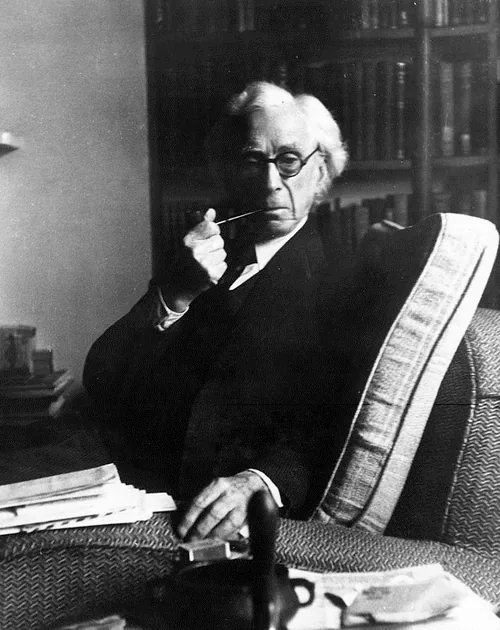
Photograph (1914), photographer unknown, via Wikimedia Commons, public domain. · Photograph by Gtl12345, CC BY-SA 4.0. Cropped and with background removed for the portrait above. · Photograph, 1954, via Wikimedia Commons, public domain.


An estimate is an inference.
Yours can be measured.
Thirty questions, scored against general-population benchmarks. Your score, your percentile, your ability breakdown and a printable IIF certificate.
Find your IQ score now! →