



What is Alex Karp’s IQ?
Alex Karp’s education is documented from a Haverford philosophy degree to a 2002 Frankfurt doctorate; an IQ score is the one thing missing.
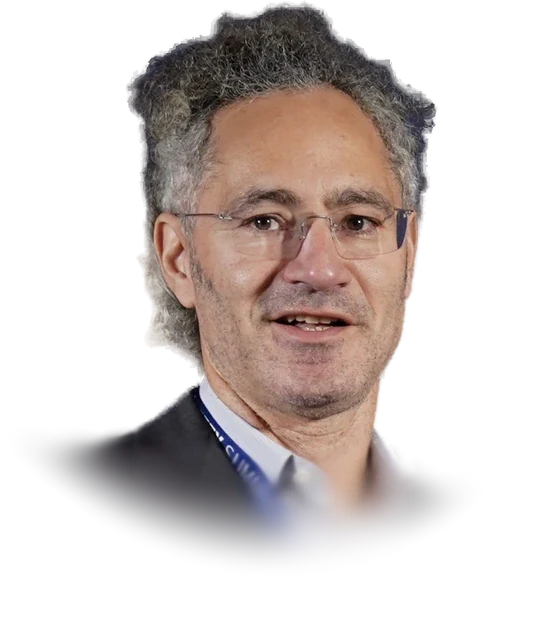
No Alex Karp IQ score has been published, and no page we opened puts a number on the Palantir CEO’s IQ level. What is documented is a Haverford College B.A. (1989), a Stanford Law J.D. (1992) and a Goethe University Frankfurt Ph.D. (2002), the record behind this site’s estimated IQ of 130–145.
Alex Karp’s estimated IQ
- A B.A. in philosophy from Haverford College in 1989 and a J.D. from Stanford Law School in 1992: Stanford Law School’s magazine lists him as “JD ’92”, and a speaker biography on Swiss Re Corporate Solutions’ site gives Haverford as “B.A., 1989”. No grades, class rank or honors turned up in the sources checked.
- A completed doctorate: a 2002 Inauguraldissertation for a Doctor of Philosophy in the social-sciences department of Goethe University Frankfurt, titled “Aggression in der Lebenswelt”, written in German and examined by Prof. Dr. Karola Brede and Priv.-Doz. Dr. Hans-Joachim Busch, as the title page of the National Library’s 129-page copy states.
- Three degrees across philosophy, law and social theory, the last written and examined in German. Each is a credential that screens for ability without measuring it.
- Palantir was co-founded in 2003, and its April 24, 2026 proxy statement says Karp has been a director since 2003 and chief executive since 2005. That record, and his 2025 book The Technological Republic, show sustained leadership and writing but no score, so they do not move the range.
No IQ, SAT, LSAT or GRE score has been published for Alex Karp, so this range is inferred from degrees, not from a test. Nothing scored against other people turned up, no chess rating, test result, class rank or honors, and degrees, however demanding, rank people loosely; his business record, which no test scores, is left out.
- Born
- October 2, 1967, New York City
- Education
- Haverford College (B.A., philosophy, 1989); Stanford Law School (J.D., 1992); Goethe University Frankfurt (Ph.D., social theory, 2002)
- Dissertation
- “Aggression in der Lebenswelt” (2002); examiners Karola Brede and Hans-Joachim Busch
- Role (as of October 2026)
- Co-founder and chief executive officer of Palantir Technologies (CEO since 2005, per its 2026 proxy statement)
- Co-founded
- Palantir Technologies, 2003
- Book
- The Technological Republic (Crown Currency, February 18, 2025), with Nicholas W. Zamiska
- Test record
- None found: no IQ, SAT, LSAT or GRE score published
What an IQ of 130–145 actually means
Set the claim aside for a moment. If someone genuinely scored in this range, here is what that would represent.
| Score range | Classification | Share of people | What it indicates |
|---|---|---|---|
| 85 – 114 | Average | ~68% | The range most people fall into. |
| 115 – 129 | Above average | ~13.6% | Roughly one person in seven. |
| 130 – 144 | Gifted | ~2% | The threshold most high-IQ societies use. |
| Above 144 | Highly gifted | ~0.1% | Figures above this range are extrapolated from the curve rather than measured. |
Percentages are approximate and describe a normal distribution. The same number means different things on tests with different standard deviations.
Thirty questions gives you a measured position on this exact scale — your score, your percentile and the ability breakdown behind it.
Find out in 30 minutes →Who Alex Karp is
How smart is Alex Karp, judged only by what can be checked? Alexander C. Karp was born on October 2, 1967, in New York City, according to Wikidata, and grew up in Philadelphia, where Wikipedia says he graduated from Central High School in 1985. He took a B.A. in philosophy at Haverford College in 1989 and a J.D. at Stanford Law School in 1992, the same year Peter Thiel graduated from the school, according to Wikipedia, which says the two met there.
Wikipedia reports that Karp lived in Frankfurt until 2001 and began a career as a research associate at the Sigmund Freud Institute there. He attended seminars by Jürgen Habermas, Karola Brede told Le Grand Continent in March 2026, but Brede supervised the dissertation, as she says, and its title page names her first examiner, with Priv.-Doz. Dr. Hans-Joachim Busch as second. Some profiles state that he earned his doctorate under Habermas; the record does not say that. The 2002 Inauguraldissertation, “Aggression in der Lebenswelt: Die Erweiterung des Parsonsschen Konzepts der Aggression durch die Beschreibung des Zusammenhangs von Jargon, Aggression und Kultur”, was submitted for a Doctor of Philosophy in Goethe University’s social-sciences department and runs 129 pages in the National Library’s copy.
Palantir Technologies was founded in 2003, and Karp is one of its co-founders. Palantir’s April 24, 2026 proxy statement says he has been a director since 2003 and chief executive since 2005, though Wikipedia gives 2004. As of October 2026 he remains co-founder and CEO: the proxy statement and an August 4, 2026 Forbes Argentina report both use the title. Nothing in that business record is a test score, which is why it does not move this site’s range.
His best-documented published works are the dissertation and one book. The Technological Republic: Hard Power, Soft Belief, and the Future of the West, written with Nicholas W. Zamiska, was published by Crown Currency, an imprint of the Crown Publishing Group, on February 18, 2025, and Stanford Law School’s magazine reports that it shot to the top of the New York Times Best Seller list soon after. Karp’s estimated IQ here, 130–145, is inferred from degrees and from nothing measured, and whether the record makes him a genius depends on what genius-level means, a separate question from what a test would return, since none has been published.
 By Elora Mercer, Celebrity Research WriterFigures checked by Leon Falkner, Data & Research Analyst
Reviewed by Aarav Vardhan, Editor-in-Chief · Last reviewed August 2026
_4-5_ratio.jpg)
Alex Karp: the documented record
The estimate above rests on this record. Every entry here is a matter of public fact, which is more than can be said for the number itself.
- 1967Born October 2 in New York City.
- 1985Graduates from Central High School in Philadelphia, according to Wikipedia.
- 1989Earns a B.A. in philosophy from Haverford College.
- 1992Earns a J.D. from Stanford Law School, the same year as Peter Thiel.
- Mid-1990s–2001Lives in Frankfurt, where Wikipedia says he works as a research associate at the Sigmund Freud Institute.
- 2002Completes his Ph.D. at Goethe University Frankfurt with the dissertation “Aggression in der Lebenswelt”, examined by Karola Brede and Hans-Joachim Busch.
- 2003Palantir is founded; Karp is a co-founder and joins its board.
- 2005Becomes chief executive of Palantir, according to its 2026 proxy statement.
- 2025The Technological Republic, written with Nicholas W. Zamiska, is published by Crown Currency on February 18.
- 2026Palantir’s April 24 proxy statement lists him as co-founder, chief executive officer and director.
Why no figure circulates
Following a claim back to its first appearance is the part almost nobody does — and it is what most people are actually asking.
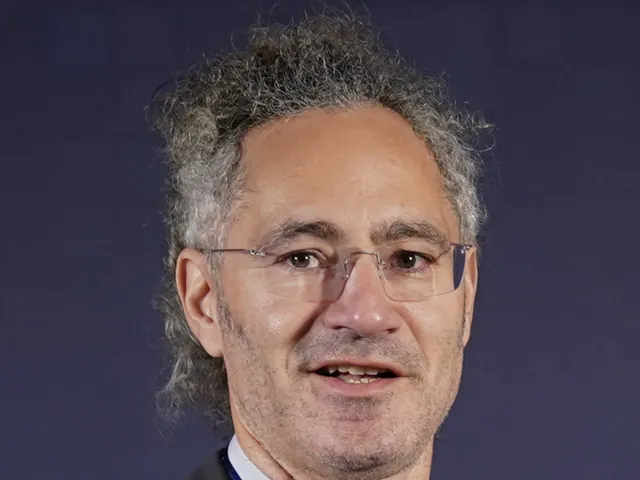
No page we opened states an IQ level for Alex Karp, and none cites a test: the results for “alex karp iq” and “palantir ceo iq” are his Wikipedia article, interview transcripts, magazine profiles and event biographies, which describe a Haverford philosophy degree, a Stanford law degree and a German doctorate rather than a score. That is unlike Peter Thiel, his Palantir co-founder, whose page here tracks figures of 155 and 160 from aggregator sites, and Sundar Pichai, whose 145 to 160 appears on biography and list sites; for how such numbers usually take hold, see where celebrity IQ numbers come from. Where nobody has printed a number, the useful question is what the record can support.
What the record does support is a completed doctorate on top of two degrees from named institutions. Karp took a B.A. in philosophy at Haverford College in 1989, a J.D. at Stanford Law School in 1992 and a Ph.D. in social theory at Goethe University Frankfurt in 2002, according to a speaker biography on Swiss Re Corporate Solutions’ site and Penguin Random House’s author page. The doctorate can be checked at the source: the National Library’s copy of his Inauguraldissertation, “Aggression in der Lebenswelt”, names Prof. Dr. Karola Brede and Priv.-Doz. Dr. Hans-Joachim Busch as examiners and works through Talcott Parsons’s concept of aggression, Adorno on jargon, Simmel and Walser. A degree is a filter, not a measurement, and no grade, class rank or entrance score has been published; no LSAT score is public either, and for how one would convert if it existed, see GRE and LSAT scores to IQ.
No score for Karp has been published, and none of the profiles we opened says he sat an IQ test. He has said publicly that he has dyslexia: at the New York Times DealBook Summit on December 3, 2025, as Fortune reported, he said, “If you are massively dyslexic, you cannot play a playbook.” That is a remark about how he works, not a measurement; for how dyslexia and IQ scores relate, see dyslexia and IQ.
Placed among the business profiles here, Alex Karp’s 130–145 starts five points under Peter Thiel’s 135–150 and Sundar Pichai’s 135–150 and ends five under their ceilings, because each of those records includes a result scored against other people, Thiel’s junior national chess ranking and Pichai’s class standing, while Karp’s turned up degrees only. It ends where Dario Amodei’s 145–160 begins; Amodei’s completed Princeton Ph.D. comes with a Hertz Foundation thesis prize and a citation record, and no outside measure of that kind turned up for Karp’s doctorate.
How we read a number →None appears in English Wikipedia, Fortune’s December 3, 2025 article, the Penguin Random House author biography or the Swiss Re speaker biography. Searches for “alex karp iq”, “alex karp iq level”, “alex karp iq score” and “palantir ceo iq” returned biographies, profiles and transcripts, not a page with a figure.
The title page reads Inauguraldissertation for the degree of Doctor of Philosophy in the Fachbereich Gesellschaftswissenschaften, submitted by Alexander C. Karp, from New York, 2002; first examiner Prof. Dr. Karola Brede, second examiner Priv.-Doz. Dr. Hans-Joachim Busch. The table of contents lists chapters on Parsons, Adorno’s concept of jargon, Simmel and Walser. The scan runs 129 pages.
Nominee biography: Karp is one of the co-founders, has served as Chief Executive Officer since 2005 and as a director since 2003; the director table lists him as Co-Founder, Chief Executive Officer, and Director, age 58. It gives no degrees.
Lists the author as “Alex Karp, JD ’92”, says Palantir is the company “which Karp co-founded in 2003”, gives the book’s publisher and date as Crown Currency, February 2025, and says it shot to the top of the New York Times Best Seller list soon after publication.
The press page gives the on-sale date, February 18, 2025, the Crown Currency imprint and the authors Alexander C. Karp and Nicholas W. Zamiska. The author page says he earned a doctorate in social theory at Goethe University and is a graduate of Haverford College and Stanford Law School.
Confirms this is Alexander C. Karp, businessman and author: born October 2, 1967 in New York City; educated at Haverford College, Goethe University Frankfurt and Stanford University; employer Palantir Technologies; no date of death recorded.
Brede says she supervised Karp’s dissertation, that Habermas had telephoned her about Karp, that Karp attended Habermas’s seminars and office hours, and that the dissertation builds on work she and Karp did together at the Freud Institute. It prints the dissertation title, gives no grade and no date for the degree.
Reports that Karp said at the New York Times DealBook Summit on December 3, 2025: “If you are massively dyslexic, you cannot play a playbook.” It gives no IQ figure, test or score.
The Swiss Re profile lists Haverford College (B.A., 1989), Stanford Law School (J.D., 1992) and Johann Wolfgang Goethe University in Frankfurt, Germany (Ph.D., 2002) and calls him co-founder and chief executive officer. Forbes Argentina, in Spanish, calls him “el CEO de Palantir” in a report dated August 4, 2026; used for his title only.
Orientation. Born October 2, 1967, New York City; Central High School, Philadelphia, 1985; Haverford 1989; Stanford Law 1992; doctorate at Goethe University in 2002 (the German article adds “magna cum laude”, which no other source we opened confirms, so it is left out); research associate at the Sigmund Freud Institute; lived in Frankfurt to 2001; met Peter Thiel at Stanford; co-founded Palantir (the article says 2004 in one place, 2003 in another); The Technological Republic, February 2025. The Thiel article gives his J.D. as 1992.
The sources behind our estimate
The figures that circulate for Alex Karp, what we were able to confirm, and where the two diverge.
No page we opened states an IQ figure for Alex Karp. Searches for “alex karp iq”, “alex karp iq level”, “alex karp iq score” and “palantir ceo iq” returned his Wikipedia article, interview transcripts, magazine profiles and event biographies, not an IQ-aggregator listing with a number.
No published Alex Karp IQ test result exists. His English Wikipedia article carries no IQ figure, Fortune’s December 3, 2025 article on how he describes his dyslexia gives no test or score, and the Penguin Random House author biography lists his degrees and role only. No SAT, LSAT or GRE score has been published either, and none of the pages we opened says he sat an IQ test.
There is no circulating figure to set against the range, so the spread is only this site’s own: fifteen points wide, with no scored result anchoring either end. Alex Karp’s IQ level is unknown, and the record supports a band, not a value; a made-up number would replace three documented degrees with something fictional.
Want a number that does hold up? Every figure on this page is somebody’s claim. Take the 30-question test and get a percentile you can check rather than a figure you have to trust.
Alex Karp — frequently asked
What is Alex Karp’s IQ?
Alex Karp’s IQ is unknown: no IQ test result has been published for the Palantir CEO, and no figure we could find circulates for him. This site’s estimated IQ for Alex Karp, 130–145, is inferred from a Haverford B.A. (1989), a Stanford Law J.D. (1992) and a Goethe University Frankfurt Ph.D. (2002), not from any score.
Did Alex Karp take an IQ test?
No Alex Karp IQ test result has been published, and none of the sources checked says he sat one, including Fortune’s December 2025 article and his publisher’s biography. No SAT, LSAT or GRE score is public either. What is documented is three degrees, and a degree screens for ability without measuring it.
How smart is Alex Karp, and is he a genius?
How smart Alex Karp is in IQ terms cannot be read from the record: it shows three degrees, a German-language doctorate, a 2025 book and the co-founding of Palantir in 2003, but no test. “Genius” is a label for achievement, not a score, which is why this site gives a range, 130–145, instead of a number.
What is Alex Karp’s education?
Alex Karp earned a B.A. in philosophy from Haverford College in 1989, a J.D. from Stanford Law School in 1992 and a Ph.D. in social theory from Goethe University Frankfurt in 2002. His dissertation, “Aggression in der Lebenswelt”, names Karola Brede and Hans-Joachim Busch as its examiners on the title page.
Did Alex Karp study under Jürgen Habermas?
Not for the doctorate. Karp attended Jürgen Habermas’s seminars in Frankfurt, according to Karola Brede, but the title page of his 2002 dissertation names Brede as first examiner and she says she supervised it. Some profiles say he earned his doctorate under Habermas; the record does not support that.
How does Alex Karp’s estimated IQ compare with Peter Thiel’s?
This site’s estimate for Alex Karp, 130–145, sits five points under Peter Thiel’s 135–150 at both ends. Both earned Stanford Law J.D.s in 1992 and Thiel co-founded Palantir with Karp, but Thiel’s record includes a scored result, a junior national chess ranking, and Karp’s turned up degrees only.
What has Alex Karp written?
Karp co-wrote The Technological Republic: Hard Power, Soft Belief, and the Future of the West with Nicholas W. Zamiska, published by Crown Currency on February 18, 2025, and wrote a German-language doctoral dissertation, “Aggression in der Lebenswelt”, in 2002. Stanford Law School’s magazine reports the book shot to the top of the New York Times Best Seller list.
How does my IQ compare with Alex Karp?
You can find out in about fifteen minutes. The IQ Metrics assessment is 30 questions, scored on the same 100-mean scale used throughout this page, so your result and the estimate above are at least expressed in the same units — one measured, one inferred. Once you have a number, the leaderboard shows where it would sit, and how we score and norm it explains the benchmarking.
Where does this estimate come from?
From the documented record rather than a test — the method is named above and set out in full under how we read a number. Compare it against the other business & tech profiles, starting with Steve Jobs.
- Take the 30-question IQ test — get a measured score and percentile of your own
- Average IQ by country — how the scale behaves across populations
- How IQ Metrics scores its assessment — the method behind our own number
- More on how IQ testing works — reliability, error and what a score can and cannot say
- More business & tech profiles — same field, same method
More business & tech

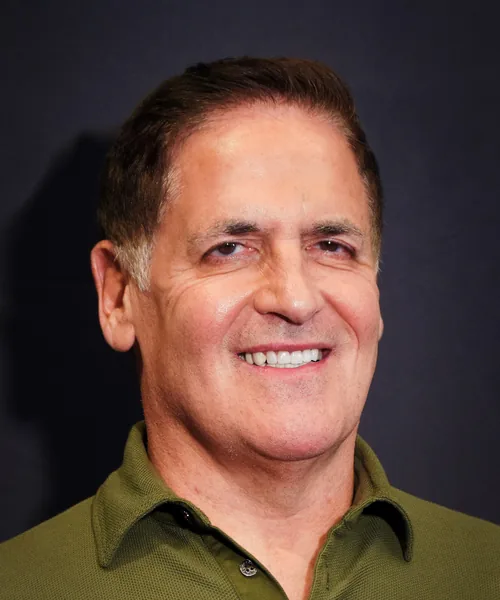

Photograph by Max Morse for TechCrunch (TechCrunch Disrupt San Francisco, September 8, 2014), CC BY 2.0, cropped from a larger picture. Background removed for the portrait above. · Photograph by Philip Romano (PaleyFest, October 16, 2023), CC BY-SA 4.0, cropped from a larger picture. Background removed for the portrait above. · Photograph by Dati Bendo / European Union (New York City, September 20, 2026), CC BY 4.0, cropped from a larger picture. Background removed for the portrait above.
.jpg)

.jpg)
An estimate is an inference.
Yours can be measured.
Thirty questions, scored against general-population benchmarks. Your score, your percentile, your ability breakdown and a printable IIF certificate.
Find your IQ score now! →