



What is Bill Bradley’s IQ?
The one page here with nothing to debunk.
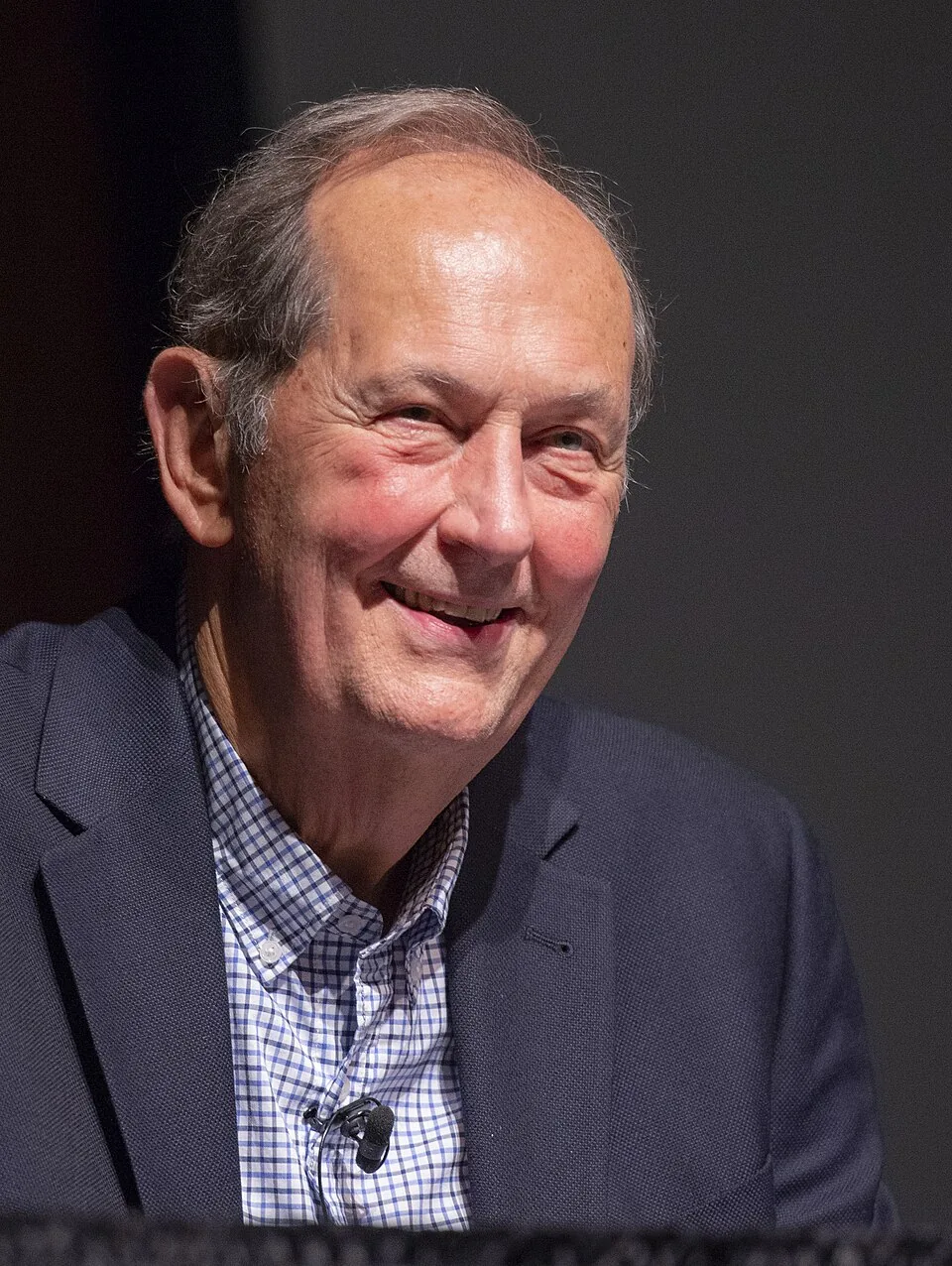
Most pages on this site exist to correct an inflated number. Bradley’s is the rarer case: nobody has bothered to invent one at all. What is left, searched instead of a score, is a genuinely unusual multi-domain record — Rhodes Scholar, Olympic gold medallist, two-time NBA champion, three-term senator.
Bill Bradley’s estimated IQ
- Turned down more than seventy-five college scholarship offers as a straight-A high-school student to attend Princeton, graduating with honours in 1965 in American history.
- Rhodes Scholarship to Oxford, studying politics, philosophy and economics, delaying an NBA career by two years to complete it.
- Ten seasons with the New York Knicks (two NBA championships, 1970 and 1973), followed by eighteen years as a U.S. Senator from New Jersey.
This is an achievement record spread across three unrelated fields — academics, professional sport, national politics — which is unusual on its own terms. It is still not a test score, and the range reflects the strength of the record rather than a measurement of it.
- Born
- 28 July 1943, Crystal City, Missouri
- Field
- Basketball, U.S. politics
- Education
- Princeton University, American history, 1965; Rhodes Scholar, Oxford (politics, philosophy, economics)
- Known for
- 1964 Olympic gold, two NBA titles with the Knicks, U.S. Senate 1979–1997
- Canonical IQ
- No figure circulates at all
What an IQ of 135–150 actually means
Set the claim aside for a moment. If someone genuinely scored in this range, here is what that would represent.
Average is 100 by construction, and about two-thirds of people fall between 85 and 115. Take the test to place your own score on this scale.
| Score range | Classification | Share of people | What it indicates |
|---|---|---|---|
| 85 – 114 | Average | ~68% | The range most people fall into. |
| 115 – 129 | Above average | ~13.6% | Roughly one person in seven. |
| 130 – 144 | Gifted | ~2% | The threshold most high-IQ societies use. |
| Above 144 | Highly gifted | ~0.1% | Figures above this range are extrapolated from the curve rather than measured. |
Percentages are approximate and describe a normal distribution. The same number means different things on tests with different standard deviations.
Thirty questions gives you a measured position on this exact scale — your score, your percentile and the ability breakdown behind it.
Find out in 30 minutes →Who Bill Bradley is
Bill Bradley was born in 1943 in Crystal City, Missouri. A straight-A student, he turned down more than seventy-five college scholarship offers to attend Princeton, where he was a three-time All-American, led the team to the 1965 Final Four, and graduated with honours in American history.
He won an Olympic gold medal with the U.S. basketball team at the 1964 Tokyo Games, then delayed a professional career for two years to take up a Rhodes Scholarship at Oxford, studying politics, philosophy and economics. He played ten seasons for the New York Knicks, winning NBA championships in 1970 and 1973.
He served as a U.S. Senator for New Jersey from 1979 to 1997 and sought the Democratic presidential nomination in 2000. He remains one of a small number of people to have combined an Olympic medal, a major-league championship and national elected office.
 By Elora Mercer, Celebrity Research WriterFigures checked by Leon Falkner, Data & Research Analyst
Reviewed by Aarav Vardhan, Editor-in-Chief · Last reviewed August 2026

Bill Bradley: the documented record
The estimate above rests on this record. Every entry here is a matter of public fact, which is more than can be said for the number itself.
- 1961Enrols at Princeton, turning down more than seventy-five other scholarship offers.
- 1964Wins Olympic gold with the U.S. basketball team in Tokyo.
- 1965Graduates Princeton with honours; named NCAA Player of the Year.
- 1965Begins a Rhodes Scholarship at Oxford, delaying his NBA career.
- 1967Joins the New York Knicks.
- 1970Wins his first NBA championship with the Knicks.
- 1973Wins a second NBA championship.
- 1979Takes office as U.S. Senator for New Jersey, serving until 1997.
Where the 135–150 figure came from
Following a claim back to its first appearance is the part almost nobody does — and it is what most people are actually asking.
Every other page in this section exists because a number attached itself to a real person and needed checking. Bradley’s case is different: we searched specifically for a circulating IQ figure and found none — not a hoax number, not a listicle guess, nothing. For a three-term U.S. Senator and Olympic gold medallist, that absence is itself notable, and worth stating rather than manufacturing a figure to fill the space every other page has.
His profile sits closest to Ryan Fitzpatrick among the athletes here — both built a documented academic record (Fitzpatrick’s at Harvard, Bradley’s at Princeton and Oxford) alongside a professional sports career, rather than relying on either alone.
How we read a number →Confirm the 1965 Princeton graduation and the 1979–1997 Senate term for New Jersey.
Contemporaneous profile of Bradley during his senior year at Princeton.
Institutional biographical summary accompanying the photograph used on this page, confirming the Knicks, Senate and Olympic record.
Searched directly; no hoax number, aggregator estimate or listicle figure exists for Bradley, unlike almost every other entry on this site.
Bill Bradley — frequently asked
What is Bill Bradley’s IQ?
No figure of any kind circulates for him — not even an unsourced guess, which makes him unusual on this site. His documented record spans Princeton, a Rhodes Scholarship, two NBA titles and eighteen years in the Senate.
Why doesn’t Bill Bradley have a circulating IQ number like other athletes here?
It isn’t clear why some public figures attract invented numbers and others don’t. In Bradley’s case, we searched directly and found nothing — no hoax, no listicle estimate, no aggregator guess.
Was Bill Bradley a Rhodes Scholar?
Yes. He delayed the start of his NBA career by two years to study politics, philosophy and economics at Oxford on a Rhodes Scholarship after graduating from Princeton in 1965.
How many NBA championships did Bill Bradley win?
Two, both with the New York Knicks, in 1970 and 1973, across a ten-season career.
Did Bill Bradley run for president?
Yes, seeking the Democratic nomination in 2000 after eighteen years representing New Jersey in the U.S. Senate. He did not win the nomination.
How does Bradley compare to other athletes on this site?
Closest to Ryan Fitzpatrick — both paired a documented elite academic record with a professional sports career, rather than resting on either alone.
How does my IQ compare with Bill Bradley?
You can find out in about fifteen minutes. The IQ Metrics assessment is 30 questions, scored on the same 100-mean scale used throughout this page, so your result and the estimate above are at least expressed in the same units — one measured, one inferred. Once you have a number, the leaderboard shows where it would sit, and how we score and norm it explains the benchmarking.
Where does this estimate come from?
From the documented record rather than a test — the method is named above and set out in full under how we read a number. Compare it against the other athletes profiles, starting with Magnus Carlsen.
- Take the 30-question IQ test — get a measured score and percentile of your own
- Average IQ by country — how the scale behaves across populations
- How IQ Metrics scores its assessment — the method behind our own number
- More on how IQ testing works — reliability, error and what a score can and cannot say
- More athletes profiles — same field, same method
More athletes
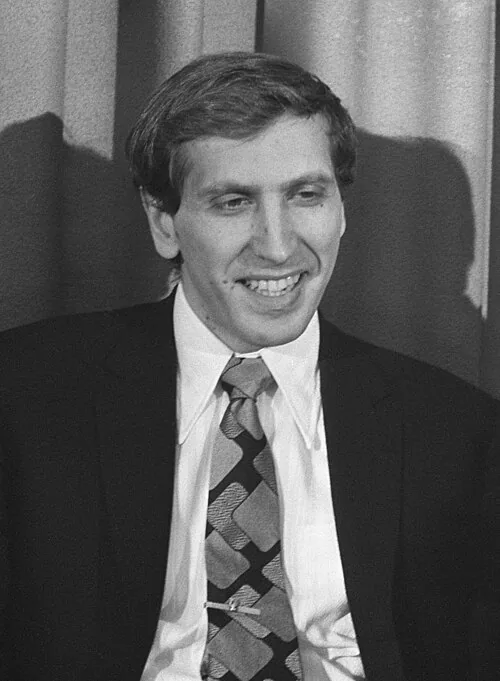
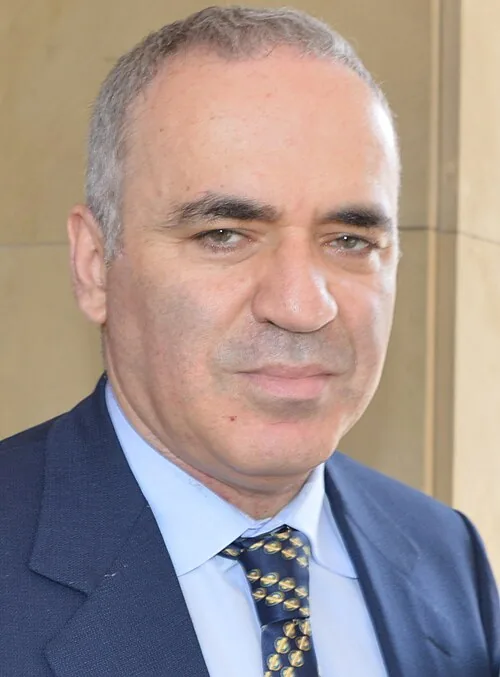
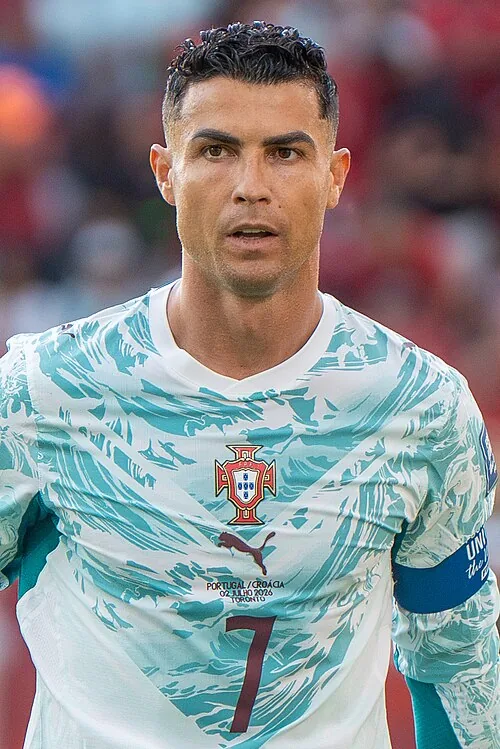
Photograph by Bert Verhoeff for Anefo (1972), CC0. Background removed for the portrait above. · Photograph by Fryta 73 (2015), CC BY-SA 2.0. Background removed for the portrait above. · Photograph by Bryan Berlin / WikiPortraits, CC BY-SA 4.0. The background-removed portrait above is a derivative work offered under the same licence.

_(cropped)_2.jpg)
.jpg)
An estimate is an inference.
Yours can be measured.
Thirty questions, scored against general-population benchmarks. Your score, your percentile, your ability breakdown and a printable IIF certificate.
Find your IQ score now! →