



What was Carl Jung’s IQ?
He timed answers to 100 stimulus words with a stopwatch, and the Myers-Briggs types grew out of his 1921 book, yet neither is an IQ test and Jung left no IQ score.
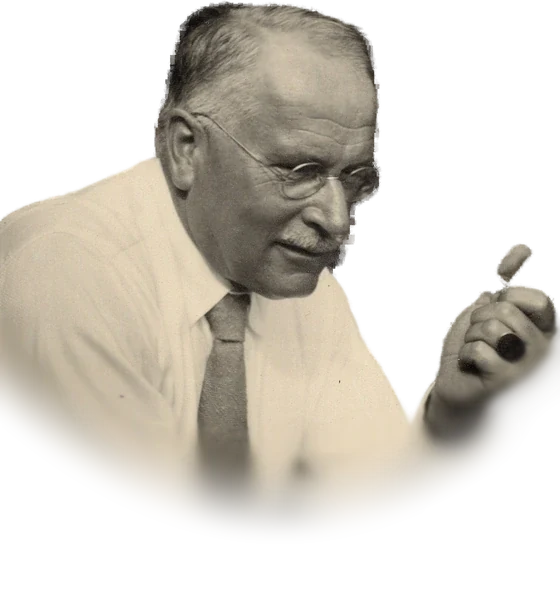
No IQ test result has been published for Carl Jung. The Carl Jung IQ score that circulates, 165 on The Genius Index and geniuses.club, cites no test, while the record documents a 1902 medical doctorate, a 1905 Zurich lectureship earned with word-association research, and the 1921 Psychological Types: an estimated IQ of 140–160, an inference and not a score.
Carl Jung’s estimated IQ
- Medical studies at the University of Basel from 1895, the state examination in 1900 and a doctorate in 1902, with a psychiatric dissertation signed as first assistant physician at the University of Zurich’s Burghölzli clinic, where Eugen Bleuler was his chief.
- A Habilitation in 1905 on association experiments, which made him a Privatdozent of psychiatry at the University of Zurich, and the two volumes of Diagnostic Association Studies he edited (1906, 1910), the experimental work behind his theory of complexes.
- An invitation to lecture on the association method at Clark University’s twentieth-anniversary celebration in September 1909, an honorary doctorate there together with Freud, and later honorary doctorates from Harvard (1936), Geneva (1945) and ETH Zurich (1955), among others.
- Psychological Types (1921), a Collected Works of 20 volumes, and 23rd place among the 100 most eminent 20th-century psychologists in the table printed in Haggbloom et al. (2002), which ranks by citations, textbook coverage and a survey.
This is an inference from a career, not a score. The record shows sustained, high-level scholarship, but Jung’s later work is interpretive theory that cannot be marked right or wrong the way a proof or a chess rating can, and an eminence table measures influence rather than reasoning. Nothing in the record separates 140 from 160, and the circulating 165 sits five points above the top of this range with no test behind it.
- Born
- July 26, 1875, Kesswil, canton of Thurgau, Switzerland
- Died
- June 6, 1961, Küsnacht, canton of Zurich, Switzerland
- Field
- Psychiatry; analytical psychology
- Education
- Medicine, University of Basel (from 1895; state examination 1900); doctorate 1902; study period with Pierre Janet in Paris
- Known for
- Word-association experiments (1904–1910); analytical psychology; Psychological Types (1921)
- Career
- Burghölzli clinic, Zurich, under Eugen Bleuler (1900–1909); Privatdozent, University of Zurich, from 1905; ETH Zurich lectures 1933–1941; medical psychology chair, Basel, 1943–44
- Honors
- Honorary doctorates from Clark (1909), Harvard (1936), Geneva (1945) and ETH Zurich (1955), among others; 23rd in Haggbloom et al.’s 2002 eminence table
- Circulating figure
- 165 on The Genius Index and geniuses.club; Reddit guesses from 115 to 175; no published test result
What an IQ of 140–160 actually means
Set the claim aside for a moment. If someone genuinely scored in this range, here is what that would represent.
Average is 100 by construction, and about two-thirds of people fall between 85 and 115. Take the test to place your own score on this scale.
| Score range | Classification | Share of people | What it indicates |
|---|---|---|---|
| 85 – 114 | Average | ~68% | The range most people fall into. |
| 115 – 129 | Above average | ~13.6% | Roughly one person in seven. |
| 130 – 144 | Gifted | ~2% | The threshold most high-IQ societies use. |
| Above 144 | Highly gifted | ~0.1% | Figures above this range are extrapolated from the curve rather than measured. |
Percentages are approximate and describe a normal distribution. The same number means different things on tests with different standard deviations.
Thirty questions gives you a measured position on this exact scale — your score, your percentile and the ability breakdown behind it.
Find out in 30 minutes →Who Carl Jung was
How smart was Carl Jung, judged only by what can be checked? Carl Gustav Jung was born on July 26, 1875, in Kesswil, in the Swiss canton of Thurgau. After the gymnasium in Basel he studied natural sciences and then medicine at the University of Basel, starting medicine in 1895 on a grant, and passed the state examination in 1900. In December 1900 he moved to Zurich to work under Eugen Bleuler at the Burghölzli, the psychiatric clinic of the University of Zurich. His doctoral dissertation, Zur Psychologie und Pathologie sogenannter occulter Phänomene (“On the Psychology and Pathology of So-Called Occult Phenomena”), a psychiatric study of spiritualism and mediumship, was published in Leipzig in 1902 by Oswald Mutze; its title page names the author as Dr. med. C. G. Jung, first assistant physician of the clinic. He then studied with Pierre Janet in Paris.
The Burghölzli is where Jung ran the word-association experiments. From 1904 he had a psychological laboratory there, and in 1905 he qualified as a lecturer with a Habilitation on association experiments, becoming a Privatdozent of psychiatry at the University of Zurich. His first study with Riklin, on healthy subjects, built on a schedule of 156 stimulus words that Bleuler had used on psychoses of all kinds. Jung edited the two volumes of Diagnostic Association Studies (Leipzig: Johann Ambrosius Barth, 1906 and 1910). The test he described at Clark University’s twentieth-anniversary celebration in September 1909, where he received an honorary degree together with Freud, has 100 stimulus words, an instruction to answer as quickly as possible with the first word that comes to mind, and reaction times in fifths of a second; delays and other disturbances mark words that touch an emotionally charged complex, the idea that grew out of these experiments. He left the Burghölzli in 1909.
Jung first met Sigmund Freud in Vienna in March 1907, and in 1910 Freud proposed him as president of the newly formed International Psychoanalytical Association. The break came in 1912–13: the Historical Dictionary of Switzerland attributes it to Jung’s view of libido as an autonomous psychic energy rather than a purely sexual drive and dates his withdrawal from office and from the psychoanalytic movement to 1913. In 1921 he published Psychological Types (Psychologische Typen). He lectured at ETH Zurich from 1933 to 1941, as a titular professor from 1934, held a chair of medical psychology at Basel in 1943–44, and in 1948 the Jung Institute was founded in Zurich. The ETH Library now holds about 1,000 of his manuscripts and more than 30,000 letters, and the Collected Works run to 20 volumes.
Jung’s later interests ran to comparative mythology, alchemy, dream interpretation and what he called synchronicity, an acausal connecting principle set out in a monograph published with Wolfgang Pauli in 1952; it has never had widespread scientific approval, and a high estimated IQ says nothing about whether such ideas are true. In a letter to Carl Seelig dated February 25, 1953, later published in his Letters, he recalled that Einstein had been his guest at dinner on several occasions in the early days of relativity and had first started him thinking about the relativity of time and space and their psychic conditionality. Jung died on June 6, 1961, at Küsnacht, near Zurich.
 By Elora Mercer, Celebrity Research WriterFigures checked by Leon Falkner, Data & Research Analyst
Reviewed by Aarav Vardhan, Editor-in-Chief · Last reviewed August 2026
Carl Jung: the documented record
The estimate above rests on this record. Every entry here is a matter of public fact, which is more than can be said for the number itself.
- 1875Born on July 26 in Kesswil, canton of Thurgau.
- 1900Passes the state examination in medicine; in December joins the Burghölzli clinic in Zurich under Eugen Bleuler.
- 1902Publishes his dissertation on so-called occult phenomena (Leipzig: Oswald Mutze) as Dr. med.; then studies with Pierre Janet in Paris.
- 1905Habilitation on association experiments; Privatdozent of psychiatry at Zurich. Binet and Simon publish the first practical intelligence test the same year.
- 1909Lectures on the association method at Clark University in September and receives an honorary degree with Freud; leaves the Burghölzli.
- 1913Break with Freud, whose early-January letter proposes abandoning their private relationship; Jung leaves office and the psychoanalytic movement.
- 1921Publishes Psychological Types (Psychologische Typen).
- 1923Psychological Types appears in English, the start of the chain that leads to the Myers-Briggs Type Indicator.
- 1961Dies on June 6 at Küsnacht.
Where the 165 figure came from
Following a claim back to its first appearance is the part almost nobody does — and it is what most people are actually asking.
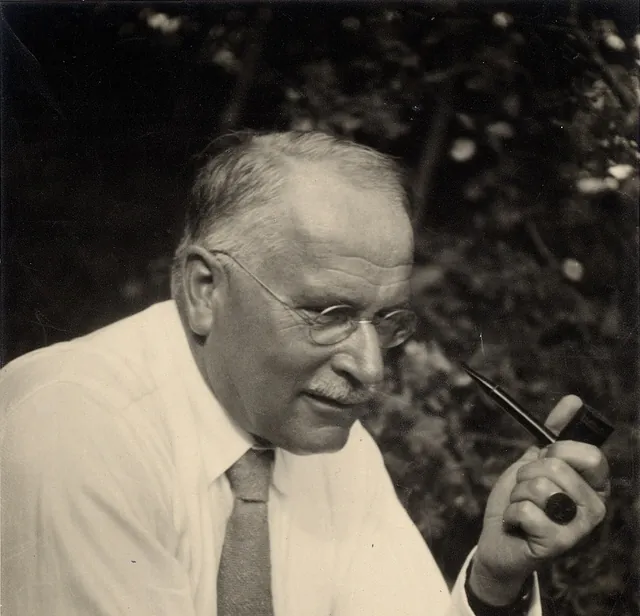
Carl Jung’s IQ is quoted as 165, and neither page that prints it cites a test. The Genius Index lists an “Estimated Cognitive Quotient” of 165; its methodology page lists clinical scores, SAT and GRE conversions and, for historical figures, Catharine Cox’s historiometric methods, and the Jung page does not say which produced the number. geniuses.club lists an estimated IQ of 165 and adds that such figures are published estimates, not a measured, verified test score. On Reddit the number passes from person to person, in comments that give 160, 165 or 175 and, in an August 2022 r/Jung thread, “What do you think Jung’s IQ was?”, guesses from 115 to about 170. None cites a test, which is the usual pattern for a celebrity IQ number.
No Carl Jung IQ score could have come from a test taken in his student years: the Binet–Simon intelligence scale appeared only in 1905, the year Jung qualified as a university lecturer; the abbreviation IQ comes from William Stern’s 1912 book and the Stanford revision of Binet’s scale from 1916 (see the history of intelligence testing). Jung’s own instrument was of another kind. M. D. Eder’s preface to the 1919 English edition of Studies in Word-Association dates the experimental study of mental association to Galton’s work in 1879 and Wundt’s in 1880, says Jung’s new departure was applying the method to unconscious processes, and hopes for standard tests for normal and abnormal children complementary to Binet’s intellectual tests. Jung and Franz Riklin timed the answers of 38 people, educated and ill-educated, with a stopwatch that read to a fifth of a second, and reported that a lack of intelligence was “far less disturbing than affect.” The method was built to expose emotionally charged complexes, not to rank ability.
A search for a “Carl Jung IQ test” can land on personality quizzes, which are not IQ tests either. Jung’s 1921 Psychological Types sorted people by two attitudes, introversion and extraversion, and four functions: thinking, feeling, sensation and intuition. It reached English in 1923; Katharine Cook Briggs had already begun her own personality system, and her daughter Isabel Briggs Myers built the Myers-Briggs Type Indicator on Jung’s theory. The Myers & Briggs Foundation says the assessment “sorts for preferences; it does not measure traits, ability, skill, or character.” A thinking type is therefore not a cleverer type, and no type result is an IQ, a difference set out under IQ versus personality.
A Carl Jung IQ level of 165 is not a number a test would readily return either. On the scale modern tests use, with a mean of 100 and a standard deviation of 15, it is 4.3 standard deviations above average, about one person in 136,000; at that height test ceilings thin out the items and the norming sample, and Wikipedia’s article on the intelligence quotient says reports of scores much higher than 160 are considered dubious. Cox’s 1926 study of 301 geniuses does not fill the gap: its subjects lived between 1450 and 1850, and Jung was born in 1875. The record supports a wider, lower band. Carl Jung’s estimated IQ of 140–160 has a bottom edge, an IQ around 140, of about one person in 260 and a top edge, an IQ of 160, of about one in 31,600. Among this site’s science profiles, that band sits above Jordan Peterson (125–140), whose Maps of Meaning (Routledge, 1999) its publisher describes as combining Freudian and Jungian approaches to mythology and narrative; it overlaps Noam Chomsky (150–170), who stands 38th in the same eminence table; and it stops short of Albert Einstein (160–180), whom Jung recalled in a 1953 letter as a dinner guest who first set him thinking about the relativity of time. All four ranges rest on records, not scores.
How we read a number →No test result or clinician’s account for Jung turned up in Wikipedia’s article on him, the Historical Dictionary of Switzerland, the ETH Library’s portrait or Reddit comments read through the PullPush archive, which give only guesses. The pages below cite no test.
The Genius Index: “Estimated Cognitive Quotient 165,” no method, source or date on the Jung page; its methodology page lists clinical scores, SAT, GRE and LSAT conversions and, for historical figures, historiometric methods after Catharine Cox. geniuses.club: 165, “published estimates, not a measured, verified test score,” no source or date.
Comments in r/RealGeniuses (April 2021, “IQ:165”; January 2019, “IQ 175,” a personal top 100), r/atheism (November 2022, “IQ=160”) and r/samharris (September 2018, “probably over 160”); an August 4, 2022 r/Jung thread of 31 comments with guesses of 115, 145 and about 170, jokes, and one reply arguing for 125–132 from assumed group averages. None cites a test.
Wikidata: Swiss psychiatrist and psychotherapist, born July 26, 1875 in Kesswil, died June 6, 1961 in Küsnacht; it lists a University of Zurich doctorate (July 17, 1902), but the ETH Library places the 1902 doctorate at Basel and the dissertation scan names no university, so this page names none. The Historical Dictionary and the ETH Library portrait give the studies, posts, lectures, honorary doctorates and archive holdings used here; Deutsche Biographie gives the 1900 state examination. None mentions an IQ.
Dissertation title page: Dr. med. C. G. Jung, first assistant physician (I. Assistenzarzt) of the psychiatric university clinic in Zurich, 1902. Volume 1: edited by Dr. C. G. Jung, Privatdozent of psychiatry in Zurich (the scan’s text layer misreads the year; the archive record gives 1906); volume 2 is listed as 1910.
Eder’s preface: experimental study of association begins with Galton (1879) and Wundt (1880); Jung applies it to unconscious processes; hope for standard tests complementary to Binet’s. Jung and Riklin: Bleuler’s schedule of 156 words, 400 different words, 38 subjects (23 highly educated, 15 ill-educated), a one-fifth-second stopwatch, “lack of intelligence is far less disturbing than affect.” The lectures: 100 stimulus words, first word that comes to mind, unit 0.2 second.
Cox’s introduction: her subjects are 301 of the most eminent men and women who lived between 1450 and 1850, chosen from Cattell’s list of the thousand most eminent. The 301 names on iqcomparisonsite.com do not include Jung.
Jung 23rd in the table as printed (Freud 3rd, Chomsky 38th); columns give journal-citation, textbook-citation and survey ranks plus NAS, APA and eponym markers. The page notes a corrected list, which we could not open.
Legacy: Katharine Cook Briggs had begun her own personality system when Psychological Types reached English in 1923; Isabel Briggs Myers built the Indicator on Jung’s theory. Basics: “sorts for preferences; it does not measure traits, ability, skill, or character.” Humanmetrics bases its typology test on Jung’s and Briggs Myers’ approach and says nothing of intelligence; 123test says the Indicator was principally developed from Jung’s theories.
Wikipedia: the March 1907 meeting with Freud and his 1910 proposal, the 1921 book and 1923 translation, the IQ article’s dates and its line on scores above 160, the 1952 synchronicity monograph, 20 volumes. Routledge: Maps of Meaning (1999) combines Freudian and Jungian approaches to mythology and narrative. The letter: Einstein as a dinner guest.
The sources behind our estimate
The figures that circulate for Carl Jung, what we were able to confirm, and where the two diverge.
That Carl Jung’s IQ is 165: The Genius Index lists an “Estimated Cognitive Quotient” of 165 and geniuses.club an estimated IQ of 165. On Reddit the figures run from 160 (r/atheism, November 2022) and “probably over 160” (r/samharris, September 2018) to 165 and 175 in two r/RealGeniuses comments (2021 and 2019), with guesses from 115 to about 170 in an r/Jung thread (August 2022).
No published IQ test result exists for Carl G. Jung. thegeniusindex.com prints its 165 with no method, source or date on the Jung page. geniuses.club calls its 165 a published estimate, not a measured, verified test score, and names no source either. The Reddit figures, read through the PullPush archive, are guesses and personal top-100 lists; the most reasoned, an r/Jung reply of August 5, 2022, argues for 125–132 from the assumed average scores of medical graduates and social-science professors, a group average and not a result for Jung. Wikipedia, the Historical Dictionary of Switzerland and the ETH Library’s portrait say nothing about an IQ score.
Read left to right: 140 and 160 are the ends of the range this site’s record supports; 165 is the figure the two named pages print; 175 is the highest Reddit figure, from a personal top-100 list. The lowest reasoned guess, 125–132, sits below the range, and no page ties any of these numbers to a test. The number that circulates is above the record’s range, which is the usual direction of the error.
Want a number that does hold up? Every figure on this page is somebody’s claim. Take the 30-question test and get a percentile you can check rather than a figure you have to trust.
Carl Jung — frequently asked
What is Carl Jung’s IQ?
No IQ test result has been published for Carl Jung, so what his IQ was is not known. The Carl Jung IQ score that circulates, 165 on The Genius Index and geniuses.club, cites no test. This site’s estimated IQ range for Jung, 140–160, is inferred from his medical doctorate, Zurich lectureship, word-association research and Psychological Types, not from a score.
Did Carl Jung ever take an IQ test?
There is no public record that he did. The Binet–Simon scale appeared in 1905, the year Jung qualified as a lecturer, and the term IQ dates from 1912. Wikipedia, the Historical Dictionary of Switzerland and the ETH Library’s portrait mention no test or score; the tests linked to his name are his word-association experiments and later personality quizzes.
Where does the 165 figure for Carl Jung’s IQ come from?
It cannot be traced to a test. The Genius Index and geniuses.club print 165 as an estimate, and Reddit comments repeat it. The Genius Index says it uses clinical scores, SAT or GRE conversions or historiometric methods, but not which produced Jung’s figure; Catharine Cox’s 1926 study, whose method it cites, covered people who lived between 1450 and 1850.
Was Carl Jung intelligent?
By the documented record, yes: a medical doctorate in 1902, a Zurich lectureship from 1905, two volumes of association studies, the 1921 Psychological Types, a 20-volume Collected Works and honorary doctorates from Clark, Harvard, Geneva and ETH Zurich. This site estimates his IQ at 140–160, an inference from that record and not a test result.
Is the Jung personality test an IQ test?
No. Jungian typology, and the Myers-Briggs Type Indicator that Katharine Briggs and Isabel Briggs Myers built on it, sorts people by preferences such as introversion and extraversion. The Myers & Briggs Foundation says it does not measure ability. A thinking type is not a smarter type, and no type result is an IQ.
Was Jung’s word-association test an IQ test?
No. Jung’s test, a list of 100 stimulus words answered as fast as possible and timed to a fifth of a second, was built to expose emotionally charged complexes. In his first study with Franz Riklin, a lack of intelligence disturbed the results far less than emotion did. It belongs to the history of mental testing but yields no IQ.
How does Carl Jung’s estimated IQ compare with Sigmund Freud’s?
Neither has a published IQ test result, so any comparison rests on records. In Haggbloom et al.’s 2002 table of the 100 most eminent 20th-century psychologists, Freud is third and Jung 23rd, but eminence measures influence, not IQ. This site infers 140–160 for Jung from his career; Freud’s estimate is on his own profile.
How does my IQ compare with Carl Jung?
You can find out in about fifteen minutes. The IQ Metrics assessment is 30 questions, scored on the same 100-mean scale used throughout this page, so your result and the estimate above are at least expressed in the same units — one measured, one inferred. Once you have a number, the leaderboard shows where it would sit, and how we score and norm it explains the benchmarking.
Where does this estimate come from?
From the documented record rather than a test — the method is named above and set out in full under how we read a number. Compare it against the other scientists profiles, starting with Albert Einstein.
- Take the 30-question IQ test — get a measured score and percentile of your own
- Average IQ by country — how the scale behaves across populations
- How IQ Metrics scores its assessment — the method behind our own number
- More on how IQ testing works — reliability, error and what a score can and cannot say
- More scientists profiles — same field, same method
More scientists

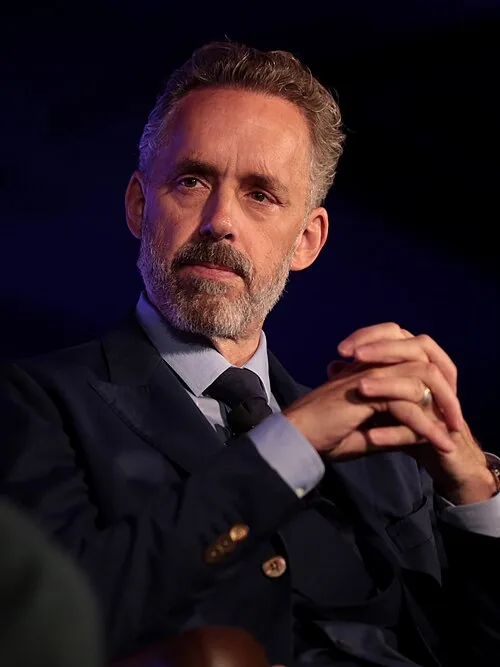
Photograph by Duncan.Hull, CC BY-SA 4.0. Background removed for the portrait above. · Photograph by Gage Skidmore, CC BY-SA 2.0. Background removed for the portrait above. · Los Alamos National Laboratory badge photograph, c. 1940s, public domain (PD-LosAlamos). Background removed for the portrait above.

.jpg)

An estimate is an inference.
Yours can be measured.
Thirty questions, scored against general-population benchmarks. Your score, your percentile, your ability breakdown and a printable IIF certificate.
Find your IQ score now! →