



What is Noam Chomsky’s IQ?
A 1992 MIT count placed him between Freud and Hegel among the most-cited sources in the humanities; no published test has placed him anywhere on an IQ scale.
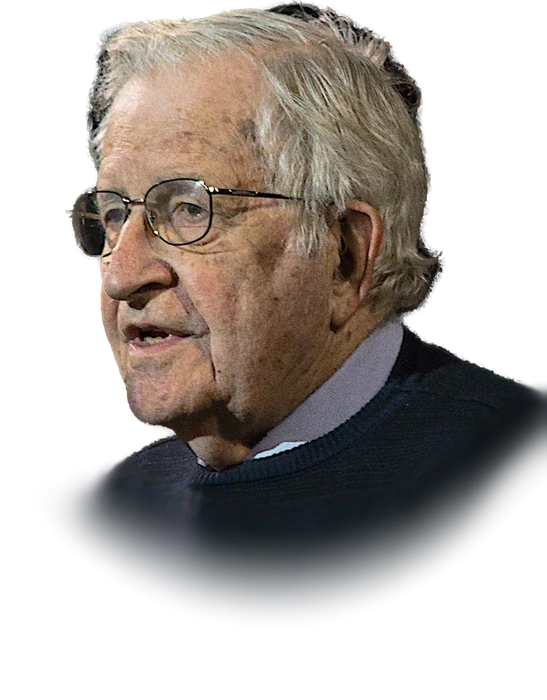
No IQ test result has ever been published for Noam Chomsky, and the only figure we could find for his IQ score, 140 on two “smartest people” lists, cites no test. What is documented is a 1955 Penn Ph.D., an MIT Institute Professorship, the 1988 Kyoto Prize and a 1992 MIT count naming him the most-cited living person in the Arts and Humanities Citation Index.
Noam Chomsky’s estimated IQ
- Ph.D. in linguistics from the University of Pennsylvania (1955), after entering Penn at 16 in 1945 and spending 1951–55 as a member of Harvard’s Society of Fellows.
- MIT assistant professor from 1955, full professor from 1961 and Institute Professor from 1976; now Institute Professor emeritus, and since fall 2017 Laureate Professor of Linguistics at the University of Arizona.
- Author of Syntactic Structures (1957), of the 1956 and 1959 papers on formal grammars behind the Chomsky hierarchy, and of a 1959 review of B. F. Skinner’s Verbal Behavior widely regarded as influential in the decline of behaviorism in linguistics, philosophy and cognitive science.
- A 1992 MIT News report of 3,874 citations in the Arts and Humanities Citation Index between 1980 and 1992: the most-cited living person in the index and the eighth most-cited source overall, behind Marx, Lenin, Shakespeare, Aristotle, the Bible, Plato and Freud.
- The 1988 Kyoto Prize in Basic Sciences (Cognitive Science), awarded for the theory of generative grammar, and the 1999 Benjamin Franklin Medal in Computer and Cognitive Science.
This estimated IQ range is an inference from documented achievement, not a test result. A citation count measures influence, including critical citation, as much as ability, and this one is more than three decades old; linguistics also has no single peer-judged yardstick like the Fields Medal behind Edward Witten’s higher range. His public prominence beyond linguistics is not counted here, because it says nothing about test performance.
- Born
- December 7, 1928, Philadelphia, Pennsylvania
- Field
- Theoretical linguistics; cognitive science; formal language theory
- Education
- University of Pennsylvania (entered 1945; B.A. 1949; M.A. 1951; Ph.D. in linguistics 1955); Harvard Society of Fellows, 1951–55
- Career
- MIT from 1955 (professor 1961; Institute Professor 1976; now emeritus); University of Arizona since 2017 (Laureate Professor of Linguistics)
- Known for
- Generative grammar; Syntactic Structures (1957); the 1959 review of Skinner’s Verbal Behavior; the Chomsky hierarchy of formal grammars
- Honors
- Kyoto Prize in Basic Sciences (1988); Benjamin Franklin Medal in Computer and Cognitive Science (1999); Helmholtz Medal
- Citation record
- 3,874 citations in the Arts and Humanities Citation Index, 1980–1992: most-cited living person, eighth overall (MIT News, 1992)
- Circulating figure
- 140 on two lists; no published test result
What an IQ of 150–170 actually means
Set the claim aside for a moment. If someone genuinely scored in this range, here is what that would represent.
Average is 100 by construction, and about two-thirds of people fall between 85 and 115. Take the test to place your own score on this scale.
| Score range | Classification | Share of people | What it indicates |
|---|---|---|---|
| 85 – 114 | Average | ~68% | The range most people fall into. |
| 115 – 129 | Above average | ~13.6% | Roughly one person in seven. |
| 130 – 144 | Gifted | ~2% | The threshold most high-IQ societies use. |
| Above 144 | Highly gifted | ~0.1% | Figures above this range are extrapolated from the curve rather than measured. |
Percentages are approximate and describe a normal distribution. The same number means different things on tests with different standard deviations.
Thirty questions gives you a measured position on this exact scale — your score, your percentile and the ability breakdown behind it.
Find out in 30 minutes →Who Noam Chomsky is
How smart is Noam Chomsky, judged only by what can be checked? Avram Noam Chomsky was born on December 7, 1928, in Philadelphia. He entered the University of Pennsylvania in 1945, at 16, exploring philosophy, logic and languages, and moved into linguistics after meeting Zellig Harris in 1947; his honors thesis dealt with the morphophonemics of Modern Hebrew, and he took a B.A. in 1949 and an M.A. in 1951. That year he went to Harvard as a member of the Society of Fellows, where he stayed until 1955 while working on his doctoral dissertation, Transformational Analysis, which he submitted to Penn. It circulated on microfilm among specialists and was published in 1975 as part of The Logical Structure of Linguistic Theory. For what the data say about doctorates and IQ, see average IQ by education level.
MIT hired him as an assistant professor in 1955, with the support of the linguist Roman Jakobson; he became a full professor in 1961 and Institute Professor in 1976. His first book, Syntactic Structures (Mouton, The Hague, 1957), grew out of lecture notes for MIT students. His 1959 review of B. F. Skinner’s Verbal Behavior in the journal Language (volume 35, issue 1, pages 26–58) is generally thought to have contributed to the decline of behaviorism’s influence in linguistics, philosophy and cognitive science. His 1956 paper “Three Models for the Description of Language,” written at MIT’s Research Laboratory of Electronics, and a 1959 follow-up in Information and Control set out what computer scientists call the Chomsky hierarchy of formal grammars, whose four levels correspond to machines from the finite-state automaton up to the Turing machine devised by Alan Turing.
The recognition that can be checked comes as a count, as prizes and as a rank. The count: in April 1992 MIT News reported that its Humanities Librarian had found 3,874 citations of Chomsky in the Arts and Humanities Citation Index between 1980 and 1992, making him the most-cited living person there and the eighth most-cited source overall, behind Marx, Lenin, Shakespeare, Aristotle, the Bible, Plato and Freud and ahead of Hegel and Cicero; the same report gave 7,449 citations in the Social Science Citation Index (1972–1992) and 1,619 in the Science Citation Index (1974–1992). The prizes: the Kyoto Prize in Basic Sciences (1988), the Benjamin Franklin Medal in Computer and Cognitive Science (1999) and the Helmholtz Medal. The rank: Institute Professor at MIT from 1976. A citation tally is the kind of peer evidence that a 1990 poll of physicists is for Edward Witten: informative about reputation, silent about a score. Reputation is not a result either, and what counts as genius-level is a separate question from what any of this shows.
Chomsky joined the University of Arizona in fall 2017, coming from MIT, where he had worked since 1955; he is Laureate Professor of Linguistics there and holds the Agnese Nelms Haury Chair, and he is Institute Professor emeritus at MIT. The University of Arizona’s linguistics page credits him with more than 100 books, among them Language and Mind, Aspects of the Theory of Syntax and The Minimalist Program. Beyond linguistics he is also widely known as a political activist and social critic; that side of his public life is not assessed on this page, since it is not evidence about test performance.
 By Elora Mercer, Celebrity Research WriterFigures checked by Leon Falkner, Data & Research Analyst
Reviewed by Aarav Vardhan, Editor-in-Chief · Last reviewed August 2026

Noam Chomsky: the documented record
The estimate above rests on this record. Every entry here is a matter of public fact, which is more than can be said for the number itself.
- 1928Born December 7 in Philadelphia, Pennsylvania.
- 1951–55Earns an M.A. at Penn (1951) and works on his doctoral dissertation as a member of Harvard’s Society of Fellows.
- 1955Receives a Ph.D. in linguistics from the University of Pennsylvania and joins MIT as an assistant professor.
- 1956–57Publishes “Three Models for the Description of Language” (1956) and Syntactic Structures (1957).
- 1959Publishes his review of B. F. Skinner’s Verbal Behavior in the journal Language.
- 1972Publishes two essays on Richard Herrnstein’s IQ argument, in Social Policy (May/June) and Ramparts (July).
- 1976Named Institute Professor at MIT.
- 1988Receives the Kyoto Prize in Basic Sciences, in Cognitive Science.
- 1992MIT News reports 3,874 citations in the Arts and Humanities Citation Index over 1980–1992, the most for any living person.
- 2017Joins the University of Arizona as Laureate Professor of Linguistics.
Where the 140 figure came from
Following a claim back to its first appearance is the part almost nobody does — and it is what most people are actually asking.
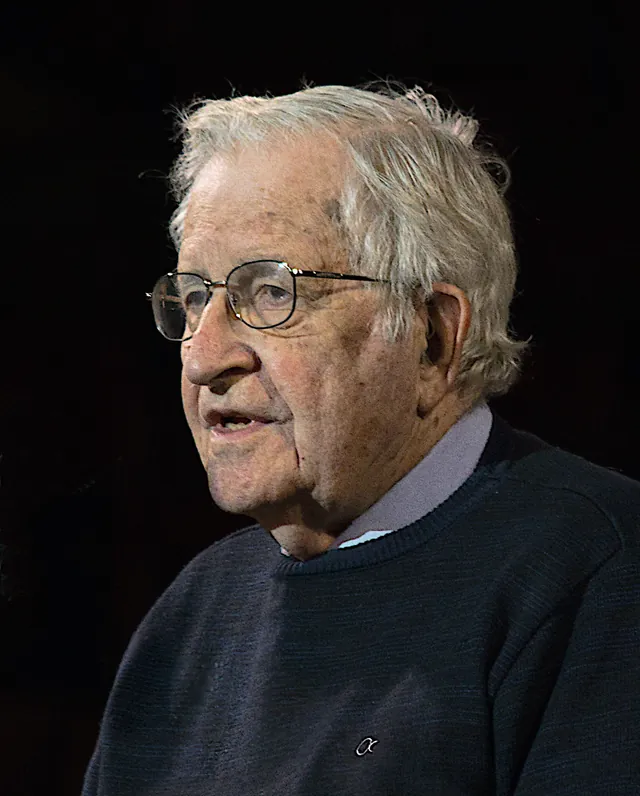
Noam Chomsky’s IQ score is a case where the pages that print a number and the pages that decline to print one sit side by side. ZestVine’s “27 Smartest People In The World” list (last updated June 28, 2023) carries the heading “Noam Chomsky – IQ 140,” and sociosite.net says his I.Q. is “estimated at around 140.” Neither names a test, a date for the figure or a method. Against them, iqtesta.com says on a page about his IQ score that it is unknown, geniuses.club says no IQ figure for him appears in any source it used, and two other “smartest people alive” lists, Kate Knows (June 5, 2025) and Back in Time Today (February 27, 2026), list him with no number at all. That is the usual pattern for a celebrity IQ number: a figure appears without a source, other pages repeat it, and the repetition starts to look like evidence. We could not trace the 140 to anything earlier or firmer than those two pages; a score around 140 would be a high one, but no test stands behind it.
Nor does anything from Chomsky himself supply a number: we found no score report, no school or clinical record and no interview in which he states a result. What he did publish on the subject, in 1972, were two essays criticizing the Harvard psychologist Richard Herrnstein’s argument that American society was drifting toward a hereditary meritocracy: “The Fallacy of Richard Herrnstein’s IQ” in Social Policy (May/June 1972) and “IQ Tests: Building Blocks for the New Class System” in Ramparts (July 1972). Both critique an argument; neither discloses a result. That leaves the 140 as the whole of the circulating evidence, and a figure that two lists print without a method is a label rather than a measurement.
Set against the record this site can check, the pattern runs the unusual way: on most pages here the circulating figure sits above the documented record, but Chomsky’s only circulating figure, 140, sits below the 150–170 range his record supports. That range matches the one given to Stephen Hawking, who, as his profile here records, told an interviewer he had no idea what his IQ was; Chomsky has no such on-record answer that we could find. It sits a little under the 160–175 given to Bertrand Russell, whose range rests partly on a ranked Cambridge examination result (Seventh Wrangler, 1893), and below the 165–185 given to Edward Witten, whose record includes a Fields Medal, a peer-judged mathematical yardstick with no counterpart in a citation count. None of this position is a measurement; it is where a documented career of this scale tends to fall, and it could be wrong in either direction.
How we read a number →No score report, school record or clinician’s account for Chomsky turned up in Wikipedia (no mention of IQ or intelligence testing in the text retrieved), the Kyoto Prize page, the University of Arizona page or MIT News’ 1992 citation report, and a search for an interview in which he states a personal score returned none. geniuses.club, which publishes an IQ figure only when a named outlet has reported one, lists none for him.
ZestVine (last updated June 28, 2023) heads the entry “Noam Chomsky – IQ 140” with no method or source; sociosite.net says his I.Q. is “estimated at around 140.” Neither cites a test.
iqtesta.com calls his IQ unknown and gives no number; geniuses.club states that no IQ figure for him appears in any source it used; Kate Knows (June 5, 2025) and Back in Time Today (February 27, 2026) list him among the smartest people alive with no IQ figure.
Reports 3,874 citations in the Arts and Humanities Citation Index, 1980–1992: the most-cited living person and the eighth most-cited source overall (Marx, Lenin, Shakespeare, Aristotle, the Bible, Plato, Freud, Chomsky, Hegel, Cicero). Also 7,449 citations in the Social Science Citation Index (1972–1992) and 1,619 in the Science Citation Index (1974–1992); the numbers were checked by MIT’s Humanities Librarian, Theresa A. Tobin.
kyotoprize.org confirms the 1988 Kyoto Prize in Basic Sciences, field Cognitive Science, for creating the theory of generative grammar and contributing to the formation of cognitive science, with a chronology: born in Philadelphia 1928; M.A. 1951; Ph.D. in linguistics, Penn, 1955; MIT assistant professor 1955, professor 1961, Institute Professor 1976. The Franklin Institute confirms the 1999 Benjamin Franklin Medal in Computer and Cognitive Science.
States that he joined the University of Arizona in fall 2017 from MIT, where he had worked since 1955 as Institute Professor, later Institute Professor emeritus; gives the titles Laureate Professor of Linguistics and Agnese Nelms Haury Chair; names Syntactic Structures, Language and Mind, Aspects of the Theory of Syntax and The Minimalist Program; lists the Kyoto Prize, the Helmholtz Medal and the Franklin Medal; and credits him with more than 100 books.
The archive page gives the review’s original citation as Language, volume 35, number 1, pages 26–58 (1959). The 1956 PDF, from MIT’s Department of Modern Languages and Research Laboratory of Electronics, formalizes phrase-structure and transformational grammars; its journal citation (IRE Transactions on Information Theory, 1956) comes from Wikipedia’s Chomsky hierarchy article.
EJ061325: Chomsky, “The Fallacy of Richard Herrnstein’s IQ,” Social Policy 3(1), pages 19–25, May/June 1972. EJ064094: Chomsky, “IQ Tests: Building Blocks for the New Class System,” Ramparts 11(2), pages 24–30, July 1972. Both abstracts describe critiques of the Harvard psychologist Richard Herrnstein’s argument that American society is drifting toward a hereditary meritocracy. libcom.org hosts the Ramparts essay under the same title, author and July 1972 date.
Orientation for entry to Penn at 16 in 1945, meeting Zellig Harris in 1947, the honors thesis, the 1951–55 Society of Fellows membership, the dissertation Transformational Analysis, Syntactic Structures (Mouton, The Hague, 1957) and the hierarchy’s original papers and machine types. famousscientists.org is the only opened page that gives the B.A. year (1949). Wikidata Q9049 identifies the American linguist and activist born December 7, 1928, in Philadelphia and carries no date of death.
The sources behind our estimate
The figures that circulate for Noam Chomsky, what we were able to confirm, and where the two diverge.
The only Noam Chomsky IQ score we found is 140, on two pages: ZestVine’s list of smartest people (“IQ 140,” last updated June 28, 2023) and sociosite.net, which says it is “estimated at around 140.” Other “smartest people” pages that list him give no number.
No published IQ test result exists for Noam Chomsky. ZestVine and sociosite.net print 140 without naming a test, a date for the figure or a method; iqtesta.com calls his IQ unknown, and geniuses.club, which publishes an IQ number only when a named outlet has reported one, lists none for him. Wikipedia, the Kyoto Prize page, the University of Arizona page and MIT’s 1992 citation report say nothing about a score.
Read left to right: 140 is the figure two lists print without a source, and 150–170 is the estimated IQ range this site’s record supports. The figure sits below the record, which is unusual in this section, and neither it nor the range is a measurement.
Want a number that does hold up? Every figure on this page is somebody’s claim. Take the 30-question test and get a percentile you can check rather than a figure you have to trust.
Noam Chomsky — frequently asked
What is Noam Chomsky’s IQ?
No published IQ test result exists for Noam Chomsky, so his exact IQ is not known. The only figure we found, 140 on two “smartest people” lists, cites no test. This site’s estimated IQ range, 150–170, is inferred from his 1955 doctorate, his MIT career and a 1992 citation count, not from a test.
Did Noam Chomsky ever take an IQ test?
No test result is public. In the sources checked for this page, including Wikipedia, MIT News, the Kyoto Prize page and the University of Arizona page, no score is reported, and we found no interview in which he gives one. What he did publish, in 1972, were two essays criticizing psychologist Richard Herrnstein’s argument about IQ and social standing.
Where does the 140 IQ score for Noam Chomsky come from?
It traces to no test. ZestVine’s list of smartest people, last updated June 28, 2023, and sociosite.net both print 140, and neither cites a test, a date for the figure or a method. We found no earlier or firmer source. iqtesta.com, by contrast, says his IQ is unknown.
What has Noam Chomsky written about IQ tests?
In 1972 he published two essays criticizing Harvard psychologist Richard Herrnstein’s argument that American society was drifting toward a hereditary meritocracy: “The Fallacy of Richard Herrnstein’s IQ” (Social Policy, May/June 1972) and “IQ Tests: Building Blocks for the New Class System” (Ramparts, July 1972). They critique an argument; neither reports a score of his own.
How does Noam Chomsky’s estimated IQ compare with Stephen Hawking’s and Edward Witten’s?
This site estimates 150–170 for Chomsky, the same range it gives Stephen Hawking, and 165–185 for Edward Witten. The ranges rest on different records: Chomsky’s on a Penn doctorate, an MIT Institute Professorship and a 1992 citation count, Hawking’s on a Cambridge doctorate and the Lucasian chair, Witten’s on a Fields Medal. None comes from a test.
What degree does Noam Chomsky have?
Noam Chomsky earned a Ph.D. in linguistics from the University of Pennsylvania in 1955, after an M.A. there in 1951, and joined MIT as an assistant professor the same year. He became a full professor in 1961 and Institute Professor in 1976, and joined the University of Arizona in fall 2017.
Is Noam Chomsky a genius, and what is he best known for?
He is best known for the theory of generative grammar, set out in Syntactic Structures (1957), for his 1959 review of B. F. Skinner’s Verbal Behavior and for the Chomsky hierarchy of formal grammars. A 1992 MIT News count found him the most-cited living person in the Arts and Humanities Citation Index over 1980–1992. “Genius” has no fixed IQ cutoff; the record supports a high estimate, not a score.
How does my IQ compare with Noam Chomsky?
You can find out in about fifteen minutes. The IQ Metrics assessment is 30 questions, scored on the same 100-mean scale used throughout this page, so your result and the estimate above are at least expressed in the same units — one measured, one inferred. Once you have a number, the leaderboard shows where it would sit, and how we score and norm it explains the benchmarking.
Where does this estimate come from?
From the documented record rather than a test — the method is named above and set out in full under how we read a number. Compare it against the other scientists profiles, starting with Albert Einstein.
- Take the 30-question IQ test — get a measured score and percentile of your own
- Average IQ by country — how the scale behaves across populations
- How IQ Metrics scores its assessment — the method behind our own number
- More on how IQ testing works — reliability, error and what a score can and cannot say
- More scientists profiles — same field, same method
More scientists
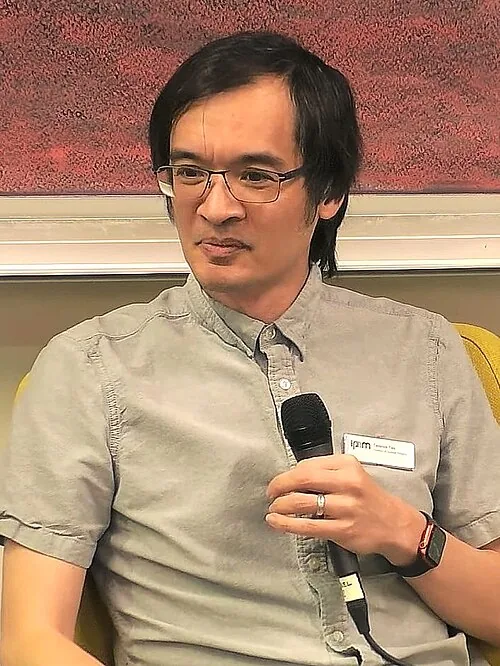
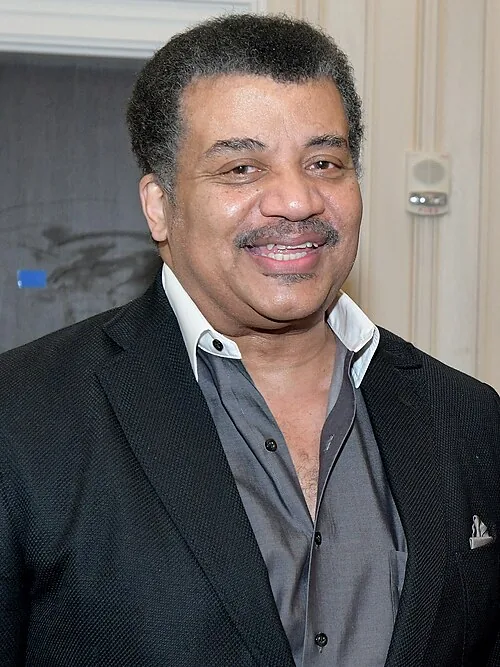
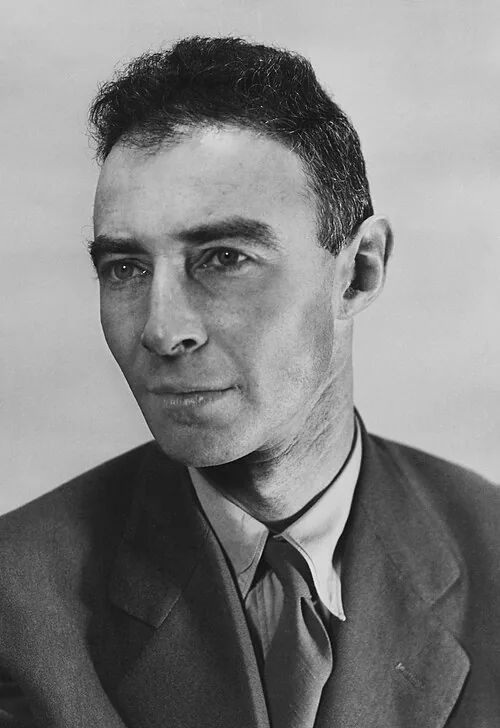
Photograph by the Institute for Pure & Applied Mathematics (2026), CC BY 4.0. Background removed for the portrait above. · Photograph by Maryland GovPics, CC BY 2.0. Background removed for the portrait above. · Photograph from the US National Archives (catalog 558579), public domain.
_(cropped).jpg)
.jpg)
An estimate is an inference.
Yours can be measured.
Thirty questions, scored against general-population benchmarks. Your score, your percentile, your ability breakdown and a printable IIF certificate.
Find your IQ score now! →