



What was Ernest Hemingway’s IQ?
A prose style built to look simple. The mind behind it wasn’t being measured.

Hemingway never attended college, wrote in famously short sentences, and built a reputation for blunt, unadorned prose — three facts that made him an easy target for “all instinct, no intellect” takes for most of a century.
Ernest Hemingway’s estimated IQ
- Skipped college entirely, going straight from Oak Park and River Forest High School to a reporting job at The Kansas City Star in 1917, where the paper’s style guide shaped the terse sentences he used for the rest of his career.
- Read widely and kept a personal library of roughly nine thousand volumes at his Cuban home, Finca Vigía, built up over decades as a war correspondent and long-time expatriate.
- Won the Pulitzer Prize for Fiction in 1953 and the Nobel Prize in Literature in 1954, the Nobel citation naming both his mastery of narrative and his influence on the style of his era.
There is no academic record to anchor this range at all — no college, no test score, nothing beyond a high-school transcript. It rests entirely on adult creative and journalistic output, which is a real achievement but a different kind of evidence than a completed degree or a documented test.
- Born
- 21 July 1899, Oak Park, Illinois
- Died
- 2 July 1961, Ketchum, Idaho
- Field
- Fiction, journalism
- Education
- High school only; no college
- Known for
- Nobel Prize in Literature, 1954; the “iceberg theory” of writing
- Nationality
- American
What an IQ of 128–145 actually means
Set the claim aside for a moment. If someone genuinely scored in this range, here is what that would represent.
Average is 100 by construction, and about two-thirds of people fall between 85 and 115. Take the test to place your own score on this scale.
| Score range | Classification | Share of people | What it indicates |
|---|---|---|---|
| 85 – 114 | Average | ~68% | The range most people fall into. |
| 115 – 129 | Above average | ~13.6% | Roughly one person in seven. |
| 130 – 144 | Gifted | ~2% | The threshold most high-IQ societies use. |
| Above 144 | Highly gifted | ~0.1% | Figures above this range are extrapolated from the curve rather than measured. |
Percentages are approximate and describe a normal distribution. The same number means different things on tests with different standard deviations.
Thirty questions gives you a measured position on this exact scale — your score, your percentile and the ability breakdown behind it.
Find out in 30 minutes →Who Ernest Hemingway was
Ernest Hemingway was born in Oak Park, Illinois, in 1899 and graduated from Oak Park and River Forest High School in 1917, going directly into newspaper reporting rather than college. He volunteered as a Red Cross ambulance driver in Italy during the First World War and was badly wounded by mortar and machine-gun fire in July 1918 while carrying a wounded soldier to safety, an act for which Italy awarded him the Silver Medal of Bravery.
In 1920s Paris he became part of the expatriate circle later called the Lost Generation, mentored early on by Gertrude Stein and Ezra Pound. His breakthrough novels — The Sun Also Rises (1926) and A Farewell to Arms (1929) — established the spare style that later won him the Nobel Prize.
He continued writing and reporting through the Spanish Civil War and the Second World War, publishing For Whom the Bell Tolls (1940) and The Old Man and the Sea (1952) before his death in 1961. He struggled for years with depression and the effects of repeated head injuries; his father and two of his siblings also died by suicide, as did his granddaughter Margaux decades later.
 By Elora Mercer, Celebrity Research WriterFigures checked by Leon Falkner, Data & Research Analyst
Reviewed by Aarav Vardhan, Editor-in-Chief · Last reviewed August 2026
Ernest Hemingway: the documented record
The estimate above rests on this record. Every entry here is a matter of public fact, which is more than can be said for the number itself.
- 1917Graduates high school; joins The Kansas City Star as a reporter.
- 1918Wounded while serving as a Red Cross ambulance driver in Italy; awarded Italy’s Silver Medal of Bravery.
- 1921Moves to Paris as a foreign correspondent.
- 1926Publishes The Sun Also Rises.
- 1929Publishes A Farewell to Arms.
- 1940Publishes For Whom the Bell Tolls.
- 1952Publishes The Old Man and the Sea.
- 1953Wins the Pulitzer Prize for Fiction.
- 1954Wins the Nobel Prize in Literature.
Where the 140 figure came from
Following a claim back to its first appearance is the part almost nobody does — and it is what most people are actually asking.
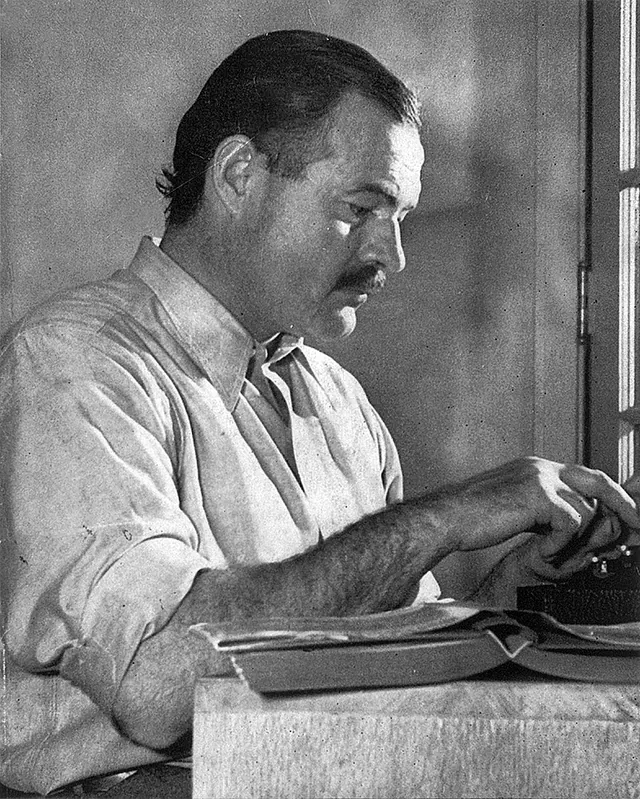
Hemingway’s reputation runs backward from his prose style: short declarative sentences, minimal adjectives, and a famous rule of leaving things out — what he called the “iceberg theory,” where the substance of a story sits mostly below the visible surface of the text. Read uncharitably, that style reads as simplicity, and simplicity gets mistaken for a simple mind.
The style was a deliberate technical choice, refined at a newspaper that enforced it before he ever wrote fiction, and it is a considerably harder thing to execute well than an ornate one — omitting the right material requires knowing what is there to omit. None of that shows up in a number, which is exactly why this page does not try to invent one with false confidence.
The same “plain prose, therefore plain mind” mistake gets made about Mark Twain, an American predecessor Hemingway read closely and who built his own reputation on vernacular simplicity over ornament. Both cases argue for judging the craft rather than reading the sentence length as a proxy for anything.
How we read a number →Awarded “for his mastery of the art of narrative… and for the influence that he has exerted on contemporary style.”
Awarded for The Old Man and the Sea (1952).
The principal archival repository for Hemingway’s manuscripts, letters and personal library records.
The standard biographical source for his schooling, the Kansas City Star years and the Finca Vigía library.
No school, military or clinical test result for Hemingway appears in any source we could find.
The sources behind our estimate
The figures that circulate for Ernest Hemingway, what we were able to confirm, and where the two diverge.
Numbers in the 130s and 140s appear on general “IQ of famous authors” list pages, without a consistent figure or a named source.
We found no record of Hemingway ever taking an IQ test, and no aggregator site publishing a figure for him that traces to an actual source. That is a different, weaker case than a specific wrong number circulating widely — here, several vague numbers circulate loosely, which is its own kind of tell that nothing behind any of them is real.
A narrower, vaguer spread than most pages here — less evidence of one hoax number replicating, more evidence of a genre of listicle that assigns famous writers a plausible-sounding figure and moves on.
Want a number that does hold up? Every figure on this page is somebody’s claim. Take the 30-question test and get a percentile you can check rather than a figure you have to trust.
Ernest Hemingway — frequently asked
What was Ernest Hemingway’s IQ?
No test result exists. Vague figures in the 130s and 140s appear on general “famous authors” list pages with no consistent number or named source. Our 128–145 range is an achievement-based estimate, not a measurement.
Did Hemingway go to college?
No. He went directly from high school to a reporting job at The Kansas City Star in 1917.
What is Hemingway’s “iceberg theory”?
His principle that a story’s deeper meaning should stay beneath the surface of the prose, conveyed by omission rather than explanation — a deliberate technique, not a simplification.
Did Hemingway really win both the Pulitzer and the Nobel Prize?
Yes. The Pulitzer Prize for Fiction in 1953 for The Old Man and the Sea, and the Nobel Prize in Literature in 1954.
How badly was Hemingway wounded in World War I?
Seriously. He was hit by mortar fragments and machine-gun fire in July 1918 while serving as a Red Cross ambulance driver in Italy, and was decorated by the Italian government for his actions that day.
Why does simple prose get mistaken for a simple mind?
Because sentence length is an easy, visible proxy people substitute for harder-to-judge things like control and selection. Mark Twain drew the same mistaken inference for similar reasons.
How does my IQ compare with Ernest Hemingway?
You can find out in about fifteen minutes. The IQ Metrics assessment is 30 questions, scored on the same 100-mean scale used throughout this page, so your result and the estimate above are at least expressed in the same units — one measured, one inferred. Once you have a number, the leaderboard shows where it would sit, and how we score and norm it explains the benchmarking.
Where does this estimate come from?
From the documented record rather than a test — the method is named above and set out in full under how we read a number. Compare it against the other writers profiles, starting with Voltaire.
- Take the 30-question IQ test — get a measured score and percentile of your own
- Average IQ by country — how the scale behaves across populations
- How IQ Metrics scores its assessment — the method behind our own number
- More on how IQ testing works — reliability, error and what a score can and cannot say
- More writers profiles — same field, same method
More writers
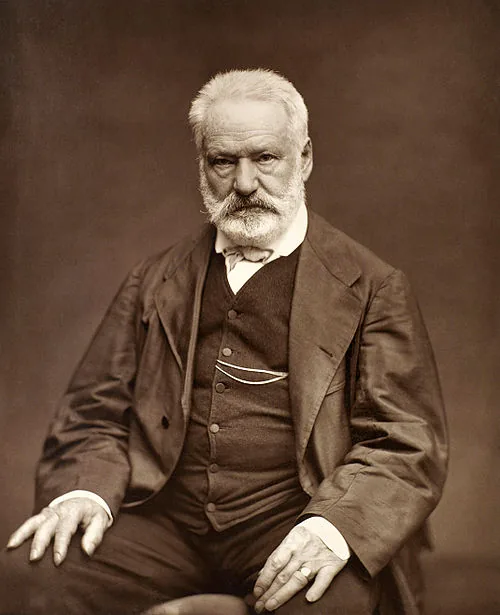
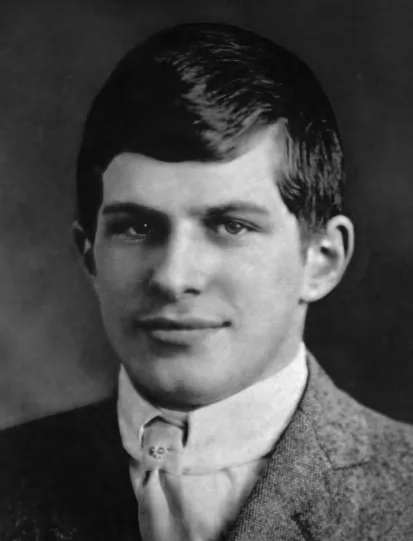
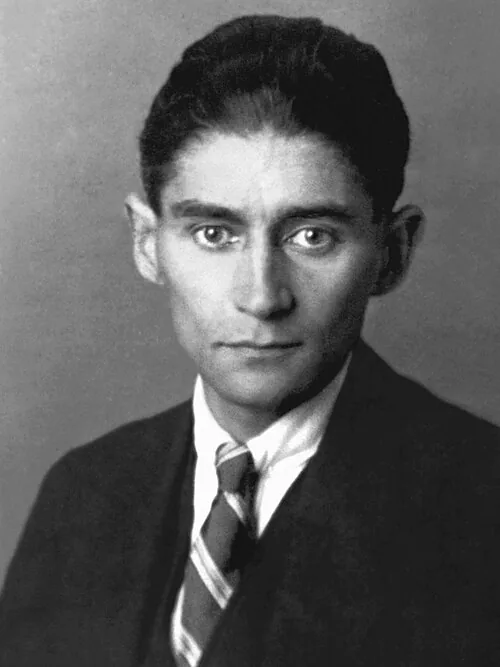
Photograph by Étienne Carjat (1876), public domain. Background removed for the portrait above. · Photograph (1914), photographer unknown, via Wikimedia Commons, public domain. · Photograph by an unknown photographer (1923), public domain. Background removed for the portrait above.


An estimate is an inference.
Yours can be measured.
Thirty questions, scored against general-population benchmarks. Your score, your percentile, your ability breakdown and a printable IIF certificate.
Find your IQ score now! →