



What was Franz Kafka’s IQ?
A completed law doctorate, fourteen years at an insurance institute — and no IQ number, real or invented, attached to either.
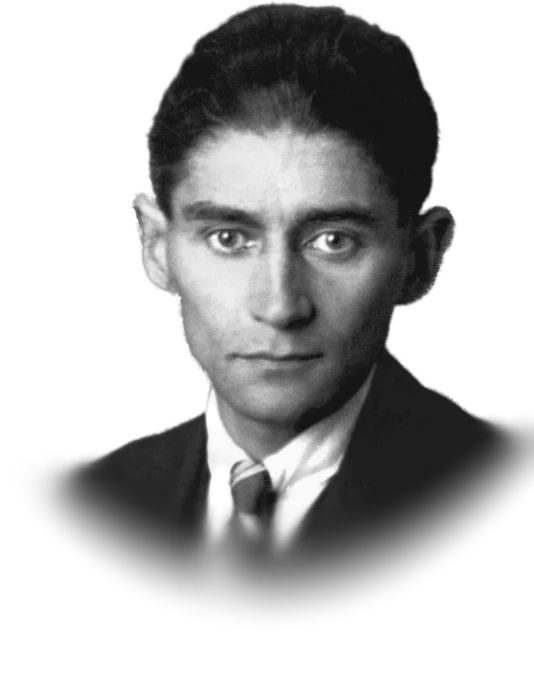
No IQ test result exists for Franz Kafka — unremarkable by itself, since practical intelligence testing barely existed during his lifetime. What is unusual is that no invented figure circulates for him either, unlike almost every other name on this site; what is documented instead is a completed law doctorate and fourteen years rising through a state insurance institute, carried on in parallel with fiction that earned him almost no recognition before he died.
Franz Kafka’s estimated IQ
- Earned a doctorate in law from the German Charles-Ferdinand University in Prague — examined 13 June 1906, conferred five days later, in a ceremony officiated by Alfred Weber, brother of the sociologist Max Weber.
- Eight years at Prague’s Altstädter Deutsches Gymnasium, passing his Matura in 1901 with good marks overall — undercut by a persistent weakness in mathematics that tutoring never fixed, not the record of a uniform prodigy.
- Fourteen years at the Worker’s Accident Insurance Institute for the Kingdom of Bohemia (1908–1922), promoted repeatedly from assistant to senior secretary before tuberculosis forced his retirement.
- Wrote in the hours a full-time legal career left him: “The Judgment” in a single overnight sitting in September 1912, “The Metamorphosis” the same year, and the unfinished manuscripts of The Trial, The Castle and Amerika, none published before his death.
A completed law doctorate and a clean fourteen-year promotion record are real, checkable achievements — but Kafka pursued law reluctantly, for practical reasons, and by his own account found the coursework’s rote memorization distasteful; this documents a competent official, not a demonstrated intellectual passion. The literary reputation that might seem to justify a higher number was assembled entirely after Kafka’s death, and this site will not let posthumous fame stand in for a score that was never taken.
- Born
- 3 July 1883, Prague, Austria-Hungary
- Died
- 3 June 1924, Kierling, near Vienna, aged 40
- Field
- Law by training; literature by later reputation
- Doctorate
- Law, German Charles-Ferdinand University, Prague — conferred 18 June 1906
- Day job
- Worker’s Accident Insurance Institute for the Kingdom of Bohemia, 1908–1922
- Best-known works
- The Metamorphosis (1915); The Trial (1925) and The Castle (1926), both posthumous
- In Cox’s 1926 study?
- No — born 1883, outside her 1450–1850 subject window
What an IQ of 130–145 actually means
Set the claim aside for a moment. If someone genuinely scored in this range, here is what that would represent.
| Score range | Classification | Share of people | What it indicates |
|---|---|---|---|
| 85 – 114 | Average | ~68% | The range most people fall into. |
| 115 – 129 | Above average | ~13.6% | Roughly one person in seven. |
| 130 – 144 | Gifted | ~2% | The threshold most high-IQ societies use. |
| Above 144 | Highly gifted | ~0.1% | Figures above this range are extrapolated from the curve rather than measured. |
Percentages are approximate and describe a normal distribution. The same number means different things on tests with different standard deviations.
Thirty questions gives you a measured position on this exact scale — your score, your percentile and the ability breakdown behind it.
Find out in 30 minutes →Who Franz Kafka was
Franz Kafka was born on 3 July 1883 in Prague, then part of Austria-Hungary, the eldest of six children in a German-speaking Jewish family; two brothers died in infancy, leaving him the eldest alongside three younger sisters, Elli, Valli and Ottla. His father Hermann had arrived in Prague from southern Bohemia in poverty and built a fancy-goods and haberdashery business — canes, parasols, knitwear — into an operation employing up to fifteen people; the relationship between them was difficult enough that Kafka wrote a 45-page indictment of it, the Letter to His Father, in November 1919, which his mother was asked to pass on and never delivered. Kafka spent eight years at the Altstädter Deutsches Gymnasium, passing his Matura in 1901 with good marks overall and a mathematics weakness tutoring never fixed, then entered the German Charles-Ferdinand University in Prague. He tried chemistry for two weeks, drifted toward German studies and art history, and settled on law — a practical choice at a time when antisemitic barriers narrowed the professions realistically open to Jewish students in Bohemia. He sat his final law examination on 13 June 1906 and was awarded a doctorate in law five days later, in a ceremony officiated by Alfred Weber, brother of the sociologist Max Weber.
A mandatory unpaid year clerking in Prague’s civil and criminal courts followed, then a position at the insurance company Assicurazioni Generali from October 1907. Its hours — 8 a.m. to 6 p.m., with paid leave capped at fourteen days every two years — left him no time to write, and in 1908 he transferred to the Worker’s Accident Insurance Institute for the Kingdom of Bohemia, a semi-public body that assessed industrial-accident claims and set workplace-safety risk classes for employers. Its shorter hours, typically finished by early afternoon, gave him his evenings. He stayed fourteen years, promoted repeatedly from assistant to senior secretary, before tuberculosis forced his retirement on 1 July 1922 — a competent, rising legal-official career running in exact parallel with fiction that was, at the time, almost entirely unread.
Kafka wrote The Judgment in a single overnight sitting on 22–23 September 1912 and published it the following year in Max Brod’s yearbook Arkadia; The Metamorphosis, written the same year, appeared in 1915. Diagnosed with pulmonary tuberculosis in August 1917, later spreading to his larynx, he spent his last years moving between sanatoriums while working on The Trial, The Castle and Amerika — all three left unfinished or unrevised, all three unpublished, when he died on 3 June 1924 at a sanatorium in Kierling, near Vienna, weeks after the disease made eating too painful to continue. He had told Brod, his literary executor, to burn his manuscripts, letters and diaries unread. Brod refused, and published The Trial in 1925 and The Castle in 1926 — the foundation of a reputation Kafka did not live to see any part of.
 By Elora Mercer, Celebrity Research WriterFigures checked by Leon Falkner, Data & Research Analyst
Reviewed by Aarav Vardhan, Editor-in-Chief · Last reviewed August 2026

Franz Kafka: the documented record
The estimate above rests on this record. Every entry here is a matter of public fact, which is more than can be said for the number itself.
- 1883Born 3 July in Prague, Austria-Hungary.
- 1901Passes his Matura at the Altstädter Deutsches Gymnasium; enters the German Charles-Ferdinand University.
- 1906Awarded a doctorate in law on 18 June.
- 1908Joins the Worker’s Accident Insurance Institute for the Kingdom of Bohemia, after a brief stint at Assicurazioni Generali.
- 1912Writes “The Judgment” in a single overnight sitting; writes “The Metamorphosis” the same year.
- 1917Diagnosed with pulmonary tuberculosis in August.
- 1922Retires from the insurance institute on medical grounds, 1 July.
- 1924Dies 3 June at a sanatorium in Kierling, near Vienna; The Trial, The Castle and Amerika remain unpublished.
Why no figure circulates
Following a claim back to its first appearance is the part almost nobody does — and it is what most people are actually asking.
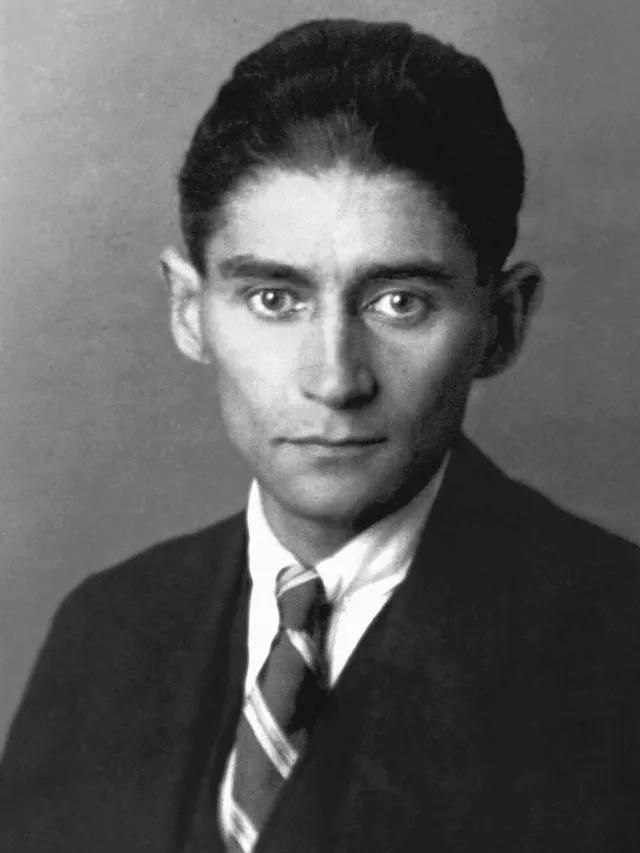
Most subjects on this site have some number attached to them somewhere online, even when it is invented, unsourced or decades removed from its original context. Franz Kafka is close to a genuine exception. A search across the general “highest IQ in history” listicles that reliably name Leonardo da Vinci, Isaac Newton and Johann Wolfgang von Goethe, and the writer-specific rankings that reliably name William Shakespeare, Goethe, Voltaire, Mark Twain and Charles Dickens, turned up no entry for Kafka at all — not a fabricated figure, not a misattributed one, nothing.
Part of this is structural. Catharine Cox’s 1926 study is the source of the “corrected” historiometric estimates this site documents for Voltaire (190) and Victor Hugo (180); it covers 301 subjects born between 1450 and 1850. Kafka, born in 1883, misses that window by more than three decades — by the same logic that keeps Bertrand Russell out of Cox’s real table despite persistent claims to the contrary. No comparable published historiometric study of twentieth-century literary figures appears to name him either.
The more basic reason is that Kafka never had a public “genius” reputation for a number to attach itself to while he was alive. He published a handful of short pieces to a small readership and worked full time as an insurance official; the literary fame now attached to his name is entirely posthumous, assembled by his friend Max Brod after 1924 out of manuscripts Kafka had asked him to destroy. There was no child-prodigy story, no public intelligence claim, no contest result for a listicle to launder into a round number — which may be the simplest explanation for why none exists.
How we read a number →Source for the exact doctorate date, the Alfred Weber detail, and the precise employment dates and promotion record at both companies.
Covers subjects born 1450–1850. Kafka (b. 1883) is outside that window and was never a candidate for its estimates, unlike this site’s Voltaire and Victor Hugo entries.
Scholarly edition of Kafka’s surviving professional reports for the Institute — documents his day job as a substantial body of work in its own right, separate from the fiction.
Cross-checked for birth and death dates, the posthumous publication history, and Max Brod’s role as literary executor.
No test score for Kafka has been found published or referenced anywhere.
Recheck geniuses.club once its full profile renders; first-appearance date of any figure there pending audit.
check-iq.org’s “Which Writer Has the Highest IQ?” ranking lists Shakespeare, Goethe, Swedenborg, Voltaire, Twain and Dickens with no Kafka entry; Reader’s Digest’s 50-highest-IQ list omits him too. A geniuses.club profile page advertises “IQ analysis” for Kafka but did not return a specific figure when checked.
The sources behind our estimate
The figures that circulate for Franz Kafka, what we were able to confirm, and where the two diverge.
This site checked the general “highest IQ in history” listicles and writer-specific IQ rankings that reliably assign round numbers to Shakespeare, Goethe, Voltaire, Twain and Dickens, looking for a Kafka entry — and found nothing attached to his name, sourced or not.
This site could not find any IQ number, credible or fabricated, circulating for Franz Kafka. check-iq.org’s dedicated “Which Writer Has the Highest IQ?” ranking lists Shakespeare (210), Goethe (205), Emanuel Swedenborg (187), Voltaire (186), Mark Twain (170) and Charles Dickens (145) — and stops there, without Kafka. Reader’s Digest’s list of the 50 highest IQs in the world likewise omits him. A profile page for him exists on geniuses.club advertising “IQ analysis,” but it did not return an actual figure when checked.
There is no spread to show: this site could not locate a second circulating number to compare against the first, because it could not locate a first one either.
Want a number that does hold up? Every figure on this page is somebody’s claim. Take the 30-question test and get a percentile you can check rather than a figure you have to trust.
Franz Kafka — frequently asked
What was Franz Kafka’s IQ?
No test result exists, and unlike almost every other name on this site, no invented or popularly circulating figure exists either. What’s documented is a completed law doctorate and fourteen years rising through an insurance institute, run alongside the writing.
Why doesn’t a number circulate for Kafka the way it does for Goethe or Voltaire?
Partly structural: Catharine Cox’s 1926 historiometric study, the source of this site’s Goethe and Voltaire figures, only covers subjects born between 1450 and 1850, and Kafka (born 1883) falls outside it. Partly biographical: he published little to a small readership during his life, so there was no contemporary “prodigy” reputation for a number to attach itself to — his fame is entirely posthumous.
Did Franz Kafka really hold a doctorate in law?
Yes. He was examined on 13 June 1906 and awarded a doctorate in law from the German Charles-Ferdinand University in Prague five days later, in a ceremony officiated by Alfred Weber.
What was Kafka’s day job?
From 1908 to 1922 he worked at the Worker’s Accident Insurance Institute for the Kingdom of Bohemia, assessing industrial-accident and workplace-safety claims, and was promoted repeatedly before tuberculosis forced his retirement.
Were The Trial and The Castle published while Kafka was alive?
No. Both were unfinished or unrevised at his death in 1924 and were published in 1925 and 1926 by his friend Max Brod, who ignored Kafka’s instruction to burn his unpublished manuscripts.
Was Kafka recognized as a genius during his own lifetime?
No. He published only a handful of short pieces to a limited readership and worked full-time as a legal official until illness forced his retirement two years before he died. The reputation that now surrounds him was built almost entirely after his death.
How does my IQ compare with Franz Kafka?
You can find out in about fifteen minutes. The IQ Metrics assessment is 30 questions, scored on the same 100-mean scale used throughout this page, so your result and the estimate above are at least expressed in the same units — one measured, one inferred. Once you have a number, the leaderboard shows where it would sit, and how we score and norm it explains the benchmarking.
Where does this estimate come from?
From the documented record rather than a test — the method is named above and set out in full under how we read a number. Compare it against the other writers profiles, starting with Voltaire.
- Take the 30-question IQ test — get a measured score and percentile of your own
- Average IQ by country — how the scale behaves across populations
- How IQ Metrics scores its assessment — the method behind our own number
- More on how IQ testing works — reliability, error and what a score can and cannot say
- More writers profiles — same field, same method
More writers
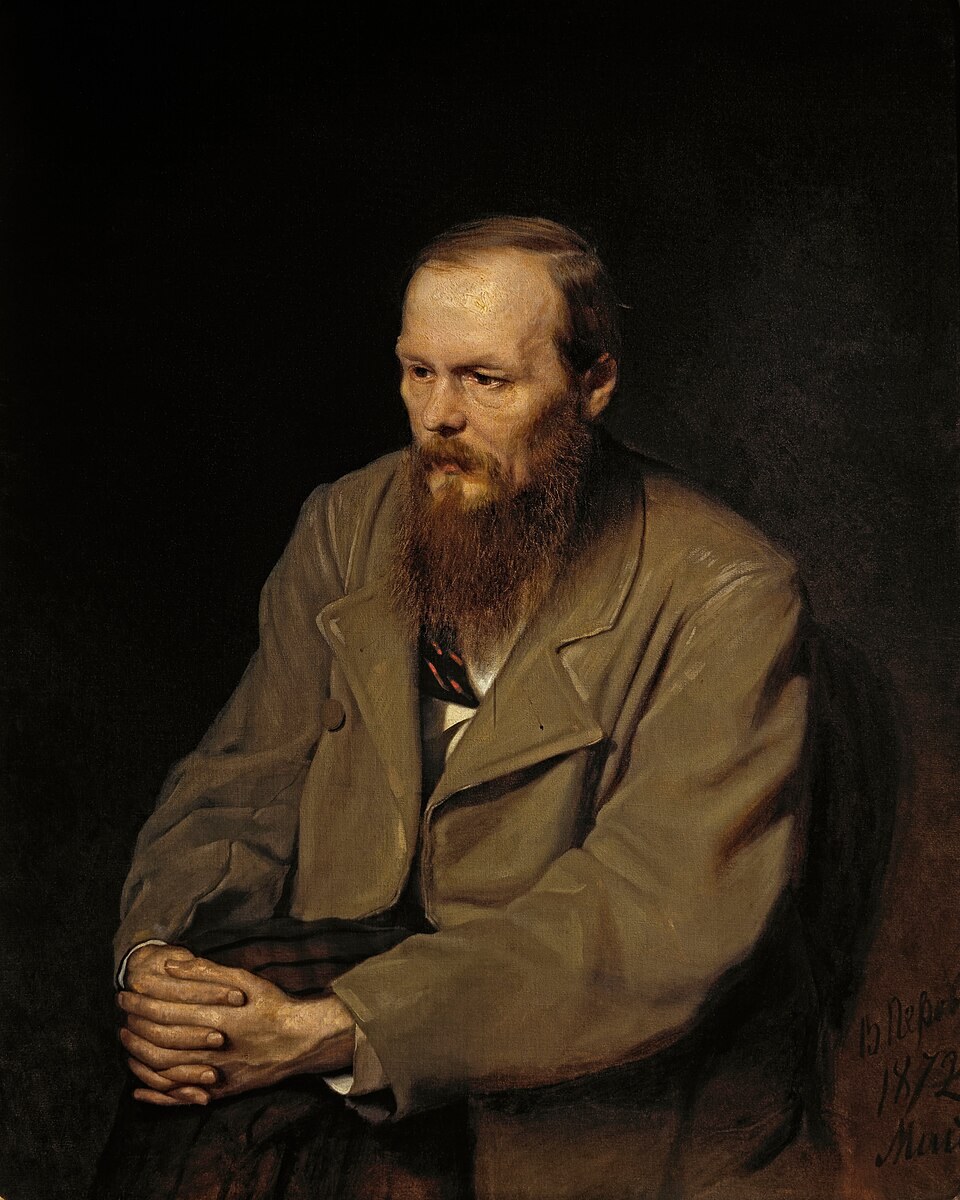

Photograph by Martin Kraft (Frankfurt Book Fair, October 2024), CC BY-SA 4.0. Background removed for the portrait above. · Portrait by Vasily Perov (1872), Tretyakov Gallery, via Wikimedia Commons, public domain. · Photograph by Joe Loong (Tech@State: Moneyball Diplomacy, June 2013), CC BY-SA 2.0. Background removed for the portrait above.
.jpg)


An estimate is an inference.
Yours can be measured.
Thirty questions, scored against general-population benchmarks. Your score, your percentile, your ability breakdown and a printable IIF certificate.
Find your IQ score now! →