



What was Hugo Grotius’ IQ?
The 200 is real arithmetic on a real table, but Cox’s own printed ratings for him are 185 and 190.
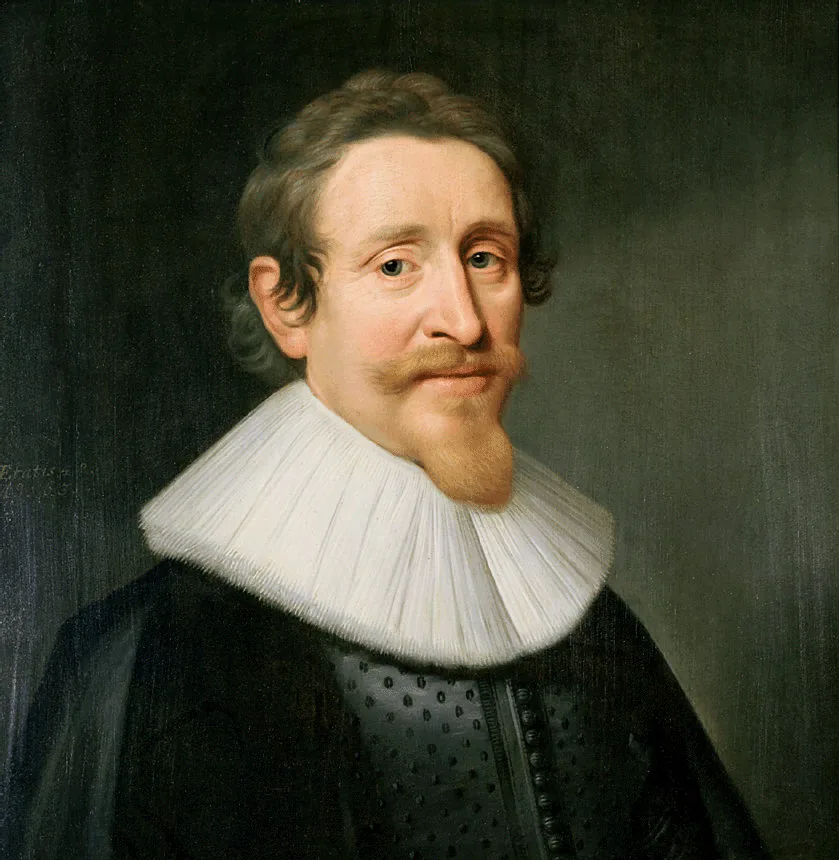
Hugo Grotius was never tested: he died in 1645, 260 years before the first intelligence scale. The 200 that circulates is a corrected rating from Catharine Cox’s 1926 study, whose printed ratings for him are 185 and 190. Our Hugo Grotius IQ estimate is 175–190, from a documented childhood of Latin verse at eight and Leiden University at eleven.
Hugo Grotius’ estimated IQ
- Cox’s obtained ratings of 185 for his first 17 years and 190 through age 26, each with a data reliability of .75 (Table 38, p. 153; case study, pp. 699–702).
- Her corrected estimates of 195 and 200 in the fold-out Table 12A, where he is 72nd in Cattell’s eminence order (read on the archive.org page image).
- Latin verse at 8, Leiden University at 11, an embassy to France at 15 and a law degree from Orléans, all in Cox’s record and confirmed in the Stanford Encyclopedia of Philosophy.
- His mature work: De iure belli ac pacis (Paris, 1625), the book that made him famous (Stanford Encyclopedia of Philosophy).
Cox’s numbers are retrospective ratings of how well a childhood was recorded, not measurements, and she wrote that her corrected estimates are not meant to give exact values for an individual. His record is detailed partly because his family was learned and well known. We keep the range below Leibniz’s 180–195, who shares Grotius’s obtained ratings, because Cox herself ranks John Stuart Mill above both.
- Born
- April 10, 1583, Delft, Holland
- Died
- August 28, 1645, Rostock, Germany
- Fields
- Law, theology, history, poetry
- Early record
- Latin verse at 8; Leiden at 11; embassy to France at 15; law degree from Orléans
- Cox obtained ratings
- 185 (to age 17) and 190 (to age 26), reliability .75 (Table 38, p. 153)
- Cox corrected estimates
- 195 and 200 (fold-out Table 12A); 72nd in Cattell’s eminence order
- Major work
- De iure belli ac pacis, Paris, 1625
- Circulating figure
- 200 (the corrected Cox estimate)
What an IQ of 175–190 actually means
Set the claim aside for a moment. If someone genuinely scored in this range, here is what that would represent.
Average is 100 by construction, and about two-thirds of people fall between 85 and 115. Take the test to place your own score on this scale.
| Score range | Classification | Share of people | What it indicates |
|---|---|---|---|
| 85 – 114 | Average | ~68% | The range most people fall into. |
| 115 – 129 | Above average | ~13.6% | Roughly one person in seven. |
| 130 – 144 | Gifted | ~2% | The threshold most high-IQ societies use. |
| Above 144 | Highly gifted | ~0.1% | Figures above this range are extrapolated from the curve rather than measured. |
Percentages are approximate and describe a normal distribution. The same number means different things on tests with different standard deviations.
Thirty questions gives you a measured position on this exact scale — your score, your percentile and the ability breakdown behind it.
Find out in 30 minutes →Who Hugo Grotius was
Who was Hugo Grotius? He was a Dutch jurist, theologian and poet, born on April 10, 1583, in Delft, the son of a well-educated family. The Stanford Encyclopedia of Philosophy says he wrote skillful Latin elegies at eight and was a student in the Faculty of Letters at Leiden by eleven. Cox, citing his biographers, adds that Latin and Greek were laid before he was seven and that he published an ode in Greek at 12 or 13.
What did he do as a teenager? In 1598, at fifteen, he joined the leading Dutch statesman, Johan van Oldenbarnevelt, on an embassy to France, where Henry IV called him “the miracle of Holland.” He earned a law degree at Orléans, and the Stanford Encyclopedia notes he may have simply bought it. At 17 he was pleading before the highest court of Holland, and at 24 he was made Attorney General of the Court of Holland, Zeeland and Friesland (Cox).
What is he remembered for? De iure belli ac pacis (On the Law of War and Peace), published in Paris in 1625, made him famous and is widely treated as a founding text of international law. Condemned to life imprisonment after the Dutch political crisis, he escaped in March 1621 in a trunk his wife Maria had sent in. He died in Rostock on August 28, 1645, after a shipwreck. Compare other Cox subjects in our historical figures category, such as Blaise Pascal.
 By Elora Mercer, Celebrity Research WriterFigures checked by Leon Falkner, Data & Research Analyst
Reviewed by Aarav Vardhan, Editor-in-Chief · Last reviewed November 2026

Hugo Grotius: the documented record
The estimate above rests on this record. Every entry here is a matter of public fact, which is more than can be said for the number itself.
- 1583Born on April 10 in Delft.
- c. 1591Writes his first skillful Latin elegies at about eight.
- 1594Enters the University of Leiden at 11.
- 1598Travels to France with Oldenbarnevelt at 15 and receives a law degree from Orléans.
- 1599–1600At 16 goes to The Hague to practice law and begins to publish on legal subjects (Cox).
- 1607Made Attorney General of the Court of Holland, Zeeland and Friesland at 24.
- 1618Arrested on August 29 in the coup against the States General; later sentenced to life imprisonment.
- 1621Escapes from prison in March, hidden in a trunk.
- 1625Publishes De iure belli ac pacis in Paris.
- 1645Dies in Rostock on August 28.
- 1926Cox prints his ratings of 185 and 190, corrected to 195 and 200.
Where the 200 figure came from
Following a claim back to its first appearance is the part almost nobody does — and it is what most people are actually asking.
What is Hugo Grotius’s IQ? He has no test score, but he has a printed Cox rating, which is rare. In The Early Mental Traits of Three Hundred Geniuses (1926), Catharine Cox gives him 185 for his first 17 years and 190 for the record through age 26, each with a data reliability of .75 and a margin of ±5 (Table 38, p. 153). His case study runs pp. 699–702. He is 72nd in the eminence order she took from Cattell.
Where does 200 come from? Cox’s fold-out Table 12A (facing p. 60) lists a corrected estimate beside every obtained rating, and for Grotius it reads 195 and 200. She calls the corrections an attempt to indicate “the region of the IQ scale” where a person may lie, not to give exact values (p. 84). How the correction works, and why it lifts documented childhoods, is explained on our Leibniz page, which shares Grotius’s obtained ratings.
Is Grotius above Leibniz and Goethe? Not by Cox’s own printed numbers. Leibniz, Grotius and Goethe form her 185 group, and she wrote that none of the three could have a childhood IQ below 180 (p. 155). She also rates John Stuart Mill above Leibniz and Grotius, because an estimated IQ “is not an adequate measure of universality of interest and significance of achievement” (p. 159). See also the philosophers ranked by IQ page.
How should a score near 200 be read? On a scale with a mean of 100 and a standard deviation of 15, 200 would be about 6.7 standard deviations out, a rarity no real test could confirm; see what an IQ of 200 means. Cox’s old ratio IQ is a different scale from today’s deviation IQ, so the numbers cannot be compared directly with a modern test score. Treat them as a ranking of documented precocity.
How we read a number →Grotius case study pp. 699–702 (AI IQ 185, AII IQ 190, reliability .75 each); Table 38, p. 153; pp. 154–155 (“cannot be less than 180” for Grotius, Leibniz and Goethe); p. 159 (Mill rated above Leibniz and Grotius); p. 84 (corrected estimates not exact values). The corrected 195 and 200 and his eminence rank 72 are read from the fold-out Table 12A on a second scan, geneticstudiesof0002cath_c2h2.
Describes Cox’s two estimates per subject and the corrected values calculated from the reliability of the data; Grotius is not discussed. The DOI and title were checked on Crossref.
Born April 10, 1583, in Delft; Latin elegies at eight; Leiden at eleven; the 1598 embassy to France at fifteen and Henry IV’s “miracle of Holland”; the Orléans law degree (“earned or possibly just bought”); the life sentence, the March 1621 escape in a trunk, De iure belli ac pacis (Paris, 1625) and his death in Rostock on August 28, 1645.
Lists Grotius at 200 beside Leibniz 205 and Goethe 210 and credits Cox without separating obtained from corrected figures.
Confirms Q154959 is the Dutch jurist and scholar (1583–1645), not a namesake.
Portrait painting by Michiel van Mierevelt, 1631, in the Museum Het Prinsenhof, Delft; public domain (PD-Art, PD-old-100-expired).
Ranges used for comparison: Leibniz 180–195, Goethe 165–185, Mill 165–185, Pascal 180–195.
Grotius died in 1645, 260 years before the Binet-Simon scale of 1905. No score, school mark or contemporary measurement exists; only Cox’s retrospective ratings.
The sources behind our estimate
The figures that circulate for Hugo Grotius, what we were able to confirm, and where the two diverge.
Lists of historical geniuses print Grotius at 200 and usually credit Catharine Cox’s 1926 study without saying which of her numbers they mean. Our Leibniz page records one such list, from Meganoticias on November 9, 2025, with Leibniz at 205, Goethe at 210 and Grotius at 200.
The 200 is the corrected AII figure in Cox’s Table 12A (195 for the first period, 200 for the second). Her printed, uncorrected ratings in the case study are 185 and 190. Neither is a test result: both are ratio IQs estimated by raters reading biographies of a man who died in 1645.
Our range ends sit at 175 and 190, and the circulating 200 is Cox’s highest corrected figure. The gap is the correction for thin evidence, which pushes the most documented childhoods furthest up the scale.
Want a number that does hold up? Every figure on this page is somebody’s claim. Take the 30-question test and get a percentile you can check rather than a figure you have to trust.
Hugo Grotius — frequently asked
What is Hugo Grotius’s IQ?
Hugo Grotius was never tested, since he died in 1645. Catharine Cox’s 1926 study prints ratings of 185 and 190 for him, corrected to 195 and 200 in her fold-out table. Our own Hugo Grotius IQ estimate is 175–190, and every figure is a retrospective estimate.
Was Hugo Grotius a child prodigy?
The record says yes. He wrote Latin verse at eight, entered Leiden at 11 and went to France at 15, where Henry IV called him “the miracle of Holland.” Cox quotes a biographer who found “no greater prodigy on record,” and her own analysis calls his gifts harmonious and, intellectually, universal, with the ability of a mature scholar by 16.
Where does the Grotius IQ of 200 come from?
It comes from the corrected estimate in Cox’s Table 12A, which lists 195 for his first period and 200 for the second. Her printed ratings for him are 185 and 190. The correction adds points for how little of a childhood a biography records.
Who had the higher Cox rating, Grotius, Leibniz or Goethe?
On her printed ratings Grotius and Leibniz are level at 185 and 190, and Goethe is 185 and 200. Cox wrote that none of the three could have a childhood IQ below 180, and she rated John Stuart Mill above both Leibniz and Grotius.
How reliable are Cox’s IQ numbers?
They are inferences from biography, not tests. Cox graded Grotius’s data .75, which is good for her sample, but she wrote that her corrected estimates are not meant to give exact values for one person. Documented childhoods score higher, which favors families that kept records.
What did Hugo Grotius write?
His best-known work is De iure belli ac pacis (On the Law of War and Peace), published in Paris in 1625, which helped found modern international law. As a youth he also wrote poems, tragedies such as Adamus Exul (published when he was 18) and the Mare Liberum on freedom of the seas (Cox).
How does Grotius compare with Leibniz and Pascal on this site?
Our range for Grotius is 175–190, a little below Leibniz and Pascal at 180–195 and overlapping Goethe and Mill at 165–185. All of the ranges rest on Cox’s 1926 ratings, so none is a stronger measurement than another.
How does my IQ compare with Hugo Grotius?
You can find out in about fifteen minutes. The IQ Metrics assessment is 30 questions, scored on the same 100-mean scale used throughout this page, so your result and the estimate above are at least expressed in the same units — one measured, one inferred. Once you have a number, the leaderboard shows where it would sit, and how we score and norm it explains the benchmarking.
Where does this estimate come from?
From the documented record rather than a test — the method is named above and set out in full under how we read a number. Compare it against the other historical profiles, starting with Isaac Newton.
- Take the 30-question IQ test — get a measured score and percentile of your own
- Average IQ by country — how the scale behaves across populations
- How IQ Metrics scores its assessment — the method behind our own number
- More on how IQ testing works — reliability, error and what a score can and cannot say
- More historical profiles — same field, same method
More historical
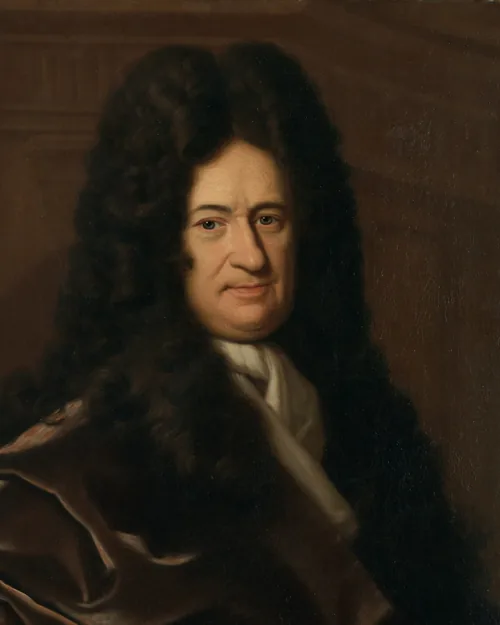
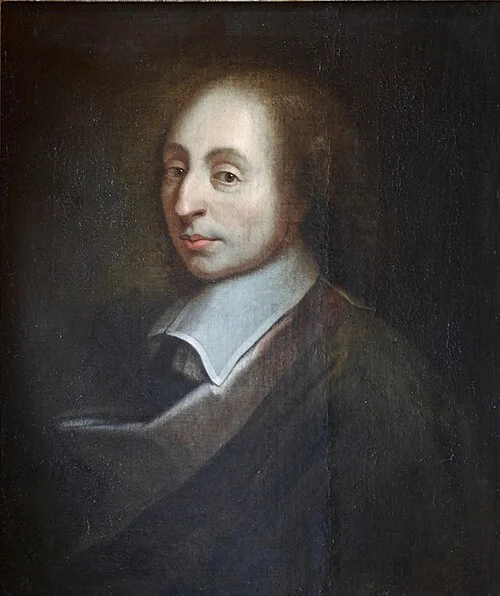
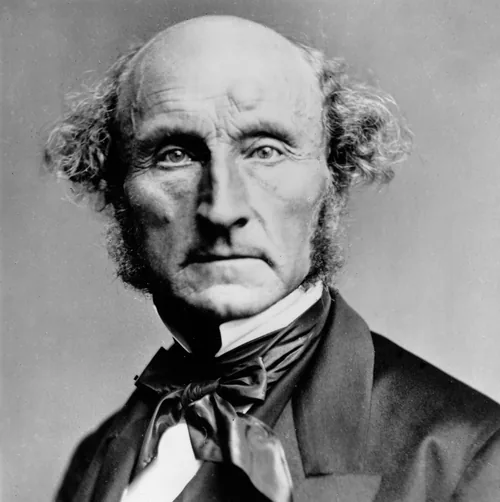
Portrait by Christoph Bernhard Francke (about 1695; Herzog Anton Ulrich-Museum, Braunschweig; Commons file), public domain, cropped. · Portrait, copy after François II Quesnel, via Wikimedia Commons, public domain. · Photograph of John Stuart Mill by the London Stereoscopic Company, about 1870 (Commons file). Public domain. Cropped for the portrait above.


An estimate is an inference.
Yours can be measured.
Thirty questions, scored against general-population benchmarks. Your score, your percentile, your ability breakdown and a printable IIF certificate.
Find your IQ score now! →