



What was Marilyn Monroe’s IQ?
A number invented to argue with a stereotype.
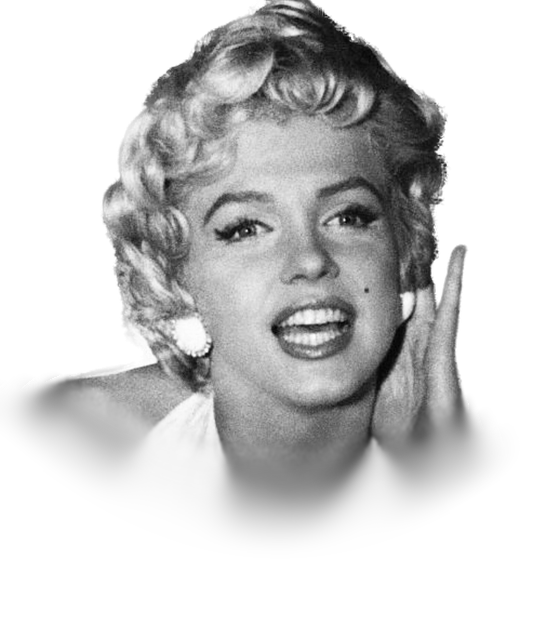
The 168 is repeated as a corrective to the dumb-blonde caricature. It is a fabrication, and the real record is more interesting than the number people reach for.
Marilyn Monroe’s estimated IQ
- Founded Marilyn Monroe Productions in 1955 and used it to renegotiate her Fox contract, winning director approval — an almost unheard-of concession for an actor at the time.
- Enrolled in literature and art appreciation courses at UCLA in 1951.
- Studied at the Actors Studio under Lee Strasberg from 1955.
- Left a personal library of roughly four hundred volumes, catalogued after her death.
There is no test result of any kind, so this is an inference from career decisions and documented self-education. It is a wide range because the evidence supports a direction, not a number.
- Born
- 1 June 1926, Los Angeles
- Died
- 4 August 1962, Los Angeles
- Field
- Film
- Education
- Courses in literature and art appreciation, UCLA, 1951; Actors Studio from 1955
- Known for
- Gentlemen Prefer Blondes, The Seven Year Itch, Some Like It Hot
- On record about IQ
- Nothing. She is not known to have discussed IQ testing at any point.
What an IQ of 120–135 actually means
Set the claim aside for a moment. If someone genuinely scored in this range, here is what that would represent.
Average is 100 by construction, and about two-thirds of people fall between 85 and 115. Take the test to place your own score on this scale.
| Score range | Classification | Share of people | What it indicates |
|---|---|---|---|
| 85 – 114 | Average | ~68% | The range most people fall into. |
| 115 – 129 | Above average | ~13.6% | Roughly one person in seven. |
| 130 – 144 | Gifted | ~2% | The threshold most high-IQ societies use. |
| Above 144 | Highly gifted | ~0.1% | Figures above this range are extrapolated from the curve rather than measured. |
Percentages are approximate and describe a normal distribution. The same number means different things on tests with different standard deviations.
Thirty questions gives you a measured position on this exact scale — your score, your percentile and the ability breakdown behind it.
Find out in 30 minutes →Who Marilyn Monroe was
Norma Jeane Mortenson was born in Los Angeles in 1926 and spent much of her childhood in foster care and an orphanage. She was photographed working in a munitions factory in 1944, began modelling, and signed her first studio contract in 1946.
By 1953 she was a major star. Dissatisfied with the roles Fox was assigning her, she left for New York in 1954, founded Marilyn Monroe Productions with the photographer Milton Greene, and studied at the Actors Studio. The resulting contract was substantially better than the one she had walked away from.
She received a Golden Globe for Some Like It Hot in 1960. She died in Los Angeles in August 1962, aged thirty-six.
 By Elora Mercer, Celebrity Research WriterFigures checked by Leon Falkner, Data & Research Analyst
Reviewed by Aarav Vardhan, Editor-in-Chief · Last reviewed August 2026

Marilyn Monroe: the documented record
The estimate above rests on this record. Every entry here is a matter of public fact, which is more than can be said for the number itself.
- 1926Born in Los Angeles.
- 1946Signs her first contract with Twentieth Century-Fox.
- 1951Enrols in literature and art appreciation courses at UCLA.
- 1953Gentlemen Prefer Blondes and How to Marry a Millionaire make her a major star.
- 1954Leaves Hollywood for New York in a contract dispute.
- 1955Founds Marilyn Monroe Productions; begins at the Actors Studio.
- 1956Signs a new Fox contract including director approval.
- 1960Wins a Golden Globe for Some Like It Hot.
- 1962Dies in Los Angeles, aged thirty-six.
Where the 168 figure came from
Following a claim back to its first appearance is the part almost nobody does — and it is what most people are actually asking.
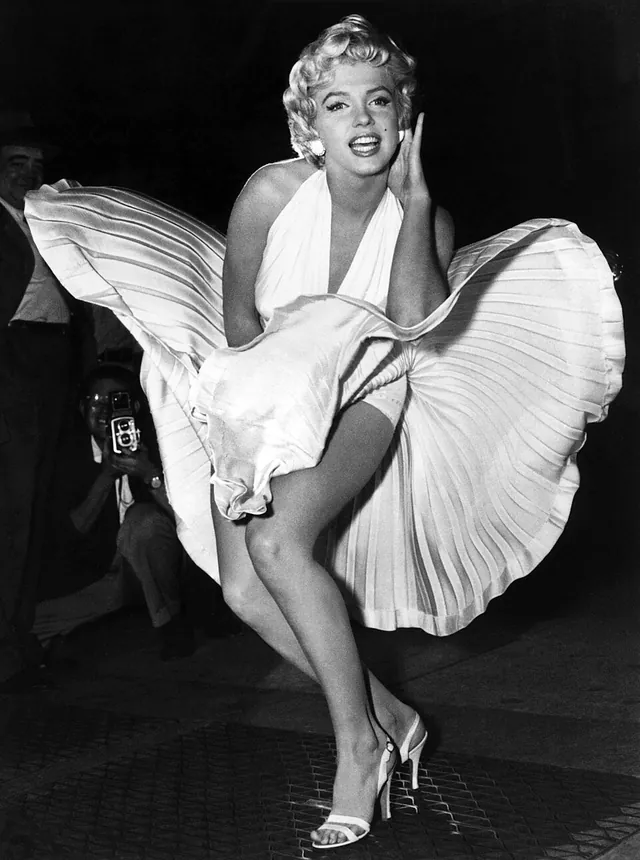
This is the clearest example in the section of a number invented for a purpose. Monroe spent her career being cast as unintelligent and resenting it, and the 168 is deployed — almost always sympathetically — to prove the casting wrong. The motive is decent and the evidence is absent.
Snopes could not identify when she was supposedly tested, by whom, or on what instrument. That combination is the signature of a manufactured figure: real test results come attached to a year and an examiner, because that is how testing works.
What makes the invention unnecessary is that the documented record already makes the point. In 1955 Monroe walked out on the most powerful studio in Hollywood, incorporated herself, and came back with a contract giving her director approval. Very few actors of any era have done that, and none of them needed an IQ score to be credited with knowing what they were doing.
The pattern here runs the same direction as John F. Kennedy, where a documented figure was quietly replaced by a more flattering invention — except that Monroe has no documented figure at all, so the invention had no competition.
How we read a number →The fact-check. Finds no year, no test, no examiner and no documentation of any kind behind the figure.
The documented business record. Cited here as achievement evidence, since no test evidence exists.
Roughly four hundred volumes. Evidence of sustained self-education, not of a score.
No biographer, archivist or historian has produced documentation that Monroe ever sat an IQ test. The archivist of her personal effects has called the claim unfounded.
First-appearance date for the 168 pending audit.
Near-universal and uniformly unsourced. The figure is generally presented as a rebuttal to her screen image rather than as a measurement.
The sources behind our estimate
The figures that circulate for Marilyn Monroe, what we were able to confirm, and where the two diverge.
That her IQ was 168, a figure that appears on virtually every celebrity IQ list and in a great many magazine profiles.
Snopes examined the claim and could not find a year, a test name, an administering psychologist, or any reason she would have been tested. Scott Fortner, who curates the largest archive of Monroe’s personal effects, has called the rumour unfounded. No biographer has produced documentation. The 168 appears to have been generated by the argument it is used to win.
Variants exist but cluster tightly, which is what copying looks like. None of them arrives with a source.
Want a number that does hold up? Every figure on this page is somebody’s claim. Take the 30-question test and get a percentile you can check rather than a figure you have to trust.
Marilyn Monroe — frequently asked
What was Marilyn Monroe’s IQ?
Unknown. No test result has ever been documented. The 168 that circulates everywhere has no year, no test name and no examiner attached to it.
Did Marilyn Monroe have an IQ of 168?
There is no evidence for it. Snopes investigated and found nothing; the curator of the largest archive of her personal effects has described the claim as unfounded.
Was Marilyn Monroe intelligent?
The documented record suggests a shrewd and self-educated woman: UCLA courses in 1951, a personal library of some four hundred books, and a 1955 production company she used to win director approval from Fox.
Where did the 168 figure come from?
No one has traced it to a source. It appears to have been generated to rebut the dumb-blonde stereotype, and it spread because the sentiment behind it was appealing.
Why does this page give a lower range than 168?
Because the estimate here is built from what is documented — education, business decisions, reading — and that evidence supports a direction rather than a precise figure. Inventing a number to be generous would be the same error the 168 already is.
Which other actors are profiled here?
Natalie Portman, who has a published Harvard record, James Woods and Dolph Lundgren, whose chemical engineering degrees are often overstated into test scores.
How does my IQ compare with Marilyn Monroe?
You can find out in about fifteen minutes. The IQ Metrics assessment is 30 questions, scored on the same 100-mean scale used throughout this page, so your result and the estimate above are at least expressed in the same units — one measured, one inferred. Once you have a number, the leaderboard shows where it would sit, and how we score and norm it explains the benchmarking.
Where does this estimate come from?
From the documented record rather than a test — the method is named above and set out in full under how we read a number. Compare it against the other actors profiles, starting with Natalie Portman.
- Take the 30-question IQ test — get a measured score and percentile of your own
- Average IQ by country — how the scale behaves across populations
- How IQ Metrics scores its assessment — the method behind our own number
- More on how IQ testing works — reliability, error and what a score can and cannot say
- More actors profiles — same field, same method
More actors
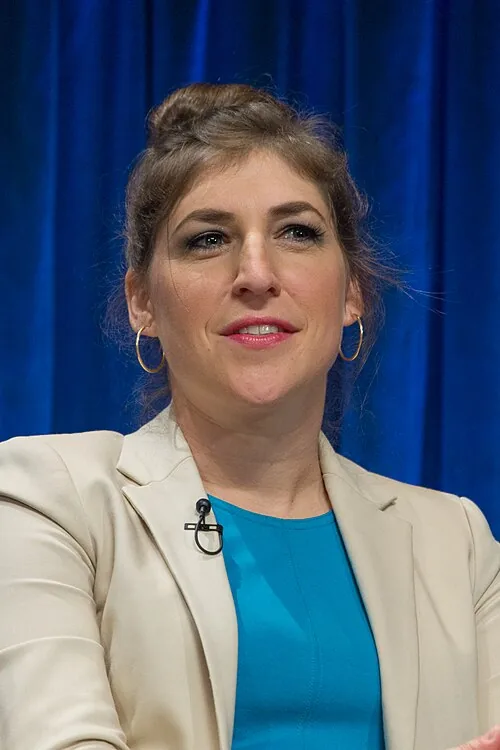
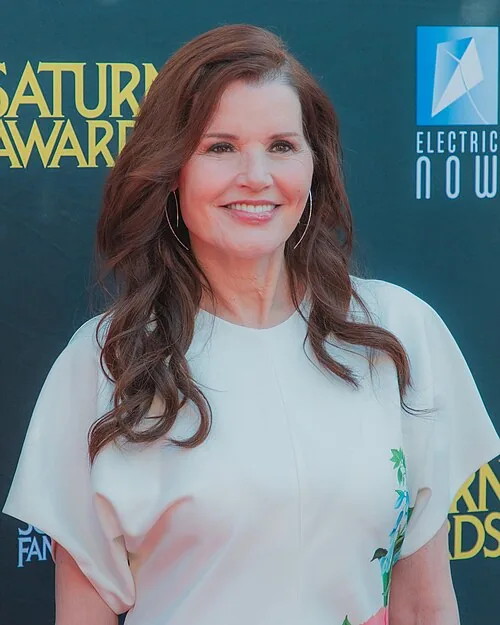
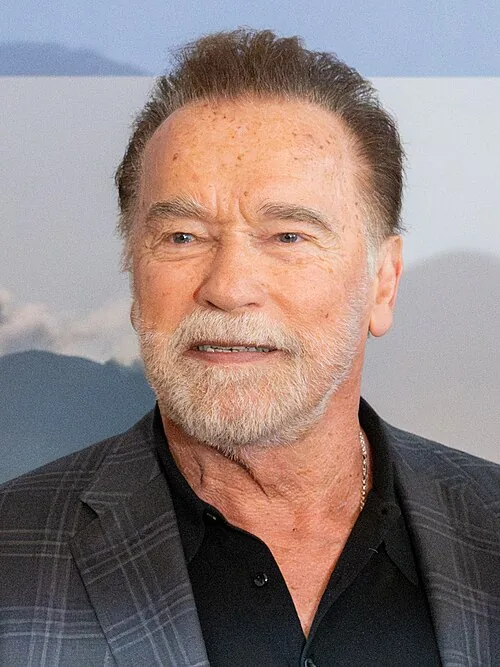
Photograph by iDominick, CC BY-SA 2.0. Background removed for the portrait above. · Photograph by Kevin Paul, CC BY 4.0. Background removed for the portrait above. · Photograph by Bernhard Holub, CC BY-SA 4.0. Background removed for the portrait above.


An estimate is an inference.
Yours can be measured.
Thirty questions, scored against general-population benchmarks. Your score, your percentile, your ability breakdown and a printable IIF certificate.
Find your IQ score now! →