



What was Malcolm X’s IQ?
Class president in the seventh grade, out of school after the eighth, then a dictionary copied by hand in prison: a record of self-education, not a test score.
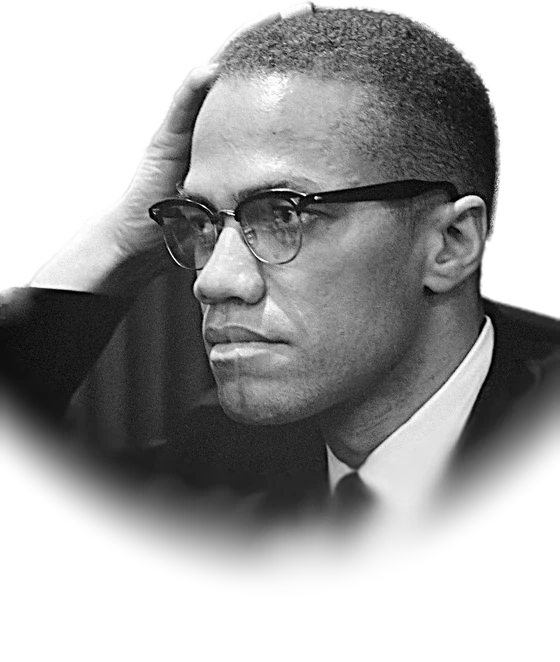
No IQ score has been published for Malcolm X, and none appears in his Autobiography. The documented record is a seventh-grade class presidency, grades he calls among the highest at Mason Junior High School, schooling that ended after the eighth grade, and years of self-education in prison. This page’s estimated IQ for him, inferred from that record, is 120–140.
Malcolm X’s estimated IQ
- Mason Junior High School, Mason, Michigan: elected class president in the second semester of the seventh grade, and, by his own account, grades among the highest in the school. English and history were the subjects he liked most.
- In the eighth grade he kept close to the top of the class, the top standing shifting among him and two classmates, Audrey Slaugh and Jimmy Cotton. He calls himself one of his English teacher’s top students, finished the eighth grade and left school.
- In prison from February 1946 he took correspondence courses, first in English and then in Latin. At the Norfolk Prison Colony he asked the school for a dictionary and copied it page by page, and he guesses he wrote a million words in prison, letters included.
- He joined the Norfolk Prison Colony’s weekly debates, which he calls his baptism into public speaking. By his own count he had later spoken at well over fifty colleges and universities, among them Brown, Harvard, Yale, Columbia and Rutgers.
- He told his life story to Alex Haley, and The Autobiography of Malcolm X was published in 1965, the year he died.
This is a judgment, not a score. The range sits below peers with university degrees because the evidence is thinner: two school years of grades at a small-town junior high and a prison curriculum, both told in his own Autobiography, with no transcript, test or class rank found. Mass Moments backs the dictionary and the reading, but nothing independent backs the grades. Vocabulary growth and debating show verbal skill, not general reasoning, and a school or prison file, if one turns up, would outrank this range.
- Born
- May 19, 1925, Omaha, Nebraska, as Malcolm Little
- Died
- February 21, 1965, Audubon Ballroom, New York City, aged 39
- Schooling
- Mason Junior High School, Mason, Michigan; class president in the seventh grade; finished the eighth grade, where his formal schooling ended
- Prison
- Charlestown State Prison from February 1946; Concord Reformatory; Norfolk Prison Colony from 1948; paroled August 1952
- Self-education
- Correspondence courses in English and Latin; copied a dictionary page by page; weekly debates at Norfolk
- Book
- The Autobiography of Malcolm X, written with Alex Haley, published 1965
- Military classification
- 4-F after an Army psychiatric examination in 1943; a draft classification, not an IQ test
- IQ test result
- None found; no figure with a named test
What an IQ of 120–140 actually means
Set the claim aside for a moment. If someone genuinely scored in this range, here is what that would represent.
| Score range | Classification | Share of people | What it indicates |
|---|---|---|---|
| 85 – 114 | Average | ~68% | The range most people fall into. |
| 115 – 129 | Above average | ~13.6% | Roughly one person in seven. |
| 130 – 144 | Gifted | ~2% | The threshold most high-IQ societies use. |
| Above 144 | Highly gifted | ~0.1% | Figures above this range are extrapolated from the curve rather than measured. |
Percentages are approximate and describe a normal distribution. The same number means different things on tests with different standard deviations.
Thirty questions gives you a measured position on this exact scale — your score, your percentile and the ability breakdown behind it.
Find out in 30 minutes →Who Malcolm X was
Malcolm X was born Malcolm Little on May 19, 1925, in an Omaha hospital, the son of Earl and Louise Little. The family moved to Milwaukee and then to Lansing, Michigan. After a Lansing school expelled him, he was placed in a detention home in Mason and entered Mason Junior High School, where English and history were his favorite subjects. He was elected class president in the seventh grade. He finished the eighth grade and went to live with his half-sister in Boston.
In February 1946 he entered Charlestown State Prison, convicted of burglary and sentenced to eight to ten years. A fellow inmate he calls Bimbi told him to use the correspondence courses and the library. He began with English, saying he could not write the letters he wanted to send, and then took Latin. After Concord Reformatory he reached the Norfolk Prison Colony in 1948, whose library held the Parkhurst bequest and whose instructors came from Harvard and Boston University.
At Norfolk he asked the school for a dictionary and tablets and copied the dictionary from the first page to the last, reading each page back aloud. Mass Moments, a Mass Humanities project, describes the same copying and years of reading. He then entered the Colony’s weekly debates, which he calls his baptism into public speaking. He was paroled in August 1952, and he says his prison studies, not schooling past the eighth grade, explain how he sounds.
He recalls addressing the Harvard Law School Forum and says that by the time of a New York Times poll he had spoken at well over fifty colleges and universities. He was assassinated at the Audubon Ballroom in Harlem on February 21, 1965, aged 39. The Autobiography, completed with Alex Haley, appeared later that year; Time named it in 1998 one of the ten most influential nonfiction books of the 20th century.
 By Elora Mercer, Celebrity Research WriterFigures checked by Leon Falkner, Data & Research Analyst
Reviewed by Aarav Vardhan, Editor-in-Chief · Last reviewed November 2026

Malcolm X: the documented record
The estimate above rests on this record. Every entry here is a matter of public fact, which is more than can be said for the number itself.
- 1925Born Malcolm Little in an Omaha hospital on May 19.
- Before 1941Expelled from a Lansing school, placed in a detention home in Mason, Michigan, and enrolled at Mason Junior High School; elected seventh-grade class president.
- 1941Finishes the eighth grade in Mason and leaves for Boston; his formal schooling ends there.
- 1943Reports for Army induction in New York; a psychiatric examination ends in a 4-F card.
- 1946Enters Charlestown State Prison on February 27, sentenced to eight to ten years for burglary.
- 1947Meets the inmate he calls Bimbi at Charlestown and begins correspondence courses in English, later Latin.
- 1948Transferred to the Norfolk Prison Colony, where he copies a dictionary page by page and joins the weekly debates.
- 1952Paroled in August after a little over six years in prison.
- 1965Assassinated in Harlem on February 21; The Autobiography of Malcolm X is published later that year.
Why no figure circulates
Following a claim back to its first appearance is the part almost nobody does — and it is what most people are actually asking.
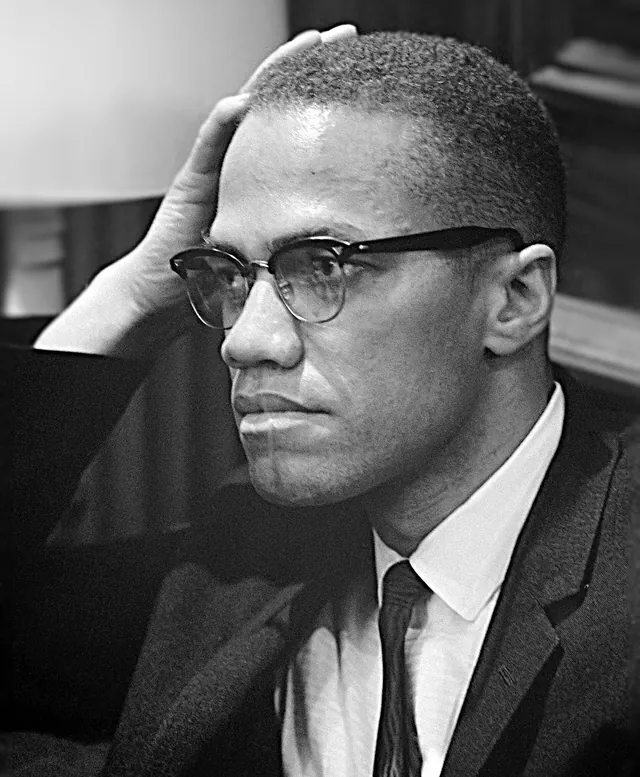
Malcolm X’s IQ score has never been published, and no number for it is tied to a test. The Autobiography of Malcolm X, written with Alex Haley and published in 1965, never mentions an IQ or an intelligence test. The Wikipedia, Mass Moments and States of Incarceration pages checked do not either. It is the pattern this site traces across celebrity IQ numbers, with one difference: no round figure turned up on the pages checked.
So what does the record show about Malcolm X’s IQ level? A school record, in his own words. After a Lansing school expelled him, he was sent to a detention home in Mason, Michigan, and entered the seventh grade at Mason Junior High School, the town’s only school. There he was elected class president, and he writes that his grades were among the highest in the school. He finished the eighth grade, and his formal schooling ended (see whether IQ predicts school success).
The second strand is prison. Entering Charlestown State Prison in February 1946, he took correspondence courses in English and then Latin. At the Norfolk Prison Colony he asked for a dictionary, copied it page by page and joined the weekly debates; Mass Moments confirms the dictionary and the reading. Benjamin Franklin left school at ten and wrote that he lacked a stock of words, so he rewrote Spectator essays from short notes. Neither account is a measurement (see reading and IQ).
On the usual scale, 120–140 runs from about an IQ of 120, roughly the top 9 percent, to about an IQ of 140, roughly the top 0.4 percent. It sits below Martin Luther King Jr.’s 125–145 and Barack Obama’s 130–145, whose ranges rest on university degrees; Malcolm X’s schooling ended at the eighth grade. The evidence for him is verbal and mostly his own telling, so the range is wide and no figure is offered for it.
How we read a number →Mason Junior High School as the town’s only school; class president in the second semester of the seventh grade; grades among the highest in the school; standing near the top in the eighth grade; the English teacher’s advice; the 1943 Army examination and 4-F card; Charlestown correspondence courses in English and Latin; the dictionary copied at Norfolk; the weekly debates; his count of college talks. Searched for I.Q., IQ, intelligence and test: no IQ or test score appears.
Malcolm Little entered Charlestown State Prison on February 27, 1946, aged 20, sentenced to eight to ten years for burglary; transferred to an experimental prison in Norfolk with a large library; read for years, copied a dictionary page by page; paroled 1952. No IQ or test result on the page.
Norfolk’s educational programs, the library, the weekly debate team and the dictionary study. It dates the Norfolk transfer to March 31, 1948, whereas the Autobiography says late 1948, so this page gives the year only. No IQ or test result on the page.
Birth in Omaha, February 1946 sentence at Charlestown, Concord in 1947, parole in August 1952, the Autobiography published after his death, Time’s 1998 ranking of it. Its “high school in 1941” wording conflicts with the Autobiography’s eighth-grade account, which this page follows. No IQ or test result in the part read.
Label Malcolm X; born 19 May 1925, died 21 February 1965; instance of human. Confirms the Q-id is the person.
Put to grammar school at eight, taken home at ten; imitated and rewrote Spectator essays and found he lacked a stock of words. The basis for the self-education comparison.
The site’s own estimated ranges used for the comparisons: King 125–145 (B.A., divinity degree, Ph.D.), Obama 130–145 (Columbia B.A., Harvard Law J.D.), Franklin 155–175.
None found in the full text of the Autobiography, Wikipedia, Mass Moments or States of Incarceration; the Penguin Random House page for The Portable Malcolm X Reader (Marable and Felber, 2013) has no relevant text. Not searched: Marable’s Malcolm X: A Life of Reinvention (Viking, 2011), the Malcolm X papers and the Massachusetts prison and school files.
The sources behind our estimate
The figures that circulate for Malcolm X, what we were able to confirm, and where the two diverge.
No IQ figure for Malcolm X turned up on any page opened for this profile: not in the text of his Autobiography, not on Wikipedia, and not on the museum and archive pages checked. Any round number found elsewhere would have no named test behind it.
No IQ score has been published for Malcolm X. The full text of The Autobiography of Malcolm X (1965, with Alex Haley) contains no IQ, no intelligence test and no test score, and the Wikipedia, Mass Moments and States of Incarceration pages checked give none either. The one examination he describes is a 1943 Army psychiatric interview that ended in a 4-F card; by his own account he set out to be rejected, and a draft classification is not an intelligence score. His school and prison files, the Malcolm X papers and Manning Marable’s 2011 biography could not be checked, so a result inside them cannot be ruled out.
With no circulating figure to compare against, the spread is this page’s own range. On a scale with a mean of 100 and a standard deviation of 15, 120 is about the top 9 percent and 140 about the top 0.4 percent. The band is 20 points wide because the evidence is verbal, partly self-reported and has no test inside it.
Want a number that does hold up? Every figure on this page is somebody’s claim. Take the 30-question test and get a percentile you can check rather than a figure you have to trust.
Malcolm X — frequently asked
What is Malcolm X’s IQ?
IQ Metrics estimates Malcolm X’s IQ at 120–140, inferred from his documented record, because no IQ score for him has been published. The range rests on his seventh-grade class presidency, high grades at Mason Junior High School and the self-education he describes in prison. It is an estimate, not a test result.
Did Malcolm X ever take an IQ test?
No IQ test result for Malcolm X turned up in the sources checked, including the full text of his Autobiography. The one examination he describes is a 1943 Army psychiatric interview that ended in a 4-F card; by his own account he set out to be rejected, and it was not an intelligence test.
Was Malcolm X smart?
By the documented record, yes. He was elected class president in the seventh grade, writes that his grades were among the highest in his school, and in prison taught himself by copying a dictionary and joining weekly debates. The record is largely his own account, though, and no test or transcript was found to confirm it.
How far did Malcolm X go in school?
Malcolm X finished the eighth grade at Mason Junior High School in Mason, Michigan, and his formal schooling ended there. He wrote that people who hear him speak may assume he studied far beyond the eighth grade, and that this impression is due entirely to his studies in prison.
How did Malcolm X educate himself in prison?
He took correspondence courses in English and then Latin at Charlestown State Prison, and at the Norfolk Prison Colony he copied a dictionary page by page, read in the library and joined the weekly debates. He guessed he wrote a million words in prison, counting letters. Mass Moments confirms the dictionary copying and the reading.
Was Malcolm X a genius?
No IQ score settles it. He was a top student in a small-town junior high, taught himself to read and write at a higher level in prison and became a widely heard public speaker. IQ Metrics’ estimated IQ for him is 120–140, and whether that makes him a genius depends on how genius is defined.
How does Malcolm X’s estimated IQ compare with Martin Luther King Jr.’s?
IQ Metrics’ range for Malcolm X, 120–140, sits 5 points below its 125–145 for Martin Luther King Jr. at both ends. The gap reflects the records, not the men: King’s rests on a B.A., a divinity degree and a Ph.D., Malcolm X’s on school grades and self-education. Both are inferences, not measurements.
How does my IQ compare with Malcolm X?
You can find out in about fifteen minutes. The IQ Metrics assessment is 30 questions, scored on the same 100-mean scale used throughout this page, so your result and the estimate above are at least expressed in the same units — one measured, one inferred. Once you have a number, the leaderboard shows where it would sit, and how we score and norm it explains the benchmarking.
Where does this estimate come from?
From the documented record rather than a test — the method is named above and set out in full under how we read a number. Compare it against the other historical profiles, starting with Isaac Newton.
- Take the 30-question IQ test — get a measured score and percentile of your own
- Average IQ by country — how the scale behaves across populations
- How IQ Metrics scores its assessment — the method behind our own number
- More on how IQ testing works — reliability, error and what a score can and cannot say
- More historical profiles — same field, same method
More historical
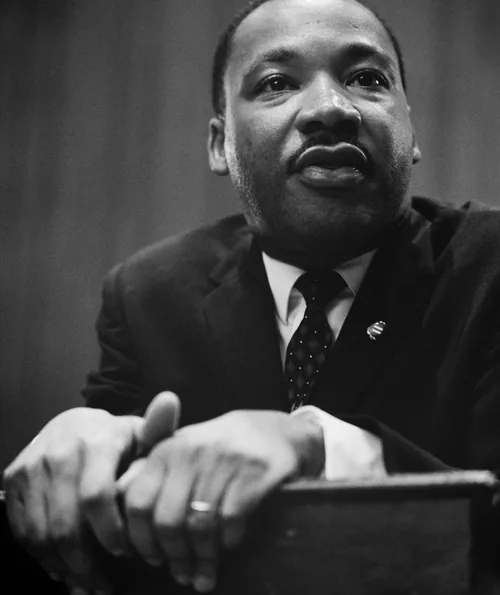
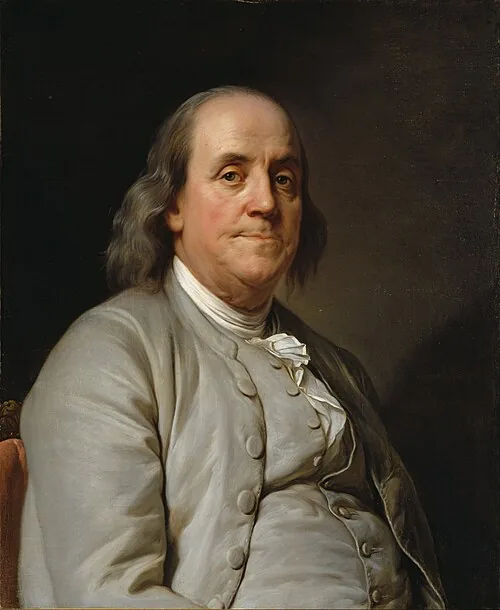
Photograph by Marion S. Trikosko for U.S. News & World Report (March 26, 1964), Library of Congress, Prints and Photographs Division (LC-DIG-ppmsc-01269); no known copyright restrictions. Cropped. · Photograph by an unknown photographer (1906), via Wikimedia Commons, public domain. Background removed for the portrait above. · Portrait by Joseph-Siffred Duplessis (c. 1785), public domain.


An estimate is an inference.
Yours can be measured.
Thirty questions, scored against general-population benchmarks. Your score, your percentile, your ability breakdown and a printable IIF certificate.
Find your IQ score now! →