



What was Max Planck’s IQ?
The father of quantum theory was a good, not a brilliant, schoolboy: usually third to eighth in his class.

Max Planck has no published IQ score, and no number circulates for him. Our Max Planck IQ estimate is 150–170, from a record that includes a doctorate summa cum laude at 21, a Berlin professorship and the 1918 Nobel Prize in Physics. He was born in 1858, outside the sample of Catharine Cox’s 1926 study, so no Cox rating exists either.
Max Planck’s estimated IQ
- A school-leaving examination passed “with distinction” in July 1874 at 16, though he usually ranked between third and eighth in his class (MacTutor).
- A doctorate, summa cum laude, on July 28, 1879, at 21, with a thesis on the second law of thermodynamics, and a habilitation in June 1880 (MacTutor).
- Extraordinary professor at Kiel in 1885, extraordinary professor and director of the Institute for Theoretical Physics at Berlin in 1888, and ordinary professor in 1892 (MacTutor).
- The presentation of his quantum theory of radiation on December 14, 1900, and the 1918 Nobel Prize in Physics “for his discovery of energy quanta,” received in 1919 (MacTutor; Nobel Foundation).
A record of this kind shows ability at the highest level of physics but not a score. Planck’s school record is good, not exceptional, and he wrote later that no prominent scientist or teacher had directed the course of his education. He was born in 1858, so Cox’s 1926 method cannot rate him, and this range sits a little below the 160–180 this site gives Einstein, Bohr and Dirac.
- Born
- April 23, 1858, Kiel
- Died
- October 4, 1947, Göttingen
- School
- Maximilian Gymnasium, Munich; usually 3rd to 8th in class; leaving exam with distinction, July 1874
- Doctorate
- University of Munich, summa cum laude, July 28, 1879, aged 21
- Posts
- Kiel (1885); Berlin professor and institute director (1888); ordinary professor (1892) to 1927
- Quantum theory
- Presented on December 14, 1900
- Nobel Prize
- Physics 1918, received in 1919, “for his discovery of energy quanta”
- Circulating figure
- None found; no IQ score, Mensa listing or test is published
What an IQ of 150–170 actually means
Set the claim aside for a moment. If someone genuinely scored in this range, here is what that would represent.
| Score range | Classification | Share of people | What it indicates |
|---|---|---|---|
| 85 – 114 | Average | ~68% | The range most people fall into. |
| 115 – 129 | Above average | ~13.6% | Roughly one person in seven. |
| 130 – 144 | Gifted | ~2% | The threshold most high-IQ societies use. |
| Above 144 | Highly gifted | ~0.1% | Figures above this range are extrapolated from the curve rather than measured. |
Percentages are approximate and describe a normal distribution. The same number means different things on tests with different standard deviations.
Thirty questions gives you a measured position on this exact scale — your score, your percentile and the ability breakdown behind it.
Find out in 30 minutes →Who Max Planck was
Who was Max Planck? He was born on April 23, 1858, in Kiel, and died on October 4, 1947, in Göttingen (Nobel Foundation). His family moved to Munich in the spring of 1867, where his father had been appointed a professor, and he entered the Maximilian Gymnasium that May. Music was perhaps his best subject, and he played piano and organ extremely well (MacTutor).
What was his academic path? He entered the University of Munich on October 21, 1874, moved to Berlin in October 1877 to study under Weierstrass, Helmholtz and Kirchhoff, and returned to Munich for his doctorate in July 1879. After the habilitation in 1880 he held an unpaid lecturing post for five years, then became a professor at Kiel in 1885 and at Berlin in 1888, where he stayed until he retired in 1927 (MacTutor).
What is he remembered for? In October 1900 he announced a radiation formula, and on December 14, 1900 he presented its explanation using quanta of energy. The Nobel Prize in Physics for 1918 was awarded to him “in recognition of the services he rendered to the advancement of Physics by his discovery of energy quanta”; he received it in 1919 because the committee reserved the 1918 prize (Nobel Foundation). See other scientists in our scientists category, or Paul Dirac from the next generation of quantum physicists.
 By Elora Mercer, Celebrity Research WriterFigures checked by Leon Falkner, Data & Research Analyst
Reviewed by Aarav Vardhan, Editor-in-Chief · Last reviewed November 2026

Max Planck: the documented record
The estimate above rests on this record. Every entry here is a matter of public fact, which is more than can be said for the number itself.
- 1858Born on April 23 in Kiel.
- 1867Moves to Munich and enters the Maximilian Gymnasium in May.
- 1874Passes his school-leaving examination with distinction in July and enters the University of Munich in October.
- 1877Moves to the University of Berlin to study under Helmholtz and Kirchhoff.
- 1879Receives his doctorate, summa cum laude, on July 28.
- 1885Appointed extraordinary professor of theoretical physics at Kiel.
- 1888Appointed to Berlin, where he becomes ordinary professor in 1892.
- 1900Presents his quantum explanation of radiation on December 14.
- 1919Receives the Nobel Prize in Physics for 1918.
- 1947Dies in Göttingen on October 4.
Why no figure circulates
Following a claim back to its first appearance is the part almost nobody does — and it is what most people are actually asking.
What is Max Planck’s IQ? No score has been published, and we found no figure attached to him on any page we could read. He died in 1947 and no record of an IQ test exists. For how celebrity numbers are made and why most are not tests, see where celebrity IQ numbers come from; this page is the case of a documented scientist with no number at all.
Is Planck in Catharine Cox’s study of geniuses? No. Cox’s 1926 sample covers people born between 1450 and 1850, and Planck was born in 1858, so no Cox rating exists for him. Albert Einstein, Niels Bohr and Werner Heisenberg, who built on his quantum theory, were all born after 1850 as well, so a page that quotes a “Cox IQ” for any of them is not quoting Cox. See also what was measured and what was guessed about Nobel winners.
Was Planck a child prodigy? Not by the school record. MacTutor’s biography says he did well at the Maximilian Gymnasium in Munich “but not brilliantly,” usually ranking between third and eighth in his class, with music his best subject. A school report of 1872 reads: “he has a very clear, logical mind. Shows great promise.” He passed his leaving examination with distinction in July 1874, at 16, and took his doctorate five years later.
Was he really told not to study physics? His professor Philipp von Jolly told him that physics was essentially a complete science with little prospect of further developments, according to MacTutor. Planck studied it anyway. In 1888 his work on thermodynamics won him the Berlin chair, and in 1900 he introduced the quanta of energy. If you want to see what a score in the 150s or 160s means, use our IQ percentile calculator.
How we read a number →Born April 23, 1858, in Kiel; died October 4, 1947, in Göttingen; the prize motivation “in recognition of the services he rendered to the advancement of Physics by his discovery of energy quanta”; received one year later, in 1919, because the 1918 prize was reserved.
Maximilian Gymnasium from May 1867, “not brilliantly,” usually third to eighth in class; the 1872 school report; the examination with distinction in July 1874; Jolly’s remark that physics was nearly complete; the doctorate on July 28, 1879, aged 21, summa cum laude; the 1880 habilitation; Kiel 1885, Berlin 1888 and 1892; the December 14, 1900 presentation.
Confirms Q9021 is the German theoretical physicist (1858–1947), not a namesake or an institute.
Photograph by AB Lagrelius & Westphal, 1918, published in 1919 in Les Prix Nobel 1918; public domain (PD-Sweden-photo). The 1938 Erfurth photograph was rejected because its file page shows no U.S. public-domain basis.
Ranges used for comparison: Einstein 160–180, Bohr 160–180, Heisenberg 165–185, Dirac 160–180.
The Nobel Foundation, MacTutor and a web search for a stated figure found no IQ test result, Mensa listing or school test score for Max Planck, and no page that gives a number for him.
The sources behind our estimate
The figures that circulate for Max Planck, what we were able to confirm, and where the two diverge.
People search for “Max Planck IQ” and “Max Planck estimated IQ,” but a web search found no page that states a number for him with a test, a date and a source.
The Nobel Foundation, MacTutor’s biography and Wikipedia give birth and death dates, degrees, posts and prizes, and none gives an IQ, Mensa listing or school test score. The documented school record is a ranking within a class, usually third to eighth.
Only our range ends are shown, because no figure circulates. Both ends are judgments about a documented academic and scientific record, not about a test.
Want a number that does hold up? Every figure on this page is somebody’s claim. Take the 30-question test and get a percentile you can check rather than a figure you have to trust.
Max Planck — frequently asked
What is Max Planck’s IQ?
Max Planck has no published IQ score and no figure circulates for him. Our own Max Planck IQ estimate is 150–170, drawn from his record: a doctorate summa cum laude at 21, a Berlin professorship and the 1918 Nobel Prize in Physics. He was born in 1858, outside Cox’s sample.
Was Max Planck a child prodigy?
Not by the school record. MacTutor says he did well but “not brilliantly,” usually third to eighth in his class, with music his best subject. A 1872 report called him clear and logical and said he showed great promise. He passed his leaving exam with distinction at 16.
Max Planck vs Einstein: whose record is stronger?
Both have a Nobel Prize and neither has a test score. On this site Einstein is 160–180 and Planck 150–170. Planck’s school record was good, not exceptional, and the gap reflects that, not a measured difference.
Why did Planck win the 1918 Nobel Prize?
The Nobel Foundation’s motivation is “in recognition of the services he rendered to the advancement of Physics by his discovery of energy quanta.” He presented the quantum explanation of radiation on December 14, 1900, and received the prize in 1919 after the 1918 prize was reserved.
Was Planck really told not to study physics?
According to MacTutor, his Munich physics professor Philipp von Jolly told him that physics was essentially a complete science with little prospect of further developments. Planck chose to study physics anyway, after weighing a career in music.
Is Max Planck in Catharine Cox’s study of 300 geniuses?
No. Cox’s 1926 study covers people born between 1450 and 1850, and Planck was born in 1858. Because of that no Cox rating exists for him, and this page cannot borrow a number from her tables.
How old was Planck when he earned his doctorate?
He was 21. He received his doctorate from the University of Munich with the grade summa cum laude on July 28, 1879, for a thesis on the second law of thermodynamics. The habilitation followed on June 14, 1880.
How does my IQ compare with Max Planck?
You can find out in about fifteen minutes. The IQ Metrics assessment is 30 questions, scored on the same 100-mean scale used throughout this page, so your result and the estimate above are at least expressed in the same units — one measured, one inferred. Once you have a number, the leaderboard shows where it would sit, and how we score and norm it explains the benchmarking.
Where does this estimate come from?
From the documented record rather than a test — the method is named above and set out in full under how we read a number. Compare it against the other scientists profiles, starting with Albert Einstein.
- Take the 30-question IQ test — get a measured score and percentile of your own
- Average IQ by country — how the scale behaves across populations
- How IQ Metrics scores its assessment — the method behind our own number
- More on how IQ testing works — reliability, error and what a score can and cannot say
- More scientists profiles — same field, same method
More scientists
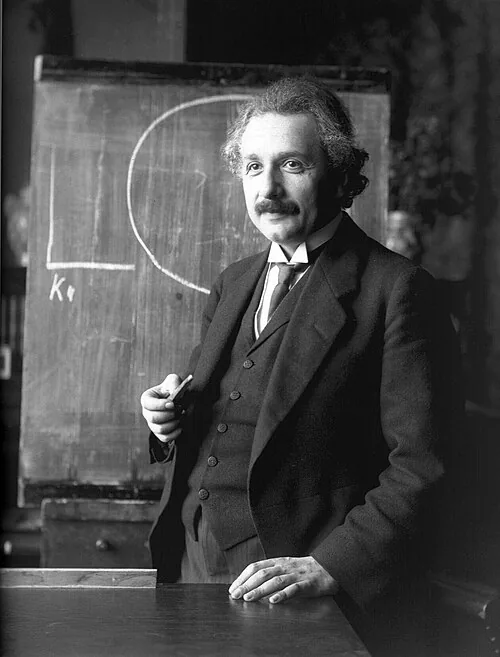
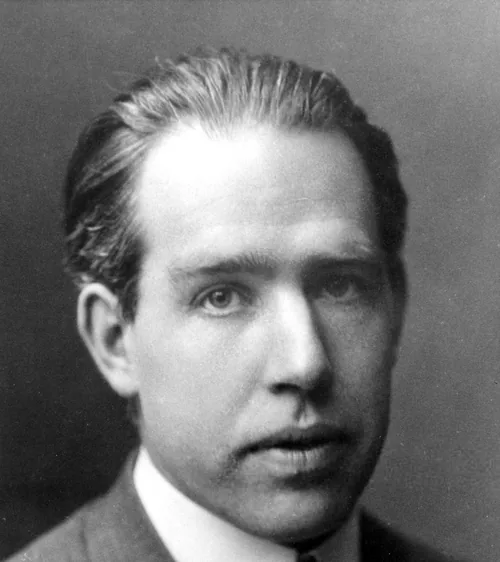
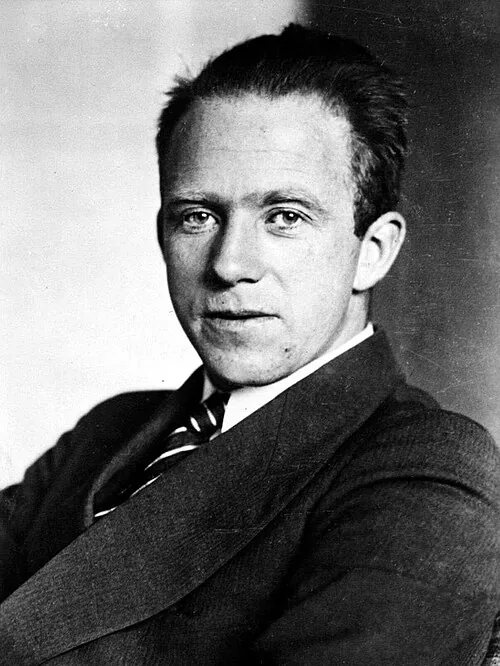
Portrait by Ferdinand Schmutzer (1921), public domain. Background removed for the portrait above. · Portrait, about 1922, credited by the American Institute of Physics to AB Lagrelius & Westphal (Stockholm), as reproduced in Niels Bohr’s Nobel Prize biography (Commons file); public domain. Background removed for the portrait above. · Photographer unknown, via Wikimedia Commons, CC BY-SA 3.0 DE. Background removed for the portrait above.


An estimate is an inference.
Yours can be measured.
Thirty questions, scored against general-population benchmarks. Your score, your percentile, your ability breakdown and a printable IIF certificate.
Find your IQ score now! →