



What was Richard Wagner’s IQ?
A 1926 study rated him 135 and 150 from his early record, then corrected that to 170; no test ever existed.
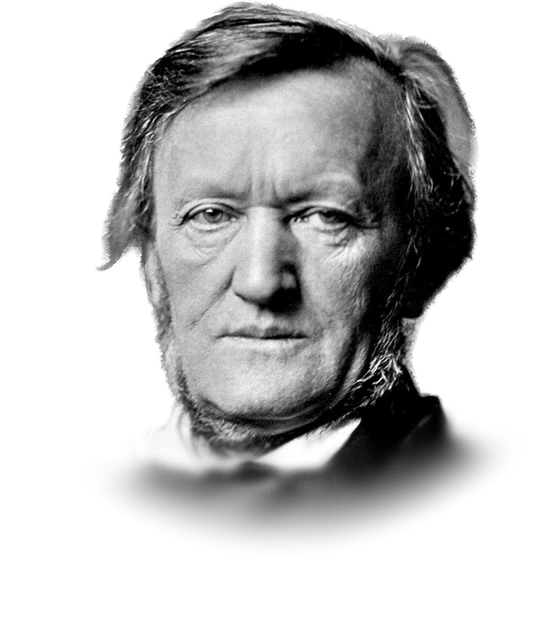
Richard Wagner’s IQ was never measured. The only figures found trace to Catharine Cox’s 1926 study: 135 for his years to age 17, 150 for ages 17 to 26, on thin records, and a corrected 170. A Richard Wagner IQ estimate is therefore an inference, 135–150 here, drawn from his schooling and his work.
Richard Wagner’s estimated IQ
- Catharine Cox’s 1926 ratings from biographical records: 135 for his development to age 17 and 150 for ages 17 to 26, each with a reliability of .53 (Cox, Table 12A and her case entry).
- Five years at the Kreuzschule in Dresden, then the St. Nicholas School in Leipzig, entered in a class he had already finished in Dresden (Cox, 1926).
- Enrolment at Leipzig University in 1831, at 18, as a music student, with composition lessons from the Thomaskantor Theodor Weinlig, who refused payment (Wikipedia).
- He wrote the libretti and the music of all his stage works, finished the texts of the four Ring operas in 1852 and saw the complete cycle premiere at Bayreuth in 1876 (Wikipedia).
These are retrospective ratings from a biography, not test results, and Cox’s reliability of .53 means thin evidence. Her corrected 170 adds points for thin records by a formula, so this range uses her two raters’ estimates instead. Cox also notes that he put little effort into subjects he found uncongenial, so school conduct says little about ability.
- Born
- May 22, 1813, Leipzig
- Died
- February 13, 1883
- Known for
- Operas and music dramas; the four-opera Ring cycle; the Bayreuth Festspielhaus
- Schooling
- Kreuzschule, Dresden; St. Nicholas School, Leipzig (Cox, 1926)
- University
- Leipzig University from 1831, as a music student
- Method
- Wrote both the libretti and the music of all his stage works
- Cox (1926)
- Rated 135 (to age 17) and 150 (ages 17 to 26), reliability .53; corrected 170
- Circulating figure
- 170, the corrected Cox figure; no test result exists
What an IQ of 135–150 actually means
Set the claim aside for a moment. If someone genuinely scored in this range, here is what that would represent.
Average is 100 by construction, and about two-thirds of people fall between 85 and 115. Take the test to place your own score on this scale.
| Score range | Classification | Share of people | What it indicates |
|---|---|---|---|
| 85 – 114 | Average | ~68% | The range most people fall into. |
| 115 – 129 | Above average | ~13.6% | Roughly one person in seven. |
| 130 – 144 | Gifted | ~2% | The threshold most high-IQ societies use. |
| Above 144 | Highly gifted | ~0.1% | Figures above this range are extrapolated from the curve rather than measured. |
Percentages are approximate and describe a normal distribution. The same number means different things on tests with different standard deviations.
Thirty questions gives you a measured position on this exact scale — your score, your percentile and the ability breakdown behind it.
Find out in 30 minutes →Who Richard Wagner was
Who was Richard Wagner? Wilhelm Richard Wagner was born on May 22, 1813, in Leipzig and died on February 13, 1883, according to Wikipedia. He was a German composer, theater director, essayist and conductor, best known for his operas. Unlike most composers, he wrote both the libretti and the music for all of his stage works.
How was Richard Wagner educated? He attended the Kreuzschule in Dresden for about five years as a boy, then entered the St. Nicholas School in Leipzig shortly before he turned 15, in a class he had already finished, and neglected his school work (Cox). In 1831, at 18, he enrolled at Leipzig University as a music student and took composition lessons with the Thomaskantor Theodor Weinlig, who was so impressed that he refused payment (Wikipedia).
What did Richard Wagner write, and is he a genius? “Genius” is a label, not a score. He drafted the Ring scenario before leaving Dresden in 1849, completed the texts of the four-opera cycle in 1852, then had his own opera house built: the Bayreuth Festspielhaus opened on August 13, 1876, with Das Rheingold, and the complete Ring premiered there that year. The philosopher Friedrich Nietzsche, then a friend, wrote the essay “Richard Wagner in Bayreuth” before that festival (Wikipedia). See other musicians we have checked, or compare your own result on the same scale with the IQ Metrics test.
 By Elora Mercer, Celebrity Research WriterFigures checked by Leon Falkner, Data & Research Analyst
Reviewed by Aarav Vardhan, Editor-in-Chief · Last reviewed November 2026

Richard Wagner: the documented record
The estimate above rests on this record. Every entry here is a matter of public fact, which is more than can be said for the number itself.
- 1813Born May 22 in Leipzig.
- 1821After his stepfather’s death, is sent to the Kreuzschule, the boarding school in Dresden (Wikipedia).
- 1828Enters the St. Nicholas School in Leipzig, shortly before turning 15, in a class he had already finished (Cox).
- 1831Enrolls at Leipzig University as a music student and begins lessons with Theodor Weinlig.
- 1848Writes the libretto Siegfrieds Tod, the first text of what becomes the Ring cycle.
- 1852Completes the texts of the four Ring operas.
- 1876The Bayreuth Festspielhaus opens on August 13 with Das Rheingold; the complete Ring cycle premieres there.
- 1883Dies February 13.
- 1926Catharine Cox rates him 135 and 150 in Table 12A of her study of 301 geniuses.
Where the 170 figure came from
Following a claim back to its first appearance is the part almost nobody does — and it is what most people are actually asking.
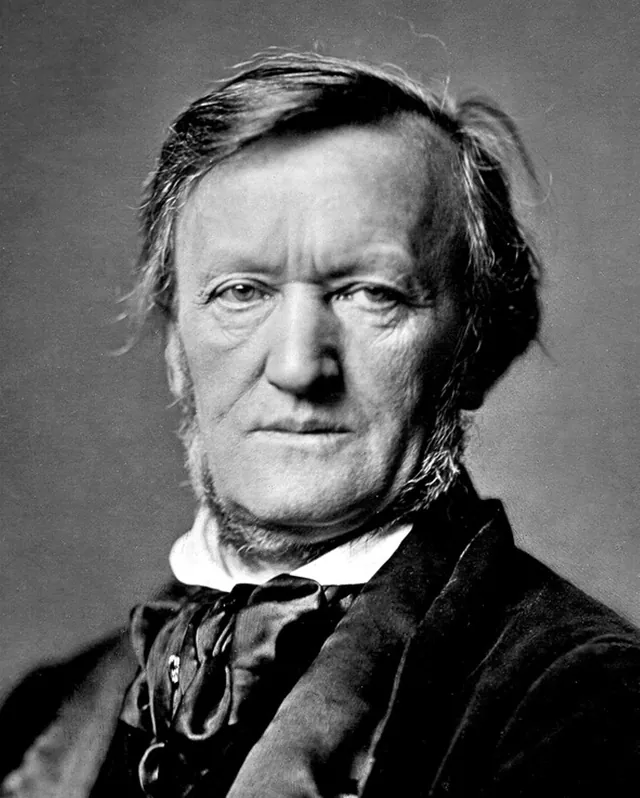
Richard Wagner IQ searches lead to Catharine Cox’s 1926 book, Early Mental Traits of Three Hundred Geniuses. Her raters estimated 135 for his development to age 17 and 150 for ages 17 to 26, on records she rated .53 for reliability, and she printed a corrected 170. Cox says plainly that these are inferences from biography, not test results. Our research on the IQ of historical geniuses lists the same figures.
Was Richard Wagner’s IQ ever measured? No. He died on February 13, 1883, long before the first IQ test. The usual route to a historical IQ is Cox’s book, which also rated Mozart at 150 and 155. Her corrected figure pushes thin records toward the average of the field, so this page uses her two raters’ estimates, 135 and 150, as the base of its range.
What is Richard Wagner’s estimated IQ, and how does it compare with Mozart and Beethoven? 135–150 here. That sits below Mozart and Beethoven (150–165 each) and overlaps Chopin (140–155). On the usual scale (mean 100, SD 15) a 135 is about the 99th percentile and a 150 about the 99.96th; our IQ percentile calculator shows the steps in between.
Does musical ability track IQ? Not in a way any single score settles. Cox’s raters judged Wagner from early interests, schooling and first compositions, and she quotes him on school: “I hardly exerted myself at all in the study of subjects that were uncongenial.” For what research says about music training and IQ, see music lessons and IQ and the Mozart effect.
How we read a number →Read at source: AI IQ 135 and AII IQ 150, both with a reliability coefficient of .53; schooling at the Kreuzschule and the St. Nicholas School; the quotation from Wagner on school subjects; enrolment at the University of Leipzig at 18. The ratings are Cox’s inferences, not test results.
Birth and death dates, the libretti and music for all stage works, Leipzig University in 1831, Theodor Weinlig, the 1848 libretto and the 1852 completion of the Ring texts, and the Festspielhaus opening on August 13, 1876. The article gives no IQ.
Lists Wagner (musician) at 135 and 150 with reliability .53 and a corrected 170, from Cox’s Table 12A, and explains that the correction adds points when records are thin.
Confirms the identifier Q1511 is the German composer (1813–1883).
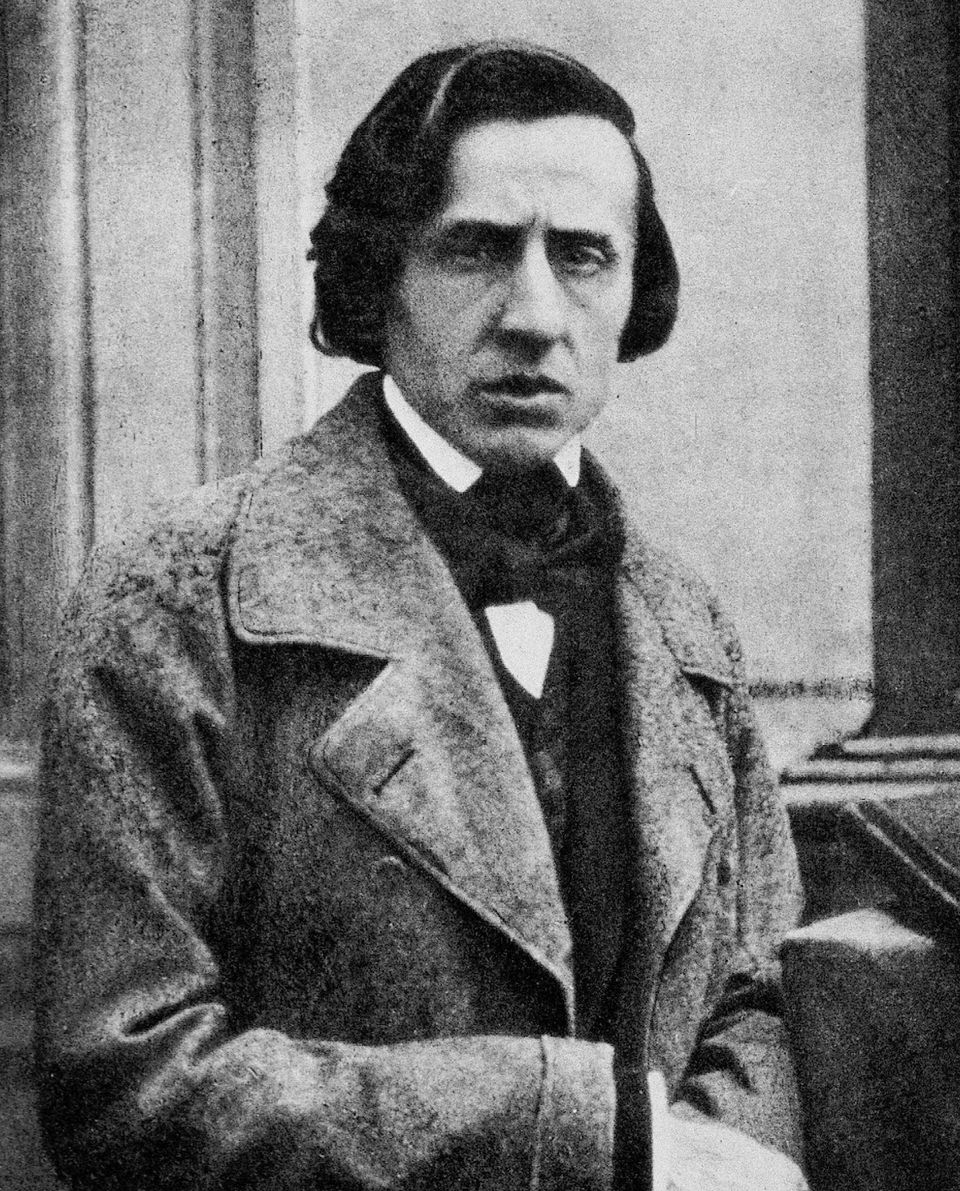
Photograph by Franz Hanfstaengl, Munich, 1871 (Bayerische Staatsbibliothek); public domain because the photographer died in 1877.
Ranges used for comparison: Mozart 150–165, Beethoven 150–165, Chopin 140–155.
No test result is known. Wikipedia gives none, and Cox’s ratings are retrospective estimates from biography, as she states.
The sources behind our estimate
The figures that circulate for Richard Wagner, what we were able to confirm, and where the two diverge.
The only Wagner figures found trace to Catharine Cox’s 1926 Stanford study: 135 for ages up to 17, 150 for ages 17 to 26, and a corrected 170. Cox states that these are inferences from biography, not tests.
Cox’s Table 12A rates Wagner at 135 and 150 with a reliability of .53, which is thin evidence. The corrected 170 is her statistical push toward the average of his field. No test result, school IQ or later estimate with a stated method was found.
The 135–150 range is Cox’s two raters’ estimates. The 170 is a different kind of number: a correction that adds points when the records are thin, so it is shown here but not used for the range.
Want a number that does hold up? Every figure on this page is somebody’s claim. Take the 30-question test and get a percentile you can check rather than a figure you have to trust.
Richard Wagner — frequently asked
What was Richard Wagner’s IQ?
Richard Wagner’s IQ was never measured. Catharine Cox’s 1926 study rated him 135 for his years to age 17 and 150 for ages 17 to 26 from biographical records, with a corrected figure of 170. This site’s estimated range is 135–150 on a scale with mean 100 and SD 15.
What was Richard Wagner’s IQ score?
No Richard Wagner IQ score exists, because he died in 1883 before IQ tests. The numbers in circulation come from Cox’s 1926 retrospective ratings: 135, 150 and a corrected 170. They are inferences from his biography, not scores, and Cox’s own reliability rating for them was only .53.
What is Richard Wagner’s estimated IQ?
A Richard Wagner estimated IQ is an inference. This site rates it at 135–150, the two estimates Cox’s raters gave, and does not use her corrected 170, which adds points for thin records. The range rests on his documented schooling, university enrolment and work, not on a test.
Did Catharine Cox rate Wagner’s IQ?
Yes. Cox’s 1926 study includes Wagner among its 301 subjects and rates him 135 for development to age 17 and 150 for ages 17 to 26, each with a reliability of .53. Her corrected figure is 170. She says these are estimates from records, not test results.
How was Richard Wagner educated?
He attended the Kreuzschule in Dresden for about five years, then the St. Nicholas School in Leipzig. In 1831, at 18, he enrolled at Leipzig University as a music student and studied composition with Theodor Weinlig, who refused payment for the lessons (Cox, 1926; Wikipedia).
Did Richard Wagner write his own libretti?
Yes. Wikipedia says that, unlike most composers, Wagner wrote both the libretti and the music for all of his stage works, and he completed the texts of the four Ring operas in 1852. That range of skills is documented, but it is not an IQ test.
Is Richard Wagner a genius?
“Genius” is a label, not a score, and no test result supports or refutes it. The documented record is a university music education, the Ring texts completed in 1852, the complete cycle premiered at Bayreuth in 1876, and libretti and music written by one person.
How does Wagner’s estimated IQ compare with Mozart’s?
This site rates Richard Wagner at 135–150 and Mozart at 150–165. Cox’s own estimates are 135 and 150 for Wagner and 150 and 155 for Mozart, on thinner records for Wagner. Both are retrospective ratings, so the gap is not a ranking of two measured people.
How does my IQ compare with Richard Wagner?
You can find out in about fifteen minutes. The IQ Metrics assessment is 30 questions, scored on the same 100-mean scale used throughout this page, so your result and the estimate above are at least expressed in the same units — one measured, one inferred. Once you have a number, the leaderboard shows where it would sit, and how we score and norm it explains the benchmarking.
Where does this estimate come from?
From the documented record rather than a test — the method is named above and set out in full under how we read a number. Compare it against the other musicians profiles, starting with Brian May.
- Take the 30-question IQ test — get a measured score and percentile of your own
- Average IQ by country — how the scale behaves across populations
- How IQ Metrics scores its assessment — the method behind our own number
- More on how IQ testing works — reliability, error and what a score can and cannot say
- More musicians profiles — same field, same method
More musicians
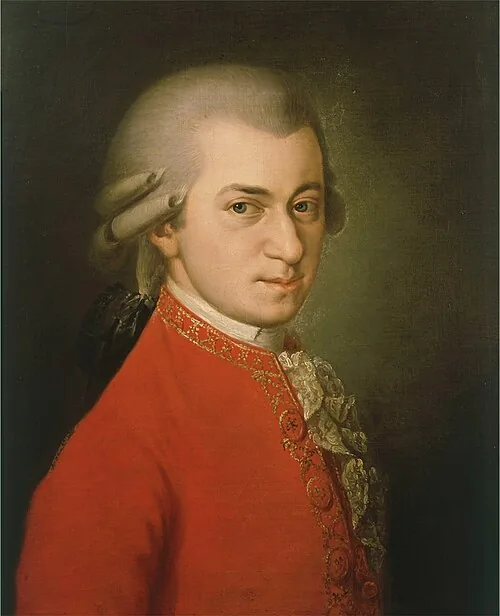
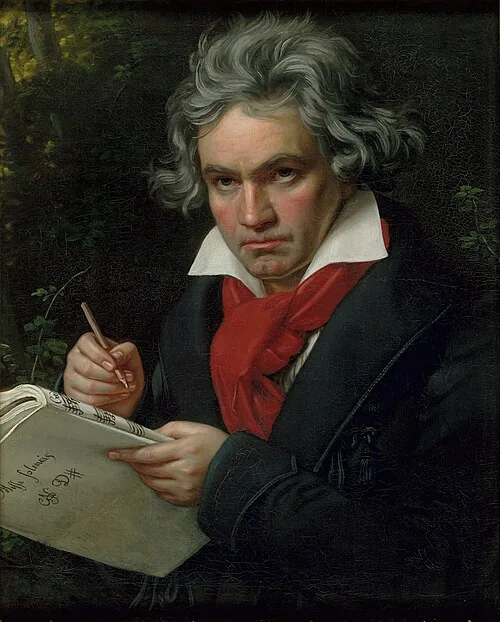
Portrait by Barbara Krafft (1819), public domain. Background removed for the portrait above. · Portrait by Joseph Karl Stieler (1820), public domain. · Daguerreotype by Louis-Auguste Bisson (1849), public domain. Background removed for the portrait above.


An estimate is an inference.
Yours can be measured.
Thirty questions, scored against general-population benchmarks. Your score, your percentile, your ability breakdown and a printable IIF certificate.
Find your IQ score now! →