



What was Thomas Aquinas’ IQ?
He was called “the dumb ox” in class, wrote the Summa Theologiae, and falls outside the one table of historical IQs.

Thomas Aquinas has no IQ score and no Cox number; our Thomas Aquinas IQ estimate is 145–165 on the usual scale (mean 100, SD 15), as of November 2026. He was born around 1225, about 225 years before the earliest birth year in Catharine Cox’s 1926 study, so any figure online is a modern guess. The estimate rests on his record: a Paris chair in theology and the Summa Theologiae.
Thomas Aquinas’ estimated IQ
- Study at the studium generale in Naples, at the University of Paris from 1245 and in Cologne from 1248 under Albertus Magnus, and a return to Paris in 1252 to study for a master’s degree in theology (Wikipedia).
- Appointment in early 1256, by direct intervention of Pope Alexander IV, as regent master in theology at the University of Paris, a post he held until 1259 (Wikipedia).
- A very large body of work, led by the unfinished Summa Theologiae (1265–1274), whose Question 2 sets out the “Five Ways” of arguing for God’s existence (Wikipedia; New Advent).
- Canonization in 1323 by Pope John XXII and the titles Doctor Angelicus and Doctor Communis, which measure influence and reputation, not ability (Wikipedia).
Aquinas died in 1274, 631 years before the Binet–Simon test of 1905, and he falls outside the 1450–1850 window of Cox’s 1926 study, so no historiometric rating exists for him. This estimate is a modern judgment of a documented scholarly record, not a recovered score. Medieval scholarship also reflects training and institutions as well as ability, so the range is moderate and low in confidence.
- Born
- About 1225, Roccasecca, Kingdom of Sicily (now Lazio, Italy)
- Died
- March 7, 1274
- Order
- Dominican friar and priest
- Studied
- Naples; Paris from 1245; Cologne from 1248 under Albertus Magnus
- Paris chair
- Regent master in theology, 1256–1259
- Best-known work
- Summa Theologiae (1265–1274), unfinished
- Canonized
- 1323, by Pope John XXII
- Cox 1926
- Not rated: born about 225 years before her 1450 starting year
- Circulating figure
- None found; no sourced IQ exists for him
What an IQ of 145–165 actually means
Set the claim aside for a moment. If someone genuinely scored in this range, here is what that would represent.
| Score range | Classification | Share of people | What it indicates |
|---|---|---|---|
| 85 – 114 | Average | ~68% | The range most people fall into. |
| 115 – 129 | Above average | ~13.6% | Roughly one person in seven. |
| 130 – 144 | Gifted | ~2% | The threshold most high-IQ societies use. |
| Above 144 | Highly gifted | ~0.1% | Figures above this range are extrapolated from the curve rather than measured. |
Percentages are approximate and describe a normal distribution. The same number means different things on tests with different standard deviations.
Thirty questions gives you a measured position on this exact scale — your score, your percentile and the ability breakdown behind it.
Find out in 30 minutes →Who Thomas Aquinas is
Who was Thomas Aquinas? Thomas Aquinas was an Italian Dominican friar, priest, theologian and philosopher, born around 1225 at Roccasecca in the Kingdom of Sicily. He died on March 7, 1274, and Pope John XXII canonized him in 1323 (Wikipedia).
What does Aquinas’s education show? He was enrolled at the studium generale in Naples as a boy, joined the Dominican order, studied at the University of Paris from 1245 and followed Albertus Magnus to Cologne in 1248. He returned to Paris in 1252 to study for a master’s degree in theology and became regent master there in early 1256 (Wikipedia). That is a documented academic path, not a test score.
What did he write, and is that evidence of IQ? The Summa Theologiae, begun in 1265 and left unfinished, is a guide to Catholic theology, and the Summa contra Gentiles (1259–1265) and many commentaries came before or beside it (Wikipedia). Output on that scale shows ability and training. For what a measured score looks like, see the highest IQ ever recorded, then other historical figures, or compare your own result with the IQ Metrics test.
 By Elora Mercer, Celebrity Research WriterFigures checked by Leon Falkner, Data & Research Analyst
Reviewed by Aarav Vardhan, Editor-in-Chief · Last reviewed November 2026

Thomas Aquinas: the documented record
The estimate above rests on this record. Every entry here is a matter of public fact, which is more than can be said for the number itself.
- c. 1225Born at Roccasecca, near Aquino, in the Kingdom of Sicily.
- After 1239Enrolled at the studium generale in Naples.
- 1245Sent to study at the Faculty of the Arts at the University of Paris.
- 1248Follows Albertus Magnus to Cologne; Wikipedia reports that fellow students call him “the dumb ox.”
- 1252Returns to Paris to study for a master’s degree in theology.
- 1256Appointed regent master in theology at Paris, a post he holds until 1259.
- 1265Begins the Summa Theologiae, which he never finishes.
- 1274Dies on March 7.
- 1323Canonized by Pope John XXII.
Why no figure circulates
Following a claim back to its first appearance is the part almost nobody does — and it is what most people are actually asking.
Thomas Aquinas IQ searches lead to no number with a method behind it. The usual source for historical IQs, Catharine Cox’s 1926 study, rates only people born between 1450 and 1850, and Aquinas was born around 1225; philosophers ranked by IQ explains the window. Her book names him once, in the case history of Girolamo Cardano, who studied Aquinas’s works as guides to the study of medicine.
Was Thomas Aquinas a genius? Wikipedia reports that fellow students at Cologne thought the quiet young Thomas was slow, and that Albertus Magnus answered, “You call him the dumb ox,” and added that his teaching would one day be heard throughout the world. It is a story about a quiet student, not a test result, and we did not trace it to a first-hand account. “Genius” here is a label for a documented record, not a score.
Aquinas vs Aristotle: who was the better thinker, and can IQ say? IQ cannot rank thinkers by the quality of their arguments. Wikipedia says Aquinas embraced several of Aristotle’s ideas and sought to join Aristotelian philosophy with Christian principles. On this site Aristotle is 150–170, Plato 145–165 and René Descartes 150–170, against 145–165 for Aquinas. A 145 is about the 99.87th percentile on the usual scale and a 165 about the 99.999th; our IQ percentile calculator shows the steps in between.
How we read a number →Birth about 1225 at Roccasecca, death on March 7, 1274, the Naples, Paris and Cologne years, the 1252 return to Paris, the 1256 appointment as regent master, the Summa Theologiae (1265–1274, unfinished), the 1323 canonization and the “dumb ox” remark attributed to Albertus Magnus. The article gives no IQ.
“I answer that, The existence of God can be proved in five ways.” The text gives no IQ and no claim about its author’s intelligence.
The full text has no case history or rating for Aquinas. It mentions him once, in the case history of Girolamo Cardano, who studied his works. Cox’s subjects were born between 1450 and 1850, as our philosophers-ranked-by-IQ article states.
Confirms the identifier Q9438 is the Italian Dominican friar, philosopher and theologian, not an asteroid or a church building.
Painting of Saint Thomas Aquinas by Carlo Crivelli, in the Commons category for the National Gallery’s Crivelli; public-domain old art. A painted devotional image, not a likeness from life.
Ranges used for comparison: Aristotle 150–170, Plato 145–165, Descartes 150–170 (Cox method).
Wikipedia, the Summa passage, Cox’s full text and a web search for an Aquinas IQ estimate found no number with a method behind it.
The sources behind our estimate
The figures that circulate for Thomas Aquinas, what we were able to confirm, and where the two diverge.
People search for “Thomas Aquinas IQ” and “Thomas Aquinas IQ estimate,” but we found no page that gives a number for him with a method and a source. Cox’s 1926 study, the usual source for historical IQs, has no entry for him.
Cox rated 301 people born between 1450 and 1850, and Aquinas was born around 1225. Her book mentions him once, in the case history of Girolamo Cardano, who studied his works. Any IQ attached to his name is a modern guess.
With no circulating figure to audit, the range is the only IQ number on the page. It matches Plato (145–165) and sits just below Aristotle (150–170) and René Descartes (150–170). The placement is a judgment, not a measurement.
Want a number that does hold up? Every figure on this page is somebody’s claim. Take the 30-question test and get a percentile you can check rather than a figure you have to trust.
Thomas Aquinas — frequently asked
What was Thomas Aquinas’s IQ?
Thomas Aquinas has no measured IQ and no Cox number. Our estimate is 145–165 on the usual scale (mean 100, SD 15), a modern judgment from his Paris chair and his writing, not a recovered score.
Was Thomas Aquinas a genius?
“Genius” has no fixed meaning. Aquinas became regent master of theology at Paris in 1256 and wrote the Summa Theologiae, and the Church later named him a Doctor. Those are marks of scholarly ability and influence, not a test score.
Why is there no Cox number for Thomas Aquinas?
Catharine Cox’s 1926 study rated 301 people born between 1450 and 1850. Aquinas was born around 1225, so he is outside her sample, and her book has no entry for him.
Why was Thomas Aquinas called the “dumb ox”?
Wikipedia reports that fellow students at Cologne thought the quiet young Thomas was slow, and that Albertus Magnus answered, “You call him the dumb ox,” adding that his teaching would be heard throughout the world. It is a story, not a test result.
Aquinas vs Aristotle: who was the better thinker, and can IQ say?
IQ cannot judge the quality of an argument. Aquinas built on Aristotle’s ideas, and this site’s ranges are Aquinas 145–165 and Aristotle 150–170. Both are estimates from records, and the gap is a judgment.
Has anyone measured Thomas Aquinas’s IQ?
No. He died in 1274, and the first modern intelligence test, the Binet–Simon scale, appeared in 1905. Any figure you see is a modern guess, so ask what method and what source stand behind it.
What would an IQ of 145 to 165 mean?
On the usual scale a 145 is about the 99.87th percentile and a 165 about the 99.999th. Here it is an IQ Metrics reading of a medieval record, not a result from an IQ test.
How does my IQ compare with Thomas Aquinas?
You can find out in about fifteen minutes. The IQ Metrics assessment is 30 questions, scored on the same 100-mean scale used throughout this page, so your result and the estimate above are at least expressed in the same units — one measured, one inferred. Once you have a number, the leaderboard shows where it would sit, and how we score and norm it explains the benchmarking.
Where does this estimate come from?
From the documented record rather than a test — the method is named above and set out in full under how we read a number. Compare it against the other historical profiles, starting with Isaac Newton.
- Take the 30-question IQ test — get a measured score and percentile of your own
- Average IQ by country — how the scale behaves across populations
- How IQ Metrics scores its assessment — the method behind our own number
- More on how IQ testing works — reliability, error and what a score can and cannot say
- More historical profiles — same field, same method
More historical
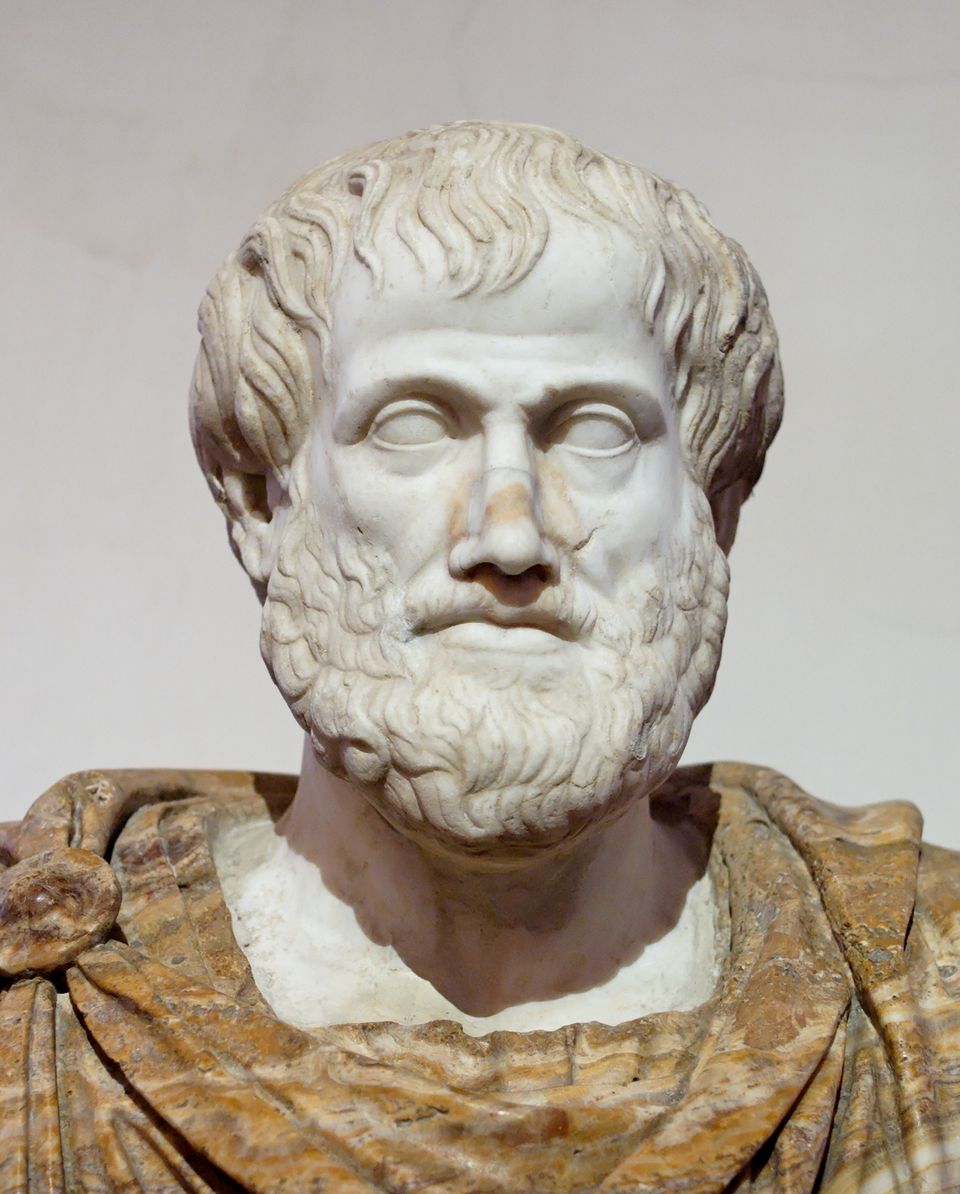
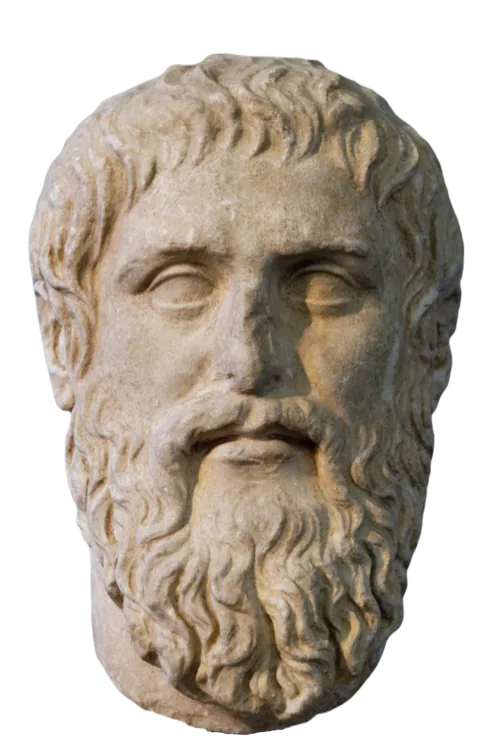
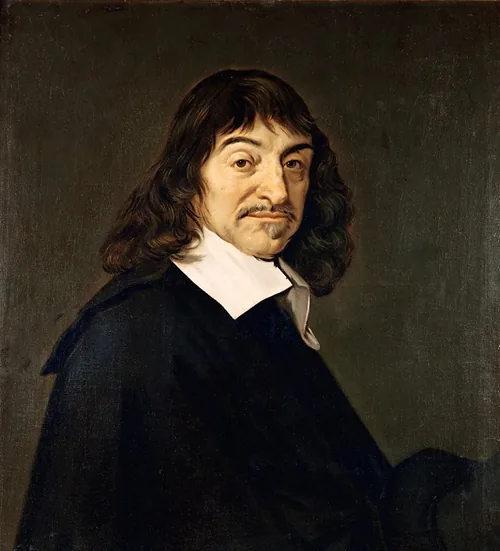
Photograph by Jastrow (2006), public domain. Roman marble copy after a Greek bronze by Lysippos (c. 330 BCE); the alabaster mantle is a modern addition. Background removed for the portrait above. · Photograph by Marie-Lan Nguyen, public domain. Background removed for the portrait above. · Portrait of René Descartes, a painting after Frans Hals, Louvre, Paris (inventory 1317; Commons file). Public domain. It is a painted portrait made after Hals’s original, not a photograph. Cropped for the portrait above.


An estimate is an inference.
Yours can be measured.
Thirty questions, scored against general-population benchmarks. Your score, your percentile, your ability breakdown and a printable IIF certificate.
Find your IQ score now! →