
IIF Certified Assessment
Start IQ Test
IIF Certified Assessment
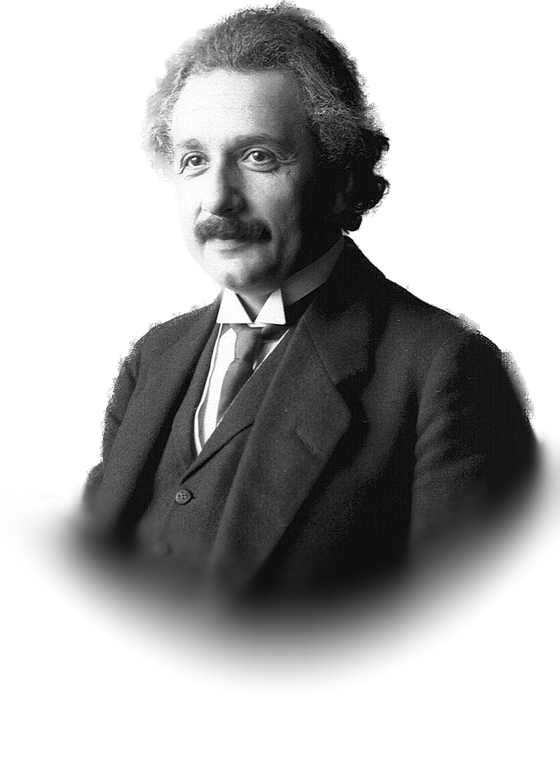
It’s the most quoted IQ figure in the world. It’s also the one with the most interesting history — because there’s no record he ever took a test.
Historiometry infers a score from the density and precocity of documented achievement. It was never applied to Einstein by Cox herself, and it cannot produce a measured result — treat the range as an inference about a record, not a fact about a person.
Set the claim aside for a moment. If someone genuinely scored in this range, here is what that would represent.
Average is 100 by construction, and about two-thirds of people fall between 85 and 115. Take the test to place your own score on this scale.
| Score range | Classification | Share of people | What it indicates |
|---|---|---|---|
| 85 – 114 | Average | ~68% | The range most people fall into. |
| 115 – 129 | Above average | ~13.6% | Roughly one person in seven. |
| 130 – 144 | Gifted | ~2% | The threshold most high-IQ societies use. |
| Above 144 | Highly gifted | ~0.1% | Figures above this range are extrapolated from the curve rather than measured. |
Percentages are approximate and describe a normal distribution. The same number means different things on tests with different standard deviations.
Thirty questions gives you a measured position on this exact scale — your score, your percentile and the ability breakdown behind it.
Find out in 30 minutes →Einstein published the special theory of relativity, the photoelectric effect and mass–energy equivalence in 1905, while working as a patent examiner in Bern. General relativity followed in 1915, and the Nobel Prize in Physics in 1921 — awarded for the photoelectric effect rather than relativity.
His name has become the standard shorthand for intelligence, which is precisely why a number gets attached to it. The figure is doing cultural work rather than scientific work — it exists to make an abstract reputation feel quantified.
The estimate above rests on this record. Every entry here is a matter of public fact, which is more than can be said for the number itself.
Following a claim back to its first appearance is the part almost nobody does — and it is what most people are actually asking.

Retrospective estimation is a real academic method, and it isn’t the same as testing. Historiometric work — most influentially Catharine Cox’s 1926 study of several hundred eminent historical figures, later reanalysed by Dean Keith Simonton — infers an estimated score from the density and precocity of documented childhood achievement. It produces a number with a named author, a stated method and known limits.
Cox’s study covered figures who had died well before it was conducted. Einstein was alive and working when it was published, and wasn’t among them. So the usual academic justification for a historical IQ figure doesn’t actually apply to him.
What remains is circulation. The wider pattern is well documented: invented celebrity IQ figures have twice reached the mainstream press — a 2001 hoax attributing scores to US presidents, which The Guardian published and retracted within two days, and a 2013 hoax about a supposed Mensa list. Both are still repeated today.
How we read a number →The origin of most historical IQ estimates in circulation. Does not include Einstein. Cited to explain the method, not to support a figure.
Modern reassessment of Cox’s method. Simonton’s reanalysis finds rated intelligence predicts eminence at about r = .25 — real, and modest.
Invented scores attributed to a non-existent institute; published by The Guardian in July 2001 and retracted two days later. Resurfaced in the Spanish press in 2007.
No IQ test result for Einstein appears in his collected papers or in the standard biographies. Recorded as a documented absence.
The figures that circulate for Albert Einstein, what we were able to confirm, and where the two diverge.
Sometimes given as “160 or higher”, sometimes as a range topping out near 190. The figure is used as shorthand for genius so routinely that it often functions as a unit of measurement rather than a claim about a person.
There is no record that Einstein ever sat an IQ test. He died in 1955. Standardised testing existed in his lifetime, but no documented administration to him appears in his papers, his biographies or the archives. This isn’t a case of weak evidence — it’s a case of there being no event to have evidence about.
A thirty-point spread on a measurement that never took place. The variation between sites is a direct consequence of there being nothing underneath any of them to constrain the number.
Want a number that does hold up? Every figure on this page is somebody’s claim. Take the 30-question test and get a percentile you can check rather than a figure you have to trust.
He was never tested, so there is no measured score. Our estimate of 160–180 is historiometric — inferred from a documented record of achievement, with the wide error margin that method carries.
No record of one exists in his collected papers or in the standard biographies. Modern deviation-IQ testing for adults also postdates most of his career.
No — this is a well-known myth. He was strong in mathematics and physics from an early age. He did fail the general entrance examination for ETH Zurich in 1895 on its non-science sections, at 16, two years under the normal entry age, and passed the following year.
Because it was published somewhere, copied widely, and never checked. The figure has no traceable origin, which is why the range we publish is wider and labelled as an inference.
Through historiometry — inferring from the density and precocity of documented achievement. Catharine Cox’s 1926 study is the best-known example. It produces an estimate with a named method and stated limits, not a score.
You can find out in about fifteen minutes. The IQ Metrics assessment is 30 questions, scored on the same 100-mean scale used throughout this page, so your result and the estimate above are at least expressed in the same units — one measured, one inferred. Once you have a number, the leaderboard shows where it would sit, and how we score and norm it explains the benchmarking.
From the documented record rather than a test — the method is named above and set out in full under how we read a number. Compare it against the other scientists profiles, starting with Nikola Tesla.


Portrait © Matthew Yohe, CC BY-SA 3.0. The background-removed portrait above is a derivative work and is likewise offered under the same licence. · Portrait © Debbie Rowe / The Royal Society, CC BY-SA 3.0. The background-removed portrait above is a derivative work and is likewise offered under the same licence. · Portrait by Christopher Smith, U.S. Department of Health and Human Services — a work of the U.S. federal government, public domain. Background removed for the portrait above.
Thirty questions, scored against general-population benchmarks. Your score, your percentile, your ability breakdown and a printable IIF certificate.
Find your IQ score now! →The assessment costs nothing and you always get a real result. Upgrades add precision, analysis and a certificate — never access to the test itself.
Whatever you paid comes off the next tier for 30 days. Start small without losing the money.
Not what you expected? Full refund, no questions, no form to hunt for.
Prices adjust to your country automatically, so the certificate is reachable outside high-income markets.
Coming later: an annual membership (~$89/year) for unlimited retests, practice sets and progress tracking. Monthly billing is deliberately not offered — a once-a-year assessment does not justify a monthly charge, and it would churn.





.jpg)
