



What was Socrates’ IQ?
Plato, Xenophon and Aristophanes each drew a different Socrates, and any IQ figure for him is a guess drawn from those portraits.
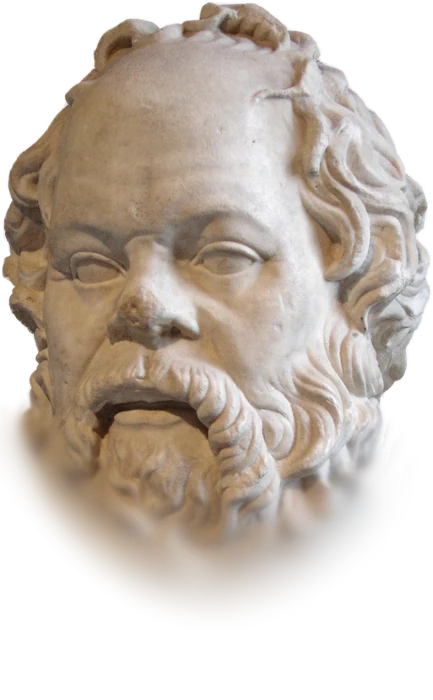
No IQ test result exists for Socrates, who died in 399 BC, some 2,300 years before the first intelligence test. What is documented is a reputation reported by others, since he wrote nothing himself; the IQ estimates online, from about 140 to 180, cite no test, and this page’s estimated range for the Socrates IQ level is a wide 135–165.
Socrates’ estimated IQ
- Aristotle credits him with two things, inductive arguments and universal definition (Metaphysics XIII, 1078b) — but at second hand: Aristotle was born in 384 BC, fifteen years after Socrates died, and probably heard of him through Plato and the Academy.
- In Plato’s Apology (21a–23b), Socrates says the oracle at Delphi told his friend Chaerephon that no one was wiser than he was, and that he then tested the claim by cross-examining a politician, poets and craftsmen.
- By the Stanford Encyclopedia of Philosophy’s reckoning, fifteen or more people wrote Socratic discourses in the years after his death, and every philosophical school of antiquity except the Epicureans claimed him as its founder or its model.
- By 423 BC he was known enough to be a principal character in Aristophanes’ comedy Clouds at the City Dionysia — a caricature Plato has Socrates reject in his defense (Apology 19c).
Socrates wrote nothing, so this range rests entirely on other people’s accounts — which the Stanford Encyclopedia of Philosophy calls second-hand and largely disputed — and scholars still argue over how far Plato’s Socrates is the historical man. That is why the range is ten points wider than Plato’s 145–165, with the same ceiling: it is a modern judgment of a documented reputation, not a recovered score, and Cox’s 1926 method (subjects born 1450–1850) cannot reach him.
- Born
- c. 470 BC, Athens (deme of Alopece); 469 BC in some scholarly chronologies
- Died
- 399 BC, Athens, by hemlock, after conviction for impiety and corrupting the young
- Field
- Philosophy
- Parents
- Sophroniscus, a stoneworker, and Phaenarete, later a midwife
- Military service
- Hoplite at Potidaea (432), Delium (424) and Amphipolis (422 BC)
- Writings
- None — known through Plato, Xenophon, Aristophanes and Aristotle
- Method
- The elenchus: cross-examining a position or definition to test and refute it
- Cox 1926 status
- Not a subject — Cox’s study covers people born 1450–1850
What an IQ of 135–165 actually means
Set the claim aside for a moment. If someone genuinely scored in this range, here is what that would represent.
Average is 100 by construction, and about two-thirds of people fall between 85 and 115. Take the test to place your own score on this scale.
| Score range | Classification | Share of people | What it indicates |
|---|---|---|---|
| 85 – 114 | Average | ~68% | The range most people fall into. |
| 115 – 129 | Above average | ~13.6% | Roughly one person in seven. |
| 130 – 144 | Gifted | ~2% | The threshold most high-IQ societies use. |
| Above 144 | Highly gifted | ~0.1% | Figures above this range are extrapolated from the curve rather than measured. |
Percentages are approximate and describe a normal distribution. The same number means different things on tests with different standard deviations.
Thirty questions gives you a measured position on this exact scale — your score, your percentile and the ability breakdown behind it.
Find out in 30 minutes →Who Socrates is
Socrates was born in Athens around 470 BC — the Stanford Encyclopedia of Philosophy and the Internet Encyclopedia of Philosophy both give 469 — in the deme of Alopece, the son of Sophroniscus, a stoneworker, and Phaenarete, who later became a midwife. Plato has him tell the jury at his trial that he was seventy (Apology 17d), which is consistent with a birth year of about 470 BC. As an Athenian citizen he served as a hoplite, a heavy infantryman: at Potidaea in 432 BC, where Plato’s Symposium has Alcibiades say Socrates saved his life and armor; at Delium in 424 BC, an Athenian defeat, where Plato’s Laches has the general Laches praise his conduct in the retreat; and at Amphipolis in 422 BC, another. Plato names all three campaigns in the Apology (28e). The Stanford Encyclopedia adds that he refused all his life to take money for what he did.
Socrates wrote nothing, so his life and ideas reach us through four ancient authors, each writing for purposes of his own. Aristophanes staged Clouds at the City Dionysia in 423 BC; in it a comic Socrates runs a school of rhetorical tricks and hangs in a basket studying the sun. The play placed last of three, and Plato has Socrates refer to it in his defense and deny any part in such studies (Apology 19c). Xenophon wrote the Memorabilia, which opens by asking how the accusers persuaded Athens that Socrates deserved to die; the Internet Encyclopedia of Philosophy notes that he knew Socrates less closely than Plato did and was not in court, hearing of the trial afterwards from Hermogenes, a member of Socrates’ circle. Plato wrote philosophical dramas in which Socrates speaks, not transcripts of his talk. Aristotle, born in 384 BC, credits Socrates with inductive arguments and universal definition. Reconstructing the historical man from these rival portraits is what scholars call the Socratic problem.
The best-known episode comes from Plato’s Apology, Socrates’ speech to the jury. He says his friend Chaerephon asked the oracle at Delphi whether anyone was wiser than Socrates, and that the Pythia replied that no one was; Chaerephon was dead by the time of the trial, so Socrates offers his brother as witness (21a). Socrates says he then tested the answer by questioning a public man with a reputation for wisdom (21c), then poets (22a–c), then craftsmen (22c–d), and concluded that he was wiser only in not thinking he knew what he did not (21d). The Internet Encyclopedia of Philosophy describes his characteristic method, the elenchus, as a cross-examination in which he tests a position or definition and refutes it. He compared his role to that of a gadfly stinging a large, sluggish horse, the city (30e). None of this is a measure of ability; it is the reputation from which any estimate has to start.
In 399 BC, when he was about seventy, Athens tried him on charges of not recognizing the city’s gods, introducing new divinities and corrupting the young, brought by Meletus with Anytus and Lycon; the Stanford Encyclopedia dates the trial to May–June. He was convicted — in Plato’s account a shift of thirty votes would have acquitted him (Apology 36a) — and sentenced to death. No executions were allowed while the sacred ship was away at Delos, so he lived about thirty days longer, and shortly before the end his friend Crito urged him to escape. He drank hemlock. Plato’s text places him in court (34a), but the Phaedo, the account of the last day, is narrated by a follower, Phaedo, to Echecrates, and Phaedo says Plato was ill; its closing scene has Socrates ask Crito to pay a debt of a cock to Asclepius. Even the account of his death is second-hand.
 By Elora Mercer, Celebrity Research WriterFigures checked by Leon Falkner, Data & Research Analyst
Reviewed by Aarav Vardhan, Editor-in-Chief · Last reviewed August 2026

Socrates: the documented record
The estimate above rests on this record. Every entry here is a matter of public fact, which is more than can be said for the number itself.
- c. 470 BCBorn in Athens, deme of Alopece (469 BC in some scholarly chronologies), to Sophroniscus and Phaenarete.
- 432 BCServes as a hoplite at Potidaea; in Plato’s Symposium, Alcibiades says Socrates saved his life there.
- 424 BCFights at Delium, where Plato’s Laches praises his conduct in the retreat.
- 423 BCAristophanes stages Clouds at the City Dionysia with a comic Socrates; it places last of three.
- 422 BCServes at Amphipolis, another Athenian defeat.
- 399 BCTried for impiety and corrupting the young on charges brought by Meletus, Anytus and Lycon (May–June, by the Stanford Encyclopedia’s chronology); convicted and sentenced to death.
- 399 BC, a month laterDies by hemlock once the sacred ship’s voyage to Delos ends the pause on executions; his last recorded request is that a cock be offered to Asclepius.
- 384 BCAristotle is born, fifteen years after Socrates’ death; his later remarks on Socrates are second-hand.
- 1905Binet and Simon publish the first practical intelligence test, some 2,300 years after Socrates’ death.
- 2023A ranked list credited to a Twitter-recruited survey (n=584) puts Socrates at 145, as transcribed in a Substack essay dated April 5.
Where the 140–180 figure came from
Following a claim back to its first appearance is the part almost nobody does — and it is what most people are actually asking.
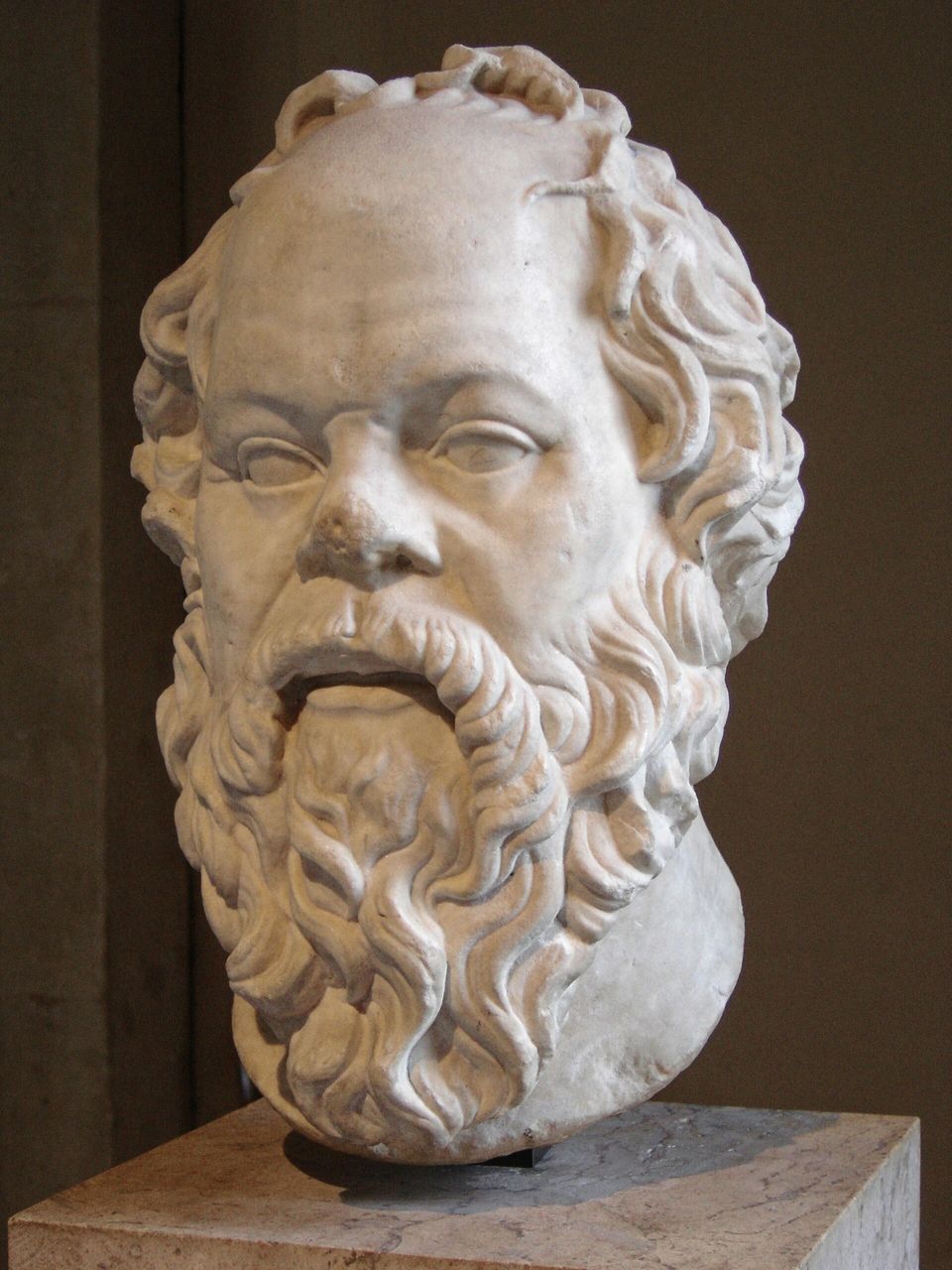
Every Socrates IQ figure found online is a retrospective guess, and each has a different pedigree. Geniuses.club gives him 180 on comparison pages that set him 20 points above Albert Einstein (160) and 10 above Confucius (170). The pages say historical IQ figures are reconstructions, not test results, but show no biography or recognition for Socrates and give no method for his number. Geniuses.club’s general methods page names five inputs — academic performance, publication analysis, patent records, biographer assessment and comparative ranking — three of which cannot exist for a man with no grades, publications or patents. According to Plato’s profile on this site, Geniuses.club gives his student Plato the same 180. LifeScore says 155+, with a working range of 140–165 and, by its own label, very low confidence. MentalUP’s highest-IQ list closes with Socrates at entry 25, crediting his philosophical contributions with a score around 140 and nothing more. For how numbers like these get made in general, see where celebrity IQ numbers come from.
The 145 has a different origin. It appears in a ranked list in Ronald Henss’s Substack essay of April 5, 2023, which credits the list to a Twitter survey: 584 people recruited on Twitter rated 54 public figures, and the medians were ranked. Isaac Newton came first at 160; Plato was rated 146 and Socrates 145 — estimates by a crowd, not measurements, with teacher and student a point apart. The survey’s own post, dated March 28, 2023, shows its ranking only as an image and its text does not name Socrates, so a reader can confirm Newton’s 160 there but not this row. Henss himself calls the exercise a just-for-fun survey drawn from an unrepresentative sample, and dismisses most such rankings as unscientific.
Nor can Catharine Cox’s 1926 study supply a figure. Dean Keith Simonton’s 2020 account in Gifted Child Quarterly describes how she chose the 301 people in The Early Mental Traits of Three Hundred Geniuses: from J. McKeen Cattell’s ranking of the most eminent, keeping only those born between 1450 and 1850 with detailed records of early childhood and adolescence, and publishing a reliability figure for each because the data were not equally good. Galileo Galilei, whose profile on this site follows her method, is among her named subjects. Socrates was born some nineteen centuries before her window opens, and no source describes his childhood in that detail. The first practical intelligence test appeared only in 1905 (see the history of intelligence testing), so every number attached to him is retrospective by definition — and historiometry, the practice of estimating traits from historical records, is itself questioned by some researchers for over-interpreting indirect evidence, as Wikipedia’s entry on it notes.
What sets Socrates apart from most profiles here is the kind of evidence, not only its age. Karl Marx, whose circulating figures run from 116 to 180 with no shared method, left a doctoral thesis and volumes of his own writing to judge from; Socrates left nothing. The Internet Encyclopedia of Philosophy notes that Plato wrote dramas, not transcripts, and that Aristotle probably learned of Socrates through Plato’s Academy; the Stanford Encyclopedia finds Xenophon’s Socrates too pedestrian to explain the fifteen or more authors he inspired, and scholars still dispute how far Plato’s Socrates speaks for Plato himself. A range built on portraits that disagree has to be wide. At the top, 180 is more than five standard deviations above the mean of 100 (SD 15), where Wikipedia’s IQ entry treats reports of scores much higher than 160 as dubious — see the IQ ceiling effect. Any Socrates IQ you meet on Reddit or a quiz page can be checked the same way: which test, which date, whose data.
How we read a number →The trial speech and the last day, as Plato tells them: Socrates’ age (Apology 17d), the oracle and Chaerephon (21a), his examination of a politician, poets and craftsmen (21c–22d), the charges (24b), his three campaigns (28e), the gadfly (30e), Plato’s presence in court (34a), the thirty-vote margin (36a), Phaedo’s narration and Plato’s absence from the death scene, Socrates’ last words (Phaedo 118a), Laches’ praise of his conduct at Delium, and Alcibiades’ account of Potidaea and Delium (Symposium 220–221). All of it is Plato’s account, not an independent record.
Three further ancient witnesses: Aristotle’s attribution of inductive arguments and universal definition to Socrates, Xenophon’s statement of the charges, and Aristophanes’ comic Socrates of 423 BC. None was written by Socrates, and each has its own angle.
Source for the dates (469–399 BC), family, deme, military service, the trial chronology (May–June 399 BC; thirty days to the execution), the elenchus, the Socratic problem, Xenophon’s absence from the courtroom, and the judgment that all information about him is second-hand and largely disputed.
Describes Cox’s selection rules — 301 subjects from Cattell’s eminence ranking, born 1450–1850, with detailed early-life records — confirming that Socrates (born c. 470 BC) is outside her study.
Source of the circulating 180: both comparison pages list Socrates at 180 with a note that historical figures’ IQs are reconstructions, not test results, and no method, biography or recognition for him. The dedicated Socrates profile page did not load when checked in September 2026.
LifeScore gives 155+ (working range 140–165), labels its evidence very low confidence and says no verified standardized result is cited (reviewed August 2026). MentalUP’s entry 25 says around 140 with no stated basis (August 2, 2024).
Henss’s list carries Socrates at 145 and credits it to a Twitter-recruited survey (n=584; 54 rated figures). The survey post confirms the survey and Newton’s top place at 160 but shows the full ranking only as an image, and its text does not name Socrates.
Used for orientation and cross-checks: Clouds’ 423 BC staging and last-place finish, the 1905 Binet–Simon scale and mean-100, SD-15 scoring, the caution on scores far above 160, historiometry’s risk of over-interpretation, and the footballer’s dates and medical degree. Wikidata Q913 identifies the philosopher.
The site’s own range for Plato (145–165) and its record that Geniuses.club lists Plato at 180, used for the comparison on this page.
Checked directly: intelligence testing dates from the 1905 Binet–Simon scale, some 2,300 years after he died in 399 BC. None of the pages above cites a test for him, and LifeScore says so outright; Answers.com and DeepThinkers say no score can be determined. A BRGHT quiz-site profile reading “has an IQ of 146” belongs to a user whose username imitates his name, not to the philosopher.
The sources behind our estimate
The figures that circulate for Socrates, what we were able to confirm, and where the two diverge.
Four figures circulate for Socrates: 180 on Geniuses.club, 155+ (working range 140–165) on LifeScore, “around 140” on MentalUP’s highest-IQ list, and 145 in a ranked list in a 2023 Substack essay credited to a Twitter survey. None names a test.
There is no published IQ test result or IQ score for Socrates, and there could not be one: he was executed in 399 BC, some 2,300 years before the Binet–Simon scale appeared in 1905. Checked in September 2026: two Geniuses.club comparison pages (against Albert Einstein and against Confucius) list him at 180, with a note that such figures are reconstructions, not test results, and no method for his; LifeScore gives 155+, labels its own evidence very low confidence and says no verified standardized result is cited; MentalUP’s list ends with him at “around 140” on the strength of his philosophical contributions; Ronald Henss’s essay carries 145 in a list credited to a Twitter survey. Answers.com and DeepThinkers, which also take up the question, give no figure and say none can be determined.
The highest figure, 180, sits 15 points above this page’s ceiling — the usual direction of error. The other three (140, 145, 155+) fall inside the range, which confirms nothing: none was derived from anything checkable. A 40-point spread among figures that cite no test is what an absent measurement looks like.
Want a number that does hold up? Every figure on this page is somebody’s claim. Take the 30-question test and get a percentile you can check rather than a figure you have to trust.
Socrates — frequently asked
What is Socrates’ IQ?
Socrates’ IQ was never measured, and could not have been: he died in 399 BC, about 2,300 years before the first intelligence test. Estimates online run from roughly 140 to 180, none from a real test. This site’s estimate of the Socrates IQ level, inferred from the documented record of his reputation, is a wide 135–165.
Where do the Socrates IQ estimates of 140, 145, 155 and 180 come from?
Geniuses.club lists Socrates at 180 and LifeScore at 155+ (working range 140–165). MentalUP says around 140, and a Substack essay reports 145 from a 2023 Twitter survey. None cites a test; LifeScore labels its own evidence very low confidence and says his IQ was never verified by a standardized test.
Was Socrates a genius?
Ancient sources portray him as a formidable arguer: Aristotle credits him with inductive arguments and universal definition, and nearly every school of antiquity claimed him as founder or model. But that verdict rests on other people’s accounts, since Socrates wrote nothing, and no test result exists to put a number on it.
How does Socrates’ estimated IQ compare with Plato’s?
This site estimates Socrates at 135–165 and Plato at 145–165. The ceilings match; Socrates’ floor is ten points lower and his range ten points wider, because nothing he wrote survives and part of his portrait may be Plato’s own. It expresses less certainty about Socrates, not a finding that he was less intelligent than his student.
Was Socrates in Catharine Cox’s 1926 study of geniuses?
No. Cox’s The Early Mental Traits of Three Hundred Geniuses covers 301 people born between 1450 and 1850 whose early years were documented in detail. Socrates was born around 470 BC, so her method cannot reach him, and any page citing Cox 1926 for a Socrates IQ score is citing a study that does not include him.
Did the Delphic oracle really call Socrates the wisest man?
In Plato’s Apology, yes: Socrates says his friend Chaerephon asked the oracle at Delphi whether anyone was wiser than he was, and the Pythia answered that no one was. Chaerephon was dead by the time of the trial, so the story rests on Socrates’ word as Plato reports it, and it concerns wisdom, not measured intelligence.
Is this page about Socrates the philosopher or the footballer?
This page covers the Athenian philosopher Socrates (c. 470–399 BC). A search for “Socrates football IQ” points to a different man: Sócrates Brasileiro (1954–2011), the Brazilian midfielder nicknamed “Doctor Sócrates”, who qualified in medicine while still playing. “Football IQ” is a term for how a player reads the game, not a test score, and this page does not rate him.
How does my IQ compare with Socrates?
You can find out in about fifteen minutes. The IQ Metrics assessment is 30 questions, scored on the same 100-mean scale used throughout this page, so your result and the estimate above are at least expressed in the same units — one measured, one inferred. Once you have a number, the leaderboard shows where it would sit, and how we score and norm it explains the benchmarking.
Where does this estimate come from?
From the documented record rather than a test — the method is named above and set out in full under how we read a number. Compare it against the other historical profiles, starting with Isaac Newton.
- Take the 30-question IQ test — get a measured score and percentile of your own
- Average IQ by country — how the scale behaves across populations
- How IQ Metrics scores its assessment — the method behind our own number
- More on how IQ testing works — reliability, error and what a score can and cannot say
- More historical profiles — same field, same method
More historical
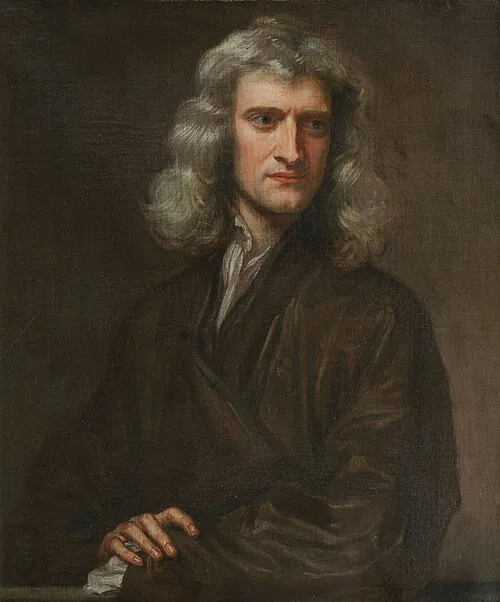
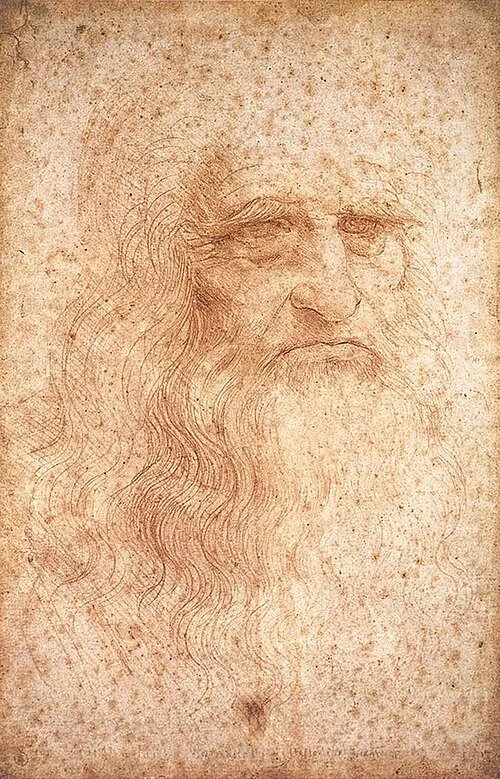
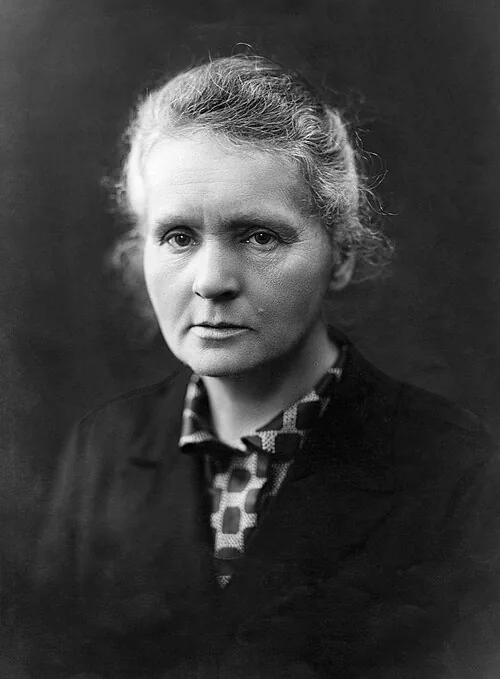
Portrait by Godfrey Kneller (1689), public domain. · Presumed self-portrait, red chalk, c. 1512, via Wikimedia Commons, public domain. · Photograph by Henri Manuel (c. 1920), public domain. Background removed for the portrait above.


An estimate is an inference.
Yours can be measured.
Thirty questions, scored against general-population benchmarks. Your score, your percentile, your ability breakdown and a printable IIF certificate.
Find your IQ score now! →