



What was Sigmund Freud’s IQ?
Thirty-three Nobel nominations and a Goethe Prize are on the record; an IQ test is not, so the 156 and 185 attached to Freud online rest on nothing we could find.
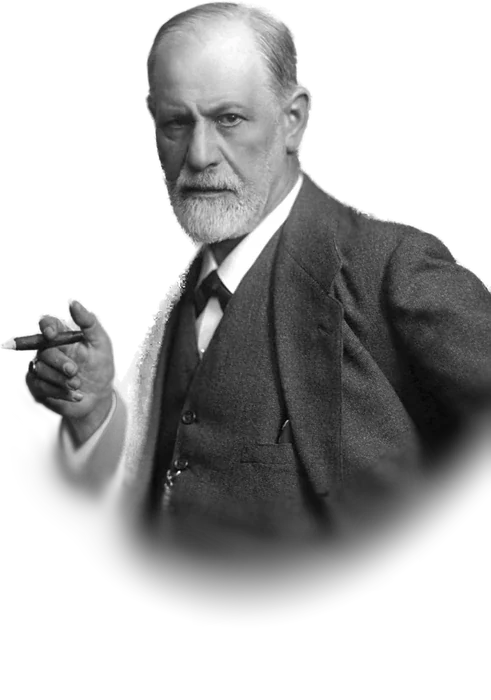
No IQ test result for Sigmund Freud appears in any source we read, and the 156 and 185 quoted for Sigmund Freud’s IQ cite none. What is documented — a Matura with honors in 1873, an M.D. from the University of Vienna in 1881 and years of laboratory research before he turned to psychoanalysis — supports an estimated IQ of 140–160: an inference from a career, not a score.
Sigmund Freud’s estimated IQ
- Top of his class at the Leopoldstadt Gymnasium in Vienna for seven years, by his own account in An Autobiographical Study (1925), and a Matura in 1873 with honors — summa cum laude, according to the International Encyclopedia of the Social Sciences.
- An M.D. from the University of Vienna in 1881, delayed by research in Ernst Brücke’s physiological laboratory, where he worked until 1882; in 1885 he was appointed lecturer in neuropathology on the strength of his histological and clinical publications and won a traveling fellowship to Charcot’s clinic in Paris.
- A monograph, On Aphasia (1891), in which he coined the term agnosia; then Studies on Hysteria (1895, with Josef Breuer), The Interpretation of Dreams (published November 1899, dated 1900) and, in all, more than twenty volumes of work.
- Recognition from institutions in several fields: an honorary degree from Clark University (1909), the Goethe Prize of the City of Frankfurt (1930), election as a Foreign Member of the Royal Society (1936) and 33 Nobel nominations between 1915 and 1938, from nominators who included five Nobel laureates.
The M.D. and the 1885 lectureship are qualifications rather than ranked results like a wrangler’s place, the 1902 professorship was a title and not a chair, and prizes and nominations measure the reach of his work, not his reasoning, while the scientific standing of that work is still debated. Sigmund Freud’s estimated IQ of 140–160 is therefore an editorial inference from schooling, research and output, not a recovered score.
- Born
- May 6, 1856, Freiberg in Moravia (now Příbor, Czech Republic)
- Died
- September 23, 1939, London
- Education and posts
- Leopoldstadt Gymnasium, Vienna (Matura with honors, 1873); University of Vienna, M.D., 1881; lecturer in neuropathology, 1885; title of professor extraordinarius, 1902 (no chair)
- Best-known works
- The Interpretation of Dreams (published November 1899, dated 1900); Three Essays on the Theory of Sexuality (1905); Totem and Taboo (1913); The Ego and the Id (1923); Civilization and Its Discontents (1930)
- Honors and nominations
- Clark University honorary degree (1909); Goethe Prize of the City of Frankfurt (1930); Foreign Member of the Royal Society (1936); 33 Nobel nominations, 1915–1938, never awarded
- In Cox’s 1926 study?
- No — born 1856, outside her 1450–1850 window, and alive when she published
- Circulating IQ figures
- 156 (iqtesta.com, iqcertificate.org) and 185 (geniuses.club); no test cited by any
- Published IQ test result
- None found
What an IQ of 140–160 actually means
Set the claim aside for a moment. If someone genuinely scored in this range, here is what that would represent.
Average is 100 by construction, and about two-thirds of people fall between 85 and 115. Take the test to place your own score on this scale.
| Score range | Classification | Share of people | What it indicates |
|---|---|---|---|
| 85 – 114 | Average | ~68% | The range most people fall into. |
| 115 – 129 | Above average | ~13.6% | Roughly one person in seven. |
| 130 – 144 | Gifted | ~2% | The threshold most high-IQ societies use. |
| Above 144 | Highly gifted | ~0.1% | Figures above this range are extrapolated from the curve rather than measured. |
Percentages are approximate and describe a normal distribution. The same number means different things on tests with different standard deviations.
Thirty questions gives you a measured position on this exact scale — your score, your percentile and the ability breakdown behind it.
Find out in 30 minutes →Who Sigmund Freud was
Sigmund Freud was born on May 6, 1856, in Freiberg in Moravia (now Příbor, Czech Republic) and grew up in Vienna. He entered the Leopoldstadt Gymnasium in 1865 and passed the Matura in 1873 with honors after seven years at the top of his class, by his own account; the International Encyclopedia of the Social Sciences says summa cum laude. He enrolled in the University of Vienna’s medical faculty that year and wrote later that what decided him was hearing Goethe’s essay “Nature” read aloud at a popular lecture by Carl Brühl shortly before he left school. Research delayed his M.D. until 1881: in 1876 he worked at Carl Claus’s zoological research station in Trieste, dissecting eels, and he then spent about six years in Ernst Brücke’s physiological laboratory, where, he wrote, he solved a problem in the histology of the nervous system that Brücke had given him.
In 1885 Freud was appointed lecturer in neuropathology, on the ground, he wrote, of his histological and clinical publications, and a traveling fellowship supported by a testimonial from Brücke took him to Jean-Martin Charcot’s clinic at the Salpêtrière in Paris, from October 1885 to February 1886. His monograph On Aphasia followed in 1891, Studies on Hysteria, written with Josef Breuer, in 1895, and The Interpretation of Dreams in November 1899, with 1900 on its title page. In 1902 the University of Vienna gave him the title of professor extraordinarius, though never a chair of his own. In September 1909 he gave five lectures at Clark University in Worcester, Massachusetts, traveling with Carl Jung and Sándor Ferenczi; Clark’s own history of the conference says the honorary degree it gave him was the only one of its kind he ever received. Totem and Taboo (1913), The Ego and the Id (1923) and Civilization and Its Discontents (1930) came later, part of more than twenty volumes. As a theory of the mind and of personality, psychoanalysis sits nearer IQ versus personality than to any IQ scale.
Recognition followed in several forms. The City of Frankfurt presented him with its Goethe Prize on August 28, 1930, Goethe’s birthday. The city describes the prize as going to people whose creative work is worthy of an honor dedicated to Goethe’s memory and lists him as a psychoanalyst; according to a 2006 essay on the board’s published minutes, his closeness to literature was the decisive argument when it chose him on July 3 by seven votes to five. Freud called the prize, in the postscript to his autobiography, the climax of his life as a citizen, and the Jewish Telegraphic Agency reported that Frankfurt’s mayor credited his creative genius with having fructified an entire generation. In 1932 Albert Einstein, invited by the League of Nations’ International Institute of Intellectual Cooperation to choose a correspondent, wrote to Freud from Caputh on July 30 asking whether mankind could be delivered from war; Freud replied from Vienna in September, and the exchange was published in Paris in 1933 as Why War? in German, English and French. The Royal Society elected Freud a Foreign Member in 1936 and, after he had moved to London in 1938, took its Charter Book to his Hampstead home so that he could sign it.
The Nobel Prize nomination archive lists 33 nominations for Freud: 32 in Physiology or Medicine, in 1915, 1917–1920, 1927, 1929, 1932, 1933, 1936, 1937 and 1938, and one in Literature, in 1936, from Romain Rolland. The first came from William A. White, who wrote that Freud’s work had opened a new era in mental medicine; later nominators included the laureates Robert Bárány, Julius Wagner-Jauregg, Edgar Adrian and Otto Loewi. He never received the prize, and the Nobel Prize website’s own facts page adds that in 1929 the committee’s expert judged further investigation unnecessary because the work was of no proven scientific value. How far his theories hold is a debate this page does not settle: the Internet Encyclopedia of Philosophy says his genius is not generally in doubt while the nature of his achievement is still much debated, and whether he reached what people call a genius IQ level is a question no test result can now settle. After the Anschluss of 1938 he left Vienna for London, where he died on September 23, 1939.
 By Elora Mercer, Celebrity Research WriterFigures checked by Leon Falkner, Data & Research Analyst
Reviewed by Aarav Vardhan, Editor-in-Chief · Last reviewed August 2026
.jpg)
Sigmund Freud: the documented record
The estimate above rests on this record. Every entry here is a matter of public fact, which is more than can be said for the number itself.
- 1856Born on May 6 in Freiberg in Moravia, now Příbor in the Czech Republic.
- 1873Graduates from the Leopoldstadt Gymnasium with honors and enrolls in the medical faculty of the University of Vienna.
- 1881Receives his M.D. from the University of Vienna.
- 1885Appointed lecturer in neuropathology; a traveling fellowship takes him to Charcot’s clinic in Paris from October 1885 to February 1886.
- 1899The Interpretation of Dreams is published in November, with 1900 on its title page.
- 1909Gives five lectures at Clark University in Worcester, Massachusetts, in September and receives its honorary degree, the only one of his career.
- 1930Receives the Goethe Prize of the City of Frankfurt on August 28, after a seven-to-five board vote on July 3.
- 1932Einstein writes from Caputh on July 30 and Freud replies from Vienna in September; the letters are published in Paris in 1933 as Why War?
- 1936Elected a Foreign Member of the Royal Society; also nominated for the Nobel Prize in Literature, by Romain Rolland.
- 1939Dies in London on September 23; he had left Vienna in 1938 after the Anschluss.
Where the 156–185 figure came from
Following a claim back to its first appearance is the part almost nobody does — and it is what most people are actually asking.
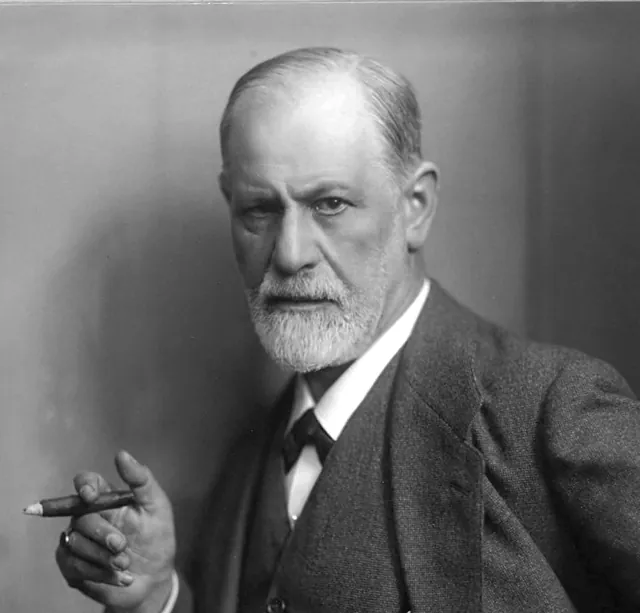
Sigmund Freud’s IQ level is quoted at two heights, and neither comes from a test. geniuses.club lists an estimated 185 and adds that figures of this kind are “published estimates, not a measured, verified test score”; iqtesta.com, the site of the Alpha High IQ Society, says Freud “possesses an IQ of 156” and names no test, date or examiner; and iqcertificate.org gives the same 156 as one row of a celebrity table, on a page that calls its own list rumors and hearsay. This is the pattern this site traces across celebrity IQ numbers: a precise-looking figure with no citation behind it, and a second site arriving at the same number without saying how.
There is no Sigmund Freud IQ test to find. The first Binet–Simon intelligence scale appeared in 1905 (the history of intelligence testing), by which time Freud had already published Studies on Hysteria and The Interpretation of Dreams, and none of the sources we read reports him taking one. His own An Autobiographical Study, published in 1925 and extended with a postscript in 1935, records a school career instead of a score: top of his class for seven years, with special privileges and hardly any examinations to pass. A Freud IQ score, in the sense of a measured number, therefore does not exist in the public record; what exists is the record itself.
The historiometric shortcut behind some other profiles here, Catharine Cox’s 1926 study of 301 geniuses, is closed for Freud. Her subjects lived between 1450 and 1850, and 282 of them were drawn from James McKeen Cattell’s list of the thousand most eminent men; Freud, born in 1856, falls outside that window and was still alive when she published. Four archive.org scans of her full text name him once, in a footnote on Leonardo da Vinci, and otherwise use only the adjective “Freudian”; none lists him among her subjects. Johann Wolfgang von Goethe, the namesake of the prize Freud received in 1930, is one of her 301; Freud is not, so no Cox estimate exists for him, sourced or not.
Of the two figures, the 185 is the harder to defend. On the usual scale (mean 100, standard deviation 15) it sits about 5.7 standard deviations above average, roughly one person in 137 million on a normal curve (how rare a high IQ score is), and no test has enough items that hard to report it (the IQ ceiling effect). The 156 falls inside the range the record supports. That range is 140–160, which puts Sigmund Freud’s estimated IQ alongside Oscar Wilde (140–155), a near-contemporary placed by the same method, and overlapping the lower part of Friedrich Nietzsche’s 150–165 — the philosopher Freud said in 1925 he had long avoided reading, because Nietzsche’s intuitions so often agreed with the findings of psychoanalysis. It sits below Bertrand Russell (160–175), whose Seventh Wrangler placing and Nobel Prize give his record firmer footing than Freud’s nominations.
How we read a number →33 nominations: 32 in Physiology or Medicine (twelve years, 1915–1938) and one in Literature (1936, Romain Rolland). The 1915 record, by William A. White, says his work had opened a new era in mental medicine; the records for Robert Bárány, Julius Wagner-Jauregg, Edgar Adrian, Otto Loewi and Rolland list each as a laureate. The facts page repeats the 32 and adds the committee expert’s 1929 conclusion of no proven scientific value. No mention of IQ.
Dates of birth and death; Leopoldstadt grammar school; doctorate in medicine 1881; habilitation in neuropathology 1885; title of associate professor in 1902 with no chair of his own; emigration to England in 1938. Calls his discovery of the unconscious still controversial. No mention of IQ.
Frankfurt: the prize (founded 1927) goes to people whose creative work is worthy of an honor dedicated to Goethe’s memory; 1930, the psychoanalyst Sigmund Freud. Clark: conference of September 6–19, 1909; five lectures; the honorary degree was the only one of its kind he received. Royal Society: its Charter Book was taken to his Hampstead home for his signature after 1938; the election year is not stated.
His own account: top of his class for seven years with scarcely any examinations; Goethe’s essay on Nature decided him on medicine; Brücke’s laboratory; lecturer in neuropathology in spring 1885 on his histological and clinical publications, then a fellowship to Paris; Nietzsche long avoided because his intuitions often agreed with psychoanalytic findings; the 1930 prize as the climax of his life as a citizen. No mention of IQ.
Einstein’s letter is headed Caputh near Potsdam, 30th July, 1932, and refers to the League of Nations’ International Institute of Intellectual Co-operation; Freud’s reply is headed Vienna, September, 1932; published in Paris in 1933 in German, English and French.
IEP: medical school from 1873, six years of physiology under Brücke, medical degree 1881, Paris 1885–86, main works; his genius is not generally in doubt, but the nature of his achievement is much debated. Anz, on the published board minutes: a vote of seven to five on July 3, 1930, with Freud’s closeness to literature the decisive argument.
Subjects are “great men and women who lived between the years 1450 and 1850”: 282 from Cattell’s list and 19 miscellaneous cases. “Freud” occurs only in a footnote on Leonardo, in “Freudian analyses” and its index entry, and in the German word Freude; he is not a subject. Goethe has a chapter.
Wikidata confirms the neurologist (1856-05-06 Příbor – 1939-09-23 London), the University of Vienna, the Goethe Prize 1930 and Royal Society Foreign Member (1936-06-25). Wikipedia: Matura with honors in 1873, On Aphasia and agnosia, The Interpretation of Dreams released November 4, 1899 (dated 1900), the 1905 Binet–Simon test. The encyclopedias: summa cum laude, the 1902 title, the Paris dates, the prize date of August 28, 1930. JTA: the mayor credited his creative genius with fructifying an entire generation.
geniuses.club: an estimated 185, called a published estimate, not a measured, verified test score. iqtesta.com: “possesses an IQ of 156”, no test, date or source. iqcertificate.org: “Sigmund Freud 156 IQ” in an unsourced table, on a page that calls its list rumors and hearsay.
None of the Nobel archive, the University of Vienna’s biography, the Internet Encyclopedia of Philosophy, Wikipedia, Wikidata or the Autobiographical Study gives an IQ for Freud, and Cox (1926) rates 301 subjects but not him.
The sources behind our estimate
The figures that circulate for Sigmund Freud, what we were able to confirm, and where the two diverge.
Two figures circulate for Sigmund Freud’s IQ: geniuses.club lists an estimated 185, while iqtesta.com (the Alpha High IQ Society) states 156 and iqcertificate.org’s celebrity table gives the same 156.
No IQ test result exists in any source we read for Sigmund Freud, and none of the three pages that print a number names a test, a date or an examiner. geniuses.club adds that figures of this kind are “published estimates, not a measured, verified test score”; iqtesta.com says Freud “possesses an IQ of 156” with no citation; and iqcertificate.org lists “Sigmund Freud 156 IQ” in a table on a page whose own text calls its list rumors and hearsay. The Nobel Prize nomination archive, the University of Vienna’s history site, the Internet Encyclopedia of Philosophy, Wikipedia and Wikidata, Cox’s 1926 study and the English text of Freud’s own Autobiographical Study contain no IQ figure for him at all.
The 156 sits inside the 140–160 range, near its top, so it is plausible but unsourced. The 185 sits 25 points above the top of the range, about 5.7 standard deviations above the mean, or roughly one person in 137 million on a normal curve. Only the higher figure runs against the record, which is the usual direction on this site.
Want a number that does hold up? Every figure on this page is somebody’s claim. Take the 30-question test and get a percentile you can check rather than a figure you have to trust.
Sigmund Freud — frequently asked
What is Sigmund Freud’s IQ?
Sigmund Freud’s IQ has no measured value: no IQ test result for him appears in any source we read, and the 156 and 185 that circulate cite no test. From his documented record — a Matura with honors, an M.D. in 1881, the Goethe Prize and 33 Nobel nominations — this site estimates 140–160, an inference, not a score.
Did Sigmund Freud ever take an IQ test?
There is no public record that he did. The first Binet–Simon intelligence scale appeared in 1905, when Freud had already published Studies on Hysteria and The Interpretation of Dreams, and his Autobiographical Study, the Nobel archive and the University of Vienna’s biography mention no test. Any Sigmund Freud IQ test figure online is therefore an estimate.
Where do the 156 and 185 Freud IQ scores come from?
No source is given for either. iqtesta.com says Freud possesses an IQ of 156, and iqcertificate.org lists the same number in a celebrity table; geniuses.club lists 185 as an estimate, not a measured score. On a normal curve the 185 would be about one person in 137 million, and no test result stands behind it.
Was Sigmund Freud intelligent, and is he considered smart?
By the documented record, yes: Sigmund Freud was clearly capable, though genius is not a tested status. By his own account he was top of his class for seven years; he took an M.D. at Vienna in 1881, won the 1930 Goethe Prize and drew 33 Nobel nominations, which fits an estimated 140–160. The Internet Encyclopedia of Philosophy says his genius is not generally in doubt.
Is Sigmund Freud in Catharine Cox’s study of 301 geniuses?
No. Cox’s 1926 study scored 301 people who lived between 1450 and 1850, most of them drawn from James McKeen Cattell’s list of the thousand most eminent men. Freud, born in 1856, falls outside that window and was alive when she published; her book names him only in a footnote on Leonardo da Vinci. No Cox estimate exists for him.
How many times was Sigmund Freud nominated for a Nobel Prize?
The Nobel Prize nomination archive lists 33 nominations for Sigmund Freud: 32 in Physiology or Medicine, across 12 years between 1915 and 1938, and one in Literature in 1936, made by Romain Rolland. He never won. Nominators included the Nobel laureates Robert Bárány, Julius Wagner-Jauregg, Edgar Adrian and Otto Loewi.
How does Sigmund Freud’s estimated IQ compare with Friedrich Nietzsche’s or Albert Einstein’s?
This site’s estimate for Sigmund Freud, 140–160, overlaps Friedrich Nietzsche’s 150–165 and sits below Albert Einstein’s 160–180. All three are inferences from achievement, not test results, and differences of this size are too small for the method to resolve.
How does my IQ compare with Sigmund Freud?
You can find out in about fifteen minutes. The IQ Metrics assessment is 30 questions, scored on the same 100-mean scale used throughout this page, so your result and the estimate above are at least expressed in the same units — one measured, one inferred. Once you have a number, the leaderboard shows where it would sit, and how we score and norm it explains the benchmarking.
Where does this estimate come from?
From the documented record rather than a test — the method is named above and set out in full under how we read a number. Compare it against the other writers profiles, starting with Voltaire.
- Take the 30-question IQ test — get a measured score and percentile of your own
- Average IQ by country — how the scale behaves across populations
- How IQ Metrics scores its assessment — the method behind our own number
- More on how IQ testing works — reliability, error and what a score can and cannot say
- More writers profiles — same field, same method
More writers


Photograph by Christopher Michel (March 18, 2016), CC BY-SA 4.0. Cropped from the original. Background removed for the portrait above. · Photograph by Kevin Payravi (Toronto International Film Festival, September 6, 2024), CC BY-SA 4.0. Cropped and with background removed for the portrait above. · Portrait from the workshop of Nicolas de Largillière, public domain.
.jpg)
.jpg)
_-002.jpg)
An estimate is an inference.
Yours can be measured.
Thirty questions, scored against general-population benchmarks. Your score, your percentile, your ability breakdown and a printable IIF certificate.
Find your IQ score now! →