



What is Haruki Murakami’s IQ?
A Waseda drama degree, a jazz bar and a 1979 debut prize are on record; an IQ test is not.
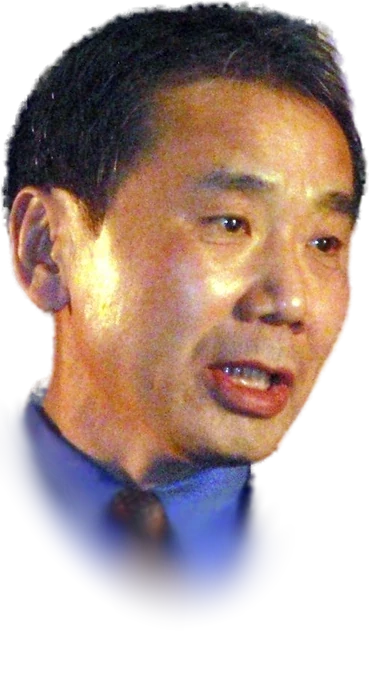
No Haruki Murakami IQ score has been published, and no figure circulates for him; the “IQ” in many searches is the title of his novel 1Q84. What is documented — a Waseda University degree (1975), the 1979 Gunzo New Writers’ Prize, decades of translating English fiction into Japanese and the 2006 Franz Kafka Prize — supports a Haruki Murakami estimated IQ of 125–145, an inference, not a measurement.
Haruki Murakami’s estimated IQ
- Entered Waseda University in Tokyo in 1968 and completed his degree in 1975, as a drama student in the former School of Humanities (Waseda University; Encyclopedia.com; Japanese Wikipedia).
- Ran the jazz bar Peter Cat in Kokubunji, Tokyo, from 1974 to 1981, wrote Hear the Wind Sing over ten months in short stretches at night after work, and won the Gunzo New Writers’ Prize for it in 1979.
- Has translated English-language fiction into Japanese for decades, including works by F. Scott Fitzgerald, Raymond Carver and J. D. Salinger, alongside his own novels: Norwegian Wood (1987), The Wind-Up Bird Chronicle (1994–95), Kafka on the Shore (2002), 1Q84 (2009–10).
- International prizes for the body of his work: the Franz Kafka Prize (2006), the Hans Christian Andersen Literature Award (2016) and the Princess of Asturias Award for Literature (2023).
This is an inference from achievement, not a measurement: the documented education is a bachelor’s degree, a weaker filter than the doctorates behind several other writers’ ranges here, and we found no honors or class rank for it. Translations and prizes show verbal skill and persistence, not performance on reasoning items, so the true figure could fall outside the range in either direction.
- Born
- January 12, 1949, Fushimi-ku, Kyoto, Japan; raised in Nishinomiya, Ashiya and Kobe
- Education
- Kobe High School; Waseda University, Tokyo (entered 1968, degree completed 1975; drama, former School of Humanities)
- Early career
- Owned the jazz bar Peter Cat, Kokubunji, Tokyo, 1974–1981 (Wikipedia)
- Debut
- Hear the Wind Sing; Gunzo New Writers’ Prize, 1979
- Best-known novels
- Norwegian Wood (1987); The Wind-Up Bird Chronicle (1994–95); Kafka on the Shore (2002); 1Q84 (2009–10)
- Honors
- Franz Kafka Prize (2006); Hans Christian Andersen Literature Award (2016); Princess of Asturias Award for Literature (2023)
- Translations into Japanese
- Fitzgerald, Carver, Salinger, Capote, John Irving, Paul Theroux
- Circulating IQ figure
- None found; no published IQ test result
What an IQ of 125–145 actually means
Set the claim aside for a moment. If someone genuinely scored in this range, here is what that would represent.
| Score range | Classification | Share of people | What it indicates |
|---|---|---|---|
| 85 – 114 | Average | ~68% | The range most people fall into. |
| 115 – 129 | Above average | ~13.6% | Roughly one person in seven. |
| 130 – 144 | Gifted | ~2% | The threshold most high-IQ societies use. |
| Above 144 | Highly gifted | ~0.1% | Figures above this range are extrapolated from the curve rather than measured. |
Percentages are approximate and describe a normal distribution. The same number means different things on tests with different standard deviations.
Thirty questions gives you a measured position on this exact scale — your score, your percentile and the ability breakdown behind it.
Find out in 30 minutes →Who Haruki Murakami is
Haruki Murakami, the Japanese novelist, short-story writer, essayist and translator, was born on January 12, 1949, in Fushimi-ku, Kyoto, and was raised in Nishinomiya, Ashiya and Kobe; Wikidata lists Kobe High School among his schools. Waseda University’s own feature says he entered Waseda in 1968 and spent his youth there as a drama student at the former School of Humanities, and that as a student he spent much time at the university’s Tsubouchi Memorial Theatre Museum. Encyclopedia.com and Japanese Wikipedia give 1975 as the year he completed his degree, and Japanese Wikipedia places him in the drama course of the First School of Letters (Dai-ichi Bungakubu); Waseda’s feature calls his faculty the former School of Humanities, now part of its School of Culture, Media and Society. In 1974, while still a student, he opened the jazz bar Peter Cat in Kokubunji, Tokyo; English Wikipedia dates it 1974 to 1981 (Encyclopedia.com says 1974–82), and Japanese Wikipedia adds that he moved it to Sendagaya in 1977 and handed it over in 1981 to write full time.
His first novel, Hear the Wind Sing, grew out of a 1978 baseball game at Jingu Stadium where, according to Wikipedia, he decided to write a novel; he worked on it for ten months in brief stretches at night after work at the bar. It won the Gunzo New Writers’ Prize in 1979 (the 22nd, announced in April 1979, according to Japanese Wikipedia). A Wild Sheep Chase followed in 1982, Norwegian Wood in 1987, The Wind-Up Bird Chronicle in 1994–95 (the Yomiuri Prize for fiction, listed under 1995), Kafka on the Shore in 2002 (English translation 2005; World Fantasy Award 2006), the three-volume 1Q84 in 2009–10 and The City and Its Uncertain Walls on April 13, 2023. As of October 2026 Wikidata lists no date of death.
Alongside his own fiction he has translated English-language writers into Japanese: Wikipedia names F. Scott Fitzgerald, Raymond Carver, Truman Capote, John Irving and Paul Theroux, and Japanese Wikipedia lists J. D. Salinger’s The Catcher in the Rye (April 2003) and Fitzgerald’s The Great Gatsby (November 2006) among his Japanese editions. In 2006 he became the sixth recipient of the Franz Kafka Prize, first awarded in 2001 and co-sponsored by the Franz Kafka Society and the city of Prague; the prize carries the name of Franz Kafka, whose estimated range here (130–145) rests on a completed law doctorate. The same year brought the Frank O’Connor International Short Story Award for Blind Willow, Sleeping Woman. The Hans Christian Andersen Literature Award, established in 2010 and given every other year, went to him in 2016: Danish press reported the win in November 2015, a prize of 500,000 kroner and a ceremony at Odense City Hall in October 2016. In 2023 he received the Princess of Asturias Award for Literature, and the Waseda International House of Literature, also called the Haruki Murakami Library, opened on October 1, 2021.
His memoir What I Talk About When I Talk About Running (Japanese 2007; English, translated by Philip Gabriel, Knopf 2008) belongs to a documented habit: Wikipedia, summarizing the book, dates his running to the early 1980s and counts over twenty marathons and one ultramarathon, a 100 km race around Lake Saroma in Hokkaido on June 23, 1996. A running habit is a fact about persistence, not IQ. Read together, the record anchors a range rather than a number: an estimated IQ of 125–145, level with Stephen King (125–145), another prolific novelist whose documented education is a bachelor’s degree, and overlapping Kafka (130–145) at the top while starting lower, because a bachelor’s degree is a weaker filter than a doctorate. Group averages rise with education level (see average IQ by education level), but they describe groups, not one writer, and a range around an IQ of 135 is a judgment from the record, not a score.
 By Elora Mercer, Celebrity Research WriterFigures checked by Leon Falkner, Data & Research Analyst
Reviewed by Aarav Vardhan, Editor-in-Chief · Last reviewed August 2026
.jpg)
Haruki Murakami: the documented record
The estimate above rests on this record. Every entry here is a matter of public fact, which is more than can be said for the number itself.
- 1949Born on January 12 in Fushimi-ku, Kyoto.
- 1968Enters Waseda University in Tokyo, where he studies drama in the former School of Humanities.
- 1974Opens the jazz bar Peter Cat in Kokubunji, Tokyo, while still a student; he keeps it until 1981.
- 1975Completes his degree at Waseda University.
- 1979Hear the Wind Sing is published and wins the Gunzo New Writers’ Prize.
- 1987Publishes Norwegian Wood.
- 1995The Wind-Up Bird Chronicle (serialized 1994–95) wins the Yomiuri Prize for fiction.
- 2006Receives the Franz Kafka Prize; Kafka on the Shore wins the World Fantasy Award for best novel.
- 2016Receives the Hans Christian Andersen Literature Award in Odense, Denmark.
Why no figure circulates
Following a claim back to its first appearance is the part almost nobody does — and it is what most people are actually asking.
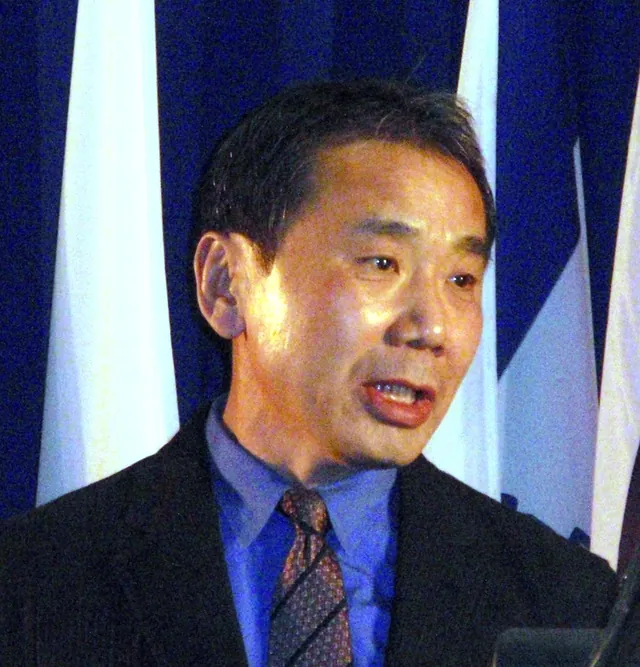
The Haruki Murakami IQ score people search for does not exist in any record we found, and the “IQ” that most often sits beside his name is not a score at all. Search “Haruki Murakami IQ” and the pages that come back are about his novel 1Q84 (Books 1 and 2 published in Japan on May 29, 2009; Book 3 on April 16, 2010), whose title plays on the Japanese pronunciation of 1984 — the letter Q and the Japanese nine, kyū, are homophones — and which is sometimes typed “IQ84”, as in a 2014 University of Porto repository article titled “Haruki Murakami’s IQ84: A Homage to George Orwell’s Nineteen Eighty-Four?” and in a reference title on his Wikipedia page. The IQ people mean when they ask about his mind is the intelligence quotient, a test result, and no page we read pairs his name with one. For how numbers usually get attached to famous names, see where celebrity IQ numbers come from; here, no number has been attached yet.
Haruki Murakami’s estimated IQ therefore has to be inferred, because the usual sources of a figure are empty. geniuses.club has a profile page for him that links to its own IQ test and IQ rankings but prints no IQ number for him, and we found no list, quiz or article that does. No school-test score, no published psychometric result and no child-prodigy story appears in the pages we read: Waseda University’s feature on his student years, Wikipedia, Wikidata, Encyclopedia.com or the Princess of Asturias Foundation’s page. The usual error on this site runs upward, with sourced records supporting a lower range than the circulating number; with nothing circulating there is nothing to mark down, and the risk is that a number appears later with no test behind it.
Is Haruki Murakami smart? The record answers a different question from the one an IQ number would. Translating English-language fiction into Japanese for decades, finishing long novels and winning international prizes are real evidence of verbal skill, persistence and taste, but they are not items from a reasoning test, and this page does not treat a prize list or a readership as proof of a number. How closely creative output tracks IQ is a question the site takes up in IQ and creativity.
What would settle the question is a named test, an examiner and a date, published by Murakami or a source close to him. We found none: Waseda University’s pages, Wikipedia, Wikidata, Encyclopedia.com and the Princess of Asturias Foundation describe his schooling, books and prizes, and none mentions an IQ. Anyone curious about their own verbal reasoning can try a timed verbal IQ test, but a score for someone else has to come from a record, and the records for Murakami contain none.
How we read a number →Says he entered Waseda University in 1968 and was a drama student at the former School of Humanities, now part of the School of Culture, Media and Society; the 2019 news item quotes the university’s president saying that, as a student, Murakami spent much time at the Tsubouchi Memorial Theatre Museum on the Waseda campus. No graduation year, jazz bar or IQ appears on these pages.
Confirms the 2023 Princess of Asturias Award for Literature. No mention of IQ.
Wikidata confirms the Q-id is the Japanese novelist (born January 12, 1949, Fushimi-ku, Kyoto; no date of death; educated at Waseda University and Kobe High School). Wikipedia supplies the Nishinomiya–Ashiya–Kobe upbringing, Peter Cat (Kokubunji, 1974 to 1981), the 1978 baseball game, Hear the Wind Sing (1979) and the 1979 Gunzo prize, Norwegian Wood (1987), The Wind-Up Bird Chronicle (1994–95), Kafka on the Shore (2002) and its 2006 World Fantasy Award, the 2006 Frank O’Connor award, the 2016 Hans Christian Andersen award, the 2023 Asturias award, The City and Its Uncertain Walls (April 13, 2023) and the translation list. Its Waseda text gives no years. A reference title on the page spells the novel “IQ84”; nothing there mentions IQ in the intelligence sense.
Gives the first-school-of-letters drama course at Waseda, entry 1968 and graduation 1975 after seven years’ enrollment; Peter Cat opened in 1974 in Kokubunji, moved to Sendagaya in 1977, handed over in 1981; the 22nd Gunzo prize in April 1979; 2006 Franz Kafka Prize; translation dates (Catcher in the Rye, April 2003; The Great Gatsby, November 2006); the running memoir’s Japanese publication on October 15, 2007. The Yomiuri page lists the 47th prize under 1995 (“award year; announcement the following year”).
Gives birth in Kyoto on January 12, 1949; enrollment at Waseda in 1968 and completion in 1975; the Gunzo prize and Hear the Wind Sing (1979); Norwegian Wood (1987); the Yomiuri prize (1995); Kafka on the Shore (2002; English 2005). It dates Peter Cat 1974–82, a year later than Wikipedia’s 1981. No mention of IQ.
Franz Kafka Prize: first awarded in 2001, co-sponsored by the Franz Kafka Society and the city of Prague, 2006 winner Haruki Murakami. Hans Christian Andersen Literature Award: established in 2010, awarded every other year, 2016 Murakami. Yomiuri Prize: fiction table lists 1995, The Wind-Up Bird Chronicle. 1Q84: Books 1 and 2 published May 29, 2009, Book 3 on April 16, 2010; the title plays on the pronunciation of 1984. Running memoir: Japanese 2007, Knopf 2008, translated by Philip Gabriel; running begins in the early 1980s; over twenty marathons and one ultramarathon. The main article adds the June 23, 1996 Lake Saroma 100 km race.
The Local: Murakami wins the Hans Christian Andersen prize, 500,000 kroner, ceremony due in Odense in October 2016. The Copenhagen Post: award handed over at Odense City Hall by Crown Princess Mary, a check for 500,000 kroner (the article gives “Sunday” in an article dated October 31, 2016). complete-review.com: an entry dated October 31, 2006 saying the Franz Kafka Prize had been announced in April and was given later in the year.
States “Born: 1949-01-12” and a short biography; the only IQ content is generic links to its IQ test and IQ rankings. It gives no IQ number, test or disclaimer for him.
No test, score or self-reported IQ appears in the Waseda pages, Wikipedia, Wikidata, Encyclopedia.com or the Asturias page. Searches for “Haruki Murakami IQ”, “IQ score”, “estimated IQ”, and “is Haruki Murakami a genius” returned pages about the novel 1Q84 (sometimes typed “IQ84,” as in a 2014 University of Porto repository article by Elizabeth Russell) and none stating an IQ for him.
The sources behind our estimate
The figures that circulate for Haruki Murakami, what we were able to confirm, and where the two diverge.
No specific IQ figure for Haruki Murakami turned up on any page we opened. Searches for “Haruki Murakami IQ score” and “Haruki Murakami estimated IQ” return pages about his novel 1Q84, often typed “IQ84”, not about his intelligence.
No IQ test result and no self-reported score appears on any page we read — Waseda University’s feature on his student years, Wikipedia, Wikidata, Encyclopedia.com or the Princess of Asturias Foundation’s page. The aggregator geniuses.club has a profile page for him (born 1949-01-12) that links to its IQ test and IQ rankings but prints no IQ number for him. The pages that match the query are about the novel: its title plays on the Japanese pronunciation of 1984, and a 2014 University of Porto repository article is titled “Haruki Murakami’s IQ84”.
With no circulating figure to set against it, the spread is only the width of our own range. Read the 20 points as uncertainty, not as two scores: high, probably well above average, and not measured.
Want a number that does hold up? Every figure on this page is somebody’s claim. Take the 30-question test and get a percentile you can check rather than a figure you have to trust.
Haruki Murakami — frequently asked
What is Haruki Murakami’s IQ?
No IQ test result for Haruki Murakami has been published, and no specific figure circulates for him. IQ Metrics estimates a Haruki Murakami IQ of 125–145, inferred from his 1975 Waseda University degree, decades of translating English fiction into Japanese, the 1979 Gunzo New Writers’ Prize and international prizes. It is an inference from the record, not a measured score.
Why do searches for “Haruki Murakami IQ” show 1Q84?
Most pages that match the search are about his novel 1Q84, published in Japan in 2009–10, whose title plays on the Japanese pronunciation of 1984: the letter Q and the Japanese nine, kyū, sound alike. The title is often typed “IQ84”, so a search for “Haruki Murakami IQ score” returns the book, not a test result.
Has Haruki Murakami ever taken an IQ test?
There is no public record of one. Waseda University’s pages, Wikipedia, Wikidata, Encyclopedia.com and the Princess of Asturias Foundation’s page describe his degree, books and prizes, and none mentions an IQ test or a Haruki Murakami IQ score. A profile page on geniuses.club links to IQ tests but prints no number for him.
Is Haruki Murakami a genius?
No IQ test has labeled him one, and “genius” is not a documented status. The documented record supports a high estimated IQ level of 125–145, not a certified score.
Is Haruki Murakami smart?
The record shows sustained intellectual work: a Waseda University degree completed in 1975, decades of English-to-Japanese translation of writers such as Fitzgerald and Carver, and novels from Hear the Wind Sing (1979) to The City and Its Uncertain Walls (2023). That supports a high estimate, but prizes are not reasoning-test results and no measured score exists.
How does Haruki Murakami’s estimated IQ compare with Stephen King’s or Franz Kafka’s?
Haruki Murakami’s estimated range, 125–145, matches Stephen King’s 125–145 and overlaps Franz Kafka’s 130–145. King’s range also rests on a bachelor’s degree and prolific output, while Kafka’s rests on a completed law doctorate. All three are inferences from achievement, not test results, so the differences are within the method’s margin of error.
What did Haruki Murakami study at Waseda University?
He entered Waseda University in Tokyo in 1968 and studied drama at the former School of Humanities, according to the university’s own feature; Encyclopedia.com and Japanese Wikipedia give 1975 as the year he completed his degree. While still a student he opened the jazz bar Peter Cat in Kokubunji in 1974.
What prizes has Haruki Murakami won?
The documented list includes the Gunzo New Writers’ Prize (1979), the Yomiuri Prize for The Wind-Up Bird Chronicle (listed under 1995), the World Fantasy Award and the Frank O’Connor International Short Story Award (both 2006), the Franz Kafka Prize (2006), the Hans Christian Andersen Literature Award (2016) and the Princess of Asturias Award for Literature (2023).
How does my IQ compare with Haruki Murakami?
You can find out in about fifteen minutes. The IQ Metrics assessment is 30 questions, scored on the same 100-mean scale used throughout this page, so your result and the estimate above are at least expressed in the same units — one measured, one inferred. Once you have a number, the leaderboard shows where it would sit, and how we score and norm it explains the benchmarking.
Where does this estimate come from?
From the documented record rather than a test — the method is named above and set out in full under how we read a number. Compare it against the other writers profiles, starting with Voltaire.
- Take the 30-question IQ test — get a measured score and percentile of your own
- Average IQ by country — how the scale behaves across populations
- How IQ Metrics scores its assessment — the method behind our own number
- More on how IQ testing works — reliability, error and what a score can and cannot say
- More writers profiles — same field, same method
More writers
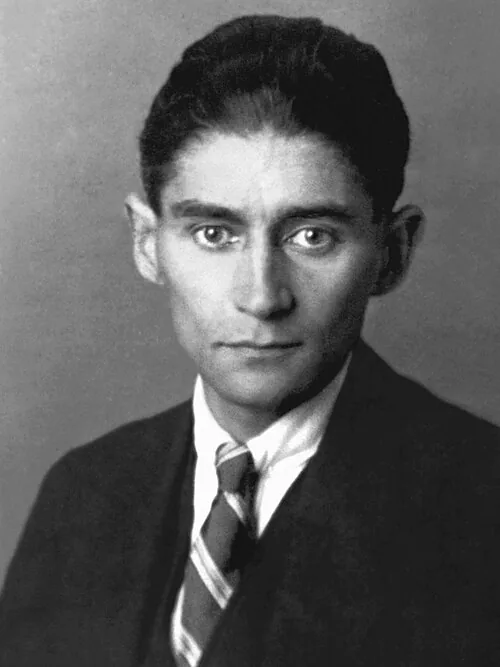

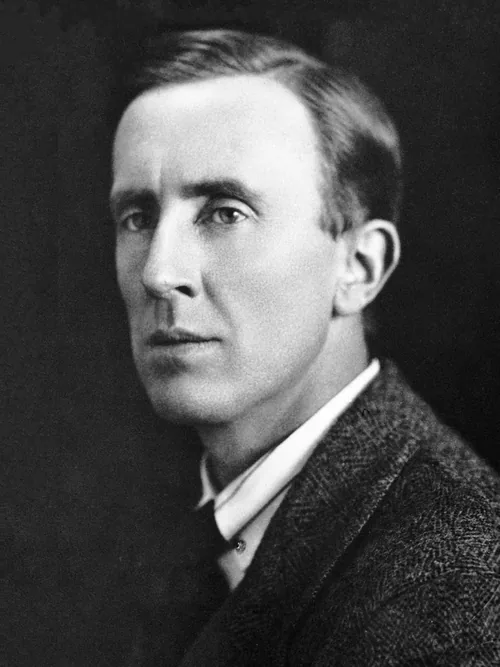
Photograph by an unknown photographer (1923), public domain. Background removed for the portrait above. · Photograph by Kevin Payravi (Toronto International Film Festival, September 6, 2024), CC BY-SA 4.0. Cropped and with background removed for the portrait above. · Photograph by an unknown photo studio, from the Commons file (c. 1925–26), public domain in the UK (author unknown, term expired) and the US (published before 1928). Background removed for the portrait above.

.jpg)

An estimate is an inference.
Yours can be measured.
Thirty questions, scored against general-population benchmarks. Your score, your percentile, your ability breakdown and a printable IIF certificate.
Find your IQ score now! →