



What is Yann LeCun’s IQ?
A Turing Award winner, no published IQ test, and an estimate level with Geoffrey Hinton’s.

No published IQ test result exists for Yann LeCun, and no source gives a Yann LeCun IQ score. What is documented is an engineering diploma from ESIEE Paris (1983), a doctorate from Pierre and Marie Curie University (1987), the 2018 Turing Award shared with Geoffrey Hinton and Yoshua Bengio, and about 507,000 Google Scholar citations as of October 2026.
Yann LeCun’s estimated IQ
- A diplôme d’ingénieur from ESIEE Paris (1983) and a doctorate in computer science from Université Pierre et Marie Curie, now part of Sorbonne University (1987), advised by Maurice Milgram, followed by postdoctoral work in Geoffrey Hinton’s group at the University of Toronto.
- Three papers with large documented reach: “Backpropagation Applied to Handwritten Zip Code Recognition” (Neural Computation, December 1989), “Gradient-based learning applied to document recognition” (Proceedings of the IEEE, 1998, with Léon Bottou, Yoshua Bengio and Patrick Haffner) and “Deep learning” (Nature, May 27, 2015, with Bengio and Hinton). Google Scholar lists 507,136 citations in total and an h-index of 177 as of October 26, 2026.
- The 2018 ACM A.M. Turing Award, announced March 27, 2019 and shared with Bengio and Hinton “for conceptual and engineering breakthroughs that have made deep neural networks a critical component of computing.”
- Election to the U.S. National Academy of Sciences in 2021 and membership of the National Academy of Engineering, the 2022 Princess of Asturias Award for Technical and Scientific Research shared with Hinton, Bengio and Demis Hassabis, and the 2025 Queen Elizabeth Prize for Engineering, shared with six others “for contributions to the development of Modern Machine Learning.”
- Posts held: AT&T Bell Laboratories from 1988, AT&T Labs-Research from 1996, professor at New York University from 2003 (Silver Professor of Computer Science at the Courant Institute by 2019) and Facebook AI Research, later at Meta, from December 2013 until his departure was announced on November 19, 2025.
This is an inference from documented achievement, not a test result. No source gives his diploma classification, an exam score or any psychometric result. Citation counts measure how widely work is cited, and the best-known papers have several authors (four on the 1998 paper, three on the 2015 Nature paper), as does the Turing Award, which he shares with two others. The range cannot separate him from Hinton or other laureates in this section; read it as a floor with an uncertain top.
- Born
- July 8, 1960, Soisy-sous-Montmorency, near Paris, France
- Field
- Machine learning, convolutional neural networks, computer vision
- Education
- Diplôme d’ingénieur, ESIEE Paris (1983); doctorate in computer science, Université Pierre et Marie Curie (1987)
- Doctoral advisor
- Maurice Milgram; postdoctoral work with Geoffrey Hinton, University of Toronto
- Known for
- LeNet and convolutional networks (1989, 1998); DjVu image compression; “Deep learning” (Nature, 2015)
- Career
- AT&T Bell Labs (1988); AT&T Labs-Research (1996); NYU (2003); Facebook AI Research and Meta (December 2013–2025); Executive Chairman, AMI Labs (as of October 2026)
- Honors
- ACM A.M. Turing Award (2018); National Academy of Sciences (2021); Princess of Asturias Award (2022); Queen Elizabeth Prize for Engineering (2025)
- Circulating figure
- None found; no published IQ test result
What an IQ of 150–165 actually means
Set the claim aside for a moment. If someone genuinely scored in this range, here is what that would represent.
| Score range | Classification | Share of people | What it indicates |
|---|---|---|---|
| 85 – 114 | Average | ~68% | The range most people fall into. |
| 115 – 129 | Above average | ~13.6% | Roughly one person in seven. |
| 130 – 144 | Gifted | ~2% | The threshold most high-IQ societies use. |
| Above 144 | Highly gifted | ~0.1% | Figures above this range are extrapolated from the curve rather than measured. |
Percentages are approximate and describe a normal distribution. The same number means different things on tests with different standard deviations.
Thirty questions gives you a measured position on this exact scale — your score, your percentile and the ability breakdown behind it.
Find out in 30 minutes →Who Yann LeCun is
Yann LeCun was born on July 8, 1960, in Soisy-sous-Montmorency, in the suburbs of Paris. He earned a diplôme d’ingénieur at ESIEE Paris in 1983, then a doctorate in computer science at Université Pierre et Marie Curie (now Sorbonne University) in 1987, with a thesis on connectionist learning models advised by Maurice Milgram. He then worked as a postdoctoral researcher in Geoffrey Hinton’s group at the University of Toronto. A degree says little about any one graduate; for the averages by level of schooling, see average IQ by education level.
In 1988 he joined the Adaptive Systems Research Department at AT&T Bell Laboratories in Holmdel, New Jersey, headed by Lawrence D. Jackel. There he worked on convolutional neural networks, the LeNet family of handwriting-recognition models, a regularization method called Optimal Brain Damage and Graph Transformer Networks for optical character recognition. In 1996 he became head of the Image Processing Research Department at AT&T Labs-Research, working mainly on DjVu image compression with Léon Bottou and Patrick Haffner. The papers behind the record are short and dated: “Backpropagation Applied to Handwritten Zip Code Recognition” (Neural Computation, volume 1, issue 4, December 1989, pages 541–551, with Boser, Denker, Henderson, Howard, Hubbard and Jackel), “Gradient-based learning applied to document recognition” (Proceedings of the IEEE, volume 86, issue 11, 1998, pages 2278–2324) and “Deep learning” (Nature, volume 521, issue 7553, May 27, 2015, pages 436–444). As of October 26, 2026, Google Scholar lists 125,960 citations for “Deep learning,” 91,484 for the 1998 paper and 20,907 for the 1989 paper; counts differ by database.
LeCun joined New York University in 2003 and was a founding director of its Center for Data Science, starting in 2012. In December 2013 he joined Facebook to build and lead its AI research lab, Facebook AI Research (FAIR), and served as chief AI scientist at Facebook and then Meta. On November 19, 2025, he announced that he would leave Meta to found his own company. On March 10, 2026, tech.eu reported that the company, Advanced Machine Intelligence (AMI) Labs, is headquartered in Paris with LeCun as executive chair. As of October 2026 he is Executive Chairman of AMI Labs and a professor at NYU’s Courant Institute. His field is machines, but a model’s benchmark result is a different thing from a person’s IQ; see why AI scoring on an IQ-style test is not an IQ.
The honors run from 2014 to 2025. They include the IEEE Neural Network Pioneer Award (2014), the IEEE Pattern Analysis and Machine Intelligence Distinguished Researcher Award (2015), the 2018 ACM A.M. Turing Award announced on March 27, 2019, election to the U.S. National Academy of Sciences (2021) and the 2022 Princess of Asturias Award for Technical and Scientific Research, shared with Hinton, Bengio and Hassabis. In 2025 he was one of seven laureates of the Queen Elizabeth Prize for Engineering, alongside Hinton, Bengio, Bill Dally, John Hopfield, Fei-Fei Li and Jensen Huang. His Meta profile also lists membership of the National Academy of Engineering, a fellowship of the Association for the Advancement of Artificial Intelligence, honorary doctorates including from Instituto Politécnico Nacional (Mexico) and EPFL, and the rank of Chevalier de la Légion d’honneur. Reputation is not a score, and each prize is a judgment of work, not a test.
 By Elora Mercer, Celebrity Research WriterFigures checked by Leon Falkner, Data & Research Analyst
Reviewed by Aarav Vardhan, Editor-in-Chief · Last reviewed October 2026

Yann LeCun: the documented record
The estimate above rests on this record. Every entry here is a matter of public fact, which is more than can be said for the number itself.
- 1960Born July 8 in Soisy-sous-Montmorency, in the suburbs of Paris.
- 1983Earns a diplôme d’ingénieur at ESIEE Paris.
- 1987Completes a doctorate in computer science at Université Pierre et Marie Curie; postdoctoral work with Geoffrey Hinton in Toronto follows.
- 1988–89Joins AT&T Bell Laboratories in Holmdel, New Jersey; in December 1989 co-authors “Backpropagation Applied to Handwritten Zip Code Recognition” in Neural Computation.
- 1998Publishes “Gradient-based learning applied to document recognition” in the Proceedings of the IEEE with Bottou, Bengio and Haffner.
- 2003Joins New York University as a professor.
- 2013Joins Facebook in December to build and lead Facebook AI Research (FAIR).
- 2015Publishes “Deep learning” in Nature (May 27) with Yoshua Bengio and Geoffrey Hinton.
- 2019On March 27, the 2018 ACM A.M. Turing Award is announced for LeCun, Bengio and Hinton.
- 2022Shares the Princess of Asturias Award for Technical and Scientific Research with Hinton, Bengio and Demis Hassabis.
- 2025–26Shares the Queen Elizabeth Prize for Engineering (2025); announces on November 19, 2025 that he will leave Meta; reported on March 10, 2026 as executive chair of AMI Labs in Paris.
Why no figure circulates
Following a claim back to its first appearance is the part almost nobody does — and it is what most people are actually asking.

Yann LeCun’s IQ score is not published, and no test result exists in the public record. Anyone typing “yann lecun iq,” “yann lecun iq level” or “yann lecun iq score” meets a documented career and no figure: biographies, prize pages and papers exist, a test result does not, and any number attached to his name without a named test is a guess. For how numbers like these usually attach to famous names, and what to check before trusting one, see where celebrity IQ numbers come from.
Is Yann LeCun a genius? Every measure that exists is counted or peer-judged. His 1987 doctorate was awarded in Paris, his 1998 paper on convolutional networks appeared in the Proceedings of the IEEE, and the 2018 Turing Award was decided by a committee weighing the importance of the work. None of those is a psychometric result, which is why this page gives a range rather than a score. A standard test has few or no items that separate people far above about 160 — the test ceiling — so a figure far above that for any laureate would be extrapolation, and a prize record cannot be converted into points by arithmetic. Whether a record like his counts as genius-level is a separate question from what any score would show.
Yann LeCun vs Geoffrey Hinton IQ is the comparison people search for, and on this site the answer is a tie of evidence type, not a contest of scores: both profiles rest on a documented record with no test. Geoffrey Hinton is estimated at 150–165, and so is LeCun. The two shared the 2018 Turing Award, the 2022 Princess of Asturias Award and the 2025 Queen Elizabeth Prize for Engineering, and after his doctorate LeCun did postdoctoral work in Hinton’s group in Toronto. Hinton’s record adds a share of the 2024 Nobel Prize in Physics, which is not among LeCun’s listed honors as of October 2026. A prize is a committee’s judgment of a body of work, not a point on a scale, so it does not move the range. Both ranges start at an IQ of 150.
Yann LeCun’s IQ level, 150–165, sits level with Hinton’s and with Jensen Huang’s, and five points above the 145–160 given to Demis Hassabis and Dario Amodei. The gap reflects a longer published research record, and it is smaller than the margin of error of any single test. None of the four has a published test score; all four estimates rest on degrees and achievement.
How we read a number →No score report, school record or clinician’s account for LeCun is public. Biographies, Wikipedia, Wikidata and his Meta and Google Scholar pages mention no IQ test.
As of October 26, 2026: affiliation line “Executive Chairman AMI Labs & Jacob T Schwarz Professor, Courant Institute, New York University”; 507,136 citations, h-index 177, i10-index 516; top papers “Deep learning” (125,960 citations), “Gradient-based learning applied to document recognition” (91,484) and “Backpropagation applied to handwritten zip code recognition” (20,907).
Confirm “Deep learning,” Nature 521(7553), 436–444 (issued May 27, 2015); “Gradient-based learning applied to document recognition,” Proceedings of the IEEE 86(11), 2278–2324 (1998); and “Backpropagation Applied to Handwritten Zip Code Recognition,” Neural Computation 1(4), 541–551 (December 1989), with the author lists used on this page.
Identifies Yann LeCun, described as “American-French computer scientist (born 1960)”; no date of death; lists the ACM A.M. Turing Award and a 2021 National Academy of Sciences election. Its birth-date statements are inconsistent (July 8, 1959 and 1961 alongside the 1960 in the description), this profile uses July 8, 1960 from Wikipedia.
His own biography: Chief AI Scientist for FAIR, joining Facebook in December 2013; Silver Professor at New York University on a part-time basis; joined NYU in 2003; founding director of the NYU Center for Data Science 2012–2014; EE diploma from ESIEE Paris; PhD in CS from Université Pierre et Marie Curie in 1987; member of the National Academy of Engineering; Chevalier de la Légion d’Honneur; AAAI fellow; honorary doctorates from IPN, Mexico and EPFL.
States that the award was announced on March 27, 2019, with a $1 million prize shared with Yoshua Bengio (and Geoffrey Hinton), and gives his NYU roles as Silver Professor of Computer Science at NYU Courant and founding director of the NYU Center for Data Science, and his Facebook role as vice president and chief AI scientist.
Lists the four 2022 laureates (Geoffrey Hinton, Yann LeCun, Yoshua Bengio and Demis Hassabis) and describes Hinton, LeCun and Bengio as the “godfathers” of deep learning.
Lists the 2025 laureates as Bill Dally, Fei-Fei Li, Geoffrey Hinton, John Hopfield, Jensen Huang, Yann LeCun and Yoshua Bengio, “for contributions to the development of Modern Machine Learning.”
Orientation for the birth date and place (July 8, 1960, Soisy-sous-Montmorency), the 1983 ESIEE diploma, the 1987 doctorate under Maurice Milgram, the postdoctoral work with Hinton (Wikipedia only), Bell Labs from 1988 (Adaptive Systems Research Department under Lawrence D. Jackel), AT&T Labs-Research from 1996 (DjVu), NYU from 2003, the 2014 and 2015 IEEE awards, the November 19, 2025 departure announcement and the 2018 Turing Award citation.
tech.eu names Advanced Machine Intelligence (AMI) Labs as Paris-headquartered with LeCun serving as executive chair; CBNews reports that he announced on a Wednesday, on Facebook, his departure from Meta at the end of 2025 and his plan to launch his own start-up; the student newspaper reports his election to the National Academy of Sciences among 120 new members in 2021.
The sources behind our estimate
The figures that circulate for Yann LeCun, what we were able to confirm, and where the two diverge.
No figure circulates. No source gives an IQ for Yann LeCun, so there is no circulating number to trace.
No published IQ test result exists for Yann LeCun. His biographies, prize pages and news coverage describe degrees, papers, appointments and awards, and none gives an IQ figure.
With nothing circulating, there is no spread to audit: 150–165 is Yann LeCun’s estimated IQ range on this site and the only figure on the page. It rests on a documented record rather than a test, so its floor, its top and its fifteen-point width are judgments, not measurements.
Want a number that does hold up? Every figure on this page is somebody’s claim. Take the 30-question test and get a percentile you can check rather than a figure you have to trust.
Yann LeCun — frequently asked
What is Yann LeCun’s IQ?
No published IQ test result exists for Yann LeCun, so his exact IQ is not known, and no source gives a figure for him. This site’s estimated IQ range for Yann LeCun, 150–165, is inferred from his doctorate, the 2018 Turing Award and about 507,000 Google Scholar citations as of October 2026, not from a test.
Is there a Yann LeCun IQ score or IQ level on record?
No Yann LeCun IQ score or IQ level is on record, and no list or test report gives one. His public record consists of degrees, papers, appointments and prizes. A number quoted for him without a named test is a guess, not a measurement.
Is Yann LeCun a genius?
The documented record is that of a leading researcher: an ESIEE Paris engineering diploma, a 1987 doctorate, the 2018 Turing Award shared with Geoffrey Hinton and Yoshua Bengio, and the 1998 paper on convolutional networks. “Genius” has no fixed IQ cutoff and no test score backs the word; his estimated IQ range here is 150–165.
Did Yann LeCun ever take an IQ test?
No test result is public. Neither his biographies nor his Meta and Google Scholar pages mention an IQ test or score, so any claim that he took one needs a named source.
How does Yann LeCun’s estimated IQ compare with Geoffrey Hinton’s?
This site estimates 150–165 for both Yann LeCun and Geoffrey Hinton. They shared the 2018 Turing Award, the 2022 Princess of Asturias Award and the 2025 Queen Elizabeth Prize for Engineering, and LeCun did postdoctoral work in Hinton’s group. Both ranges rest on records, not tests, and they overlap completely, so neither is higher.
What did Yann LeCun study?
LeCun earned a diplôme d’ingénieur at ESIEE Paris in 1983, then a doctorate in computer science at Université Pierre et Marie Curie, now part of Sorbonne University, in 1987, advised by Maurice Milgram. He then did postdoctoral work in Geoffrey Hinton’s group at the University of Toronto.
Is a citation count or a Turing Award the same as an IQ?
No. Google Scholar lists 507,136 citations and an h-index of 177 for LeCun as of October 26, 2026, and the Turing Award citation praises conceptual and engineering breakthroughs, but neither is a psychometric score. Citations depend on a field’s size, on co-authors and on timing, not on performance on a test.
Where does Yann LeCun work as of October 2026?
As of October 2026, his Google Scholar page lists him as Executive Chairman of AMI Labs and a professor at New York University’s Courant Institute. He announced on November 19, 2025 that he would leave Meta, where he was chief AI scientist after joining Facebook in December 2013, to found his own company.
How does my IQ compare with Yann LeCun?
You can find out in about fifteen minutes. The IQ Metrics assessment is 30 questions, scored on the same 100-mean scale used throughout this page, so your result and the estimate above are at least expressed in the same units — one measured, one inferred. Once you have a number, the leaderboard shows where it would sit, and how we score and norm it explains the benchmarking.
Where does this estimate come from?
From the documented record rather than a test — the method is named above and set out in full under how we read a number. Compare it against the other scientists profiles, starting with Albert Einstein.
- Take the 30-question IQ test — get a measured score and percentile of your own
- Average IQ by country — how the scale behaves across populations
- How IQ Metrics scores its assessment — the method behind our own number
- More on how IQ testing works — reliability, error and what a score can and cannot say
- More scientists profiles — same field, same method
More scientists
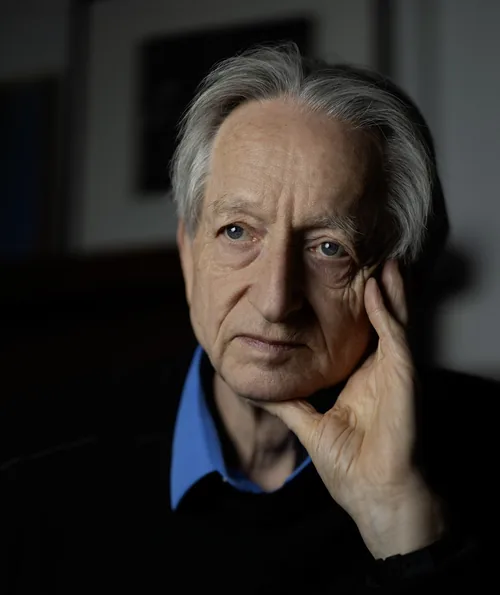
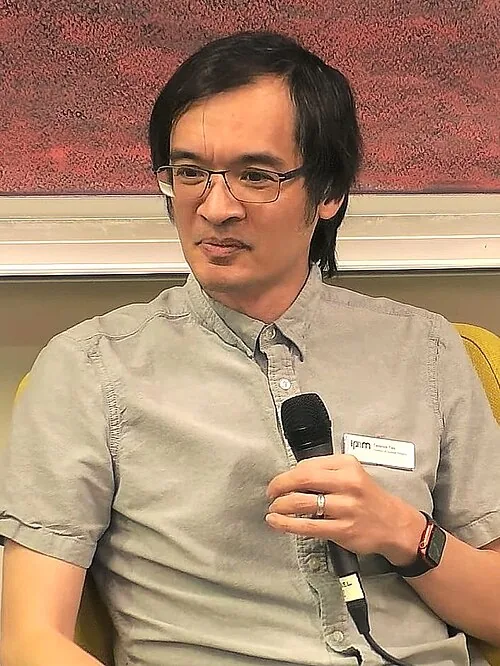
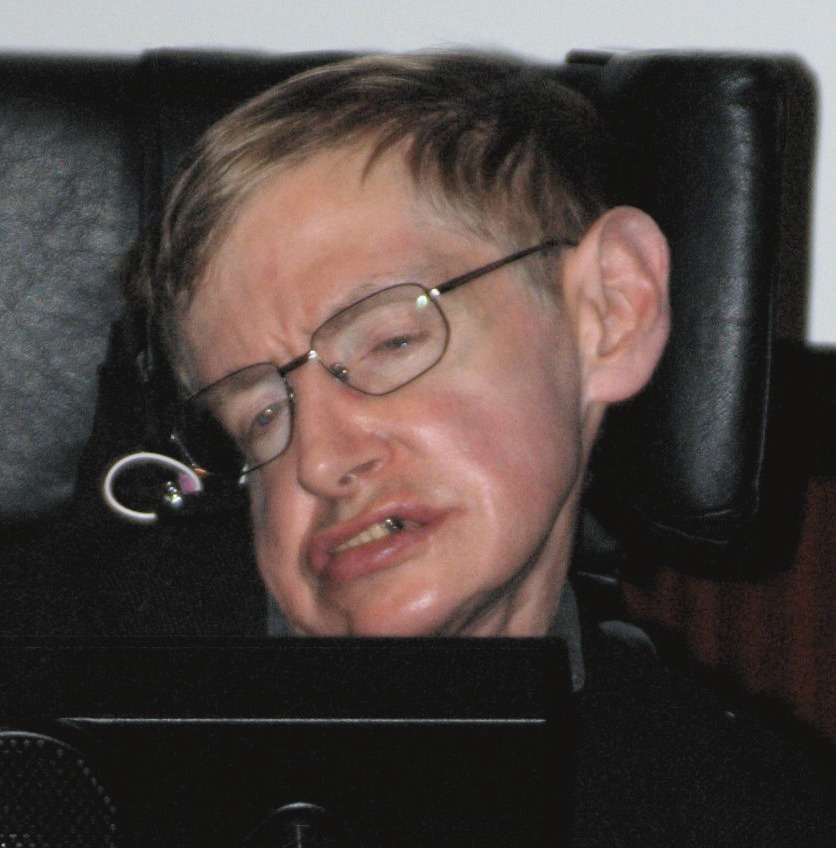
Photograph by Christopher Michel (Cmichel67) (May 13, 2026), CC BY-SA 4.0. Background removed for the portrait above. · Photograph by the Institute for Pure & Applied Mathematics (2026), CC BY 4.0. Background removed for the portrait above. · Photograph by ²°¹°°, Paris, 2006, public domain. Cropped from the original.


An estimate is an inference.
Yours can be measured.
Thirty questions, scored against general-population benchmarks. Your score, your percentile, your ability breakdown and a printable IIF certificate.
Find your IQ score now! →