



What was C. S. Lewis’ IQ?
No IQ score is on record. The record is three Oxford firsts between 1920 and 1923.
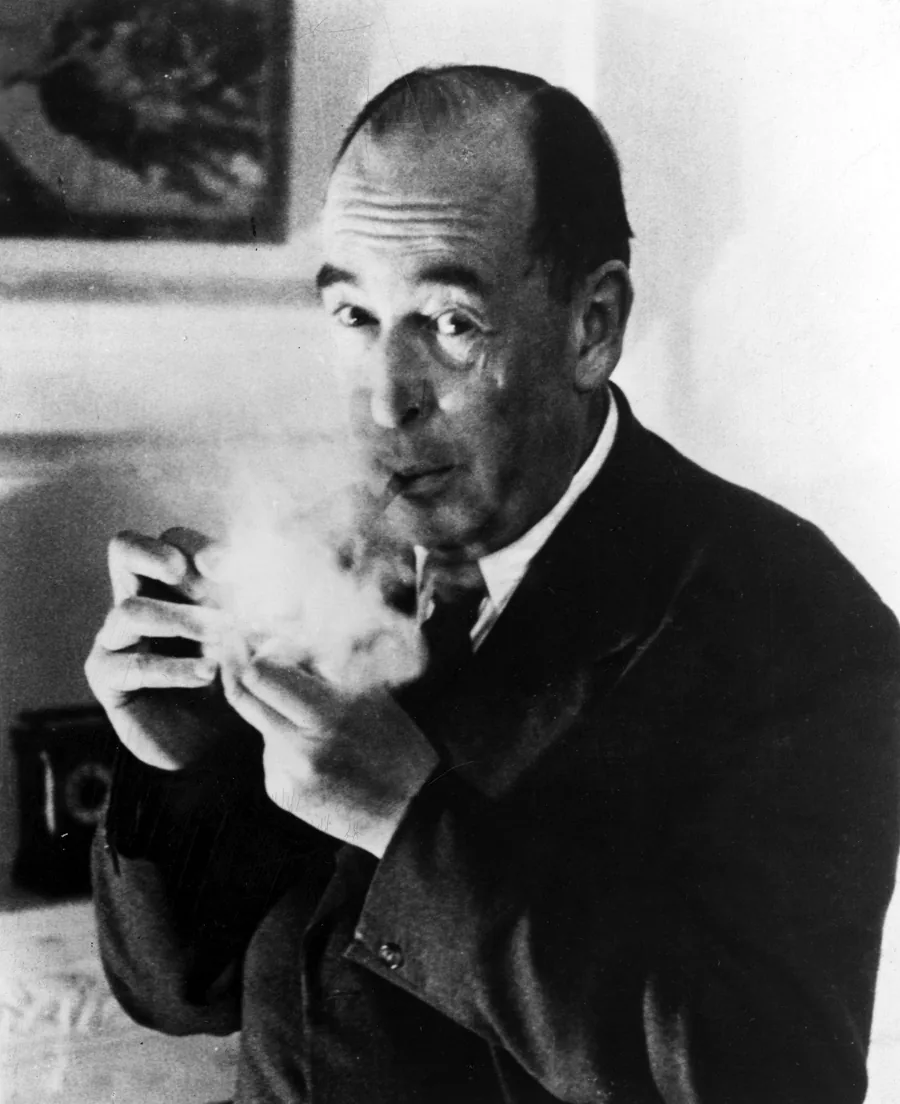
C. S. Lewis’s IQ is unknown: no IQ test result has been published for him. What is documented is a “triple first” at Oxford, with first-class honors in Classical Moderations (1920), Greats (1922) and English (1923), followed by a tutorial fellowship at Magdalen College from 1925 to 1954.
C. S. Lewis’ estimated IQ
- First-class honors in Classical Moderations (1920) and in Greats (1922) at University College, Oxford, according to Keble College’s history pages. University College itself records his 1922 First in Classics.
- First-class honors in English Language and Literature (1923). University College says he took a second degree in English in one year, working through a syllabus that was expected to take two.
- Election as a Fellow of Magdalen College in 1925. Magdalen says he was a Tutorial Fellow in English there until 1954.
- Appointment in 1954 as Professor of Mediaeval and Renaissance Literature at Cambridge, where he became a Fellow of Magdalene College, per Magdalen College.
This is an inference from an exam record, not a test result. A first-class degree is the examiners’ judgment against a standard, not a point on a scale, and no source gives a school, army or adult IQ result for him. His studies were also interrupted by the First World War, in which he was badly wounded. The range is wide for those reasons.
- Born
- November 29, 1898
- Died
- November 22, 1963
- Education
- University College, Oxford; first-class honors in 1920, 1922 and 1923
- Fellowship
- Tutorial Fellow in English, Magdalen College, Oxford, 1925–1954
- Later post
- Professor of Mediaeval and Renaissance Literature, Cambridge, from 1954
- Known for
- The Chronicles of Narnia, The Screwtape Letters, Mere Christianity, The Allegory of Love
- Circulating figure
- None found; no published IQ test result
What an IQ of 145–160 actually means
Set the claim aside for a moment. If someone genuinely scored in this range, here is what that would represent.
| Score range | Classification | Share of people | What it indicates |
|---|---|---|---|
| 85 – 114 | Average | ~68% | The range most people fall into. |
| 115 – 129 | Above average | ~13.6% | Roughly one person in seven. |
| 130 – 144 | Gifted | ~2% | The threshold most high-IQ societies use. |
| Above 144 | Highly gifted | ~0.1% | Figures above this range are extrapolated from the curve rather than measured. |
Percentages are approximate and describe a normal distribution. The same number means different things on tests with different standard deviations.
Thirty questions gives you a measured position on this exact scale — your score, your percentile and the ability breakdown behind it.
Find out in 30 minutes →Who C. S. Lewis was
Clive Staples Lewis was born on November 29, 1898 and died on November 22, 1963, according to Wikidata. University College says he came up to Oxford in 1917, at the height of the First World War, and left soon after to join up. He was badly wounded in France and returned to Oxford in 1919 to resume his studies.
University College says he proved a brilliant student. Keble College’s history pages record his first-class honors in Classical Moderations (1920), Greats (1922) and English Language and Literature (1923). University College says he stayed on for a second degree in English and worked through, in one year, a syllabus expected to take two.
Lewis would have liked to stay at University College as a Fellow, but there were no openings. In 1925 he was elected a Fellow of Magdalen College instead. Magdalen says he was a Tutorial Fellow in English there until 1954, and University College says that until the 1940s all its undergraduates reading English went to Magdalen to be tutored by him.
Magdalen names The Allegory of Love among the scholarly works of those years and the Narnia books, The Screwtape Letters and Mere Christianity among the others that built his reputation. In 1954 he was elected Professor of Mediaeval and Renaissance Literature at Cambridge and became a Fellow of Magdalene College. Magdalen elected him an honorary fellow in 1955, and University College did so in 1959.
 By Elora Mercer, Celebrity Research WriterFigures checked by Leon Falkner, Data & Research Analyst
Reviewed by Aarav Vardhan, Editor-in-Chief · Last reviewed November 2026

C. S. Lewis: the documented record
The estimate above rests on this record. Every entry here is a matter of public fact, which is more than can be said for the number itself.
- 1898Born November 29.
- 1917Comes up to University College, Oxford, and leaves soon after to join up.
- 1919Returns to Oxford after being badly wounded in France.
- 1920First-class honors in Classical Moderations.
- 1922First-class honors in Greats; University College records a First in Classics.
- 1923First-class honors in English Language and Literature.
- 1925Elected a Fellow and Tutor in English at Magdalen College.
- 1954Elected Professor of Mediaeval and Renaissance Literature at Cambridge.
- 1963Dies on November 22.
Why no figure circulates
Following a claim back to its first appearance is the part almost nobody does — and it is what most people are actually asking.
No IQ test result has been published for C. S. Lewis, so C. S. Lewis’s IQ score is unknown. A number attached to his name without a named test, a date and an examiner is a guess. For how such figures spread, and what to check first, see where celebrity IQ numbers come from.
The exam record is the checkable part. Keble College’s history pages list first-class honors in Classical Moderations in 1920, in Greats in 1922 and in English Language and Literature in 1923. University College adds that the English degree took him one year, on a syllabus built for two. Those are three examination results from three different courses. They are strong evidence of ability, but they are not a score.
Was C. S. Lewis a genius? His documented record is that of an exceptional scholar. “Genius” has no fixed IQ cut-off; see what genius-level IQ means. His estimated IQ, 145–160, sits just below J.R.R. Tolkien (150–165), who took first-class honors in English at Exeter College in 1915. It overlaps Oscar Wilde (140–155), who won a double first at Magdalen, and is above George Orwell (135–150), who never attended a university.
On the usual scale (SD 15), 145 is about 1 in 741 people and 160 is about 1 in 31,600. Use the percentile calculator to see any score in between. Above about 160, tests cannot separate people reliably, a limit explained in the test ceiling, so the top of any range for a scholar like Lewis is partly extrapolation.
How we read a number →No school, army or adult test result for Lewis is public. The University College, Keble College and Magdalen College pages describe examinations, degrees and posts, and none gives an IQ.
Says he came up in 1917, left to join up, was badly wounded and returned in 1919; got a First in Classics in 1922 and another First in English in 1923 after covering a two-year syllabus in one; was elected a Fellow of Magdalen in 1925; and became an Honorary Fellow of Univ in 1959.
States that he gained a “Triple First” as an undergraduate at University College: First Class Honours in Classical Moderations in 1920, in Greats in 1922 and in English Language and Literature in 1923, and was elected a tutorial fellow of Magdalen in 1925.
Says he was elected a Tutorial Fellow in English of Magdalen in 1925 and remained until 1954, when he was elected Professor of Mediaeval and Renaissance Literature and became a Fellow of Magdalene College, Cambridge; elected an Honorary Fellow of Magdalen in 1955.
Source of the portrait: the dust jacket of the first US edition of Till We Have Faces (Harcourt, Brace and Company, 1957), photographer credited as John S. Murray. The file page says the jacket scan shows no copyright notice and applies the US public-domain rule for jackets published without one. The status is a United States rule; other countries may differ.
Used to confirm identity and the dates of birth and death. Wikidata describes him as a British writer, lay theologian and scholar (1898–1963).
The sources behind our estimate
The figures that circulate for C. S. Lewis, what we were able to confirm, and where the two diverge.
No IQ figure circulates for C. S. Lewis in the sources we found, although people do search for “C. S. Lewis IQ” and “C. S. Lewis IQ level.”
Oxford’s University College, Magdalen College and Keble College describe examinations, degrees and appointments. None gives an IQ. A “triple first” is a record of examination results across three subjects, not a score.
With nothing circulating, there is no spread to audit. 145–160 is this site’s estimated range for C. S. Lewis and the only figure on the page. It rests on a record, not a test, so its floor, its top and its fifteen-point width are judgments.
Want a number that does hold up? Every figure on this page is somebody’s claim. Take the 30-question test and get a percentile you can check rather than a figure you have to trust.
C. S. Lewis — frequently asked
What is C. S. Lewis’s IQ?
No IQ test result has been published for C. S. Lewis, so his IQ is unknown. This site’s estimated range is 145–160. It is inferred from his three first-class Oxford results and his Magdalen fellowship, not from a test.
Did C. S. Lewis get a triple first at Oxford?
Yes. Keble College’s history pages list first-class honors in Classical Moderations (1920), Greats (1922) and English Language and Literature (1923). University College confirms the 1922 First in Classics and the 1923 First in English.
Was C. S. Lewis a genius?
The documented record is that of an exceptional scholar: three Oxford firsts and a tutorial fellowship at Magdalen College from 1925 to 1954. “Genius” has no fixed IQ cut-off, and no test score backs the word.
Where did C. S. Lewis teach?
C. S. Lewis taught English at Magdalen College, Oxford, as a Tutorial Fellow from 1925 to 1954. In 1954 he became Professor of Mediaeval and Renaissance Literature at Cambridge and a Fellow of Magdalene College there.
How does C. S. Lewis’s estimated IQ compare with J.R.R. Tolkien’s?
This site estimates 145–160 for C. S. Lewis and 150–165 for J.R.R. Tolkien. Tolkien also took first-class honors in English at Oxford. Both ranges rest on records, not tests, and they overlap from 150 to 160, so neither man can be called higher.
How rare is an IQ of 145 to 160?
On a scale with an average of 100 and a standard deviation of 15, a score of 145 is about 1 in 741 people and 160 is about 1 in 31,600. No test reliably separates people far above 160, so any figure there is partly extrapolated.
Does a first-class degree prove a high IQ?
No. A first shows that examiners rated a candidate’s work in the top class, not what score the candidate would earn on an IQ test. Average IQ rises with education, but schooling also raises scores, so the link runs both ways.
How does my IQ compare with C. S. Lewis?
You can find out in about fifteen minutes. The IQ Metrics assessment is 30 questions, scored on the same 100-mean scale used throughout this page, so your result and the estimate above are at least expressed in the same units — one measured, one inferred. Once you have a number, the leaderboard shows where it would sit, and how we score and norm it explains the benchmarking.
Where does this estimate come from?
From the documented record rather than a test — the method is named above and set out in full under how we read a number. Compare it against the other writers profiles, starting with Voltaire.
- Take the 30-question IQ test — get a measured score and percentile of your own
- Average IQ by country — how the scale behaves across populations
- How IQ Metrics scores its assessment — the method behind our own number
- More on how IQ testing works — reliability, error and what a score can and cannot say
- More writers profiles — same field, same method
More writers
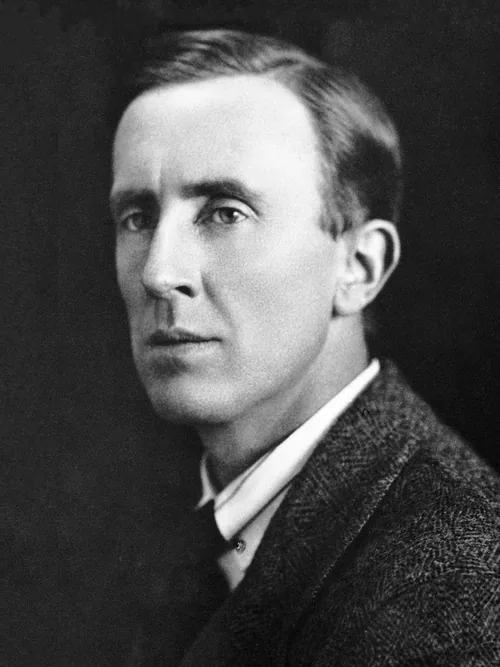
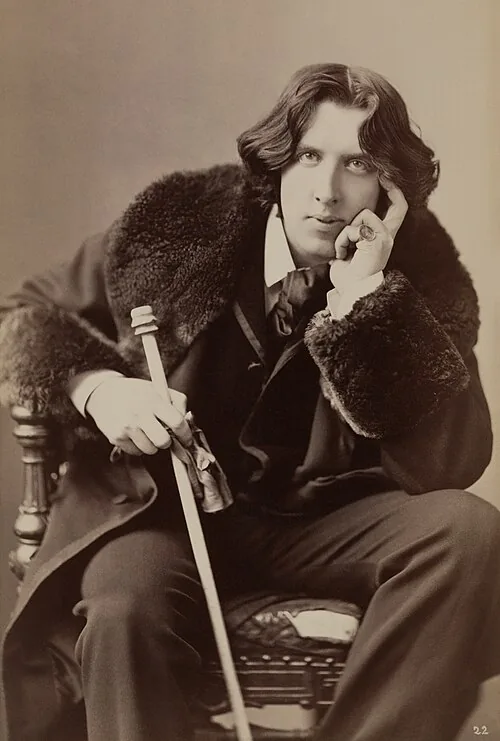
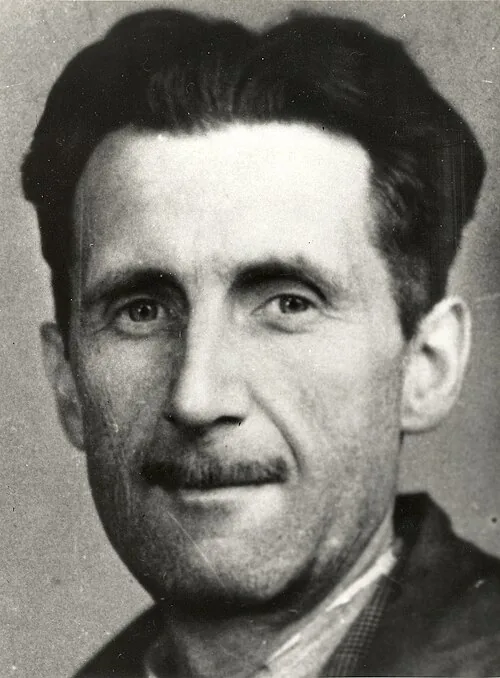
Photograph by an unknown photo studio, from the Commons file (c. 1925–26), public domain in the UK (author unknown, term expired) and the US (published before 1928). Background removed for the portrait above. · Photograph by Napoleon Sarony (1882), Library of Congress, public domain. · Press photograph by the Branch of the National Union of Journalists (1943), public domain. Background removed for the portrait above.


An estimate is an inference.
Yours can be measured.
Thirty questions, scored against general-population benchmarks. Your score, your percentile, your ability breakdown and a printable IIF certificate.
Find your IQ score now! →