



What was Leo Tolstoy’s IQ?
The strongest documented fact: War and Peace, rewritten and published in full in 1869 at 1,225 pages.
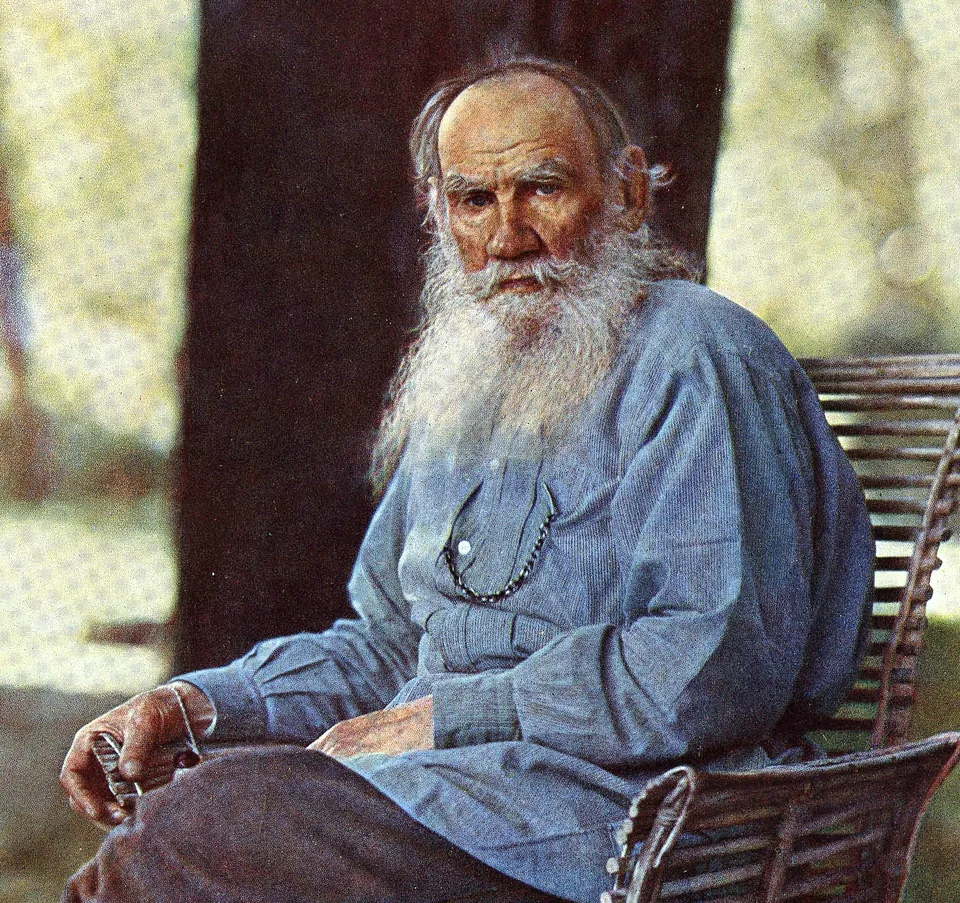
Leo Tolstoy’s IQ is unknown: no IQ score has been published for him (1828–1910), and no school, army or adult test result is public. The documented record is Kazan University from 1844 to 1847 without a degree, then Childhood (1852), War and Peace (1869) and Anna Karenina (1878). This site’s estimated range is 145–165 on the usual scale (mean 100, SD 15), inferred from that record.
Leo Tolstoy’s estimated IQ
- Kazan Federal University’s history page records that he studied Asian languages and law there from 1844 to 1847. Paul Birukoff’s 1911 biography says he did not pass the examination at the end of his first year in Eastern languages and moved to law. He left without a degree, so the school record adds nothing to the range.
- He served as an artillery officer in the Crimean War and was at the siege of Sevastopol in 1854–55. Childhood was published in 1852 and the Sevastopol Sketches in 1855, according to Wikipedia’s biography.
- War and Peace was serialized in The Russian Messenger from 1865 to 1867, the entire book was then rewritten. The first edition of 1869 ran to 1,225 pages, according to Wikipedia’s article on the novel.
- Anna Karenina appeared in installments from 1875 to 1877 and as a book in 1878. In 1877 Dostoevsky wrote that “Anna Karenina, as an artistic production, is perfect,” as Wikipedia’s article on the novel quotes him.
- After the emancipation of the serfs in 1861 he founded 13 schools for peasant children and set out their principles in his 1862 essay “The School at Yasnaya Polyana,” per Wikipedia’s biography.
This is an inference from a literary record, not a test result. The formal record points the other way: he did not pass a first-year examination at Kazan and left without a degree. Work on this scale also depends on time, language and years of drafting, not only on IQ, so the range is twenty points wide.
- Born
- September 9, 1828 (August 28, Old Style), Yasnaya Polyana, Russia
- Died
- November 20, 1910 (November 7, Old Style), Astapovo, Russia
- Education
- Kazan University, 1844–1847: Asian languages, then law; no degree
- Military service
- Artillery officer; Crimean War, siege of Sevastopol, 1854–1855
- Known for
- War and Peace (1869), Anna Karenina (1878), Resurrection (1899)
- Schools
- 13 schools for peasant children after 1861; essay “The School at Yasnaya Polyana,” 1862
- Nobel nominations
- Literature 1902–1906; Peace 1901, 1902 and 1909; never awarded
- Circulating figure
- None found; no published IQ test result
What an IQ of 145–165 actually means
Set the claim aside for a moment. If someone genuinely scored in this range, here is what that would represent.
| Score range | Classification | Share of people | What it indicates |
|---|---|---|---|
| 85 – 114 | Average | ~68% | The range most people fall into. |
| 115 – 129 | Above average | ~13.6% | Roughly one person in seven. |
| 130 – 144 | Gifted | ~2% | The threshold most high-IQ societies use. |
| Above 144 | Highly gifted | ~0.1% | Figures above this range are extrapolated from the curve rather than measured. |
Percentages are approximate and describe a normal distribution. The same number means different things on tests with different standard deviations.
Thirty questions gives you a measured position on this exact scale — your score, your percentile and the ability breakdown behind it.
Find out in 30 minutes →Who Leo Tolstoy was
How smart was Leo Tolstoy? The record shows a writer of very large scope who was an uneven student. Count Lev Nikolayevich Tolstoy was born on September 9, 1828 (August 28, Old Style) at Yasnaya Polyana, Russia, and died on November 20, 1910 (November 7, Old Style) at Astapovo, aged 82. Kazan Federal University’s history page records that he studied Asian languages and law there from 1844 to 1847.
Paul Birukoff’s The Life of Tolstoy (Cassell, London, 1911) says he first chose the faculty of Eastern languages, did not pass the examination at the end of the first year, and went over to law, where things went “a little better” but his zeal had cooled by the end of the second year.
Wikipedia’s biography says he left the university in the middle of his studies and returned to Yasnaya Polyana, and that his teachers described him as “both unable and unwilling to learn.” In 1851 he went to the Caucasus and joined the army.
He served as a young artillery officer in the Crimean War and was in Sevastopol during the 11-month siege of 1854–55. During the war he was recognized for courage and promoted to lieutenant. His first novel, Childhood, was published in 1852, and the Sevastopol Sketches followed in 1855.
The two novels that carry his reputation took years to build. Parts of an early version of War and Peace, titled The Year 1805, were serialized in The Russian Messenger from 1865 to 1867. The entire book was then rewritten and published in 1869, and its first edition ran to 1,225 pages.
Wikipedia’s article on Tolstoy says its canvas includes 580 characters, some historical and some fictional. Anna Karenina appeared in installments from 1875 to 1877 and in book form in 1878, and Tolstoy called it his first true novel. Resurrection followed in 1899.
Tolstoy also worked as an educator. After the emancipation of the serfs in 1861 he founded 13 schools for the children of peasants and set out their principles in his 1862 essay “The School at Yasnaya Polyana.”
His Russian Book for Reading, a four-volume collection of 629 stories addressed to schoolchildren, was published along with the New Azbuka textbook. He was nominated for the Nobel Prize in Literature every year from 1902 to 1906 and for the Nobel Peace Prize in 1901, 1902 and 1909, and was never awarded either, according to Wikipedia.
 By Elora Mercer, Celebrity Research WriterFigures checked by Leon Falkner, Data & Research Analyst
Reviewed by Aarav Vardhan, Editor-in-Chief · Last reviewed November 2026

Leo Tolstoy: the documented record
The estimate above rests on this record. Every entry here is a matter of public fact, which is more than can be said for the number itself.
- 1828Born September 9 (August 28, Old Style) at Yasnaya Polyana.
- 1844–1847Studies Asian languages and law at Kazan University and leaves without a degree.
- 1851Goes to the Caucasus and joins the army.
- 1852Childhood is published.
- 1854–1855Serves at the siege of Sevastopol; Sevastopol Sketches follows in 1855.
- 1861–1862Founds 13 schools for peasant children; publishes the essay “The School at Yasnaya Polyana” (1862).
- 1865–1867An early version of War and Peace is serialized in The Russian Messenger.
- 1869War and Peace is published in full, rewritten, in a first edition of 1,225 pages.
- 1875–1878Anna Karenina appears in installments (1875–1877) and as a book (1878).
- 1910Dies November 20 (November 7, Old Style) at Astapovo.
Why no figure circulates
Following a claim back to its first appearance is the part almost nobody does — and it is what most people are actually asking.
No IQ test result has been published for Leo Tolstoy, so any Leo Tolstoy IQ figure that appears without a named test, a date and an examiner is a guess. Two lists of famous people’s IQ scores, on briefly.co.za and the Christian Post, leave him out.
He was born in 1828 and died in 1910, and the sources on his life describe studies, service, books and schools, never a score. For how celebrity numbers spread, and what to check first, see where celebrity IQ numbers come from.
Is there a Tolstoy IQ score from Catharine Cox? No. No test result has been published, and no historiometric rating by Cox exists for him. Cox’s 1926 study, The Early Mental Traits of Three Hundred Geniuses, rated 301 historical figures from records of their childhood and youth, and Tolstoy is not among them, as the full list of Cox’s 301 geniuses shows.
For comparison, her raters put Charles Dickens at 145 for childhood and 155 for youth, and her 60 poets, novelists and dramatists averaged 147.8 for youth. Those are retrospective estimates from records, not measurements, and none of them is a Tolstoy figure.
Was Tolstoy a genius? His documented record is that of one of the most celebrated novelists in world literature, and of an uneven student. “Genius” has no fixed IQ cut-off; see what genius-level IQ means.
His estimated IQ, 145–165, sits just below Fyodor Dostoevsky (150–170), who wrote in 1877 that Anna Karenina was perfect as an artistic production, and equals the range for Mark Twain (145–165), which rests on the same kind of method. For more, see the other writers we have checked.
On the usual scale (mean 100, SD 15), a score of 145 is about 1 in 741 people and 165 is about 1 in 136,000, on a normal curve. Above about 160, tests cannot separate people reliably, a limit explained in the test ceiling, so the top of any range for a writer of Tolstoy’s output is partly extrapolation from the record.
How we read a number →No school, army or adult test result for Tolstoy is public. Two lists of famous people’s IQ scores, briefly.co.za (“What is the highest IQ ever recorded: Top 35 smartest people of all time”) and the Christian Post (“IQ scores of famous people”), have no entry for him, and the pages on his studies and works give no IQ.
Catharine Cox’s The Early Mental Traits of Three Hundred Geniuses (Stanford University Press, 1926) rated 301 people born from 1450 to 1850 from records of their early lives. Tolstoy, born in 1828, is not among them, so no historiometric rating by Cox exists for him.
Its timeline entry for 1844–1847 says Leo Tolstoy “studied Asian languages and law at the University.”
Near-contemporary biography. Says he first chose the faculty of Eastern Languages, did not pass the examination at the end of the first year, went over to Law where things went a little better, and that his zeal had cooled by the close of the second year.
Used for birth and death dates and places, leaving Kazan before finishing, the 1851 army service and the siege of Sevastopol, the 13 schools and the 1862 essay, Russian Book for Reading, and the Nobel nominations. The English article is linked to Wikidata item Q7243.
Serialized 1865–1867 in The Russian Messenger (earlier version titled The Year 1805), the entire book rewritten and published in 1869; 1,225 pages in the first published edition.
Installments from 1875 to 1877, book form in 1878; Tolstoy called it his first true novel; quotes Dostoevsky’s 1877 essay “Anna Karenina as a Fact of Special Importance,” in A Writer’s Diary, calling it perfect as an artistic production.
Lists all of Cox’s subjects; Tolstoy is not one of them. Gives Dickens 145 for childhood and 155 for youth, and 147.8 as the raters’ youth average for 60 poets, novelists and dramatists.
The sources behind our estimate
The figures that circulate for Leo Tolstoy, what we were able to confirm, and where the two diverge.
No Tolstoy IQ figure appears in the lists of famous people’s IQ scores from briefly.co.za (“Top 35 smartest people of all time”) or the Christian Post (“IQ scores of famous people”). Neither has an entry for him.
Kazan Federal University’s history page and Paul Birukoff’s 1911 biography, The Life of Tolstoy, describe his studies and give no IQ. Catharine Cox’s 1926 study of 301 historical geniuses does not include him, so no historiometric rating by Cox exists for him either.
With nothing circulating, there is no spread to audit. 145–165 is this site’s estimated range for Leo Tolstoy and the only figure on the page. It rests on a record, not a test, so its floor, its top and its twenty-point width are judgments.
Want a number that does hold up? Every figure on this page is somebody’s claim. Take the 30-question test and get a percentile you can check rather than a figure you have to trust.
Leo Tolstoy — frequently asked
What was Leo Tolstoy’s IQ?
Leo Tolstoy’s IQ is unknown: no IQ test result has been published for him, and he died in 1910. This site’s estimated IQ range is 145–165 on a scale with a mean of 100 and a standard deviation of 15. It is inferred from his novels and his Kazan University record, not from a test.
Did Leo Tolstoy ever take an IQ test?
No IQ test result has been published for Leo Tolstoy, so there is no score to quote. Kazan Federal University’s history page and Paul Birukoff’s 1911 biography, The Life of Tolstoy, describe his studies and give no score, and two lists of famous people’s IQ scores omit him.
How smart was Leo Tolstoy?
Leo Tolstoy was a writer of exceptional scope and an uneven student. According to Paul Birukoff’s 1911 biography he did not pass his first-year examination in Eastern languages at Kazan, yet he went on to write War and Peace (1869) and Anna Karenina (1878). This site’s estimated IQ for him is 145–165, an inference from that record.
Was Leo Tolstoy a genius?
Wikipedia’s biography calls Leo Tolstoy one of the greatest and most influential authors of all time, but no IQ score makes him a genius. “Genius” has no fixed IQ cut-off. The record includes War and Peace, published in full in 1869, and Anna Karenina, which Dostoevsky called perfect as an artistic production in 1877.
How does Leo Tolstoy’s estimated IQ compare with Fyodor Dostoevsky’s?
This site estimates 145–165 for Leo Tolstoy and 150–170 for Fyodor Dostoevsky. The ranges overlap from 150 to 165, so neither writer can be called higher. Both ranges rest on literary records, not tests, and each is on a scale with a mean of 100 and a standard deviation of 15.
Did Leo Tolstoy finish university?
No. Leo Tolstoy studied Asian languages and law at Kazan University from 1844 to 1847, according to the university’s own history page, and left without a degree. Paul Birukoff’s 1911 biography says he did not pass his first-year examination in Eastern languages and then moved to the faculty of law.
Is Leo Tolstoy in Catharine Cox’s study of 301 geniuses?
No. Catharine Cox’s 1926 study, The Early Mental Traits of Three Hundred Geniuses, rated 301 historical figures from records of their early lives, and Leo Tolstoy is not one of them. No historiometric rating by Cox exists for him, so a Cox-based number attached to his name is not hers.
How does my IQ compare with Leo Tolstoy?
You can find out in about fifteen minutes. The IQ Metrics assessment is 30 questions, scored on the same 100-mean scale used throughout this page, so your result and the estimate above are at least expressed in the same units — one measured, one inferred. Once you have a number, the leaderboard shows where it would sit, and how we score and norm it explains the benchmarking.
Where does this estimate come from?
From the documented record rather than a test — the method is named above and set out in full under how we read a number. Compare it against the other writers profiles, starting with Voltaire.
- Take the 30-question IQ test — get a measured score and percentile of your own
- Average IQ by country — how the scale behaves across populations
- How IQ Metrics scores its assessment — the method behind our own number
- More on how IQ testing works — reliability, error and what a score can and cannot say
- More writers profiles — same field, same method
More writers
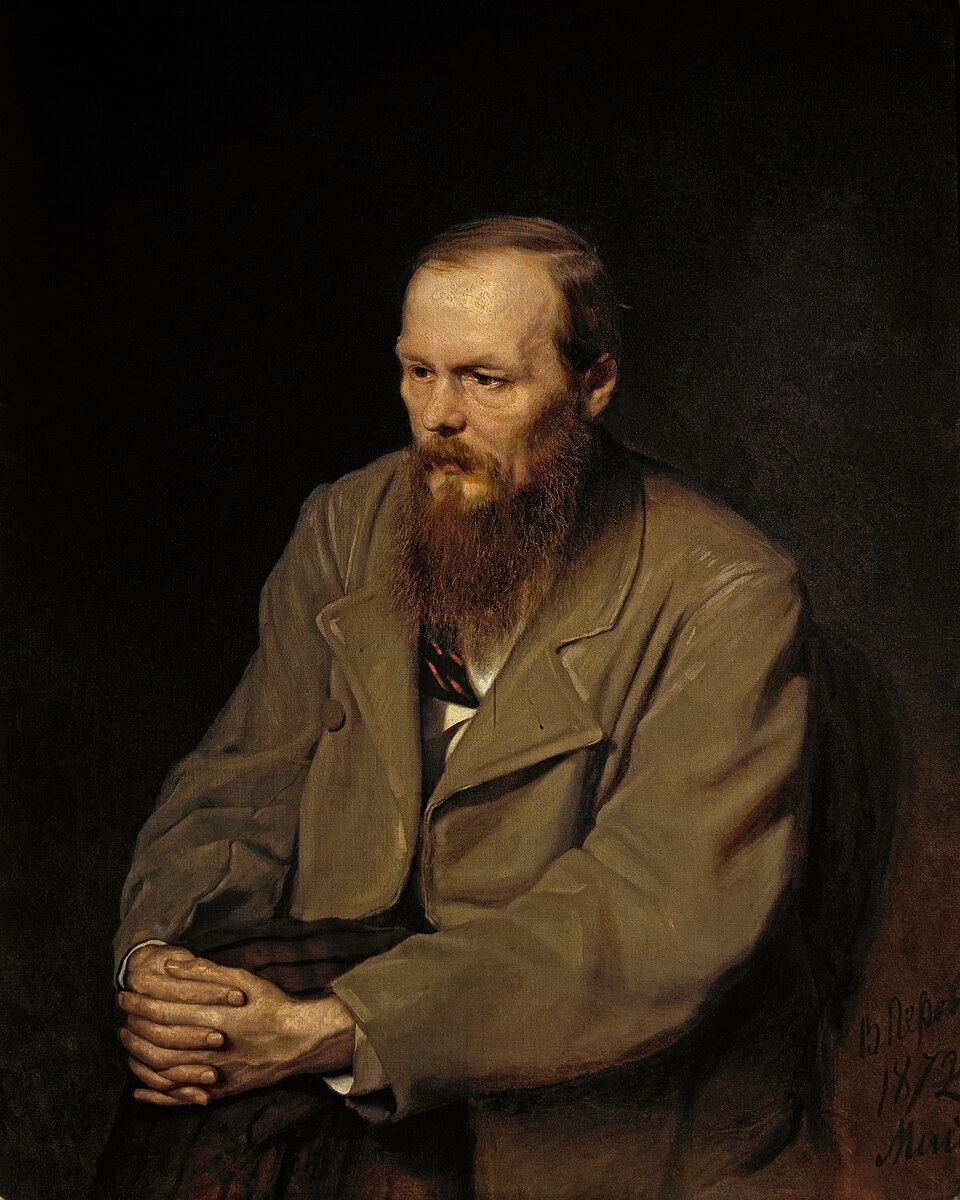
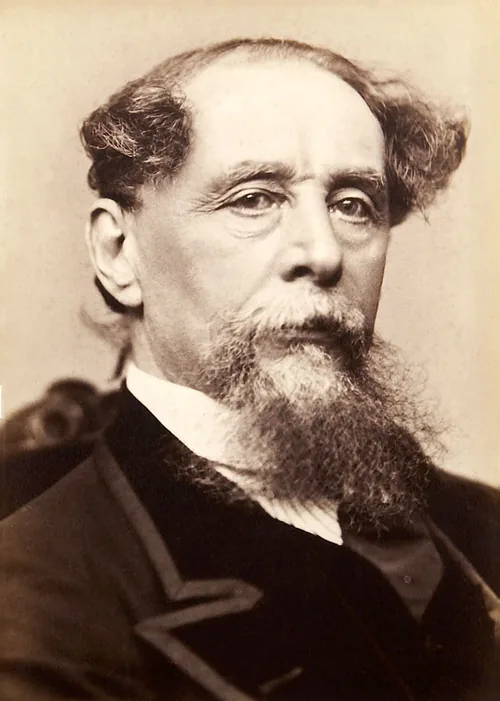
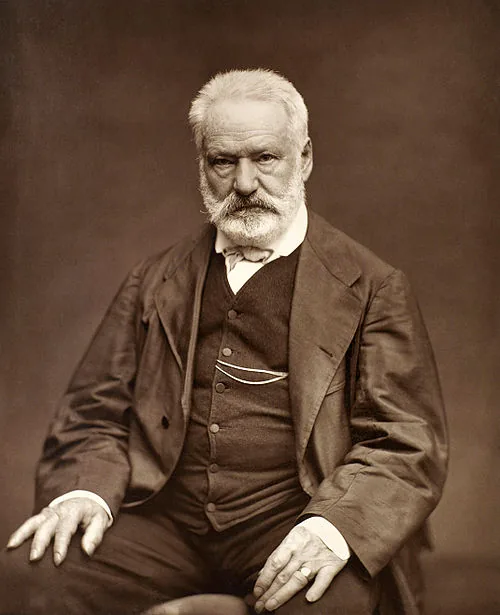
Portrait by Vasily Perov (1872), Tretyakov Gallery, via Wikimedia Commons, public domain. · Photograph of Charles Dickens by Jeremiah Gurney (between 1867 and 1868), Commons file, public domain (a nineteenth-century photograph). Cropped for the portrait above. · Photograph by Étienne Carjat (1876), public domain. Background removed for the portrait above.


An estimate is an inference.
Yours can be measured.
Thirty questions, scored against general-population benchmarks. Your score, your percentile, your ability breakdown and a printable IIF certificate.
Find your IQ score now! →