



What was Fyodor Dostoevsky’s IQ?
A firing squad that stopped at the last second, four years in Siberian chains, and a psychological reputation Nietzsche praised — against a circulating 180 with no test behind it.
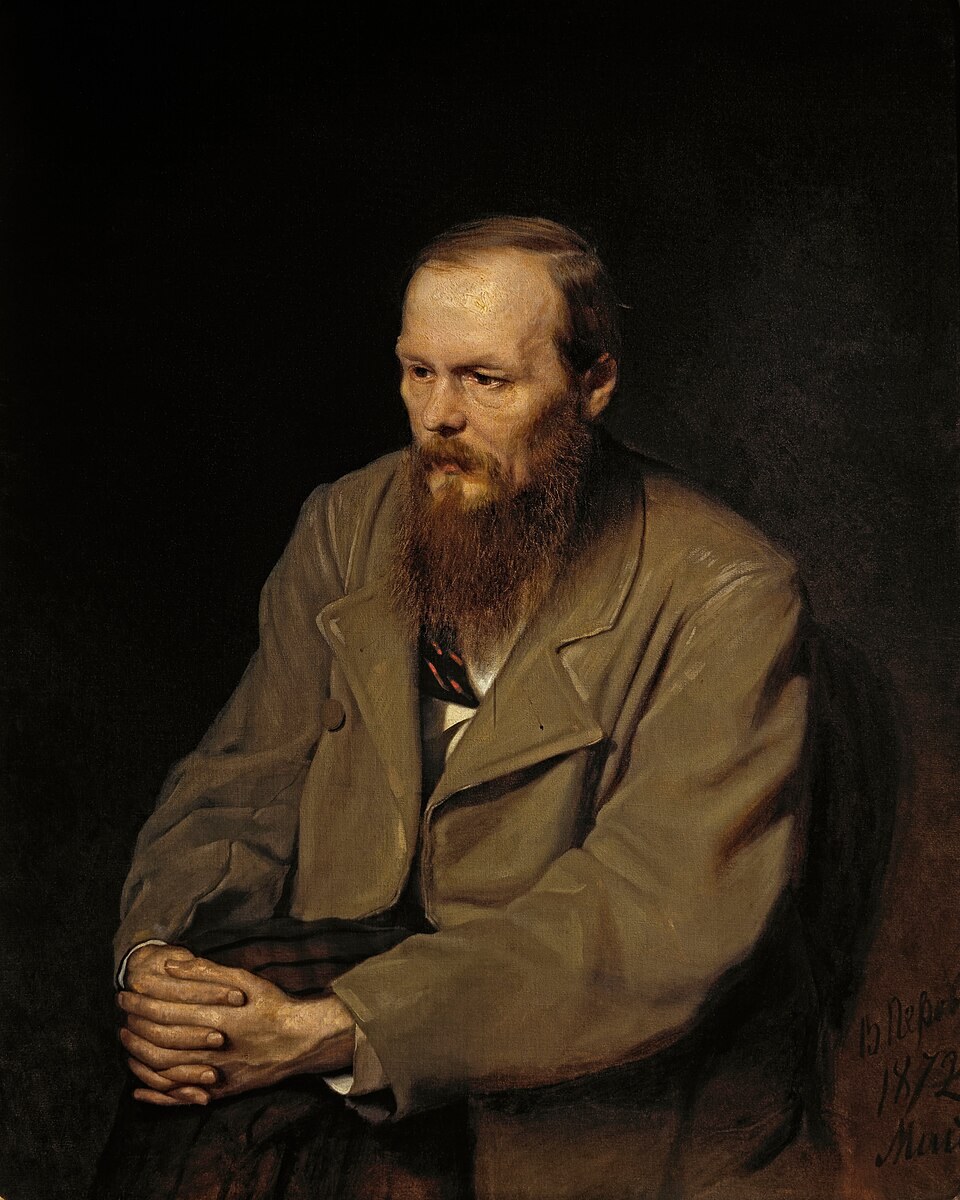
Fyodor Dostoevsky’s IQ level is put at 180 on genius-ranking pages, though the figure traces to a homemade list, not a test — he died in 1881, before intelligence testing existed. What is documented is a commuted death sentence, four years of Siberian penal labor, and novels later thinkers cited as psychological evidence, supporting an estimated IQ of 150–170: an inference, not a recovered score.
Fyodor Dostoevsky’s estimated IQ
- A debut novel, Poor Folk, completed in 1845 and published January 15, 1846, that the leading critic of the day, Vissarion Belinsky, hailed as inaugurating Russian social-novel realism — literary fame at 24.
- A sequence of major novels sustained across three decades of debt and illness — Crime and Punishment (1866), The Idiot (1868–69), Demons (1871–72) and The Brothers Karamazov (1879–80) — including The Gambler, dictated whole to a stenographer in about four weeks in October 1866 to beat a contract deadline that would otherwise have signed away his copyrights for nine years.
- Elected an honorary member of the Russian Academy of Sciences, receiving its certificate in February 1879.
- Recognition running in both directions among writers: his own 1861 preface introduced Edgar Allan Poe’s stories to Russian readers in the magazine Vremya, and Friedrich Nietzsche later called his work, in an 1888 letter to Georg Brandes, “the most valuable psychological material I know.”
- The June 1880 Pushkin Speech in Moscow, delivered at the unveiling of the Pushkin monument less than a year before his death — a speech historians credit with cementing his standing as Russia’s leading living writer.
Dostoevsky died in 1881, twenty-four years before Alfred Binet published the first practical intelligence test, so no score of any kind was ever available to him. His schooling gives little else to anchor a range to: he was by every account an indifferent student of mathematics and the military sciences at the Engineering Institute, preferred drawing and reading to his coursework, and resigned his commission within a year of graduating — nothing like a wrangler’s placing or a completed doctorate. The case for 150–170 rests on literary and civic achievement instead: a large, sustained body of work, institutional recognition from the Academy of Sciences, and admiration from later thinkers who are not disinterested judges of psychological insight. That is real evidence, but of a different kind than a ranked result, and it is no more a recovered score than the 180 that circulates against it.
- Born
- November 11, 1821 (October 30, Old Style), Moscow
- Died
- February 9, 1881, Saint Petersburg, aged 59
- Education
- Nikolayev Military Engineering Institute, St. Petersburg, 1838–1843
- 1849 sentence
- Death sentence read at Semyonovsky Square, December 22, 1849; commuted to four years’ katorga at Omsk
- Best-known novels
- Crime and Punishment (1866); The Idiot (1868–69); Demons (1871–72); The Brothers Karamazov (1879–80)
- Academy honor
- Honorary member, Russian Academy of Sciences, certificate dated February 1879
- Condition
- Epilepsy, documented from the 1850s onward
- Introduced to Russia
- First Russian translations of Edgar Allan Poe, with his preface, in Vremya (1861)
What an IQ of 150–170 actually means
Set the claim aside for a moment. If someone genuinely scored in this range, here is what that would represent.
Average is 100 by construction, and about two-thirds of people fall between 85 and 115. Take the test to place your own score on this scale.
| Score range | Classification | Share of people | What it indicates |
|---|---|---|---|
| 85 – 114 | Average | ~68% | The range most people fall into. |
| 115 – 129 | Above average | ~13.6% | Roughly one person in seven. |
| 130 – 144 | Gifted | ~2% | The threshold most high-IQ societies use. |
| Above 144 | Highly gifted | ~0.1% | Figures above this range are extrapolated from the curve rather than measured. |
Percentages are approximate and describe a normal distribution. The same number means different things on tests with different standard deviations.
Thirty questions gives you a measured position on this exact scale — your score, your percentile and the ability breakdown behind it.
Find out in 30 minutes →Who Fyodor Dostoevsky was
Fyodor Mikhailovich Dostoevsky was born on November 11, 1821 (October 30, Old Style) in Moscow, one of eight children of Mikhail Dostoevsky, a military physician at the Mariinsky Hospital for the Poor, and Maria Nechayeva, who died of tuberculosis in 1837. He entered the Nikolayev Military Engineering Institute in St. Petersburg in January 1838, aged sixteen, and by his own and his biographers’ account was an indifferent student there, drawn to drawing, architecture and reading over the mathematics and military sciences he was meant to study. He graduated in August 1843, took a commission as a military engineer, and resigned it within a year to write. His debut novel, Poor Folk, completed in 1845 and published January 15, 1846 in the almanac St. Petersburg Collection, was hailed by the era’s most influential critic, Vissarion Belinsky, as inaugurating a new realist tradition in Russian fiction; a second novel, The Double, followed on January 30, 1846 to a far cooler reception.
From 1846 Dostoevsky attended the Petrashevsky circle, a St. Petersburg discussion group formed by Mikhail Petrashevsky that read banned political literature and debated socialist ideas. He was arrested on April 23, 1849 and held in the Peter and Paul Fortress; a military court sentenced him to death for his part in it. On December 22, 1849, he and his co-defendants were marched to Semyonovsky Square and stood before a firing squad — Dostoevsky third in the second row — before a rider arrived with the tsar’s commutation, a reprieve staged in advance as a show of mercy. The sentence became four years of katorga, penal labor, at the Omsk fortress in Siberia, where he was classified among the more dangerous convicts and kept in shackles throughout; released February 14, 1854, he served a further six years of compulsory military service as a private at Semipalatinsk.
Back in European Russia by 1859, Dostoevsky turned his prison years into Notes from the House of the Dead, serialized 1861–62, and ran the magazine Vremya (Time), founded with his brother Mikhail; in 1861 it carried the first Russian translations of three Edgar Allan Poe stories — “The Tell-Tale Heart,” “The Black Cat” and “The Devil in the Belfry” — with Dostoevsky’s own preface calling Poe a “strange, though enormously talented writer” known for “the power of details.” Notes from Underground followed in 1864, the year his first wife, Maria Isaeva, whom he had married in Kuznetsk on February 7, 1857, died of tuberculosis. Under a punitive contract with the publisher Fyodor Stellovsky — deliver a new novel by November 1, 1866 or forfeit the rights to everything he had written or would write for nine years — he dictated The Gambler to a 19-year-old stenographer, Anna Snitkina, finishing on October 29, 1866; he married her the following February. Epilepsy, present by one later-disputed account since his teens, was officially diagnosed around the time of that first marriage and recurred for the rest of his life: four seizures are recorded in March 1877, and his three-year-old son Alexey died after a severe one on May 16, 1879.
Crime and Punishment began serialization in The Russian Messenger in January 1866, followed by The Idiot (1868–69) and Demons, finished November 26, 1872. From January 1873 Dostoevsky wrote a regular column, A Writer’s Diary, for Prince Vladimir Meshchersky’s magazine The Citizen, then issued it independently in book form from 1876; it sold more than twice as many copies as his earlier work and brought him more reader mail than he had ever had. He was elected an honorary member of the Russian Academy of Sciences, receiving its certificate in February 1879, the year he began serializing his last and longest novel, The Brothers Karamazov (1879–80). On June 20, 1880 (June 8, Old Style) he delivered a speech at the unveiling of the Pushkin monument in Moscow that biographers count as the peak of his public standing. He died in Saint Petersburg on February 9, 1881, of complications from pulmonary emphysema first diagnosed in 1879, and is buried at Tikhvin Cemetery.
 By Elora Mercer, Celebrity Research WriterFigures checked by Leon Falkner, Data & Research Analyst
Reviewed by Aarav Vardhan, Editor-in-Chief · Last reviewed August 2026

Fyodor Dostoevsky: the documented record
The estimate above rests on this record. Every entry here is a matter of public fact, which is more than can be said for the number itself.
- 1821Born November 11 (October 30, Old Style) in Moscow, son of a military physician.
- 1838Enters the Nikolayev Military Engineering Institute in St. Petersburg at sixteen.
- 1846Debut novel Poor Folk, published January 15, brings literary fame at 24.
- 1849Arrested April 23 for the Petrashevsky circle; stands before a firing squad at Semyonovsky Square on December 22 before a staged reprieve commutes the sentence to katorga.
- 1854Released February 14 after four years’ penal labor at Omsk; begins compulsory military service at Semipalatinsk.
- 1861Publishes the first Russian translations of three Edgar Allan Poe stories, with his own preface, in the magazine Vremya.
- 1866Serializes Crime and Punishment while dictating The Gambler to the stenographer Anna Snitkina in under a month, beating a contract deadline that would otherwise have cost him his copyrights.
- 1876Issues A Writer’s Diary independently in book form; it outsells his earlier work and brings a flood of reader letters.
- 1879Elected an honorary member of the Russian Academy of Sciences; begins serializing The Brothers Karamazov.
- 1881Dies in Saint Petersburg on February 9, less than eight months after the Pushkin Speech.
Where the 180 figure came from
Following a claim back to its first appearance is the part almost nobody does — and it is what most people are actually asking.
A figure of 180 is what circulates for Fyodor Dostoevsky’s estimated IQ, repeated across a small cluster of genius-ranking pages and social posts rather than found in any single well-documented study. It fits the pattern this site traces across celebrity IQ numbers generally: a round score that outlives whatever produced it.
The clearest paper trail for the 180 runs through a crowdsourced ranking, not a test. A Quora thread answering the same question — what was Dostoevsky’s IQ? — attributes the figure to “Hmolpedia 2020,” the self-published “Encyclopedia of Human Thermodynamics” project, quoting its entry as “Fyodor Dostoyevsky (1821-1881) (IQ:180|#118)”: a slot on a homemade list of roughly two thousand named “geniuses,” with no test, no citation and no stated method attached to the number. A second page, indexed under the title “IQ of Fyodor Dostoevsky — Score 180,” repeats the same figure; it sits behind a bot-check this research could not get past, so whatever sourcing it gives for its own number could not be checked. Two aggregators that do maintain open famous-person IQ lists, corebrain.app and Reader’s Digest, do not list Dostoevsky at all.
No test result could exist. Dostoevsky died in February 1881, and Alfred Binet did not publish the first practical intelligence test until 1905 — see the history of intelligence testing. A score of 180 would also be an extraordinary claim on its own terms: on the usual scale (mean 100, standard deviation 15) it sits more than five standard deviations above average, rare enough that how rare a high IQ score actually is is worth reading before taking any pre-1905 figure at face value. Search results for “Fyodor Dostoevsky” and IQ also turn up a same-named character from the anime and manga Bungo Stray Dogs — fan rankings and chatbot pages rating a fictional Fyodor’s intelligence against other characters. That Fyodor is loosely modeled on the novelist but is a separate, fictional figure with his own stated abilities; none of that material informs the range below.
What the documented record supports is lower and differently grounded: an estimated 150–170, built from achievement rather than any score. Dostoevsky’s own 1861 preface introduced Edgar Allan Poe’s stories to Russian readers in the magazine Vremya; his admiration ran the other way toward Victor Hugo, whose The Last Day of a Condemned Man he translated and whom he told his brother in 1863 he had read almost entire; and Friedrich Nietzsche later called Dostoevsky’s writing “the most valuable psychological material I know.” That reading places him inside Poe’s own 150–170 band and below Hugo’s 165–180 — a position the achievement record supports, not the 180 that circulates unsourced.
How we read a number →Confirms the Q-id is the 19th-century Russian novelist, not a film or namesake; birth November 11, 1821 (October 30, Old Style) in Moscow; death February 9, 1881 (January 28, Old Style) in Saint Petersburg, cause given as natural causes attributed to epilepsy and pulmonary emphysema.
Core biographical timeline: family, the Engineering Institute, Poor Folk, the Petrashevsky circle and mock execution, the Omsk sentence, epilepsy and his children, marriages, Crime and Punishment through The Brothers Karamazov, A Writer’s Diary and its sales, the honorary Academy of Sciences membership (February 1879), the June 1880 Pushkin Speech and its reception, and the 1881 death. Also the Stellovsky contract and Anna Snitkina’s stenography on The Gambler.
Cross-checks the Engineering Academy dates (1838–1843, resigned his commission in 1844), the December 22, 1849 date for the mock execution at Semyonovsky Square against a competing December 23 date given by other sources, the four-year Omsk sentence, and that epilepsy was officially diagnosed around the time of his first marriage.
Corroborates the December 22, 1849 date, Semyonovsky Square, and the sequence of the staged reprieve; gives Dostoevsky’s own later reflection on the experience.
Quotes Dostoevsky’s 1861 Vremya preface to the first Russian translations of three Poe stories, calling Poe a “strange, though enormously talented writer” known for “the power of details.”
The Stellovsky contract’s November 1, 1866 deadline and nine-year forfeiture penalty, and the completion of The Gambler on October 29, 1866, with the “twenty-six days” figure given for the dictation.
Quotes Nietzsche’s 1888 letter to Georg Brandes calling Dostoevsky’s work “the most valuable psychological material I know,” and a follow-up 1889 letter; also flags that the widely quoted line “the only psychologist from whom I had anything to learn” is presented there as paraphrase, not verified quotation, matching a “failed verification” tag on that wording on Wikipedia’s own Dostoevsky article.
Dostoevsky’s 1862 Vremya translation of Hugo’s Notre-Dame de Paris, his earlier translation of The Last Day of a Condemned Man, and an 1863 letter to his brother saying he had read nearly all of Victor Hugo.
One answer (Gerry Roberts) attributes 180 to “Hmolpedia 2020,” quoting it as “Fyodor Dostoyevsky (1821-1881) (IQ:180|#118)” with no methodology given; other answers state plainly that no reliable, empirically measured IQ exists for him and that circulating figures of 140 to 180 are extrapolations, not documentation.
No test score appears in any biography, encyclopedia entry or archive consulted, and none could: intelligence testing began in 1905, twenty-four years after his death. corebrain.app’s own “Famous People IQ Scores” page and Reader’s Digest’s list of the fifty highest IQs do not include him. A geniuses.club page indexed under the title “IQ of Fyodor Dostoevsky — Score 180” could not be opened past a bot-check, so its sourcing is unverified.
The sources behind our estimate
The figures that circulate for Fyodor Dostoevsky, what we were able to confirm, and where the two diverge.
A figure of 180 circulates for Fyodor Dostoevsky’s IQ. The clearest source is a Quora answer that attributes it to “Hmolpedia 2020,” quoting the entry as “Fyodor Dostoyevsky (1821-1881) (IQ:180|#118)”; a geniuses.club page is indexed under the title “IQ of Fyodor Dostoevsky — Score 180” but sits behind a bot-check this research could not clear. Neither corebrain.app’s nor Reader’s Digest’s own famous-person IQ lists include him at all.
No IQ test result exists for Fyodor Dostoevsky, and neither of the two places this research could reach that repeats 180 offers a method. A Quora thread titled “What was Dostoevsky’s IQ?” credits the figure to Hmolpedia, a self-published “Encyclopedia of Human Thermodynamics” project that ranks roughly two thousand historical figures by IQ with no disclosed methodology; its own page, and a similarly titled geniuses.club page carrying the same number, were both behind bot-checks this research could not pass, so their sourcing, if any, is unverified. Searches for “Fyodor Dostoevsky” and IQ also surface a same-named character from the anime and manga Bungo Stray Dogs — fan and chatbot pages ranking a fictional Fyodor’s intelligence — who is loosely based on the novelist but is a separate character with his own stated abilities; none of that material is used here.
The circulating 180 and this site’s 150–170 are ten to thirty points apart, and the gap is the space between an achievement-based estimate and an unsourced ranking-site number: the higher figure has no test, no named study and, in the one case this research could trace to its source, nothing beyond a slot on a homemade list.
Want a number that does hold up? Every figure on this page is somebody’s claim. Take the 30-question test and get a percentile you can check rather than a figure you have to trust.
Fyodor Dostoevsky — frequently asked
What is Fyodor Dostoevsky’s IQ?
No test measured Fyodor Dostoevsky’s IQ; he died in 1881, decades before intelligence testing existed. A figure of 180 circulates on genius-ranking sites, tracing to a self-published ranking project rather than a study. From his documented record — a debut novel that made him famous at 24, sustained major fiction, and honorary Academy of Sciences membership — this site estimates 150–170.
Did Fyodor Dostoevsky ever take an IQ test?
No. Dostoevsky died in February 1881; Alfred Binet did not publish the first practical intelligence test until 1905. No test result appears in any biography, encyclopedia or archive consulted for this profile, and the 180 that circulates online cites no test — it traces to a self-published ranking site, not a study.
Where does the 180 figure for Dostoevsky’s IQ come from?
The clearest trail leads to Hmolpedia, a self-published “Encyclopedia of Human Thermodynamics” project that ranks roughly two thousand historical figures by IQ with no disclosed method; a Quora answer quotes its entry as “Fyodor Dostoyevsky (1821-1881) (IQ:180|#118).” A geniuses.club page repeats the same number behind a bot-check this research could not clear.
Is the Fyodor Dostoevsky with a high IQ score online the real novelist or an anime character?
Often the anime character. Bungo Stray Dogs features a character named Fyodor Dostoevsky, loosely inspired by the novelist, and fan sites and chatbots rank his fictional intelligence separately from any claim about the real author. This profile concerns only the 19th-century novelist who wrote Crime and Punishment and The Brothers Karamazov.
Was Dostoevsky really sentenced to death?
Yes. Convicted for his part in the Petrashevsky circle, a banned-literature discussion group, Dostoevsky stood before a firing squad at Semyonovsky Square on December 22, 1849. A tsarist reprieve, staged in advance, commuted the sentence at the last moment to four years of penal labor in Omsk, Siberia.
Is Fyodor Dostoevsky considered a genius?
In literary and philosophical terms, routinely — his psychological novels influenced thinkers from Nietzsche to Freud, and he was elected an honorary member of the Russian Academy of Sciences in 1879. None of that is an IQ score, though; it is achievement this site uses to infer a range, 150–170, rather than to report one.
How does Fyodor Dostoevsky’s estimated IQ compare with Edgar Allan Poe’s or Victor Hugo’s?
This site’s estimate for Dostoevsky, 150–170, matches Edgar Allan Poe’s own 150–170 and sits below Victor Hugo’s 165–180. All three rest on achievement rather than a test: Dostoevsky introduced Poe’s stories to Russian readers in 1861 and translated Hugo, so the comparison reflects a real literary relationship, not just adjacent numbers.
How does my IQ compare with Fyodor Dostoevsky?
You can find out in about fifteen minutes. The IQ Metrics assessment is 30 questions, scored on the same 100-mean scale used throughout this page, so your result and the estimate above are at least expressed in the same units — one measured, one inferred. Once you have a number, the leaderboard shows where it would sit, and how we score and norm it explains the benchmarking.
Where does this estimate come from?
From the documented record rather than a test — the method is named above and set out in full under how we read a number. Compare it against the other writers profiles, starting with Voltaire.
- Take the 30-question IQ test — get a measured score and percentile of your own
- Average IQ by country — how the scale behaves across populations
- How IQ Metrics scores its assessment — the method behind our own number
- More on how IQ testing works — reliability, error and what a score can and cannot say
- More writers profiles — same field, same method
More writers
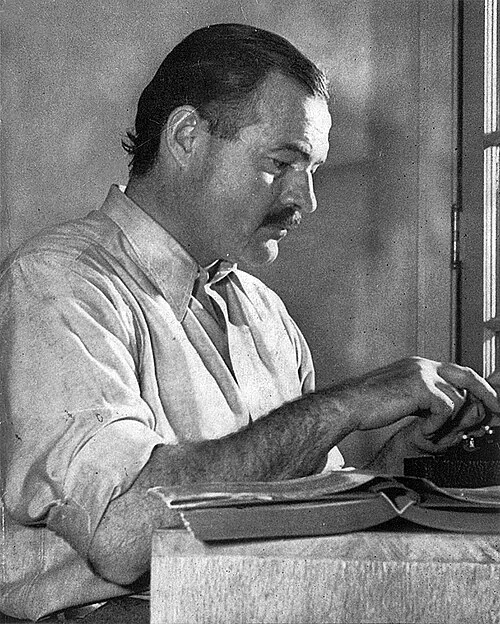
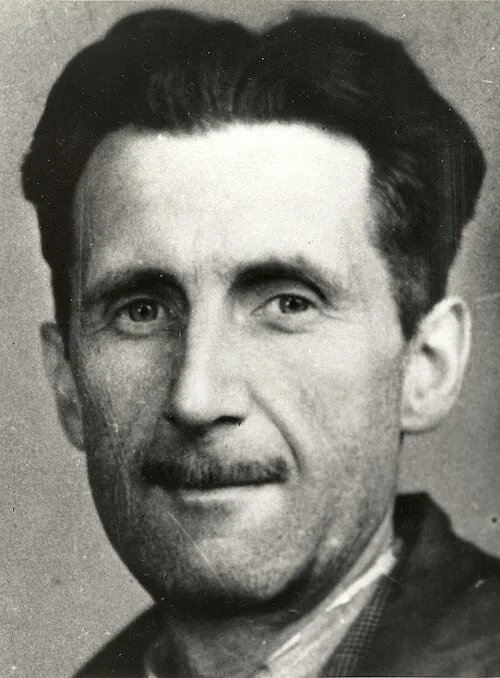
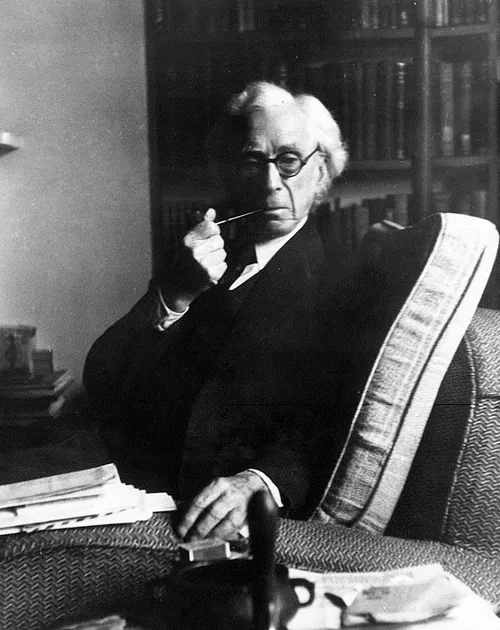
Photograph by Lloyd Arnold, public domain. Background removed for the portrait above. · Press photograph by the Branch of the National Union of Journalists (1943), public domain. Background removed for the portrait above. · Photograph, 1954, via Wikimedia Commons, public domain.


An estimate is an inference.
Yours can be measured.
Thirty questions, scored against general-population benchmarks. Your score, your percentile, your ability breakdown and a printable IIF certificate.
Find your IQ score now! →