



What was Claude Shannon’s IQ?
A thesis on digital circuits, a 1948 paper that founded information theory, and no published IQ score.
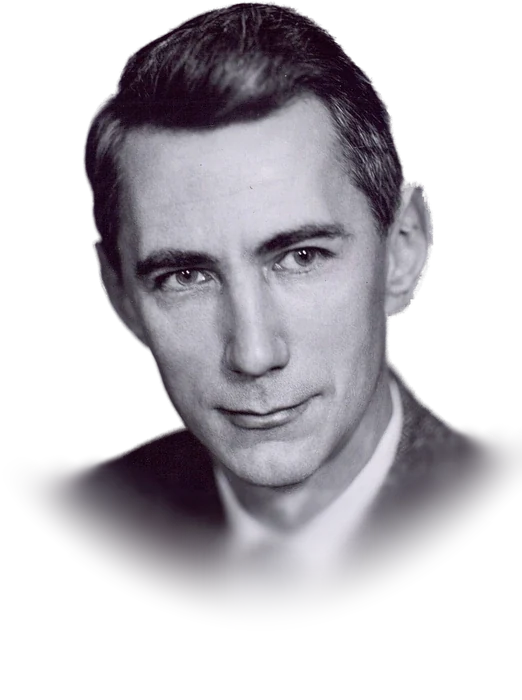
Claude Shannon has no published IQ score, and we found none anywhere. What is documented is two University of Michigan degrees, an MIT doctorate and the 1948 paper that founded information theory. Our Claude Shannon IQ estimate is 145–165, drawn from that record, not from a test.
Claude Shannon’s estimated IQ
- Bachelor’s degrees in mathematics and electrical engineering from the University of Michigan in 1936 (MIT News).
- A master’s thesis at MIT, “A Symbolic Analysis of Relay and Switching Circuits”, that used Boolean algebra to set out the theory behind digital circuits. MIT News calls it the beginning of modern switching theory, and Harvard’s Howard Gardner called it “possibly the most important, and also the most famous, master’s thesis of the century”.
- An MIT master’s degree in electrical engineering and a PhD in mathematics, both in 1940 (MIT News); the doctoral thesis was “An Algebra for Theoretical Genetics” (Wikipedia).
- Bell Laboratories from 1941 to 1972, where he wrote “A Mathematical Theory of Communication” (1948). His MIT colleague Robert Gallager said, “Nobody had come close to this idea before” (MIT News).
- His 1949 paper “Communication Theory of Secrecy Systems” is generally credited with transforming cryptography from an art to a science. He received the National Medal of Science (1966), the IEEE Medal of Honor (1966) and the Kyoto Prize (1985) (MIT News).
Research achievement is not an IQ score, and we found no test, school mark or ranking for him. The 145–165 band is a judgment from the record. Alan Turing (160–180) and John von Neumann (170–190) are above him on this site.
- Born
- April 30, 1916, Petoskey, Michigan
- Education
- BS degrees in mathematics and electrical engineering, Michigan, 1936; SM and PhD, MIT, 1940
- Thesis
- “A Symbolic Analysis of Relay and Switching Circuits” (master’s; Boolean algebra for circuits)
- Bell Laboratories
- Affiliated 1941–1972
- Key paper
- “A Mathematical Theory of Communication” (1948)
- MIT
- Visiting professor from 1956; professor emeritus from 1978
- Prizes
- National Medal of Science (1966); IEEE Medal of Honor (1966); Kyoto Prize (1985)
- Died
- February 24, 2001, Medford, Massachusetts, aged 84
- Documented IQ test
- None published
What an IQ of 145–165 actually means
Set the claim aside for a moment. If someone genuinely scored in this range, here is what that would represent.
| Score range | Classification | Share of people | What it indicates |
|---|---|---|---|
| 85 – 114 | Average | ~68% | The range most people fall into. |
| 115 – 129 | Above average | ~13.6% | Roughly one person in seven. |
| 130 – 144 | Gifted | ~2% | The threshold most high-IQ societies use. |
| Above 144 | Highly gifted | ~0.1% | Figures above this range are extrapolated from the curve rather than measured. |
Percentages are approximate and describe a normal distribution. The same number means different things on tests with different standard deviations.
Thirty questions gives you a measured position on this exact scale — your score, your percentile and the ability breakdown behind it.
Find out in 30 minutes →Who Claude Shannon was
Who was Claude Shannon? He was born on April 30, 1916, in Petoskey, Michigan, and grew up in Gaylord, where he worked as a Western Union messenger while at Gaylord High School. He died in Medford, Massachusetts, on February 24, 2001, aged 84 (MIT News).
What did he study and where did he work? After Michigan he went to MIT, where he worked part-time on Vannevar Bush’s differential analyzer, and then to the Institute for Advanced Study in Princeton. He joined Bell Laboratories in 1941, became a visiting professor at MIT in 1956 and stayed until he became professor emeritus in 1978.
What else did he build? MIT News lists a juggling machine, a mechanical mouse that could navigate a maze and a chess-playing computer built years before IBM’s Deep Blue. On a trip to Russia in 1965 he challenged world champion Mikhail Botvinnik and lost in 42 moves. See other scientists in our scientists category.
 By Elora Mercer, Celebrity Research WriterFigures checked by Leon Falkner, Data & Research Analyst
Reviewed by Aarav Vardhan, Editor-in-Chief · Last reviewed November 2026

Claude Shannon: the documented record
The estimate above rests on this record. Every entry here is a matter of public fact, which is more than can be said for the number itself.
- 1916Born on April 30 in Petoskey, Michigan.
- 1936Earns BS degrees in mathematics and electrical engineering at Michigan.
- 1937Writes his MIT master’s thesis on relay and switching circuits (Wikipedia dates it 1937; MIT lists the degree as 1940).
- 1940Receives the SM in electrical engineering and the PhD in mathematics from MIT.
- 1941Joins Bell Laboratories after a fellowship at the Institute for Advanced Study.
- 1948Publishes “A Mathematical Theory of Communication”.
- 1949Publishes “Communication Theory of Secrecy Systems”.
- 1956Becomes a visiting professor at MIT.
- 1966Receives the National Medal of Science and the IEEE Medal of Honor.
- 2001Dies on February 24 in Medford, Massachusetts.
Why no figure circulates
Following a claim back to its first appearance is the part almost nobody does — and it is what most people are actually asking.
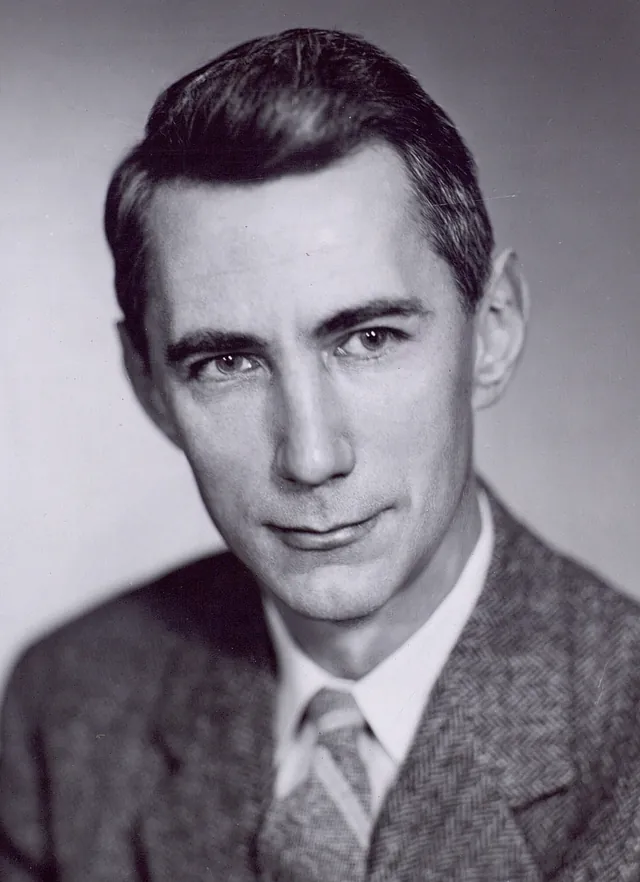
What is Claude Shannon’s IQ? No score has been published, and no source we opened names a test. MIT’s own obituary lists his degrees, papers and prizes, and none of them is a score. Our estimate of 145–165 rests on that record. For why celebrity numbers drift between pages, see where celebrity IQ numbers come from.
What did the thesis do? It used Boolean algebra, in which problems are solved by manipulating two symbols, 1 and 0, to describe the theory behind digital circuits. MIT News calls this the beginning of modern switching theory. The 1948 paper then defined the information content of a message by the number of 1s and 0s needed to send it. MIT’s obituary calls him the father of modern digital communications and information theory.
How does he compare with Turing and von Neumann? On this site Alan Turing is 160–180, John von Neumann 170–190 and Richard Feynman 125–150. All are estimates from records, not tests. To place a score of your own, use our IQ percentile calculator.
How we read a number →Born in Petoskey on April 30, 1916; BS degrees in mathematics and electrical engineering from Michigan in 1936; the master’s thesis and Howard Gardner’s remark; the SM and PhD from MIT in 1940; the Institute for Advanced Study; Bell Laboratories 1941–1972; the 1948 paper and Robert Gallager’s remark; the 1949 secrecy paper; MIT from 1956; the prizes; death on February 24, 2001. It gives no IQ.
The repository record lists it as an M.S. thesis in electrical engineering, advisor Frank L. Hitchcock, issued 1940.
The thesis year 1937 and the doctoral thesis title “An Algebra for Theoretical Genetics”; the Alfred Noble Prize (1939). It contains no IQ.
Confirms Q92760 is the American mathematician and information theorist (1916–2001).
None in MIT’s obituary or Wikipedia. A general web search for “Claude Shannon IQ” returned articles about his work and no figure.
On this site Turing is 160–180, von Neumann 170–190, Feynman 125–150 and Sagan 145–165.
The sources behind our estimate
The figures that circulate for Claude Shannon, what we were able to confirm, and where the two diverge.
People type “claude shannon iq”, “was claude shannon a genius” and “father of information theory”. We found no page that gives him an IQ score, and none that names a test.
No IQ score for Claude Shannon appears in any source we opened. MIT’s obituary, which lists his degrees, jobs, papers and prizes in detail, gives none, and Wikipedia gives none. A general web search for his IQ turned up articles about his work and no number for him.
No circulating figure exists to compare, so the range stands alone. We put him level with Carl Sagan (145–165) and below Alan Turing (160–180) on this site.
Want a number that does hold up? Every figure on this page is somebody’s claim. Take the 30-question test and get a percentile you can check rather than a figure you have to trust.
Claude Shannon — frequently asked
What is Claude Shannon’s IQ?
No IQ score for Claude Shannon has been published. Our Claude Shannon IQ estimate, built from his degrees, papers and prizes, is 145–165. It is an estimate, not a test result.
Was Claude Shannon a genius?
MIT’s obituary calls him the father of modern digital communications and information theory, and Howard Gardner called his master’s thesis “possibly the most important … master’s thesis of the century”. “Genius” is not an IQ category, and our range for him is 145–165.
What did Claude Shannon’s 1937 thesis do?
It used Boolean algebra to set out the theory behind digital circuits, which MIT News calls the beginning of modern switching theory. Wikipedia dates the thesis to 1937; MIT’s repository lists the degree as 1940.
Why is Claude Shannon called the father of information theory?
His 1948 paper “A Mathematical Theory of Communication” defined the information in a message by the number of 1s and 0s needed to send it. His colleague Robert Gallager said, “Nobody had come close to this idea before.”
How does Claude Shannon’s IQ estimate compare with Alan Turing’s and John von Neumann’s?
On this site Shannon is 145–165, Turing 160–180 and von Neumann 170–190. All three are estimates from records, not test scores, and the ranges overlap only at the edges.
Did Claude Shannon have a PhD?
Yes. He received a PhD in mathematics from MIT in 1940, with a thesis called “An Algebra for Theoretical Genetics”. To see where a score lands, take our IQ test.
How does my IQ compare with Claude Shannon?
You can find out in about fifteen minutes. The IQ Metrics assessment is 30 questions, scored on the same 100-mean scale used throughout this page, so your result and the estimate above are at least expressed in the same units — one measured, one inferred. Once you have a number, the leaderboard shows where it would sit, and how we score and norm it explains the benchmarking.
Where does this estimate come from?
From the documented record rather than a test — the method is named above and set out in full under how we read a number. Compare it against the other scientists profiles, starting with Albert Einstein.
- Take the 30-question IQ test — get a measured score and percentile of your own
- Average IQ by country — how the scale behaves across populations
- How IQ Metrics scores its assessment — the method behind our own number
- More on how IQ testing works — reliability, error and what a score can and cannot say
- More scientists profiles — same field, same method
More scientists
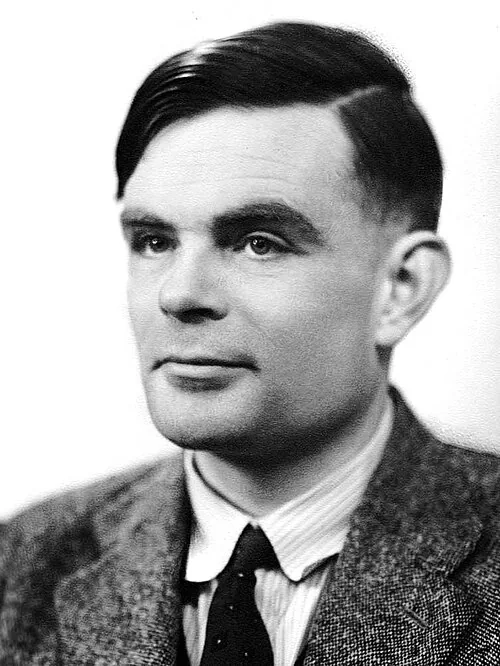
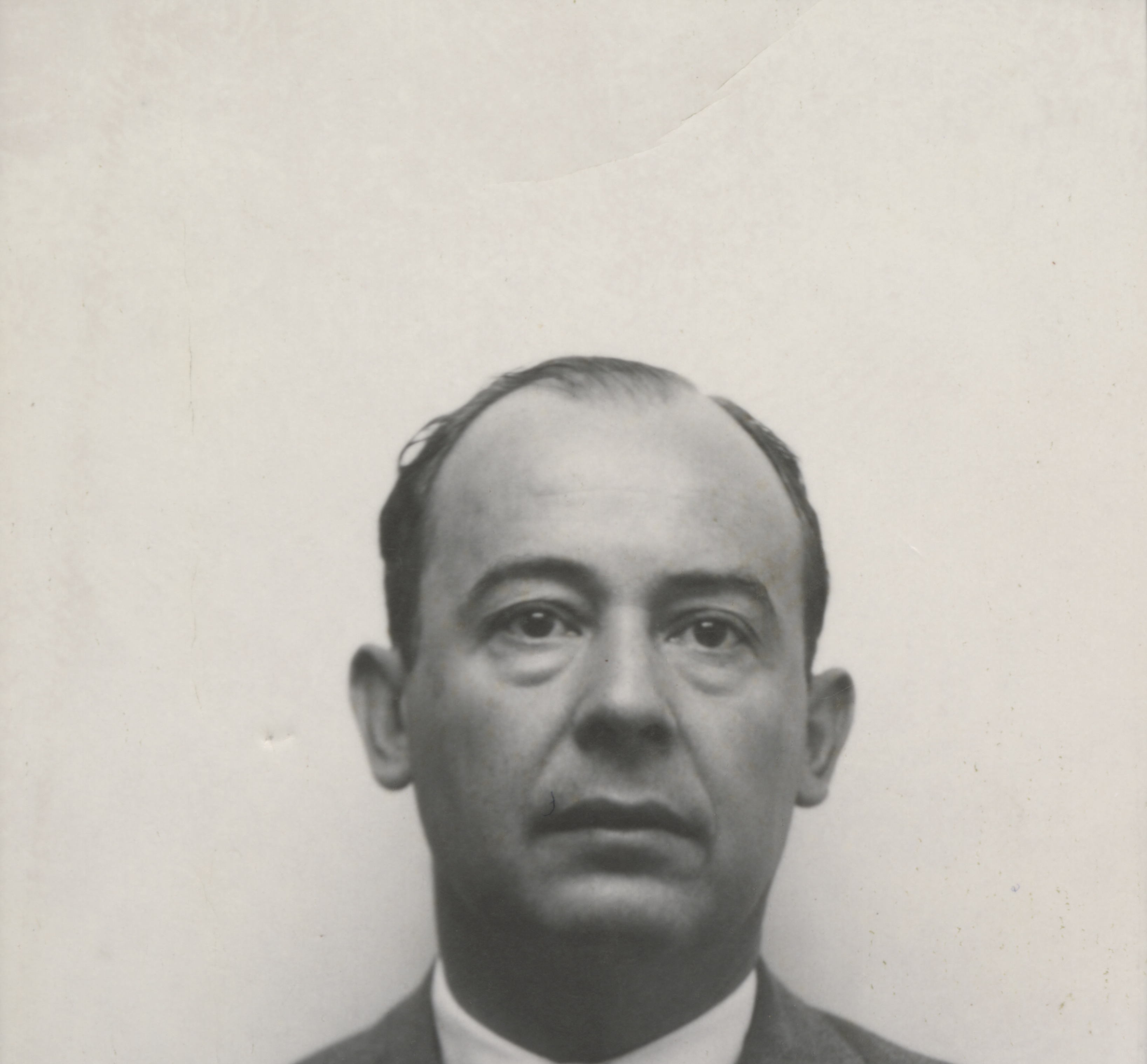

Photograph by Elliott & Fry, public domain. Background removed for the portrait above. · Los Alamos National Laboratory badge photograph, c. 1940s, public domain (PD-LosAlamos). Background removed for the portrait above. · Los Alamos National Laboratory badge photograph, via Wikimedia Commons, CC0. Background removed for the portrait above.


An estimate is an inference.
Yours can be measured.
Thirty questions, scored against general-population benchmarks. Your score, your percentile, your ability breakdown and a printable IIF certificate.
Find your IQ score now! →