



What was James Madison’s IQ?
No test exists; four historiometric estimates run from 120 to 160, and their average, 141.3, ranks him 11th of 42 presidents.

James Madison’s estimated IQ is 141.3, the average of four historiometric estimates in Simonton’s 2006 study that run from 120 to 160 on a scale with a standard deviation of 16. That ranks him 11th of 42 presidents. He died in 1836, so no test exists. Our James Madison IQ estimate is 135–150.
James Madison’s estimated IQ
- Cox’s 1926 case study rates his first 17 years at an IQ of 120 (data reliability .20) and ages 17 to 26 at 135 (.43). She marks his interests, school standing, friends, reading and achievements before 17 “No record” (Cox, pp. 293–294).
- Simonton’s 2006 Table 1 lists four estimates for him: 120 and 135 as Cox obtained them, and 150 and 160 after correcting for data reliability. Their average is 141.25, which is 11th of 42 (our arithmetic from the table).
- He chose the College of New Jersey, now Princeton, in 1769, completed its three-year degree in two years, graduating in 1771, and stayed to study Hebrew and political philosophy under John Witherspoon (Wikipedia; Miller Center).
- He shaped the Virginia Plan for the 1787 Constitutional Convention, wrote about a third of the 85 Federalist essays and proposed the amendments that became the Bill of Rights, ratified by 1791 (Miller Center).
Cox rated his youth on thin evidence, which is why her first figure is only 120. Simonton notes in the same paper that Cox’s corrected scores may be overestimates. The range sits just below John Adams (140–155), whose Simonton average is 142.5.
- Born
- March 16, 1751, Port Conway, Virginia
- Died
- June 28, 1836
- Education
- College of New Jersey (Princeton): three-year degree in two years, 1771
- Federalist essays
- About one third of the 85
- President
- 1809 to 1817
- Cox 1926
- IQ 120 (reliability .20) and 135 (.43)
- Simonton 2006
- 120, 150, 135, 160; average 141.3; 11th of 42
- Documented IQ test
- None (died 1836)
What an IQ of 135–150 actually means
Set the claim aside for a moment. If someone genuinely scored in this range, here is what that would represent.
Average is 100 by construction, and about two-thirds of people fall between 85 and 115. Take the test to place your own score on this scale.
| Score range | Classification | Share of people | What it indicates |
|---|---|---|---|
| 85 – 114 | Average | ~68% | The range most people fall into. |
| 115 – 129 | Above average | ~13.6% | Roughly one person in seven. |
| 130 – 144 | Gifted | ~2% | The threshold most high-IQ societies use. |
| Above 144 | Highly gifted | ~0.1% | Figures above this range are extrapolated from the curve rather than measured. |
Percentages are approximate and describe a normal distribution. The same number means different things on tests with different standard deviations.
Thirty questions gives you a measured position on this exact scale — your score, your percentile and the ability breakdown behind it.
Find out in 30 minutes →Who James Madison was
Who was James Madison? He was born on March 16, 1751, in Port Conway, Virginia, and raised at Montpelier in Orange County. His family’s wealth rested on enslaved labor, and he inherited an enslaved child while still a boy (Miller Center). He became the fourth president of the United States and served from 1809 to 1817.
How was he educated? He began at a boarding school, then studied under a tutor, the parish clergyman, who lived in the household (Miller Center; Cox). Instead of William and Mary, he chose the College of New Jersey in 1769. He finished the three-year degree in two years, graduating in 1771, and stayed to study Hebrew and political philosophy (Wikipedia).
What did he do? In 1787 he helped shape the Virginia Plan for the Constitutional Convention, and then wrote about a third of the 85 Federalist essays with Alexander Hamilton and John Jay. He proposed the amendments that became the Bill of Rights, led the country into the War of 1812 and died on June 28, 1836 (Miller Center; Wikipedia).
 By Elora Mercer, Celebrity Research WriterFigures checked by Leon Falkner, Data & Research Analyst
Reviewed by Aarav Vardhan, Editor-in-Chief · Last reviewed November 2026

James Madison: the documented record
The estimate above rests on this record. Every entry here is a matter of public fact, which is more than can be said for the number itself.
- 1751Born on March 16 in Port Conway, Virginia.
- 1769Enrolls at the College of New Jersey, now Princeton.
- 1771Graduates after two years and stays to study Hebrew and political philosophy.
- 1787Brings the Virginia Plan to the Constitutional Convention; the Federalist essays begin in October.
- 1789Elected to the House of Representatives in February.
- 1791The first ten amendments, the Bill of Rights, are ratified.
- 1809Takes office as president on March 4.
- 1817Leaves office after two terms.
- 1836Dies on June 28.
- 1926Cox rates his youth at 120 and 135.
- 2006Simonton publishes the four estimates for 42 presidents.
Where the 120–160 figure came from
Following a claim back to its first appearance is the part almost nobody does — and it is what most people are actually asking.
What is James Madison’s IQ? He died in 1836, so no test exists and every number is a historiometric estimate. Cox’s 1926 study rated his youth at 120 and his early twenties at 135, and Simonton’s 2006 paper corrected them to 150 and 160. Our presidents ranked by IQ article prints the average, 141.3, and the rank, 11th of 42.
How does Madison compare with Jefferson and Adams? On this site Thomas Jefferson is 150–170, John Adams 140–155 and John Quincy Adams 150–170. Simonton’s averages are 153.75 for Jefferson, 142.5 for Adams and 141.25 for Madison, from the same table and method, so Madison sits just below Adams.
Why is the evidence thin? Cox had a few facts about his family and his Princeton years but marked his early interests, schooling, friends and reading “No record”. Our article on the founding fathers ranked by Cox explains her method, and what an IQ of 140 means shows where a score near this one sits. See all political figures.
How we read a number →Case study read in the archive.org full text: “AI IQ 120” (reliability .20) and “AII IQ 135” (.43), with interests, school standing, friends, reading, achievement and precocity before 17 each marked “No record”. Table 12A is a rotated scan whose OCR is unreadable, so his corrected scores are taken from Simonton.
Table 1 read in the paper’s full text: Madison 120.0, 150.0, 135.0 and 160.0. The scores use a mean of 100 and a standard deviation of 16, and the paper says Cox’s corrected scores may be overestimates. The DOI, title and pages were checked on Crossref.
Read in full: born March 16, 1751; the choice of the College of New Jersey and John Witherspoon; graduation in 1771 and a further year; the Virginia Plan; about one third of the 85 Federalist essays; the Bill of Rights ratified by 1791; “the work of many heads & many hands”.
The three-year degree completed in two years, graduation in 1771, the presidency from 1809 to 1817, the War of 1812 and the death on June 28, 1836. It contains no test score.
Confirms Q11813 is the president of the United States from 1809 to 1817 (1751–1836).
He died in 1836, long before intelligence tests existed. The only numbers are Cox’s ratings and Simonton’s corrections.
Our presidents article prints Madison at 141.3, 11th of 42. On this site Jefferson is 150–170, John Adams 140–155 and John Quincy Adams 150–170.
The sources behind our estimate
The figures that circulate for James Madison, what we were able to confirm, and where the two diverge.
People type “james madison iq”, “james madison estimated iq” and “madison vs jefferson iq”. The figures that circulate come from one paper, Simonton’s 2006 study of 42 presidents: 120, 135, 150 and 160, with an average of 141.3.
Madison’s numbers are real, but they are estimates, not test scores. Simonton’s Table 1 gives 120, 150, 135 and 160. The first and third are Cox’s uncorrected scores for ages up to 17 and 18 to 26, and the second and fourth are the same scores corrected for data reliability. We read the table in the paper’s full text and re-ranked all 42 presidents from it.
The four estimates span 40 points because the first (120) rests on a youth with almost no recorded evidence. Their average is 141.3, and our range of 135–150 brackets it.
Want a number that does hold up? Every figure on this page is somebody’s claim. Take the 30-question test and get a percentile you can check rather than a figure you have to trust.
James Madison — frequently asked
What is James Madison’s IQ?
No IQ test exists for James Madison, who died in 1836. Four estimates run from 120 to 160, averaging 141.3 in Simonton’s 2006 table, which is 11th of 42 presidents. Our James Madison IQ estimate is 135–150.
Where does Madison’s estimated IQ come from?
Catharine Cox rated his documented youth in 1926: 120 for ages 0 to 17 and 135 for ages 18 to 26. Simonton’s 2006 paper added versions corrected for data reliability, 150 and 160. All four are estimates from biographies, not tests.
How does James Madison’s IQ rank among presidents?
He is 11th of 42 in Simonton’s table, at 141.25 on average. John Quincy Adams (168.75), Jefferson (153.75) and Kennedy (150.65) lead, and John Adams is 7th at 142.5. Our presidents article lists all 42.
Madison vs Jefferson: who had the higher IQ?
In Simonton’s averages Jefferson scores 153.75 and Madison 141.25, a gap of about 12 points. Both come from the same historiometric method, not tests. On this site Jefferson is 150–170 and Madison 135–150.
Did Madison finish Princeton in two years?
Yes. Wikipedia says he completed the college’s three-year Bachelor of Arts in two years, graduating in 1771, and then stayed on to study Hebrew and political philosophy under John Witherspoon.
What did Madison do for the Constitution?
He shaped the Virginia Plan for the 1787 Convention, wrote about a third of the 85 Federalist essays and proposed the Bill of Rights, says the Miller Center. He called the Constitution “the work of many heads & many hands”.
How reliable are presidential IQ estimates?
They are rough. They are built from biographies, and Simonton notes that Cox’s corrected scores may be overestimates. Measure your own reasoning with our IQ test, or place a score with our percentile calculator.
How does my IQ compare with James Madison?
You can find out in about fifteen minutes. The IQ Metrics assessment is 30 questions, scored on the same 100-mean scale used throughout this page, so your result and the estimate above are at least expressed in the same units — one measured, one inferred. Once you have a number, the leaderboard shows where it would sit, and how we score and norm it explains the benchmarking.
Where does this estimate come from?
From the documented record rather than a test — the method is named above and set out in full under how we read a number. Compare it against the other politics profiles, starting with Thomas Jefferson.
- Take the 30-question IQ test — get a measured score and percentile of your own
- Average IQ by country — how the scale behaves across populations
- How IQ Metrics scores its assessment — the method behind our own number
- More on how IQ testing works — reliability, error and what a score can and cannot say
- More politics profiles — same field, same method
More politics
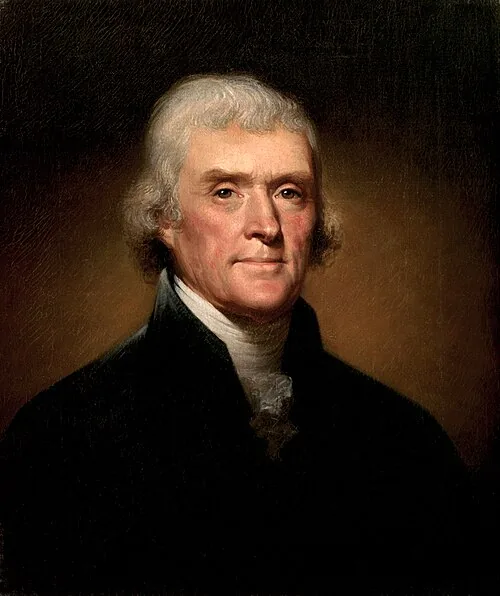
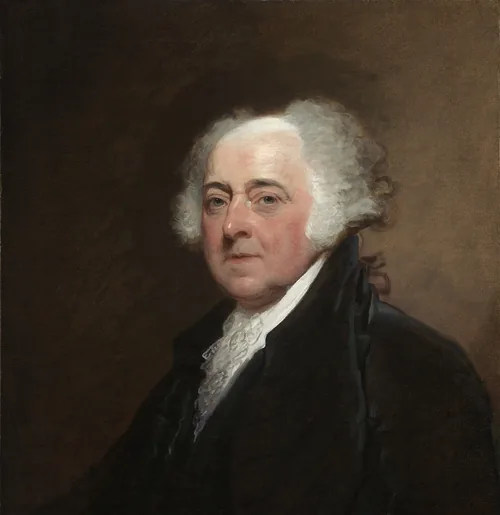
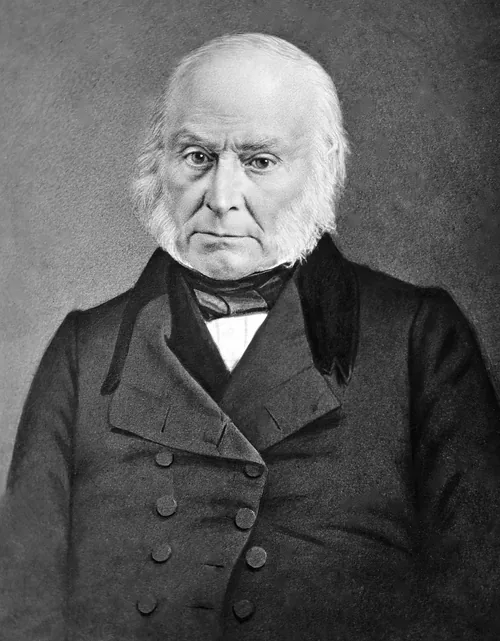
Portrait by Rembrandt Peale (1800), public domain. · Painting of John Adams by Gilbert Stuart (about 1800–1815; National Gallery of Art, Washington). CC0 public domain. It is a painted portrait, not a photograph. Cropped for the portrait above. · Copy by Mathew Brady (c. 1855–1865) of a daguerreotype made between 1843 and 1848 by an unknown photographer, from the U.S. National Archives (Record Group 111) and digitally restored, via Wikimedia Commons, public domain. Background removed for the portrait above.


An estimate is an inference.
Yours can be measured.
Thirty questions, scored against general-population benchmarks. Your score, your percentile, your ability breakdown and a printable IIF certificate.
Find your IQ score now! →