


What is Nassim Nicholas Taleb’s IQ?
A Wharton MBA, a Paris doctorate on hedging risk, and two decades of trading crashes for profit — yet the one figure missing from his record is the one he has spent years calling a swindle.

No IQ figure circulates for Nassim Nicholas Taleb — a rare absence on this site, and a fitting one, since his own Medium essay calls the discipline “a pseudoscientific swindle.” What is documented — a Wharton MBA, a doctorate on the mathematics of hedging from the University of Paris, and a trading career that turned two market crashes into profit — supports an estimated IQ of 145–160.
Nassim Nicholas Taleb’s estimated IQ
- An MBA from the Wharton School, University of Pennsylvania, 1983.
- A PhD in management science from the University of Paris (Dauphine), 1998, with a dissertation on the mathematics of dynamic hedging supervised by Hélyette Geman.
- Two decades as an options and derivatives trader at Credit Suisse First Boston, UBS, BNP Paribas, Indosuez and Bankers Trust, founder in 1999 of the trading firm Empirica Capital, and an advisory role at Universa Investments, co-founded by Mark Spitznagel, from 2007.
- Distinguished Professor of Risk Engineering at NYU’s Tandon School of Engineering from 2008, after academic posts at NYU’s Courant Institute, the University of Massachusetts Amherst, London Business School and Oxford’s Saïd Business School.
- Author of the five-volume Incerto (2001–2018), translated into dozens of languages, with The Black Swan named by The Sunday Times one of the twelve most influential books since World War II.
An MBA and a management-science doctorate are credentials, not scores on any test of reasoning, and a profitable trading record reflects appetite for risk and market conditions as well as skill. The complication here is not only methodological: since December 2018 Taleb has argued in essays and online that IQ chiefly measures “paper shufflers” and explains little of real-world performance above the ordinary range, a position other researchers dispute. This site’s estimate does not depend on who is right in that argument; it describes the same achievement record his own argument says a test would miss.
- Born
- September 12, 1960, Amioun, Lebanon
- Education
- University of Paris (BS, MS); MBA, Wharton School, 1983; PhD in management science, University of Paris (Dauphine), 1998
- Dissertation
- “The Microstructure of Dynamic Hedging” (1998), supervised by Hélyette Geman
- Trading career
- Credit Suisse First Boston, UBS, BNP Paribas, Indosuez, Bankers Trust; founded Empirica Capital, 1999
- Academic title
- Distinguished Professor of Risk Engineering, NYU Tandon School of Engineering, 2008– (now listed as retired)
- Best-known books
- Fooled by Randomness (2001); The Black Swan (2007); Antifragile (2012); Skin in the Game (2018)
- Public position on IQ
- Calls IQ testing “a pseudoscientific swindle” (Medium, January 2019), after a December 2018 Twitter thread on the same subject
- Circulating IQ figure
- None found on the usual aggregator sites; no number is stated as fact anywhere
What an IQ of 145–160 actually means
Set the claim aside for a moment. If someone genuinely scored in this range, here is what that would represent.
| Score range | Classification | Share of people | What it indicates |
|---|---|---|---|
| 85 – 114 | Average | ~68% | The range most people fall into. |
| 115 – 129 | Above average | ~13.6% | Roughly one person in seven. |
| 130 – 144 | Gifted | ~2% | The threshold most high-IQ societies use. |
| Above 144 | Highly gifted | ~0.1% | Figures above this range are extrapolated from the curve rather than measured. |
Percentages are approximate and describe a normal distribution. The same number means different things on tests with different standard deviations.
Thirty questions gives you a measured position on this exact scale — your score, your percentile and the ability breakdown behind it.
Find out in 30 minutes →Who Nassim Nicholas Taleb is
Nassim Nicholas Taleb was born on September 12, 1960, in Amioun, in northern Lebanon, into a Greek Orthodox family long involved in Lebanese public life: his maternal grandfather, Fouad Nicolas Ghosn, and great-grandfather, Nicolas Ghosn, both served as deputy prime minister, and his father, Nagib Taleb, was an oncologist and anthropology researcher. He was educated at the Grand Lycée Franco-Libanais in Beirut before the Lebanese Civil War, which began in 1975, disrupted the family’s standing and finances. He went on to a bachelor’s and a master’s degree from the University of Paris, then an MBA from the Wharton School of the University of Pennsylvania in 1983.
Taleb began trading in the mid-1980s, working in options and derivatives at Credit Suisse First Boston, UBS, Banque Indosuez, Bankers Trust and BNP Paribas over the next two decades, alongside stretches as an independent floor trader. Betting on rare, outsized market moves rather than against them, he profited from the Black Monday crash of October 19, 1987, a trade he has said left him financially independent. In the mid-1990s he returned to graduate study, completing a PhD in management science at the University of Paris (Dauphine) in 1998; his dissertation, “The Microstructure of Dynamic Hedging,” on the mathematics of pricing derivatives under real-world trading conditions, was supervised by Hélyette Geman.
In 1999 he founded the trading firm Empirica Capital, built to gain from rare, extreme market moves, and took his first academic post the same year as a fellow and adjunct professor of mathematics at NYU’s Courant Institute. His first trading book, Dynamic Hedging, had appeared in 1997; Fooled by Randomness followed in 2001, and The Black Swan in 2007, the year The Sunday Times later named it one of the twelve most influential books published since World War II. Further academic posts followed at the University of Massachusetts Amherst (2005–2006), London Business School (2007–2009) and the University of Oxford’s Saïd Business School (2009–2013), before NYU’s Tandon School of Engineering named him Distinguished Professor of Risk Engineering in 2008, a title its faculty page still carries, now marked retired.
The Incerto continued with The Bed of Procrustes (2010), a volume of aphorisms, Antifragile (2012) and Skin in the Game (2018); Taleb has also published dozens of technical papers and, in 2020, the statistics text Statistical Consequences of Fat Tails. From 2007 he advised the fund Universa Investments, co-founded by Mark Spitznagel, through the 2008 financial crisis, and Bloomberg named him one of the fifty most influential people in global finance in 2011. The American University of Beirut gave him an honorary doctorate, which its own recipients page quotes him calling “the greatest honor that any Lebanese could receive.” In the years since, he has become as well known for combative, aphoristic public argument, much of it posted directly to X, as for the books, and IQ testing, which he has attacked in print and online since at least December 2018, is the argument he has returned to most often.
 By Elora Mercer, Celebrity Research WriterFigures checked by Leon Falkner, Data & Research Analyst
Reviewed by Aarav Vardhan, Editor-in-Chief · Last reviewed August 2026

Nassim Nicholas Taleb: the documented record
The estimate above rests on this record. Every entry here is a matter of public fact, which is more than can be said for the number itself.
- 1960Born September 12 in Amioun, Lebanon.
- 1983Earns an MBA from the Wharton School, University of Pennsylvania.
- 1987Profits trading the Black Monday crash of October 19.
- 1998Completes a PhD in management science at the University of Paris (Dauphine); dissertation on the mathematics of dynamic hedging, supervised by Hélyette Geman.
- 1999Founds the trading firm Empirica Capital; joins NYU’s Courant Institute as a fellow and adjunct professor.
- 2001Publishes Fooled by Randomness, the first volume of the Incerto.
- 2007Publishes The Black Swan; becomes an adviser to Universa Investments.
- 2008Named Distinguished Professor of Risk Engineering at NYU’s Tandon School of Engineering.
- 2019Publishes the Medium essay “IQ is largely a pseudoscientific swindle,” following a December 2018 Twitter thread on the same theme.
Why no figure circulates
Following a claim back to its first appearance is the part almost nobody does — and it is what most people are actually asking.
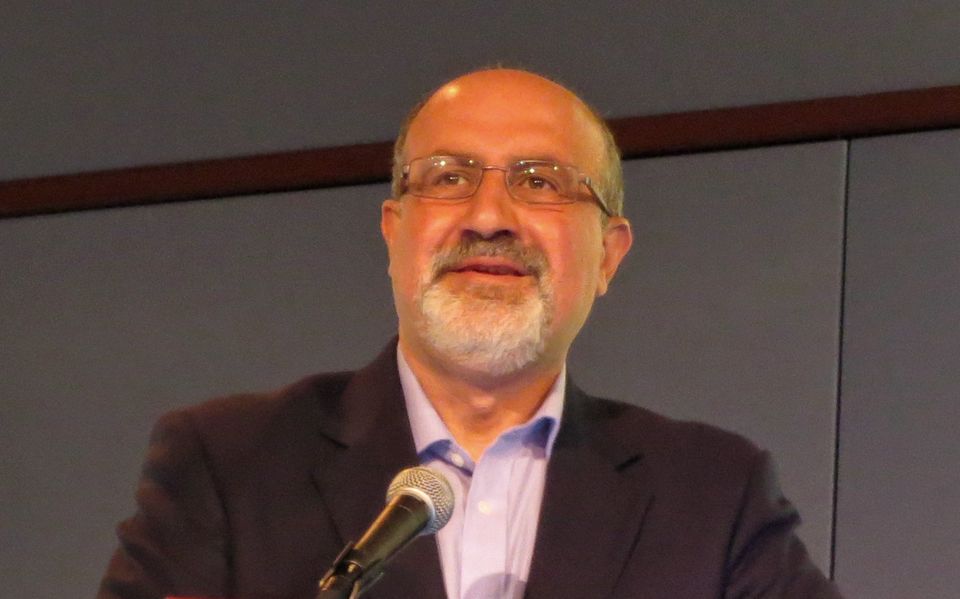
Search “Nassim Taleb IQ” and the results are almost all Nassim Taleb: the Medium essay in which he calls IQ testing “a pseudoscientific swindle,” the December 2018 Twitter thread that started the argument, and years of pushback on Reddit, Substack and X that keep the fight alive. What the search does not return is a number. corebrain.app, iqtests.com and geniuses.club — the three aggregator sites that supply a figure for most people on this site — carry no page for Nassim Nicholas Taleb, and no listicle or forum post states one as settled fact. That is unusual: celebrity IQ numbers are normally invented and repeated whether or not anyone objects; here, for once, no one seems to have gotten around to inventing one.
What Taleb has published instead is an argument against the whole exercise. His Medium essay, posted January 3, 2019 and revised repeatedly since, holds that “IQ” mostly captures the low end of the scale — what he calls extreme unintelligence, or learning difficulty — and that above it the test mainly selects, in his words, “exam-takers, paper shufflers, obedient IYIs” (his shorthand for “intellectual yet idiot”), people he argues are poorly adapted to real-world decision-making. The December 2018 thread that preceded it made the same point through his recurring contrast of “Fat Tony” and “Dr. John”: a street-smart operator who asks why a question is being asked, against a credentialed thinker who answers it too quickly. Taleb has kept the argument going since, including a 2024 essay on IQ and race science that calls Charles Murray, co-author of The Bell Curve, a “mountebank,” and a 2025 follow-up arguing that a study meant to rebut him instead confirmed that IQ explains very little of income, education or occupational attainment. Other researchers dispute this reading; Aporia Magazine’s Noah Carl and others argue Taleb overstates his case and leans on dismissal more than data.
Set the rhetoric aside and the documented record is substantial. Taleb earned an MBA from the Wharton School in 1983 and, in 1998, a PhD in management science from the University of Paris (Dauphine), with a dissertation on the mathematics of derivatives pricing supervised by Hélyette Geman. In between and after, he spent two decades trading options and other derivatives at Credit Suisse First Boston, UBS, BNP Paribas, Indosuez and Bankers Trust, then ran his own firm, Empirica Capital, from 1999 — the kind of career quantitative trading firms select for on results rather than a score. He became financially independent trading the 1987 crash and, from 2007, advised Universa Investments, a fund co-founded by Mark Spitznagel, through the 2008 crisis. From 2008 he held the title Distinguished Professor of Risk Engineering at NYU’s Tandon School of Engineering, now listed there as retired; earlier posts included NYU’s Courant Institute, the University of Massachusetts Amherst, London Business School and Oxford’s Saïd Business School. His five-volume Incerto, from Fooled by Randomness (2001) to Skin in the Game (2018), has been translated into dozens of languages, and The Sunday Times named The Black Swan one of the twelve most influential books since World War II.
Placed beside this site’s other writers and thinkers, an estimated 145–160 sits below Bertrand Russell (160–175), whose Cambridge wrangler’s placing and Nobel Prize are ranked results a trading record is not, and above Yuval Noah Harari (130–145), another globally read nonfiction author whose Oxford doctorate is the whole of his documented case. It sits apart in kind from Christopher Langan (160–175), whose page rests on a specific unsupervised test score: Taleb has no test result to rest on, sourced or not, and has spent years arguing the absence should not bother anyone. Whether it should is not something this range needs to settle; it measures the achievement record above, not his verdict on the discipline that would have measured him differently.
How we read a number →Confirms the title Distinguished Professor of Risk Engineering, department (Finance and Risk Engineering), the “Retired” status shown on the live faculty page, prior posts at the Courant Institute, UMass Amherst and London Business School, and the trading-firm roster: Credit Suisse First Boston, UBS, BNP Paribas, Indosuez and Bankers Trust.
Confirms the Q-id names the essayist and former option trader, not a namesake: birth date September 12, 1960, birthplace Amioun, Lebanon, and identifiers (VIAF, Library of Congress, GND) matching the author of The Black Swan and Antifragile.
Confirms an honorary doctorate from AUB and quotes Taleb calling it “the greatest honor that any Lebanese could receive.”
Cross-checks birth details, family background, education (University of Paris BS and MS, Wharton MBA 1983, Paris Dauphine PhD 1998 supervised by Hélyette Geman), the trading-firm career and the Incerto’s publication dates.
Primary source for the thread that opened his public IQ argument, including the “paper shufflers, obedient IYIs” language and the “Fat Tony vs Dr. John” contrast.
Primary source for the essay’s central claim, that IQ testing mostly captures extreme unintelligence rather than measuring general reasoning ability, and for the dates of his follow-up pieces, including the August 2024 essay naming Charles Murray a “mountebank” and the May 2025 “Argument Closed” update.
Cross-check for the trading-firm roster, the Sunday Times ranking of The Black Swan, the Bloomberg 50 Most Influential in Global Finance listing (2011), and the Universa Investments advisory role from 2007 alongside Mark Spitznagel.
Critical response naming Taleb’s central claims and his “mountebank” description of Charles Murray, and arguing his case overreaches the data; used to confirm the dispute is contested rather than settled.
Discusses Taleb’s essay and its “IYI” (intellectual yet idiot) formulation, and argues Taleb overstated an otherwise defensible point; used for context on the ongoing debate, not for any number.
No IQ test result for Taleb appears in any biography, university page or aggregator checked, and corebrain.app, iqtests.com and geniuses.club — sources of a number for most other profiles on this site — carry no page for him at all.
The sources behind our estimate
The figures that circulate for Nassim Nicholas Taleb, what we were able to confirm, and where the two diverge.
No numeric IQ figure circulates for Nassim Nicholas Taleb. He does not appear on corebrain.app, iqtests.com or geniuses.club, the three aggregator sites that supply a figure for most people on this site, and no listicle or forum post states one as settled fact. What circulates instead is his own argument that such figures are not worth stating: a Medium essay and a Twitter thread, still debated on Reddit and Substack years later, both arguing IQ testing is close to meaningless.
We checked corebrain.app, iqtests.com and geniuses.club, which carry a number for most profiles on this site, and none has a page for Taleb. Broader searches for “Nassim Taleb IQ” return his own writing against the discipline, secondary commentary on it (Aporia Magazine, Erik Hoel’s newsletter, and further rebuttals across Reddit and Substack), and only anonymous, unsourced forum guesses — never a number stated as fact on a page we could name as a source.
With no circulating figure to set against it, the spread here is just the estimate’s own width, 145 to 160. That reverses the usual pattern on this site, where a circulating number is easy to find and hard to source; for Taleb, a public critic of the entire enterprise, no one appears to have bothered inventing one.
Want a number that does hold up? Every figure on this page is somebody’s claim. Take the 30-question test and get a percentile you can check rather than a figure you have to trust.
Nassim Nicholas Taleb — frequently asked
What is Nassim Nicholas Taleb’s IQ?
Nassim Nicholas Taleb’s IQ has never been measured by a published test, and no numeric figure circulates for him online — an unusual absence on this site. His documented record, an MBA from Wharton, a doctorate from the University of Paris, and a two-decade trading career, supports an estimated IQ of 145–160, an inference from achievement rather than a recovered score.
Did Nassim Taleb ever take an IQ test?
No IQ test result has been published or reported for Nassim Taleb. The tests he has documented are professional and academic instead: an MBA from the Wharton School in 1983 and a defended PhD dissertation on derivatives pricing from the University of Paris in 1998, neither of which measures general intelligence the way an IQ test claims to.
Why is there no IQ figure listed for Nassim Taleb online?
None of the three aggregator sites that supply a figure for most people on this site — corebrain.app, iqtests.com and geniuses.club — has a page for him, and no other source states one as fact. The gap fits his own record: since a December 2018 Twitter thread, still argued over on Reddit and Substack years later, Taleb has said such figures measure little worth reporting.
What does Nassim Taleb say about IQ testing?
In a Medium essay first published January 3, 2019 and revised since, Taleb argues that IQ testing mostly identifies extreme unintelligence and otherwise selects, in his words, “exam-takers, paper shufflers, obedient IYIs” rather than measuring real-world judgment. A December 2018 Twitter thread made the same case through his contrast of a street-smart “Fat Tony” with a credentialed but slower “Dr. John.”
Is Nassim Taleb a genius?
No test says so, and Taleb has spent years arguing the question is framed wrong. His documented record — a doctorate in management science, a trading career that survived two major crashes, and the Incerto’s reach into dozens of languages — supports an estimated IQ of 145–160 on this site, well above average but not among the highest ranges recorded here.
Has Nassim Taleb criticized Charles Murray’s IQ research specifically?
Yes. In a 2024 essay on IQ and race science, Taleb calls Murray, co-author of The Bell Curve, a “mountebank,” part of a broader argument that IQ research on group differences rests on weak statistics. Murray’s defenders and researchers such as Aporia Magazine’s Noah Carl dispute Taleb’s reading of the evidence, so the underlying debate remains contested, not settled.
How does Nassim Taleb’s estimated IQ compare with Christopher Langan’s or Yuval Noah Harari’s?
This site’s estimate for Taleb, 145–160, sits below Christopher Langan’s 160–175, which rests on a specific unsupervised test score, and above Yuval Noah Harari’s 130–145, based on an Oxford doctorate alone. All three ranges are inferences rather than recovered scores; Taleb’s rests on a doctorate and a two-decade trading record instead of a single credential or test.
How does my IQ compare with Nassim Nicholas Taleb?
You can find out in about fifteen minutes. The IQ Metrics assessment is 30 questions, scored on the same 100-mean scale used throughout this page, so your result and the estimate above are at least expressed in the same units — one measured, one inferred. Once you have a number, the leaderboard shows where it would sit, and how we score and norm it explains the benchmarking.
Where does this estimate come from?
From the documented record rather than a test — the method is named above and set out in full under how we read a number. Compare it against the other writers profiles, starting with Voltaire.
- Take the 30-question IQ test — get a measured score and percentile of your own
- Average IQ by country — how the scale behaves across populations
- How IQ Metrics scores its assessment — the method behind our own number
- More on how IQ testing works — reliability, error and what a score can and cannot say
- More writers profiles — same field, same method
More writers

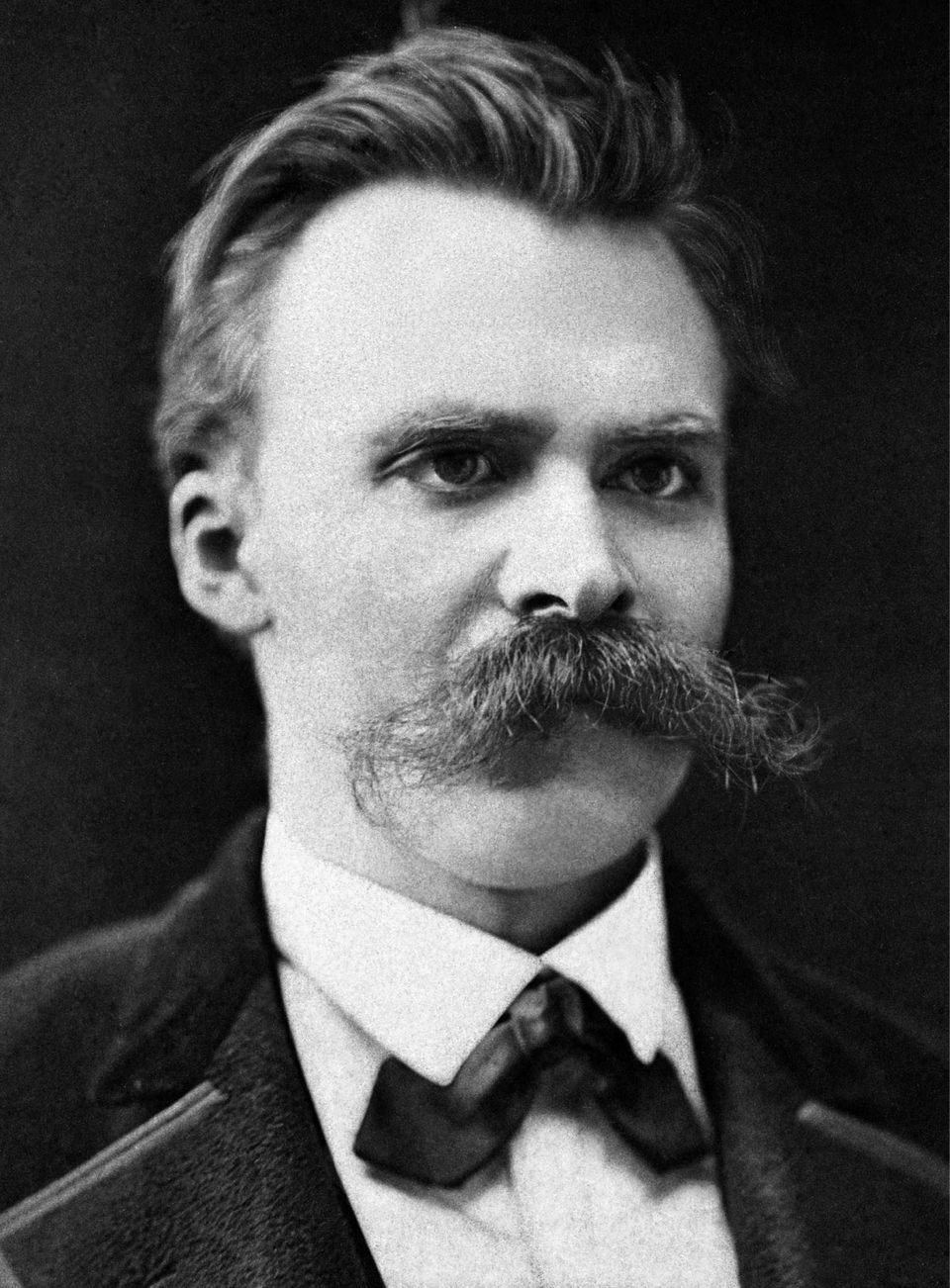
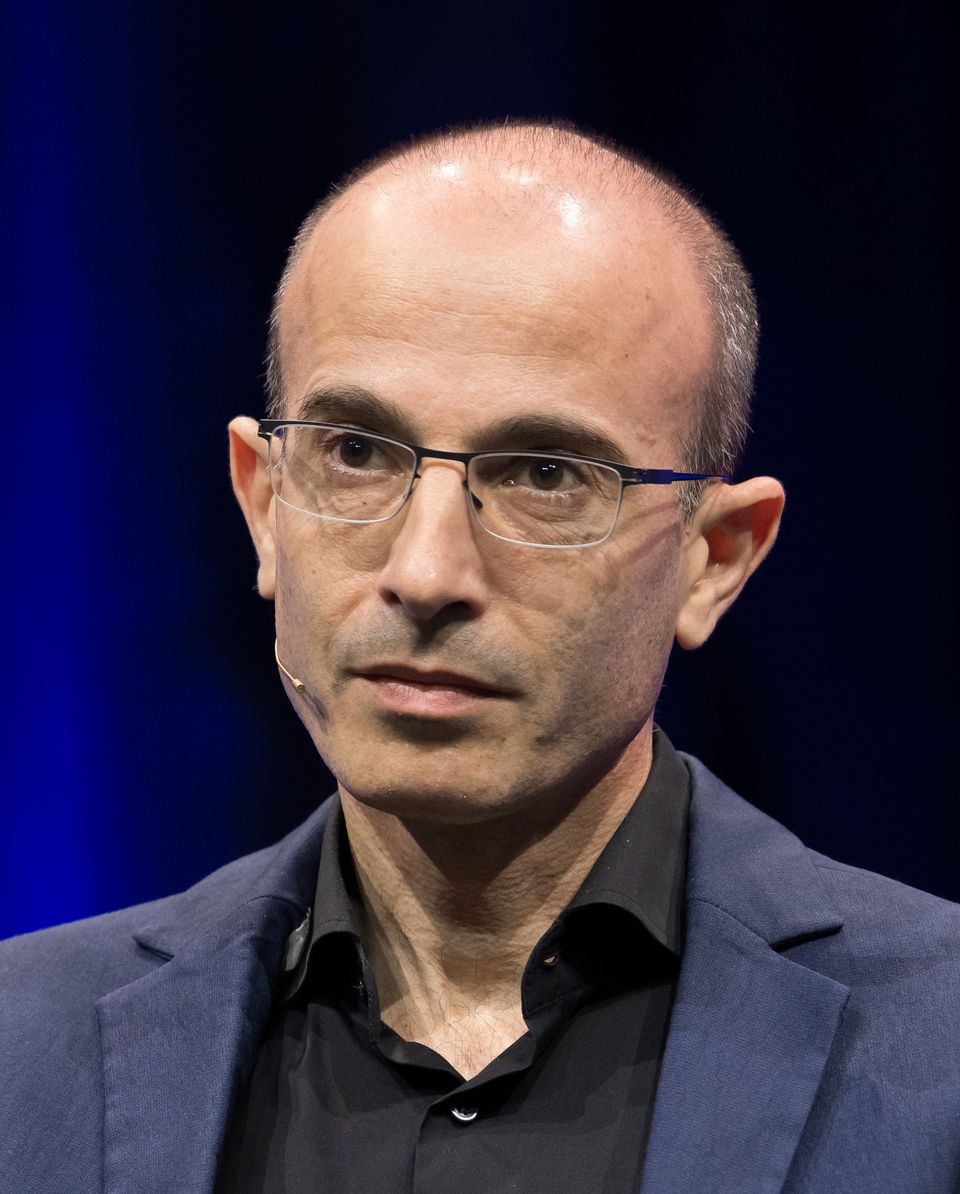
Photograph by Gtl12345, CC BY-SA 4.0. Cropped and with background removed for the portrait above. · Photograph by Friedrich Hermann Hartmann (c. 1875), public domain. Background removed for the portrait above. · Photograph by Martin Kraft (Frankfurt Book Fair, October 2024), CC BY-SA 4.0. Background removed for the portrait above.


.jpg)
An estimate is an inference.
Yours can be measured.
Thirty questions, scored against general-population benchmarks. Your score, your percentile, your ability breakdown and a printable IIF certificate.
Find your IQ score now! →