



What is Yuval Noah Harari’s IQ?
Fifty-five million copies is what readers bought. It is not what an IQ test measured.
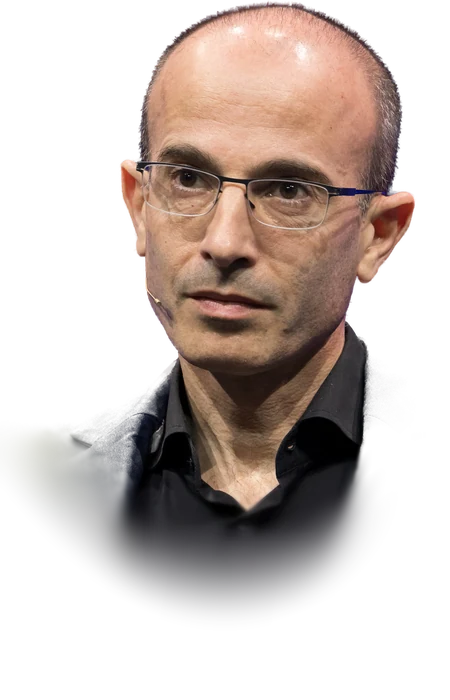
The IQ of Yuval Noah Harari has no published test result behind it, and no specific figure circulates for it either. What is documented — an Oxford D.Phil. (2002) and a post in the Hebrew University’s Department of History — supports an estimated IQ of 130–145: an inference from the record, not a measurement.
Yuval Noah Harari’s estimated IQ
- Completed a D.Phil. in history at the University of Oxford (Jesus College, matriculated 1999, degree 2002) with a thesis on war and personal identity in Renaissance military memoirs, c. 1450–1600.
- Published a scholarly monograph before any bestseller: Renaissance Military Memoirs: War, History and Identity, 1450–1600 (Boydell, 2004), reviewed in The American Historical Review in June 2005.
- Won the Society for Military History’s 2011 Moncado Prize, one of four given for the best articles in the 2010 issues of The Journal of Military History, for “Armchairs, Coffee, and Authority: Eye-witnesses and Flesh-witnesses Speak about War.”
- Lists in his Edge.org biography the Polonsky Prize for Creativity and Originality (2009 and 2012) and election to the Young Israeli Academy of Sciences (2012), all before Sapiens reached English readers in 2014.
- Holds a post in the Department of History at the Hebrew University of Jerusalem, where the department’s faculty page styles him “Prof.” and the university’s research portal lists him as Associate Professor.
This is an inference from a completed doctorate and an academic career, not a measurement: degrees track IQ only loosely, the record is verbal and historical, and bestseller sales are left out because they measure readers, not reasoning. With no test on file, the true figure could fall outside the range in either direction.
- Born
- February 24, 1976, Kiryat Ata, Israel
- Education
- B.A., history, Hebrew University of Jerusalem (1993–1998); D.Phil., University of Oxford (Jesus College), 2002
- Doctoral thesis
- “History and I: War and the Relations between History and Personal Identity in Renaissance Military Memoirs, c. 1450–1600”
- Post
- Department of History, Hebrew University of Jerusalem (faculty page: “Prof.”; research portal: Associate Professor)
- Early recognition
- Moncado Prize, Society for Military History (2011); Polonsky Prize (2009, 2012); Young Israeli Academy of Sciences (2012)
- Best-known books
- Sapiens (Hebrew 2011, English 2014); Homo Deus (2016); 21 Lessons for the 21st Century (2018); Nexus (2024)
- Copies sold
- 55 million in 65 languages, according to his own site
- Published IQ test result
- None found
What an IQ of 130–145 actually means
Set the claim aside for a moment. If someone genuinely scored in this range, here is what that would represent.
| Score range | Classification | Share of people | What it indicates |
|---|---|---|---|
| 85 – 114 | Average | ~68% | The range most people fall into. |
| 115 – 129 | Above average | ~13.6% | Roughly one person in seven. |
| 130 – 144 | Gifted | ~2% | The threshold most high-IQ societies use. |
| Above 144 | Highly gifted | ~0.1% | Figures above this range are extrapolated from the curve rather than measured. |
Percentages are approximate and describe a normal distribution. The same number means different things on tests with different standard deviations.
Thirty questions gives you a measured position on this exact scale — your score, your percentile and the ability breakdown behind it.
Find out in 30 minutes →Who Yuval Noah Harari is
Yuval Noah Harari was born on February 24, 1976, in Kiryat Ata, Israel. He began a B.A. in history at the Hebrew University of Jerusalem at 17 and completed it in 1998, specializing in medieval and military history. He matriculated at Jesus College, Oxford, in 1999 and took a D.Phil. in 2002 — Oxford’s name for its doctorate, which his official biographies call a Ph.D. — with a thesis titled “History and I: War and the Relations between History and Personal Identity in Renaissance Military Memoirs, c. 1450–1600,” supervised by Steven Gunn.
His first monograph, Renaissance Military Memoirs: War, History and Identity, 1450–1600, appeared from Boydell in 2004 as number 18 in its Warfare in History series, and The American Historical Review reviewed it in June 2005. In 2011 the Society for Military History gave him a Moncado Prize for an article in The Journal of Military History; his Edge.org biography also lists the Polonsky Prize for Creativity and Originality (2009 and 2012) and election to the Young Israeli Academy of Sciences (2012). He holds a post in the Hebrew University’s Department of History, where the department’s faculty page styles him “Prof.” and the university’s research portal lists him as Associate Professor; his own site lists him as a Distinguished Research Fellow at the University of Cambridge’s Centre for the Study of Existential Risk.
Sapiens: A Brief History of Humankind grew out of lectures he gave at the Hebrew University. It appeared in Hebrew in 2011 (Dvir) and in English in 2014, followed by Homo Deus: A Brief History of Tomorrow (Hebrew 2015, English 2016), 21 Lessons for the 21st Century (2018), the children’s series Unstoppable Us (Volume 1 published October 18, 2022, illustrated by Ricard Zaplana Ruiz) and Nexus: A Brief History of Information Networks from the Stone Age to AI (September 10, 2024). His own site puts the total at 55 million copies in 65 languages.
Read together, the record anchors the lower end of a range and nothing above it. Group averages tend to rise with education level (see average IQ by education level), so a completed Oxford doctorate and a university post make an estimated IQ around 130–145 reasonable, roughly the territory of an IQ of 135. That range sits level with Franz Kafka (130–145), a little above Jordan Peterson (125–140), a gap smaller than the method can resolve, and well below Bertrand Russell (160–175), whose page rests on a ranked Cambridge result and a Nobel Prize rather than on a doctorate and sales. Whether Harari reaches what is usually called a genius IQ level is a question only a test could answer.
 By Elora Mercer, Celebrity Research WriterFigures checked by Leon Falkner, Data & Research Analyst
Reviewed by Aarav Vardhan, Editor-in-Chief · Last reviewed August 2026
.jpg)
Yuval Noah Harari: the documented record
The estimate above rests on this record. Every entry here is a matter of public fact, which is more than can be said for the number itself.
- 1976Born on February 24 in Kiryat Ata, Israel.
- 2002Completes his D.Phil. at the University of Oxford (Jesus College, matriculated 1999) on war and personal identity in Renaissance military memoirs.
- 2004Publishes Renaissance Military Memoirs: War, History and Identity, 1450–1600 with Boydell; The American Historical Review reviews it in June 2005.
- 2009Wins the first of two Polonsky Prizes for Creativity and Originality; the second follows in 2012.
- 2011Sapiens appears in Hebrew (Dvir); the Society for Military History gives him a Moncado Prize for an article in The Journal of Military History.
- 2012Elected to the Young Israeli Academy of Sciences.
- 2014Sapiens: A Brief History of Humankind appears in English.
- 2016Homo Deus: A Brief History of Tomorrow appears in English (Hebrew edition 2015); 21 Lessons for the 21st Century follows in 2018.
- 2022Publishes Unstoppable Us, Volume 1, the first of three children’s books, on October 18.
- 2024Publishes Nexus: A Brief History of Information Networks from the Stone Age to AI on September 10.
Why no figure circulates
Following a claim back to its first appearance is the part almost nobody does — and it is what most people are actually asking.
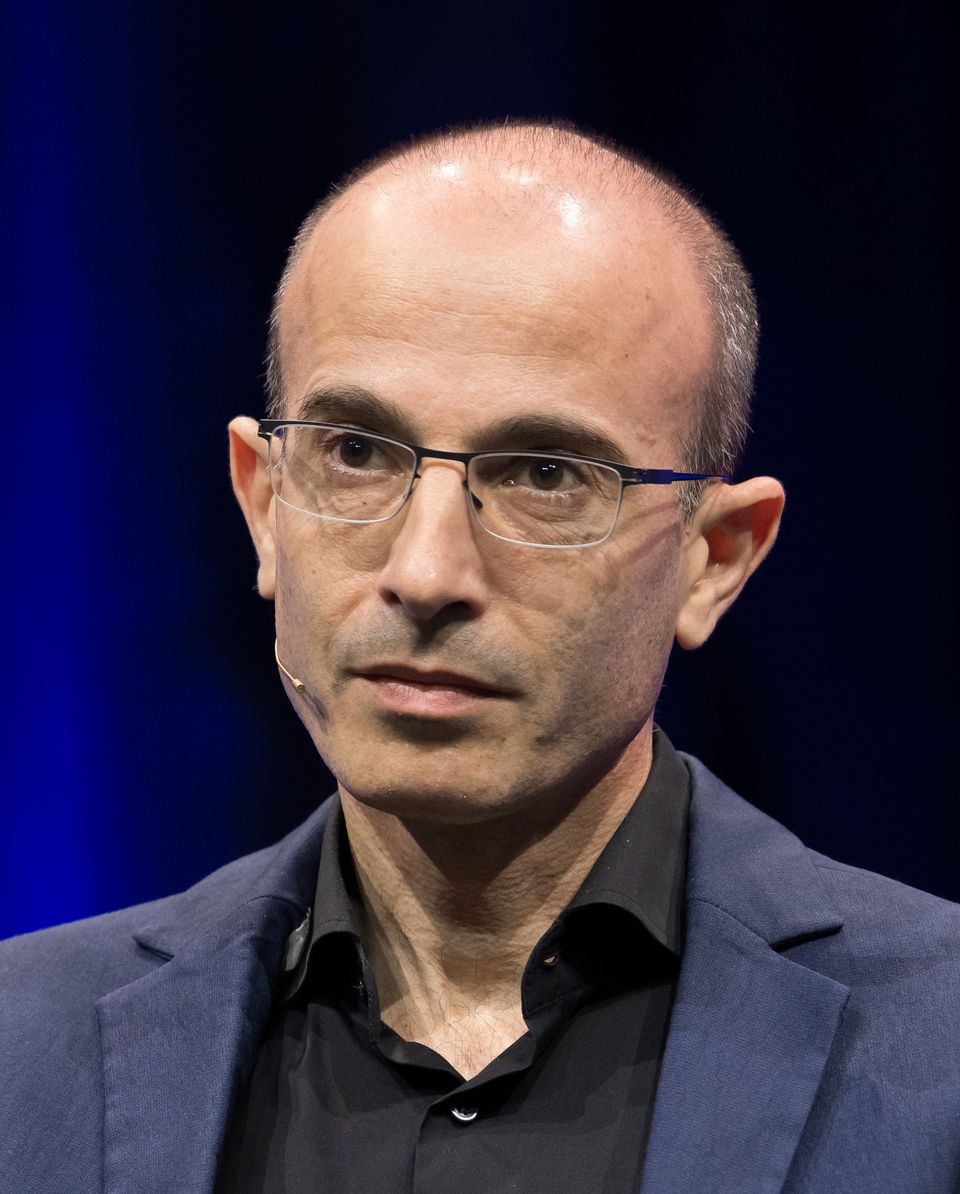
The IQ of Yuval Noah Harari is an unusual case on this site because there is no number to trace. Searching for it turns up an aggregator profile on geniuses.club that search results title “IQ of Yuval Noah Harari” (its profile text would not load when we opened it), a May 2026 Substack essay arguing that his strength is attention rather than IQ, and a famous-people IQ list on myiqscores.com that leaves him out and calls its own figures unverified estimates. None of the three names a test, an examiner, a date or a score.
The absence is what an academic career would predict. A historian is ranked by degrees, examined theses, prizes and publications rather than by an IQ test, so a professor rarely has a score on file, and none of the biographies we read for Harari mentions one. For how celebrity numbers usually get attached to famous names, see where celebrity IQ numbers come from. The usual error on this site runs upward, with sourced records supporting a lower range than the circulating figure; here nothing circulates, so there is nothing to mark down, and the risk is a number appearing later with no test behind it.
Sales are the tempting substitute. Harari’s own site says his books have sold 55 million copies in 65 languages, and his US publisher’s biography gives 45 million; either way, the figure measures readers, translators and marketing, not performance on reasoning items. Jordan Peterson’s page shows the mirror image: a bestselling academic whose number began with his own recollection of a test and still amounts to a self-report, not a result. We found no comparable recollection from Harari, so this page starts from the documented career instead.
What would settle the question is a documented result: a named test, an examiner and a date, published by Harari or a source close to him. Until then, any figure attached to his name is an estimate at best and an invention at worst. Anyone curious about their own reasoning can take a timed test such as the IQ Metrics test, but a score for someone else has to come from a record, and the records we found for Harari contain none.
How we read a number →His biography as he publishes it: styled “Prof.”, Ph.D. from Oxford in 2002, a Distinguished Research Fellow at Cambridge’s Centre for the Study of Existential Risk, and the sales figure of 55 million copies in 65 languages; the same paragraph also says he has been a lecturer in the Department of History. It mentions no IQ test or score.
The faculty page styles him “Prof.”, gives birth in Israel in 1976 and a 2002 Oxford Ph.D., and says he originally specialized in world, medieval and military history; the research portal lists him as Associate Professor, Department of History. Neither mentions IQ; the ranks differ between pages.
Lists Yuval Noah Harari (b. 1976), historian, matriculated 1999.
Lists Harari among the 2011 Moncado Prize winners for “Armchairs, Coffee, and Authority: Eye-witnesses and Flesh-witnesses Speak about War,” The Journal of Military History 74 (January 2010); the prizes went to the best article in each issue of the previous year.
Confirms the thesis title, author, year and institution; the catalog excerpt did not show the degree name.
Confirms the 2004 Boydell monograph (Warfare in History, no. 18) and that a leading history journal reviewed it.
His own bio: Ph.D. from Oxford in 2002; Polonsky Prize for Creativity and Originality (2009, 2012); Moncado Award (2011); Young Israeli Academy of Sciences (2012). Undated; it describes him as a lecturer, a wording that differs from the university’s own listings.
Nexus published September 10, 2024; Unstoppable Us, Volume 1 published October 18, 2022 (book 1 of 3). The publisher’s biography gives sales as forty-five million copies in sixty-five languages, a lower count than his own site’s 55 million.
Orientation and cross-checks: born February 24, 1976, Kiryat Ata; B.A. 1993–1998; D.Phil. Jesus College 2002 under Steven Gunn; Sapiens in Hebrew 2011 and English 2014; Homo Deus in Hebrew 2015 and English 2016. Wikidata confirms the identity and date of birth. The supervisor and B.A. years rest on Wikipedia alone.
No test, score or self-report appears in the biographies and institutional pages above. The one aggregator page found under the target phrasing (geniuses.club) would not load its profile text, a famous-people list at myiqscores.com omits him and calls its own numbers unverified estimates, and a May 29, 2026 Substack essay discusses IQ only as a foil for attention, with no figure.
The sources behind our estimate
The figures that circulate for Yuval Noah Harari, what we were able to confirm, and where the two diverge.
No specific IQ figure for Yuval Noah Harari turned up on any page we opened. A search for the “IQ of Yuval Noah Harari” returns an aggregator profile with that title, an essay about attention versus IQ, and a famous-people IQ list that leaves him out.
No IQ test result and no self-reported score appears in any biography we read — his own site, his US publisher’s author page, the Hebrew University’s faculty page, his Edge.org profile or Wikipedia. The aggregator geniuses.club has a page that search results title “IQ of Yuval Noah Harari,” but its profile text would not load when we opened it, so we cannot report a figure from it. A Substack essay dated May 29, 2026 (IoNTELLIGENCE) uses IQ only as a foil for attention and gives no number, and myiqscores.com’s famous-people list does not include him and describes its own figures as unverified estimates.
With no circulating figure to set against it, the spread is only the width of our own range. Read the 15 points as uncertainty, not as two scores: high, probably well above average, and not measured.
Want a number that does hold up? Every figure on this page is somebody’s claim. Take the 30-question test and get a percentile you can check rather than a figure you have to trust.
Yuval Noah Harari — frequently asked
What is Yuval Noah Harari’s IQ?
No IQ test result for Yuval Noah Harari has been published, and no specific figure circulates for him. IQ Metrics estimates a range of 130–145, inferred from his completed Oxford D.Phil. and his post in the Hebrew University’s Department of History. It is an inference from the record, not a measured score.
Has Yuval Noah Harari taken an IQ test?
There is no public record of one. His own site, his US publisher’s author biography and the Hebrew University’s faculty page describe his degrees, posts and books, and none mentions an IQ test or a score. Academic careers are ranked by degrees, examined theses and publications, so a test score is rarely on file.
Is Yuval Noah Harari a genius?
No IQ test has labeled him one, and “genius” is not a documented status. What is documented is an Oxford D.Phil. (2002), a post in the Hebrew University’s Department of History, a 2011 Moncado Prize and two Polonsky Prizes. Those support a high estimated IQ range of 130–145. They do not certify a score.
Where did Yuval Noah Harari study, and what was his doctoral thesis about?
He studied history at the Hebrew University of Jerusalem, then took a D.Phil. at the University of Oxford (Jesus College, matriculated 1999, degree 2002). His thesis, “History and I,” examined war and personal identity in Renaissance military memoirs, c. 1450–1600.
How does Yuval Noah Harari’s estimated IQ compare with Jordan Peterson’s?
Both are placed by the same kind of evidence — a completed doctorate, a university career and bestselling books — so the ranges overlap: 130–145 for Harari, 125–140 for Jordan Peterson. Neither is a test result, and a five-point offset is well inside the method’s margin of error.
Do Yuval Noah Harari’s book sales say anything about his IQ?
Not directly. His own site says his books have sold 55 million copies in 65 languages, which measures readers, translation and reach rather than performance on reasoning items. Sales therefore do not enter this estimate, which rests on his Oxford doctorate and academic record instead.
What are Yuval Noah Harari’s best-known books?
Sapiens: A Brief History of Humankind (Hebrew 2011, English 2014), Homo Deus: A Brief History of Tomorrow (Hebrew 2015, English 2016), 21 Lessons for the 21st Century (2018), the children’s series Unstoppable Us (from 2022) and Nexus: A Brief History of Information Networks from the Stone Age to AI (2024).
How does my IQ compare with Yuval Noah Harari?
You can find out in about fifteen minutes. The IQ Metrics assessment is 30 questions, scored on the same 100-mean scale used throughout this page, so your result and the estimate above are at least expressed in the same units — one measured, one inferred. Once you have a number, the leaderboard shows where it would sit, and how we score and norm it explains the benchmarking.
Where does this estimate come from?
From the documented record rather than a test — the method is named above and set out in full under how we read a number. Compare it against the other writers profiles, starting with Voltaire.
- Take the 30-question IQ test — get a measured score and percentile of your own
- Average IQ by country — how the scale behaves across populations
- How IQ Metrics scores its assessment — the method behind our own number
- More on how IQ testing works — reliability, error and what a score can and cannot say
- More writers profiles — same field, same method
More writers
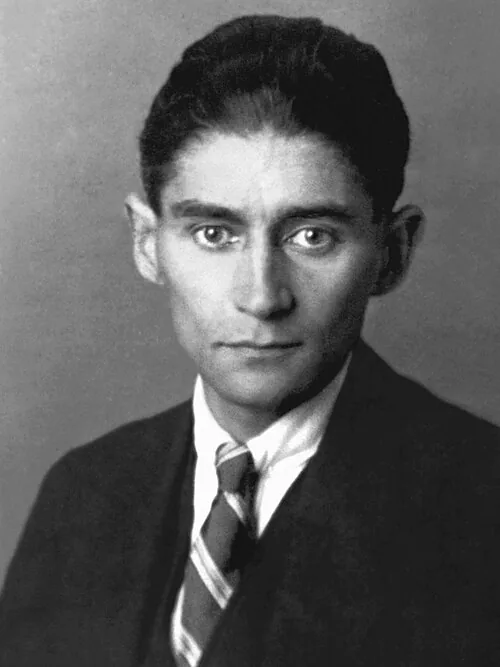

Photograph by an unknown photographer (1923), public domain. Background removed for the portrait above. · Photograph by Gtl12345, CC BY-SA 4.0. Cropped and with background removed for the portrait above. · Photograph by Friedrich Hermann Hartmann (c. 1875), public domain. Background removed for the portrait above.


An estimate is an inference.
Yours can be measured.
Thirty questions, scored against general-population benchmarks. Your score, your percentile, your ability breakdown and a printable IIF certificate.
Find your IQ score now! →