



What is Christopher Langan’s IQ?
The real score, run through its own test-maker’s later math, lands well under the number that made him famous.

A 1999 magazine profile made “195” famous. The test it came from is real — but its own creator’s later renorming puts the actual conversion thirty points lower.
Christopher Langan’s estimated IQ
- Scored 42 of 48 on Ronald Hoeflin’s Mega Test in 1985, then 47 of 48 on a pseudonymous retake.
- Hoeflin’s own repeated renormings of the Mega Test later placed that raw-score band at approximately 163–174, not 195.
- A 2020 peer-reviewed reanalysis (Redvaldsen, Psych) independently concluded the Mega and Titan tests’ officially reported scores run too high.
- A standardized WAIS-III was reportedly administered on camera for a 1999 TV segment; no numeric composite score from it has ever been published.
The Mega Test is untimed, unsupervised, self-scored by mail, and normed on a small, self-selected sample of magazine readers — not a professionally administered instrument like the Wechsler or Stanford-Binet scales. This range anchors to the test’s own later-corrected conversion, not to the popular 195 figure, and should be read with that limitation in mind.
- Born
- March 25, 1952, San Francisco, California
- Field
- Independent philosopher/author; horse rancher
- Education
- No completed degree (Reed College; Montana State University)
- Known for
- Mega Test score, popularly reported as 195; the CTMU
- Organization
- Co-founder, Mega Foundation (1999)
What an IQ of 160–175 actually means
Set the claim aside for a moment. If someone genuinely scored in this range, here is what that would represent.
Average is 100 by construction, and about two-thirds of people fall between 85 and 115. Take the test to place your own score on this scale.
| Score range | Classification | Share of people | What it indicates |
|---|---|---|---|
| 85 – 114 | Average | ~68% | The range most people fall into. |
| 115 – 129 | Above average | ~13.6% | Roughly one person in seven. |
| 130 – 144 | Gifted | ~2% | The threshold most high-IQ societies use. |
| Above 144 | Highly gifted | ~0.1% | Figures above this range are extrapolated from the curve rather than measured. |
Percentages are approximate and describe a normal distribution. The same number means different things on tests with different standard deviations.
Thirty questions gives you a measured position on this exact scale — your score, your percentile and the ability breakdown behind it.
Find out in 30 minutes →Who Christopher Langan is
Christopher Langan was born March 25, 1952, in San Francisco, and had a difficult childhood marked by poverty and an abusive stepfather. He has said he taught himself advanced mathematics, physics and philosophy in high school after being denied harder coursework, and reported a perfect SAT score despite napping during the test. He won a full scholarship to Reed College but withdrew after losing it; he later enrolled at Montana State University and left without a degree, citing financial difficulty and conflict with professors.
Without a completed degree, he worked for roughly twenty years as a bar bouncer on Long Island, alongside stints in construction, firefighting and ranching. He has described his central intellectual project, the “Cognitive-Theoretic Model of the Universe,” as a theory of everything; it was published in 2002 in a journal produced by an intelligent-design advocacy organization, outside the mainstream scientific peer-review process, and later as a self-published book.
In 1999 he and his wife, neuropsychologist Gina Lynne LoSasso, founded the Mega Foundation, a nonprofit for people with very high test scores; the couple relocated to a horse ranch in northern Missouri in 2004. He was profiled by Malcolm Gladwell in Outliers (2008) as a counterpoint to J. Robert Oppenheimer, and won $250,000 on the game show 1 vs. 100 the same year.
 By Elora Mercer, Celebrity Research WriterFigures checked by Leon Falkner, Data & Research Analyst
Reviewed by Aarav Vardhan, Editor-in-Chief · Last reviewed August 2026

Christopher Langan: the documented record
The estimate above rests on this record. Every entry here is a matter of public fact, which is more than can be said for the number itself.
- 1952Born, San Francisco.
- 1985Hoeflin’s Mega Test published in Omni magazine.
- 1985–86Takes the Mega Test; scores 42/48, then 47/48 under a pseudonym on retake.
- 1990Guinness discontinues its “Highest IQ” World Records category.
- 1999Mega Foundation founded; Esquire profile popularizes the “195” figure.
- 2002CTMU paper published in a non-mainstream-peer-reviewed journal.
- 2008Profiled in Gladwell’s Outliers; wins $250,000 on 1 vs. 100.
- 2020Peer-reviewed reanalysis (Redvaldsen) concludes the Mega/Titan tests’ reported scores run too high.
Where the 195 figure came from
Following a claim back to its first appearance is the part almost nobody does — and it is what most people are actually asking.

Langan is one of the few subjects on this site with an actual test score on record, which makes the gap more interesting, not less. In 1985 he took Ronald Hoeflin’s Mega Test — an untimed, unsupervised, mail-in test of 48 items published in Omni magazine — scoring 42 of 48 under his own name and, on a later retake under the pseudonym “Eric Hart,” 47 of 48.
That raw score is real. Its conversion to “195” is not something Hoeflin’s own math supports. He renormed the Mega Test multiple times over the years, and his later norms place a score in that band at roughly 163–174 — well under the figure a 1999 Esquire profile made famous nationally. A 2020 peer-reviewed reanalysis by David Redvaldsen, published in the journal Psych, independently concluded that the Mega and Titan tests’ officially reported scores run too high relative to what their data actually supports.
There is a second data point worth naming honestly: a psychologist reportedly administered the WAIS-III — a real, professionally normed instrument — to Langan on camera for a 1999 television segment. No numeric composite score from that test has ever been published, only qualitative characterizations. So the one time a standard clinical instrument was used, its actual number was never released either.
How we read a number →Finds the test “overinterprets the weak data of a self-selected sample.”
Peer-reviewed reanalysis concluding reported scores ran too high.
Test history and renorming detail.
Langan’s own account of his test attempts; treated as self-report, not independent verification.
Traces to 1999 media coverage, not to a sourced score conversion.
The sources behind our estimate
The figures that circulate for Christopher Langan, what we were able to confirm, and where the two diverge.
195 is the figure that made him “the smartest man in America” in a 1999 magazine profile; some sites round it up to 210.
Langan did take a real test: Ronald Hoeflin’s Mega Test, an untimed, mail-in test published in Omni magazine in 1985. He scored 42 of 48 under his own name, then 47 of 48 under a pseudonym on a retake. Hoeflin’s own repeated renormings of that raw score put it at roughly 163–174 — and a 2020 peer-reviewed reanalysis found the test’s reported scores ran too high even at that.
The gap here is the test’s own creator revising his norms downward, not a rival claim — Hoeflin’s later math and the popular figure disagree by roughly thirty points.
Want a number that does hold up? Every figure on this page is somebody’s claim. Take the 30-question test and get a percentile you can check rather than a figure you have to trust.
Christopher Langan — frequently asked
What is Christopher Langan’s IQ?
No single documented number exists. A figure of 195 has circulated since a 1999 magazine profile, but the score that is actually on record — his result on Ronald Hoeflin’s 1985 Mega Test — converts to roughly 163–174 under the test-maker’s own later renormings.
What test did Christopher Langan take?
Ronald Hoeflin’s Mega Test, an untimed, unsupervised, mail-in test published in Omni magazine in 1985. He scored 42 of 48, then 47 of 48 on a pseudonymous retake.
Are the Mega Test and Titan Test scientifically reliable at that range?
Psychometric reviewers say no. A 1991 review found the Mega Test “violates many good psychometric principles,” and a 2020 peer-reviewed reanalysis concluded both tests’ officially reported scores run too high.
Did an independent psychologist ever verify Langan’s IQ with a standard test?
A psychologist reportedly administered the WAIS-III on camera for a 1999 TV segment, but no numeric score from that test has ever been published.
Was Langan ever listed in the Guinness Book of World Records for IQ?
Yes, in its “Highest IQ” category, until Guinness discontinued the category entirely in 1990, citing the unreliability of such scores.
What is Christopher Langan known for besides his IQ?
The “Cognitive-Theoretic Model of the Universe,” a self-described theory of everything published outside mainstream peer review; co-founding the Mega Foundation; and an unconventional work history documented in Malcolm Gladwell’s Outliers.
How does my IQ compare with Christopher Langan?
You can find out in about fifteen minutes. The IQ Metrics assessment is 30 questions, scored on the same 100-mean scale used throughout this page, so your result and the estimate above are at least expressed in the same units — one measured, one inferred. Once you have a number, the leaderboard shows where it would sit, and how we score and norm it explains the benchmarking.
Where does this estimate come from?
From the documented record rather than a test — the method is named above and set out in full under how we read a number. Compare it against the other writers profiles, starting with Voltaire.
- Take the 30-question IQ test — get a measured score and percentile of your own
- Average IQ by country — how the scale behaves across populations
- How IQ Metrics scores its assessment — the method behind our own number
- More on how IQ testing works — reliability, error and what a score can and cannot say
- More writers profiles — same field, same method
More writers
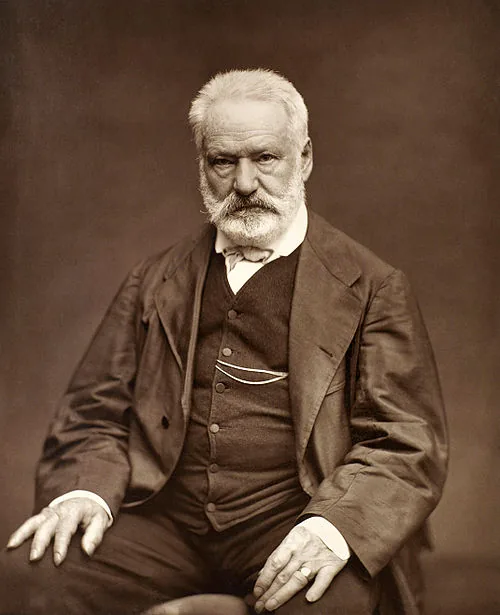

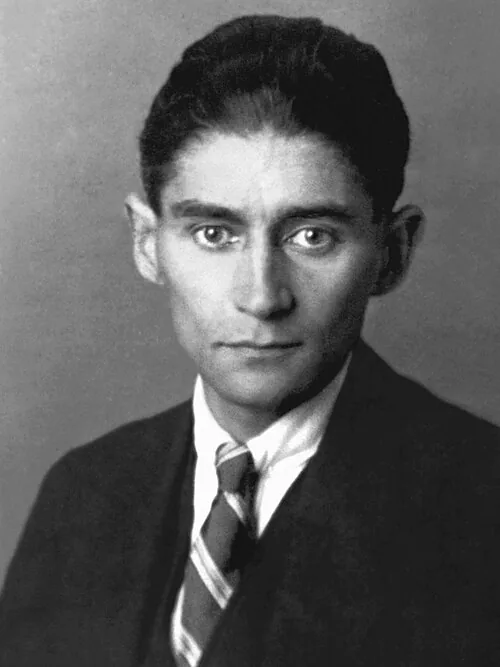
Photograph by Étienne Carjat (1876), public domain. Background removed for the portrait above. · Photograph (1914), photographer unknown, via Wikimedia Commons, public domain. · Photograph by an unknown photographer (1923), public domain. Background removed for the portrait above.


An estimate is an inference.
Yours can be measured.
Thirty questions, scored against general-population benchmarks. Your score, your percentile, your ability breakdown and a printable IIF certificate.
Find your IQ score now! →