



What is Pythagoras’ IQ?
A Babylonian tablet from about 1800 BCE already lists Pythagorean triples, centuries before he was born.

No IQ score exists for Pythagoras, and none could: he wrote nothing, and no contemporary left a detailed account of his thought, according to the Stanford Encyclopedia of Philosophy. The surviving biographies were written some 700 years after his time. Pythagoras’s IQ is therefore an inference from legend-laden evidence, as of November 2026, not a measurement.
Pythagoras’ estimated IQ
- At about age 40 he moved to Croton in southern Italy, where most of his philosophical activity occurred, according to the Stanford Encyclopedia of Philosophy.
- The teaching most securely identified with him is the “transmigration of souls,” according to Wikipedia, which also says many accomplishments credited to him likely originated earlier or with colleagues such as Hippasus and Philolaus.
- The geometric principles behind the theorem that bears his name appear in Babylonian mathematics, such as the Plimpton 322 tablet (about 1800 BCE), and in the Indian Baudhayana Sulbasutra (c. 800–500 BCE), per Wikipedia.
- His fame as a thinker rests on ancient and late-antique writers, not on a text of his own: the main biographies are by Diogenes Laërtius, Porphyry and Iamblichus, per the Stanford Encyclopedia.
This is the weakest kind of estimate on the site. Every fact about his life is second-hand, many achievements credited to him are older or collective, and the biographies are described as filled primarily with myths and legends. The range is wide, low-confidence and sits below Plato’s, who left writings.
- Lived
- c. 570 – c. 495 BCE
- Born
- Samos, an island off the coast of modern Turkey
- Moved to
- Croton, southern Italy, at about age 40
- Writings
- None: he wrote nothing, per the Stanford Encyclopedia of Philosophy
- Main biographies
- Diogenes Laërtius, Porphyry, Iamblichus (late antiquity)
- Theorem evidence
- Plimpton 322 tablet, about 1800 BCE; Baudhayana Sulbasutra, c. 800–500 BCE
- Most secure teaching
- The “transmigration of souls,” per Wikipedia
- Circulating figure
- None found
What an IQ of 135–155 actually means
Set the claim aside for a moment. If someone genuinely scored in this range, here is what that would represent.
| Score range | Classification | Share of people | What it indicates |
|---|---|---|---|
| 85 – 114 | Average | ~68% | The range most people fall into. |
| 115 – 129 | Above average | ~13.6% | Roughly one person in seven. |
| 130 – 144 | Gifted | ~2% | The threshold most high-IQ societies use. |
| Above 144 | Highly gifted | ~0.1% | Figures above this range are extrapolated from the curve rather than measured. |
Percentages are approximate and describe a normal distribution. The same number means different things on tests with different standard deviations.
Thirty questions gives you a measured position on this exact scale — your score, your percentile and the ability breakdown behind it.
Find out in 30 minutes →Who Pythagoras is
Who was Pythagoras? He was a Greek philosopher who lived from about 570 to about 495 BCE, according to Wikipedia. The Stanford Encyclopedia says he spent his early years on the island of Samos, off the coast of modern Turkey, and at the age of forty emigrated to the city of Croton in southern Italy, where most of his philosophical activity occurred. Wikipedia says he died in either Croton or Metapontum.
What is Pythagoras actually known for? The Stanford Encyclopedia states that Pythagoras wrote nothing, nor were there detailed accounts of his thought by contemporaries. Wikipedia reports that the teaching most securely identified with him is the “transmigration of souls,” and that many achievements credited to him likely originated earlier or with followers such as Hippasus and Philolaus.
What does the portrait show? The marble bust used on this page is a Roman copy of a Greek original in the Capitoline Museums in Rome, according to its Wikimedia Commons description. It is not a contemporary likeness: the Greek original it copies is dated to the 2nd–1st century BCE, long after his death. See other historical figures we have checked, or compare yourself with the same scale in the IQ Metrics test.
 By Elora Mercer, Celebrity Research WriterFigures checked by Leon Falkner, Data & Research Analyst
Reviewed by Aarav Vardhan, Editor-in-Chief · Last reviewed November 2026

Pythagoras: the documented record
The estimate above rests on this record. Every entry here is a matter of public fact, which is more than can be said for the number itself.
- c. 1800 BCEBabylonian scribes write the Plimpton 322 tablet, a table of Pythagorean triples.
- c. 800–500 BCEThe Baudhayana Sulbasutra states the rule of the diagonal in India.
- c. 570 BCEPythagoras is born on Samos.
- c. 530 BCEAt about age 40 he moves to Croton in southern Italy.
- c. 495 BCEHe dies in Croton or Metapontum.
- c. 200–250 CEDiogenes Laërtius writes his Life of Pythagoras.
- c. 234–305 CEPorphyry writes his Life of Pythagoras.
- c. 245–325 CEIamblichus writes On the Pythagorean Life.
Why no figure circulates
Following a claim back to its first appearance is the part almost nobody does — and it is what most people are actually asking.

Searches for “Pythagoras IQ,” “Pythagoras IQ level” and “Pythagoras estimated IQ” do not lead to a sourced number. No test could have been given to him, and the evidence for what he did is second-hand. Any figure attached to his name is an opinion about a legend. For how such numbers form, see where celebrity IQ numbers come from.
Was Pythagoras a genius? Ancient writers made him one, but their testimony is late. Wikipedia says the major sources on his life are three biographies from late antiquity, by Diogenes Laërtius, Porphyry and Iamblichus, which are filled primarily with myths and legends. The Stanford Encyclopedia dates them to about 200–325 CE, some 700 years after he died. Earlier mentions, by Xenophanes, Heraclitus, Empedocles, Ion of Chios and Herodotus, are brief, ambiguous and often satirical.
Did Pythagoras discover the Pythagorean theorem? The claim fails an audit. The Plimpton 322 clay tablet, believed written around 1800 BCE, records Pythagorean triples, and the rule of the diagonal was stated in India in the Baudhayana Sulbasutra (c. 800–500 BCE), according to Wikipedia. The theorem’s name records a tradition, not a measured feat, so it cannot support an IQ number. For recent comparisons, see the smartest mathematicians alive.
What was Pythagoras’s IQ compared with Plato’s? This site’s range for him, 135–155, sits below Plato (145–165) Aristotle (150–170) and Archimedes (160–185), and overlaps Socrates (135–165). The gap reflects evidence, not a verdict on his mind: Plato and Archimedes left writings that can be read. See philosophers ranked by IQ and the research on the IQ of historical geniuses.
How we read a number →States he wrote nothing and that contemporaries left no detailed account of his thought; Samos, Croton and the chronology of the late biographies.
Dates, death place, the late biographers, the “transmigration of souls,” Hippasus and Philolaus, and earlier uses of the theorem.
A Babylonian clay tablet believed written around 1800 BCE, containing a table of Pythagorean triples.
Confirms the identifier Q10261 is the Greek philosopher and mathematician (c. 570 – c. 495 BCE), not a sculptor namesake.
Photograph of a Roman copy of a Greek original (Capitoline Museums, Rome); public domain.
No test result or sourced estimate appears in the Stanford Encyclopedia or Wikipedia.
The sources behind our estimate
The figures that circulate for Pythagoras, what we were able to confirm, and where the two diverge.
No page states a Pythagoras IQ score with a named test, a date and an examiner, including for the phrasings “Pythagoras estimated IQ” and “Pythagoras IQ level.”
The Stanford Encyclopedia of Philosophy says Pythagoras wrote nothing and that no contemporary wrote a detailed account of his thought. Wikipedia’s account of his life relies on late biographies. Neither source gives an IQ, and the principles behind the theorem that bears his name appear on a Babylonian tablet more than a thousand years earlier.
With no circulating number to test, the only figure on the page is this site’s own 135–155 range. It is a placeholder for “a famous ancient thinker,” built from tradition, and it cannot be checked against any record from his lifetime.
Want a number that does hold up? Every figure on this page is somebody’s claim. Take the 30-question test and get a percentile you can check rather than a figure you have to trust.
Pythagoras — frequently asked
What was Pythagoras’s IQ?
No IQ score exists for Pythagoras, and no sourced figure circulates. The Stanford Encyclopedia of Philosophy says he wrote nothing and that no contemporary detailed his thought. This site’s inferred range is 135–155 on a scale with mean 100 and SD 15, and it is low-confidence.
What was Pythagoras’s IQ level?
Pythagoras’s IQ level is not documented. The evidence for his life comes from biographies written about 700 years after his death, which Wikipedia says are filled primarily with myths and legends. Any level attached to his name is an estimate, not a score.
What is Pythagoras’s estimated IQ?
The estimated IQ on this site is 135–155, inferred from tradition rather than records. It is below Plato’s 145–165 because Plato left writings that can be read. No test or source from Pythagoras’s lifetime exists to check the range.
Did Pythagoras discover the Pythagorean theorem?
Probably not alone, and the record does not say. Wikipedia reports that the geometric principles appear on the Babylonian Plimpton 322 tablet, written around 1800 BCE, and in the Indian Baudhayana Sulbasutra, c. 800–500 BCE, centuries before Pythagoras.
Was Pythagoras a genius?
Ancient writers treated Pythagoras as a sage, but their testimony is late and legend-laden. “Genius” is a label, not an IQ score. Wikipedia says many achievements credited to him likely came from earlier sources or from colleagues such as Hippasus and Philolaus.
Did Pythagoras write any books?
No. The Stanford Encyclopedia of Philosophy states that Pythagoras wrote nothing, and that there were no detailed accounts of his thought written by contemporaries. What survives comes from later writers, chiefly Diogenes Laërtius, Porphyry and Iamblichus.
How does Pythagoras’s estimated IQ compare with Plato’s?
This site’s 135–155 range for Pythagoras sits below its 145–165 range for Plato and 160–185 for Archimedes, and overlaps its 135–165 range for Socrates. The gap reflects how much evidence survives, not a verdict on his mind.
How does my IQ compare with Pythagoras?
You can find out in about fifteen minutes. The IQ Metrics assessment is 30 questions, scored on the same 100-mean scale used throughout this page, so your result and the estimate above are at least expressed in the same units — one measured, one inferred. Once you have a number, the leaderboard shows where it would sit, and how we score and norm it explains the benchmarking.
Where does this estimate come from?
From the documented record rather than a test — the method is named above and set out in full under how we read a number. Compare it against the other historical profiles, starting with Isaac Newton.
- Take the 30-question IQ test — get a measured score and percentile of your own
- Average IQ by country — how the scale behaves across populations
- How IQ Metrics scores its assessment — the method behind our own number
- More on how IQ testing works — reliability, error and what a score can and cannot say
- More historical profiles — same field, same method
More historical
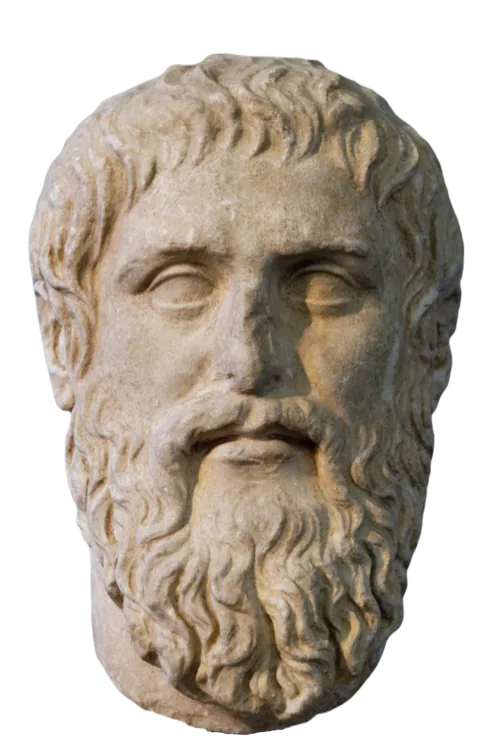
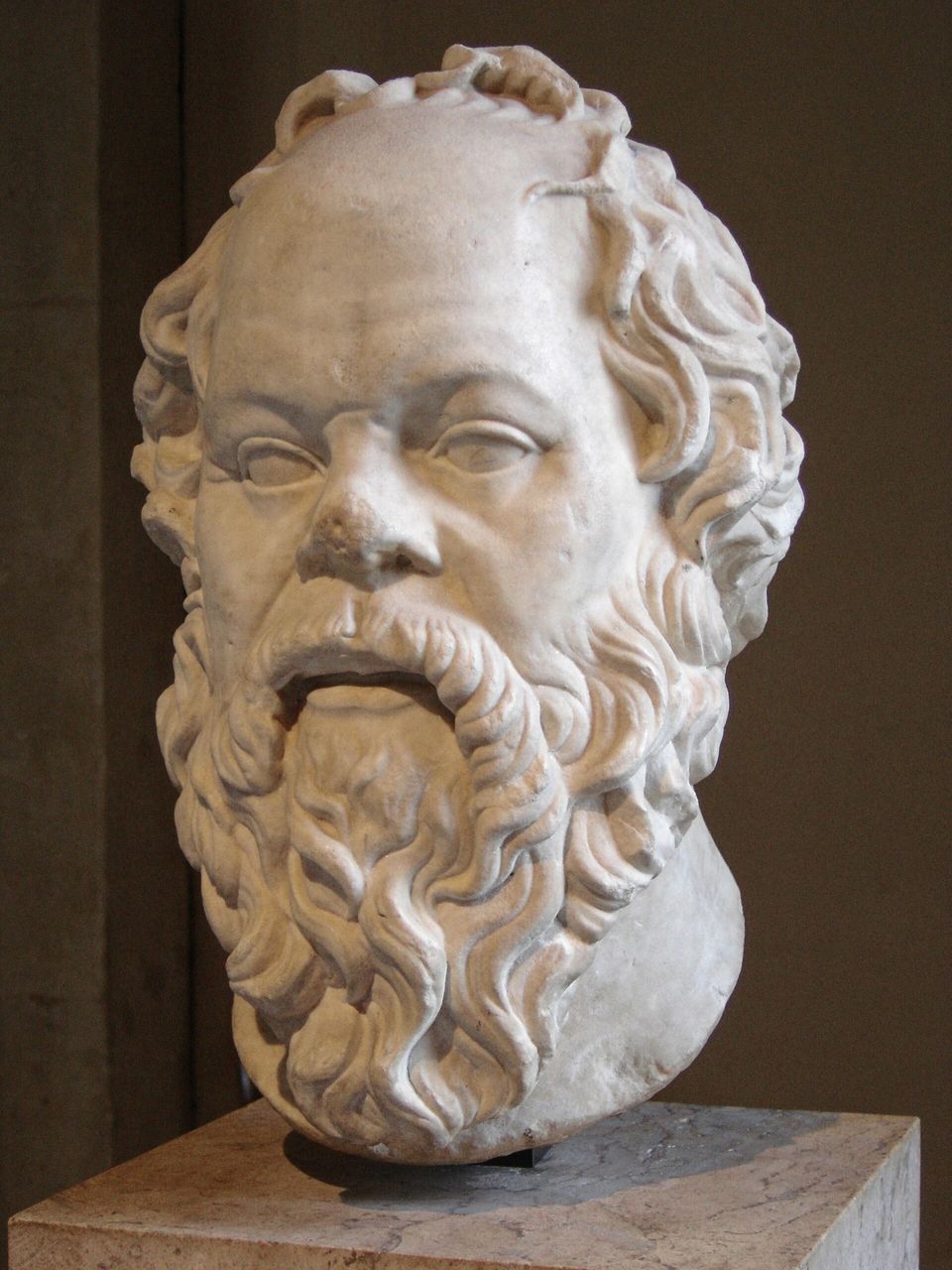

Photograph by Marie-Lan Nguyen, public domain. Background removed for the portrait above. · Photograph by Eric Gaba (Wikimedia Commons user: Sting) (July 2005), CC BY-SA 2.5. Roman marble portrait of Socrates, 1st century AD, Louvre Museum. Background removed for the portrait above. · Portrait by Domenico Fetti (circa 1620), via Wikimedia Commons, public domain.


An estimate is an inference.
Yours can be measured.
Thirty questions, scored against general-population benchmarks. Your score, your percentile, your ability breakdown and a printable IIF certificate.
Find your IQ score now! →