



What was William Shakespeare’s IQ?
Absent from the most famous list of genius IQs, for a reason worth knowing.
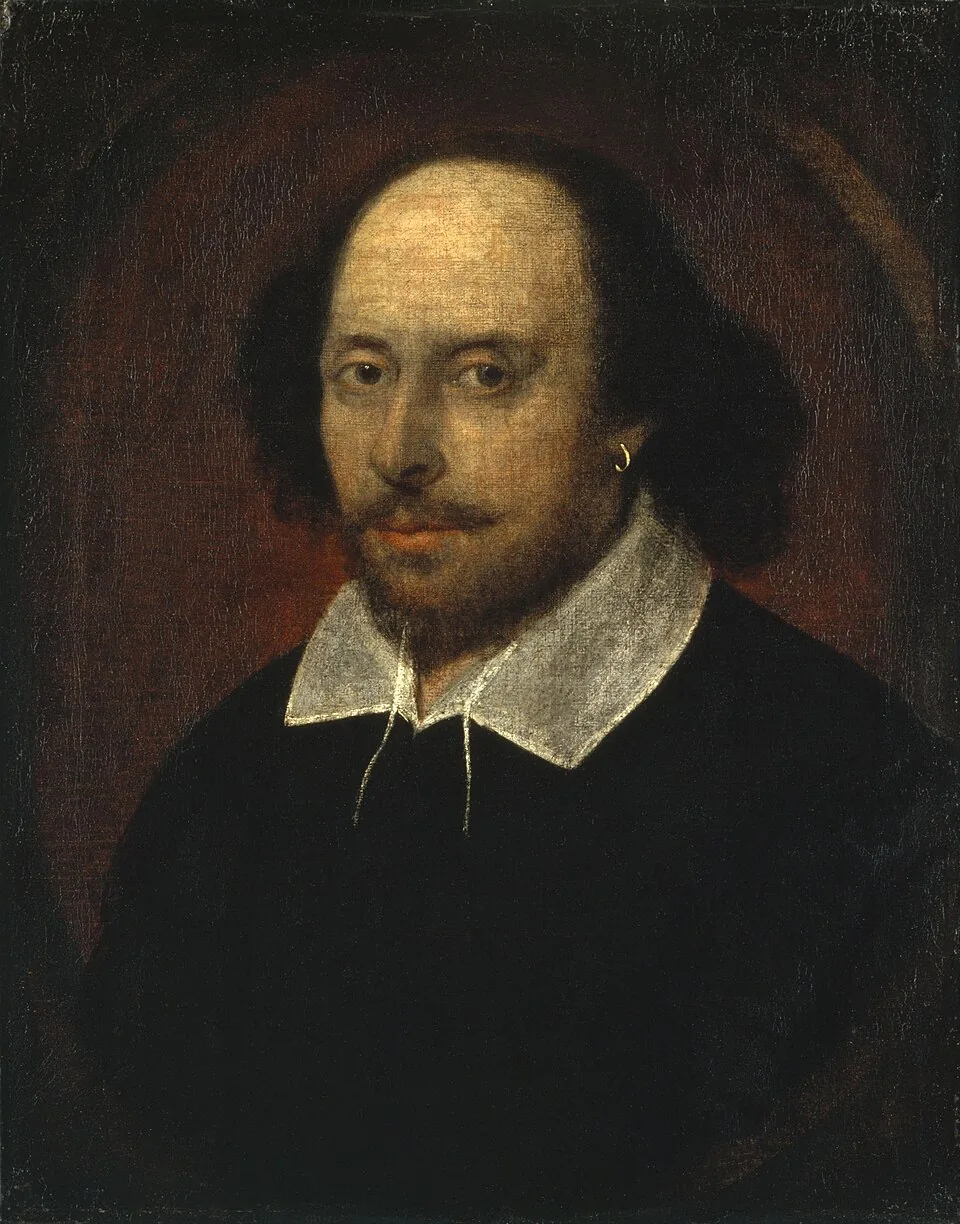
The 210 attached to Shakespeare has no author and no method. What makes the gap interesting is that the one study everyone assumes it came from deliberately left him out.
William Shakespeare’s estimated IQ
- A working vocabulary of roughly 29,000 distinct words across the surviving plays and poems, exceptionally large for the period.
- Thirty-eight plays and 154 sonnets, composed while working as an actor and a shareholder in a commercial theatre company.
- Command of five-act dramatic structure, verse and prose registers, and legal, military, nautical and medical idiom acquired without a university education.
- Built and sustained the Lord Chamberlain’s Men as a commercial enterprise, buying into the Globe as a sharer in 1599.
This is an achievement estimate about a man whose childhood is almost entirely undocumented, which is precisely why Cox excluded him. It is placed below Voltaire and Goethe here because both of those have documented early records and Shakespeare has none.
- Baptised
- 26 April 1564, Stratford-upon-Avon
- Died
- 23 April 1616, Stratford-upon-Avon
- Field
- Drama and poetry
- Education
- Probably the King’s New School, Stratford; no university
- Known for
- Hamlet, King Lear, Macbeth, the sonnets
- In Cox 1926
- Not included — the study required documented childhood records
What an IQ of 160–180 actually means
Set the claim aside for a moment. If someone genuinely scored in this range, here is what that would represent.
Average is 100 by construction, and about two-thirds of people fall between 85 and 115. Take the test to place your own score on this scale.
| Score range | Classification | Share of people | What it indicates |
|---|---|---|---|
| 85 – 114 | Average | ~68% | The range most people fall into. |
| 115 – 129 | Above average | ~13.6% | Roughly one person in seven. |
| 130 – 144 | Gifted | ~2% | The threshold most high-IQ societies use. |
| Above 144 | Highly gifted | ~0.1% | Figures above this range are extrapolated from the curve rather than measured. |
Percentages are approximate and describe a normal distribution. The same number means different things on tests with different standard deviations.
Thirty questions gives you a measured position on this exact scale — your score, your percentile and the ability breakdown behind it.
Find out in 30 minutes →Who William Shakespeare was
William Shakespeare was baptised in Stratford-upon-Avon in April 1564, the son of a glover and alderman. He married Anne Hathaway in 1582. Nothing reliable is known of him between 1585 and 1592, when he appears in London as an actor and playwright already attracting professional jealousy.
He became a sharer in the Lord Chamberlain’s Men in 1594 and part-owner of the Globe in 1599. He was a working commercial dramatist, not a court poet, and the plays were written to fill a playhouse against direct competition.
He wrote thirty-eight plays and 154 sonnets, retired to Stratford as a prosperous man, and died there in April 1616. The First Folio, collected by two of his fellow actors, appeared in 1623.
 By Elora Mercer, Celebrity Research WriterFigures checked by Leon Falkner, Data & Research Analyst
Reviewed by Aarav Vardhan, Editor-in-Chief · Last reviewed August 2026

William Shakespeare: the documented record
The estimate above rests on this record. Every entry here is a matter of public fact, which is more than can be said for the number itself.
- 1564Baptised in Stratford-upon-Avon.
- 1582Marries Anne Hathaway.
- 1585Beginning of the seven years for which no record survives.
- 1592First documented reference to him as a London playwright.
- 1594Becomes a sharer in the Lord Chamberlain’s Men.
- 1599Part-owner of the newly built Globe theatre.
- 1616Dies in Stratford-upon-Avon.
- 1623The First Folio is published by two of his fellow actors.
- 1926Cox publishes her study of 301 geniuses; Shakespeare is not in it.
Where the 210 figure came from
Following a claim back to its first appearance is the part almost nobody does — and it is what most people are actually asking.
The interesting thing about Shakespeare’s IQ is not the number. It is the absence the number was invented to cover.
Catharine Cox’s Early Mental Traits of Three Hundred Geniuses is where most historical IQ figures come from, and it is the source this section cites for Voltaire at 190, Goethe at 210 and Mozart. Her method was to read biographical material for evidence of childhood attainment — what a subject could do, and at what age — and score it against the Stanford-Binet. It required a documented childhood, and it is the reason Shakespeare is not in the book.
What survives of his early life is a baptism record, a marriage licence bond, and the reasonable inference that he attended the King’s New School in Stratford because he was entitled to. There are no letters, no school reports, no anecdotes recorded at the time, and seven years between 1585 and 1592 for which there is no record at all. Cox could not have scored him, so she did not try.
The 210 filled that vacuum anyway, and it is telling that it matches Goethe’s Cox figure exactly. Where a real method declined to produce a number, the internet supplied one and borrowed the authority of the study that refused.
One caution in the other direction: the widely repeated claim that Shakespeare coined more than 1,700 words is heavily contested by modern corpus scholarship, which finds many of those first attestations simply reflect the fact that his texts survive and his contemporaries’ do not. That figure is not used in the estimate above.
How we read a number →The study usually assumed to be the source of the 210. Shakespeare is not in the sample; the method required documented childhood records.
The collected text on which the achievement estimate rests.
Essentially the whole documentary record of his life outside the theatre. Cited to show how little there is.
No school reports, letters or contemporary anecdotes survive, and seven years between 1585 and 1592 are undocumented. No historiometric study has produced a figure for him.
First-appearance date for the 210 pending audit.
Unsourced, and frequently presented as though it came from Cox. It did not.
The sources behind our estimate
The figures that circulate for William Shakespeare, what we were able to confirm, and where the two diverge.
That Shakespeare’s IQ was 210, a figure carried by nearly every celebrity IQ aggregator and frequently given as the highest of any writer.
No study, psychologist or publication has been identified as the origin of the 210. It is generally assumed to come from Catharine Cox’s 1926 historiometric study of 301 eminent figures — the source of the numbers for Voltaire, Goethe and Mozart. It does not: Shakespeare is not in Cox’s sample. Her method required documented childhood records, and his do not exist.
A fifty-point spread with no method attached to any of it. Where the underlying record is empty, the numbers drift furthest.
Want a number that does hold up? Every figure on this page is somebody’s claim. Take the 30-question test and get a percentile you can check rather than a figure you have to trust.
William Shakespeare — frequently asked
What was William Shakespeare’s IQ?
Unknown, and unmeasurable. He died three centuries before intelligence testing existed, and unlike other historical figures profiled here he was never assigned a figure by any published historiometric study.
Where does the figure of 210 come from?
No identified source. It is widely assumed to come from Catharine Cox’s 1926 study, which is where Voltaire’s and Goethe’s numbers come from — but Shakespeare is not in Cox’s sample.
Why was Shakespeare left out of Cox’s study?
Her method scored documented childhood attainment against the Stanford-Binet, so it needed a documented childhood. Shakespeare’s barely exists: no school reports, no letters, and a seven-year gap in the record from 1585.
Did Shakespeare go to university?
No. He probably attended the King’s New School in Stratford, to which he was entitled as an alderman’s son, and there is no record of any further formal education.
Did Shakespeare really invent 1,700 words?
That claim is contested. Modern corpus scholarship finds many first attestations reflect which texts survived rather than who coined the word, and this page does not use the figure.
Which other writers are profiled here?
Voltaire and Goethe, both of whom do have Cox figures and documented childhoods, and Isaac Asimov.
How does my IQ compare with William Shakespeare?
You can find out in about fifteen minutes. The IQ Metrics assessment is 30 questions, scored on the same 100-mean scale used throughout this page, so your result and the estimate above are at least expressed in the same units — one measured, one inferred. Once you have a number, the leaderboard shows where it would sit, and how we score and norm it explains the benchmarking.
Where does this estimate come from?
From the documented record rather than a test — the method is named above and set out in full under how we read a number. Compare it against the other writers profiles, starting with Voltaire.
- Take the 30-question IQ test — get a measured score and percentile of your own
- Average IQ by country — how the scale behaves across populations
- How IQ Metrics scores its assessment — the method behind our own number
- More on how IQ testing works — reliability, error and what a score can and cannot say
- More writers profiles — same field, same method
More writers
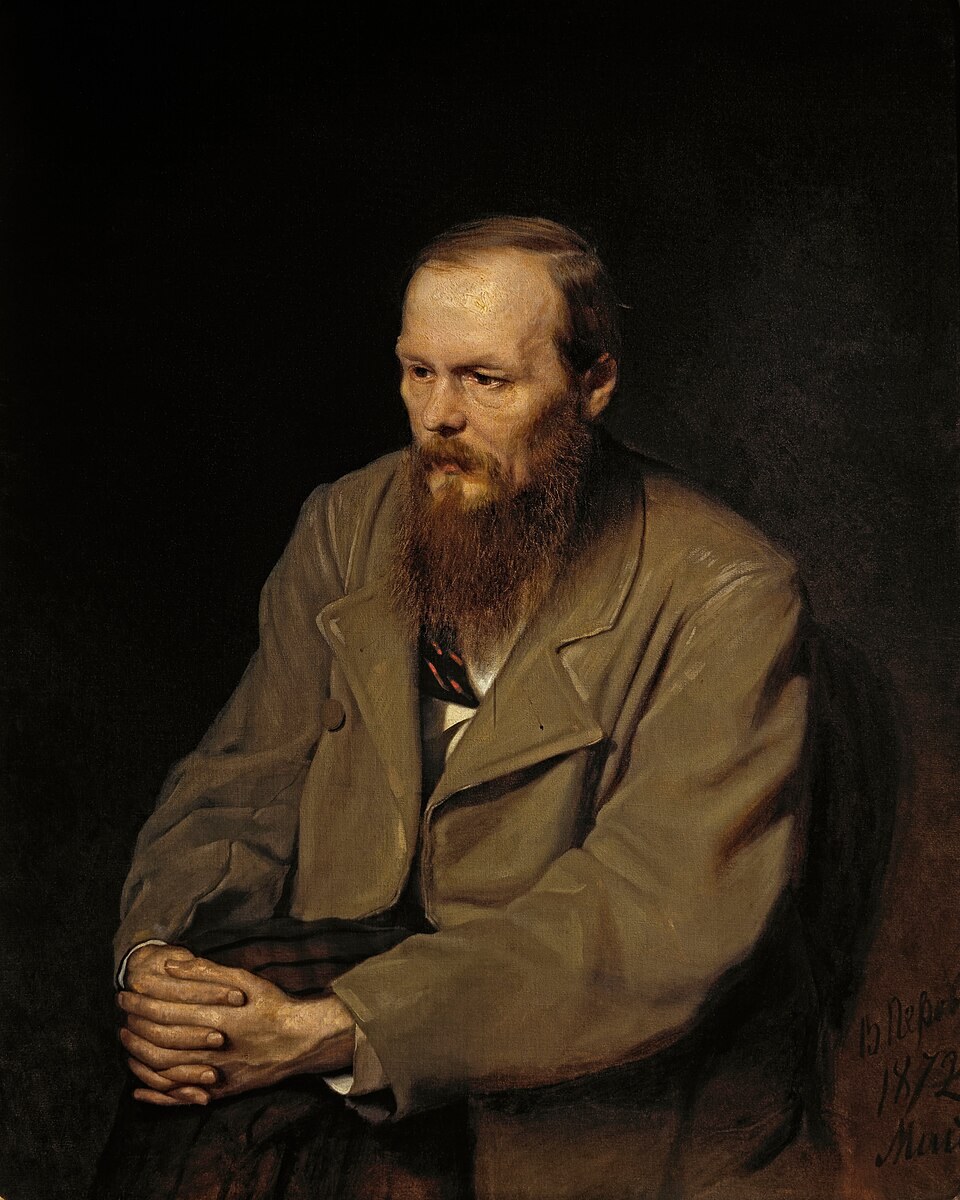


Portrait by Vasily Perov (1872), Tretyakov Gallery, via Wikimedia Commons, public domain. · Photograph by Joe Loong (Tech@State: Moneyball Diplomacy, June 2013), CC BY-SA 2.0. Background removed for the portrait above. · Photograph by Christopher Michel (March 18, 2016), CC BY-SA 4.0. Cropped from the original. Background removed for the portrait above.


.jpg)
An estimate is an inference.
Yours can be measured.
Thirty questions, scored against general-population benchmarks. Your score, your percentile, your ability breakdown and a printable IIF certificate.
Find your IQ score now! →