



What is Ray Kurzweil’s IQ?
No IQ score has been published. The only IQ number near his name is a rival’s remark about his theory.
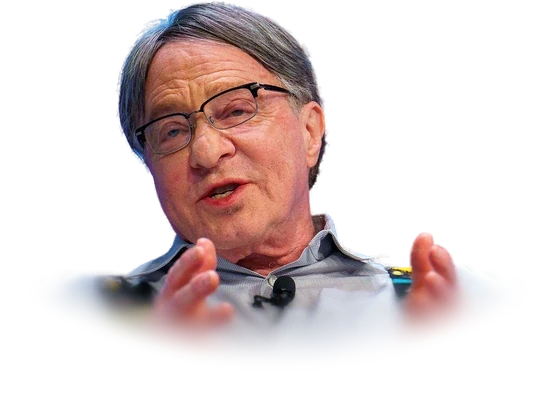
Ray Kurzweil’s IQ has never been published, and our Ray Kurzweil IQ estimate is 135–150. The only IQ number near his name is not a score: Mitch Kapor called his singularity theory “intelligent design for the IQ 140 people” in 2007. We placed him from his record: MIT, a 1965 science-fair win, a reading machine for blind people and the 1999 National Medal of Technology and Innovation.
Ray Kurzweil’s estimated IQ
- Wikipedia and Fortune’s 2007 profile give no IQ or test score for him. The one IQ number in print near his name is Mitch Kapor’s “IQ 140”, and it is a figure of speech about a theory.
- At 15 he wrote his first computer program (1963). In 1965 he played a piece composed by a computer he built on the CBS show I’ve Got a Secret, won first prize at the International Science Fair and was a national winner of the Westinghouse Talent Search (Wikipedia).
- He earned a B.Sc. in computer science and literature at MIT in 1970. In 1974 he founded Kurzweil Computer Products, which developed an omni-font optical character recognition system and a reading machine for blind people (Wikipedia).
- His honors include the 1999 National Medal of Technology and Innovation, the 2001 Lemelson–MIT Prize, election to the National Academy of Engineering in 2001, the National Inventors Hall of Fame in 2002 and 21 honorary doctorates (Wikipedia).
Inventing and starting companies is not the same as scoring on a test, and a long record can reflect drive and funding as well as ability. Much of his public work is about the future, which no test measures. The range is wide on purpose. It is not a measurement of him.
- Born
- February 12, 1948, Queens, New York
- Known for
- Reading machine, music synthesizers, books on AI and the singularity
- Education
- B.Sc., MIT, computer science and literature, 1970
- 1965
- International Science Fair first prize; Westinghouse Talent Search national winner
- Top honor
- National Medal of Technology and Innovation, 1999
- Other honors
- Lemelson–MIT Prize 2001; National Inventors Hall of Fame 2002; 21 honorary doctorates
- Employer
- Google, since December 2012 (Wikipedia)
- Documented IQ test
- None found
What an IQ of 135–150 actually means
Set the claim aside for a moment. If someone genuinely scored in this range, here is what that would represent.
| Score range | Classification | Share of people | What it indicates |
|---|---|---|---|
| 85 – 114 | Average | ~68% | The range most people fall into. |
| 115 – 129 | Above average | ~13.6% | Roughly one person in seven. |
| 130 – 144 | Gifted | ~2% | The threshold most high-IQ societies use. |
| Above 144 | Highly gifted | ~0.1% | Figures above this range are extrapolated from the curve rather than measured. |
Percentages are approximate and describe a normal distribution. The same number means different things on tests with different standard deviations.
Thirty questions gives you a measured position on this exact scale — your score, your percentile and the ability breakdown behind it.
Find out in 30 minutes →Who Ray Kurzweil is
Who is Ray Kurzweil? Raymond Kurzweil was born on February 12, 1948, and grew up in Queens, New York. Wikipedia calls him an American computer scientist, author, entrepreneur, futurist and inventor. His parents had emigrated from Austria: his father was a concert pianist and his mother a visual artist. See all scientists on this site.
What is Ray Kurzweil’s education? He attended Martin Van Buren High School in Queens, then MIT, where he took a B.Sc. in computer science and literature in 1970. He met Marvin Minsky while still in high school. In 1968, in his second year at MIT, he started a college-matching software company and later sold it for $100,000 plus royalties (Wikipedia). See average IQ by education level.
What did he invent? In 1974 he founded Kurzweil Computer Products, which developed the first omni-font optical character recognition system, according to Wikipedia. He used it to build a reading machine for blind people. In 1984 his music company unveiled the Kurzweil K250 synthesizer, and in 2015 he received a Technical Grammy Award for it.
What is he known for now? He writes about artificial intelligence, life extension and the technological singularity, and he has worked at Google since December 2012. Douglas Hofstadter wrote of Kurzweil’s and Hans Moravec’s books that they mix “rubbish and good ideas”, “because these are smart people; they’re not stupid” (as quoted by Wikipedia).
 By Elora Mercer, Celebrity Research WriterFigures checked by Leon Falkner, Data & Research Analyst
Reviewed by Aarav Vardhan, Editor-in-Chief · Last reviewed November 2026

Ray Kurzweil: the documented record
The estimate above rests on this record. Every entry here is a matter of public fact, which is more than can be said for the number itself.
- February 12, 1948Born; grows up in Queens, New York.
- 1963Writes his first computer program at 15.
- 1965Plays a computer-composed piece on I’ve Got a Secret and wins first prize at the International Science Fair.
- 1970Takes a B.Sc. in computer science and literature at MIT.
- 1974Founds Kurzweil Computer Products.
- 1984Kurzweil Music Systems unveils the K250 synthesizer.
- 1999Receives the National Medal of Technology and Innovation from President Clinton.
- 2002Mitch Kapor bets $20,000 that no computer will show human-level consciousness by 2029.
- May 2007Fortune profile quotes Kapor’s “IQ 140 people” line.
- December 2012Joins Google full time.
Why no figure circulates
Following a claim back to its first appearance is the part almost nobody does — and it is what most people are actually asking.
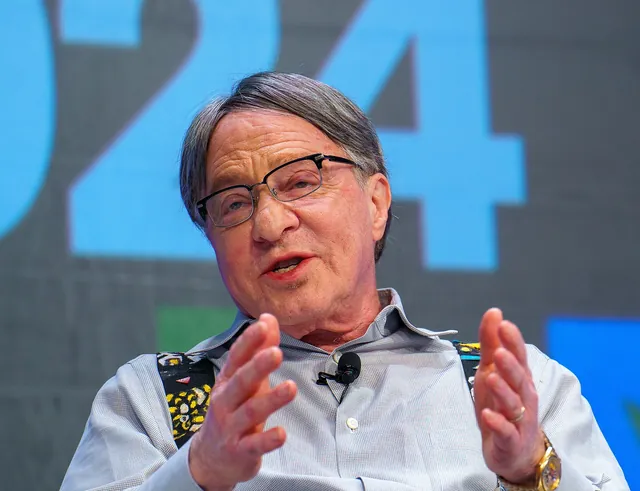
Has Ray Kurzweil’s IQ ever been published? No. Wikipedia gives no IQ, and neither do Fortune’s 2007 profile or IEEE Spectrum’s 2010 article on his forecasts. We found no test, date or examiner. Our range of 135–150 is placed from the record. For how such numbers spread, see where celebrity IQ numbers come from.
Where does “IQ 140” come from? From Mitch Kapor, a Lotus founder who made a $20,000 bet with Kurzweil in 2002 that no computer would show human-level consciousness by 2029. In Fortune’s 2007 profile Kapor called the singularity “intelligent design for the IQ 140 people”. It is a jab at a theory, so it says nothing about Kurzweil’s own score.
What does the record show? Wikipedia says he wrote his first program at 15, won the International Science Fair in 1965 and took an MIT degree in 1970. In 1974 he founded the company behind an omni-font reading machine. He received the National Medal of Technology and Innovation in 1999. Google hired him full time in December 2012.
How accurate are his predictions? Opinions differ. IEEE Spectrum reported in 2010 that neuroscientists and AI researchers called his 2029 timeline for a human-level AI highly unrealistic. Wikipedia says Forbes judged his 2009 forecasts mostly inaccurate, and that Bill Gates called him “the best at predicting the future of artificial intelligence”. We do not score forecasts as IQ.
How does he compare with other AI voices here? On this site Geoffrey Hinton and Yann LeCun are each 150–165, and Sam Altman is 138–150. Kurzweil’s 135–150 sits below the two researchers and level with Altman. For the debate itself, see is AI smarter than humans and can robots be self-aware.
How we read a number →Birth, family, school, MIT degree, the 1965 science fair, the companies, honors, the Google job and the criticism of his forecasts (Forbes on his 2009 predictions; Hofstadter and Gates quotes). It gives no IQ.
Prints Mitch Kapor’s remark that the singularity is “intelligent design for the IQ 140 people” and describes his $20,000 bet with Kurzweil (2002, human-level consciousness by 2029). It gives no IQ for Kurzweil.
Reports that neuroscientists and AI researchers call his timeline unrealistic and describes the $20,000 Long Bets wager with Kapor. It gives no IQ.
None of the three gives an IQ, a test, a date or an examiner.
Confirms the identity (American computer scientist, author, entrepreneur, futurist and inventor, born February 12, 1948) used for this page’s structured data.
Photograph taken at South by Southwest on March 10, 2024 by Jay Dixit (own work), shared under CC BY 4.0. We read the file page text; it carries the CC BY 4.0 template and no deletion notice.
How this section separates a published test result, a circulating figure and its own estimate.
The sources behind our estimate
The figures that circulate for Ray Kurzweil, what we were able to confirm, and where the two diverge.
People search “ray kurzweil iq”, “ray kurzweil iq score”, “is ray kurzweil smart”, “ray kurzweil education” and “ray kurzweil predictions”. No IQ number for him circulates widely. The one number tied to his name is “IQ 140”, from a rival’s quote about his theory.
We found no published IQ score for Ray Kurzweil. Wikipedia, Fortune’s 2007 profile and IEEE Spectrum’s 2010 article give none. Fortune quotes Mitch Kapor calling the singularity “intelligent design for the IQ 140 people”. That is a figure of speech about a theory, not a test result for Kurzweil.
These are the ends of our range, not a score. On this site Geoffrey Hinton and Yann LeCun are each 150–165, and Noam Chomsky is 150–170. None of them has a published score either.
Want a number that does hold up? Every figure on this page is somebody’s claim. Take the 30-question test and get a percentile you can check rather than a figure you have to trust.
Ray Kurzweil — frequently asked
What is Ray Kurzweil’s IQ?
No IQ score has been published for him. Our Ray Kurzweil IQ estimate is 135–150, placed from his record, not from a test. To see where your own score falls, take the IQ test.
What is Ray Kurzweil’s IQ score on record?
None. We found no test, date or examiner in Wikipedia, Fortune or IEEE Spectrum. See where celebrity IQ numbers come from.
Is Ray Kurzweil smart?
The record says yes in the ordinary sense: an MIT degree, a national science-fair win at 17, a reading machine and the 1999 National Medal of Technology and Innovation. None of that is a test score, and critics dispute many of his forecasts. Our range of 135–150 is an inference.
Where does “IQ 140” come from?
From Mitch Kapor’s remark in Fortune’s 2007 profile that the singularity is “intelligent design for the IQ 140 people”. Kapor was criticizing a theory. He gave no score for Kurzweil.
What is Ray Kurzweil’s education?
A B.Sc. in computer science and literature from MIT, awarded in 1970. He attended Martin Van Buren High School in Queens, and Wikipedia lists 21 honorary doctorates.
How accurate are Ray Kurzweil’s predictions?
Opinions differ. IEEE Spectrum reported in 2010 that experts called his 2029 timeline for a human-level AI highly unrealistic, and Wikipedia says Forbes rated his 2009 forecasts mostly inaccurate. Bill Gates called him “the best at predicting the future of artificial intelligence”.
How does Ray Kurzweil compare with Geoffrey Hinton and Yann LeCun?
On this site Geoffrey Hinton and Yann LeCun are each 150–165. Kurzweil’s 135–150 is lower, and all three are estimates with no published test behind them.
How rare is an IQ of 135 to 150?
On the usual scale (mean 100, SD 15), 135 is about the 99.0th percentile, so about 1 person in 102 scores higher. 150 is about the 100.0th percentile, or about 1 in 2,331. Those are our arithmetic from the normal curve for our range, not results. See the IQ percentile calculator.
How does my IQ compare with Ray Kurzweil?
You can find out in about fifteen minutes. The IQ Metrics assessment is 30 questions, scored on the same 100-mean scale used throughout this page, so your result and the estimate above are at least expressed in the same units — one measured, one inferred. Once you have a number, the leaderboard shows where it would sit, and how we score and norm it explains the benchmarking.
Where does this estimate come from?
From the documented record rather than a test — the method is named above and set out in full under how we read a number. Compare it against the other scientists profiles, starting with Albert Einstein.
- Take the 30-question IQ test — get a measured score and percentile of your own
- Average IQ by country — how the scale behaves across populations
- How IQ Metrics scores its assessment — the method behind our own number
- More on how IQ testing works — reliability, error and what a score can and cannot say
- More scientists profiles — same field, same method
More scientists
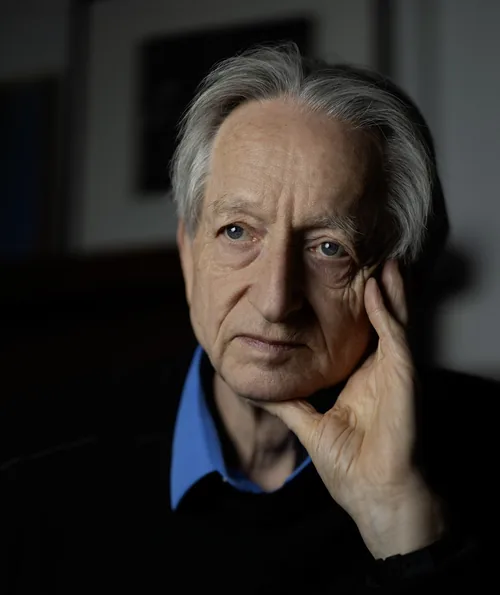

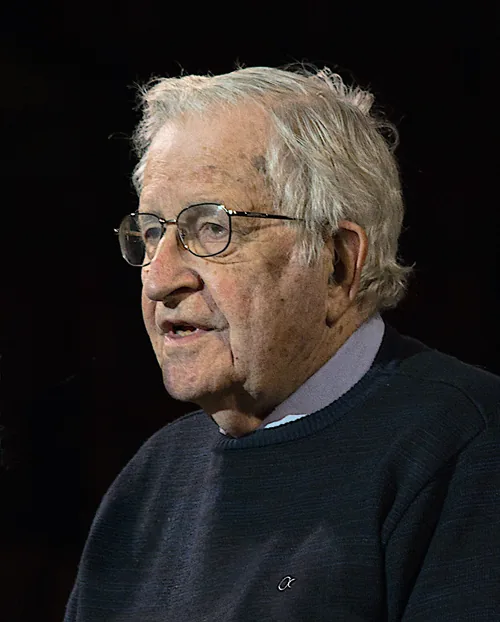
Photograph by Christopher Michel (Cmichel67) (May 13, 2026), CC BY-SA 4.0. Background removed for the portrait above. · Photograph of Yann LeCun by Jérémy Barande / École polytechnique (June 24, 2024), CC BY-SA 2.0. Background removed for the portrait above. · Photograph by Σ (Amherst, Massachusetts, April 13, 2017), retouched by Wugapodes and Jonnmann, CC BY-SA 4.0. Background removed for the portrait above.


An estimate is an inference.
Yours can be measured.
Thirty questions, scored against general-population benchmarks. Your score, your percentile, your ability breakdown and a printable IIF certificate.
Find your IQ score now! →