



What is George R. R. Martin’s IQ?
Two Northwestern degrees, four Hugo Awards and the Wild Cards series: the record is long, and no IQ test is in it.
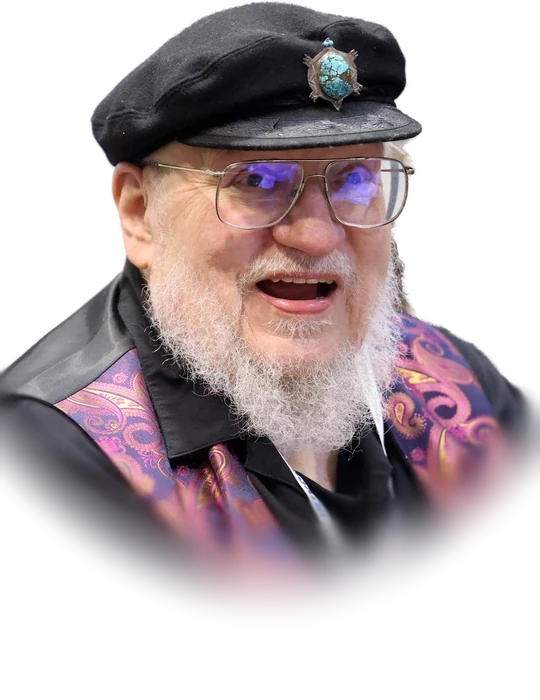
No George R. R. Martin IQ test result has been published, and no George RR Martin IQ score circulates on any page we found. What is documented — a summa cum laude B.S. and an M.S. in journalism from Northwestern (1970, 1971), four Hugo Awards for his fiction, two Nebulas and a Bram Stoker Award — supports an estimated IQ of 130–150: an inference, not a measurement.
George R. R. Martin’s estimated IQ
- A B.S. in journalism from Northwestern University in 1970, graduating summa cum laude, and an M.S. in journalism there in 1971 (his official Life & Times page and Contemporary Authors); Medill’s Hall of Achievement page lists the same degrees, BSJ70 and MSJ71, without the honor.
- Four Hugo Awards for his fiction: Best Novella for “A Song for Lya” (1975), Best Novelette for “Sandkings” and Best Short Story for “The Way of Cross and Dragon” (both 1980), and Best Novella for “Blood of the Dragon” (1997).
- Two Nebula Awards for Best Novelette, for “Sandkings” and “Portraits of His Children” (SFWA labels them by publication year, 1979 and 1985); a Bram Stoker Award for long fiction in 1988 for “The Pear-Shaped Man,” tied with Alan Rodgers; and the 1989 World Fantasy Award for Best Novella, “The Skin Trade.”
- A Game of Thrones (Bantam Spectra, August 1, 1996), the first novel of A Song of Ice and Fire, won the 1997 Locus Award for Best Fantasy Novel; he also edited the Wild Cards shared-world series, whose first volume, Wild Cards: A Mosaic Novel, Bantam published in 1986.
- Teaching and academic honors: instructor in journalism at Clarke College in Dubuque, Iowa, from 1976 to 1978 and writer-in-residence in 1978–79; the Medill Hall of Achievement in 2015; an honorary Doctor of Humane Letters from Northwestern in 2021.
This George RR Martin estimated IQ is an inference, not a measurement: fiction awards and series-building reward craft, persistence and the taste of readers and peers, a journalism degree is a weaker filter than the research doctorates behind some peers here, and no SAT, ACT or other test score for him has been published. The range is wide for that reason, and the true value could fall outside it in either direction.
- Born
- September 20, 1948, Bayonne, New Jersey; living as of October 2026
- Education
- Northwestern University (Medill): B.S. in journalism, 1970, summa cum laude; M.S. in journalism, 1971
- Early career
- VISTA communications coordinator, Chicago, 1972–74; Continental Chess Association tournament director, 1973–75; Clarke College journalism instructor, 1976–78, writer-in-residence, 1978–79
- Awards for fiction
- Four Hugos (1975, 1980 twice, 1997); two Nebulas (stories of 1979 and 1985); Bram Stoker Award (1988, tied); World Fantasy Award for Best Novella (1989)
- Major works
- Dying of the Light (1977); Fevre Dream (1982); A Game of Thrones (August 1, 1996), first book of A Song of Ice and Fire; editor of the Wild Cards series (first volume, 1986)
- Honors
- Time 100 (2011); World Fantasy Life Achievement (2012); Medill Hall of Achievement (2015); Northwestern honorary Doctor of Humane Letters (2021)
- Circulating IQ figure
- None found on any page we opened
- Published IQ test result
- None found
What an IQ of 130–150 actually means
Set the claim aside for a moment. If someone genuinely scored in this range, here is what that would represent.
| Score range | Classification | Share of people | What it indicates |
|---|---|---|---|
| 85 – 114 | Average | ~68% | The range most people fall into. |
| 115 – 129 | Above average | ~13.6% | Roughly one person in seven. |
| 130 – 144 | Gifted | ~2% | The threshold most high-IQ societies use. |
| Above 144 | Highly gifted | ~0.1% | Figures above this range are extrapolated from the curve rather than measured. |
Percentages are approximate and describe a normal distribution. The same number means different things on tests with different standard deviations.
Thirty questions gives you a measured position on this exact scale — your score, your percentile and the ability breakdown behind it.
Find out in 30 minutes →Who George R. R. Martin is
George R. R. Martin, the American author of fantasy, science fiction and horror, was born on September 20, 1948, in Bayonne, New Jersey, and is living as of October 2026 (the Not A Blog page on his official site lists an entry dated September 3, 2026). Wikipedia gives his birth name as George Raymond Martin. He arrived at Northwestern University in fall 1966, received a B.S. in journalism in 1970, graduating summa cum laude, and completed an M.S. in journalism in 1971, according to his official Life & Times page; Medill’s Hall of Achievement page lists the same degrees, BSJ70 and MSJ71, and Contemporary Authors gives the same pair with the summa cum laude honor. His first professional sale, “The Hero,” was made in 1970, at age 21, to Galaxy, where it appeared in February 1971.
Before the novels came a run of varied jobs. According to Contemporary Authors, he worked in 1972–74 as a communications coordinator for the Cook County Legal Assistance Foundation in Chicago, through the Volunteers in Service to America (VISTA) program, and in 1973–75 as a tournament director in Chicago for the Continental Chess Association. He was an instructor in journalism at Clarke College in Dubuque, Iowa, from 1976 to 1978 and writer-in-residence there in 1978–79 (his official site; Northwestern Magazine gives 1976 to 1979). His first novel, Dying of the Light, was published by Pocket Books in 1977 (Northwestern Magazine), and Fevre Dream, a vampire novel, by Poseidon Press in 1982 (Wikipedia).
The awards run across four decades. His official site lists Hugo Awards for “A Song for Lya” (Best Novella, 1975), “Sandkings” (Best Novelette) and “The Way of Cross and Dragon” (Best Short Story), both in 1980, and “Blood of the Dragon” (Best Novella, 1997); Nebula Awards for Best Novelette for “Sandkings” (1979) and “Portraits of His Children” (1985), dated by publication year; a Bram Stoker Award for long fiction in 1988 for “The Pear-Shaped Man,” tied with Alan Rodgers’s “The Boy Who Came Back from the Dead”; and World Fantasy Awards for “The Skin Trade” (Best Novella, 1989), a Life Achievement award in 2012 and the anthology Dangerous Women, edited with Gardner Dozois (2014). A Game of Thrones, the first book of A Song of Ice and Fire, was published by Bantam Spectra on August 1, 1996, and won the 1997 Locus Award for Best Fantasy Novel. He also edited Wild Cards, a shared-world series that Northwestern Magazine’s 2016 feature counted at more than 20 books; Bantam published Wild Cards: A Mosaic Novel in 1986.
Northwestern has honored him as an alumnus: he was inducted into the Medill Hall of Achievement in 2015, and Northwestern Now reports an honorary Doctor of Humane Letters in 2021. Read together, the record anchors a range rather than a number: an estimated IQ of 130–150 for George R. R. Martin, a notch above Stephen King (125–145), another American genre author whose range rests on a bachelor’s degree, and below Isaac Asimov (155–170), a fellow science-fiction author whose range rests on a completed doctorate. Its top edge meets the bottom of Tolkien’s 150–165; with no test behind any of these, the gaps are smaller than the method can resolve. Group averages, such as average IQ by education level, describe groups, not any one author, and whether Martin reaches what people call a genius IQ level is a question only a test could answer.
 By Elora Mercer, Celebrity Research WriterFigures checked by Leon Falkner, Data & Research Analyst
Reviewed by Aarav Vardhan, Editor-in-Chief · Last reviewed August 2026
_(cropped).jpg)
George R. R. Martin: the documented record
The estimate above rests on this record. Every entry here is a matter of public fact, which is more than can be said for the number itself.
- 1948Born on September 20 in Bayonne, New Jersey.
- 1970–71Earns a B.S. in journalism (summa cum laude, 1970) and an M.S. (1971) from Northwestern; his first professional sale, “The Hero,” appears in Galaxy in February 1971.
- 1975“A Song for Lya” wins the Hugo Award for Best Novella at Aussiecon in Melbourne.
- 1977Pocket Books publishes his first novel, Dying of the Light.
- 1980Wins Hugo Awards for “Sandkings” (Best Novelette) and “The Way of Cross and Dragon” (Best Short Story) at Noreascon Two in Boston.
- 1988Wins the Bram Stoker Award for long fiction for “The Pear-Shaped Man,” tied with Alan Rodgers.
- 1996Bantam Spectra publishes A Game of Thrones on August 1.
- 1997“Blood of the Dragon” wins the Hugo Award for Best Novella at LoneStarCon 2 in San Antonio.
- 2011Included on the Time 100 list of the most influential people in the world.
- 2015Inducted into the Medill Hall of Achievement at Northwestern.
Why no figure circulates
Following a claim back to its first appearance is the part almost nobody does — and it is what most people are actually asking.
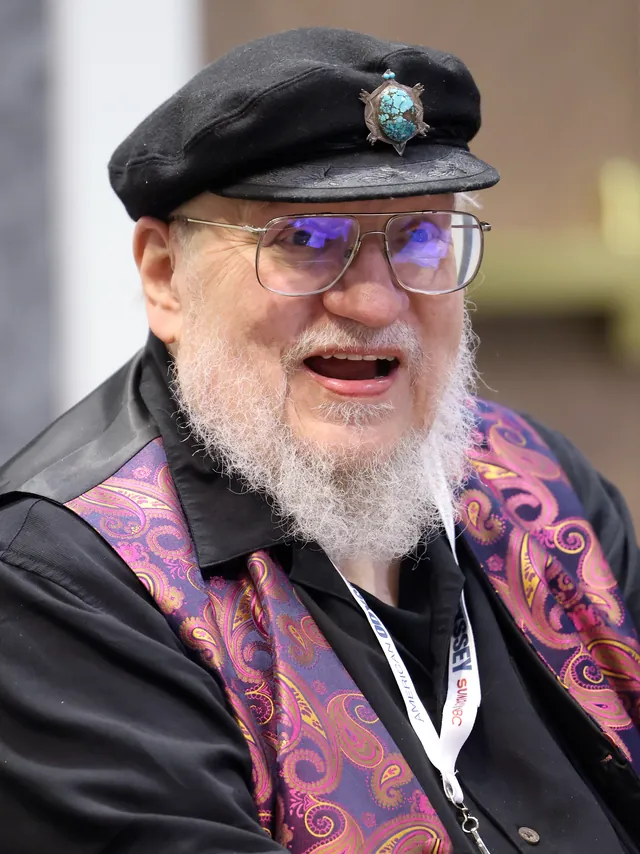
No George R. R. Martin IQ score circulates on any page we found, so there is nothing to trace to a source. Searching for “George R. R. Martin IQ,” “George RR Martin IQ score” or “what is George R. R. Martin’s IQ” returns his Wikipedia entry, biography sites and a JobCannon page that gives an INTP personality type, with its trait scores footnoted as estimated from the type. The celebrity lists we opened, sociosite.net’s famous-person IQ page and The Scientific Place’s celebrities page, have no entry for him. For how numbers like these usually get attached to famous names, see where celebrity IQ numbers come from; for Martin, that process has not started. The name is typed as George R. R. Martin, George RR Martin or George R R Martin, and all three searches end the same way.
The nearest thing to a first-person statement is not a score. In Northwestern Magazine (Spring 2016) he recalls arriving at Northwestern in fall 1966 after having always been “one of the smartest kids in my class,” then finding himself among other bright students and teachers less easily impressed. That is a memory of school rank, not a test result. The same feature says he formed Northwestern’s first chess club, and Contemporary Authors lists him as a Continental Chess Association tournament director in Chicago from 1973 to 1975; he ran tournaments, but we found no chess rating for him as a player, so chess adds nothing to the range (see what chess ratings can and cannot say about IQ).
Labels from critics are not tests either. Medill’s Hall of Achievement page notes that in 2005 Lev Grossman of Time called him “the American Tolkien,” and that Time later named him to its 2011 list of the most influential people in the world; the first describes a genre and the second influence, and neither measures reasoning. Opinions about someone’s intelligence, admiring or otherwise, are not test results. J.R.R. Tolkien’s profile here (150–165) uses the same achievement-and-academic-record method and sits a notch higher; the label itself moves neither range. For a sense of what the upper part of Martin’s range means, see what an IQ of 140 means.
What would settle the question is a named test, an examiner and a date, or a first-person statement of a score. We found none. His official site, the Medill and Northwestern pages, Contemporary Authors and Wikipedia describe schooling, jobs, books and awards, and none mentions an IQ test. The usual pattern on this site, where the circulating number runs above what the record supports, cannot apply when no number circulates; the only question is how far the documented record reaches, and the answer is a range, not a score. Anyone curious about their own verbal reasoning can try a timed verbal IQ test, but a score for someone else has to come from a record, and the records for Martin contain none.
How we read a number →Life & Times: born September 20, 1948 in Bayonne, New Jersey; B.S. in journalism from Northwestern in 1970, graduating summa cum laude; M.S. in journalism in 1971; first professional sale, “The Hero,” to Galaxy (February 1971 issue); journalism instructor at Clarke College 1976–78 and writer-in-residence 1978–79. Award pages: Hugo wins for “A Song for Lya” (1975), “Sandkings” and “The Way of Cross and Dragon” (1980) and “Blood of the Dragon” (1997); Nebula wins for “Sandkings” (1979) and “Portraits of His Children” (1985); Bram Stoker win for “The Pear-Shaped Man” (1988, tied with Alan Rodgers); World Fantasy wins for “The Skin Trade” (1989), Life Achievement (2012) and Dangerous Women (2014). Not A Blog lists entries dated through September 3, 2026. No page mentions IQ.
Medill: B.S. in journalism 1970 (BSJ70) and M.S. in journalism 1971 (MSJ71); Hall of Achievement induction in 2015; in 2005 Lev Grossman of Time called him “the American Tolkien”; named to the 2011 Time 100. It does not mention summa cum laude. Northwestern Now: B.S. from Medill in 1970, M.S. in 1971, Hall of Achievement 2015, and an honorary Doctor of Humane Letters in 2021. Neither mentions IQ.
Says he arrived in fall 1966, played chess in the Scott Hall grill and later formed Northwestern’s first chess club, was nudged by history professor Franklin Scott to get his work out, taught journalism at Clarke College (now Clarke University) from 1976 to 1979, sold Dying of the Light (Pocket Books, 1977), and developed Wild Cards into a series of more than 20 books. Quotes him recalling that he had always been “one of the smartest kids in my class” before finding himself among other bright students. Scholarships and summa cum laude are not on the page. No test score.
Born September 20, 1948, Bayonne, NJ; Northwestern University, B.S. (summa cum laude) 1970, M.S. 1971; VISTA communications coordinator for the Cook County Legal Assistance Foundation, Chicago, 1972–74; Continental Chess Association tournament director in Chicago, 1973–75; Clarke College instructor in journalism 1976–78 and writer-in-residence 1978–79; series editor of Wild Cards (Wild Cards: A Mosaic Novel, Bantam, 1986); lists a Bram Stoker Award for The Pear-Shaped Man and a World Fantasy Award for The Skin Trade (1989). Its Hugo years follow publication (1974 for “A Song for Lya”), unlike the ceremony years used here. No IQ.
List the finalists: “A Song for Lya” (Best Novella, Aussiecon One, Melbourne, August 14–17, 1975); “Sandkings” (Best Novelette) and “The Way of Cross and Dragon” (Best Short Story), Noreascon Two, Boston, August 29 – September 1, 1980; “Blood of the Dragon” (Best Novella), LoneStarCon 2, San Antonio, August 28 – September 1, 1997. The wins rest on Martin’s own site and the Wikipedia Worldcon pages.
Wikidata: “American writer and television producer (born 1948),” born 1948-09-20; the Q-id is the author, not the record producer, and no date of death was visible in the first part of the item. Wikipedia: infobox lists him as living, age 78; birth name George Raymond Martin; A Game of Thrones published August 1, 1996 by Bantam Spectra and winner of the 1997 Locus Award for Best Fantasy Novel; Fevre Dream (Poseidon Press, 1982); the Worldcon pages list the Hugo winners; the Nebula page marks Sandkings (1979) and Portraits of His Children (1985) as winners and says SFWA labels each award by the work’s publication year; the Stoker page lists the story as 1987 (his site and SFADB say 1988); the World Fantasy pages give 1989 for The Skin Trade and 2012 for Life Achievement. None mentions IQ.
Lists “The Pear-Shaped Man” by George R. R. Martin (Omni, October 1987) and “The Boy Who Came Back from the Dead” by Alan Rodgers as tied winners, which supports the 1988 date and the tie on Martin’s own site. The page labels the category Novelette rather than Long Fiction.
The first two have no entry for George R. R. Martin. JobCannon’s page (© 2026) is titled with an INTP personality type, notes that its scores are estimated from the type, and never uses the word IQ.
No test, score or self-reported IQ appears on his official site, the Medill and Northwestern pages, Contemporary Authors, Wikipedia or Wikidata, or in any aggregator page we found. The nearest first-person remark is his recollection of being one of the smartest kids in his class, in Northwestern Magazine, which is not a score.
The sources behind our estimate
The figures that circulate for George R. R. Martin, what we were able to confirm, and where the two diverge.
No specific IQ figure for George R. R. Martin turned up on any page we opened. Searches for “George R. R. Martin IQ,” his estimated IQ and whether he is a genius returned his biographies, a JobCannon personality-type page and generic celebrity IQ lists, and none of the pages we opened prints a number for him.
No IQ test result and no self-reported score appears on any page we read — his official site (the Life & Times page and the award pages), Medill’s Hall of Achievement profile, Northwestern Magazine (Spring 2016) and Northwestern Now, Contemporary Authors, Wikipedia or Wikidata. The celebrity lists we opened, sociosite.net’s famous-person IQ page and The Scientific Place’s celebrities page, have no entry for him. JobCannon’s page gives an INTP personality type and notes that its trait scores are estimated from that type; it prints no IQ.
With no circulating figure to set against it, the spread is only the width of our own range. Read the 20 points as uncertainty, not as two scores: high, probably well above average, and not measured.
Want a number that does hold up? Every figure on this page is somebody’s claim. Take the 30-question test and get a percentile you can check rather than a figure you have to trust.
George R. R. Martin — frequently asked
What is George R. R. Martin’s IQ?
No IQ test result for George R. R. Martin has been published, and no George RR Martin IQ score circulates on any page we found. IQ Metrics estimates 130–150, inferred from his summa cum laude Northwestern degrees (B.S. 1970, M.S. 1971), four Hugo Awards for his fiction and other awards. It is an inference, not a measured score.
Did George R. R. Martin ever take an IQ test?
There is no public record of one. His official site, Medill’s Hall of Achievement page, Northwestern Magazine and Contemporary Authors describe schooling, jobs and awards, and none mentions an IQ test or a score. Whether he took a private test is unknown, so any George R. R. Martin IQ you see online is not a documented result.
Is George R. R. Martin a genius?
No IQ test has labeled him one, and “genius” is not a documented status. What is documented is a summa cum laude journalism degree, an M.S., four Hugo Awards for fiction, two Nebulas and a Bram Stoker Award. Those support an estimated IQ level of 130–150: high, but not certified. A genius label would need a named, proctored test.
How does George RR Martin’s estimated IQ compare with Stephen King’s or J.R.R. Tolkien’s?
Martin’s estimated range, 130–150, sits a notch above Stephen King’s 125–145 and meets J.R.R. Tolkien’s 150–165 only at its top edge. King’s range rests on a bachelor’s degree, Martin’s on bachelor’s and master’s degrees from Northwestern. All three are inferences from achievement, not test results, so the gaps are smaller than the method can resolve.
Where did George R. R. Martin go to college?
George R. R. Martin attended Northwestern University, where he received a B.S. in journalism in 1970, graduating summa cum laude, and an M.S. in journalism in 1971, according to his official site. Medill’s Hall of Achievement page lists the same degrees, and Northwestern awarded him an honorary Doctor of Humane Letters in 2021.
How many Hugo, Nebula and Bram Stoker awards has George R. R. Martin won for his fiction?
Four of the Hugo Awards on his official site are for his stories: 1975, 1980 (two) and 1997. He has won two Nebula Awards for Best Novelette (stories of 1979 and 1985) and one Bram Stoker Award, for “The Pear-Shaped Man” in 1988, tied with Alan Rodgers. Awards record achievement, not IQ.
Do the Time 100 list and the “American Tolkien” label show George R. R. Martin’s IQ level?
No. Time named him to its 2011 Time 100 list of the most influential people, and in 2005 its critic Lev Grossman called him “the American Tolkien,” according to Medill’s Hall of Achievement page. Those describe influence and genre, not reasoning. The documented basis for his estimated IQ of 130–150 is his Northwestern record and his awards.
How does my IQ compare with George R. R. Martin?
You can find out in about fifteen minutes. The IQ Metrics assessment is 30 questions, scored on the same 100-mean scale used throughout this page, so your result and the estimate above are at least expressed in the same units — one measured, one inferred. Once you have a number, the leaderboard shows where it would sit, and how we score and norm it explains the benchmarking.
Where does this estimate come from?
From the documented record rather than a test — the method is named above and set out in full under how we read a number. Compare it against the other writers profiles, starting with Voltaire.
- Take the 30-question IQ test — get a measured score and percentile of your own
- Average IQ by country — how the scale behaves across populations
- How IQ Metrics scores its assessment — the method behind our own number
- More on how IQ testing works — reliability, error and what a score can and cannot say
- More writers profiles — same field, same method
More writers
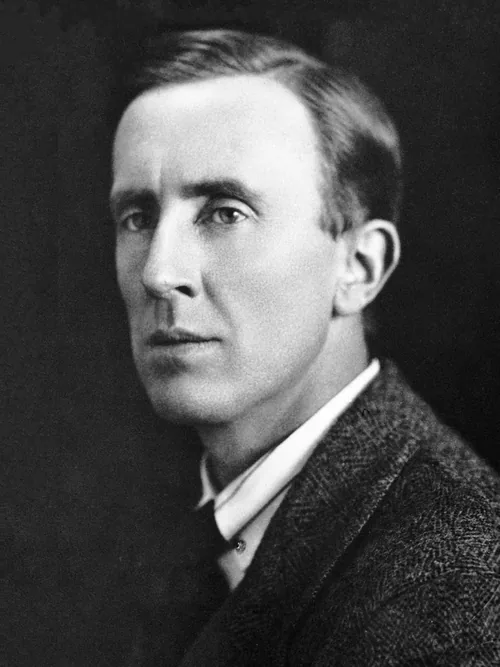

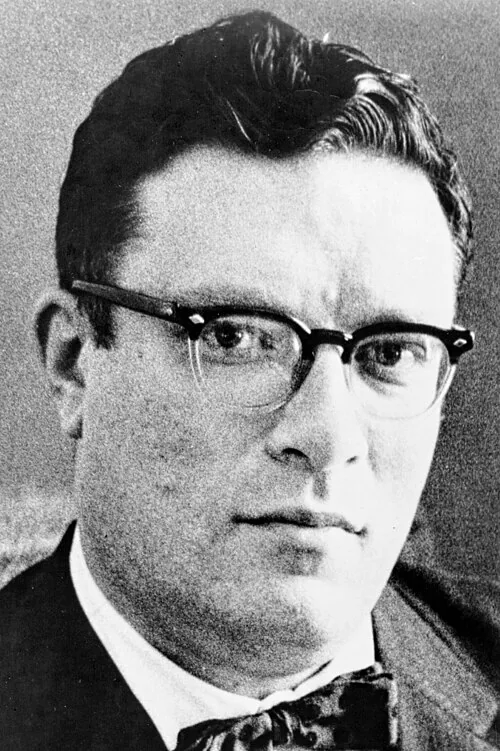
Photograph by an unknown photo studio, from the Commons file (c. 1925–26), public domain in the UK (author unknown, term expired) and the US (published before 1928). Background removed for the portrait above. · Photograph by Kevin Payravi (Toronto International Film Festival, September 6, 2024), CC BY-SA 4.0. Cropped and with background removed for the portrait above. · Photograph by Phillip Leonian for the New York World-Telegram & Sun (before 1959), public domain. Background removed for the portrait above.

.jpg)
.jpg)
An estimate is an inference.
Yours can be measured.
Thirty questions, scored against general-population benchmarks. Your score, your percentile, your ability breakdown and a printable IIF certificate.
Find your IQ score now! →