Do humans have mirror neurons? 54 recording studies counted
We counted every published recording of cells that fire when an animal or a person acts and when they watch the same act: 54 papers, 1992 to 2026, in monkeys, rats, a mouse, songbirds and people.

By Leon Falkner, Data & Research Analyst · Reviewed by Aarav Vardhan, Editor-in-Chief · Published 21 November 2026 · 17 min read
About this study
- Report type
- Data study: our ledger of every published mirror-neuron recording we could find, with cell counts
- Data
- 54 papers (57 rows): 45 in macaques, 2 in people, 7 in a marmoset, rats, a mouse and songbirds; counts printed for 39 rows
- Sources
- Kilner and Lemon 2013 Table 1 (CC BY 3.0), PubMed, PubMed Central, OpenAlex (CC0), Wikimedia page views (CC0), papers cited by DOI
- As of
- 21 November 2026 (next update May 2027)
- Version
- 2026.11
- Sources
- 27
We found two studies that recorded single cells in people responding to both doing and watching an action, and 52 in animals. That is 54 recording papers, 1992 to 2026. Where both counts are printed, 29.9% of 9,293 cells were called mirror cells; in people, 68 of 1,177 (5.8%). IQ Metrics Research, 21 November 2026.
01 Key findings
- Two recording studies in people. 68 of 1,177 cells in 21 patients matched watching and doing (5.8%, 2010); two people with paralysis showed shared single-unit tuning in parietal cortex (2026). 45 papers were done in macaques.IQ Metrics ledger; Mukamel 2010; Bougou 2026
- The share is not one number. 29.9% of 9,293 cells were called mirror in 28 rows, but rows run from 5.8% to 70.1%: parietal 16.8%, F5 31.5%, M1 and dorsal premotor 58.3% (medians).IQ Metrics calculation
- The F5 share rose from 20.0% to 48.2% between rows of 1992-2005 and 2009-2014; the review that tabled them attributes most of it to how cells were sampled.Kilner and Lemon 2013
- The claim that grew has the fewest recordings. Empathy is mentioned by 18.3% of mirror-neuron papers (11.9% in 1996-2008, 21.5% in 2017-2025); 2 recording studies tested another’s pain or distress, both in rats.OpenAlex; IQ Metrics ledger
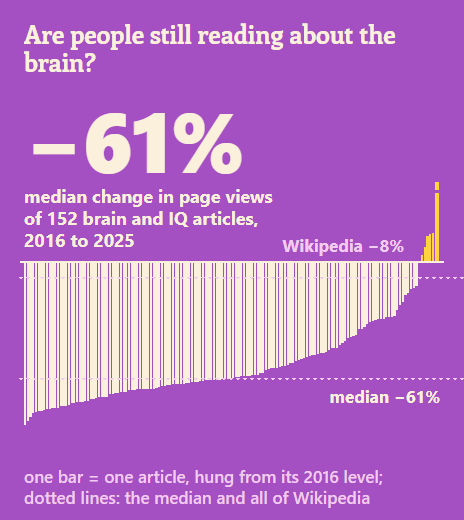
- Attention is falling. Papers peaked at 223 in 2012 and were 93 in 2022; English Wikipedia views fell 45.9% from 2016 to 2025, against 8.1% for all of English Wikipedia.OpenAlex; Wikimedia
02 Do humans have mirror neurons? The numbers to quote
IQ Metrics Research counted 54 papers (57 rows, one per paper and brain area) that recorded individual nerve cells while an animal or person both did and watched an act, published from 1992 to 2026 [1] [2]. Two were done in people: 21 patients with epilepsy in 2010 and two people with paralysis in 2026. 45 were done in macaque monkeys, and 7 in a marmoset, rats, a mouse and songbirds. Mirror neurons are cells that fire both when an animal does an action and when it watches another do a similar one; this page counts how many such cells have been recorded, where, and what the recordings can and cannot show.
recording papers (57 rows) in the ledger, 1992-2026: 22 are in Kilner and Lemon’s 2013 table and 32 were added by IQ Metrics.
IQ Metrics ledgerpapers recorded single cells in people (2010 and 2026); 45 were in macaque monkeys.
IQ Metrics ledgerof 9,293 cells were called mirror cells in the 28 rows that print both counts (median 29.1%, range 5.8% to 70.1%).
IQ Metrics calculationcells matched watching and doing in the largest human sample: 21 patients, 5.8%.
Mukamel and colleagues 2010median share in parietal areas, F5 and M1 with dorsal premotor cortex (6, 15 and 5 rows).
IQ Metrics calculationmedian F5 share, 7 rows from 1992-2005 against 8 rows from 2009-2014; sampling is the likely cause.
IQ Metrics calculation; Kilner and Lemon 2013cell records printed across 39 rows; the same cells can appear in more than one paper, so this is not a count of different cells.
IQ Metrics ledgerrows showed hand, arm or object actions; the two rows on another’s pain or distress are both rats.
IQ Metrics codingpapers that mention mirror neurons also mention empathy (18.3%); the claim rose from 11.9% (1996-2008) to 21.5% (2017-2025).
OpenAlex, IQ Metrics calculationpapers a year that mention mirror neurons at the peak, against 93 in 2022 (-58.3%) and 168 in 2025.
OpenAlexEnglish Wikipedia views of the Mirror neuron article, 210,662 in 2016 to 113,955 in 2025 (all of English Wikipedia: -8.1%).
Wikimedia Analytics APIWhat this study does not say
This page counts published recordings and says what each kind of evidence can show. It does not say that mirror neurons do or do not explain empathy, imitation, language or any condition, it gives no advice and it prints no IQ for any person or group. “Found” always means in the sources we could read, a lower bound.
03 What is a mirror neuron, and what counts as a recording here?
A mirror neuron is a cell that fires both when an animal does an action, such as grasping, and when it watches another individual do a similar action. It was first described in a 1992 paper on monkey premotor cortex [24], and the two F5 papers of 1996 are in this ledger [1]. This page counts recording studies: papers in which cells were recorded while the same kind of act was done and watched, and whose authors call the cells mirror, mirror-like, matching or congruent. Brain imaging, field potentials, brain stimulation, lesions and models are not counted as recordings; they appear in the text as other kinds of evidence.
- Mirror neuron
- A cell that responds both when its owner does an action and when it watches or hears a similar one. Papers differ on how similar the two must be: strict (same action preferred in both) or broad (any response in both).
- Recording study
- A paper that recorded individual cells, units or calcium-imaged cells in a living animal or person who both did and watched (or heard) an act, and whose authors call them mirror, mirror-like, matching or congruent cells.
- Cell record
- One cell counted in one paper. The same cells can appear in several papers from one lab; the papers do not let us check, so totals are cell records, never different cells.
- Share
- Mirror cells divided by cells recorded, for rows where both numbers are printed. It depends on where the electrode went, which cells were searched and the authors’ rule, so it is not how common mirror cells are in the brain.
- F5
- A part of the macaque ventral premotor cortex, where mirror neurons were first found. The inferior parietal lobule (areas PFG and AIP) and M1 (primary motor cortex) are the other main sites in monkeys.
- Single unit and multiunit
- A single unit is one cell separated from the electrode signal; a multiunit is the pooled signal of several nearby cells. Some papers count both as “neurons” or “units”.
- Pooled share and prediction interval
- A random-effects average of the rows’ shares (IQ Metrics calculation) and the range where a new row would likely fall. It describes the published literature, not one brain.
04 How many mirror-neuron recording studies are there?
We found 54 recording papers from 1992 to 2026, 22 of them in Kilner and Lemon’s 2013 table and 32 added by IQ Metrics; 45 are macaque studies and 2 are in people. The 2013 review tabled 25 rows from 22 macaque papers, each with the number of cells recorded and the number called mirror [1]; 14 of those rows are in area F5. We read their table, searched PubMed with six printed queries (554 records screened) and looked up 22 named papers [2]. The ledger is a lower bound: a paper that does not call its cells mirror, or is not indexed in the way we searched, is missing.
54 recording papers, one square each: 45 in macaques and 2 in people
Every paper in the ledger, oldest first, coloured by species. 45 papers are macaque studies, 3 are rat, 2 songbird, 2 people, 1 marmoset and 1 mouse. A paper with two brain areas is one square. As of 21 November 2026.
54 papersone square = one paper
Source: IQ Metrics ledger [1] [2]
Data table
| paper | group | label | detail |
|---|---|---|---|
| p1 | Macaque monkey | di Pellegrino 1992 | F5 · macaque · both counts printed |
| p2 | Macaque monkey | Gallese 1996 | F5 · macaque · both counts printed |
| p3 | Macaque monkey | Rizzolatti 1996 | F5 · macaque · both counts printed |
| p4 | Macaque monkey | Umilta 2001 | F5 · macaque · both counts printed |
| p5 | Macaque monkey | Kohler 2002 | F5 · macaque · both counts printed |
| p6 | Macaque monkey | Ferrari 2003 | F5 · macaque · both counts printed |
| p7 | Macaque monkey | Keysers 2003 | F5 · macaque · no count in the text we could read |
| p8 | Macaque monkey | Ferrari 2005 | F5 · macaque · both counts printed |
| p9 | Macaque monkey | Fogassi 2005 | IPL · macaque · both counts printed |
| p10 | Macaque monkey | Tkach 2007 | M1, PMd · macaque · both counts printed |
| p11 | Macaque monkey | Fujii 2007 | IPS, PM3 · macaque · cells recorded printed |
| p12 | Macaque monkey | Rozzi 2008 | IPL · macaque · both counts printed |
| p13 | Songbird | Prather 2008 | HVC (forebrain) · songbird · no count in the text we could read |
| p14 | Macaque monkey | Kraskov 2009 | F5 · macaque · both counts printed |
| p15 | Macaque monkey | Caggiano 2009 | F5 · macaque · both counts printed |
| p16 | Macaque monkey | Shepherd 2009 | LIP · macaque · both counts printed |
| p17 | Macaque monkey | Rochat 2010 | F5 · macaque · both counts printed |
| p18 | Macaque monkey | Bonini 2010 | F5, IPL · macaque · both counts printed |
| p19 | Macaque monkey | Dushanova 2010 | M1 · macaque · both counts printed |
| p20 | Macaque monkey | Ishida 2010 | VIP · macaque · both counts printed |
| p21 | Macaque monkey | Yamazaki 2010 | IPL · macaque · no count in the text we could read |
| p22 | People | Mukamel 2010 | SMA, ACC, medial temporal lobe · people · both counts printed |
| p23 | Macaque monkey | Caggiano 2011 | F5 · macaque · both counts printed |
| p24 | Macaque monkey | Caggiano 2012 | F5 · macaque · both counts printed |
| p25 | Macaque monkey | Caggiano 2013 | F5 · macaque · both counts printed |
| p26 | Macaque monkey | Vigneswaran 2013 | M1 · macaque · both counts printed |
| p27 | Macaque monkey | Maranesi 2013 | F5 · macaque · no count in the text we could read |
| p28 | Macaque monkey | Kilner 2014 | F5 · macaque · both counts printed |
| p29 | Macaque monkey | Bonini 2014 | F5 · macaque · cells recorded printed |
| p30 | Macaque monkey | Bonini 2014 | PMv · macaque · no count in the text we could read |
| p31 | Macaque monkey | Maranesi 2014 | F5 · macaque · no count in the text we could read |
| p32 | Macaque monkey | Maeda 2015 | IPL (AIP, PFG) · macaque · both counts printed |
| p33 | Macaque monkey | Maranesi 2015 | F5 · macaque · no count in the text we could read |
| p34 | Marmoset | Suzuki 2015 | ventrolateral frontal cortex · marmoset · mirror count printed |
| p35 | Macaque monkey | Coude 2016 | PMv · macaque · no count in the text we could read |
| p36 | Macaque monkey | Caggiano 2016 | F5 · macaque · no count in the text we could read |
| p37 | Macaque monkey | Maranesi 2017 | F5 · macaque · mirror count printed |
| p38 | Macaque monkey | Jiang 2018 | M1 and PMd · macaque · no count in the text we could read |
| p39 | Macaque monkey | Mazurek 2018 | PMd and M1 · macaque · no count in the text we could read |
| p40 | Macaque monkey | Livi 2019 | pre-SMA (F6) · macaque · cells recorded printed |
| p41 | Macaque monkey | Papadourakis 2019 | PMd · macaque · no count in the text we could read |
| p42 | Macaque monkey | Lanzilotto 2019 | AIP · macaque · cells recorded printed |
| p43 | Rat | Carrillo 2019 | anterior cingulate cortex · rat · both counts printed |
| p44 | Macaque monkey | Lanzilotto 2020 | AIP · macaque · cells recorded printed |
| p45 | Macaque monkey | Jerjian 2020 | F5 and M1 · macaque · cells recorded printed |
| p46 | Macaque monkey | Albertini 2021 | F6 and F2 · macaque · cells recorded printed |
| p47 | Rat | Viaro 2021 | forelimb motor cortex · rat · no count in the text we could read |
| p48 | Rat | Wu 2023 | anterior cingulate and insular cortex · rat · cells recorded printed |
| p49 | Mouse | Yang 2023 | hypothalamus (VMHvl) · mouse · cells recorded printed |
| p50 | Macaque monkey | Maranesi 2024 | AIP · macaque · no count in the text we could read |
| p51 | Macaque monkey | Tili 2025 | F5, F6 and AIP · macaque · cells recorded printed |
| p52 | Macaque monkey | Chatzimichail 2026 | PMd and PMv · macaque · both counts printed |
| p53 | People | Bougou 2026 | motor cortex and superior parietal lobule · people · no count in the text we could read |
| p54 | Songbird | Suzuki 2026 | basal ganglia · songbird · no count in the text we could read |
Embed this chart
Paste this HTML into your page: it carries the numbers and the credit link to this figure.
Papers per period rose from 9 (1992-2005) to 19 (2013-2019), and 2020-2026 has 11 so far; what is recorded also changes. Before 2006, 8 of the 9 rows are F5; F5 still holds 11 of the 30 rows since 2013, but the rest went to parietal areas, dorsal premotor and medial frontal cortex, other animals and people, and the first non-monkey paper appeared in 2008, a songbird study [14]. The marmoset study found 27 mirror cells in the ventrolateral frontal cortex [15], and the open dataset of 2025 shares the activity of 355 macaque cells tested in both conditions in F5, F6 and the anterior intraparietal area [16]; datasets like it are listed in our directory of open cognition datasets.
Recording papers by period: other animals arrive late, people twice
Papers in the ledger by the year they were published and by what was recorded. Macaque papers fill every period; the first non-monkey paper is from 2008, and the two human papers are from 2010 and 2026. As of 21 November 2026.
Source: IQ Metrics ledger [1] [2]
Data table
| period (number of papers) | Macaque monkeys | Other animals | People | total |
|---|---|---|---|---|
| 1992-2005 | 9 | 0 | 0 | 9 |
| 2006-2012 | 13 | 1 | 1 | 15 |
| 2013-2019 | 17 | 2 | 0 | 19 |
| 2020-2026 | 6 | 4 | 1 | 11 |
Embed this chart
Paste this HTML into your page: it carries the numbers and the credit link to this figure.
Where the electrodes went: F5 first, then everywhere else
Rows in the ledger by brain area and by period. F5 holds 8 of the 9 rows before 2006; since 2020 the 11 rows are spread over other areas, other animals and people. A paper with two areas has two rows. As of 21 November 2026.
Source: IQ Metrics ledger [1] [2]
Data table
| brain area | 1992-2005 | 2006-2012 | 2013-2019 | 2020-2026 |
|---|---|---|---|---|
| F5 (ventral premotor) | 8 | 6 | 10 | 1 |
| Parietal | 1 | 6 | 2 | 2 |
| M1 and dorsal premotor | 0 | 4 | 4 | 1 |
| Medial frontal | 0 | 0 | 1 | 1 |
| Several areas at once | 0 | 0 | 0 | 1 |
| People | 0 | 1 | 0 | 1 |
| Other animals | 0 | 1 | 2 | 4 |
Embed this chart
Paste this HTML into your page: it carries the numbers and the credit link to this figure.
Counts are not always printed. Of the 54 papers, 36 print how many cells were recorded and 26 print both the cells recorded and the mirror cells; for 8 of those we also found the two numbers in the paper’s own open full text. Our counts are denser before 2013 (22 of 27 rows print both) than since (6 of 30 rows) mainly because Kilner and Lemon read the full texts of the earlier papers, while several later ones are behind paywalls or embargoes that we did not read.
From 54 papers to 8 whose numbers we could check in the open text
Papers in the ledger, then those that print how many cells were recorded, those that print both counts (recorded and mirror), and those whose two numbers we found again in the paper's own open full text. Paywalled and embargoed texts were not read. As of 21 November 2026.
Source: IQ Metrics ledger [1] [2] [3]
Data table
| stage | count | pct_of_first | pct_of_previous |
|---|---|---|---|
| Papers in the ledger | 54 | 100 | 100 |
| Print how many cells were recorded | 36 | 66.7 | 66.7 |
| Print both counts, recorded and mirror | 26 | 48.1 | 72.2 |
| Both counts found again in the paper's open text | 8 | 14.8 | 30.8 |
Embed this chart
Paste this HTML into your page: it carries the numbers and the credit link to this figure.
05 Have mirror neurons been recorded in people?
Yes, in two studies we found: 68 of 1,177 cells matched watching and doing in 21 patients in 2010 (5.8%), and in 2026 two people with paralysis showed shared single-unit tuning for intended and observed hand actions in parietal cortex. Mukamel and colleagues recorded 1,177 cells (652 in medial frontal cortex and 525 in the medial temporal lobe) in patients being assessed for epilepsy surgery while they grasped and made facial expressions and watched the same acts [8]. Bougou and colleagues used Utah electrode arrays in two people with tetraplegia and say in their abstract that single-unit evidence in humans remains scarce [9]. The same arrays are used in brain-implant studies, counted in our ledger of every brain-computer interface implant.
The two studies that recorded cells in people
Both read from the open full text. The 2010 counts are the paper's own (369 + 296 single units and 283 + 229 multiunits). Patients and participants are not named. As of 21 November 2026.
| Study | Who and what they did | Where | Cells | What was found |
|---|---|---|---|---|
| Mukamel 2010 | 21 patients with epilepsy, hand grasps and emotional facial expressions | medial frontal cortex and medial temporal lobe | 1,177 cells (665 single units, 512 multiunits) | 68 cells matched watching and doing (54 matched one action, 14 matched two): 5.8% |
| Bougou 2026 | 2 people with tetraplegia, intended and observed hand actions | motor cortex and superior parietal lobule (Utah arrays) | total not read; responsive units 395 (intended) and 225 (observed) in parietal, 607 and 153 in motor cortex | no mirror count; shared tuning for intended and observed actions in parietal units, weak observation responses in motor cortex |
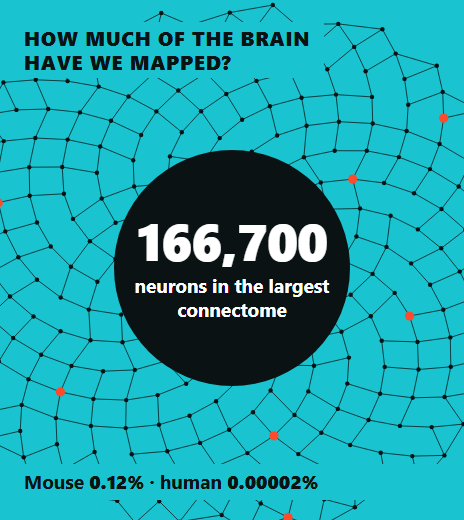
Other evidence in people does not record single cells. A meta-analysis of 125 fMRI papers found 14 clusters of brain activity with mirror properties, but fMRI cannot see single cells [25]. Two fMRI adaptation tests of the same idea gave opposite readings: one found no evidence of mirror neurons in people [26], the other found evidence in the inferior frontal gyrus [27]. Two papers that look like human recordings are left out of the ledger because they have no execution condition in the text we read ([18] and a 2026 preprint); the table at the end lists every exclusion. Human cells are 8.8% of the 13,380 cell records printed in the ledger but only 2.5% of the 2,775 mirror cells counted in rows with both numbers. For a wider view of what human brain tissue and recordings can show, see our study of adult neurogenesis and how much of the brain has been mapped.
06 What share of recorded cells are mirror neurons?
Across 28 rows with both counts, 29.9% of 9,293 cells were called mirror cells (median 29.1%), but single rows run from 5.8% to 70.1%. The pooled share is 29.9% in F5 (15 rows), 14.1% in parietal areas (6 rows) and 59.2% in M1 with dorsal premotor cortex (5 rows), using each paper’s own definition [1]. A random-effects pool of all rows gives 30.1% (95% interval 22.9% to 38.4%) with a prediction interval of 5.6% to 75.6%: a new row could land almost anywhere in that range.
Share of cells called mirror cells, row by row
Each square is one paper-and-area row: the share of cells the authors called mirror (or matching, or congruent), with its 95% Wilson interval; square area = cells recorded. The diamond is the random-effects pooled share and the dashed bar its 95% prediction interval. Pick an area. The rows differ in definition and sampling, so the pooled share describes the literature, not the brain. As of 21 November 2026.
Share of recorded cells called mirror cells
Source: IQ Metrics calculation from the ledger [1] [8]; intervals and pooling by IQ Metrics
Data table
| row | study | detail | n | estimate | ci_low | ci_high |
|---|---|---|---|---|---|---|
| F5, ventral premotor (15 rows) | di Pellegrino 1992 | F5 · hand actions | 184 | 9.8 | 6.3 | 14.9 |
| F5, ventral premotor (15 rows) | Gallese 1996 | F5 · hand actions | 532 | 17.3 | 14.3 | 20.7 |
| F5, ventral premotor (15 rows) | Rizzolatti 1996 | F5 · hand actions | 300 | 20 | 15.9 | 24.9 |
| F5, ventral premotor (15 rows) | Umilta 2001 | F5 · hidden hand actions | 220 | 46.8 | 40.3 | 53.4 |
| F5, ventral premotor (15 rows) | Kohler 2002 | F5 · sound of actions | 497 | 12.7 | 10 | 15.9 |
| F5, ventral premotor (15 rows) | Ferrari 2003 | F5 · mouth actions | 485 | 26.8 | 23.1 | 30.9 |
| F5, ventral premotor (15 rows) | Ferrari 2005 | F5 · tool actions | 209 | 24.9 | 19.5 | 31.2 |
| F5, ventral premotor (15 rows) | Kraskov 2009 | F5 · hand actions | 64 | 48.4 | 36.6 | 60.4 |
| F5, ventral premotor (15 rows) | Caggiano 2009 | F5 · hand actions, near vs far space | 219 | 47.9 | 41.4 | 54.5 |
| F5, ventral premotor (15 rows) | Rochat 2010 | F5 · hand and tool grasping | 282 | 32.6 | 27.4 | 38.3 |
| F5, ventral premotor (15 rows) | Bonini 2010 | F5 · hand actions | 154 | 23.4 | 17.4 | 30.7 |
| F5, ventral premotor (15 rows) | Caggiano 2011 | F5 · hand actions (video) | 224 | 54.9 | 48.4 | 61.3 |
| F5, ventral premotor (15 rows) | Caggiano 2012 | F5 · hand actions, reward value | 299 | 49.8 | 44.2 | 55.5 |
| F5, ventral premotor (15 rows) | Caggiano 2013 | F5 · hand actions (video), repetition | 785 | 31.5 | 28.3 | 34.8 |
| F5, ventral premotor (15 rows) | Kilner 2014 | F5 · natural actions, repetition | 116 | 57.8 | 48.7 | 66.4 |
| F5, ventral premotor (15 rows) | Pooled estimate | 15 rows · 4,570 cells | 4570 | 31.6 | 24.6 | 39.6 |
| Parietal areas (6 rows) | Fogassi 2005 | IPL · hand actions, intention | 165 | 24.8 | 18.9 | 32 |
| Parietal areas (6 rows) | Rozzi 2008 | IPL · hand actions | 423 | 12.1 | 9.3 | 15.5 |
| Parietal areas (6 rows) | Shepherd 2009 | LIP · eye gaze | 153 | 19.6 | 14.1 | 26.6 |
| Parietal areas (6 rows) | Bonini 2010 IPL | IPL · hand actions | 120 | 23.3 | 16.7 | 31.7 |
| Parietal areas (6 rows) | Ishida 2010 | VIP · touch and vision | 541 | 8.9 | 6.8 | 11.6 |
| Parietal areas (6 rows) | Maeda 2015 | IPL (AIP, PFG) · own hand and others' hands | 235 | 14 | 10.2 | 19.1 |
| Parietal areas (6 rows) | Pooled estimate | 6 rows · 1,637 cells | 1637 | 16.2 | 11.5 | 22.5 |
| M1 and dorsal premotor (5 rows) | Tkach 2007 M1 | M1 · arm tracking | 829 | 70.1 | 66.9 | 73.1 |
| M1 and dorsal premotor (5 rows) | Tkach 2007 PMd | PMd · arm tracking | 128 | 60.2 | 51.5 | 68.2 |
| M1 and dorsal premotor (5 rows) | Dushanova 2010 | M1 · reaching | 303 | 34.7 | 29.5 | 40.2 |
| M1 and dorsal premotor (5 rows) | Vigneswaran 2013 | M1 · hand actions | 132 | 58.3 | 49.8 | 66.4 |
| M1 and dorsal premotor (5 rows) | Chatzimichail 2026 | PMd and PMv · reach-to-grasp | 433 | 55.4 | 50.7 | 60 |
| M1 and dorsal premotor (5 rows) | Pooled estimate | 5 rows · 1,825 cells | 1825 | 55.9 | 42.4 | 68.5 |
| All rows with both counts (28, incl. people and rat) | di Pellegrino 1992 | F5 · hand actions | 184 | 9.8 | 6.3 | 14.9 |
| All rows with both counts (28, incl. people and rat) | Gallese 1996 | F5 · hand actions | 532 | 17.3 | 14.3 | 20.7 |
| All rows with both counts (28, incl. people and rat) | Rizzolatti 1996 | F5 · hand actions | 300 | 20 | 15.9 | 24.9 |
| All rows with both counts (28, incl. people and rat) | Umilta 2001 | F5 · hidden hand actions | 220 | 46.8 | 40.3 | 53.4 |
| All rows with both counts (28, incl. people and rat) | Kohler 2002 | F5 · sound of actions | 497 | 12.7 | 10 | 15.9 |
| All rows with both counts (28, incl. people and rat) | Ferrari 2003 | F5 · mouth actions | 485 | 26.8 | 23.1 | 30.9 |
| All rows with both counts (28, incl. people and rat) | Ferrari 2005 | F5 · tool actions | 209 | 24.9 | 19.5 | 31.2 |
| All rows with both counts (28, incl. people and rat) | Fogassi 2005 | IPL · hand actions, intention | 165 | 24.8 | 18.9 | 32 |
| All rows with both counts (28, incl. people and rat) | Tkach 2007 M1 | M1 · arm tracking | 829 | 70.1 | 66.9 | 73.1 |
| All rows with both counts (28, incl. people and rat) | Tkach 2007 PMd | PMd · arm tracking | 128 | 60.2 | 51.5 | 68.2 |
| All rows with both counts (28, incl. people and rat) | Rozzi 2008 | IPL · hand actions | 423 | 12.1 | 9.3 | 15.5 |
| All rows with both counts (28, incl. people and rat) | Kraskov 2009 | F5 · hand actions | 64 | 48.4 | 36.6 | 60.4 |
| All rows with both counts (28, incl. people and rat) | Caggiano 2009 | F5 · hand actions, near vs far space | 219 | 47.9 | 41.4 | 54.5 |
| All rows with both counts (28, incl. people and rat) | Shepherd 2009 | LIP · eye gaze | 153 | 19.6 | 14.1 | 26.6 |
| All rows with both counts (28, incl. people and rat) | Rochat 2010 | F5 · hand and tool grasping | 282 | 32.6 | 27.4 | 38.3 |
| All rows with both counts (28, incl. people and rat) | Bonini 2010 | F5 · hand actions | 154 | 23.4 | 17.4 | 30.7 |
| All rows with both counts (28, incl. people and rat) | Bonini 2010 IPL | IPL · hand actions | 120 | 23.3 | 16.7 | 31.7 |
| All rows with both counts (28, incl. people and rat) | Dushanova 2010 | M1 · reaching | 303 | 34.7 | 29.5 | 40.2 |
| All rows with both counts (28, incl. people and rat) | Ishida 2010 | VIP · touch and vision | 541 | 8.9 | 6.8 | 11.6 |
| All rows with both counts (28, incl. people and rat) | Mukamel 2010 | SMA, ACC, medial temporal lobe · hand grasps and facial gestures | 1177 | 5.8 | 4.6 | 7.3 |
| All rows with both counts (28, incl. people and rat) | Caggiano 2011 | F5 · hand actions (video) | 224 | 54.9 | 48.4 | 61.3 |
| All rows with both counts (28, incl. people and rat) | Caggiano 2012 | F5 · hand actions, reward value | 299 | 49.8 | 44.2 | 55.5 |
| All rows with both counts (28, incl. people and rat) | Caggiano 2013 | F5 · hand actions (video), repetition | 785 | 31.5 | 28.3 | 34.8 |
| All rows with both counts (28, incl. people and rat) | Vigneswaran 2013 | M1 · hand actions | 132 | 58.3 | 49.8 | 66.4 |
| All rows with both counts (28, incl. people and rat) | Kilner 2014 | F5 · natural actions, repetition | 116 | 57.8 | 48.7 | 66.4 |
| All rows with both counts (28, incl. people and rat) | Maeda 2015 | IPL (AIP, PFG) · own hand and others' hands | 235 | 14 | 10.2 | 19.1 |
| All rows with both counts (28, incl. people and rat) | Carrillo 2019 | anterior cingulate cortex · own pain and witnessed pain | 84 | 33.3 | 24.2 | 43.9 |
| All rows with both counts (28, incl. people and rat) | Chatzimichail 2026 | PMd and PMv · reach-to-grasp | 433 | 55.4 | 50.7 | 60 |
| All rows with both counts (28, incl. people and rat) | Pooled estimate | 28 rows · 9,293 cells | 9293 | 30.1 | 22.9 | 38.4 |
Embed this chart
Paste this HTML into your page: it carries the numbers and the credit link to this figure.
The share depends on where you look: parietal 17%, F5 32%, motor cortex 58%
Share of recorded cells called mirror cells, per row, by brain area. Box = middle half, line = median, whiskers = lowest and highest row; every row is a dot. The dotted line is the one large human sample (68 of 1,177 cells, medial frontal and temporal cortex). As of 21 November 2026.
Share of recorded cells called mirror cells. Dotted line: People (Mukamel 2010): 5.8%.
Source: IQ Metrics calculation from the ledger [1] [8]
Data table
| brain area | n | low | q1 | median | q3 | high |
|---|---|---|---|---|---|---|
| F5 | 15 | 9.8 | 20 | 31.5 | 48.4 | 57.8 |
| Parietal | 6 | 8.9 | 11.3 | 16.8 | 23.7 | 24.8 |
| M1 + PMd | 5 | 34.7 | 45 | 58.3 | 65.2 | 70.1 |
Embed this chart
Paste this HTML into your page: it carries the numbers and the credit link to this figure.
Shares run from 6% to 70%; 11 of the 28 rows sit between 10% and 30%
28 rows with both counts printed, by the share of cells called mirror cells (bins of 10 points). Median 29.1%, lowest 5.8%, highest 70.1%. As of 21 November 2026.
Share of recorded cells called mirror cells
Source: IQ Metrics calculation from the ledger [1]
Data table
| from | to | rows |
|---|---|---|
| 0 | 10 | 3 |
| 10 | 20 | 5 |
| 20 | 30 | 6 |
| 30 | 40 | 4 |
| 40 | 50 | 4 |
| 50 | 60 | 4 |
| 60 | 70 | 1 |
| 70 | 80 | 1 |
Embed this chart
Paste this HTML into your page: it carries the numbers and the credit link to this figure.
The spread has three plain causes. The areas differ (parietal rows sit lowest, M1 and dorsal premotor highest). The definitions differ: the 70.1% row counts “congruent” cells in M1, while a 2026 paper counts 240 mirror cells in premotor cortex, of which 67 (28%) are strictly congruent [17]. And the sampling differs: Kilner and Lemon note that later papers first selected cells by their motor properties and then tested them with observed actions, which they say may explain part of the higher shares [1]. None of the numbers is a rate for the whole brain.
07 Did the share of mirror cells rise over the years?
In F5 the median share rose from 20.0% in 7 rows of 1992-2005 to 48.2% in 8 rows of 2009-2014, but the likely cause is how cells were sampled, not the brain. The first monkey paper counted 18 mirror cells among 184 recorded (9.8%). Kilner and Lemon write that the rise most likely reflects a sampling bias during data collection: the first papers described the basic properties, while later ones first selected cells by their motor properties, such as selectivity for grasping, and then tested those cells with observed actions [1].
The F5 share climbed from about 10% in 1992 to about 50% by 2012
Each bubble is a row with both counts: year of the paper (across), share of cells called mirror (up), cells recorded (area). F5 rows: median 20.0% for 7 rows in 1992-2005, 48.2% for 8 rows in 2009-2014. Kilner and Lemon (2013) attribute most of the rise to a change in how cells were sampled, not to a change in the brain. As of 21 November 2026.
Share of cells called mirror cells (%)
Year of the paper
Source: IQ Metrics calculation from the ledger [1] [8] [10]
Data table
| row | year | share_pct | group | cells_recorded |
|---|---|---|---|---|
| di Pellegrino 1992 | 1992 | 9.8 | f5 | 184 |
| Gallese 1996 | 1996 | 17.3 | f5 | 532 |
| Rizzolatti 1996 | 1996 | 20 | f5 | 300 |
| Umilta 2001 | 2001 | 46.8 | f5 | 220 |
| Kohler 2002 | 2002 | 12.7 | f5 | 497 |
| Ferrari 2003 | 2003 | 26.8 | f5 | 485 |
| Ferrari 2005 | 2005 | 24.9 | f5 | 209 |
| Kraskov 2009 | 2009 | 48.4 | f5 | 64 |
| Caggiano 2009 | 2009 | 47.9 | f5 | 219 |
| Caggiano 2011 | 2011 | 54.9 | f5 | 224 |
| Caggiano 2012 | 2012 | 49.8 | f5 | 299 |
| Caggiano 2013 | 2013 | 31.5 | f5 | 785 |
| Rochat 2010 | 2010 | 32.6 | f5 | 282 |
| Bonini 2010 F5 | 2010 | 23.4 | f5 | 154 |
| Bonini 2010 IPL | 2010 | 23.3 | pa | 120 |
| Fogassi 2005 | 2005 | 24.8 | pa | 165 |
| Rozzi 2008 | 2008 | 12.1 | pa | 423 |
| Shepherd 2009 | 2009 | 19.6 | pa | 153 |
| Dushanova 2010 | 2010 | 34.7 | mo | 303 |
| Tkach 2007 M1 | 2007 | 70.1 | mo | 829 |
| Tkach 2007 PMd | 2007 | 60.2 | mo | 128 |
| Vigneswaran 2013 | 2013 | 58.3 | mo | 132 |
| Ishida 2010 | 2010 | 8.9 | pa | 541 |
| Kilner 2014 | 2014 | 57.8 | f5 | 116 |
| Maeda 2015 | 2015 | 14 | pa | 235 |
| Chatzimichail 2026 | 2026 | 55.4 | mo | 433 |
| Mukamel 2010 | 2010 | 5.8 | pe | 1177 |
| Carrillo 2019 | 2019 | 33.3 | ra | 84 |
Embed this chart
Paste this HTML into your page: it carries the numbers and the credit link to this figure.
08 Which animals have mirror neurons?
Recordings exist in macaques, one marmoset study, rats, one mouse study and two songbird studies; we found none in bats, dogs, fish, apes or elephants. The marmoset paper reported mirror cells in the ventrolateral frontal cortex [15]. In rats, mirror-like cells were found in forelimb motor cortex during grasping [11] and in the anterior cingulate cortex for own and witnessed pain: of 84 cells followed over three sessions in 13 rats, 28 responded to both [10]; a third rat study recorded 806 cells in 41 rats [12]. In the mouse, cells in the hypothalamus represent aggression performed by the mouse and by another mouse [13]. In songbirds, forebrain cells fire for the same note sequences when a bird sings and when it hears them [14]. For what each animal’s brain holds, see our pages on dog and cat brains, chimpanzees, crows and the smartest land animal, and our neuron-count study of 100+ species.
The nine papers outside macaques and people
Marmoset, rat, mouse and songbird recordings in the ledger. "-" = not printed in a source we could read. The CSV adds a note for each row. As of 21 November 2026.
| Suzuki 2015 | 2015 | Marmoset | ventrolateral frontal cortex | food-taking actions | – | 27 |
| Prather 2008 | 2008 | Songbird | HVC (forebrain) | singing and hearing note sequences | – | – |
| Suzuki 2026 | 2026 | Songbird | basal ganglia | learned song | – | – |
| Carrillo 2019 | 2019 | Rat | anterior cingulate cortex | own pain and witnessed pain | 84 | 28 |
| Viaro 2021 | 2021 | Rat | forelimb motor cortex | grasping | – | – |
| Wu 2023 | 2023 | Rat | anterior cingulate and insular cortex | witnessed distress and prosocial help | 806 | – |
| Yang 2023 | 2023 | Mouse | hypothalamus (VMHvl) | aggression by self and by others | 69 | – |
09 Which claims about mirror neurons have recordings behind them?
Most recordings tested hand, arm or object actions (47 of 57 rows), while the claim most often attached to mirror neurons now is empathy (18.3% of papers that mention them) and only 2 recording studies tested a response to another’s pain or distress, both in rats. Mirror neurons were said to underlie action understanding, imitation, language, mind reading and empathy; Ramachandran wrote in 2000 that mirror neurons “will do for psychology what DNA did for biology” [7]. The ledger shows what was actually recorded: 3 rows watched mouth, face or sound events, 2 gaze or touch, 2 song or voice, 1 aggression and 2 another’s pain or distress. No row tested theory of mind, and none recorded cells in people with a psychiatric or developmental diagnosis: the human samples are patients with epilepsy and two people with paralysis.
Who was recorded, what they watched, and whether the counts are printed
Width = rows in the ledger (57). Left: the species. Middle: what the animal or person watched, our coding (one class per row). Right: which counts the paper prints in the text we could read. 47 of 57 rows are hand, arm or object actions; the two rows about another's pain or distress are both rats. As of 21 November 2026.
Source: IQ Metrics ledger and coding [1] [2]
Data table
| from | to | rows |
|---|---|---|
| Macaque | Hand, arm, object | 43 |
| Macaque | Mouth, face, sound | 3 |
| Macaque | Gaze or touch | 2 |
| Marmoset | Hand, arm, object | 1 |
| Rat | Hand, arm, object | 1 |
| Rat | Another's pain | 2 |
| Mouse | Another's aggression | 1 |
| Songbird | Song or voice | 2 |
| People | Hand, arm, object | 2 |
| Hand, arm, object | Both counts printed | 23 |
| Hand, arm, object | Cells recorded only | 9 |
| Hand, arm, object | Mirror count only | 2 |
| Hand, arm, object | No count in the text read | 13 |
| Mouth, face, sound | Both counts printed | 2 |
| Mouth, face, sound | No count in the text read | 1 |
| Gaze or touch | Both counts printed | 2 |
| Another's pain | Both counts printed | 1 |
| Another's pain | Cells recorded only | 1 |
| Another's aggression | Cells recorded only | 1 |
| Song or voice | No count in the text read | 2 |
Embed this chart
Paste this HTML into your page: it carries the numbers and the credit link to this figure.
Empathy is now the claim most often attached to mirror neurons: 18% of papers
Share of the 3,371 papers that mention mirror neurons in the title or abstract and also mention each word set (OpenAlex, 1992-2026; filters printed on the page). It counts mentions, not support. Empathy: 617 papers; imitation 579; language or speech 540. As of 21 November 2026.
Source: OpenAlex works API, IQ Metrics calculation [4]
Data table
| label | value |
|---|---|
| Empathy | 18.3 |
| Imitation | 17.2 |
| Language or speech | 16 |
| Social cognition | 12.6 |
| Autism | 9.5 |
| Theory of mind | 6.9 |
| Action understanding | 6.9 |
Embed this chart
Paste this HTML into your page: it carries the numbers and the credit link to this figure.
Empathy rose to first place; action understanding fell to last
Rank (1 = most mentioned) of seven claim word sets among papers that mention mirror neurons, in three periods. Empathy went from third (11.9% of papers, 1996-2008) to first (21.5%, 2017-2025); action understanding or recognition from fourth (11.4%) to seventh and last (3.5%). Mentions, not support. As of 21 November 2026.
Source: OpenAlex works API, IQ Metrics calculation [4]
Data table
| claim word set | 1996-2008 | 2009-2016 | 2017-2025 |
|---|---|---|---|
| Imitation | 1 | 2 | 2 |
| Language | 2 | 3 | 3 |
| Empathy | 3 | 1 | 1 |
| Action understanding | 4 | 6 | 7 |
| Social cognition | 5 | 4 | 4 |
| Autism | 6 | 5 | 5 |
| Theory of mind | 7 | 7 | 6 |
Embed this chart
Paste this HTML into your page: it carries the numbers and the credit link to this figure.
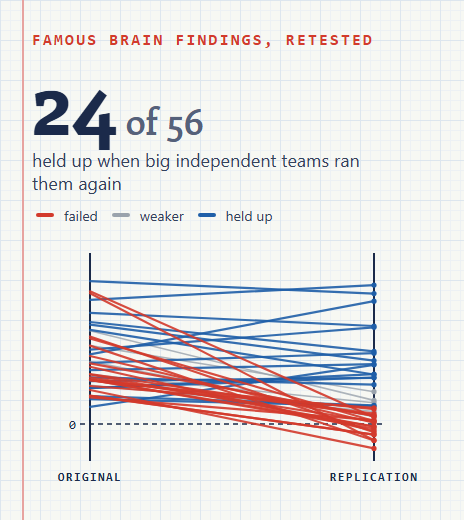
Between 1996-2008 and 2017-2025 the share of mirror-neuron papers that mention empathy rose from 11.9% to 21.5%, while those mentioning action understanding or recognition fell from 11.4% to 3.5%. Mentioning a word is not evidence for it: some of these papers argue against the claim, such as a critical review of the action-understanding theory [19] and a 2022 review that finds low-level contributions to action processing but not high-level interpretation [23]. A test of neonatal imitation, often linked to a mirror system, found no imitation in 106 infants at 1, 3, 6 and 9 weeks [22]. Other brain claims that travelled further than their data are checked in our neuromyths study, our guide to myths about intelligence and the replication scorecard.
10 Is interest in mirror neurons falling?
Papers that mention mirror neurons peaked at 223 in 2012 and fell 58.3% to 93 in 2022, then rose to 168 in 2025; English Wikipedia readers of the article fell 45.9% from 2016 to 2025. Set against all articles that mention neurons, mirror neurons peaked at 118.2 per 10,000 in 2012 and were 73.3 in 2025 [4]. Human views of the English Wikipedia article fell from 210,662 in 2016 to 113,955 in 2025, German -63.4%, French -35.7% and Japanese -64.4% [5]; all of English Wikipedia fell 8.1% in those years [6]. The 2025-2026 rise in papers is not explained here and may include uses of the term outside neuroscience.
Papers that mention mirror neurons peaked in 2012 and fell 58% by 2022
Articles per year whose title or abstract mention mirror neuron(s) or the mirror neuron system (OpenAlex). Peak 223 in 2012, 93 in 2022 (-58.3%), 168 in 2025; 2026* is a part year (to 21 November). Per 10,000 articles that mention neurons: peak 118.2 in 2012, 73.3 in 2025. As of 21 November 2026.
Source: OpenAlex works API (CC0), IQ Metrics calculation [4]
Data table
| label | value |
|---|---|
| 1996 | 3 |
| 1997 | 1 |
| 1998 | 4 |
| 1999 | 5 |
| 2000 | 3 |
| 2001 | 19 |
| 2002 | 16 |
| 2003 | 26 |
| 2004 | 33 |
| 2005 | 60 |
| 2006 | 76 |
| 2007 | 121 |
| 2008 | 170 |
| 2009 | 187 |
| 2010 | 191 |
| 2011 | 190 |
| 2012 | 223 |
| 2013 | 219 |
| 2014 | 194 |
| 2015 | 197 |
| 2016 | 141 |
| 2017 | 164 |
| 2018 | 136 |
| 2019 | 136 |
| 2020 | 109 |
| 2021 | 124 |
| 2022 | 93 |
| 2023 | 104 |
| 2024 | 107 |
| 2025 | 168 |
| 2026* | 149 |
Embed this chart
Paste this HTML into your page: it carries the numbers and the credit link to this figure.
When people read the Mirror neuron article: every day from January 2024 to October 2026
Daily human views of the English Wikipedia article "Mirror neuron", 1 January 2024 to 31 October 2026. Each small grid is a month; rows are weeks, Monday to Sunday. Darker = more views, on a scale that stops at 600 so one spike cannot wash out the rest. Busiest day 806 views (2025-12-18), quietest 116 (2026-07-24). Weekend days average 85% of weekday days (2023-2025). As of 21 November 2026.
- Thu 18 Dec 2025 the busiest day (806 views)
- Fri 24 Jul 2026 the quietest day (116 views)
Source: Wikimedia Analytics API, daily [5]; human views (agent user), all access methods
Data table
| date | views of "Mirror neuron" on English Wikipedia |
|---|---|
| 2024-01-01 | 273 |
| 2024-01-02 | 280 |
| 2024-01-03 | 286 |
| 2024-01-04 | 360 |
| 2024-01-05 | 273 |
| 2024-01-06 | 246 |
| 2024-01-07 | 278 |
| 2024-01-08 | 229 |
| 2024-01-09 | 330 |
| 2024-01-10 | 296 |
| 2024-01-11 | 285 |
| 2024-01-12 | 242 |
| 2024-01-13 | 265 |
| 2024-01-14 | 272 |
| 2024-01-15 | 309 |
| 2024-01-16 | 335 |
| 2024-01-17 | 317 |
| 2024-01-18 | 355 |
| 2024-01-19 | 317 |
| 2024-01-20 | 216 |
| 2024-01-21 | 275 |
| 2024-01-22 | 321 |
| 2024-01-23 | 342 |
| 2024-01-24 | 286 |
| 2024-01-25 | 341 |
| 2024-01-26 | 309 |
| 2024-01-27 | 253 |
| 2024-01-28 | 274 |
| 2024-01-29 | 371 |
| 2024-01-30 | 310 |
| 2024-01-31 | 302 |
| 2024-02-01 | 355 |
| 2024-02-02 | 265 |
| 2024-02-03 | 253 |
| 2024-02-04 | 280 |
| 2024-02-05 | 278 |
| 2024-02-06 | 300 |
| 2024-02-07 | 317 |
| 2024-02-08 | 312 |
| 2024-02-09 | 273 |
| 2024-02-10 | 226 |
| 2024-02-11 | 235 |
| 2024-02-12 | 316 |
| 2024-02-13 | 326 |
| 2024-02-14 | 322 |
| 2024-02-15 | 286 |
| 2024-02-16 | 304 |
| 2024-02-17 | 235 |
| 2024-02-18 | 256 |
| 2024-02-19 | 276 |
| 2024-02-20 | 337 |
| 2024-02-21 | 302 |
| 2024-02-22 | 316 |
| 2024-02-23 | 258 |
| 2024-02-24 | 343 |
| 2024-02-25 | 277 |
| 2024-02-26 | 343 |
| 2024-02-27 | 307 |
| 2024-02-28 | 333 |
| 2024-02-29 | 352 |
| 2024-03-01 | 325 |
| 2024-03-02 | 259 |
| 2024-03-03 | 271 |
| 2024-03-04 | 408 |
| 2024-03-05 | 316 |
| 2024-03-06 | 473 |
| 2024-03-07 | 360 |
| 2024-03-08 | 270 |
| 2024-03-09 | 211 |
| 2024-03-10 | 285 |
| 2024-03-11 | 305 |
| 2024-03-12 | 387 |
| 2024-03-13 | 388 |
| 2024-03-14 | 300 |
| 2024-03-15 | 314 |
| 2024-03-16 | 266 |
| 2024-03-17 | 241 |
| 2024-03-18 | 284 |
| 2024-03-19 | 295 |
| 2024-03-20 | 325 |
First 80 of 1035 rows; the Data button gives all of them.
Embed this chart
Paste this HTML into your page: it carries the numbers and the credit link to this figure.
The daily record shows the rhythm of a study topic. Weekend days average 85% of weekday days (264 against 312 views, 2023-2025), and the monthly average dips to 320 views a day in August and peaks at 419 in March (2019-2025). That is the pattern of students and teachers; it is the same school-term rhythm we measured for 173 brain articles in our Wikipedia study. Views of one article say nothing about why readers came.
Readers of the article fell in four languages: -36% in French to -64% in Japanese
Human views of the Wikipedia article on mirror neurons, full years 2016 and 2025, in thousands: English -45.9%, German -63.4%, French -35.7%, Japanese -64.4%. The Spanish article is left out: its views jump from 769 in 2020 to 20,617 in 2021, a sign of a renamed or merged page. All of English Wikipedia fell 8.1% in the same years. As of 21 November 2026.
Source: Wikimedia Analytics API (CC0) [5]; all of English Wikipedia [6]
Data table
| Wikipedia edition (thousand views) | 2016 | 2025 |
|---|---|---|
| English | 210.7 | 114 |
| German | 63.7 | 23.3 |
| French | 37.6 | 24.2 |
| Japanese | 46.1 | 16.4 |
Embed this chart
Paste this HTML into your page: it carries the numbers and the credit link to this figure.
11 When did the recordings and the doubts arrive?
The recordings and the doubts grew up together: the first monkey paper is from 1992, the prediction that mirror neurons would transform psychology is from 2000, and the first sustained checks came between 2009 and 2014. A 2022 review counts 30 years since the first description and says a “mirror mechanism” of several cell types now spans birds to humans [24]; another review of the same year asks “What happened to mirror neurons?” [23].
Thirty-four years: nine recording milestones, and the predictions and checks beside them
Top lane: first recordings in each kind of subject. Bottom lane: a famous prediction and the reviews and tests that checked the big claims. Events are dated by publication year; each has a tooltip with the source. As of 21 November 2026.
Source: IQ Metrics ledger and the papers cited [1] [7] [23]
Data table
| lane | type | from | to | label | detail |
|---|---|---|---|---|---|
| Recordings | event | 1992 | 1992 F5 | di Pellegrino and colleagues: the first monkey paper (184 cells, 18 mirror), Kilner and Lemon 2013 Table 1 | |
| Recordings | event | 1996 | 1996 F5 | Gallese and colleagues, and Rizzolatti and colleagues: two F5 papers with 532 cells (92 mirror) and 300 cells (60 mirror), Kilner and Lemon 2013 Table 1 | |
| Recordings | event | 2005 | 2005 IPL | Fogassi and colleagues: inferior parietal lobule, 165 cells with 41 mirror, Kilner and Lemon 2013 Table 1 | |
| Recordings | event | 2008 | 2008 bird | Prather and colleagues, Nature: swamp sparrow forebrain cells with a precise auditory-vocal correspondence | |
| Recordings | event | 2010 | 2010 human | Mukamel and colleagues, Current Biology: 1,177 cells in 21 patients, 68 matching | |
| Recordings | event | 2019 | 2019 rat | Carrillo and colleagues, Current Biology: rat anterior cingulate cortex, cells for own and witnessed pain | |
| Recordings | event | 2021 | 2021 rat | Viaro and colleagues, Current Biology: rat forelimb motor cortex during grasping | |
| Recordings | event | 2023 | 2023 mouse | Yang and colleagues, Cell: mouse hypothalamus cells that mirror aggression | |
| Recordings | event | 2026 | 2026 human | Bougou and colleagues, Cell: two people with paralysis, shared tuning in parietal cortex | |
| Claims and checks | event | 2000-05 | 2000 DNA | Ramachandran, Edge.org: predicts mirror neurons will do for psychology what DNA did for biology | |
| Claims and checks | event | 2009 | 2009 Hickok | Hickok, J Cogn Neurosci: eight problems for the theory that mirror neurons give action understanding | |
| Claims and checks | event | 2010 | 2010 Heyes | Heyes, NeuroImage: "Mesmerising mirror neurons", why they were hailed as the key to social cognition | |
| Claims and checks | event | 2013 | 2013 Table | Kilner and Lemon, Current Biology: the table of 25 macaque rows this page extends | |
| Claims and checks | event | 2014 | 2014 Cook | Cook and colleagues, Behavioral and Brain Sciences: argue mirror neurons are formed by associative learning | |
| Claims and checks | event | 2016 | 2016 infants | Oostenbroek and colleagues, Current Biology: no neonatal imitation in 106 infants | |
| Claims and checks | event | 2022 | 2022 reviews | Heyes and Catmur, "What happened to mirror neurons?"; Bonini and colleagues, "30 years later" |
Embed this chart
Paste this HTML into your page: it carries the numbers and the credit link to this figure.
Reviews and tests that checked the big claims
What each paper says in its own abstract. Facts only; no passage is copied. As of 21 November 2026.
| Paper | Kind | What it says |
|---|---|---|
| Kilner and Lemon 2013 | Review with a table | 25 macaque rows (22 papers), 1992-2013: cells recorded and mirror cells; the rise in the share in F5 is attributed mostly to sampling |
| Hickok 2009 | Critical review | Argues there is no monkey evidence that directly tests the theory that mirror neurons give action understanding, and that human evidence argues against it |
| Heyes 2010 | Essay | Says three currents of thought (evolution, atomism, telepathy) magnified the perceived importance of mirror neurons |
| Cook, Bird, Catmur and colleagues 2014 | Target article | Argues mirror neurons arise from sensorimotor associative learning and do not consistently encode action goals |
| Oostenbroek and colleagues 2016 | Longitudinal study | 106 infants tested at 1, 3, 6 and 9 weeks: no imitation of any of eleven models |
| Heyes and Catmur 2022 | Review | Mirror-neuron brain areas contribute to low-level processing of observed actions but not to high-level interpretation of intentions; strong evidence for a causal role in copying body movements |
| Bonini, Rotunno, Arcuri and colleagues 2022 | Review | Describes a “mirror mechanism” of cell types across motor, sensory and emotional areas in species from birds to humans |
| Molenberghs, Cunnington and Mattingley 2012 | Meta-analysis (brain imaging) | 125 fMRI papers from more than 300 met the criteria; 14 clusters with mirror properties; fMRI cannot see single cells |
| Lingnau, Gesierich and Caramazza 2009 and Kilner, Neal, Weiskopf and colleagues 2009 | Two fMRI adaptation studies | Opposite readings of the same kind of test: one found no evidence of mirror neurons in people, the other found evidence in the inferior frontal gyrus |
Source: The papers cited, by DOI [1] [19] [20] [21] [22] [23] [24] [25] [26] [27]
12 How was this counted?
- 01
Define
data/DEFINITIONS.md was written first: what a recording study is, how cells and shares are counted, what the page may say, and the task coding.
- 02
Take the 2013 table
Table 1 of Kilner and Lemon 2013 (CC BY 3.0) gives 25 rows from 22 macaque papers with cells recorded and mirror cells. We read it through the PubMed Central API and, where the paper’s open full text could be read, searched the two numbers in it.
- 03
Search and screen
Six printed PubMed queries returned 554 records; titles and abstracts were screened for recorded cells that the authors call mirror; 22 named papers were looked up by title. 32 papers beyond the 2013 table entered the ledger.
- 04
Read the numbers
Counts come from the abstract or the open full text. A number that no source we could read prints is left empty, never estimated. Excluded papers are listed with a reason.
- 05
Count and test
Shares, Wilson intervals, DerSimonian-Laird pooled shares and period counts are scripted (data/s30_analyse.py) and re-counted by a second script (data/recount.py).
- 06
Add attention
OpenAlex (CC0) counts papers per year with the printed filters; Wikimedia (CC0) gives human page views for four editions and one daily series.
The OpenAlex filters, in full: articles whose title or abstract contain "mirror neuron" OR "mirror neurons" OR "mirror neuron system" OR "mirror neuron systems", and, for the claim counts, also one of these word sets: empathy OR empathic OR empathetic; imitation OR imitate OR imitating; language OR speech OR speaking; "theory of mind" OR "mind reading" OR mindreading; "action understanding" OR "action recognition" OR "understanding actions" OR "understanding action"; "social cognition" OR "social interaction" OR "social behavior" OR "social behaviour"; autism OR autistic. The comparison count uses neuron OR neurons. Autism is one of seven word sets counted; this page reviews no evidence on it.
Read every number with these in mind
- The ledger is a lower bound. A paper whose authors do not call its cells mirror, or that our six queries and 22 title lookups did not reach, is missing.
- Counts are denser before 2013 because Kilner and Lemon read the full texts. Paywalled or embargoed papers after 2013 (several J Neurosci, Eur J Neurosci and Nature papers) were not read, so many later rows show no count.
- The same cells can appear in several papers from one lab; we flag likely pairs but cannot check, so totals are cell records, never different cells.
- Papers define “recorded” and “mirror” differently (all isolated cells, only cells tested in both conditions, strict or broad congruence). Shares are not comparable across rows without that caveat.
- The coding of what each row showed (six classes) and of brain areas into families is ours; a different rule gives different counts.
- OpenAlex counts mentions in titles and abstracts, with different journals and years indexed to different depths; the 2026 count is a part year. Wikipedia views count one article in four editions and not search or other channels.
Using this in a class or thesis
The CSV has one row per paper and brain area (57 rows, 20 columns): the species, area, technique, what was shown, cells recorded, mirror cells, the share, which source gave the counts and whether the numbers were found again in the paper’s open text. It can be used to teach how counts and definitions change a headline number, or to find the primary papers by DOI. It cannot be used to estimate how many mirror neurons a brain has or to compare labs, and the cell records overlap. Licence: CC BY 4.0; credit “IQ Metrics Research, Do humans have mirror neurons? (2026)”.
Your own mind, measured another way
This page is about cells, not scores. If you want a measure of your own reasoning instead, the IQ Metrics test is on the home page; the brain games on this site train nothing and measure one skill each, for example memory.
Open the IQ Metrics home pageRelated reading on this site: the number of brain cells in a human head (86 billion neurons, and what the figure rests on) and human brain facts; how memory relates to IQ scores; and how intelligence is wider than a test score. Cognitive biases in judgment, another idea that spread faster than its evidence, are counted in our study of 174 named biases.
13 Every recording row, and every exclusion
Every row in the ledger (57 rows, 54 papers)
Oldest first. Cells = the number of cells or units the paper says it recorded or tested; mirror = the number the authors called mirror, matching or congruent; "-" = not printed in a source we could read. The CSV adds journal, DOI, technique, our task class, where each count was read, overlap flags and notes. As of 21 November 2026.
| di Pellegrino 1992 | 1992 | F5 | hand actions | 184 | 18 | 9.8% |
| Gallese 1996 | 1996 | F5 | hand actions | 532 | 92 | 17.3% |
| Rizzolatti 1996 | 1996 | F5 | hand actions | 300 | 60 | 20.0% |
| Umilta 2001 | 2001 | F5 | hidden hand actions | 220 | 103 | 46.8% |
| Kohler 2002 | 2002 | F5 | sound of actions | 497 | 63 | 12.7% |
| Ferrari 2003 | 2003 | F5 | mouth actions | 485 | 130 | 26.8% |
| Ferrari 2005 | 2005 | F5 | tool actions | 209 | 52 | 24.9% |
| Kraskov 2009 | 2009 | F5 | hand actions | 64 | 31 | 48.4% |
| Caggiano 2009 | 2009 | F5 | hand actions, near vs far space | 219 | 105 | 47.9% |
| Caggiano 2011 | 2011 | F5 | hand actions (video) | 224 | 123 | 54.9% |
| Caggiano 2012 | 2012 | F5 | hand actions, reward value | 299 | 149 | 49.8% |
| Caggiano 2013 | 2013 | F5 | hand actions (video), repetition | 785 | 247 | 31.5% |
| Rochat 2010 | 2010 | F5 | hand and tool grasping | 282 | 92 | 32.6% |
| Bonini 2010 | 2010 | F5 | hand actions | 154 | 36 | 23.4% |
| Bonini 2010 | 2010 | IPL | hand actions | 120 | 28 | 23.3% |
| Fogassi 2005 | 2005 | IPL | hand actions, intention | 165 | 41 | 24.8% |
| Rozzi 2008 | 2008 | IPL | hand actions | 423 | 51 | 12.1% |
| Shepherd 2009 | 2009 | LIP | eye gaze | 153 | 30 | 19.6% |
| Dushanova 2010 | 2010 | M1 | reaching | 303 | 105 | 34.7% |
| Tkach 2007 | 2007 | M1 | arm tracking | 829 | 581 | 70.1% |
| Tkach 2007 | 2007 | PMd | arm tracking | 128 | 77 | 60.2% |
| Vigneswaran 2013 | 2013 | M1 | hand actions | 132 | 77 | 58.3% |
| Ishida 2010 | 2010 | VIP | touch and vision | 541 | 48 | 8.9% |
| Fujii 2007 | 2007 | PM3 | hand actions | 148 | – | – |
| Fujii 2007 | 2007 | IPS | hand actions | 148 | – | – |
| Keysers 2003 | 2003 | F5 | sound and sight of actions | – | – | – |
| Yamazaki 2010 | 2010 | IPL | goal-directed actions | – | – | – |
| Kilner 2014 | 2014 | F5 | natural actions, repetition | 116 | 67 | 57.8% |
| Maranesi 2013 | 2013 | F5 | grasping and gaze | – | – | – |
| Bonini 2014 | 2014 | F5 | objects and actions | 464 | – | – |
| Bonini 2014 | 2014 | PMv | action and inaction | – | – | – |
| Maranesi 2014 | 2014 | F5 | action and inaction, predicted | – | – | – |
| Maeda 2015 | 2015 | IPL (AIP, PFG) | own hand and others’ hands | 235 | 33 | 14.0% |
| Maranesi 2015 | 2015 | F5 | sight of own hand | – | – | – |
| Coude 2016 | 2016 | PMv | gaze direction of the actor | – | – | – |
| Caggiano 2016 | 2016 | F5 | abstract causal stimuli | – | – | – |
| Maranesi 2017 | 2017 | F5 | viewpoint and space | – | 155 | – |
| Jiang 2018 | 2018 | M1 and PMd | centre-out reaching | – | – | – |
| Mazurek 2018 | 2018 | PMd and M1 | behavioural epochs | – | – | – |
| Livi 2019 | 2019 | pre-SMA (F6) | objects and actions | 306 | – | – |
| Papadourakis 2019 | 2019 | PMd | reach and grasp | – | – | – |
| Lanzilotto 2019 | 2019 | AIP | observed manipulative actions | 643 | – | – |
| Lanzilotto 2020 | 2020 | AIP | observed actions, video | 297 | – | – |
| Jerjian 2020 | 2020 | F5 and M1 | grasp execution and observation | 302 | – | – |
| Albertini 2021 | 2021 | F6 and F2 | biological and non-biological movements | 549 | – | – |
| Maranesi 2024 | 2024 | AIP | visual and motor mixed selectivity | – | – | – |
| Tili 2025 | 2025 | F5, F6 and AIP | execution and observation (open dataset) | 355 | – | – |
| Chatzimichail 2026 | 2026 | PMd and PMv | reach-to-grasp | 433 | 240 | 55.4% |
| Suzuki 2015 | 2015 | Marmoset, ventrolateral frontal cortex | food-taking actions | – | 27 | – |
| Mukamel 2010 | 2010 | People, SMA, ACC, medial temporal lobe | hand grasps and facial gestures | 1177 | 68 | 5.8% |
| Bougou 2026 | 2026 | People, motor cortex and superior parietal lobule | intended and observed hand actions | – | – | – |
| Prather 2008 | 2008 | Songbird, HVC (forebrain) | singing and hearing note sequences | – | – | – |
| Suzuki 2026 | 2026 | Songbird, basal ganglia | learned song | – | – | – |
| Carrillo 2019 | 2019 | Rat, anterior cingulate cortex | own pain and witnessed pain | 84 | 28 | 33.3% |
| Viaro 2021 | 2021 | Rat, forelimb motor cortex | grasping | – | – | – |
| Wu 2023 | 2023 | Rat, anterior cingulate and insular cortex | witnessed distress and prosocial help | 806 | – | – |
| Yang 2023 | 2023 | Mouse, hypothalamus (VMHvl) | aggression by self and by others | 69 | – | – |
Papers that look like recording studies but are left out, and why
Our rule needs cells recorded while the same kind of act is done and watched, and authors who call the cells mirror, matching or congruent. As of 21 November 2026.
| Study | Journal | Species | Why it is not in the ledger |
|---|---|---|---|
| Aflalo 2020 | Sci Adv | human | no execution condition: action verbs and observed videos only |
| Gusman 2026 | bioRxiv | human | preprint; abstract describes viewing devices only, no execution test |
| Keller 2009 | Nature | songbird | authors do not call the cells mirror neurons |
| Giret 2014 | PNAS | songbird | uses “mirror” as a verb for a delay, not for a cell class |
| Yoshida 2011 | Curr Biol | macaque | neurons for others’ action; authors do not call them mirror neurons |
Source: IQ Metrics rule [2]
Sources
- Cell Press (Elsevier). Kilner JM, Lemon RN (2013). What we know currently about mirror neurons. Current Biology. Table 1 (25 macaque rows, 22 papers). 2013. doi.org/10.1016/j.cub.2013.10.051CC BY 3.0 (open access, PMC3898692): Table 1 numbers are used with credit
- US National Library of Medicine. PubMed (NCBI E-utilities): six printed queries (554 records) and 22 title lookups. 2026. pubmed.ncbi.nlm.nih.govPublic domain metadata and abstracts used for facts (counts, years); no abstract text is copied
- US National Library of Medicine. PubMed Central full texts (open subset), read through the NCBI API for cell counts. 2026. pmc.ncbi.nlm.nih.govEach paper under its own licence; only numbers are used
- OurResearch. OpenAlex works API: articles whose title or abstract mention mirror neuron(s), by year, with and without claim words. 2026. api.openalex.org/worksCC0
- Wikimedia Foundation. Wikimedia Analytics API: page views of the article "Mirror neuron" (en, de, fr, es, ja), monthly 2015-07 to 2026-10 and daily 2019-2026. 2026. wikimedia.org/api/rest_v1CC0
- IQ Metrics. IQ Metrics Research (2026). Are people still reading about the brain on Wikipedia? Page views of 152 brain, IQ and mind articles. 2026. iqmetrics.org/research/are-people-still-reading-about-the-brain-on-wikipediaCC BY 4.0
- Edge Foundation. Ramachandran VS (2000). Mirror neurons and imitation learning as the driving force behind "the great leap forward" in human evolution. Edge.org. 2000. edge.org/node/21076Quoted: one phrase of eleven words, with credit
- Curr Biol. Mukamel and colleagues (2010). Single-neuron responses in humans during execution and observation of actions. Curr Biol. 2010. doi.org/10.1016/j.cub.2010.02.045Facts only (cells counted, years, species); no table, figure or passage is copied
- Cell. Bougou and colleagues (2026). Hierarchical and context-dependent encoding of actions in human posterior parietal and motor cortex. Cell. 2026. doi.org/10.1016/j.cell.2026.07.032Facts only (cells counted, years, species); no table, figure or passage is copied
- Curr Biol. Carrillo and colleagues (2019). Emotional Mirror Neurons in the Rat's Anterior Cingulate Cortex. Curr Biol. 2019. doi.org/10.1016/j.cub.2019.03.024Facts only (cells counted, years, species); no table, figure or passage is copied
- Curr Biol. Viaro and colleagues (2021). Neurons of rat motor cortex become active during both grasping execution and grasping observation. Curr Biol. 2021. doi.org/10.1016/j.cub.2021.07.054Facts only (cells counted, years, species); no table, figure or passage is copied
- iScience. Wu and colleagues (2023). Affective mirror and anti-mirror neurons relate to prosocial help in rats. iScience. 2023. doi.org/10.1016/j.isci.2022.105865Facts only (cells counted, years, species); no table, figure or passage is copied
- Cell. Yang and colleagues (2023). Hypothalamic neurons that mirror aggression. Cell. 2023. doi.org/10.1016/j.cell.2023.01.022Facts only (cells counted, years, species); no table, figure or passage is copied
- Nature. Prather and colleagues (2008). Precise auditory-vocal mirroring in neurons for learned vocal communication. Nature. 2008. doi.org/10.1038/nature06492Facts only (cells counted, years, species); no table, figure or passage is copied
- Front Neurosci. Suzuki and colleagues (2015). Mirror Neurons in a New World Monkey, Common Marmoset. Front Neurosci. 2015. doi.org/10.3389/fnins.2015.00459Facts only (cells counted, years, species); no table, figure or passage is copied
- Sci Data. Tili and colleagues (2025). Mirror Neurons in Monkey Frontal and Parietal Areas. Sci Data. 2025. doi.org/10.1038/s41597-025-05299-9Facts only (cells counted, years, species); no table, figure or passage is copied
- Sci Adv. Chatzimichail and colleagues (2026). Dynamic population coding of kinematic structure across executed and observed actions in primate premotor cortex. Sci Adv. 2026. doi.org/10.1126/sciadv.aed9309Facts only (cells counted, years, species); no table, figure or passage is copied
- Sci Adv. Aflalo and colleagues (2020). A shared neural substrate for action verbs and observed actions in human posterior parietal cortex. Sci Adv. 2020. doi.org/10.1126/sciadv.abb3984Facts only (cells counted, years, species); no table, figure or passage is copied
- MIT Press. Hickok G (2009). Eight problems for the mirror neuron theory of action understanding in monkeys and humans. Journal of Cognitive Neuroscience. 2009. doi.org/10.1162/jocn.2009.21189Abstract facts only
- Elsevier. Heyes C (2010). Mesmerising mirror neurons. NeuroImage. 2010. doi.org/10.1016/j.neuroimage.2010.02.034Abstract facts only
- Cambridge University Press. Cook R, Bird G, Catmur C, Press C, Heyes C (2014). Mirror neurons: from origin to function. Behavioral and Brain Sciences. 2014. doi.org/10.1017/S0140525X13000903Abstract facts only
- Cell Press (Elsevier). Oostenbroek J, Suddendorf T, Nielsen M and colleagues (2016). Comprehensive longitudinal study challenges the existence of neonatal imitation in humans. Current Biology. 2016. doi.org/10.1016/j.cub.2016.03.047Abstract facts only
- SAGE. Heyes C, Catmur C (2022). What happened to mirror neurons? Perspectives on Psychological Science. 2022. doi.org/10.1177/1745691621990638Abstract facts only
- Cell Press (Elsevier). Bonini L, Rotunno C, Arcuri E and colleagues (2022). Mirror neurons 30 years later: implications and applications. Trends in Cognitive Sciences. 2022. doi.org/10.1016/j.tics.2022.06.003Abstract facts only
- Elsevier. Molenberghs P, Cunnington R, Mattingley JB (2012). Brain regions with mirror properties: a meta-analysis of 125 human fMRI studies. Neuroscience and Biobehavioral Reviews. 2012. doi.org/10.1016/j.neubiorev.2011.07.004Abstract facts only
- PNAS. Lingnau A, Gesierich B, Caramazza A (2009). Asymmetric fMRI adaptation reveals no evidence for mirror neurons in humans. PNAS. 2009. doi.org/10.1073/pnas.0902262106Abstract facts only
- Society for Neuroscience. Kilner JM, Neal A, Weiskopf N, Friston KJ, Frith CD (2009). Evidence of mirror neurons in human inferior frontal gyrus. Journal of Neuroscience. 2009. doi.org/10.1523/JNEUROSCI.2668-09.2009Abstract facts only
Version history
- 2026.1121 November 2026First release. Next update due May 2027 (PubMed searches re-run; the paywalled and embargoed texts after 2013 read for their counts), sooner if a human recording study appears or a count is corrected.
Leon Falkner, Data & Research Analyst. Leon owns the arithmetic on IQ Metrics: the percentile tables, the score converter and the figures in everyone else's drafts. On the research desk Leon pulls the data, builds each index and writes the method. More about Leon.
Questions
Do humans have mirror neurons?
Probably, but the direct evidence is thin. Of 54 recording papers found, 2 recorded single cells in people: 68 of 1,177 cells matched watching and doing in 21 patients (2010), and two people with paralysis showed shared single-unit tuning (2026). Brain scans cannot see single cells.
What is a mirror neuron?
A mirror neuron is a cell that fires both when an animal or person does an action, such as grasping, and when they watch another individual do a similar one. Papers differ on how alike the two must be, so the same cell may count as mirror in one paper and not in another.
How many mirror neurons have been recorded?
The 30 ledger rows that print a mirror count report 2,957 mirror cells; the 28 rows with both counts report 2,775 of 9,293 cells. These are cell records, not different cells: the same cells can appear in several papers from one lab, and some papers print no count.
What percent of neurons are mirror neurons?
There is no single percent. Across 28 published rows, 29.9% of 9,293 cells were called mirror cells, with rows from 5.8% to 70.1%. The share depends on the brain area, the definition and which cells the team searched, so it is not a rate for the whole brain.
Where in the brain are mirror neurons?
In monkeys about half the rows are in premotor area F5 (25 of the 57 rows) and parietal areas, with more in primary motor and dorsal premotor cortex. In people, cells were recorded in the supplementary motor area and temporal lobe (2010) and in parietal and motor cortex (2026).
Do mirror neurons explain empathy?
Not established. 18.3% of papers that mention mirror neurons also mention empathy, but only 2 recording studies tested another's pain or distress, both in rats; none did in monkeys or people. Mentioning a word is not evidence for it, and some of these papers argue against the claim.
Which animals have mirror neurons?
Recordings exist in macaque monkeys (45 papers), a marmoset, rats (3), a mouse and two songbird species, besides people (2). We found none in bats, dogs, fish, apes or elephants, which means not found in our searches, not absent.
Who discovered mirror neurons?
A 1992 paper on monkey premotor cortex is cited as the first description (Bonini and colleagues 2022), and two F5 papers in 1996 (Gallese and colleagues, Rizzolatti and colleagues) reported 92 of 532 and 60 of 300 cells as mirror. Both are rows in the ledger.
Is interest in mirror neurons falling?
Papers that mention mirror neurons peaked at 223 in 2012, fell to 93 in 2022 and were 168 in 2025. Human views of the English Wikipedia article fell 45.9% from 2016 to 2025, against 8.1% for all of English Wikipedia.
Can I use this data in a class or thesis?
Yes. The CSV has 57 rows with the DOI of every paper, the cells recorded and mirror cells where printed, and a note on how each count was found. It is licensed CC BY 4.0: credit "IQ Metrics Research, Do humans have mirror neurons? (2026)". It cannot give how many mirror neurons a brain has.
Share it, cite it, download it
You may reuse everything on this page under CC BY 4.0: in articles, reports, lessons and posts. The one condition is credit to IQ Metrics with a link to this page.
Cite this study
Version 2026.11. Citing the version lets readers find the exact numbers.
Falkner, L. (2026). Do humans have mirror neurons? 54 recording studies counted (Version 2026.11) [Data set]. IQ Metrics Research. https://iqmetrics.org/research/do-humans-have-mirror-neurons/
Falkner, Leon. "Do humans have mirror neurons? 54 recording studies counted." IQ Metrics Research, 21 Nov. 2026, iqmetrics.org/research/do-humans-have-mirror-neurons/.
Falkner, Leon. "Do humans have mirror neurons? 54 recording studies counted." IQ Metrics Research. November 21, 2026. https://iqmetrics.org/research/do-humans-have-mirror-neurons/.
@misc{iqmetrics2026dohumanshavemirrorneurons, author = {Falkner, Leon}, title = {Do humans have mirror neurons? 54 recording studies counted}, institution = {IQ Metrics}, year = {2026}, version = {2026.11}, url = {https://iqmetrics.org/research/do-humans-have-mirror-neurons/} }
Source: Leon Falkner, "Do humans have mirror neurons? 54 recording studies counted." IQ Metrics Research, version 2026.11, https://iqmetrics.org/research/do-humans-have-mirror-neurons/
Get the data
One row per paper and brain area (57 rows, 54 papers) that recorded cells while an animal or person did and watched an act and whose authors call the cells mirror, matching or congruent. Counts come from Table 1 of Kilner and Lemon 2013 (CC BY 3.0), abstracts and open full texts; an empty count means not printed in a source we could read. Rules: mirror-neurons/data/DEFINITIONS.md. No patient or participant is named.
| Column | What it holds |
|---|---|
row, study, year | Row number, the first author and year, and the publication year |
journal, doi, pmid | Journal (ISO abbreviation), DOI and PubMed ID of the paper |
species, brain_area | macaque, marmoset, rat, mouse, songbird or human; the brain area as the paper or table names it |
technique, task, task_class | Recording method; what the animal or person did and watched; our class (hand, arm or object actions; mouth, face or sound; gaze or touch; another's pain or distress; another's aggression; song or voice) |
neurons_recorded | Cells or units the paper says it recorded or tested, as printed; empty = not printed in a source we could read |
mirror_neurons | Cells the authors called mirror, matching or congruent, as printed; empty = not printed |
share_mirror_pct | mirror_neurons divided by neurons_recorded x 100, only where both are printed (IQ Metrics calculation) |
label_used, participants | The authors' word for the cells; animals or patients when printed |
count_source | KL = Kilner and Lemon 2013 Table 1; ABS = the abstract; TXT = the paper's open full text |
numbers_found_in_paper_text | yes = the printed numbers were found again in the paper's open text; text read = text read, not both found; blank = open text not read |
possible_overlap, note | Pairs from one lab whose cells may overlap (not checkable); details such as how counts were made |
For journalists, researchers and teachers
Everything on this page may be quoted, charted and republished with credit. No embargo, no permission needed, no sign-up. If you need a number that is not here, ask.
Summary you can paste
Plain news style. Edit freely; keep the credit.
IQ Metrics Research counted 54 papers (57 rows) that recorded mirror-neuron cells in animals and people, 1992 to 2026, as of 21 November 2026: 45 in macaque monkeys, 2 in people, 7 in a marmoset, rats, a mouse and songbirds. Where both counts are printed, 29.9% of 9,293 cells were called mirror cells (rows 5.8% to 70.1%); in the largest human sample, 68 of 1,177 (5.8%). A lower bound. Source: IQ Metrics Research, https://iqmetrics.org/research/do-humans-have-mirror-neurons/
Angles for a story
- Thirty-four years of mirror-neuron recordings, two in people. 54 recording papers since 1992, only 2 in people: 21 patients in 2010 and two people with paralysis in 2026.
- The empathy claim outran the recordings. 18.3% of mirror-neuron papers mention empathy, up from 11.9% in 1996-2008; 2 recording studies tested another’s pain or distress, both in rats.
- “What share of neurons are mirror neurons?” has no single answer. Rows run from 5.8% to 70.1% depending on the brain area, the definition and how cells were sampled.
- The interest curve. Papers peaked at 223 in 2012; English Wikipedia views of the article fell 45.9% in nine years, against 8.1% for all of English Wikipedia.
Quotes you can use
Attributable as written, with the name and title. For a different angle or a quote on a specific figure, ask through the contact page.
We found 54 papers that recorded mirror-neuron cells and only two of them were in people. The recordings are mostly from monkeys; many of the claims are about people.
Leon Falkner, Data & Research Analyst, IQ Metrics ResearchThere is no single share of mirror neurons. Across 28 published rows it runs from 5.8% to 70.1%, depending on the brain area, the definition and how the cells were chosen.
Leon Falkner, Data & Research Analyst, IQ Metrics ResearchEmpathy is now the claim most often attached to mirror neurons, and the number of recording studies that tested anything like it is two, both in rats. That is a statement about the evidence we could find, not about what is true.
Leon Falkner, Data & Research Analyst, IQ Metrics Research
Files
- CSV of every row: species, brain area, technique, what was shown, cells recorded, mirror cells, share, count source and notes (57 rows, 20 columns, CC BY 4.0)
- Every figure as a print-ready PNG: use the Image button under each figure
- Embed code and data table under every figure
- Share images for social media in three sizes, with the credit line built in
Terms, contact and corrections
Licence and credit: CC BY 4.0. Credit “IQ Metrics Research, Do humans have mirror neurons? (2026)” with a link to this page. On air or in print, “IQ Metrics” and the page address are enough. The 25 rows from Table 1 of Kilner and Lemon 2013 are used under CC BY 3.0 with credit.
What it covers: counts, years and published results of mirror-neuron recording studies. It makes no claim that mirror neurons explain any ability or condition, gives no advice, names no patient and prints no IQ for any person or group.
Contact: the research desk answers requests through the contact page.
Related research