



What is Ken Jennings’ IQ?
The 173 and 175 on celebrity lists cite no test; the record shows a BYU degree and 74 straight Jeopardy! wins.

Ken Jennings’s IQ score has never been published: the 175 and 173 on celebrity lists name no test, and a July 2004 column that printed 175 gave no source. What is documented is a 2000 BYU degree, 74 straight Jeopardy! wins in 2004 and, as of October 2026, a fifth season as host; this page’s estimated IQ is 130–145.
Ken Jennings’ estimated IQ
- A Brigham Young University degree with a double major in English and computer science, completed in 2000 after a 1996 transfer from the University of Washington (his own site; Wikipedia), then work as a software engineer in Salt Lake City in 2004; he also captained BYU’s quiz bowl team.
- A run of episodes aired from June 2 to November 30, 2004: 74 consecutive Jeopardy! wins, then a loss in the 75th game, reached through the show’s written contestant exam and an audition (Wikipedia; jeopardy.com).
- Second to IBM’s Watson in the 2011 IBM Challenge, and the winner of Jeopardy! The Greatest of All Time in January 2020 over Brad Rutter and James Holzhauer (jeopardy.com; Wikipedia).
- Fifteen books by jeopardy.com’s count, among them Brainiac (2006), Maphead (2011), Because I Said So! (2012) and Planet Funny (2018).
- A guest host of Jeopardy! in 2021, then a rotating host with Mayim Bialik, then its sole host after Sony’s December 2023 announcement; Season 43, which began in September 2026, is his fifth as host (jeopardy.com; Fox45 Baltimore).
Ken Jennings’s estimated IQ is an inference from a degree and a quiz record, not a measurement. Jeopardy! rewards breadth, fast recall and buzzer timing, which correlate with an IQ but are not an IQ, and he has written that games between humans are more often won by the fastest thumb. With no test of his on record, the true figure could fall outside 130–145 in either direction.
- Born
- May 23, 1974, Edmonds, Washington
- Education
- Seoul Foreign School; University of Washington; Brigham Young University from 1996, double major in English and computer science, graduated 2000
- Before Jeopardy!
- Software engineer in Salt Lake City (2004); captain of BYU’s quiz bowl team
- Jeopardy! record
- 74 consecutive wins, episodes aired June 2 to November 30, 2004; Greatest of All Time champion, January 2020
- Books
- Brainiac (2006); Maphead (2011); Because I Said So! (2012); Planet Funny (2018); The Complete Kennections (2025); 15 books by jeopardy.com’s count
- Host
- Sole host of Jeopardy! since Sony’s December 2023 announcement; Season 43 (September 2026) is his fifth as host
- Podcast
- Omnibus, with John Roderick, from 2017
- Published IQ test result
- None found; the 175 and 173 that circulate name no test
What an IQ of 130–145 actually means
Set the claim aside for a moment. If someone genuinely scored in this range, here is what that would represent.
Average is 100 by construction, and about two-thirds of people fall between 85 and 115. Take the test to place your own score on this scale.
| Score range | Classification | Share of people | What it indicates |
|---|---|---|---|
| 85 – 114 | Average | ~68% | The range most people fall into. |
| 115 – 129 | Above average | ~13.6% | Roughly one person in seven. |
| 130 – 144 | Gifted | ~2% | The threshold most high-IQ societies use. |
| Above 144 | Highly gifted | ~0.1% | Figures above this range are extrapolated from the curve rather than measured. |
Percentages are approximate and describe a normal distribution. The same number means different things on tests with different standard deviations.
Thirty questions gives you a measured position on this exact scale — your score, your percentile and the ability breakdown behind it.
Find out in 30 minutes →Who Ken Jennings is
Ken Jennings was born on May 23, 1974, in Edmonds, Washington, according to Wikipedia (Wikidata gives the same date). jeopardy.com says he grew up in Seoul, South Korea, where he became a daily viewer of Jeopardy!, and Wikipedia adds that he graduated from the Seoul Foreign School. He attended the University of Washington, transferred to Brigham Young University in 1996 and, his own site says, double-majored in English and computer science and graduated in 2000; he also captained BYU’s quiz bowl team. The same site says he was working as a software engineer for a Salt Lake City health care staffing company in 2004, the year he went on the show.
His Jeopardy! record starts with the contestant exam, which Wikipedia says he took in 2003 before waiting a year to hear from the show; jeopardy.com says he successfully auditioned in 2004. His first episode aired June 2, 2004, when he unseated two-time champion Jerry Harvey, and he lost his 75th game to Nancy Zerg in an episode that aired November 30, 2004, after 74 consecutive wins, the longest streak in the show’s history (Wikipedia). He later played in the 2005 Ultimate Tournament of Champions, the 2011 IBM Challenge against Watson (Watson $77,147, Jennings $24,000, Rutter $21,600), the 2014 Battle of the Decades and the 2019 All-Star Games. In Jeopardy! The Greatest of All Time, aired January 7–14, 2020, he faced Brad Rutter and James Holzhauer, the show’s three highest-earning contestants, and won three of the four matches.
jeopardy.com counts 15 books. The best known are Brainiac (2006), Ken Jennings’s Trivia Almanac (2008), Maphead (2011), Because I Said So! (2012), Planet Funny (2018), 100 Places to See After You Die (2023) and The Complete Kennections (2025); Wikipedia and Open Library give the same years, and jeopardy.com calls Brainiac a New York Times best-seller, as were his follow-up books. He was the first guest host of 2021 (six weeks of episodes aired January 11 to February 19), then alternated with Mayim Bialik as a rotating host from 2021 until December 2023, when Sony announced he would remain sole host permanently. Wikipedia reports a March 2026 deal to keep hosting through 2028, and jeopardy.com says he was nominated for an Emmy Award in 2023, 2024, 2025 and 2026. He has co-hosted the podcast Omnibus with John Roderick since 2017.
Read together, the record anchors a range rather than a number: an estimated IQ of 130–145, whose middle is the territory of an IQ of 135. That matches Yuval Noah Harari (130–145), whose range rests on a completed Oxford doctorate, and overlaps Malcolm Gladwell and Stephen King (both 125–145), bestselling authors placed on a bachelor’s degree and a body of work. It sits below Hawking (150–170), the physicist Jennings himself names when he says knowing facts does not make him the smarter man, and below Bialik (140–155), his rotating co-host, whose range rests on a completed neuroscience doctorate. Is Ken Jennings a genius? Whether he reaches what is usually called a genius IQ level is a question only a test could answer, and a quiz record is not one.
 By Elora Mercer, Celebrity Research WriterFigures checked by Leon Falkner, Data & Research Analyst
Reviewed by Aarav Vardhan, Editor-in-Chief · Last reviewed October 2026

Ken Jennings: the documented record
The estimate above rests on this record. Every entry here is a matter of public fact, which is more than can be said for the number itself.
- 1974Born May 23 in Edmonds, Washington.
- 2000Graduates from Brigham Young University with a double major in English and computer science, after transferring from the University of Washington in 1996.
- 2004Jeopardy! episodes with Jennings air from June 2 to November 30: 74 consecutive wins, then a loss in the 75th game.
- 2006Publishes Brainiac; Maphead follows in 2011 and Because I Said So! in 2012.
- 2011The Jeopardy! IBM Challenge begins on February 14; Watson wins with $77,147 to Jennings’s $24,000 and Rutter’s $21,600.
- 2018Publishes Planet Funny.
- 2020Wins Jeopardy! The Greatest of All Time, aired January 7–14, over Brad Rutter and James Holzhauer.
- 2021Is the first guest host of the year; his six weeks of episodes air January 11 to February 19.
- 2023In December, Sony announces that Jennings will remain the sole host of the syndicated series permanently.
- 2026Season 43 begins in September, his fifth as host (jeopardy.com; Fox45 Baltimore, September 16).
Where the 173–175 figure came from
Following a claim back to its first appearance is the part almost nobody does — and it is what most people are actually asking.
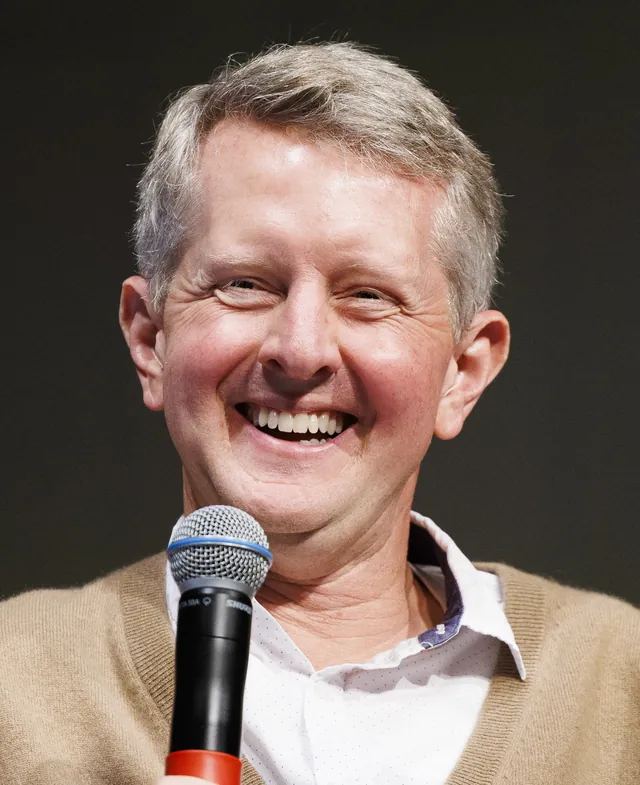
Ken Jennings’s IQ score does not exist in any public record: no published test, no examiner, no date, and no Ken Jennings IQ test of any kind. The sources behind this page — Wikipedia and Wikidata, the host biography on jeopardy.com, the show’s contestant FAQ, the about page on ken-jennings.com and his own 2011 Slate essay — list degrees, games, books and hosting jobs, and none mentions an IQ. Riot IQ, which sells IQ tests, says in an article by Dr. Russell T. Warne dated August 16, 2026 that no outlet has named a test he took and that he has never published a number. No interview has him giving a score. For how numbers usually get attached to famous names, see where celebrity IQ numbers come from.
The Ken Jennings IQ score that circulates, 175 or 173, traces to pages that cite nothing. The earliest located is an American Thinker column, “The Unbearable Brightness of Being Ken,” by John B. Dwyer, dated July 29, 2004, which says he “is said to have” a genius IQ of 175 and names no test or source; it describes his run as thirty-eight straight games at that point, so the figure surfaced in the middle of the streak. The latest is the Fiction Horizon list The Smartest Celebrities Ranked by IQ (Hrvoje Milakovic, August 13, 2025), whose entry reads “Reported IQ is 173” with no test, source or date. A 175 on the usual 15-point scale is five standard deviations above the mean, about 1 in 3.5 million; how rare a high IQ score is depends on a normed test, and a game-show record is not one.
How smart is Ken Jennings? A Jeopardy! record shows a great deal, but it is not an IQ test. The show’s contestant FAQ describes an Anytime Test of 50 clues with 15 seconds to respond to each, open to people 18 or older in the United States or Canada, then an audition in two parts by video conference with a mock game in groups of three and a short interview, and a contestant pool in which a person can be invited for up to 24 months; it does not say what the test measures. Jennings has said where the weight falls. In a Slate essay dated February 16, 2011 he called buzzer skill crucial and wrote that games between humans are more often won by “the fastest thumb,” and Stephen Baker’s book Final Jeopardy, excerpted by the Kurzweil Library, says a written test of knowledge rather than speed would have favored both him and Brad Rutter against Watson. That knowledge is closer to crystallized intelligence than to reasoning, and recall speed overlaps with memory, but neither is a full IQ.
Jennings himself keeps the two apart. In Seattle Met in August 2012 he said, “I’m not Stephen Hawking,” and the magazine noted that people assume a nerdy, socially awkward “super genius,” which it called not really true. In an August 2025 KUOW interview about his book The Complete Kennections he said real problem-solving, the “big leaps forward in creativity or even in science,” means applying or connecting information in new ways, not just recalling it. The usual error on this site runs upward, with sourced records supporting a lower range than the circulating figure; here the record supports an estimated IQ of 130–145, well under 173 or 175, and no document supports a higher one.
How we read a number →Season 43 marks his fifth season as host; he grew up in Seoul, auditioned successfully in 2004 and won 74 games; 2005 Ultimate Tournament of Champions, 2011 IBM Challenge, 2014 Battle of the Decades, 2019 All-Star Games; beat Brad Rutter and James Holzhauer in 2020; 15 books; Emmy nominations in 2023–2026; Omnibus co-host since 2017. It does not mention education, IQ or any test score.
The test is 50 clues with 15 seconds to respond to each, for applicants 18 or older in the United States or Canada; passing is the first round of qualification; auditions run in two parts by video conference, with a mock game in groups of three and an interview; the contestant pool lasts up to 24 months. Neither page says what the test measures.
At BYU he double-majored in English and computer science and graduated in 2000, and captained the quiz bowl team; he was a software engineer for a Salt Lake City health care staffing company in 2004; won 74 games; lists Brainiac, Trivia Almanac, Maphead and Because I Said So!. No publication years, no Planet Funny, and no mention of IQ or test scores.
His own essay on playing Watson: buzzer skill is crucial and games between humans are more often won by “the fastest thumb”; the buzzer advantage grows when one thumb is a machine. No mention of IQ.
KUOW: recall versus the “big leaps forward in creativity or even in science.” Seattle Met: “I’m not Stephen Hawking”; the “nerdy, socially awkward super genius” assumption is called not really true. Kurzweil excerpt: a written test of knowledge, not speed, would have favored Jennings and Rutter over Watson. None gives an IQ.
Born May 23, 1974 in Edmonds; Seoul Foreign School; University of Washington, BYU from 1996, graduated 2000; first episode June 2, 2004; 75th game aired November 30, 2004; the 2003 exam; IBM Challenge scores and first round (February 14, 2011); Greatest of All Time, January 7–14, 2020, three match wins; hosting history, Sony’s December 2023 announcement, the March 2026 deal. Wikidata Q186 is “American game show contestant, host, and writer,” born 1974-05-23. Open Library gives first-publication years for the books. The Ken Jennings article mentions no IQ, SAT or ACT.
Season 43 is about to begin and marks Jennings’s fifth season behind the lectern as host. Confirms his status as of October 2026.
Says Jennings has no publicly verified IQ score, that he has never published a number, and that no outlet has named a test he took; says 175 appears only on celebrity lists, sometimes as 173. Published by a company that sells IQ tests.
American Thinker: he “is said to have a genius IQ of 175”; no test or source, written when his streak stood at thirty-eight games. Fiction Horizon: “Reported IQ is 173”; no test, source or date, and an introduction warning that many celebrity numbers are self-reported or repeated without formal confirmation.
No test, score report, examiner or self-reported IQ appears on the jeopardy.com, ken-jennings.com, Slate, KUOW, Seattle Met, Wikipedia or Wikidata pages cited here, and no SAT or ACT score is published. The only IQ figures for him are the list figures above, and Riot IQ says none was ever verified.
The sources behind our estimate
The figures that circulate for Ken Jennings, what we were able to confirm, and where the two diverge.
The Ken Jennings IQ that circulates is 175 in an American Thinker column dated July 29, 2004 (“said to have a genius IQ of 175”) and 173 in the Fiction Horizon list The Smartest Celebrities Ranked by IQ, dated August 13, 2025. Riot IQ says the number appears only on celebrity lists and is sometimes quoted as 173.
No IQ test result, score report or self-reported score for Ken Jennings is on record — not in Wikipedia and Wikidata, the host biography on jeopardy.com, the show’s contestant FAQ, the about page on ken-jennings.com, his 2011 Slate essay or the interviews cited here. American Thinker gives 175 and Fiction Horizon gives 173; neither names a test, an examiner or a date, and Fiction Horizon’s own introduction warns that many celebrity numbers are self-reported or repeated without formal confirmation. Riot IQ (Dr. Russell T. Warne, August 16, 2026), a company that sells IQ tests, says no outlet has named a test he took and that he has never published a number.
The lower of the two circulating figures sits 28 points above the top of this page’s range. Two pages 21 years apart give 175 and 173 with the same absence of evidence, the signature of a number repeated rather than measured. On a 15-point scale 175 is five standard deviations above the mean, about 1 in 3.5 million.
Want a number that does hold up? Every figure on this page is somebody’s claim. Take the 30-question test and get a percentile you can check rather than a figure you have to trust.
Ken Jennings — frequently asked
What is Ken Jennings’s IQ?
Ken Jennings’s IQ has never been published as a test result, so it has no measured value. Celebrity lists print 175 (an American Thinker column, July 29, 2004) and 173 (Fiction Horizon, August 13, 2025), and neither names a test. IQ Metrics estimates 130–145 from his BYU degree, his 74-game Jeopardy! streak and his books: an inference, not a score.
Is Ken Jennings’s IQ 175?
There is no evidence for 175. A July 29, 2004 American Thinker column says he “is said to have” it, and a 2025 Fiction Horizon list prints 173; neither cites a test, an examiner or a date. On a 15-point scale 175 would be about 1 in 3.5 million, a claim that needs a normed test, not a quiz record.
Did Ken Jennings take an IQ test?
No Ken Jennings IQ test is on public record, and no interview, book or page has him giving a score. The tests he is documented to have taken are the Jeopardy! written contestant exam, which Wikipedia says he took in 2003, and an audition; Jeopardy! does not say what either measures, and neither is an IQ test.
Is Ken Jennings a genius?
No test has labeled him one, and “genius” is not a documented status. The record shows a BYU double major, 74 straight Jeopardy! wins in 2004 and the 2020 Greatest of All Time title, which support an estimated IQ of 130–145, high but not certified. In a 2012 Seattle Met profile he said, “I’m not Stephen Hawking.”
How smart is Ken Jennings?
The documented record shows exceptional recall and quiz speed alongside solid academics: a BYU degree in English and computer science (2000), work as a software engineer, 15 books and the Jeopardy! hosting job. That supports a high estimated IQ of 130–145, but breadth of knowledge and buzzer speed are not a full IQ.
Does winning Jeopardy! show a high IQ?
Not by itself. The show rewards knowledge of clues and speed on the buzzer; in a 2011 Slate essay Jennings called buzzer skill crucial and wrote that games between humans are more often won by “the fastest thumb.” Knowledge and recall correlate with IQ, but a Jeopardy! record is not an IQ score.
How does Ken Jennings’s estimated IQ compare with Stephen Hawking’s or Malcolm Gladwell’s?
Ken Jennings’s estimated range, 130–145, overlaps Malcolm Gladwell’s 125–145 and sits below Stephen Hawking’s 150–170. The ranges rest on different evidence — a degree and a quiz record for Jennings, a bachelor’s degree and a writing career for Gladwell, a completed doctorate for Hawking — so the gaps are not measured differences between people.
Where did Ken Jennings go to school, and what has he written?
Born May 23, 1974, in Edmonds, Washington, he graduated from the Seoul Foreign School, attended the University of Washington and graduated from Brigham Young University in 2000 with a double major in English and computer science. His books include Brainiac (2006), Maphead (2011), Because I Said So! (2012) and Planet Funny (2018).
How does my IQ compare with Ken Jennings?
You can find out in about fifteen minutes. The IQ Metrics assessment is 30 questions, scored on the same 100-mean scale used throughout this page, so your result and the estimate above are at least expressed in the same units — one measured, one inferred. Once you have a number, the leaderboard shows where it would sit, and how we score and norm it explains the benchmarking.
Where does this estimate come from?
From the documented record rather than a test — the method is named above and set out in full under how we read a number. Compare it against the other writers profiles, starting with Voltaire.
- Take the 30-question IQ test — get a measured score and percentile of your own
- Average IQ by country — how the scale behaves across populations
- How IQ Metrics scores its assessment — the method behind our own number
- More on how IQ testing works — reliability, error and what a score can and cannot say
- More writers profiles — same field, same method
More writers
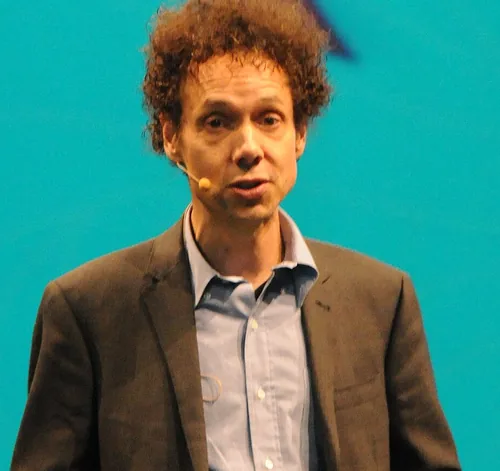
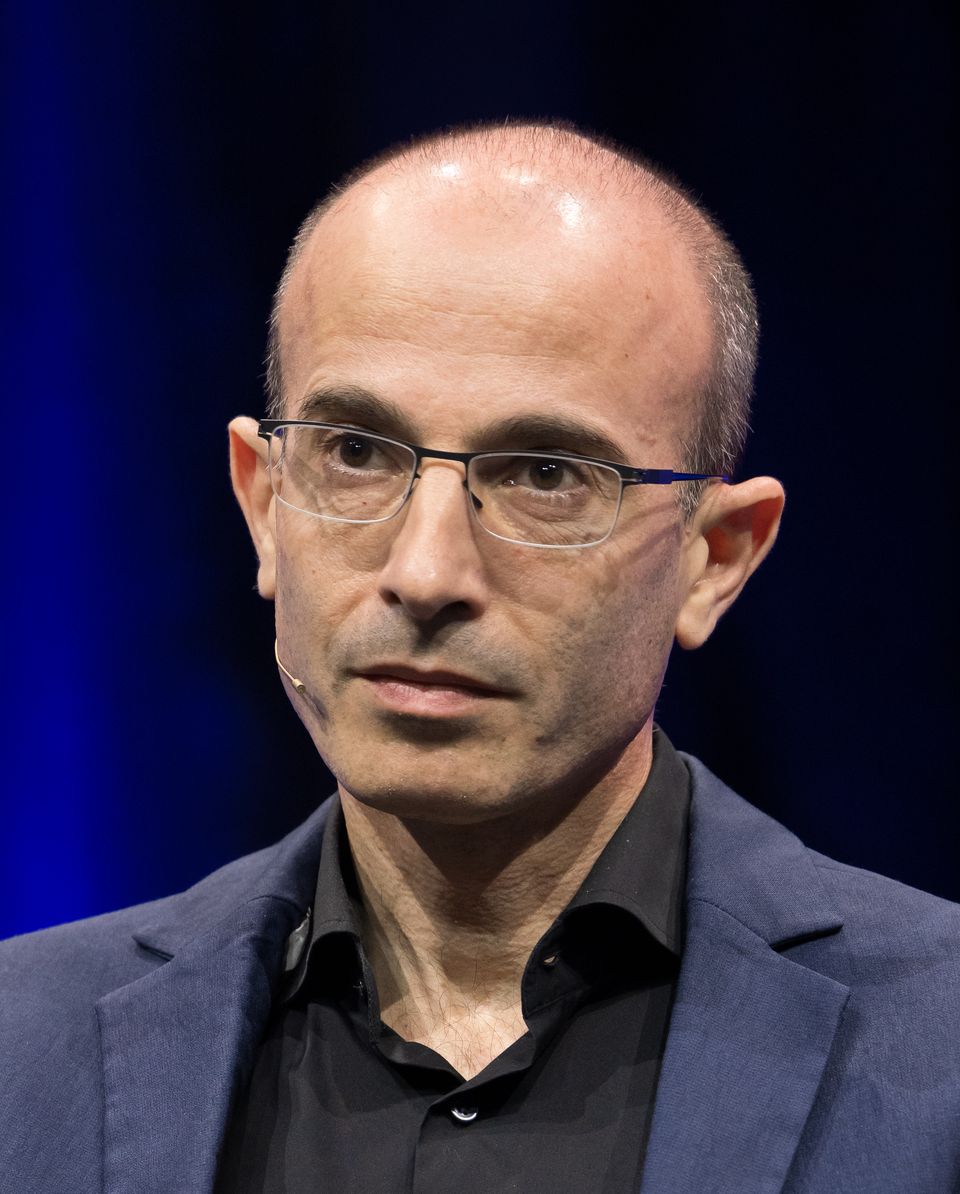
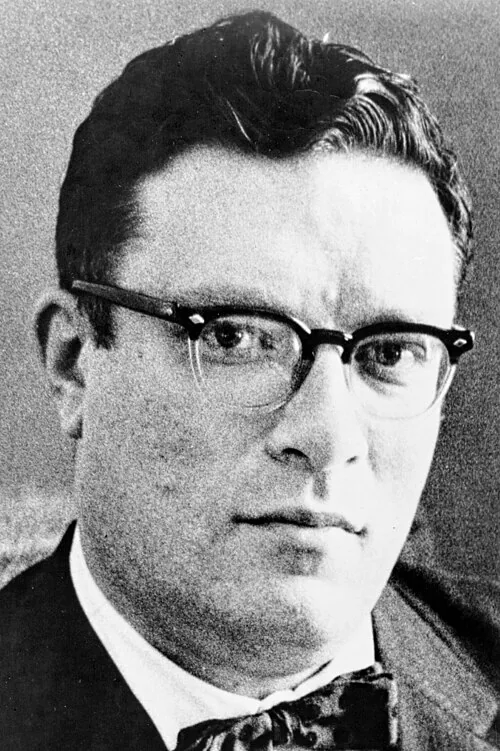
Photograph by Thomas Bonte (November 16, 2011; Commons file), CC BY 2.0, cropped from a larger picture. Background removed for the portrait above. · Photograph by Martin Kraft (Frankfurt Book Fair, October 2024), CC BY-SA 4.0. Background removed for the portrait above. · Photograph by Phillip Leonian for the New York World-Telegram & Sun (before 1959), public domain. Background removed for the portrait above.


An estimate is an inference.
Yours can be measured.
Thirty questions, scored against general-population benchmarks. Your score, your percentile, your ability breakdown and a printable IIF certificate.
Find your IQ score now! →