



What was Edgar Allan Poe’s IQ?
Eligible for the Cox study by birth year, and left out of it.
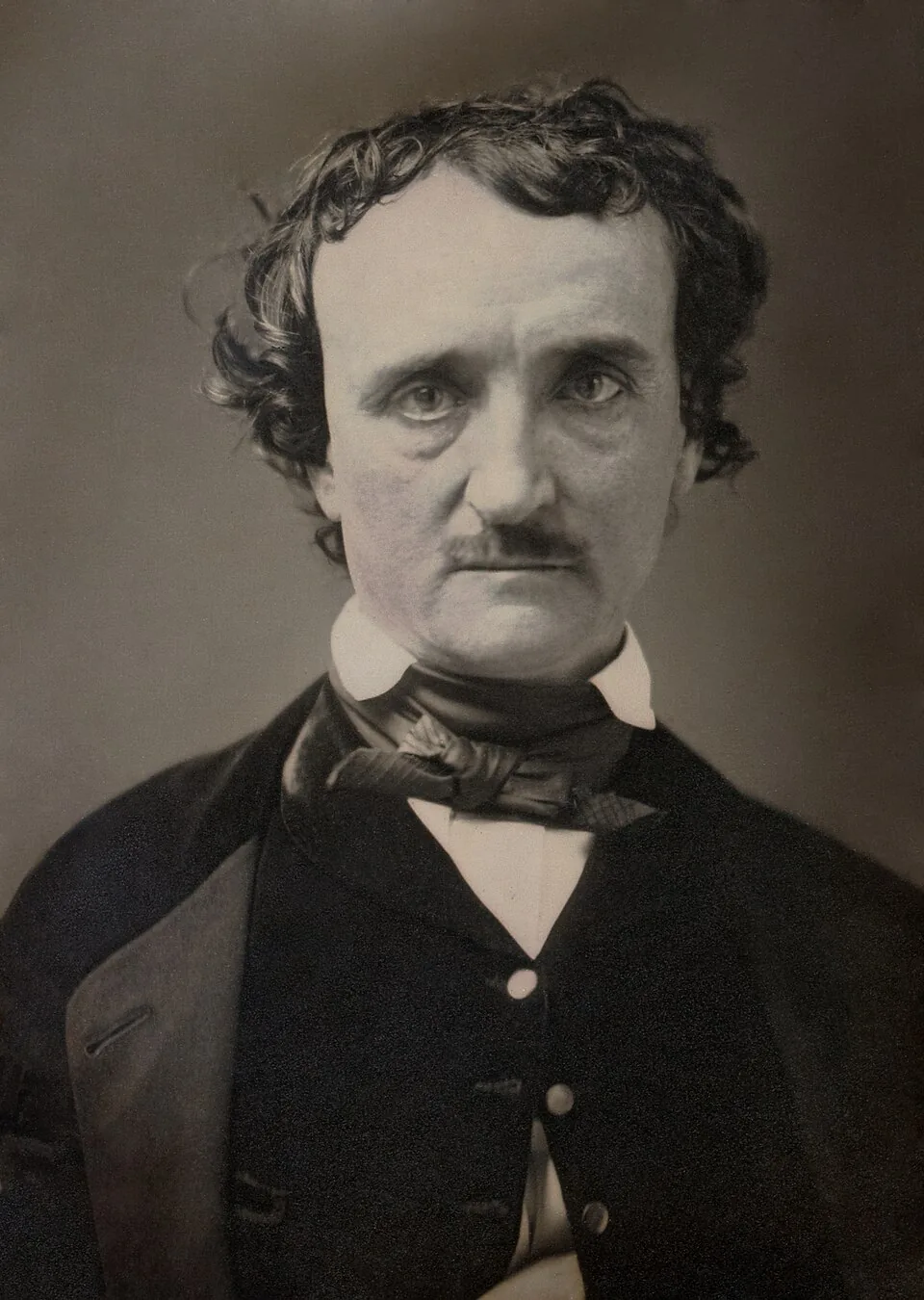
The 145 attached to Poe has no source at all. The detail worth knowing is that the one study which should have covered him — Cox’s 1926 survey of geniuses born between 1450 and 1850 — does not include him, despite his falling squarely inside its window.
Edgar Allan Poe’s estimated IQ
- Invented the modern detective story. “The Murders in the Rue Morgue” (1841) established the form — the eccentric analyst, the baffled official police, the reconstruction from overlooked detail — that Conan Doyle later built Sherlock Holmes on.
- Ran a public cryptanalysis challenge in Alexander’s Weekly Messenger in 1839–40, inviting readers to submit substitution ciphers and publishing solutions. His 1841 essay “A Few Words on Secret Writing” set out the method.
- Worked professionally as a magazine editor and critic, producing a large body of reviews on a deadline — an unusual quantity of dated, attributable output for a writer of the period.
- Eureka (1848), a speculative prose cosmology, contains passages sometimes read as anticipating an expanding universe and a resolution of Olbers’ paradox.
Poe’s formal record is genuinely poor — one abandoned university session and a deliberate expulsion from West Point — so this range rests almost entirely on the published work. Achievement-based estimates flatter people who wrote things down, and Poe wrote constantly. Treat 150–170 as a reading of the output, not of the man.
- Born
- 19 January 1809, Boston
- Died
- 7 October 1849, Baltimore
- Field
- Fiction, poetry, criticism
- Education
- University of Virginia (one session); West Point (dismissed 1831)
- Known for
- Inventing detective fiction; “The Raven”
- In Cox 1926?
- No — eligible by birth year, not selected
What an IQ of 150–170 actually means
Set the claim aside for a moment. If someone genuinely scored in this range, here is what that would represent.
Average is 100 by construction, and about two-thirds of people fall between 85 and 115. Take the test to place your own score on this scale.
| Score range | Classification | Share of people | What it indicates |
|---|---|---|---|
| 85 – 114 | Average | ~68% | The range most people fall into. |
| 115 – 129 | Above average | ~13.6% | Roughly one person in seven. |
| 130 – 144 | Gifted | ~2% | The threshold most high-IQ societies use. |
| Above 144 | Highly gifted | ~0.1% | Figures above this range are extrapolated from the curve rather than measured. |
Percentages are approximate and describe a normal distribution. The same number means different things on tests with different standard deviations.
Thirty questions gives you a measured position on this exact scale — your score, your percentile and the ability breakdown behind it.
Find out in 30 minutes →Who Edgar Allan Poe was
Edgar Allan Poe was born in Boston in 1809 and orphaned before he was three. He was taken in, though never formally adopted, by John Allan, a Richmond merchant whose surname he carried.
He attended the University of Virginia for one session in 1826 and left over debts, then enlisted in the army and secured a place at West Point, from which he was court-martialled and dismissed in 1831 — by most accounts deliberately, having decided to leave. His formal education ends there, at twenty-two.
He spent the rest of his short life as a working magazine man: editor, reviewer, and author of the stories and poems that made his name after his death rather than during it. He died in Baltimore in 1849, aged forty, in circumstances still unexplained.
 By Elora Mercer, Celebrity Research WriterFigures checked by Leon Falkner, Data & Research Analyst
Reviewed by Aarav Vardhan, Editor-in-Chief · Last reviewed August 2026

Edgar Allan Poe: the documented record
The estimate above rests on this record. Every entry here is a matter of public fact, which is more than can be said for the number itself.
- 1809Born in Boston.
- 1826Attends the University of Virginia for one session; leaves over debts.
- 1830Admitted to West Point.
- 1831Court-martialled and dismissed from West Point.
- 1839Begins the cipher challenge in Alexander’s Weekly Messenger.
- 1841Publishes “The Murders in the Rue Morgue” and “A Few Words on Secret Writing”.
- 1845Publishes “The Raven”.
- 1848Publishes Eureka.
- 1849Dies in Baltimore, aged forty.
Where the 145 figure came from
Following a claim back to its first appearance is the part almost nobody does — and it is what most people are actually asking.
The Poe number is a good illustration of how a figure acquires false respectability. Because several historical writers on this site — Voltaire, Goethe — genuinely do have Cox numbers, a reader encountering “Poe: 145” reasonably assumes it came from the same place. It did not. Cox’s 301 does not contain him.
Why he was left out is itself informative. Cox selected from Cattell’s ranked list of the thousand most eminent figures, compiled in 1903, and Poe’s standing then was far lower than it is now — he was still substantially read as a disreputable minor figure, thanks in large part to Rufus Griswold’s hostile obituary and memoir. The study measured eminence as of 1903, and eminence moves.
The record that does exist points in two directions at once, which is why the range is wide. Against him: he left the University of Virginia after a single session over gambling debts, and got himself deliberately court-martialled out of West Point. For him: he invented a literary form that is still in use, ran a cryptography column that he serviced himself, and produced an enormous quantity of dated critical prose. The formal record and the working record disagree, and the working record is the better evidence.
How we read a number →The first modern detective story, introducing C. Auguste Dupin. Dated, attributable and continuously in print since.
His account of the cryptanalysis method used in the Alexander’s Weekly Messenger reader challenge of 1839–40.
Poe is not in it, despite being born in 1809, inside the study’s 1450–1850 window. Cox selected from Cattell’s 1903 eminence ranking, where Poe stood low.
Poe died in 1849. Intelligence testing began in 1905. No test exists or could exist.
Source URLs and first-appearance date pending audit.
No original could be located. Several pages imply a historiometric origin the figure does not have.
The sources behind our estimate
The figures that circulate for Edgar Allan Poe, what we were able to confirm, and where the two diverge.
145 is the figure most often quoted, sometimes 150. It appears on aggregator pages with no test, no date and no study attached, and often alongside the false claim that it comes from a historiometric survey.
Poe died in 1849 and was never tested. More usefully: he is not among Cox’s 301, although he was born in 1809, well inside the 1450–1850 window the study covered. So the 145 cannot be a Cox figure, whatever the pages implying otherwise suggest. It has no documentary origin we could find.
Three numbers, no method between them. Compare Beethoven, whose 165 at least names a study and a table.
Want a number that does hold up? Every figure on this page is somebody’s claim. Take the 30-question test and get a percentile you can check rather than a figure you have to trust.
Edgar Allan Poe — frequently asked
What was Edgar Allan Poe’s IQ?
No test exists — he died in 1849, before intelligence testing was invented. The 145 that circulates has no source. Our 150–170 range is inferred from his published work, not from a test.
Is Poe’s IQ figure from the Cox study?
No. Poe is not among Cox’s 301, even though he was born in 1809, inside the study’s 1450–1850 window. Any page implying a Cox origin for his number is wrong.
Why was Poe left out of the Cox study?
Cox selected subjects from Cattell’s 1903 ranking of the thousand most eminent figures. Poe’s reputation in 1903 was much lower than it is now, partly because of Rufus Griswold’s hostile posthumous memoir.
Did Edgar Allan Poe invent the detective story?
He is generally credited with it. “The Murders in the Rue Morgue” (1841) introduced C. Auguste Dupin and the structure Conan Doyle later used for Sherlock Holmes.
Was Poe good at codebreaking?
He ran a public cipher challenge in Alexander’s Weekly Messenger in 1839–40, solving reader-submitted substitution ciphers, and wrote up the method in 1841. The ciphers were simple by modern standards but the work was real.
Did Poe finish university?
No. He completed one session at the University of Virginia in 1826 before leaving over gambling debts, and was later dismissed from West Point.
How does my IQ compare with Edgar Allan Poe?
You can find out in about fifteen minutes. The IQ Metrics assessment is 30 questions, scored on the same 100-mean scale used throughout this page, so your result and the estimate above are at least expressed in the same units — one measured, one inferred. Once you have a number, the leaderboard shows where it would sit, and how we score and norm it explains the benchmarking.
Where does this estimate come from?
From the documented record rather than a test — the method is named above and set out in full under how we read a number. Compare it against the other writers profiles, starting with Voltaire.
- Take the 30-question IQ test — get a measured score and percentile of your own
- Average IQ by country — how the scale behaves across populations
- How IQ Metrics scores its assessment — the method behind our own number
- More on how IQ testing works — reliability, error and what a score can and cannot say
- More writers profiles — same field, same method
More writers
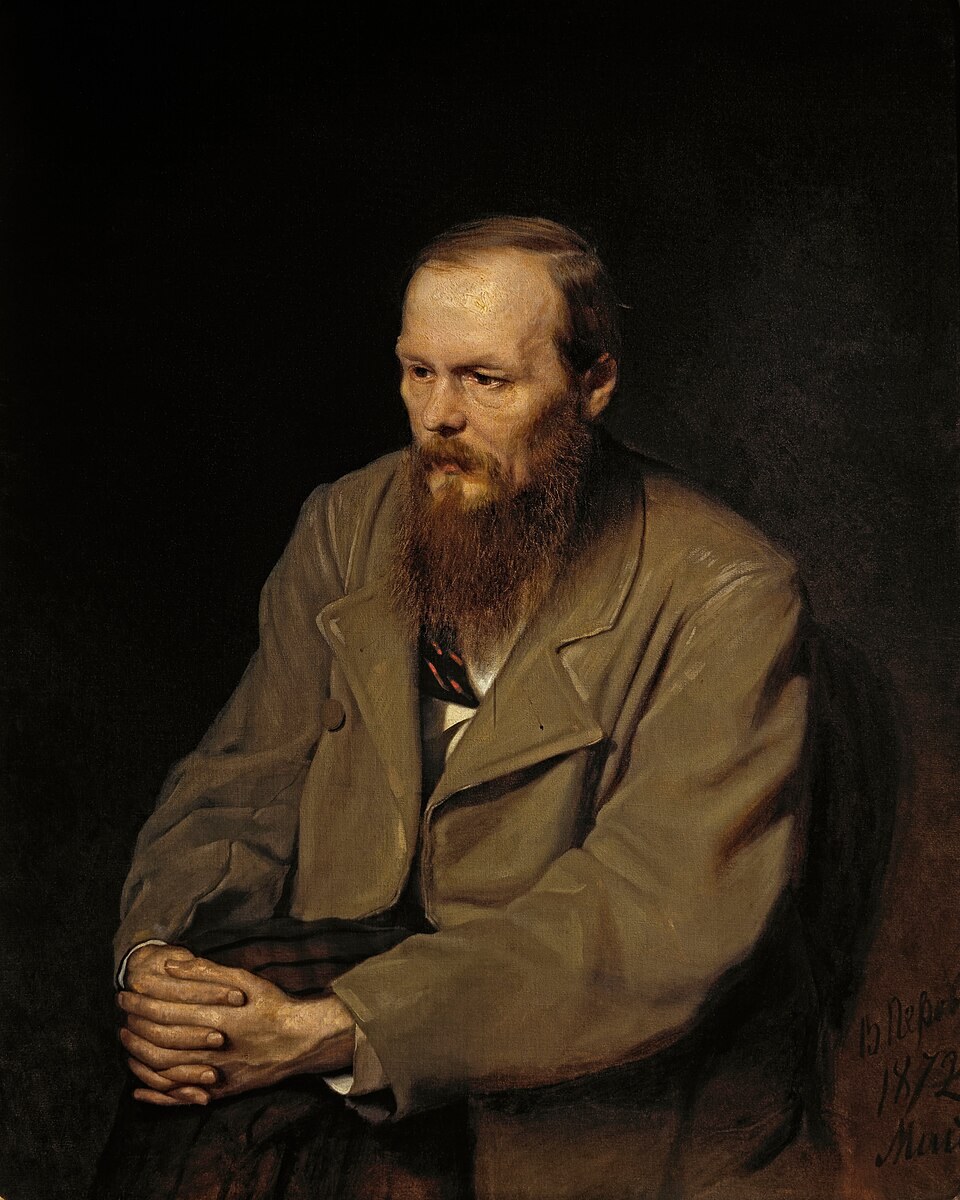


Portrait by Vasily Perov (1872), Tretyakov Gallery, via Wikimedia Commons, public domain. · Photograph by Joe Loong (Tech@State: Moneyball Diplomacy, June 2013), CC BY-SA 2.0. Background removed for the portrait above. · Photograph by Christopher Michel (March 18, 2016), CC BY-SA 4.0. Cropped from the original. Background removed for the portrait above.


.jpg)
An estimate is an inference.
Yours can be measured.
Thirty questions, scored against general-population benchmarks. Your score, your percentile, your ability breakdown and a printable IIF certificate.
Find your IQ score now! →