



What was Jane Austen’s IQ?
About three years of school, her father’s library and six novels: the record is documented, and no IQ score has ever been published.
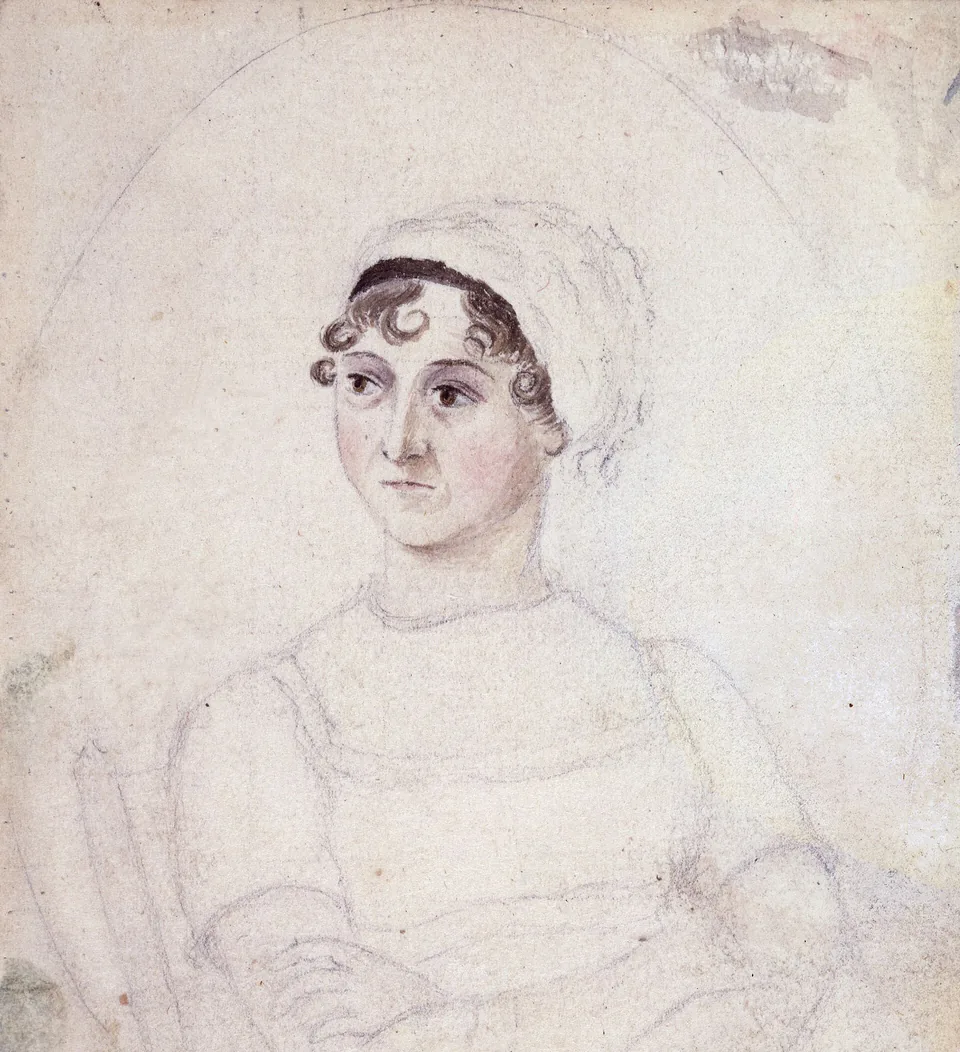
Jane Austen has no published IQ score. What is documented is about three years of schooling that ended in 1786, when she was ten, then years of reading in her father’s library and six novels. Our Jane Austen IQ estimate is 135–150, drawn from that record, not from a test.
Jane Austen’s estimated IQ
- School in Oxford, Southampton and Reading with her sister Cassandra between 1783 and 1786, and home education after that (Jane Austen’s House). The Reading Abbey school ended before December 1786 because the fees were too high for the family (Wikipedia).
- Teenage writings from 1787 to 1794, including Love and Friendship, Lesley Castle and Lady Susan (Jane Austen’s House), and Catharine, or the Bower, which she began in August 1792, aged 17 (Wikipedia).
- Unfettered access to her father’s library and to that of a family friend, Warren Hastings; her education came mainly from reading, guided by her father and her brothers James and Henry (Wikipedia).
- Four novels in her lifetime: Sense and Sensibility (1811), Pride and Prejudice (1813), Mansfield Park (1814) and Emma (December 1815). Northanger Abbey and Persuasion followed after her death in 1817 (Jane Austen’s House; Wikipedia).
Literary skill is not an IQ score. We found no test, school mark or exam result for her, and she died long before intelligence tests existed. The range is a judgment about the record as a whole, not a measurement.
- Born
- December 16, 1775, Steventon, Hampshire
- Schooling
- 1783–1786 in Oxford, Southampton and Reading; taught at home after that
- Teenage writings
- 1787–1794, including Love and Friendship, Lesley Castle and Lady Susan
- Novels in her lifetime
- Sense and Sensibility (1811), Pride and Prejudice (1813), Mansfield Park (1814), Emma (1815)
- After her death
- Northanger Abbey and Persuasion (1817)
- Died
- July 18, 1817, Winchester, aged 41
- Circulating IQ figure
- None found
- Documented IQ test
- None published
What an IQ of 135–150 actually means
Set the claim aside for a moment. If someone genuinely scored in this range, here is what that would represent.
| Score range | Classification | Share of people | What it indicates |
|---|---|---|---|
| 85 – 114 | Average | ~68% | The range most people fall into. |
| 115 – 129 | Above average | ~13.6% | Roughly one person in seven. |
| 130 – 144 | Gifted | ~2% | The threshold most high-IQ societies use. |
| Above 144 | Highly gifted | ~0.1% | Figures above this range are extrapolated from the curve rather than measured. |
Percentages are approximate and describe a normal distribution. The same number means different things on tests with different standard deviations.
Thirty questions gives you a measured position on this exact scale — your score, your percentile and the ability breakdown behind it.
Find out in 30 minutes →Who Jane Austen was
Who was Jane Austen? She was born on December 16, 1775, at Steventon Rectory in Hampshire, the seventh of eight children of a clergyman and his wife. She lived her adult life in the English countryside and in Bath, Southampton and Chawton. She died in Winchester on July 18, 1817, aged 41.
What did she study? In 1783 she and her sister Cassandra were sent to school in Oxford and then Southampton, where both caught typhus and Jane nearly died. After the Reading Abbey school in 1785–86 she was taught at home. Her schooling was short, but her father’s library was open to her.
Was she famous in her lifetime? Not by name. Sense and Sensibility appeared in October 1811 “By a Lady”, and her name never appeared on a book while she lived. Wikipedia says she earned £140 from that novel and sold the copyright of Pride and Prejudice for £110. Compare other writers in our writers category.
 By Elora Mercer, Celebrity Research WriterFigures checked by Leon Falkner, Data & Research Analyst
Reviewed by Aarav Vardhan, Editor-in-Chief · Last reviewed November 2026

Jane Austen: the documented record
The estimate above rests on this record. Every entry here is a matter of public fact, which is more than can be said for the number itself.
- 1775Born on December 16 at Steventon Rectory, Hampshire.
- 1783Sent to school in Oxford with her sister Cassandra; falls ill with typhus and nearly dies.
- 1785Attends Reading Abbey Girls’ School; the sisters are home again before December 1786.
- 1787Begins the teenage writings that run to 1794.
- 1792Starts Catharine, or the Bower, aged 17 (Wikipedia).
- 1795Writes Elinor and Marianne, an early version of Sense and Sensibility.
- 1811Sense and Sensibility is published “by a Lady”.
- 1813Pride and Prejudice is published “by the author of Sense and Sensibility”.
- 1815Emma is published in December (dated 1816).
- 1817Dies in Winchester on July 18; Northanger Abbey and Persuasion are published the same year.
Why no figure circulates
Following a claim back to its first appearance is the part almost nobody does — and it is what most people are actually asking.
What is Jane Austen’s IQ? No one knows, because no IQ test or school mark has been published for her. She died in 1817, before intelligence tests existed, and the sources we opened give her record, not a number. Our estimate of 135–150 rests on that record. For why celebrity numbers drift from page to page, see where celebrity IQ numbers come from.
Was Austen a child prodigy? She wrote early, though not in the way the word suggests. Jane Austen’s House dates her teenage writings to 1787–1794. Wikipedia says she wrote major novels before the age of 22 but was not published until she was 35. “Prodigy” fits a performer better than a writer; early and persistent fits her record.
How does she compare with other writers on this site? We place her level with Herman Melville at 135–150 and above Ernest Hemingway at 128–145. Virginia Woolf is 140–155 and Charles Dickens 140–160. All four ranges are estimates from records, not test scores, and they overlap. To place a score of your own, use our IQ percentile calculator.
How we read a number →Born December 16, 1775 at Steventon Rectory, the seventh of eight children; school in Oxford, Southampton and Reading, 1783–1786, with typhus in 1783; teenage writings 1787–1794; Elinor and Marianne in 1795; the four novels published in her lifetime with their dates. It gives no IQ.
The Reading Abbey school and the fees; access to her father’s library and Warren Hastings’s; Catharine, or the Bower in August 1792; major novels written before 22 and published from 35; £140 from Sense and Sensibility and £110 for the copyright of Pride and Prejudice; death in Winchester on July 18, 1817. It contains no IQ.
The sketch used as the portrait above; public domain, with the source named on Wikimedia Commons.
Confirms Q36322 is the English novelist (1775–1817), not a namesake.
None from Austen, her family or the museum that keeps her house. A general web search for “Jane Austen IQ” returned no sourced figure.
On this site Woolf is 140–155, Dickens 140–160, Hemingway 128–145 and Melville 135–150.
The sources behind our estimate
The figures that circulate for Jane Austen, what we were able to confirm, and where the two diverge.
People type “jane austen iq”, “was jane austen smart” and “jane austen education”. We found no page that gives her an IQ score, and none that names a test.
No IQ score for Jane Austen appears in any source we opened. Jane Austen’s House, the museum in her last home, lists her schooling, her writing and her publication dates, and gives no score. Wikipedia’s long biography gives none either, and a general web search for her IQ turned up no number for her.
No circulating figure exists to compare, so the range stands alone. We put it level with Herman Melville’s 135–150, on a record that is early, sustained and well documented.
Want a number that does hold up? Every figure on this page is somebody’s claim. Take the 30-question test and get a percentile you can check rather than a figure you have to trust.
Jane Austen — frequently asked
What is Jane Austen’s IQ?
No IQ score for Jane Austen has been published, and she died in 1817, before IQ tests existed. Our Jane Austen IQ estimate, drawn from her record, is 135–150. It is an estimate, not a test result.
Was Jane Austen smart?
Her record points to a very able writer: teenage works from 1787, Catharine, or the Bower begun at 17 and four novels published between 1811 and 1815. “Smart” is not an IQ category, and our range for her is 135–150.
What was Jane Austen’s education?
She went to school in Oxford, Southampton and Reading between 1783 and 1786, and was taught at home after that. She had the use of her father’s library and, through a family friend, Warren Hastings’s as well.
Was Jane Austen a child prodigy?
She was an early and steady writer rather than a documented prodigy. Her teenage writings date from 1787 to 1794, and Wikipedia says she wrote major novels before 22 but was not published until 35. No test or school report marks her out.
Was Jane Austen famous in her lifetime?
Not by name. Her novels appeared “By a Lady” and “By the author of Sense and Sensibility”, and her name never appeared on a book while she lived. Pride and Prejudice sold well, yet she had sold its copyright for £110.
How does Jane Austen’s estimated IQ compare with Virginia Woolf’s and Charles Dickens’s?
On this site Austen is 135–150, Woolf 140–155 and Dickens 140–160. All three are estimates from records, not test scores, and the ranges overlap heavily. To see where a score lands, try our IQ test.
How does my IQ compare with Jane Austen?
You can find out in about fifteen minutes. The IQ Metrics assessment is 30 questions, scored on the same 100-mean scale used throughout this page, so your result and the estimate above are at least expressed in the same units — one measured, one inferred. Once you have a number, the leaderboard shows where it would sit, and how we score and norm it explains the benchmarking.
Where does this estimate come from?
From the documented record rather than a test — the method is named above and set out in full under how we read a number. Compare it against the other writers profiles, starting with Voltaire.
- Take the 30-question IQ test — get a measured score and percentile of your own
- Average IQ by country — how the scale behaves across populations
- How IQ Metrics scores its assessment — the method behind our own number
- More on how IQ testing works — reliability, error and what a score can and cannot say
- More writers profiles — same field, same method
More writers

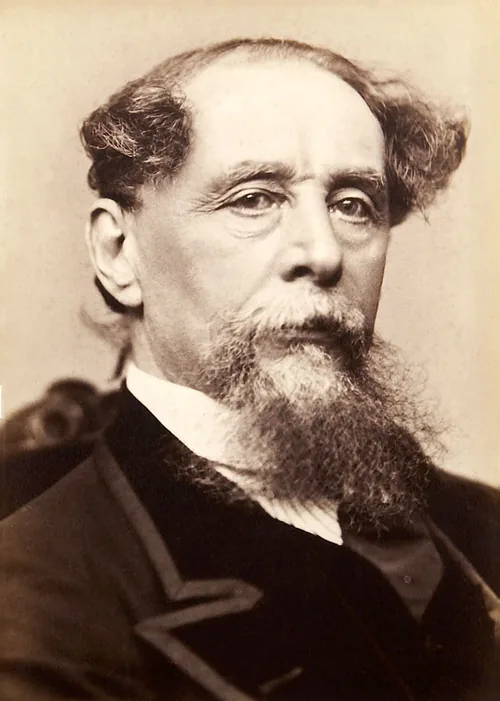
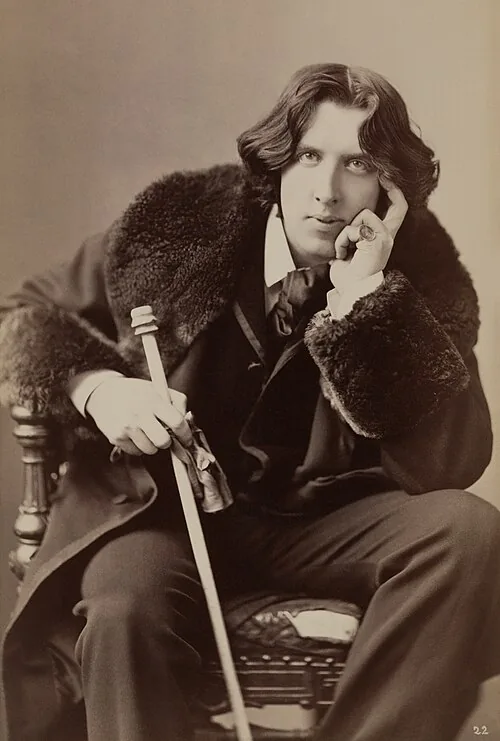
Portrait of Virginia Woolf by George Charles Beresford, 1902, restored by Adam Cuerden (Commons file). Public domain. Cropped for the portrait above. · Photograph of Charles Dickens by Jeremiah Gurney (between 1867 and 1868), Commons file, public domain (a nineteenth-century photograph). Cropped for the portrait above. · Photograph by Napoleon Sarony (1882), Library of Congress, public domain.


An estimate is an inference.
Yours can be measured.
Thirty questions, scored against general-population benchmarks. Your score, your percentile, your ability breakdown and a printable IIF certificate.
Find your IQ score now! →