



What was Aristotle’s IQ?
His IQ online runs from −1000 to 200: a Flynn-effect thought experiment at one end, an unsourced list at the other, and no test anywhere in between.
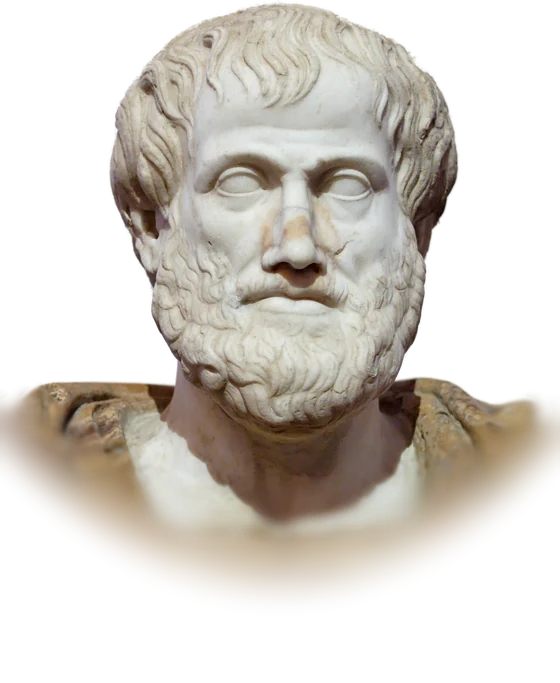
No IQ test result exists for Aristotle, who died in 322 BCE, more than 2,200 years before the Binet–Simon intelligence test of 1905, and none of the Aristotle IQ estimates online cites one. What is documented is a career: about twenty years at Plato’s Academy, tutor to Alexander, founder of the Lyceum, some thirty-one surviving treatises. From that record, this page’s estimate of his IQ level is 150–170.
Aristotle’s estimated IQ
- By the Stanford Encyclopedia of Philosophy’s count he left perhaps as many as two hundred treatises, of which about thirty-one survive, spanning logic, physics, metaphysics, ethics, politics, rhetoric, poetics and biology; the entry says no one before him developed a systematic treatment of the principles governing correct inference.
- He went to Plato’s Academy in Athens at about seventeen (c. 367 BCE) and stayed until Plato’s death, roughly twenty years, before founding a school of his own, the Lyceum, in 335 BCE.
- In 343 BCE Philip, king of Macedon, asked him to come to Pella, the Macedonian capital, to tutor his thirteen-year-old son Alexander.
- The Stanford Encyclopedia’s entry on his biology calls him the originator of the scientific study of life, puts biology at roughly a quarter of his surviving works, and says nothing of similar scope and sophistication followed until the sixteenth century.
- J. McKeen Cattell’s 1903 ranking of the thousand most eminent men in history, built from the space six biographical dictionaries gave each name, put him sixth; Plato was tenth and Socrates twenty-ninth. That measures reputation, not ability.
Aristotle died more than 2,200 years before modern intelligence testing began, so this Aristotle IQ level is a modern judgment of a documented record, not a recovered score. The record is thinner than his fame suggests: by the Stanford Encyclopedia’s account what survives is mostly lecture notes and drafts, his dialogues are largely lost, and a main ancient biography, by Diogenes Laertius, was written more than five centuries after his death. The range sits five points above Plato’s 145–165 at both ends because of the number of fields he shaped, not because any test could separate teacher from student.
- Born
- 384 BCE, Stagira, in the Macedonian region of northeastern Greece
- Died
- 322 BCE, Chalcis, on Euboea, of natural causes; aged about 62 (Diogenes Laertius says about 63)
- Field
- Philosophy: logic, metaphysics, physics, ethics, politics, rhetoric, biology
- Teacher
- Plato, at the Academy in Athens, from about 367 BCE for about twenty years
- Pupil
- Alexander, tutored at Pella from 343 BCE, when he was thirteen
- Founded
- The Lyceum, Athens, 335 BCE
- Surviving works
- About 31 treatises of perhaps 200; mostly lecture notes and drafts
- Cox 1926 status
- Not a subject: Cox’s study covers people who lived 1450–1850
What an IQ of 150–170 actually means
Set the claim aside for a moment. If someone genuinely scored in this range, here is what that would represent.
Average is 100 by construction, and about two-thirds of people fall between 85 and 115. Take the test to place your own score on this scale.
| Score range | Classification | Share of people | What it indicates |
|---|---|---|---|
| 85 – 114 | Average | ~68% | The range most people fall into. |
| 115 – 129 | Above average | ~13.6% | Roughly one person in seven. |
| 130 – 144 | Gifted | ~2% | The threshold most high-IQ societies use. |
| Above 144 | Highly gifted | ~0.1% | Figures above this range are extrapolated from the curve rather than measured. |
Percentages are approximate and describe a normal distribution. The same number means different things on tests with different standard deviations.
Thirty questions gives you a measured position on this exact scale — your score, your percentile and the ability breakdown behind it.
Find out in 30 minutes →Who Aristotle is
Aristotle was born in 384 BCE in Stagira, a small city in the Macedonian region of northeastern Greece. His father, Nicomachus, was a court physician; Diogenes Laertius, writing more than five centuries after Aristotle’s death, says he lived with Amyntas, king of Macedon, as physician and friend. At about seventeen Aristotle went to Athens and joined Plato’s Academy, around 367 BCE, and he stayed until Plato’s death in 348 or 347 BCE, the twenty years that Diogenes Laertius also reports. He was born fifteen years after Socrates died, so what he says of Socrates is second-hand; the Socrates profile notes that Aristotle credits him with inductive arguments and universal definition.
After Plato’s death Aristotle left Athens for Assos, on the coast of Asia Minor, where he joined a philosophical circle and stayed about three years, then moved to the nearby island of Lesbos, where he met Theophrastus and spent about two more. The Stanford Encyclopedia’s entry on his biology describes a researcher who consulted beekeepers, fishermen and sponge divers and performed, or oversaw, a great many dissections of a wide variety of animals; it calls him the originator of the scientific study of life and puts biology at roughly a quarter of what survives, in works such as History of Animals, Parts of Animals and Generation of Animals. In 343 BCE Philip, king of Macedon, asked him to come to Pella, the Macedonian capital, to tutor his thirteen-year-old son Alexander; the lessons lasted only two or three years.
In 335 BCE Aristotle returned to Athens and set up his own school in a public exercise ground dedicated to Apollo Lykeios, from which it took its name, the Lyceum. The Stanford Encyclopedia counts perhaps as many as two hundred treatises, of which about thirty-one survive. What survives reads like lecture notes, reworked drafts and in-house compilations for an inner circle of listeners, not polished works, and the dialogues he presumably wrote while still in the Academy are largely lost. The corpus includes the logical works (Categories, Prior Analytics, Posterior Analytics), the Physics, the Metaphysics, De Anima, the Nicomachean Ethics, the Politics, the Rhetoric and the Poetics. An ancient catalog of his writings preserved by Diogenes Laertius, which lists dialogues as well as treatises, closes with a total of 445,270 lines.
Alexander died in 323 BCE, and with anti-Macedonian feeling running high in Athens Aristotle withdrew to Chalcis, on the island of Euboea, where he died the following year, in 322 BCE, of natural causes, aged about 62. Diogenes Laertius, who wrote in the first half of the 3rd century CE and is often described by scholars as an uncritical compiler, records two versions of the death, aconite or natural causes, and gives Aristotle’s age as about sixty-three after correcting a source that said seventy. The Stanford Encyclopedia judges that only Plato rivals Aristotle in philosophical influence, and his physics, which held that the speed at which identically shaped bodies fall is proportional to their weight, stood for almost two millennia until pioneers including Galileo Galilei and Isaac Newton, both profiled here with Cox’s method, made it untenable. It is the kind of reputation people mean by genius (see what a genius IQ level means), but a reputation is not a test score.
 By Elora Mercer, Celebrity Research WriterFigures checked by Leon Falkner, Data & Research Analyst
Reviewed by Aarav Vardhan, Editor-in-Chief · Last reviewed August 2026

Aristotle: the documented record
The estimate above rests on this record. Every entry here is a matter of public fact, which is more than can be said for the number itself.
- 384 BCEBorn in Stagira, in the Macedonian region of northeastern Greece; his father, Nicomachus, is a court physician.
- c. 367 BCEGoes to Athens at about seventeen and joins Plato’s Academy, where he stays for about twenty years.
- 348–347 BCEPlato dies. Aristotle leaves Athens for Assos, in Asia Minor (about three years), then Lesbos (about two), where he meets Theophrastus.
- 343 BCEInvited by Philip, king of Macedon, to Pella to tutor his thirteen-year-old son Alexander; the lessons last two or three years.
- 335 BCEReturns to Athens and founds his own school, the Lyceum.
- 322 BCEDies at Chalcis, on Euboea, of natural causes, having left Athens in 323 BCE after Alexander’s death stirred anti-Macedonian feeling.
- 1903J. McKeen Cattell ranks him sixth of the 1,000 most eminent men in history, ahead of Plato (tenth) and Socrates (twenty-ninth).
- 1905–1912Binet and Simon publish their intelligence test (1905); William Stern coins the term IQ (1912). Aristotle had been dead more than 2,200 years.
- 1926Catharine Cox publishes her study of 301 geniuses who lived 1450–1850; men born before 1450 are excluded, so Aristotle is not a subject.
- 2008Scott Barry Kaufman’s Psychology Today essays give Aristotle 200 among his contemporaries and −1000 by today’s norms, as a Flynn-effect thought experiment.
- 2023A ranked list credited to a Twitter-recruited survey puts Aristotle at 148, as transcribed in a Substack essay dated April 5.
Where the 148–200 figure came from
Following a claim back to its first appearance is the part almost nobody does — and it is what most people are actually asking.
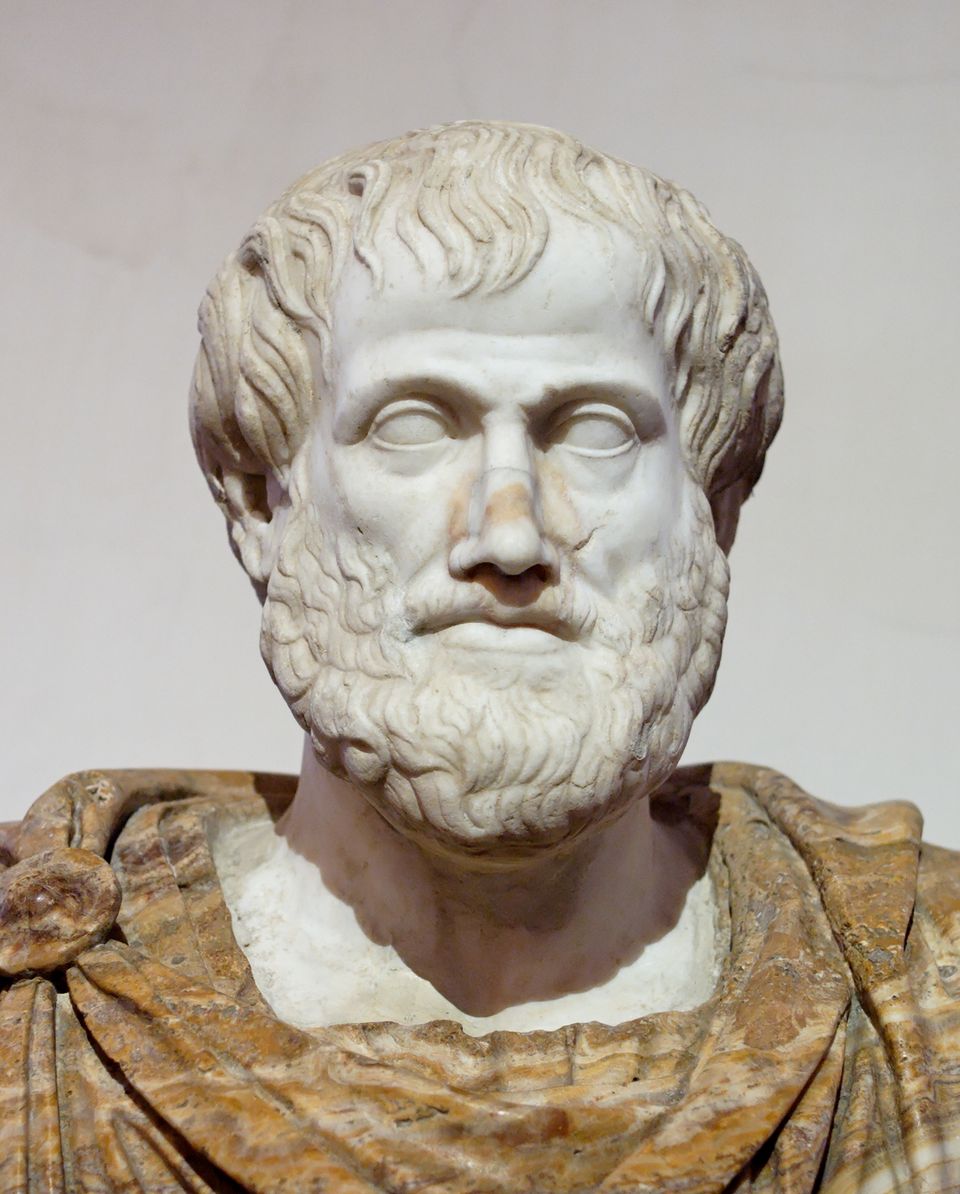
Every Aristotle IQ figure found online is a retrospective guess, and the pages differ mainly in how candid they are. iqtests.com (April 30, 2024) and NeuroLaunch (September 30, 2024) both call their numbers speculative, and LifeScore labels its own 160+ very low confidence. The 200 is the least explained: “The highest IQs in History”, published under the name IQ Tests on storifyme.com, ranks him second behind William James Sidis with no source, author or date, and Geniuses.club’s own ranked list of geniuses omits him even though its Aristotle profile is titled “Score 200” in search listings. For how numbers like these get made in general, see where celebrity IQ numbers come from.
The lowest figure has a different origin. A ranked list in Ronald Henss’s Substack essay of April 5, 2023 puts Isaac Newton first at 160, then Kant at 149 and Aristotle at 148, with Plato at 146 and Socrates at 145. Henss credits the list to a 2023 survey that recruited raters on Twitter to estimate the IQs of 54 people. Those are crowd guesses, not measurements, and Henss himself calls the exercise an impromptu, just-for-fun survey rather than a scientific study. The three philosophers sit within three points of one another, with each pupil ahead of his teacher, an ordering that reflects reputation, not data.
Among the pages that turn up first when you search for Aristotle’s IQ are two 2008 Psychology Today essays, not lists. In “Are You Smarter than Aristotle?” (August 16 and September 22) Scott Barry Kaufman supposes that Aristotle scored highest among his contemporaries, a 200, then runs the Flynn effect, the rise in scores of about three points a decade, backward and reports that by today’s norms his IQ would be −1000. Kaufman poses this as a paradox and relays James Flynn’s reply that earlier people were not deficient, but that schooling after the industrial revolution changed habits of mind toward hypothetical, abstract thinking. The absurd figure carries the lesson: an IQ places a person within a reference population, and none exists for fourth-century BCE Athens. Binet and Simon published their test in 1905 and William Stern coined the term IQ in 1912 (see the history of intelligence testing), so any number for Aristotle is a projection from achievement, and norms expire even for living people (see why IQ norms expire).
Nor can Catharine Cox’s 1926 study supply a figure. The Early Mental Traits of Three Hundred Geniuses describes 301 people who lived between 1450 and 1850. She drew them from Cattell’s 1903 list of the thousand most eminent men, ordered by the space six biographical dictionaries gave them, where Aristotle stands sixth, Plato tenth and Socrates twenty-ninth, but she left out eminent men born before 1450 and noted that including men of ancient times would put her requirement of adequate records of early life in doubt. Aristotle, born in 384 BCE, is not a subject, so any page citing “Cox 1926” for him cites a study that does not include him. What remains is the method this site uses for Plato and Socrates: reading an approximate IQ off the documented record and naming its weaknesses. At the top of the circulating range even the arithmetic strains: a 195 is more than six standard deviations above the mean, where Wikipedia’s IQ entry treats reports far above 160 as dubious (see the IQ ceiling effect). An Aristotle IQ you meet on Reddit or a quiz page can be checked the same way: which test, which date, whose data.
How we read a number →A main ancient biography, written over five centuries after his death and often judged an uncritical compilation. Source for Stagira, his father as physician and friend of Amyntas of Macedon, seventeen and twenty years with Plato, two versions of the death at Chalcis (aconite; natural causes) with an age of about sixty-three correcting a source that said seventy, Alexander in his fifteenth year (the Stanford Encyclopedia says thirteen), and a catalog of his writings totaling 445,270 lines.
Source for the dates, Stagira, the Academy years, Assos, Lesbos, Pella (343 BCE, Alexander thirteen), the Lyceum (335 BCE), Chalcis (323–322 BCE), perhaps two hundred treatises of which about thirty-one survive as lecture notes and drafts, the first systematic treatment of correct inference, only Plato as a peer in influence, and biology as roughly a quarter of the surviving corpus.
Read in the archive.org full text and the Wikisource transcription. Cox’s 301 subjects lived 1450–1850 and were drawn from Cattell’s list of 1,000; she omitted men born before 1450, so Aristotle is not a subject. Cattell’s order, by space in six reference works: Aristotle sixth, Plato tenth, Socrates twenty-ninth.
The thought experiment: Aristotle at 200 among his contemporaries and, by Kaufman’s own calculation, −1000 by today’s norms once the Flynn effect is run backward. Kaufman reports James Flynn’s reply that the gain reflects new habits of mind, not deficiency in earlier people.
Sources of the 200, 195, 160-to-190-plus and 160+ figures. The list gives “IQ Score: 200” with no source, author or date shown; iqtests.com bases 195 on his writings and influence; NeuroLaunch names no estimator; LifeScore labels its evidence very low confidence and cites no verified standardized result (reviewed August 2026).
The Geniuses.club profile is listed in search results as “IQ of Aristotle — Score 200”, but its text had not loaded when checked. The site’s ranked list omits Aristotle and calls its historical scores informed speculation, not measured fact. HistorySnob’s list of twenty omits him too.
Carries “Newton 160, Kant 149, Aristotle 148, Plato 146, Socrates 145” in a list credited to a Twitter-recruited survey covering 54 people; Henss calls it an impromptu, just-for-fun survey. The survey post itself was not opened.
Used for cross-checks: the Binet–Simon test (1905), Stern’s coinage of “IQ” (1912), the mean-100, SD-15 scale, scores much higher than 160 called dubious, the Flynn effect (about three points a decade); Aristotelian physics’ near-two-millennium reign until Galileo, Newton and others; Diogenes Laërtius’s date and reputation as an uncritical compiler. Wikidata Q868 identifies the philosopher (born 384 BCE, Stagira; died 322 BCE, Chalcis).
The site’s own ranges (Plato 145–165, Socrates 135–165), its record of the Twitter-survey figures (Plato 146, Socrates 145), and of Aristotle crediting Socrates with inductive arguments and universal definition, used for the comparisons on this page.
Checked directly: intelligence testing dates from the 1905 Binet–Simon scale, and the term IQ from 1912, more than 2,200 years after Aristotle died in 322 BCE. None of the pages above cites a test for him; LifeScore says none is cited, and iqtests.com says IQ tests did not exist in his time.
The sources behind our estimate
The figures that circulate for Aristotle, what we were able to confirm, and where the two diverge.
Aristotle IQ figures online run from 148 to 200: 200 on an unsourced list titled “The highest IQs in History” and in the title of a Geniuses.club profile, 195 on iqtests.com, 160+ on LifeScore, 160 to 190 or more on NeuroLaunch, and 148 in a ranked list a Substack essay credits to a 2023 Twitter survey. None names a test.
There is no published IQ test result or IQ score for Aristotle, and there could not be one: he died in 322 BCE, more than 2,200 years before the Binet–Simon scale appeared in 1905. Checked in September 2026: an unsourced “IQ Score: 200” on a storifyme.com list; a Geniuses.club profile titled “IQ of Aristotle — Score 200” whose text had not loaded; iqtests.com’s 195, which concedes that IQ tests did not exist in his time; LifeScore’s 160+, labeled very low confidence; NeuroLaunch’s “160 to 190 or even higher”, with no estimator named; and a Substack essay’s 148, credited to a Twitter survey. HistorySnob’s list of twenty historical geniuses and Geniuses.club’s own ranked list do not include him at all.
The circulating figures span 52 points, from 148 to 200, with no shared method. The lowest, a crowd guess, sits two points under this page’s range; the two highest, 195 and 200, sit 25 to 30 points above its ceiling, the usual direction of error. On a textbook normal curve a 200 is 6.7 standard deviations above the mean of 100 (SD 15), roughly one person in 76 billion.
Want a number that does hold up? Every figure on this page is somebody’s claim. Take the 30-question test and get a percentile you can check rather than a figure you have to trust.
Aristotle — frequently asked
What is Aristotle’s IQ?
Aristotle’s IQ was never measured, and could not have been: he died in 322 BCE, more than 2,200 years before the Binet–Simon intelligence test of 1905. Estimates online run from 148 to 200 and none cites a test. This site’s estimate of his IQ level, inferred from his documented record, is 150–170.
Where do the Aristotle IQ estimates of 148, 160, 195 and 200 come from?
A list on storifyme.com and the title of a Geniuses.club profile give 200 with no source shown, iqtests.com says 195 from his writings and influence, LifeScore says 160+ and labels its evidence very low confidence, and NeuroLaunch says 160 to 190 or more. The 148 comes from a Substack essay crediting a 2023 Twitter survey of crowd guesses. None cites a test.
Is it true that Aristotle’s IQ would be −1000?
No. The −1000 comes from a 2008 Psychology Today essay by Scott Barry Kaufman, who imagined Aristotle scoring 200 among his contemporaries, then ran the Flynn effect (about three IQ points per decade) backward. He posed it as a paradox, not an estimate; James Flynn’s reply was that earlier people were not deficient, but that their habits of mind differed.
Was Aristotle a genius?
By reputation, few figures rival him. The Stanford Encyclopedia says only Plato is his peer in philosophical influence, and J. McKeen Cattell’s 1903 ranking of the thousand most eminent men put him sixth. But that is achievement and standing, not a measured score; no IQ test result for him exists.
Was Aristotle in Catharine Cox’s 1926 study of three hundred geniuses?
No. Cox’s The Early Mental Traits of Three Hundred Geniuses covers 301 people who lived between 1450 and 1850. She left out eminent men born before 1450 and questioned whether men of ancient times leave adequate early-life records, so Aristotle, born in 384 BCE, is not a subject, and any page citing Cox 1926 for an Aristotle IQ cites a study that does not include him.
How does Aristotle’s estimated IQ compare with Plato’s and Socrates’?
This site estimates Aristotle at 150–170, Plato at 145–165 and Socrates at 135–165. The ranges overlap heavily; Aristotle’s sit five points above Plato’s because of the number of fields he shaped and his higher place in Cattell’s 1903 eminence ranking (sixth, against Plato’s tenth and Socrates’ twenty-ninth). It is a judgment about the record, not a finding that he outscored his teacher.
How many of Aristotle’s works survive?
About thirty-one treatises survive, out of perhaps two hundred he wrote, according to the Stanford Encyclopedia of Philosophy. What survives is mostly lecture notes, drafts and in-house compilations rather than polished works, and his dialogues are largely lost. An ancient catalog preserved by Diogenes Laertius totals 445,270 lines.
How does my IQ compare with Aristotle?
You can find out in about fifteen minutes. The IQ Metrics assessment is 30 questions, scored on the same 100-mean scale used throughout this page, so your result and the estimate above are at least expressed in the same units — one measured, one inferred. Once you have a number, the leaderboard shows where it would sit, and how we score and norm it explains the benchmarking.
Where does this estimate come from?
From the documented record rather than a test — the method is named above and set out in full under how we read a number. Compare it against the other historical profiles, starting with Isaac Newton.
- Take the 30-question IQ test — get a measured score and percentile of your own
- Average IQ by country — how the scale behaves across populations
- How IQ Metrics scores its assessment — the method behind our own number
- More on how IQ testing works — reliability, error and what a score can and cannot say
- More historical profiles — same field, same method
More historical
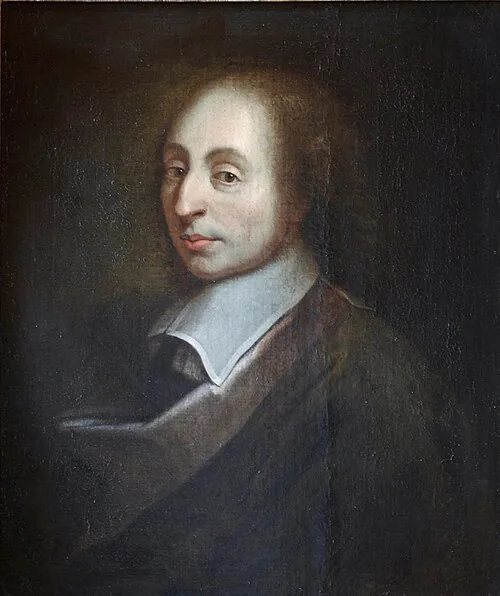
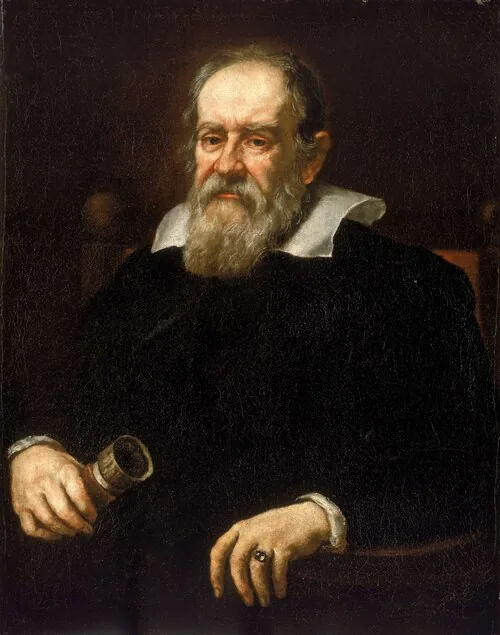
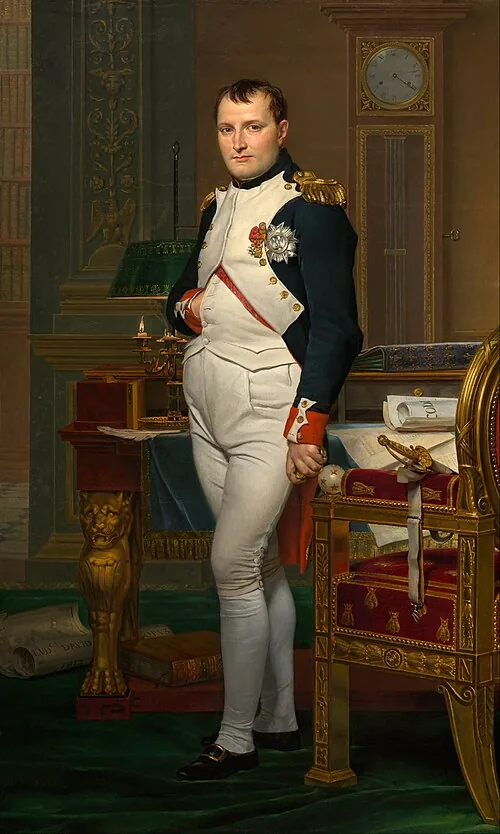
Portrait, copy after François II Quesnel, via Wikimedia Commons, public domain. · Portrait by Justus Sustermans (1636), via Wikimedia Commons, public domain. · Portrait by Jacques-Louis David (1812), via Wikimedia Commons, public domain.


An estimate is an inference.
Yours can be measured.
Thirty questions, scored against general-population benchmarks. Your score, your percentile, your ability breakdown and a printable IIF certificate.
Find your IQ score now! →