



What was Kim Peek’s IQ?
Scientific American called his “one of the most extraordinary memories ever recorded.” No IQ total captures it.

Kim Peek’s IQ was reported as 87 after psychological testing in 1988. But the testing report concluded that the score did not describe his intellectual ability: his subtests ran from the superior range to far below average. What is documented is a memory that held thousands of books, and the inspiration he gave screenwriter Barry Morrow for Rain Man.
Kim Peek’s estimated IQ
- An overall IQ score of 87 from psychological testing in 1988, reported by Darold Treffert and Daniel Christensen in Scientific American. The article does not name the test or the examiner.
- The same article says the verbal and performance subtests varied greatly, from the superior range of intelligence to far below average, and that the psychological report concluded his IQ classification was not a valid description of his intellectual ability.
- Treffert and Christensen report that he had learned 9,000 books by heart, read a page in eight to 10 seconds and, given one birth date, named its weekday in under a second. The range does not use these feats, because the composite does not measure them.
- Darold Treffert’s Wisconsin Medical Society profile lists, in his father’s words, calendar calculation, area codes, ZIP codes and at least 14 subject areas among his knowledge. These also sit outside the range.
This range is a band around one contested composite, not an estimate of Kim Peek’s ability: the report behind the 87 judged the classification not valid. Its subtests spanned the superior range to far below average. It does not measure his memory, and it should not be ranked against the achievement-based estimates elsewhere on this site, which rest on a different kind of evidence.
- Born
- November 11, 1951, Salt Lake City, Utah
- Died
- December 19, 2009, Murray, Utah, aged 58 (apparent heart attack, per the Deseret News)
- Known for
- Exceptional memory and calendar calculation; an inspiration for the character Raymond Babbitt in Rain Man (1988)
- Documented recall
- 9,000 books learned by heart per Scientific American; other published counts run from 6,000 to more than 12,000
- Public role
- Traveled and spoke with his father, Fran Peek, as an advocate for people with disabilities
- Reported IQ
- Overall 87 (psychological testing, 1988); the report judged the classification not valid
- Estimated range
- 80–95 (this site), a band around that one composite, not a measure of memory
What an IQ of 80–95 actually means
Set the claim aside for a moment. If someone genuinely scored in this range, here is what that would represent.
Average is 100 by construction, and about two-thirds of people fall between 85 and 115. Take the test to place your own score on this scale.
| Score range | Classification | Share of people | What it indicates |
|---|---|---|---|
| 85 – 114 | Average | ~68% | The range most people fall into. |
| 115 – 129 | Above average | ~13.6% | Roughly one person in seven. |
| 130 – 144 | Gifted | ~2% | The threshold most high-IQ societies use. |
| Above 144 | Highly gifted | ~0.1% | Figures above this range are extrapolated from the curve rather than measured. |
Percentages are approximate and describe a normal distribution. The same number means different things on tests with different standard deviations.
Thirty questions gives you a measured position on this exact scale — your score, your percentile and the ability breakdown behind it.
Find out in 30 minutes →Who Kim Peek was
Laurence Kim Peek was born in Salt Lake City, Utah, on November 11, 1951, and died on December 19, 2009, at age 58, according to Wikipedia and Wikidata. The Deseret News reported that he died of an apparent heart attack.
Treffert and Christensen say he began memorizing books at 18 months, as they were read to him. Darold Treffert’s Wisconsin Medical Society profile, relaying his father’s account, adds that he memorized a book after one reading and then placed it upside down on a shelf so that no one would read it to him again.
The documented range of his knowledge is wide. Treffert’s profile, quoting his father, lists American and world history, geography, professional sports, the space program, the Bible, literature, Shakespeare, classical music, calendar calculation, area codes and major ZIP codes. Scientific American says his memory covered at least 15 interests, that he could identify hundreds of classical compositions with their dates and composers, and that after meeting University of Utah music professor April Greenan in 2002 he began to play the piano.
The number of books attached to his name varies by source: about 7,600 on Treffert’s profile, 9,000 in Scientific American, “over 6000” in Treffert’s 2009 paper in Philosophical Transactions of the Royal Society B, and more than 12,000 in the Deseret News, where his father gave the figure. None of these accounts explains how the books were counted.
Treffert and Christensen date the start of Peek’s book memorizing to 18 months and describe no training method. Treffert notes that terms such as “automatic” and “habit-like” have been applied to savant memory, and Treffert and Christensen add that Peek comprehended much of what he memorized, which they call unusual among savants, and made puns and clever connections from it.
Memory athletes are different: the memory world records analyzed on this site were set by competitors using learnable methods. On Kim Peek’s brain, imaging reported by Treffert and Christensen showed the absence of a corpus callosum and a malformed cerebellum. They wrote that these findings “cannot yet be linked directly to any of his skills.”
Kim Peek and Rain Man are linked by a 1984 meeting: screenwriter Barry Morrow met Peek that year in Arlington, Texas, and the script he wrote became the 1988 film. Treffert writes that Peek was the initial inspiration, but that Raymond Babbitt, played by Dustin Hoffman, is a composite savant with abilities drawn from several real people, and Treffert and Christensen call the film purely fictional, not Peek’s life story even in outline.
Hoffman met Peek and his father, Fran Peek, in February 1987 and thanked Peek when accepting his Oscar in March 1989, according to Treffert’s profile. Father and son then became, in Scientific American’s words, “enthusiastic emissaries for people with disabilities.”
 By Elora Mercer, Celebrity Research WriterFigures checked by Leon Falkner, Data & Research Analyst
Reviewed by Aarav Vardhan, Editor-in-Chief · Last reviewed November 2026

Kim Peek: the documented record
The estimate above rests on this record. Every entry here is a matter of public fact, which is more than can be said for the number itself.
- 1951Born November 11 in Salt Lake City, Utah.
- 1984Screenwriter Barry Morrow meets Peek in Arlington, Texas; his script later becomes Rain Man.
- 1987Dustin Hoffman meets Peek and his father in February while preparing for the role.
- 1988Psychological testing gives an overall IQ score of 87; the report judges the classification not valid. Daniel Christensen performs the first MRI brain scans.
- 1989Hoffman thanks Peek when accepting his Oscar in March.
- 2002Meets University of Utah music professor April Greenan and begins to play the piano.
- 2009Dies December 19, aged 58, of an apparent heart attack.
Where the 87 figure came from
Following a claim back to its first appearance is the part almost nobody does — and it is what most people are actually asking.

What was Kim Peek’s IQ? The only figure on record is an overall IQ score of 87 from psychological testing in 1988, reported by Darold Treffert and Daniel Christensen in Scientific American. They write that the verbal and performance subtests varied greatly, with some scores in the superior range of intelligence and others far below average, and that the psychological report concluded his IQ classification was not a valid description of his intellectual ability.
The article does not name the test or the examiner. If the test used the common scale with a mean of 100 and a standard deviation of 15, an 87 is about the 19th percentile; the percentile calculator shows any other score.
The figure spread because it is short and easy to repeat. Kim Peek’s IQ score of 87 appears without its context in Berit Brogaard’s December 11, 2012 post for Psychology Today, which says “his IQ was 87, significantly below normal” and names no test or date.
Wikipedia states the 87 with the warning attached. For how a number detaches from its source, and what to check first, see where celebrity IQ numbers come from. In this case the number is real; what fails is the step from a composite to a verdict on the person.
How smart was Kim Peek? Two documented things do not average into one number. The first is recall: Scientific American says he had learned 9,000 books by heart, read a page in eight to 10 seconds and, given the birth date March 31, 1956, said in less than a second that it fell on a Saturday of Easter weekend.
The second is the composite, an 87 that its own report called invalid as a description of his ability. A single total flattens a narrow, extreme ability into an average, as savant syndrome and IQ tests explains.
Was Kim Peek a genius? The documented record is of an extraordinary memory: Treffert and Christensen write that his talents “would be extraordinary in any person.” “Genius” has no fixed IQ cut-off, and no IQ composite backs the word either way. His 80–95 band cannot be compared with Richard Feynman’s 125–150, which starts from a school-record test number of 125, or with the ranges in other science profiles, mostly built from degrees, prizes and published work.
The direction of error also differs. A circulating 300 for John von Neumann and 160 for Helen Keller sit above this site’s ranges for them (170–190 and 125–145); Peek’s 87 is a low figure that its own report says does not describe his intellectual ability.
How we read a number →Treffert and Christensen report the 1988 overall score and the spread of the subtests, but neither they nor Treffert’s Wisconsin Medical Society profile or his 2009 paper name the test or the examiner or give the subtest scores.
Reports psychological testing in 1988 with an overall IQ score of 87, subtests from the superior range to far below average and a report conclusion that the IQ classification is not valid; also 9,000 books learned by heart, the birth-date example, the imaging findings and the 1984 meeting with Barry Morrow.
Calls Raymond Babbitt the best-known autistic savant and describes the original inspiration as a man who has memorized over 6000 books; notes that terms such as “automatic” and “habit-like” have been applied to savant memory.
Gives his birth date, his father’s list of subjects, calendar calculation, area codes and ZIP codes, some 7,600 books, Morrow’s 1984 meeting, Hoffman’s February 1987 visit and thanks at the March 1989 Oscars, and that Raymond Babbitt is a composite savant.
Reports that he died on Saturday at age 58 from an apparent heart attack, and that he memorized more than 12,000 other books, his father said.
States that his IQ was 87, significantly below normal, and that he had read 10,000 books by his death; names no test, examiner or date for the score.
Used to confirm identity, dates and places of birth and death (Salt Lake City; Murray, Utah). Wikipedia states the 87 with the note that it is not considered a valid measure of his cognitive ability. Wikidata describes him as an American savant (1951–2009).
Explains that savant syndrome pairs an ordinary, low or hard-to-measure Full-Scale IQ with one narrow ability far beyond what the general score predicts, and why a single composite describes neither well.
Analyzes 356 memory world records and shows that competitors use learnable methods.
The sources behind our estimate
The figures that circulate for Kim Peek, what we were able to confirm, and where the two diverge.
Psychology Today’s “The Superhuman Mind” blog, in a post by Berit Brogaard dated December 11, 2012, states that “his IQ was 87, significantly below normal,” with no test, examiner or date. Wikipedia gives the same 87 but adds that it is not considered a valid measure of his cognitive ability.
The 87 traces to psychological testing in 1988, reported by Darold Treffert and Daniel Christensen in Scientific American, which also reports a wide subtest spread and the report’s conclusion that the IQ classification is not a valid description of his intellectual ability. The article does not name the test or the examiner, and none of the pages that state the 87 gives the subtest scores.
The circulating 87 is the one number that traces to a test, and this site’s 80–95 band is built around it, so the spread is narrow. A narrow spread here shows agreement about the figure, not about what it means: the report that produced the 87 says it does not describe his intellectual ability.
Want a number that does hold up? Every figure on this page is somebody’s claim. Take the 30-question test and get a percentile you can check rather than a figure you have to trust.
Kim Peek — frequently asked
What was Kim Peek’s IQ?
Kim Peek’s IQ was reported as 87 on psychological testing in 1988, according to Darold Treffert and Daniel Christensen in Scientific American. But the testing report concluded that this classification did not validly describe his intellectual ability. This site’s estimated range is 80–95, a band around that one score, not a measure of his memory.
Did Kim Peek take an IQ test?
Yes. Treffert and Christensen report in Scientific American that Peek underwent psychological testing in 1988 and received an overall IQ score of 87. Their article does not name the test or the examiner, and it says the verbal and performance subtests varied greatly, from the superior range to far below average.
How smart was Kim Peek?
Kim Peek had one of the most extraordinary memories on record, according to Scientific American’s introduction to the Treffert and Christensen article. His overall IQ score of 87 from 1988 is not considered a valid description of his intellectual ability. No single number captures both facts.
Was Kim Peek a genius?
The documented record is of an extraordinary memory: Treffert and Christensen write in Scientific American that his talents “would be extraordinary in any person.” “Genius” has no fixed IQ cut-off, and Peek’s one overall IQ score, 87 from 1988, was judged not to describe his intellectual ability, so the label rests on documented feats, not a score.
How many books did Kim Peek read?
No exact count exists; published figures run from over 6,000 to more than 12,000. Treffert’s 2009 paper says over 6000, his Wisconsin Medical Society profile some 7,600, Scientific American 9,000. The Deseret News (December 22, 2009) more than 12,000, a figure his father gave. None explains how the books were counted.
Was Rain Man based on Kim Peek?
Partly. Screenwriter Barry Morrow met Peek in 1984 and wrote the script that became the 1988 film Rain Man, but Treffert writes that Raymond Babbitt is a composite savant drawn from several real people, and Treffert and Christensen call the film purely fictional, not Peek’s life story.
How does Kim Peek’s IQ compare with Richard Feynman’s?
They cannot be ranked. This site’s range for Kim Peek, 80–95, is a band around a single 1988 composite that its own report called not valid, while its range for Richard Feynman, 125–150, is anchored to a school-record test number of 125. The two ranges rest on different kinds of evidence.
How does my IQ compare with Kim Peek?
You can find out in about fifteen minutes. The IQ Metrics assessment is 30 questions, scored on the same 100-mean scale used throughout this page, so your result and the estimate above are at least expressed in the same units — one measured, one inferred. Once you have a number, the leaderboard shows where it would sit, and how we score and norm it explains the benchmarking.
Where does this estimate come from?
From the documented record rather than a test — the method is named above and set out in full under how we read a number. Compare it against the other scientists profiles, starting with Albert Einstein.
- Take the 30-question IQ test — get a measured score and percentile of your own
- Average IQ by country — how the scale behaves across populations
- How IQ Metrics scores its assessment — the method behind our own number
- More on how IQ testing works — reliability, error and what a score can and cannot say
- More scientists profiles — same field, same method
More scientists
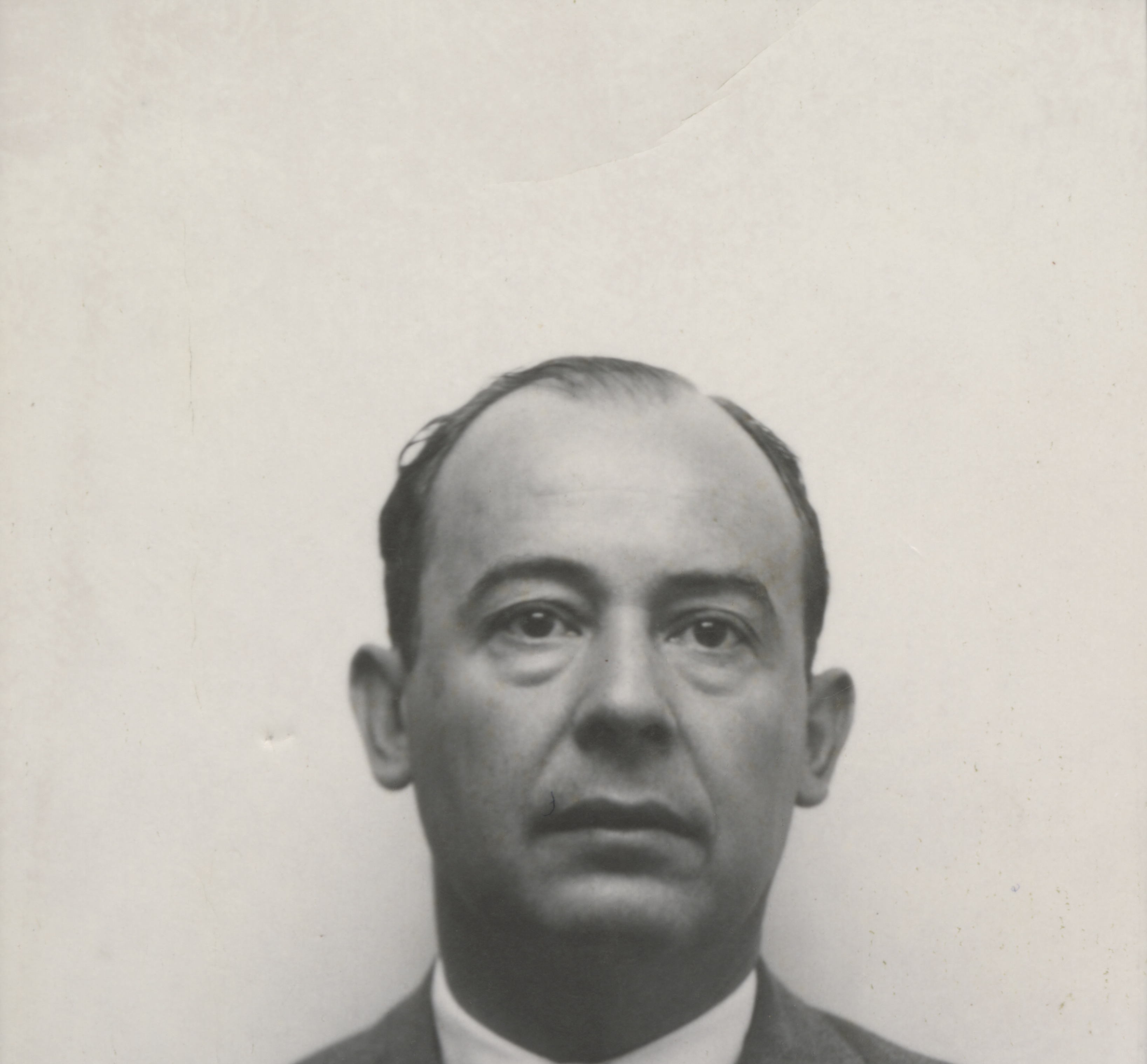


Los Alamos National Laboratory badge photograph, c. 1940s, public domain (PD-LosAlamos). Background removed for the portrait above. · Los Alamos National Laboratory badge photograph, via Wikimedia Commons, CC0. Background removed for the portrait above. · Photograph by ²°¹°°, Paris, 2006, public domain. Cropped from the original.


An estimate is an inference.
Yours can be measured.
Thirty questions, scored against general-population benchmarks. Your score, your percentile, your ability breakdown and a printable IIF certificate.
Find your IQ score now! →