



What was Ludwig Wittgenstein’s IQ?
No IQ score exists; the record is a barely passed school exam, a Cambridge doctorate in 1929 and Bertrand Russell’s verdict that he was a genius.
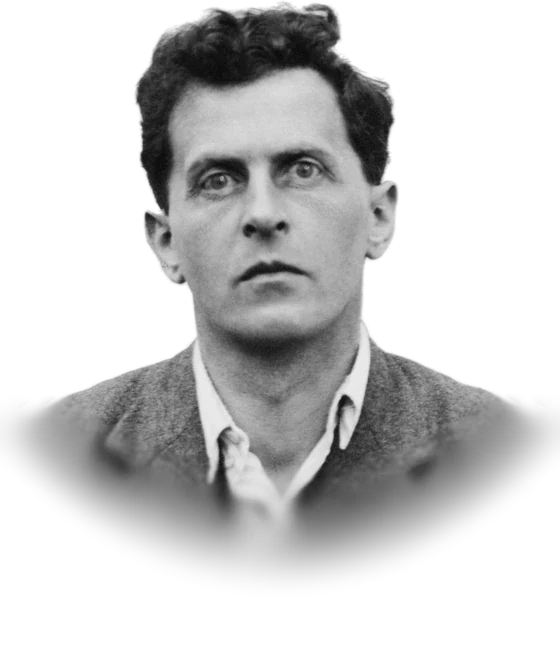
Ludwig Wittgenstein’s IQ is not on record: no test score exists, and our Wittgenstein IQ estimate is 150–165. It rests on his Cambridge doctorate (the Tractatus, 1929), Bertrand Russell’s judgment that he was a genius, and engineering studies in Berlin and Manchester. His school record, by contrast, was ordinary.
Ludwig Wittgenstein’s estimated IQ
- He studied mechanical engineering at the Technische Hochschule in Berlin from October 1906 and registered as a research student at the University of Manchester in 1908 (MacTutor; Wikipedia).
- He arrived unannounced at Russell’s rooms at Trinity College, Cambridge, on October 18, 1911. Russell wrote that he had “fire and penetration and intellectual purity to a quite extraordinary degree” (MacTutor).
- He finished the Tractatus Logico-Philosophicus in August 1918. It was published in German in 1921 and in English in 1922 (Wikipedia).
- In 1929 he returned to Cambridge and offered the Tractatus as his doctoral thesis. Russell and G. E. Moore examined it, and R. B. Braithwaite recalled Moore’s report as saying “a work of genius” (Wikipedia, quoting Braithwaite’s memory).
A philosophy career shows depth and originality, not an IQ score. The school file is ordinary: he failed the entrance exam for the academic Gymnasium and failed his written German exam because of spelling. The range therefore leans on his adult work and on the opinions of Russell and Moore.
- Born
- April 26, 1889, Vienna
- Died
- April 29, 1951, Cambridge, England
- Schooling
- Home tutoring to age 14; Realschule in Linz from 1903
- University
- Mechanical engineering in Berlin (1906–1908); research student at Manchester (1908)
- Doctorate
- Cambridge, 1929, with the Tractatus as the thesis
- Best-known works
- Tractatus Logico-Philosophicus (1921); Philosophical Investigations (1953, after his death)
- Documented IQ test
- None published
What an IQ of 150–165 actually means
Set the claim aside for a moment. If someone genuinely scored in this range, here is what that would represent.
| Score range | Classification | Share of people | What it indicates |
|---|---|---|---|
| 85 – 114 | Average | ~68% | The range most people fall into. |
| 115 – 129 | Above average | ~13.6% | Roughly one person in seven. |
| 130 – 144 | Gifted | ~2% | The threshold most high-IQ societies use. |
| Above 144 | Highly gifted | ~0.1% | Figures above this range are extrapolated from the curve rather than measured. |
Percentages are approximate and describe a normal distribution. The same number means different things on tests with different standard deviations.
Thirty questions gives you a measured position on this exact scale — your score, your percentile and the ability breakdown behind it.
Find out in 30 minutes →Who Ludwig Wittgenstein was
Who was Ludwig Wittgenstein? He was an Austrian-British philosopher who worked in logic, the philosophy of mathematics, mind and language. He was born in Vienna on April 26, 1889, the youngest of nine children of the industrialist Karl Wittgenstein. He died in Cambridge on April 29, 1951 (Wikipedia; MacTutor).
What does his school record show? He was educated at home until age 14 (MacTutor). He failed the entrance exam for the academic Gymnasium in Wiener Neustadt and passed the exam for the Realschule in Linz only after extra tutoring. He entered it in 1903, and spelling problems made him fail the written German exam. He later blamed his “weakness in study” (Wikipedia).
What did he study next? He began mechanical engineering in Berlin on October 23, 1906, and left after three semesters with a certificate dated May 5, 1908. At Manchester he researched kites in the upper atmosphere and patented a propeller design in 1911. Reading Russell’s Principles of Mathematics then turned him toward logic (Wikipedia).
What happened at Cambridge and in the war? He studied under Russell at Trinity College from October 1911 and left in 1913. He served in the Austro-Hungarian Army in World War I, finished the Tractatus in August 1918 and was captured in Italy that November. He taught at Cambridge from 1930 to 1947 (Wikipedia).
 By Elora Mercer, Celebrity Research WriterFigures checked by Leon Falkner, Data & Research Analyst
Reviewed by Aarav Vardhan, Editor-in-Chief · Last reviewed November 2026

Ludwig Wittgenstein: the documented record
The estimate above rests on this record. Every entry here is a matter of public fact, which is more than can be said for the number itself.
- 1889Born in Vienna on April 26.
- 1903Enters the Realschule in Linz after failing the Gymnasium entrance exam.
- 1906Begins mechanical engineering at the Technische Hochschule in Berlin on October 23.
- 1908Leaves Berlin in May and registers as a research student at the University of Manchester.
- 1911Arrives at Trinity College, Cambridge, on October 18 to study logic under Bertrand Russell.
- 1918Completes the Tractatus in August and is captured in Italy on November 3.
- 1921The Tractatus is published in German; the English translation follows in 1922.
- 1929Returns to Cambridge and is examined by Russell and Moore for a doctorate on the Tractatus.
- 1930Begins teaching at Cambridge, where he stays until 1947.
- 1951Dies in Cambridge on April 29; Philosophical Investigations follows in 1953.
Why no figure circulates
Following a claim back to its first appearance is the part almost nobody does — and it is what most people are actually asking.
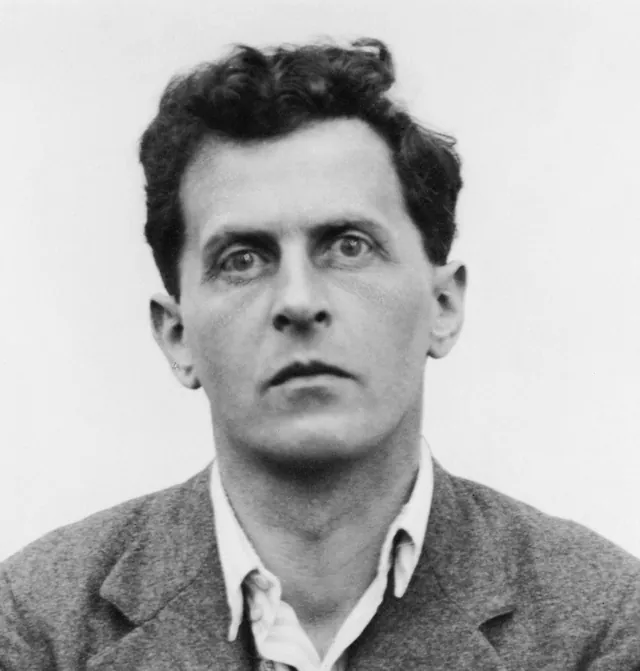
What is Wittgenstein’s IQ? No test score has been published and no biography we read gives one. Our range is 150–165, built from his degrees, his doctorate and the verdicts of the people who examined him. For why such ranges stay wide, see the IQ ceiling effect.
Why is there no test score? The first practical intelligence test, Binet’s, dates from 1905. The IQ formula came in 1912 and the term caught on after the 1916 Stanford-Binet, according to our history of intelligence testing. He was already a student at Cambridge when the formula appeared. Our philosophers ranked by IQ page uses a study of people born between 1450 and 1850, so he falls outside it.
How does he compare with other philosophers here? Bertrand Russell is 160–175, Immanuel Kant 150–170 and Friedrich Nietzsche 150–165. As a teenager Wittgenstein read Arthur Schopenhauer (145–165), and later called him “a quite crude mind”. See all writers on this site.
When did he do his best work? He finished the Tractatus in August 1918, at 29. In our study of 663 prize-winning discoveries, the typical laureate did the work that won the prize at 39. Philosophy is not physics, so the comparison is loose, but it shows how early his central book came.
How we read a number →Born April 26, 1889 in Vienna, died April 29, 1951 in Cambridge. Educated at home until 14, then three years at the Realschule in Linz from 1903. Engineering in Berlin from 1906, Manchester research student in 1908, Cambridge in 1911. Quotes Russell on his “fire and penetration and intellectual purity”. In 1929 he submitted the Tractatus as his doctoral thesis. No IQ figure.
Failed the Wiener Neustadt Gymnasium entrance exam and barely passed the Linz Realschule exam; failed his written German exam over spelling; Berlin diploma dated May 5, 1908; Manchester studentship and the 1911 propeller patent; Russell’s November 1911 verdict that he was a genius; Tractatus finished August 1918; the 1929 examination by Russell and Moore, with Braithwaite’s recollection of Moore’s report; Cambridge teaching from 1930 to 1947. It contains no IQ.
German publication in 1921 and the English translation in 1922. No IQ.
Confirms Q9391 is the Austrian philosopher and logician (1889–1951), not the Viennese merchant of the same name (Q104985206).
Gives no IQ number. It says he was fluent in Latin and Greek at six and accepted into the Vienna Conservatory at 11, and cites no source for either claim.
Searches for “wittgenstein iq” found biographies, forum threads and explainers, and no score with a test, a date or an examiner.
Binet’s first practical test dates from 1905 and the IQ formula from 1912. The philosophers page draws on people born between 1450 and 1850. The breakthrough study finds a median age of 39 for prize-winning work in physics, chemistry and medicine.
On this site Russell is 160–175, Kant 150–170, Nietzsche 150–165 and Schopenhauer 145–165.
The sources behind our estimate
The figures that circulate for Ludwig Wittgenstein, what we were able to confirm, and where the two diverge.
People type “wittgenstein iq”, “ludwig wittgenstein iq” and “wittgenstein estimated iq”. We found no score with a test, a date or an examiner. One online explainer says he was fluent in Latin and Greek at six and entered the Vienna Conservatory at 11. We found no source for either claim.
We found no IQ score for Wittgenstein and no estimate that names a test. Wikipedia and MacTutor list his schools, degrees and books, and neither mentions an IQ test. The first practical intelligence test appeared in 1905, while he was still at school. The biographies we read describe home tutoring until age 14 and an ordinary school record.
No circulating number sits beside the range. It starts level with Immanuel Kant (150–170) and Friedrich Nietzsche (150–165) on this site and stops below Bertrand Russell (160–175), who taught him and later examined his thesis.
Want a number that does hold up? Every figure on this page is somebody’s claim. Take the 30-question test and get a percentile you can check rather than a figure you have to trust.
Ludwig Wittgenstein — frequently asked
What was Ludwig Wittgenstein’s IQ?
No IQ score for Ludwig Wittgenstein has been published. Our Ludwig Wittgenstein IQ estimate is 150–165, based on his Cambridge doctorate, the Tractatus and Russell’s judgment. It is a reading of the record, not a test result.
Is there a published IQ for Wittgenstein?
No. We found no test, date or examiner for any number attached to him, so any figure is a guess. Our 150–165 is a range, and we label it as an estimate. To place a score on the scale, use our IQ percentile calculator.
What do Wittgenstein’s school and university records show?
He was home-schooled to 14, failed the Gymnasium entrance exam and passed the Linz Realschule exam only after extra tutoring (Wikipedia). He left Berlin after three semesters with a certificate dated May 5, 1908, then did research at Manchester. Cambridge gave him a doctorate in 1929 for the Tractatus.
Was Wittgenstein a genius?
Russell decided by November 1911 that he was, and Moore is reported to have called the Tractatus “a work of genius” in the 1929 examiners’ report. Both were his teachers or examiners, so these are opinions, not scores. Genius is a judgment about achievement, and IQ is a test result.
What did Russell say about Wittgenstein?
Russell wrote that Wittgenstein had “fire and penetration and intellectual purity to a quite extraordinary degree” (MacTutor). He first thought him a possible crank, according to Wikipedia, and within weeks of his arrival in 1911 decided he was a genius.
Is it true that Wittgenstein was a child prodigy?
We found no source for the claims that he was fluent in Latin and Greek at six or entered the Vienna Conservatory at 11. MacTutor says he was educated at home until 14. Wikipedia says he had absolute pitch and whistled long musical passages, but that is a documented talent, not an IQ score.
How does Wittgenstein’s estimated IQ compare with Kant, Nietzsche and Russell?
On this site Wittgenstein is 150–165, Kant 150–170, Nietzsche 150–165 and Russell 160–175. The ranges overlap because each is a judgment from a record, not a measured score. Our philosophers ranked by IQ page shows which philosophers have numbers that can be traced.
How does my IQ compare with Ludwig Wittgenstein?
You can find out in about fifteen minutes. The IQ Metrics assessment is 30 questions, scored on the same 100-mean scale used throughout this page, so your result and the estimate above are at least expressed in the same units — one measured, one inferred. Once you have a number, the leaderboard shows where it would sit, and how we score and norm it explains the benchmarking.
Where does this estimate come from?
From the documented record rather than a test — the method is named above and set out in full under how we read a number. Compare it against the other writers profiles, starting with Voltaire.
- Take the 30-question IQ test — get a measured score and percentile of your own
- Average IQ by country — how the scale behaves across populations
- How IQ Metrics scores its assessment — the method behind our own number
- More on how IQ testing works — reliability, error and what a score can and cannot say
- More writers profiles — same field, same method
More writers
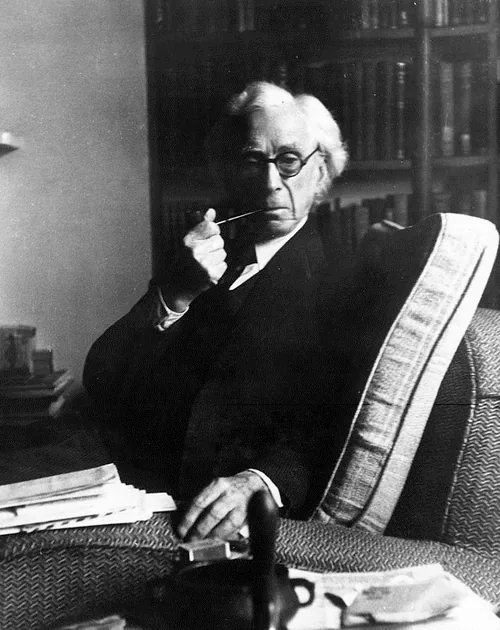
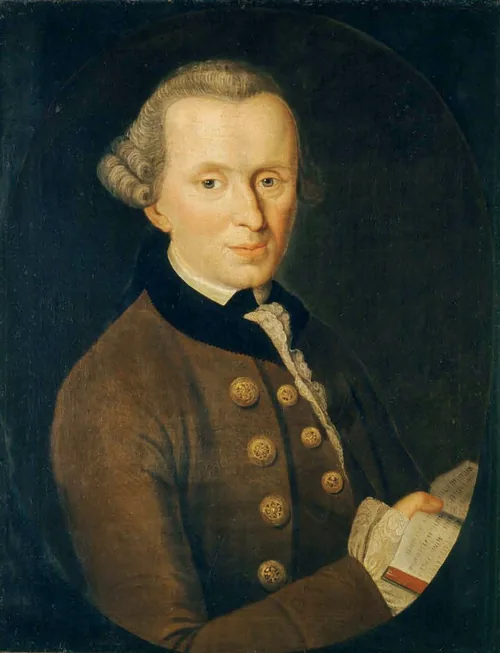
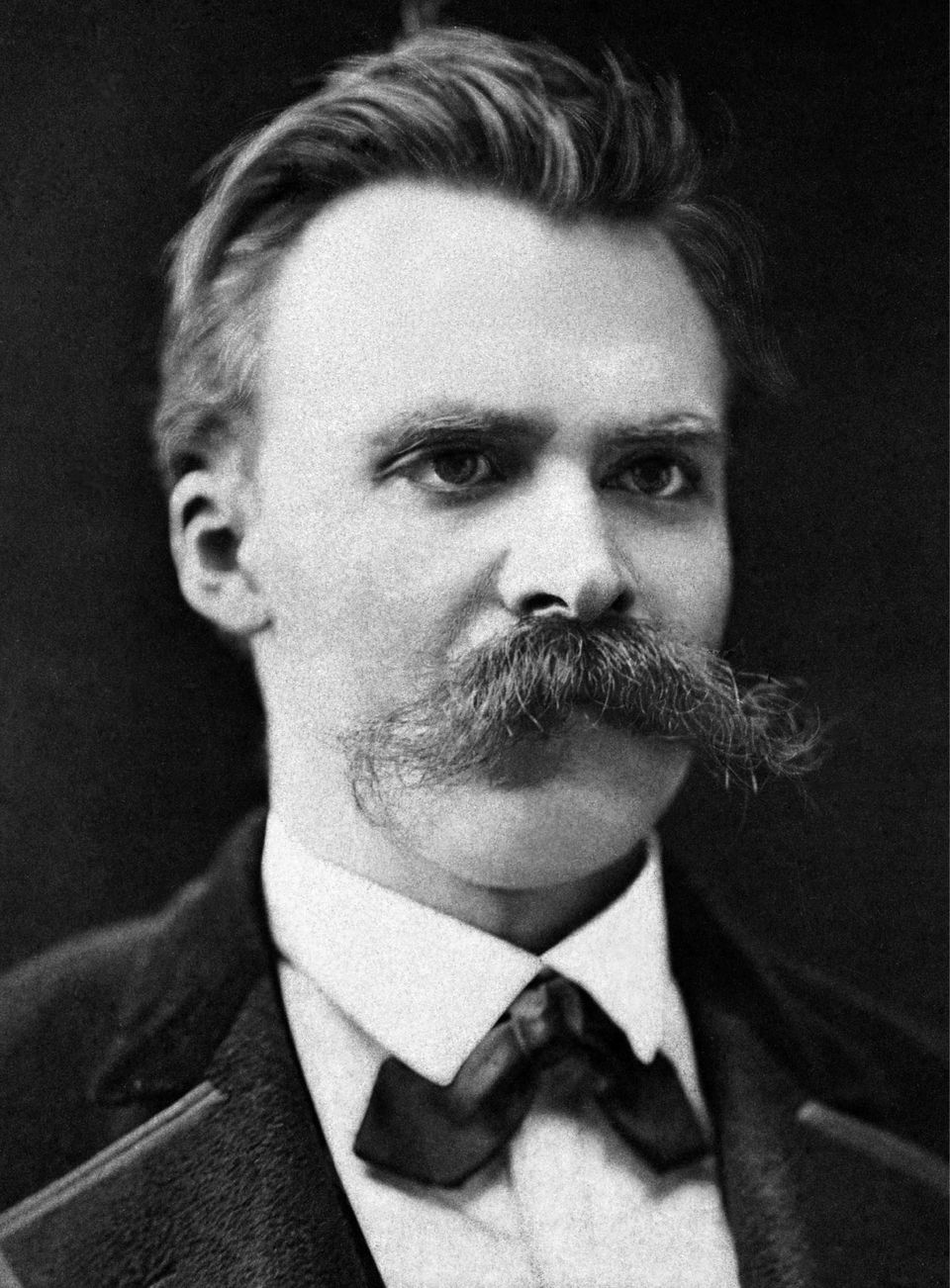
Photograph, 1954, via Wikimedia Commons, public domain. · Portrait of Immanuel Kant by Johann Gottlieb Becker (1768; Commons file), cropped; public domain (the artist died in 1782). · Photograph by Friedrich Hermann Hartmann (c. 1875), public domain. Background removed for the portrait above.


An estimate is an inference.
Yours can be measured.
Thirty questions, scored against general-population benchmarks. Your score, your percentile, your ability breakdown and a printable IIF certificate.
Find your IQ score now! →