How Many Brain Banks Are There? 59 found, 13 print a size
We built the first bank-by-bank table of human brain banks from their own web pages: 59 banks and 7 networks in 12 countries, a floor. Published counts of banks run from 60 to 200; only 13 banks print how many brains or donors they hold, 35,861 brains in all.

By Leon Falkner, Data & Research Analyst · Reviewed by Aarav Vardhan, Editor-in-Chief · Published 14 November 2026 · 14 min read
About this study
- Report type
- Data study: our one-row-per-bank table of human brain banks, from their own pages
- Data
- 59 banks and 7 networks in 12 countries; 25 printed numbers with their units; 128 NIH awards; 6,409 papers
- Sources
- Bank and network pages, Alzforum directory (lead list only), NIH RePORTER, OpenAlex, World Bank, two Frontiers 2026 papers, Human Brain 2022
- Dates
- Pages read 14 November 2026; NIH fiscal years 2015-2026; papers 2000-2025; population 2025; as of 14 November 2026
- Licence
- CC BY 4.0 (our dataset and charts)
- Version
- 2026.11
- Sources
- 26
We could name 59 human brain banks with a page of their own, in 12 countries; only 13 print how many brains or donors they hold (14 November 2026). Published counts of banks run from “more than 60” to “fewer than 200”; ours is a floor. The 9 that print brains hold at least 35,861. Source: IQ Metrics Research.
01 Key findings
- 59 banks found, in 12 countries. Published counts of how many exist run from “more than 60” to “fewer than 200”, and none comes from a bank-by-bank table; ours is a floor from pages we read.Bank pages; IQ Metrics count
- Only 13 banks print a size. 9 print brains (35,861 in all, median 3,000), 4 print donors (10,700); 41 print no number and 5 print another unit. Units are never added.Bank pages; IQ Metrics sum
- 36 of 59 banks are in the United States (61%), then the United Kingdom (7); the list leans to English-language pages.IQ Metrics count
- The directory behind the 2022 count has shrunk from 144 banks to 97 entries (US 81 to 55); it says it is being updated.Liu 2022; Alzforum directory
- 36 of 59 pages invite pledges and 47 show a tissue-request process; 2 publish donor sex and ancestry summaries (via one HIV consortium report).IQ Metrics coding
- A ceiling of $109 million in 128 NIH awards whose title or terms match banking (FY2015-2026); $1.11 billion in awards that mention it.NIH RePORTER; IQ Metrics query
- 139 papers mention a brain bank in 2025, 6.3 times 2000 (22), in OpenAlex.OpenAlex
02 How many brain banks are there? The numbers to quote
No one knows how many brain banks exist: published figures run from “more than 60” to “fewer than 200”, and we named 59 with a page of their own [6] [5]. A 2022 review counted 144 banks in the Alzforum directory [3]. IQ Metrics Research built its own list, one row per bank, from the banks’ and networks’ own web pages: 59 banks and 7 networks, in 12 countries, as of 14 November 2026 [1].
human brain banks found with a page of their own, in 12 countries (a floor, not a census).
Bank pages; IQ Metrics countnetworks and coordinating bodies, counted once as networks and never added to the banks.
Bank pages; IQ Metrics countof the banks found (36 of 59) are in the United States; the list leans to places that publish in English.
IQ Metrics countbanks print a total of brains or donors on their own pages: 9 in brains, 4 in donors; 41 print none and 5 print another unit.
Bank pages; IQ Metrics countbrains held, at least, by the 9 banks that print a total in brains (sum of printed totals; “over” and “more than” are floors).
Bank pages; IQ Metrics sumbrains in the median of those 9 banks; the middle half runs from 1,500 to 4,000, the range from 11 to 11,000.
IQ Metrics calculationdonors in all at the 4 banks that print donors (a separate unit: never added to brains).
Bank pages; IQ Metrics sumbrains per million people printed by US banks that print a total (29,500 brains, population 2025); a lower bound.
IQ Metrics calculationof banks (36 of 59) have a page that invites the public to pledge or register as a donor.
IQ Metrics codingof 59 banks publish donor sex and ancestry figures on their pages, both through one HIV tissue consortium’s public report; “not found” is not “not collected”.
IQ Metrics coding; NNTC reportin 128 NIH awards whose title or terms match our brain-bank query, fiscal years 2015-2026 (whole awards; a ceiling for banking money).
NIH RePORTER; IQ Metrics querymore papers mention a brain bank in 2025 (139) than in 2000 (22), counting journal articles and reviews in OpenAlex.
OpenAlex; IQ Metrics queryEach row of the table at the end of this page links the page we read, the sentence that shows the place collects brain tissue, and any total it prints. We never write that the world has a set number of banks: 59 is the number we could name with a page, so it is a floor. Banks with no web page, no English page or no page that says they bank tissue are not in it.
What this study does not say
This page counts organisations and the numbers they print. It names no donor, gives no medical, legal or donation advice, and does not rank banks: a bank with no total is not smaller than one that prints a total. To donate, ask the bank or network directly; each row of the table links its page.
03 What is a brain bank?
A brain bank is an organisation that collects donated human brains after death with consent, stores them and makes tissue available to researchers. The University of Iowa neuropathology laboratory describes one as “a collection of donated brain tissue used for research and education” [6]. The Netherlands Brain Bank, to take one example, collects tissue from donors with neurological and psychiatric disorders and from people without disease, together with a short anonymised summary of the donor’s medical record [1].
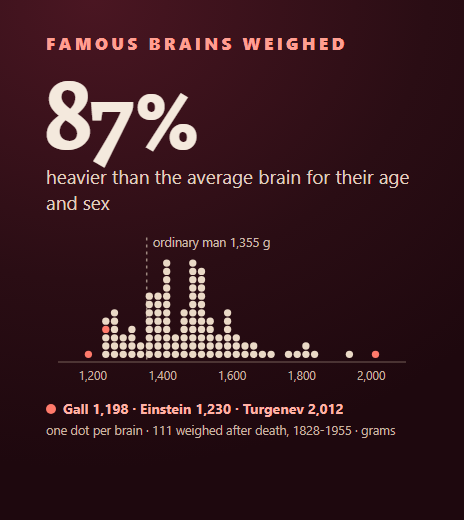
We count a place as a bank only when its own pages, or its host institution’s, say it collects, stores or distributes brain tissue. A network is its own row and each member is its own row; they are never added. We left out single-laboratory freezers, fetal collections, animal collections, company tissue sections and historical collections: the 19th-century counterpart is the set of famous brains weighed after death, which our study famous brains weighed lists as history, not as banks.
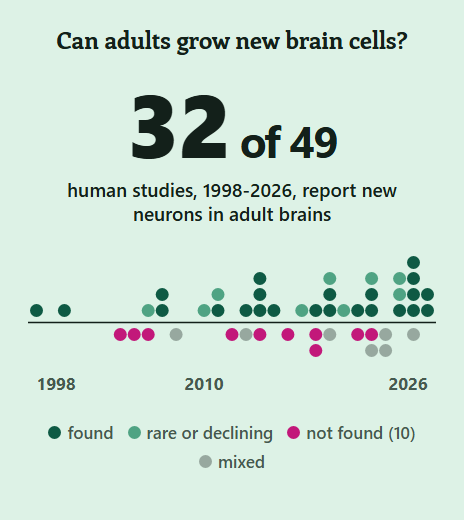
The tissue is the basis of much of what we know about the human brain. Studies of new neurons in adults, for example, rely on donated brains, as we show in can adults grow new brain cells, and general facts such as weight and neuron count are collected in our human brain facts guide.
04 How many brain banks are there in the world?
The honest answer is between about 60 and 200, depending on whom you ask, and we found 59 with a page of their own. Four published figures disagree: a University of Iowa page says “fewer than 200” [6]; a 2022 review counted 144 banks in the Alzforum directory, 81 of them in the United States [3]; the directory’s results page now shows 97 entries [2]; and a 2026 review speaks of “more than 60” banks and about 100,000 banked brains [5].
Published counts of how many brain banks exist run from 60 to 200; we could name 59 with a page of their own
Banks worldwide as each source states it: a University of Iowa page ("fewer than 200"), a 2022 review that counted the Alzforum directory (144), the directory's own results header today (97 entries, which include networks), a 2026 review ("more than 60") and our count of banks with a page we read (59; a floor). The sources count different things, so the bars do not add up to a trend. As of 14 November 2026.
Source: University of Iowa [6]; Liu et al. 2022 [3]; Alzforum directory [2]; Stevens et al. 2026 [5]; IQ Metrics count
Data table
| label | value |
|---|---|
| Iowa lab page: under 200 | 200 |
| 2022 review: 144 | 144 |
| Directory today: 97 | 97 |
| 2026 review: over 60 | 60 |
| IQ Metrics: 59 found | 59 |
Embed this chart
Paste this HTML into your page: it carries the numbers and the credit link to this figure.
None of these is a census. The 2022 figure counts a directory, the 2026 figure is a round floor, and the Iowa figure is an upper bound with no stated method. A second 2026 paper repeats the 2022 split as 86 banks in North America, 35 in Europe and 6 in Asia, with none in Southeast Asia, and cites the 2022 review as its source [4]. Our number is lower than the directory’s because we kept only banks with a readable page that says they bank brain tissue, and counted networks and duplicate entries once: 36 candidates were dropped, each with its reason in the CSV pack.
The directory that fed the 2022 count lists fewer banks today: United States 81 to 55, Australia 10 to 3
Entries by country in the Alzforum brain bank directory: counted by a 2022 review (144 banks in all) and counted by us on the directory's results page on 14 November 2026 (97 entries in all). The directory says it is "currently being updated", so the fall may be housekeeping, not closures. The eight countries with 3 or more banks in 2022. As of 14 November 2026.
Source: Liu et al. 2022 [3]; Alzforum directory results page [2]; IQ Metrics count of the page
Data table
| country | 2022 review | Directory 2026 |
|---|---|---|
| United States | 81 | 55 |
| United Kingdom | 16 | 12 |
| Australia | 10 | 3 |
| Germany | 7 | 4 |
| France | 4 | 2 |
| Canada | 3 | 4 |
| Spain | 3 | 3 |
| South Korea | 3 | 3 |
Embed this chart
Paste this HTML into your page: it carries the numbers and the credit link to this figure.
The directory itself is moving. A 2022 review took 144 banks from it; its results page on 14 November 2026 shows 97, with the United States down from 81 to 55 and Australia from 10 to 3, while Canada went from 3 to 4 [3] [2]. The directory says it is “currently being updated”, so we read the fall as housekeeping, not as closures. It is one reason we did not copy any directory: every bank in our table rests on its own page.
05 Where are the brain banks? Is there one in my country?
We found at least one brain bank in 12 countries, and 36 of the 59 banks (61%) are in the United States [1]. The United Kingdom has 7, Australia 4, Canada 3 and Germany 2; Spain, the Netherlands, Hungary, South Korea, China, India and Singapore have one each. A grey country on the map means none found by us, not none.
We found brain banks in 12 countries: 36 of the 59 are in the United States
Human brain banks with a page of their own that we read, by country (59 banks, 14 November 2026). Grey means none found by us, not none. The list leans to places that publish in English and to banks that appear in public directories; countries with banks that publish only in other languages may be missing. IQ Metrics count. As of 14 November 2026.
Source: Each bank’s own pages [1]; Alzforum directory as a lead list [2]; IQ Metrics count
Data table
| country | iso2 | value |
|---|---|---|
| United States | US | 36 |
| United Kingdom | GB | 7 |
| Australia | AU | 4 |
| Canada | CA | 3 |
| Germany | DE | 2 |
| China | CN | 1 |
| Hungary | HU | 1 |
| South Korea | KR | 1 |
| Netherlands | NL | 1 |
| Spain | ES | 1 |
| India | IN | 1 |
| Singapore | SG | 1 |
Embed this chart
Paste this HTML into your page: it carries the numbers and the credit link to this figure.
Treat the map as a map of web pages as much as of banks. Banks that publish only in Japanese, Chinese, Portuguese or Spanish are harder for us to read and to verify, and pages for banks in Japan, Korea (two of the three members of its national consortium), Mexico, Finland and Italy could not be loaded on the day: they are listed in the dropped file with the error. The 12 countries hold 43.4% of the world’s people (World Bank, 2025) [26], so the countries we cover are not the whole of the picture and the others are not empty.
In the United States, banks cluster around Alzheimer’s Disease Research Centers, which run a neuropathology core that banks brains. The 36 US banks we found sit in 19 states, with the most in California and Massachusetts (4 each), and three each in Pennsylvania, New York, Texas, Maryland and Florida.
The 36 US banks we found sit in 19 states; California and Massachusetts have 4 each
Human brain banks with a page of their own, by US state (36 banks; many are the brain banks of Alzheimer's Disease Research Centers). Grey states have none that we found. A count of banks found, not of brains held. IQ Metrics count. As of 14 November 2026.
Source: Each bank’s own pages [1]; Alzforum directory addresses as a lead list [2]; IQ Metrics count
Data table
| state | abbr | value |
|---|---|---|
| California | CA | 4 |
| Massachusetts | MA | 4 |
| Pennsylvania | PA | 3 |
| New York | NY | 3 |
| Texas | TX | 3 |
| Maryland | MD | 3 |
| Florida | FL | 3 |
| Illinois | IL | 2 |
| Washington | WA | 1 |
| South Carolina | SC | 1 |
| Georgia | GA | 1 |
| Indiana | IN | 1 |
| Iowa | IA | 1 |
| Michigan | MI | 1 |
| Ohio | OH | 1 |
| Oregon | OR | 1 |
| Rhode Island | RI | 1 |
| Kentucky | KY | 1 |
| Wisconsin | WI | 1 |
Embed this chart
Paste this HTML into your page: it carries the numbers and the credit link to this figure.
Adjusted for size, our floor gives 0.11 banks found per million Americans, against 0.0007 per million in China and 0.0007 in India. That compares how many banks we could read in each place, not how many exist, and one bank can serve a country of a billion people or a city. A national single-bank system such as Singapore’s or the Netherlands’ looks small here and may be complete for its country.
Banks found per million people run from 0.0007 in India and China to 0.16 in Singapore, but most countries have a single bank
Each country with a bank found: population (World Bank, 2025, log scale) against banks found per million residents (log scale); bubble area = banks found. A floor: it counts only banks we could read, and it says nothing about the size of any bank. IQ Metrics calculation. As of 14 November 2026.
Banks found per million people (log scale)
Population (log scale)
Banks found are a floor and depend on which pages exist in English; per-million figures compare reach of our list, not of any country's system.
Source: World Bank population [26]; each bank’s pages [1]; IQ Metrics calculation
Data table
| country | population | banks_per_million | banks_found |
|---|---|---|---|
| Singapore | 6111175 | 0.2 | 1 |
| Australia | 27614411 | 0.1 | 4 |
| United States | 341784857 | 0.1 | 36 |
| Hungary | 9514251 | 0.1 | 1 |
| United Kingdom | 69487000 | 0.1 | 7 |
| Canada | 41651653 | 0.1 | 3 |
| Netherlands | 18087633 | 0.1 | 1 |
| Germany | 83491249 | 0 | 2 |
| Spain | 49355143 | 0 | 1 |
| Korea, Rep. | 51684564 | 0 | 1 |
| China | 1406585000 | 0 | 1 |
| India | 1463865525 | 0 | 1 |
Embed this chart
Paste this HTML into your page: it carries the numbers and the credit link to this figure.
For a country not on the map the practical answer is to ask the national networks and university neuropathology departments directly; our table gives each bank’s page so that you do not have to start from a directory.
06 How many brains are in brain banks?
At least 35,861 brains are held by the 9 banks that print a total in brains, and 10,700 donors by the 4 that print donors; the two units are never added. The largest printed totals are Mayo Clinic’s brain bank in Jacksonville, “over 11,000 brains” [11], the Harvard Brain Tissue Resource Center, “over 10,000 brain donations” since 1978 [12], the Lieber Institute for Brain Development, “more than 4,000 donated brains” [13] and the Douglas Brain Bank in Montreal, “over 3,600 brains” [14].
Of 59 banks, only 13 print how many brains or donors they hold; 41 print no number at all
One square per bank found (59). Totals as printed on each bank's own pages: 9 in brains, 4 in donors, 5 in another unit (cases, donations, individuals, brains and spinal cords), 41 none. Units are never added across groups. IQ Metrics count. As of 14 November 2026.
59 banksone square = one bank
Source: Each bank’s own pages [1]; IQ Metrics coding
Data table
| bank | group | label | detail |
|---|---|---|---|
| b0 | Total printed in brains | Douglas Brain Bank | Canada: prints 3,600 (brains) |
| b1 | Total printed in brains | Chinese Brain Bank Center | China: prints 1,950 (human brains) |
| b2 | Total printed in brains | Brain Bank Singapore | Singapore: prints 11 (brains retrieved) |
| b3 | Total printed in brains | Sheffield Brain Tissue Bank | United Kingdom: prints 800 (brains) |
| b4 | Total printed in brains | Harvard Brain Tissue Resource Center | United States: prints 10,000 (brain donations) |
| b5 | Total printed in brains | Lieber Institute for Brain Development Human Brain Repository | United States: prints 4,000 (donated brains) |
| b6 | Total printed in brains | Mayo Clinic Brain Bank for Neurodegenerative Disorders | United States: prints 11,000 (brains) |
| b7 | Total printed in brains | Michigan Brain Bank | United States: prints 1,500 (paraffin brains) |
| b8 | Total printed in brains | Rhode Island BioBank | United States: prints 3,000 (brains) |
| b9 | Total printed in donors | Neurobiobank Munich | Germany: prints 1,000 (Spender (donors)) |
| b10 | Total printed in donors | Neurological Tissue Bank of the Biobank of the Hospital Clinic of Barcelona | Spain: prints 2,300 (donors) |
| b11 | Total printed in donors | South West Dementia Brain Bank | United Kingdom: prints 1,400 (individuals who donated their brains) |
| b12 | Total printed in donors | Oregon Brain Bank | United States: prints 6,000 (people who donated their brains) |
| b13 | Another unit only (cases, brains and spinal cords…) | NSW Brain Tissue Resource Centre | Australia: prints a number in another unit |
| b14 | Another unit only (cases, brains and spinal cords…) | Multiple Sclerosis and Parkinson’s Tissue Bank | United Kingdom: prints a number in another unit |
| b15 | Another unit only (cases, brains and spinal cords…) | Alzheimer's Disease Research Center at the University of Washington | United States: prints a number in another unit |
| b16 | Another unit only (cases, brains and spinal cords…) | Carroll A. Campbell Jr. Neuropathology Laboratory | United States: prints a number in another unit |
| b17 | Another unit only (cases, brains and spinal cords…) | Wisconsin Alzheimer’s Disease Research Center | United States: prints a number in another unit |
| b18 | No total found on the pages read | Australian Sports Brain Bank | Australia: no total found |
| b19 | No total found on the pages read | Sydney Brain Bank | Australia: no total found |
| b20 | No total found on the pages read | Victorian Brain Bank | Australia: no total found |
| b21 | No total found on the pages read | Dale E. Creighton Brain & BioBank | Canada: no total found |
| b22 | No total found on the pages read | Maritime Brain Tissue Bank | Canada: no total found |
| b23 | No total found on the pages read | German Center for Neurodegenerative Diseases | Germany: no total found |
| b24 | No total found on the pages read | Human Brain Tissue Bank at Semmelweis University | Hungary: no total found |
| b25 | No total found on the pages read | NIMHANS Brain Bank | India: no total found |
| b26 | No total found on the pages read | Netherlands Brain Bank | Netherlands: no total found |
| b27 | No total found on the pages read | National Brain Biobank of Korea | South Korea: no total found |
| b28 | No total found on the pages read | Edinburgh Brain and Tissue Bank | United Kingdom: no total found |
| b29 | No total found on the pages read | London Neurodegenerative Diseases Brain Bank | United Kingdom: no total found |
| b30 | No total found on the pages read | Newcastle Brain Tissue Resource | United Kingdom: no total found |
| b31 | No total found on the pages read | Queen Square Brain Bank | United Kingdom: no total found |
| b32 | No total found on the pages read | Alzheimer's Disease Center at NYU Langone | United States: no total found |
| b33 | No total found on the pages read | Alzheimer's Disease and Dementia Center at Thomas Jefferson University | United States: no total found |
| b34 | No total found on the pages read | California NeuroAIDS Tissue Network | United States: no total found |
| b35 | No total found on the pages read | Garrison Institute on Aging Brain Bank Program | United States: no total found |
| b36 | No total found on the pages read | Glenn Biggs Institute for Alzheimer’s and Neurodegenerative Diseases Brain Bank | United States: no total found |
| b37 | No total found on the pages read | Goizueta Alzheimer's Disease Research Center at Emory University | United States: no total found |
| b38 | No total found on the pages read | Human Brain Collection Core | United States: no total found |
| b39 | No total found on the pages read | Human Brain and Spinal Fluid Resource Center | United States: no total found |
| b40 | No total found on the pages read | Indiana Alzheimer's Disease Research Center | United States: no total found |
| b41 | No total found on the pages read | Iowa NeuroBank Core | United States: no total found |
| b42 | No total found on the pages read | Iqbal Farrukh and Asad Jamal Stanford Alzheimer’s Disease Research Center | United States: no total found |
| b43 | No total found on the pages read | Manhattan HIV Brain Bank | United States: no total found |
| b44 | No total found on the pages read | Massachusetts Alzheimer's Disease Research Center | United States: no total found |
| b45 | No total found on the pages read | Mesulam Center for Cognitive Neurology and Alzheimer's Disease | United States: no total found |
| b46 | No total found on the pages read | Moody Brain Health Institute Brain Tissue Repository | United States: no total found |
| b47 | No total found on the pages read | Mount Sinai/JJ Peters VA Medical Center NIH Brain and Tissue Repository | United States: no total found |
| b48 | No total found on the pages read | Neurodegenerative Brain Bank | United States: no total found |
| b49 | No total found on the pages read | Neuroscience Research Institute Brain Bank and Biorepository | United States: no total found |
| b50 | No total found on the pages read | Penn Memory Center | United States: no total found |
| b51 | No total found on the pages read | Rush Alzheimer's Disease Center | United States: no total found |
| b52 | No total found on the pages read | The Florida Brain Bank | United States: no total found |
| b53 | No total found on the pages read | USC Alzheimer's Disease Research Center | United States: no total found |
| b54 | No total found on the pages read | University of Kentucky Alzheimer's Disease Research Center | United States: no total found |
| b55 | No total found on the pages read | University of Maryland Brain & Tissue Bank | United States: no total found |
| b56 | No total found on the pages read | University of Miami Brain Endowment Bank | United States: no total found |
| b57 | No total found on the pages read | VA Biorepository Brain Bank | United States: no total found |
| b58 | No total found on the pages read | VA-BU-CLF Brain Bank | United States: no total found |
Embed this chart
Paste this HTML into your page: it carries the numbers and the credit link to this figure.
Only 13 of 59 banks print a total (22%), and 5 more print a number in another unit: 500 cases at the NSW Brain Tissue Resource Centre in Sydney, “more than 1,600 human brains and spinal cords” at the Multiple Sclerosis and Parkinson’s Tissue Bank in London, 500 biospecimen donations at the Wisconsin ADRC [1]. We keep each number in its printed unit and sum only brains. A bank that prints “over 11,000” is counted as 11,000: the sum is a floor, and the real total is higher.
The 9 banks that print a total in brains hold a median of 3,000, from 11 to 11,000
Every printed total, one dot per bank: 9 banks print brains (the largest, Mayo Clinic in Florida, over 11,000; Brain Bank Singapore, 11 brains retrieved) and 4 print donors. Whiskers are the lowest and highest; the box is the middle half. Printed as "over", "more than" or "approximately": each is a floor on that bank's own claim. Units are not mixed. As of 14 November 2026.
brains or donors, as printed.
Source: Each bank’s own page [11] [12] [13] [14] [15] [16] [17] [18] [19] [20] [21] [22] [23]
Data table
| unit | n | low | q1 | median | q3 | high |
|---|---|---|---|---|---|---|
| Brains | 9 | 11 | 1500 | 3000 | 4000 | 11000 |
| Donors | 4 | 1000 | 1300 | 1850 | 3225 | 6000 |
Embed this chart
Paste this HTML into your page: it carries the numbers and the credit link to this figure.
The middle of the printed brain totals is 3,000 brains; the three largest hold 70% of the 35,861, so the sum is dominated by a few banks, and 2 of 9 print under 1,000 (Sheffield, “more than 800 brains” [18], and Brain Bank Singapore, which says it had retrieved 11 brains [19]). The 2026 review’s “about 100,000 banked brains” [5] is 2.8 times our floor; the review gives no method for its estimate, and 50 of our 59 banks print no total in brains.
Per head of population the printed totals give 86 brains per million Americans and 86 per million Canadians, 12 in the United Kingdom, and under 2 in China and Singapore, all lower bounds because they use only banks that print a total [26].
Banks that print a total in brains hold at least 86 per million people in the United States and Canada, 12 in the UK, under 2 in China and Singapore
Brains held per million residents, counting only banks that print a total in brains (a lower bound; 9 banks in 5 countries; banks that print nothing, or donors only, add nothing). Population: World Bank 2025. Spain and Germany print donors only. It measures what is printed, not what is stored. IQ Metrics calculation. As of 14 November 2026.
Source: Banks’ printed totals [11] [12] [13] [14] [15] [16] [17] [18] [19]; World Bank [26]; IQ Metrics calculation
Data table
| label | value |
|---|---|
| Canada (1 of 3 banks) | 86.4 |
| United States (5 of 36 banks) | 86.3 |
| United Kingdom (1 of 7 banks) | 11.5 |
| Singapore (1 of 1 bank) | 1.8 |
| China (1 of 1 bank) | 1.4 |
Embed this chart
Paste this HTML into your page: it carries the numbers and the credit link to this figure.
A different number is people who have registered to donate and are still alive. Brains for Dementia Research, a UK network, says that since 2007 3,278 people have signed up to donate their brain [10], the Michigan Brain Bank has 560 registered living participants [17], Brain Bank Singapore over 500 registered donors [19] and the Medical University of South Carolina’s bank over 300 [1]. These pledges are a fourth unit; we do not add them to anything.
07 What do brain banks publish about their donors?
Almost none: 2 of 59 banks publish donor sex or ancestry figures on their own pages, both through one report, the National NeuroHIV Tissue Consortium’s public report of 4 November 2025 [9]. At the other end, 36 of 59 (61%) have a page inviting the public to pledge, and 47 (80%) show a tissue-request process for researchers [1]. This is our coding of pages read on 14 November 2026.
Most banks invite pledges and take tissue requests online; almost none publish donor age, sex or ancestry
Share of banks found, by region, whose own pages (or their network's) show each item: 59 banks. IQ Metrics coding from pages read on 14 November 2026. "Not found" means not on the pages we read, never "not collected": banks hold these fields and may publish them in papers or reports. Asia has 4 banks and Oceania 4, so a single bank moves their rows by 25 points. As of 14 November 2026.
Source: Each bank’s own pages [1]; NNTC public report [9]; IQ Metrics coding
Data table
| region (banks) | Public pledge page | Tissue-request page | Published total | Donor age | Donor sex | Donor ancestry |
|---|---|---|---|---|---|---|
| North America (39) | 59 | 74 | 18 | 5 | 5 | 5 |
| Europe (12) | 58 | 92 | 33 | 0 | 0 | 0 |
| Asia (4) | 75 | 100 | 50 | 0 | 0 | 0 |
| Oceania (4) | 75 | 75 | 0 | 0 | 0 | 0 |
Embed this chart
Paste this HTML into your page: it carries the numbers and the credit link to this figure.
“Not found” means exactly that. At least some banks send researchers an anonymised summary of each donor’s medical record (the Netherlands Brain Bank says so) [1], so the fields exist, and some banks publish summaries in papers or reports that we did not read. So we do not write that banks lack diversity: what the numbers show is how few put donor summaries on their own pages, and publishing nothing is not the same as collecting nothing.
Of 59 banks, 36 invite pledges, 31 also take tissue requests and 5 also print a total
Banks found, narrowed in steps: a public pledge or donor page, then also a tissue-request page for researchers, then also a printed total in brains or donors. Each step is a subset of the one before. The two banks that publish donor sex and ancestry summaries are not in the last step: they print no total in brains or donors. IQ Metrics coding. As of 14 November 2026.
Source: Each bank’s own pages [1]; IQ Metrics coding
Data table
| stage | count | pct_of_first | pct_of_previous |
|---|---|---|---|
| Banks found with a page | 59 | 100 | 100 |
| With a public pledge page | 36 | 61 | 61 |
| And a tissue-request page | 31 | 52.5 | 86.1 |
| And a printed total | 5 | 8.5 | 16.1 |
Embed this chart
Paste this HTML into your page: it carries the numbers and the credit link to this figure.
The funnel shows the same gap in steps: 36 of 59 pages invite pledges, 31 of those also take requests, and 5 of those also print a total. A sample of what the banks say they hold: Alzheimer’s or dementia is the most common word, on 33 pages, because many are the brain banks of Alzheimer’s Disease Research Centers; psychiatric disorders follow, then Parkinson’s.
Alzheimer's or dementia is the most common word on bank pages: 33 of 59 banks (56%)
Banks whose own pages tie banking to each condition in at least two sentences (or in the bank's name), 59 banks. The tags overlap: a bank can carry several. Many banks are the brain banks of Alzheimer's Disease Research Centers, which explains the top bar. IQ Metrics coding of what pages say, with no disease facts taken from them. As of 14 November 2026.
Source: Each bank’s own pages [1]; IQ Metrics coding
Data table
| label | value |
|---|---|
| Alzheimer's or dementia | 33 |
| Psychiatric | 16 |
| Parkinson's or Lewy body | 8 |
| Neurodevelopmental | 7 |
| ALS | 5 |
| CTE or concussion | 4 |
| Paediatric | 4 |
| Multiple sclerosis | 4 |
| Healthy controls | 4 |
| HIV | 2 |
| Prion | 2 |
| Huntington's | 1 |
Embed this chart
Paste this HTML into your page: it carries the numbers and the credit link to this figure.
Printed totals come from all four regions, but 7 of the 13 are in North America
59 banks found, split by region (left to middle) and by whether the bank prints a total in brains or donors (middle to right). Oceania's 4 banks print none. A bank is counted once. IQ Metrics count. As of 14 November 2026.
Source: Each bank’s own pages [1]; IQ Metrics count
Data table
| from | to | region |
|---|---|---|
| Banks found | North America | 39 |
| North America | Total printed (brains or donors) | 7 |
| North America | No total, or another unit | 32 |
| Banks found | Europe | 12 |
| Europe | Total printed (brains or donors) | 4 |
| Europe | No total, or another unit | 8 |
| Banks found | Asia | 4 |
| Asia | Total printed (brains or donors) | 2 |
| Asia | No total, or another unit | 2 |
| Banks found | Oceania | 4 |
| Oceania | No total, or another unit | 4 |
Embed this chart
Paste this HTML into your page: it carries the numbers and the credit link to this figure.
The Sankey splits the banks by region and by printed total: 7 of the 13 totals are North American, 4 European and 2 Asian, and none of Oceania’s 4 banks prints one. Totals are a habit of some institutions, not a property of a region.
08 When were the first brain banks founded?
The earliest founding year printed on any page we read is 1978, for the Harvard Brain Tissue Resource Center [12], and only 10 of 66 places print one. The Michigan Brain Bank gives 1982 [17], the London Neurodegenerative Diseases Brain Bank 1989, the California NeuroAIDS Tissue Network 1998 and the NIH NeuroBioBank, a network of six repositories, September 2013 [12] [7].
Only 10 of 66 places print a founding year; the earliest is 1978, and the counts of banks that exist were published in 2022 and 2026
Founding years as printed on bank and network pages (7 banks, 3 networks), with the dates of the published counts of how many banks exist. Most banks print no year, and some print an opening, a first autopsy or a start of activity, so the lane shows what each page says, not a census of when banking began. As of 14 November 2026.
Source: Each bank’s and network’s own pages [1] [7] [10]; Liu et al. 2022 [3]; Stevens et al. 2026 [5]; Alzforum directory [2]
Data table
| lane | type | from | to | label | detail |
|---|---|---|---|---|---|
| Banks | event | 1978 | Harvard Brain Tissue Resource Center | Harvard Brain Tissue Resource Center: year as printed on its own page | |
| Banks | event | 1982 | Michigan Brain Bank | Michigan Brain Bank: year as printed on its own page | |
| Banks | event | 1988 | Florida Brain Bank | The Florida Brain Bank (1Florida Alzheimer's Disease Research Center): year as printed on its own page | |
| Banks | event | 1989 | London Neurodegenerative Diseases Brain Bank | London Neurodegenerative Diseases Brain Bank: year as printed on its own page | |
| Banks | event | 1998 | California NeuroAIDS Tissue Network | California NeuroAIDS Tissue Network (CNTN): year as printed on its own page | |
| Banks | event | 2006 | VA Biorepository Brain Bank | VA Biorepository Brain Bank (ALS, Gulf War veterans, veterans without brain disorders): year as printed on its own page | |
| Banks | event | 2007 | Garrison Institute on Aging Brain Bank Program | Garrison Institute on Aging Brain Bank Program: year as printed on its own page | |
| Networks | event | 2007 | Brains for Dementia Research | Brains for Dementia Research: year as printed on its own page | |
| Networks | event | 2013 | NIH NeuroBioBank | NIH NeuroBioBank: year as printed on its own page | |
| Networks | event | 2014 | Autism BrainNet | Autism BrainNet: year as printed on its own page | |
| Counts of banks | event | 2022-10 | 144 (2022 review) | Liu et al.: 144 banks counted in the Alzforum directory | |
| Counts of banks | event | 2026-02 | Over 60 (2026) | Stevens et al.: "more than 60 brain banks around the world" | |
| Counts of banks | event | 2026-11-14 | 97 entries now | Alzforum directory results header, 14 November 2026 |
Embed this chart
Paste this HTML into your page: it carries the numbers and the credit link to this figure.
The lane of banks is not a history of brain banking: collections of brains existed long before these years, and a page often gives the year of a programme, a first autopsy or a change of name. The point of the timeline is the third lane: the three published counts of how many banks exist, none older than 2022, are the first that treat banks as one population.
09 How much US federal money goes to brain banks?
A ceiling of $109 million in 128 NIH awards whose title or terms match our brain-bank query, fiscal years 2015-2026 [24]. Awards that mention banking anywhere in title, terms or abstract come to $1.11 billion in 1,006 awards (NIH RePORTER, as of 14 November 2026). Both count whole awards, so each is an upper bound for what was spent on banks.
Our query is: 'brain bank' OR 'brain banks' OR 'brain tissue bank' OR 'brain tissue repository' OR 'brain tissue resource' OR 'NeuroBioBank' OR 'brain donation', searched in project title and terms (strict) and in title, terms and abstract (broad). It is an IQ Metrics query, not an official NIH category. 15 awards in the strict set and 91 in the broad set carry no amount in RePORTER and add nothing. Broad awards with sub-projects are counted once, at their largest amount.
Awards that name banking in the title or terms: $17.2 million in FY2026; awards that mention it anywhere: $159 million
NIH RePORTER awards, fiscal years 2015-2026, in millions of dollars: left dot = awards whose project title or terms match our brain-bank query (128 awards, $109.5 million in all); right dot = awards whose title, terms or abstract match (1006 awards, $1.11 billion in all, one amount per award). Whole awards, so the right dot is a ceiling for money spent on banks. IQ Metrics query, not an NIH category. As of 14 November 2026.
Source: NIH RePORTER API [24]; IQ Metrics query and calculation
Data table
| fiscal year | Title or terms match | Abstract mentions it too |
|---|---|---|
| FY2015 | 2.4 | 22.3 |
| FY2016 | 3.2 | 33.6 |
| FY2017 | 3.6 | 52.5 |
| FY2018 | 2 | 42.5 |
| FY2019 | 10.3 | 60.2 |
| FY2020 | 16.5 | 79.5 |
| FY2021 | 12.9 | 94.8 |
| FY2022 | 14.9 | 109.8 |
| FY2023 | 11.4 | 147 |
| FY2024 | 9.7 | 150.5 |
| FY2025 | 5.5 | 162.1 |
| FY2026 | 17.2 | 158.7 |
Embed this chart
Paste this HTML into your page: it carries the numbers and the credit link to this figure.
In the strict set the top recipient organisations are the University of Maryland Baltimore ($20.1 million), the Icahn School of Medicine at Mount Sinai ($18.8 million), McLean Hospital ($17.2 million) and the University of Pittsburgh ($15.4 million): four of the six NIH NeuroBioBank repositories [7] [24]. FY2026 is not finished in the data, so its figure may move. We make no judgement about the level of the funding; for a comparison of national brain-research programmes see US vs China brain science.
10 How many scientific papers mention brain banks?
1,116 journal articles and reviews from 2015 to 2025 mention a brain bank in their title or abstract, 139 of them in 2025 [25]. That is up from 22 in 2000 (OpenAlex, as of 14 November 2026). Adding “postmortem brain” gives 6,409 papers for 2000-2025, 457 in 2025.
Papers that mention a brain bank rose from 22 in 2000 to 139 in 2025; with "postmortem brain" added, from 91 to 457
Journal articles and reviews per year in OpenAlex whose title or abstract mention "brain bank" (blue) or also "postmortem brain" / "post-mortem brain" (orange), 2000-2025. These are papers that mention banked tissue, not papers that used a named bank. IQ Metrics query. As of 14 November 2026.
Source: OpenAlex [25]; IQ Metrics query
Data table
| x | Mentions "brain bank" | Also "postmortem brain" |
|---|---|---|
| 2000 | 22 | 91 |
| 2001 | 16 | 107 |
| 2002 | 25 | 96 |
| 2003 | 25 | 106 |
| 2004 | 27 | 115 |
| 2005 | 28 | 117 |
| 2006 | 34 | 153 |
| 2007 | 28 | 123 |
| 2008 | 62 | 227 |
| 2009 | 54 | 172 |
| 2010 | 63 | 233 |
| 2011 | 62 | 205 |
| 2012 | 59 | 219 |
| 2013 | 80 | 253 |
| 2014 | 88 | 265 |
| 2015 | 69 | 250 |
| 2016 | 75 | 300 |
| 2017 | 86 | 283 |
| 2018 | 102 | 310 |
| 2019 | 103 | 366 |
| 2020 | 103 | 362 |
| 2021 | 83 | 342 |
| 2022 | 126 | 399 |
| 2023 | 110 | 423 |
| 2024 | 120 | 435 |
| 2025 | 139 | 457 |
Embed this chart
Paste this HTML into your page: it carries the numbers and the credit link to this figure.
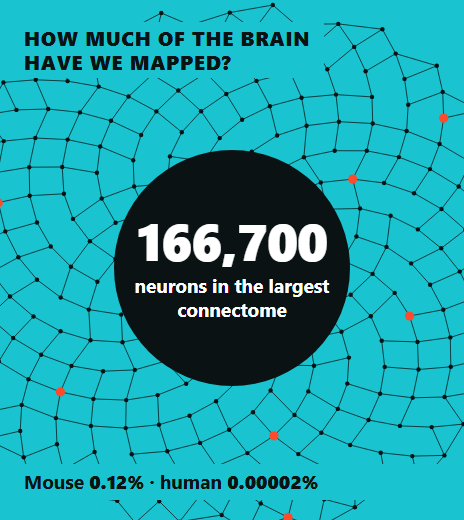
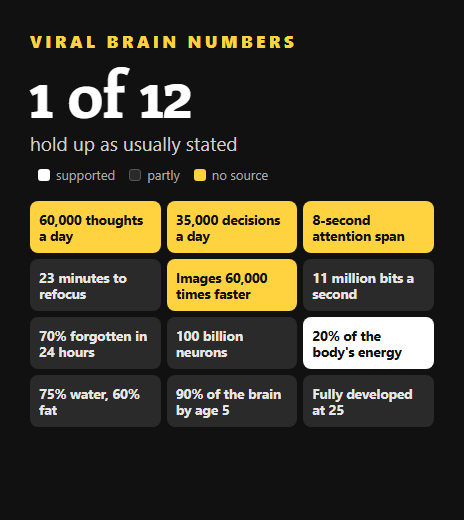
Papers with an author in the United States number 463 for the phrase “brain bank” in 2015-2025, then the United Kingdom (182), the Netherlands (77), China (64) and Japan (64) [25]. These are papers that mention banked tissue, not papers that used a particular bank, and a paper with authors in two countries counts for both. The neuroscience behind them is mapped in how much of the brain have we mapped, and what scans can and cannot say about intelligence in can a brain scan show your IQ; the figures behind other widely repeated brain numbers are traced in brain statistics fact check. Two other brain numbers readers ask about have their own pages: how much data the human brain can store and when the human brain is fully developed.
11 How does brain donation work, and where do donated brains go?
A donated brain goes to the bank the donor registered with, which stores it and, after review, sends samples to researchers [12]. The Harvard bank says it has distributed over 100,000 samples since 1978. We give no advice on donating: each bank sets its own rules, and 36 of 59 pages have a pledge or donor page; to donate, ask the bank or network directly. The table lists every page.
Two statements on bank pages show how much the rules differ. The Department of Veterans Affairs biorepository page says a person intending to donate “must sign up with a brain bank such as the VABBB before death”, and the NIMH Human Brain Collection Core says a driver’s licence designation does not give brain banks permission to receive a brain [1]. Both are the banks’ words about their own programmes, not general rules.
Tissue is used by researchers who apply through each bank or its network: 47 of 59 banks have a tissue-request page, and networks such as the NIH NeuroBioBank and the UK Brain Banks Network run one application for several banks [7] [8]. What the tissue has shown, such as the weight and size of the human brain, is covered in Einstein’s brain: what it did and did not show, brain size and IQ: what the correlation really is and, for older readers, can an IQ test detect dementia.
Curious how your own reasoning measures up?
This study counts brain banks, not abilities. An IQ test is how reasoning is measured.
Take the IQ test12 How we built the dataset
Every number on the page comes from scripts in brain-banks/data (analyse.py runs 440 checks) that read only cached copies of the pages, each logged with its date and sha256.
- 01
Lead list
Read the Alzforum directory results page (97 entries) for names, places and each entry’s own web address, plus the detail pages of the entries that list no address; added banks and networks found elsewhere. No directory description text is copied.
- 02
Read the pages
Fetched 262 pages for 102 candidates, one at a time per site, cached as text; for candidates with no number on the first page followed up to three same-site links about the collection, donors or reports.
- 03
Code each row
A place counts only if a sentence on its pages says it collects, stores or distributes brain tissue; that sentence is stored. 36 candidates were dropped with a reason (page unreadable, general tissue bank, data centre, merged duplicate).
- 04
Totals
Cut each printed total out of the page text with its unit and date; the number must sit inside the quoted sentence. Units are never added: the headline sums count brains only, and donors, registered pledges and cases separately.
- 05
Coding
Pledge page, tissue-request page and donor age, sex and ancestry are our coding of what the pages show: “not found” never means “does not collect”.
- 06
Money and papers
NIH RePORTER API v2 (awards FY2015-2026; the query is printed above) and the OpenAlex works API (year and author-country counts); population from the World Bank.
- Brain bank
- An organisation that collects donated human post-mortem brain tissue with consent, stores it and makes it available to researchers.
- Network
- A coordinating body for several banks (for example the NIH NeuroBioBank); counted once as a network and never added to its member banks.
- Found
- A bank with a page we fetched and read that says it banks brain tissue. A floor, never “the number that exist”.
- Printed total
- The number of brains, donors or other units a bank states on its own page, exactly as printed; undated unless the page gives a date.
- Brains, donors, registered
- Three units kept apart: whole brains held, people who have donated, and living people who have registered to donate.
- Pledge page
- A page that invites members of the public to register or pledge a donation (our coding).
- Alzheimer's Disease Research Center (ADRC)
- A US centre funded by the National Institute on Aging; many run a neuropathology core that is a brain bank.
- NIH RePORTER
- The US National Institutes of Health database of funded projects, with award amounts by fiscal year.
Read every number with these in mind
- 59 is a floor: banks with no web page, no readable page, or no page saying they bank tissue are missing. 36 candidates were dropped (see the CSV pack).
- The list leans to the United States and to English-language pages; banks in Japan, Korea, Mexico, Finland, Italy and four in the US could not be read on the day.
- Printed totals are the banks’ own claims, mostly undated, and “over” or “more than” are read as the number printed: sums are floors, not audits.
- Units are not mixed: brains, donors, registered pledges and cases are separate numbers.
- “Not found” in the coding means not on the pages we read; banks may publish donor summaries in papers, reports or on request.
- The NIH query is ours, not an NIH category; whole awards count even if banking is a small part, so dollars are a ceiling.
- The OpenAlex counts are papers that mention banking, not papers that used a given bank.
- No donor information of any kind is in this study; nothing here is medical, legal or donation advice.
13 Is there a brain bank in my country? Every bank and network in one table
Every bank and network we found (66 rows), sorted by country; click a header to sort. Empty cells mean nothing found. The full CSV (how-many-brain-banks-are-there-2026-iqmetrics.csv) has the quote behind each row.
Every brain bank and network we found: country, network, printed total and what its pages publish (as of 14 November 2026)
| Australian Sports Brain Bank | Bank | Australia | Yes | Not found | Not found | brainbank.org.au | ||||
| NSW Brain Tissue Resource Centre | Bank | Australia | Yes | Yes | Not found | sydney.edu.au | ||||
| Sydney Brain Bank | Bank | Australia | Yes | Yes | Not found | sbb.neura.edu.au | ||||
| Victorian Brain Bank | Bank | Australia | Not found | Yes | Not found | florey.edu.au | ||||
| Dale E. Creighton Brain & BioBank | Bank | Canada | Not found | Yes | Not found | londonbrainandbiobank.ca | ||||
| Douglas Brain Bank | Bank | Canada | 3,600 | brains | undated | Not found | Yes | Not found | douglasbrainbank.ca | |
| Maritime Brain Tissue Bank | Bank | Canada | Yes | Yes | Not found | mbtb.ca | ||||
| Chinese Brain Bank Center | Bank | China | 1,950 | human brains | undated | Not found | Yes | Not found | cbbcnet.cn | |
| French National Brain Bank Neuro-CEB | Network | France | Yes | Yes | Not found | neuroceb.org | ||||
| German Center for Neurodegenerative Diseases | Bank | Germany | Not found | Yes | Not found | dzne.de | ||||
| Neurobiobank Munich | Bank | Germany | 1,000 | Spender (donors) | undated | Yes | Yes | Not found | neuropathologie.med.uni-muenchen.de | |
| Human Brain Tissue Bank at Semmelweis University | Bank | Hungary | Not found | Yes | Not found | semmelweis.hu | ||||
| NIMHANS Brain Bank | Bank | India | Yes | Yes | Not found | nimhans.hbtr.in | ||||
| Netherlands Brain Bank | Bank | Netherlands | Yes | Yes | Not found | brainbank.nl | ||||
| Brain Bank Singapore | Bank | Singapore | 11 | brains retrieved | undated | Yes | Yes | Not found | ntu.edu.sg | |
| National Brain Biobank of Korea | Bank | South Korea | Yes | Yes | Not found | pnuhbrainbank.org | ||||
| Neurological Tissue Bank of the Biobank of the Hospital Clinic of Barcelona | Bank | Spain | 2,300 | donors | undated | Not found | Not found | Not found | clinicbarcelona.org | |
| Brain Archive Information Network UK | Network | United Kingdom | Not found | Yes | Not found | brain-uk.org | ||||
| Brains for Dementia Research | Network | United Kingdom | Yes | Yes | Not found | brainsfordementiaresearch.org | ||||
| Edinburgh Brain and Tissue Bank | Bank | United Kingdom | UK Brain Banks Network | Yes | Yes | Not found | clinical-brain-sciences.ed.ac.uk | |||
| London Neurodegenerative Diseases Brain Bank | Bank | United Kingdom | UK Brain Banks Network; Brains for Dementia Research | Not found | Yes | Not found | kcl.ac.uk | |||
| Multiple Sclerosis and Parkinson’s Tissue Bank | Bank | United Kingdom | UK Brain Banks Network | Yes | Yes | Not found | imperial.ac.uk | |||
| Newcastle Brain Tissue Resource | Bank | United Kingdom | UK Brain Banks Network; Brains for Dementia Research | Yes | Yes | Not found | nbtr.ncl.ac.uk | |||
| Queen Square Brain Bank | Bank | United Kingdom | UK Brain Banks Network | Yes | Yes | Not found | ucl.ac.uk | |||
| Sheffield Brain Tissue Bank | Bank | United Kingdom | UK Brain Banks Network | 800 | brains | undated | Not found | Yes | Not found | sheffield.ac.uk |
| South West Dementia Brain Bank | Bank | United Kingdom | UK Brain Banks Network; Brains for Dementia Research | 1,400 | individuals who donated their brains | undated | Yes | Yes | Not found | bristol.ac.uk |
| UK Brain Banks Network | Network | United Kingdom | Yes | Yes | Not found | ukbbn.brainsfordementiaresearch.org | ||||
| Alzheimer’s Disease Center at NYU Langone | Bank | United States | Yes | Yes | Not found | med.nyu.edu | ||||
| Alzheimer’s Disease Research Center at the University of Washington | Bank | United States | Not found | Yes | Not found | depts.washington.edu | ||||
| Alzheimer’s Disease and Dementia Center at Thomas Jefferson University | Bank | United States | Not found | Not found | Not found | jefferson.edu | ||||
| Autism BrainNet | Network | United States | Not found | Yes | Not found | sfari.org | ||||
| California NeuroAIDS Tissue Network | Bank | United States | NNTC | Not found | Yes | age, sex, ancestry | nntc.org | |||
| Carroll A. Campbell Jr. Neuropathology Laboratory | Bank | United States | Yes | Not found | Not found | medicine.musc.edu | ||||
| Garrison Institute on Aging Brain Bank Program | Bank | United States | Not found | Not found | Not found | ttuhsc.edu | ||||
| Glenn Biggs Institute for Alzheimer’s and Neurodegenerative Diseases Brain Bank | Bank | United States | Yes | Yes | Not found | biggsinstitute.org | ||||
| Goizueta Alzheimer’s Disease Research Center at Emory University | Bank | United States | Yes | Yes | Not found | alzheimers.emory.edu | ||||
| Harvard Brain Tissue Resource Center | Bank | United States | NIH NeuroBioBank | 10,000 | brain donations | undated | Yes | Yes | Not found | hbtrc.mclean.harvard.edu |
| Human Brain Collection Core | Bank | United States | Not found | Yes | Not found | nimh.nih.gov | ||||
| Human Brain and Spinal Fluid Resource Center | Bank | United States | NIH NeuroBioBank | Yes | Yes | Not found | uclabrainbank.org | |||
| Indiana Alzheimer’s Disease Research Center | Bank | United States | Yes | Yes | Not found | medicine.iu.edu | ||||
| Iowa NeuroBank Core | Bank | United States | Yes | Yes | Not found | inrl.lab.uiowa.edu | ||||
| Iqbal Farrukh and Asad Jamal Stanford Alzheimer’s Disease Research Center | Bank | United States | Yes | Yes | Not found | med.stanford.edu | ||||
| Lieber Institute for Brain Development Human Brain Repository | Bank | United States | 4,000 | donated brains | undated | Yes | Not found | Not found | libd.org | |
| Manhattan HIV Brain Bank | Bank | United States | NNTC | Yes | Yes | age, sex, ancestry | icahn.mssm.edu | |||
| Massachusetts Alzheimer’s Disease Research Center | Bank | United States | Yes | Not found | Not found | madrc.org | ||||
| Mayo Clinic Brain Bank for Neurodegenerative Disorders | Bank | United States | 11,000 | brains | undated | Not found | Not found | Not found | mayo.edu | |
| Mesulam Center for Cognitive Neurology and Alzheimer’s Disease | Bank | United States | Yes | Yes | Not found | brain.northwestern.edu | ||||
| Michigan Brain Bank | Bank | United States | 1,500 | paraffin brains | undated | Yes | Yes | Not found | brainbank.umich.edu | |
| Moody Brain Health Institute Brain Tissue Repository | Bank | United States | Not found | Not found | Not found | utmb.edu | ||||
| Mount Sinai/JJ Peters VA Medical Center NIH Brain and Tissue Repository | Bank | United States | NIH NeuroBioBank | Yes | Yes | Not found | icahn.mssm.edu | |||
| NIH NeuroBioBank | Network | United States | Yes | Yes | Not found | neurobiobank.nih.gov | ||||
| National NeuroHIV Tissue Consortium | Network | United States | Not found | Yes | age, sex, ancestry | nntc.org | ||||
| Neurodegenerative Brain Bank | Bank | United States | NIH NeuroBioBank | Yes | Yes | Not found | neuro.pathology.pitt.edu | |||
| Neuroscience Research Institute Brain Bank and Biorepository | Bank | United States | Not found | Yes | Not found | wexnermedical.osu.edu | ||||
| Oregon Brain Bank | Bank | United States | 6,000 | people who donated their brains | undated | Not found | Yes | Not found | ohsu.edu | |
| Penn Memory Center | Bank | United States | Not found | Not found | Not found | pennmemorycenter.org | ||||
| Rhode Island BioBank | Bank | United States | 3,000 | brains | undated | Not found | Not found | Not found | biomedcorefacilities.brown.edu | |
| Rush Alzheimer’s Disease Center | Bank | United States | Not found | Yes | Not found | radc.rush.edu | ||||
| The Florida Brain Bank | Bank | United States | Yes | Not found | Not found | adrccares.org | ||||
| USC Alzheimer’s Disease Research Center | Bank | United States | Yes | Yes | Not found | adrc.usc.edu | ||||
| University of Kentucky Alzheimer’s Disease Research Center | Bank | United States | Not found | Yes | Not found | medicine.uky.edu | ||||
| University of Maryland Brain & Tissue Bank | Bank | United States | NIH NeuroBioBank | Not found | Yes | Not found | medschool.umaryland.edu | |||
| University of Miami Brain Endowment Bank | Bank | United States | NIH NeuroBioBank | Yes | Yes | Not found | med.miami.edu | |||
| VA Biorepository Brain Bank | Bank | United States | Yes | Yes | Not found | research.va.gov | ||||
| VA-BU-CLF Brain Bank | Bank | United States | Yes | Yes | Not found | bu.edu | ||||
| Wisconsin Alzheimer’s Disease Research Center | Bank | United States | Yes | Yes | Not found | adrc.wisc.edu |
Source:
Sources
- Each bank or network. The banks' own web pages and their networks' pages: every row of the open CSV carries its address (page_url), the sentence that shows the place collects or stores brain tissue (evidence_quote) and the date the page was read. 66 rows (59 banks, 7 networks), 262 pages cached as text with sha256 in data/raw/access-log.tsv.. 2026. iqmetrics.org/research/how-many-brain-banks-are-there/#tab-allPublic web pages; facts and one-sentence quotations cited with credit, no page copied
- AlzForum Foundation. Alzforum, Brain Banks directory (alzforum.org/brain-banks), results page: 97 entries; each entry's name, place and own web address; detail pages read for the entries that list no address. 2026. alzforum.org/brain-banksPage footer: "Copyright (c) 1996-2026 AlzForum Foundation Inc. All Rights Reserved." Used as a lead list only: names, places, web addresses and the number of entries are facts; no description text is copied; every counted bank rests on its own page. Page note: "This database is currently being updated."
- Human Brain (EAA Publishing). Liu F, Yin XS, Cong C, Wang Y, Ma C. Human brain banking as a convergence platform of neuroscience and neuropsychiatric research. Human Brain 2022; 1(1): 46-62. 2022. doi.org/10.37819/hb.001.001.0204CC BY-ND 4.0 (read on the PDF: "licensed under a Creative Commons Attribution-NoDerivatives 4.0 International"); counts and one sentence cited, no table copied
- Frontiers Media. Martin P et al. Global brain banking challenges through the lens of Southeast Asia's inaugural brain bank. Frontiers in Neurology 2026; 17: 1768688. 2026. doi.org/10.3389/fneur.2026.1768688CC BY 4.0
- Frontiers Media. Stevens J et al. An Australian brain bank and the future of alcohol and major neuropsychiatric disorders research. Frontiers in Neurology 2026; 17: 1746346. 2026. doi.org/10.3389/fneur.2026.1746346CC BY 4.0
- University of Iowa Carver College of Medicine. University of Iowa, Iowa Neuropathology Resource Laboratory: What is a brain bank? (donor information page). 2026. inrl.lab.uiowa.edu/donor-information/what-brain-bankPublic web page of the bank; one fact (a count) quoted with credit, no table or description copied
- National Institutes of Health. NIH NeuroBioBank: researchers FAQs and about pages (six brain and tissue repositories). 2026. neurobiobank.nih.gov/researchers-faqsUS government work (17 U.S.C. 105), public domain
- UK Brain Banks Network. UK Brain Banks Network: information for researchers and for donors. 2026. ukbbn.brainsfordementiaresearch.org/public/en/researchersPublic web page of the bank; one fact (a count) quoted with credit, no table or description copied
- National NeuroHIV Tissue Consortium. National NeuroHIV Tissue Consortium: public report of 4 November 2025 (tissue bank counts and demographics of autopsy cases). 2025. nntc.org/system/files?file=publicreports_04NOV2025_0.pdfPublic web page of the bank; one fact (a count) quoted with credit, no table or description copied
- Brains for Dementia Research. Brains for Dementia Research: about page. 2026. www.brainsfordementiaresearch.org/aboutPublic web page of the bank; one fact (a count) quoted with credit, no table or description copied
- Mayo Clinic. Mayo Clinic Brain Bank for Neurodegenerative Disorders (Jacksonville). 2026. www.mayo.edu/research/departments-divisions/department-neuroscience-florida/biorepositories/mayo-clinic-brain-bankPublic web page of the bank; one fact (a count) quoted with credit, no table or description copied
- McLean Hospital. Harvard Brain Tissue Resource Center, history page (McLean Hospital). 2026. hbtrc.mclean.harvard.edu/about/historyPublic web page of the bank; one fact (a count) quoted with credit, no table or description copied
- Lieber Institute for Brain Development. Lieber Institute for Brain Development, information for families. 2026. www.libd.org/familiesPublic web page of the bank; one fact (a count) quoted with credit, no table or description copied
- Douglas Mental Health University Institute. Douglas Brain Bank. 2026. douglasbrainbank.caPublic web page of the bank; one fact (a count) quoted with credit, no table or description copied
- Brown University. Rhode Island BioBank (Brown University). 2026. biomedcorefacilities.brown.edu/rhode-island-biobankPublic web page of the bank; one fact (a count) quoted with credit, no table or description copied
- Chinese Brain Bank Center. Chinese Brain Bank Center (Wuhan). 2026. http://www.cbbcnet.cn/English/index-english.htmlPublic web page of the bank; one fact (a count) quoted with credit, no table or description copied
- University of Michigan. Michigan Brain Bank. 2026. www.brainbank.umich.edu/homePublic web page of the bank; one fact (a count) quoted with credit, no table or description copied
- University of Sheffield. Sheffield Brain Tissue Bank. 2026. sheffield.ac.uk/sitran/facilities/neuropathologyPublic web page of the bank; one fact (a count) quoted with credit, no table or description copied
- Nanyang Technological University. Brain Bank Singapore. 2026. www.ntu.edu.sg/brain-bank-singaporePublic web page of the bank; one fact (a count) quoted with credit, no table or description copied
- Oregon Health & Science University. Oregon Brain Bank. 2026. www.ohsu.edu/school-of-medicine/pathology/oregon-brain-bankPublic web page of the bank; one fact (a count) quoted with credit, no table or description copied
- Hospital Clinic de Barcelona. Neurological Tissue Bank, Biobank of the Hospital Clinic of Barcelona (IDIBAPS). 2026. www.clinicbarcelona.org/en/idibaps/core-facilities/biobank/structure-of-the-biobank/neurological-tissue-bank-ntbPublic web page of the bank; one fact (a count) quoted with credit, no table or description copied
- University of Bristol. South West Dementia Brain Bank. 2026. www.bristol.ac.uk/medical-school/research/laboratories-and-facilities/south-west-dementia-brain-bank/information-for-researchersPublic web page of the bank; one fact (a count) quoted with credit, no table or description copied
- Ludwig-Maximilians-Universitaet Muenchen. Neurobiobank Munich (donor page, German). 2026. www.neuropathologie.med.uni-muenchen.de/neurobiobank_muenchen/gewebespender/index.htmlPublic web page of the bank; one fact (a count) quoted with credit, no table or description copied
- National Institutes of Health. NIH RePORTER API v2 (api.reporter.nih.gov), project search, fiscal years 2015-2026; IQ Metrics query printed in the text, not an official NIH category. 2026. api.reporter.nih.govUS government data (17 U.S.C. 105). The API page states the data are "scientific awards data from both NIH and non-NIH federal agencies" and asks for no more than one request per second; it prints no further licence text. 128 + 1,207 responses cached with sha256 in data/raw/nih/access-log.tsv
- OurResearch. OpenAlex works API: journal articles and reviews, 2000-2025, title or abstract matching banked brain tissue (grouped by year and by author country). 2026. docs.openalex.org/how-to-use-the-api/api-overviewCC0 (OpenAlex documentation: "all data is CC0")
- World Bank. World Bank, World Development Indicators: Population, total (SP.POP.TOTL), latest year 2025 (updated 11 Nov 2026). 2026. data.worldbank.org/indicator/SP.POP.TOTLCC BY 4.0 (World Bank: "licenses datasets under the Creative Commons Attribution 4.0 International license (CC-BY 4.0)")
Version history
- 2026.1114 November 2026First release: pages read 14 November 2026. Next update due when the Alzforum directory finishes its update, when more banks print totals, and on the next NIH fiscal-year close (October 2027); banks with unreadable pages (Italy, Japan, Finland, Korea, Mexico and four in the US) are retried then.
Leon Falkner, Data & Research Analyst. Leon owns the arithmetic on IQ Metrics: the percentile tables, the score converter and the figures in everyone else's drafts. On the research desk Leon pulls the data, builds each index and writes the method. More about Leon.
Questions
How many brain banks are there in the world?
Nobody knows exactly: published figures run from "more than 60" to "fewer than 200". IQ Metrics Research found 59 human brain banks with a page of their own in 12 countries (14 November 2026), a floor, not a census.
What is a brain bank?
A brain bank is an organisation that collects donated human brains after death with consent, stores them and makes tissue available to researchers. A University of Iowa laboratory calls it "a collection of donated brain tissue used for research and education".
How many brains are in brain banks?
At least 35,861 brains in the 9 banks that print a total in brains, plus 10,700 donors at 4 others (2026). A 2026 review estimates about 100,000 banked brains worldwide; most banks print no total.
Which country has the most brain banks?
The United States, with 36 of the 59 banks we found (61%), then the United Kingdom (7) and Australia (4). Our list leans to English-language pages, so this is not a ranking of countries.
How do I donate my brain to science?
Ask the bank or network directly: 36 of 59 bank pages we read invite pledges, and the table on this page links each one. Each bank sets its own rules and some require signing up before death. This is not medical or legal advice.
Where do donated brains go?
To the bank the donor registered with, which stores the brain and, after review, sends samples to researchers. The Harvard Brain Tissue Resource Center says it has collected over 10,000 brain donations and distributed over 100,000 samples since 1978.
Is there a brain bank in my country?
We found at least one in 12 countries: the United States (36), United Kingdom (7), Australia (4), Canada (3), Germany (2) and one each in Spain, the Netherlands, Hungary, South Korea, China, India and Singapore. Grey means none found by us, not none.
Do brain banks publish who their donors are?
Rarely: 2 of 59 banks published donor sex and ancestry figures on pages we read, both through one HIV tissue consortium report (2025). "Not found" does not mean not collected; banks may publish in papers or on request.
How much US government money goes to brain banks?
A ceiling: NIH RePORTER lists 128 awards, $109 million, whose title or terms match our brain-bank query (FY2015-2026) and 1,006 awards, $1.11 billion, mentioning banking anywhere. Whole awards, not bank-only spend.
How many scientific papers use brain banks?
1,116 journal articles and reviews from 2015 to 2025 mention a brain bank in the title or abstract in OpenAlex, 139 in 2025 against 22 in 2000. They mention banked tissue; they do not name the bank used.
Share it, cite it, download it
You may reuse everything on this page under CC BY 4.0: in articles, reports, lessons and posts. The one condition is credit to IQ Metrics with a link to this page.
Cite this study
Version 2026.11. Citing the version lets readers find the exact numbers.
Archived copy with a DOI: 10.5281/zenodo.24217227 (report PDF and data on Zenodo).
Falkner, L. (2026). How Many Brain Banks Are There? 59 found, 13 print a size (Version 2026.11) [Data set]. IQ Metrics Research. https://iqmetrics.org/research/how-many-brain-banks-are-there/ (DOI: 10.5281/zenodo.24217227)
Falkner, Leon. "How Many Brain Banks Are There? 59 found, 13 print a size." IQ Metrics Research, 14 Nov. 2026, iqmetrics.org/research/how-many-brain-banks-are-there/. DOI: 10.5281/zenodo.24217227.
Falkner, Leon. "How Many Brain Banks Are There? 59 found, 13 print a size." IQ Metrics Research. November 14, 2026. https://iqmetrics.org/research/how-many-brain-banks-are-there/. DOI: 10.5281/zenodo.24217227.
@misc{iqmetrics2026howmanybrainbanksarethere, author = {Falkner, Leon}, title = {How Many Brain Banks Are There? 59 found, 13 print a size}, institution = {IQ Metrics}, year = {2026}, version = {2026.11}, doi = {10.5281/zenodo.24217227}, url = {https://iqmetrics.org/research/how-many-brain-banks-are-there/} }
Source: Leon Falkner, "How Many Brain Banks Are There? 59 found, 13 print a size." IQ Metrics Research, version 2026.11, https://iqmetrics.org/research/how-many-brain-banks-are-there/ (DOI 10.5281/zenodo.24217227)
Get the data
One row per bank or network (66 rows: 59 banks, 7 networks). Pages read on 14 November 2026. Printed totals are the banks’ own numbers with their unit and date; pledge, tissue-request and donor-summary columns are IQ Metrics coding of the pages read (“no” or empty = not found, never “not collected”). Rules: brain-banks/data/DEFINITIONS.md.
| Column | What it holds |
|---|---|
bank_id, name | Identifier and name of the bank or network |
kind | bank or network (networks are never added to banks) |
country_iso3, country, continent, state, city, parent | Place and host institution |
networks | Networks the bank names, as shown on its pages |
year_founded | Year as printed on the bank's page (empty = none printed) |
focus | Conditions the bank's pages tie banking to (IQ Metrics coding; overlapping) |
published_total, total_unit, unit_class | Number printed on the bank's page, its unit exactly as printed, and our class (brains, donors) |
total_as_of | Date the page states, or "undated, accessed 2026-11-14" |
published_total_quote | The words around the number on the page |
pledges_public | yes = page invites the public to pledge or register; unclear = not found |
publishes_donor_age, publishes_donor_sex, publishes_donor_ancestry | yes = donor summary figures found on the bank's or its network's pages; no = not found |
tissue_request_process | yes = a researcher tissue-request page or form found |
listed_in_directory_2026 | yes = the bank appears in the Alzforum directory results on 14 November 2026 |
page_url, evidence_quote | The page read, and the sentence showing the place collects or stores brain tissue |
page_read_date | 2026-11-14 |
For journalists, researchers and teachers
Everything on this page may be quoted, charted and republished with credit. No embargo, no permission needed, no sign-up. If you need a number that is not here, ask.
Summary you can paste
Plain news style. Edit freely; keep the credit.
IQ Metrics Research built a one-row-per-bank table of human brain banks from their own web pages: 59 banks and 7 networks in 12 countries, as of 14 November 2026, a floor. Published counts of how many banks exist range from "more than 60" to "fewer than 200". Only 13 banks print a total: 9 in brains (35,861 in all) and 4 in donors (10,700). 36 of the 59 are in the United States. Source: IQ Metrics Research, https://iqmetrics.org/research/how-many-brain-banks-are-there/
Angles for a story
- Nobody counts the world’s brain banks. “More than 60”, “144”, “fewer than 200”: three published figures, no bank-by-bank table until now; ours names 59 with a page.
- Only 13 of 59 banks print a size. 9 print brains, 4 print donors; the median bank that prints brains holds 3,000.
- The directory that fed a 2022 count lists 97 entries today, down from 144 banks; the US from 81 to 55.
- Who publishes the donor? 2 of 59 banks put donor sex and ancestry figures on their pages; 36 invite pledges.
- US money and papers. 128 NIH awards ($109 million) name banking in title or terms; 139 papers mention a brain bank in 2025.
Quotes you can use
Attributable as written, with the name and title. For a different angle or a quote on a specific figure, ask through the contact page.
Nobody can say how many brain banks there are. We named 59 with a page, and only 13 of them print how many brains or donors they hold.
Leon Falkner, Data & Research Analyst, IQ Metrics ResearchEvery figure for the world’s brain banks is a floor or a ceiling. The honest range is 60 to 200, and our table shows what is behind it: one row per bank, each with its page.
Leon Falkner, Data & Research Analyst, IQ Metrics ResearchA bank that publishes no donor summary is not a bank that collects none. What we can count is what is on the page.
Leon Falkner, Data & Research Analyst, IQ Metrics Research
Files
- CSV of every bank and network in our dataset: country, networks, printed total with its unit and date, what its pages publish, page address and evidence quote (CC BY 4.0)
- Every figure as a print-ready PNG: use the Image button under each figure
- Embed code and data table under every figure
- Share images for social media in three sizes, with the credit line built in
- Citations in APA, MLA, Chicago, BibTeX and plain text
- Also in the data pack: claims.csv (every printed total), conflicts.csv (every published count of banks) and dropped.csv (candidates left out, with the reason), shared on request through the contact page
Terms, contact and corrections
Licence and credit: CC BY 4.0. Credit “IQ Metrics Research, How many brain banks are there? (2026)” with a link to this page. On air or in print, “IQ Metrics” and the page address are enough.
What it covers: Bank and network pages are cited for facts (a count, a date) with one-sentence quotations; no page or table is copied. No donor information, no ranking of banks, no medical, legal or donation advice.
Contact: the research team, through the contact page. Corrections are made on this page with a dated note in the version history.